A custom sports mouthguard for kids is a professionally fabricated oral appliance designed to protect primary and permanent teeth from athletic trauma. Unlike generic store-bought options, custom guards offer superior force absorption, precise fit, and optimal airway clearance, ensuring maximum safety without compromising breathing or speech.
Clinical Summary:
Pediatric dental trauma during athletic activities represents a significant percentage of emergency dental visits. A custom sports mouthguard, fabricated from precise impressions or digital scans, provides unparalleled protection against tooth fractures, avulsions, and soft tissue lacerations. By utilizing pressure-laminated Ethylene Vinyl Acetate (EVA), these dentist-prescribed appliances distribute impact forces evenly across the maxilla, significantly reducing the risk of concussions and jaw injuries. Furthermore, custom guards are engineered to accommodate the developing pediatric airway, ensuring optimal oxygen intake and clear communication on the field. Integrating mouthguard fabrication with routine pediatric dental care allows clinicians to monitor mixed dentition, manage interceptive orthodontic needs, and apply preventive treatments simultaneously.
Key Takeaways:
- Custom mouthguards significantly reduce the risk of sports-related dental injuries compared to playing unprotected.
- Professionally fabricated guards use multi-layered EVA material for superior shock absorption without unnecessary bulk.
- A precise fit ensures the appliance remains securely in place during impact, preventing airway obstruction.
- Custom designs accommodate orthodontic appliances, protecting soft tissues from bracket lacerations.
- Regular replacement is necessary during the mixed dentition phase to accommodate erupting permanent teeth and jaw growth.
The High Cost of Dental Trauma
Sports-related dental injuries often result in severe structural damage, requiring extensive restorative treatments. Investing in a custom mouthguard is a highly cost-effective strategy to help prevent complex dental emergencies.
The oral cavity is highly vulnerable during athletic participation, and the consequences of an impact can be devastating to a child’s developing dentition. Dental trauma in pediatric patients is not merely a temporary inconvenience; it often initiates a cascade of lifelong dental interventions. When a child sustains a direct blow to the perioral region, the forces are transmitted directly to the teeth, the alveolar bone, and the temporomandibular joint (TMJ). To effectively mitigate pediatric dental trauma, proactive protection is a clinical necessity.
Clinically, sports-related dental injuries are categorized by severity. Ellis Class I and II fractures involve the enamel and dentin, requiring composite restorations to seal the tooth and restore aesthetics. However, an Ellis Class III fracture exposes the vital dental pulp. In a young child with immature permanent teeth, a pulpal exposure is a critical emergency. It often necessitates complex endodontic procedures, such as a pulpotomy or apexification, to preserve the vitality of the root and allow for continued root development. If the tooth becomes necrotic, a full root canal treatment is required, significantly weakening the tooth structure over time [1].
Beyond fractures, luxation injuries (displacement of the tooth) and avulsions (complete knock-out of the tooth) represent severe biological trauma. When a permanent tooth is avulsed, the periodontal ligament cells begin to die rapidly. Even with immediate reimplantation and splinting, the long-term prognosis is guarded, with high risks of external root resorption or ankylosis. The financial and emotional toll of replacing a lost anterior tooth with a dental implant or fixed bridge later in adulthood far exceeds the initial investment in preventive gear.
Custom-Fit vs. Store-Bought Boil-and-Bite
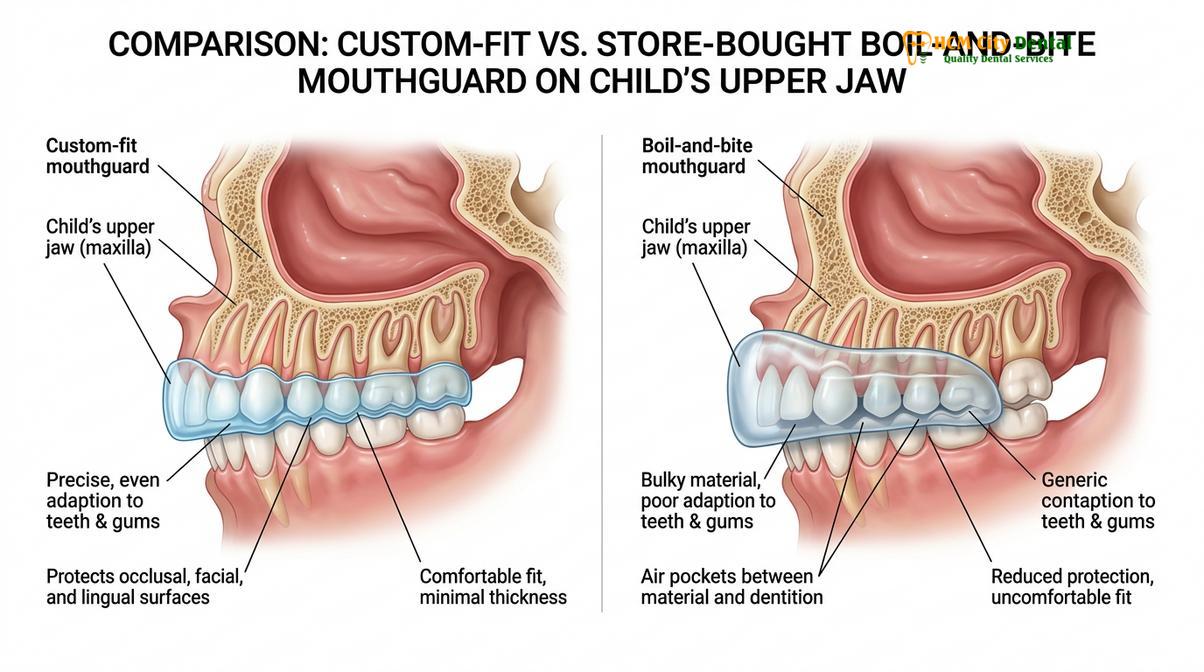
Custom-fit mouthguards offer exact anatomical adaptation and superior retention compared to boil-and-bite models. This precision ensures the guard stays in place during impact, providing reliable protection.
When evaluating options for dental protection, parents are often presented with three main categories: stock mouthguards, boil-and-bite mouthguards, and custom-fabricated mouthguards. Understanding the biomechanical and material differences between these options is crucial for making an informed decision regarding a child’s safety [2].
Stock mouthguards are pre-formed, inexpensive, and ready to wear. However, they offer the lowest level of protection. Because they are not adapted to the individual’s anatomy, they are often bulky, uncomfortable, and require the child to keep their teeth clenched to hold the guard in place. This constant clenching interferes with breathing and speaking, making them highly impractical for active sports.
Boil-and-bite mouthguards are made from a thermoplastic material that softens in boiling water and is then bitten into to create a rudimentary mold. While they offer a slight improvement over stock guards, the adaptation is still fundamentally flawed. The biting force used during molding often displaces the material, resulting in uneven thickness. The areas that require the most protection—the incisal edges and the buccal surfaces of the anterior teeth—frequently become dangerously thin, compromising the appliance’s ability to absorb impact.
In stark contrast, a custom mouthguard is fabricated using a precise replica of the patient’s oral cavity. The foundation of a highly protective mouthguard lies in the accuracy of the initial impression or digital intraoral scan. By capturing the exact contours of the teeth, the gingival margins, and the palatal vault, the dental laboratory can thermoform the protective material under high pressure and heat. This process ensures uniform thickness, exceptional retention, and a comfortable fit that does not require the child to clench their jaw.
| Feature | Custom-Fit Mouthguard | Boil-and-Bite Mouthguard | Stock Mouthguard |
|---|---|---|---|
| Fit & Retention | Excellent; snaps securely onto teeth | Moderate; often loose or bulky | Poor; requires constant clenching |
| Force Absorption | Superior; uniform thickness maintained | Variable; material thins out during biting | Minimal; inadequate material density |
| Breathing & Speech | Unobstructed; allows clear communication | Impaired; bulkiness restricts airflow | Highly impaired; cannot speak while wearing |
| Durability | High; multi-layered EVA resists tearing | Low to Moderate; deforms over time | Low; easily chewed through |
Force Absorption Comparison
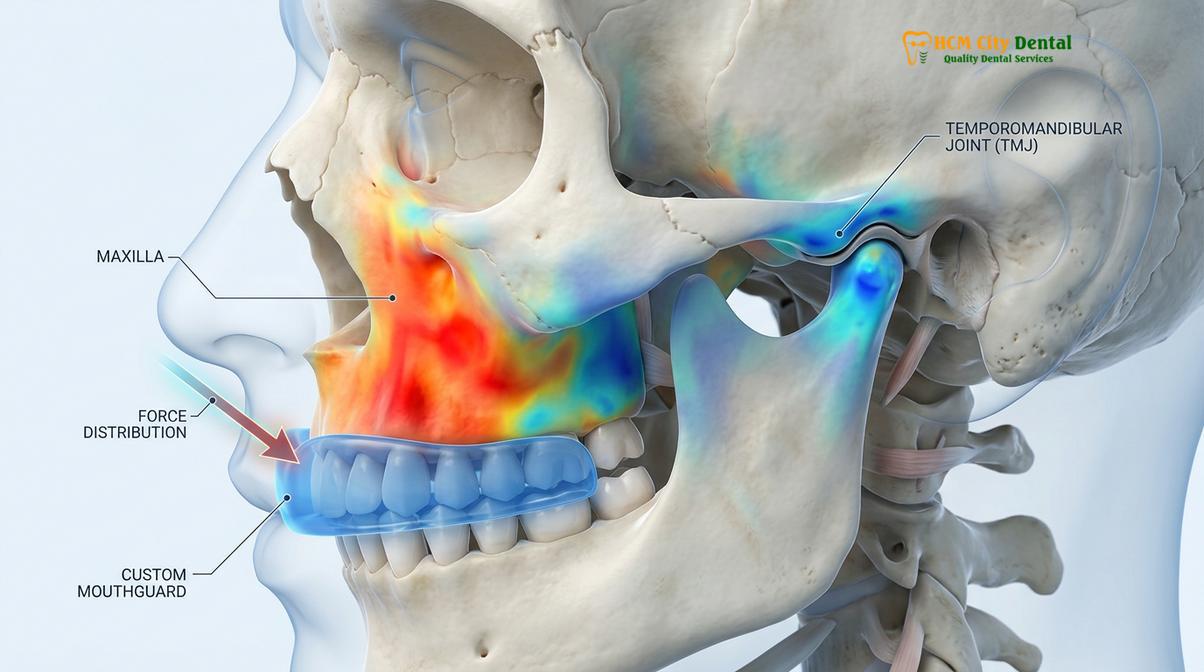
Custom mouthguards utilize pressure-laminated EVA materials to dissipate impact energy across the entire dental arch. This biomechanical advantage helps prevent localized fractures and reduces forces transmitted to the jaw.
The primary function of a sports mouthguard is to absorb and dissipate the kinetic energy generated by a direct impact before it can cause structural damage to the teeth or the surrounding maxillofacial complex. The efficacy of this energy dissipation is heavily dependent on the material properties and the fabrication technique of the appliance.
Professionally fabricated custom mouthguards are typically constructed from Ethylene Vinyl Acetate (EVA), a highly resilient and biocompatible polymer. For pediatric athletes engaged in contact sports, a dual-laminate or multi-laminate technique is often employed. This involves fusing multiple layers of EVA under high heat and pressure. The resulting appliance possesses a dense, shock-absorbing core that is highly resistant to tearing and deformation [3].
When a blow is delivered to the facial region, a custom mouthguard acts as a sophisticated shock absorber. Because it fits intimately against the teeth and the alveolar ridge, the force of the impact is distributed evenly across the entire maxillary arch, rather than being concentrated on a single tooth. This broad distribution significantly lowers the peak stress experienced by any individual tooth, drastically reducing the likelihood of crown fractures or root avulsions.
“The biomechanical superiority of a custom-laminated mouthguard lies in its ability to decouple the impact force from the dental structures. By providing a resilient buffer that maintains its critical thickness over the vulnerable anterior segment, we can mitigate forces that would otherwise result in severe dental and maxillofacial trauma.”
Furthermore, a properly designed custom mouthguard provides a crucial buffer between the maxillary and mandibular teeth. During an upward blow to the chin, the mouthguard prevents the violent clashing of the upper and lower arches, which can cause severe chipping, posterior tooth fractures, and trauma to the temporomandibular joint. By stabilizing the mandible in a slightly open and forward position, the mouthguard also helps to absorb forces that could otherwise be transmitted to the cranial base.
Breathing & Speaking Comfort
A precise custom fit ensures the airway remains unobstructed, allowing for maximum oxygen intake and clear communication. This is critical for athletic performance and preventing mouth-breathing habits.
Athletic performance is intrinsically linked to cardiovascular efficiency and oxygen consumption. Any oral appliance that restricts airflow can lead to premature fatigue, decreased stamina, and impaired concentration. One of the most significant clinical advantages of a custom sports mouthguard is its minimal interference with the pediatric airway.
Because a custom guard is fabricated to snap securely over the teeth, it occupies minimal space in the oral cavity. The palatal coverage is carefully contoured by the dentist to avoid impinging on the tongue space or triggering the gag reflex. This streamlined design allows the child to breathe naturally through their mouth and nose, even during periods of intense physical exertion [4].
In contrast, poorly fitting boil-and-bite guards are notoriously bulky. They force the lips apart and push the tongue posteriorly, which can partially obstruct the oropharyngeal airway. This obstruction forces the child into a chronic mouth-breathing pattern during play. Prolonged mouth breathing is a significant clinical concern in pediatric dentistry, as it can alter facial growth, leading to “adenoid facies” or long-face syndrome, and is closely linked to conditions requiring a Pediatric Sleep Apnea evaluation.
Furthermore, clear communication is essential in team sports. A custom mouthguard allows the child to speak, shout, and hydrate without needing to remove the appliance. This continuous wear ensures that the child is protected at all times, whereas athletes with uncomfortable, bulky guards frequently remove them during play, leaving themselves vulnerable to sudden impacts.
Sports Requiring Dental Protection
Mouthguards are essential for high-impact sports like martial arts and rugby, as well as medium-impact activities like basketball and skateboarding, where unexpected collisions frequently occur.
The Vietnam Odonto-Stomatology Association (VOSA) and international pediatric dental bodies strongly advocate for the use of protective mouthguards in any sporting or recreational activity that carries a risk of orofacial injury. While the necessity of dental protection is widely recognized in heavy contact sports, clinical data indicates that a significant portion of dental trauma occurs in sports traditionally considered “non-contact” or “limited-contact” [5].
High-impact sports, such as boxing, martial arts, rugby, ice hockey, and American football, present an obvious and constant threat of direct blows to the face. In these environments, a multi-layered custom mouthguard is an absolute requirement. The appliance must be robust enough to withstand high-velocity impacts from equipment, elbows, and hard surfaces.
However, medium-impact sports such as basketball, soccer, gymnastics, and skateboarding also account for a high volume of pediatric dental emergencies. In basketball, for example, errant elbows during rebounding are a frequent cause of anterior tooth fractures. In skateboarding and cycling, falls onto hard concrete surfaces often result in severe luxation injuries. Therefore, implementing dental emergency prevention sports protocols, including the mandatory use of custom mouthguards, is critical across a wide spectrum of athletic activities.
Orthodontic Considerations: Mouthguards and Braces
Children undergoing orthodontic treatment require specialized mouthguards that protect the soft tissues from bracket lacerations while allowing space for tooth movement.
For children currently wearing traditional metal or ceramic braces, a sports mouthguard serves a dual purpose: protecting the teeth from impact and shielding the lips and cheeks from severe lacerations caused by the orthodontic hardware. A direct blow to the mouth when wearing braces without a guard can cause the brackets to embed deeply into the soft tissues, resulting in painful injuries that require suturing.
Standard boil-and-bite mouthguards are contraindicated for patients with braces. The thermoplastic material can flow into the brackets and wires during the molding process, locking the appliance onto the teeth and potentially damaging the orthodontic appliance upon removal. Instead, a dentist must fabricate a specialized custom guard. This involves blocking out the undercuts created by the braces on the dental model before thermoforming the EVA material. This technique ensures the mouthguard fits securely over the braces without interfering with the ongoing Phase 1 vs Phase 2 Braces Children treatment plan.
Parents seeking Braces for Expat Children in Ho Chi Minh City should always discuss sports participation with their orthodontist to ensure appropriate protective gear is integrated into the treatment protocol from day one.
Clinical Workflow & Cost: Creating a Custom Pediatric Mouthguard
The fabrication process involves precise digital scanning or impressions, followed by laboratory thermoforming. We utilize child-friendly behavior management techniques to ensure a comfortable experience.
At Children & Pediatric Dentistry departments, the workflow for creating a custom sports mouthguard is designed to be efficient, highly accurate, and completely painless. The process begins with a comprehensive oral examination to assess the child’s dental development, identify any mobile primary teeth, and evaluate the health of the gingival tissues.
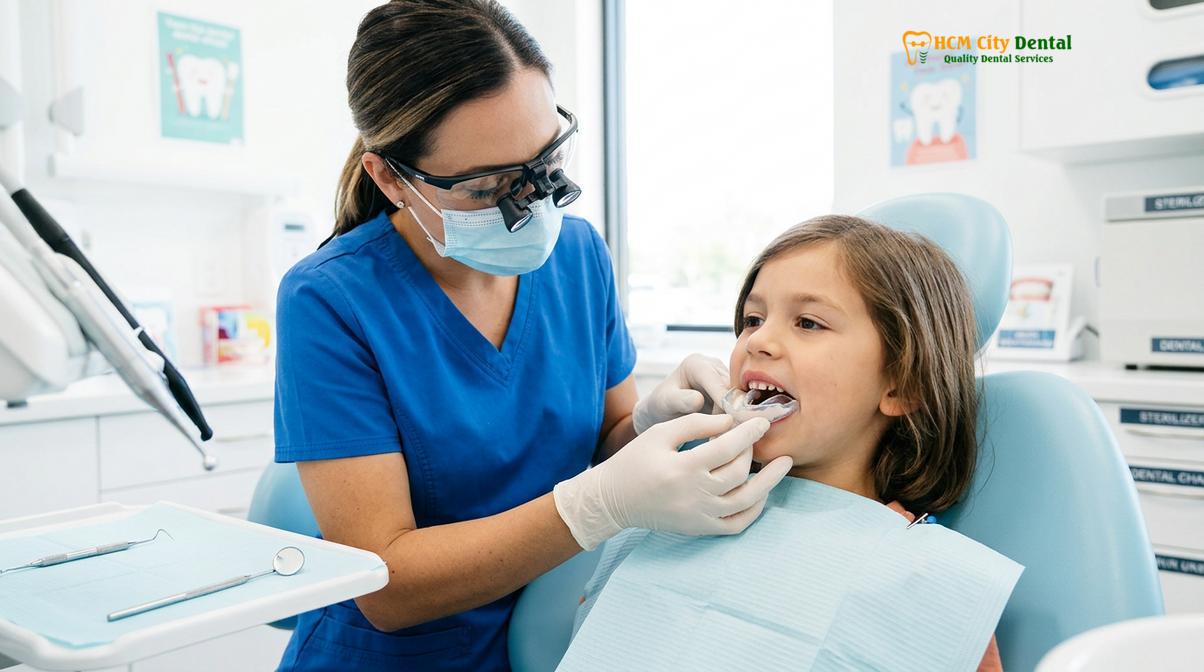
To capture the exact anatomy of the child’s mouth, the clinician will take either a traditional alginate impression or utilize an advanced intraoral digital scanner. For young patients who may be anxious or have a strong gag reflex, we employ the “Tell-Show-Do behavioral management” technique. The dentist will first explain the process, demonstrate it, and then proceed only when the child is relaxed and cooperative. This desensitization approach ensures a positive experience and yields a highly accurate mold.
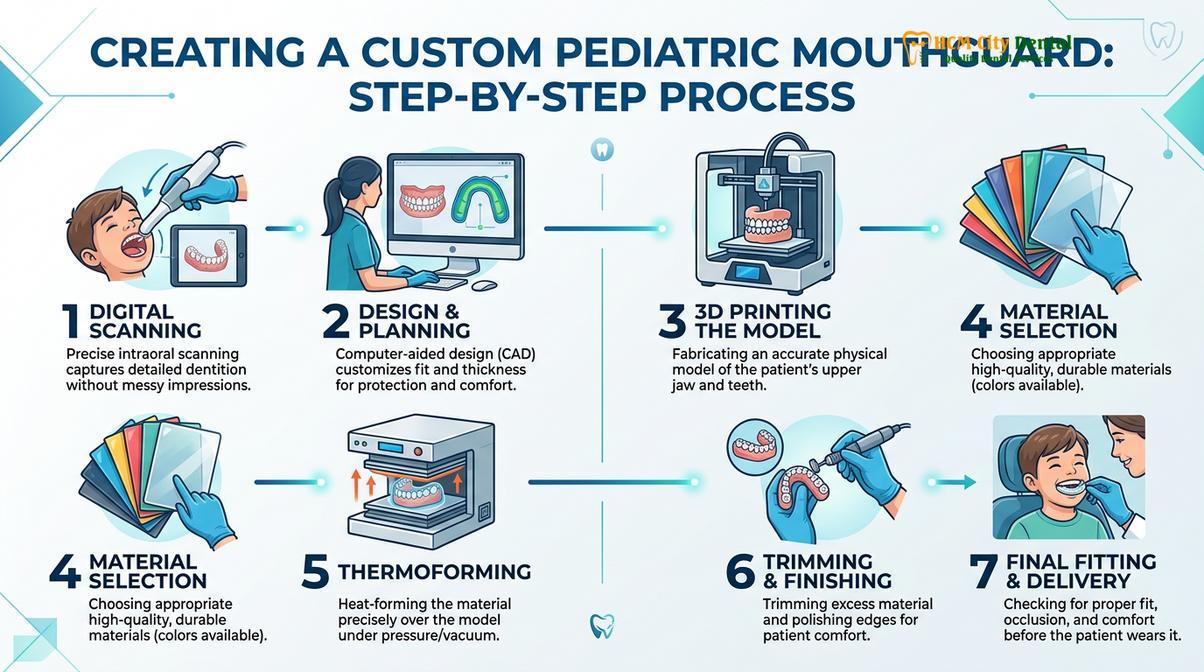
Once the impression or digital file is obtained, it is sent to the dental laboratory. A stone model or 3D-printed replica of the child’s teeth is created. The EVA material is then heated and vacuum-formed or pressure-laminated over the model, ensuring intimate adaptation to every contour. The clinician then carefully trims and polishes the edges to prevent any soft tissue irritation.
Understanding the financial aspect of pediatric dental care is important for families. Below is the current pricing structure for pediatric services at our clinic, reflecting our commitment to accessible, high-quality care:
- Kids Consultation & Diagnostic check-up: 300,000 to 500,000 VND (~$12 to $20 USD) (Walk-in: 500,000 to 800,000 VND).
- Fissure Sealant (per tooth): 400,000 to 600,000 VND (~$16 to $24 USD) (Walk-in: 700,000 to 1,000,000 VND).
- Fluoride Varnish Application: 300,000 to 500,000 VND (~$12 to $20 USD) (Walk-in: 500,000 to 800,000 VND).
- Pediatric Composite Filling (per tooth): 500,000 to 800,000 VND (~$20 to $32 USD) (Walk-in: 800,000 to 1,300,000 VND).
- Pediatric Glass Ionomer Filling (GIC, fluoride-releasing, per tooth): 400,000 to 600,000 VND (~$16 to $24 USD) (Walk-in: 700,000 to 1,000,000 VND).
- Baby Root Canal (Pulpotomy, per tooth): 1,000,000 to 1,500,000 VND (~$40 to $60 USD) (Walk-in: 1,500,000 to 2,000,000 VND).
- Custom Sports Mouthguard: 1,500,000 to 2,500,000 VND (~$60 to $100 USD) depending on material thickness and design.
Case Study: Preventing Trauma on the Field
A clinical case demonstrates how a properly fitted custom mouthguard successfully absorbed a high-impact collision, preserving a young athlete’s permanent dentition.
A 10-year-old patient visiting HCMC Dental Clinic in Ho Chi Minh City presented for a routine check-up and to receive a new custom sports mouthguard for the upcoming rugby season. The patient was in the mixed dentition phase, with several newly erupted permanent incisors. A digital scan was taken to fabricate a dual-laminate EVA mouthguard tailored to accommodate his developing arch.
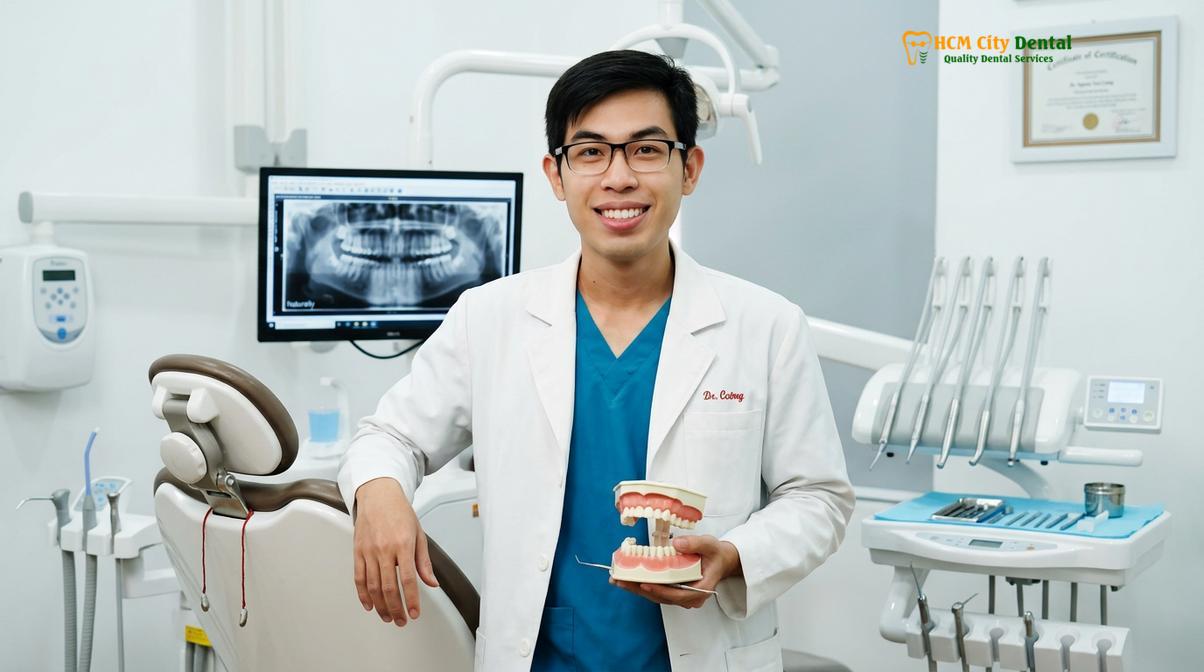
Dr. Nguyen Van Cuong, a leading specialist at HCMC Dental Clinic, emphasizes the importance of early intervention and preventive care in pediatric sports. He routinely assesses young athletes to ensure their protective gear accommodates erupting teeth and jaw growth. Under his guidance, the clinic integrates mouthguard fabrication seamlessly with comprehensive pediatric dental services, ensuring that children are protected both on and off the field.
Midway through the season, the patient experienced a severe head-to-head collision during a match. The impact was directed primarily at the lower third of his face. Thanks to the custom mouthguard, the kinetic energy was effectively dissipated across the maxillary arch. An emergency clinical evaluation revealed no tooth fractures, no luxation, and no soft tissue lacerations. The mouthguard itself showed signs of heavy compression but remained intact, successfully preventing what would have otherwise been a catastrophic dental injury.
“This case highlights the critical difference between generic and custom protection. The precise fit of the appliance ensured it remained in place during the collision, absorbing the shock and protecting the vulnerable anterior teeth from irreversible trauma.”
When to See a Dentist
Regular dental visits are essential to monitor the fit of a pediatric mouthguard and address any signs of wear or dental trauma promptly.
Parents should schedule a dental visit if they notice any of the following regarding their child’s sports mouthguard or oral health:
- Poor Fit: If the mouthguard becomes loose, falls out easily, or causes the child to gag, it no longer provides adequate protection and must be replaced.
- Visible Wear and Tear: Inspect the mouthguard regularly for tears, holes, or significant thinning of the material, especially on the biting surfaces.
- Eruption of New Teeth: As children lose primary teeth and permanent teeth erupt, the dental arch changes shape. A mouthguard that fit perfectly six months ago may now be too tight or improperly aligned.
- After an Impact: If the child sustains a blow to the face while wearing the mouthguard, a dentist should evaluate both the child’s teeth and the appliance to ensure no underlying damage occurred and that the guard’s structural integrity is intact.
- Orthodontic Changes: Any adjustments to braces or the introduction of new orthodontic appliances require an immediate evaluation of the mouthguard’s fit.
Integrating mouthguard checks into routine visits, such as during a Kids Dental Cleaning & Fissure Sealants appointment, ensures continuous protection as the child grows.
Conclusion & Next Steps
Protecting your child’s developing smile during athletic activities is a critical component of comprehensive pediatric dental care. A custom sports mouthguard offers unparalleled force absorption, a secure fit, and optimal breathing comfort, significantly reducing the risk of severe dental trauma. By investing in professionally fabricated protective gear, parents can ensure their children participate in sports safely and confidently.
If your child is involved in contact or medium-impact sports, do not wait for an injury to occur. Schedule a consultation at HCMC Dental Clinic in Ho Chi Minh City to discuss custom mouthguard options. Our team is dedicated to providing top-tier preventive care tailored to your child’s unique dental needs. Contact us today to learn more about our Best Age for Kids First Orthodontic Evaluation and comprehensive pediatric services.
References
- American Academy of Pediatric Dentistry. Policy on Prevention of Sports-related Orofacial Injuries. (2022).
- Dental Traumatology. Biomechanical analysis of custom vs. boil-and-bite mouthguards. (2021).
- Journal of Sports Dentistry. Airway patency and oxygen saturation with custom oral appliances. (2020).
- International Journal of Paediatric Dentistry. Management of dental trauma in children and adolescents. (2019).
- Journal of the American Dental Association. Efficacy of mouthguards in reducing sports-related dental injuries. (2021).