When comparing composite vs glass ionomer fillings for kids, the choice depends on the tooth’s location, cavity size, and the child’s cooperation level. Glass ionomer cement (GIC) releases fluoride and tolerates moisture, making it ideal for toddlers, while composite resin offers superior strength and natural aesthetics for permanent teeth.
Clinical Summary:
Pediatric restorative dentistry requires materials that balance durability, biocompatibility, and ease of placement. Glass ionomer fillings are highly favored for primary (baby) teeth due to their chemical bond to dentin and continuous fluoride release, which helps arrest early childhood caries. Conversely, composite resins provide excellent wear resistance and tooth-matching aesthetics, making them the standard for permanent dentition or high-stress areas. The clinical decision heavily relies on moisture control capabilities during the procedure, often managed through Tell-Show-Do behavioral techniques to ensure patient comfort and restoration longevity.
Key Takeaways:
- Glass ionomer cement (GIC) releases fluoride, protecting adjacent enamel from recurrent decay.
- Composite resin provides superior mechanical strength and perfectly matches natural tooth color.
- GIC is highly moisture-tolerant, making it an excellent child friendly filling material for uncooperative toddlers.
- Modern pediatric dentistry utilizes BPA free composite fillings to ensure maximum systemic safety.
- Treatment success relies heavily on behavioral management techniques like Tell-Show-Do to minimize dental anxiety.
Glass Ionomer Cement (GIC): Fluoride-Releasing Protection
Glass ionomer cement is a biocompatible restorative material that chemically bonds to the tooth and continuously releases fluoride, making it highly effective for treating decay in primary teeth.
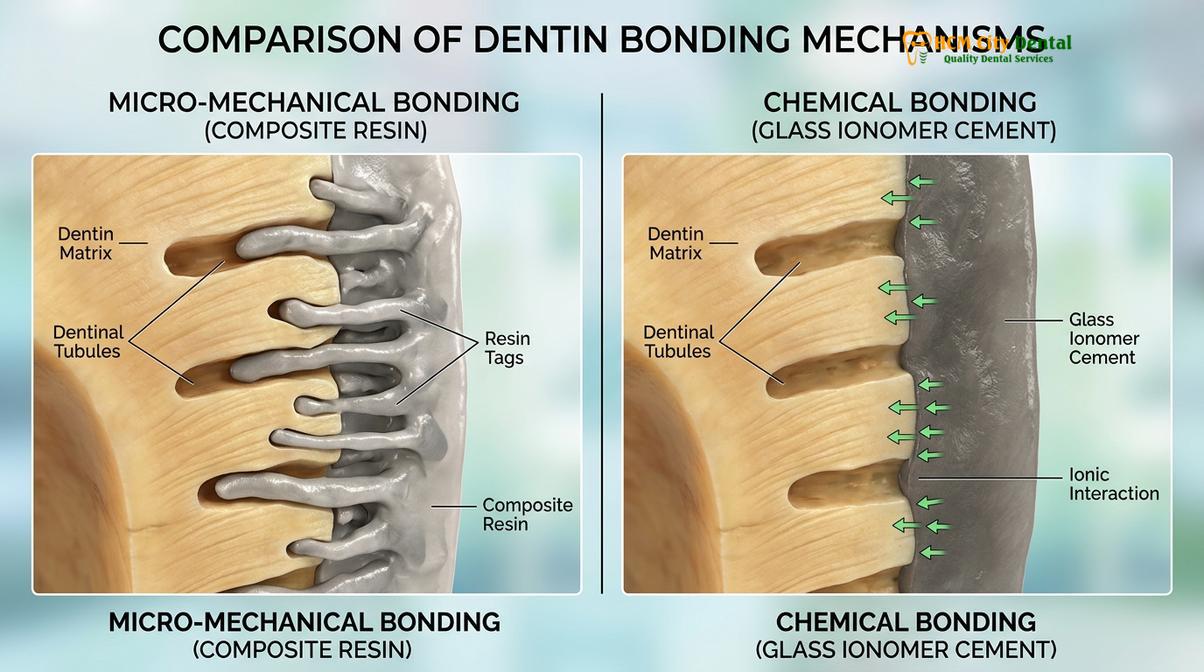
In the realm of pediatric dentistry, managing early childhood caries requires materials that not only restore the physical structure of the tooth but also actively contribute to the oral environment’s health. Glass Ionomer Cement (GIC) has long been a cornerstone in treating pediatric patients. Composed of a silicate glass powder and a polyacrylic acid liquid, GIC undergoes an acid-base reaction upon mixing, allowing it to chemically bond directly to the calcium in the tooth’s enamel and dentin[1]. This unique chemical adhesion means that less healthy tooth structure needs to be removed during cavity preparation, preserving the integrity of the primary tooth.
One of the most significant clinical advantages of GIC is its ability to release fluoride into the surrounding tooth structure. This fluoride release acts as a localized defense mechanism, remineralizing adjacent enamel and inhibiting the metabolic activity of cariogenic bacteria. Furthermore, GIC possesses a “fluoride recharge” capability; it can absorb fluoride from toothpaste, mouthwashes, and professional fluoride varnishes, subsequently releasing it over time. This makes it an exceptional choice for toddler tooth decay fillings, especially in children categorized as having a high risk for recurrent cavities.
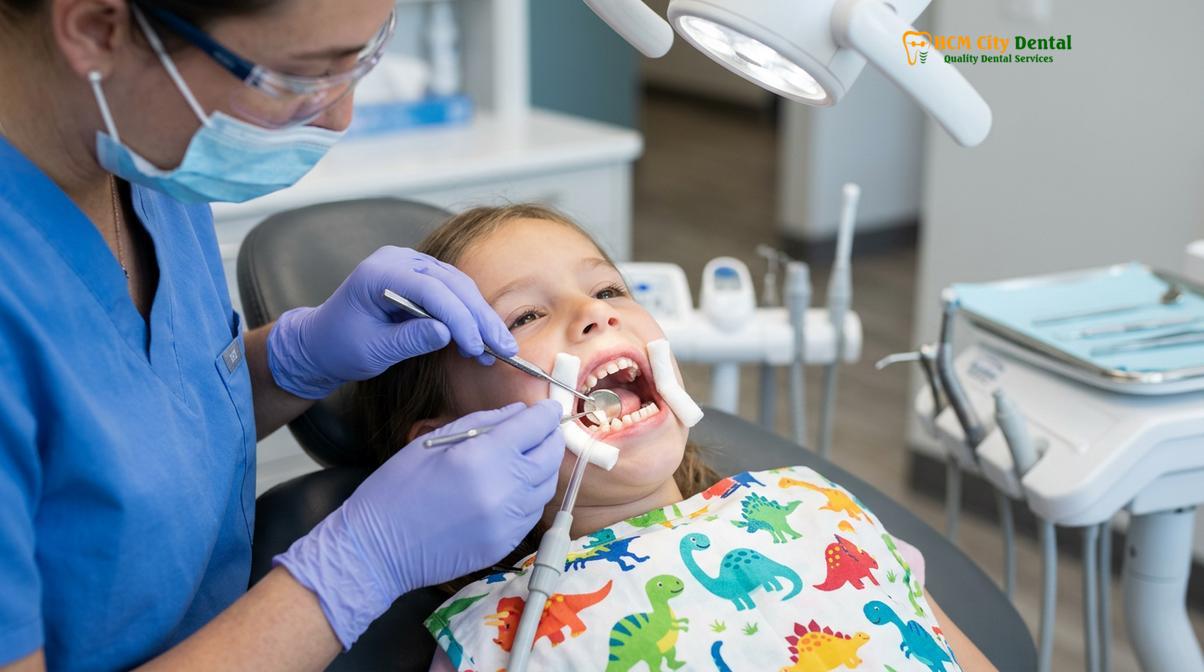
Additionally, GIC is highly tolerant of moisture during placement. Unlike other materials that require a perfectly dry field to bond successfully, GIC can adhere effectively even if the tooth is slightly contaminated by saliva. This characteristic is invaluable when treating young, anxious, or uncooperative children where maintaining strict isolation is clinically challenging. While traditional GIC may lack the high compressive strength needed for large cavities on permanent molars, its properties make it an ideal, child friendly filling material for primary dentition, where the lifespan of the restoration only needs to match the natural exfoliation timeline of the baby tooth.
Composite Resin: Strong & Tooth-Coloured
Composite resin is a highly durable, aesthetic filling material that requires strict moisture control during placement, offering long-lasting restorations for both primary and permanent teeth.
Composite resin represents the gold standard for aesthetic and durable dental restorations. Made from a complex mixture of acrylic resin (typically bisphenol A-glycidyl methacrylate or urethane dimethacrylate) reinforced with finely ground glass or quartz filler particles, composite fillings offer unparalleled mechanical strength and wear resistance. Unlike GIC, which relies on chemical bonding, composite resin utilizes a micromechanical bonding process. This involves applying a mild phosphoric acid to etch the tooth surface, creating microscopic pores. A bonding agent is then applied, flowing into these pores, and finally, the composite material is layered and cured (hardened) using a specialized blue light[2].
The primary advantage of composite resin is its exceptional aesthetic versatility. The material can be precisely shade-matched to the child’s natural tooth color, rendering the restoration virtually invisible. This is particularly crucial for cavities on anterior (front) teeth or for older children and teenagers who are highly conscious of their appearance. Furthermore, the high filler content in modern composites provides excellent compressive and tensile strength, allowing them to withstand the heavy occlusal (chewing) forces exerted on posterior molars.
“While glass ionomer is excellent for temporary or primary restorations, composite resin remains the gold standard when we need maximum occlusal strength and a virtually seamless aesthetic integration in the aesthetic zone.”
However, the clinical placement of composite resin is highly technique-sensitive. The micromechanical bond will fail if the tooth surface is contaminated by even a microscopic amount of saliva, blood, or crevicular fluid during the bonding process. Therefore, strict moisture control—often achieved through the use of a rubber dam—is an absolute prerequisite. In pediatric dentistry, achieving this level of isolation can be challenging, requiring advanced behavioral management skills from the clinician. When isolation is achievable, composite resin provides a highly durable, long-lasting restoration that supports the structural integrity of both primary and permanent teeth.
Moisture Control Challenges in Kids
Successful dental restorations in children require meticulous moisture control, which is often complicated by excess saliva and limited patient cooperation during the procedure.
The oral cavity is a naturally wet environment, and managing this moisture is one of the most significant hurdles in pediatric restorative dentistry. Children naturally produce copious amounts of saliva, have smaller oral cavities, and often possess a hyperactive gag reflex or limited attention spans. These factors make it exceedingly difficult to maintain the dry field required for technique-sensitive materials like composite resin. If a composite filling is placed in a moisture-contaminated field, the bond will be compromised, leading to microleakage, post-operative sensitivity, and eventual failure of the restoration.
To combat these challenges, pediatric dentists employ a variety of isolation techniques. The rubber dam—a thin sheet of latex or non-latex material placed over the target tooth—is the most effective method for achieving absolute isolation. It not only keeps the tooth dry but also protects the child’s airway from water and dental materials. When a rubber dam is not tolerated, clinicians may use cotton rolls, dry angles, and high-volume suction to manage saliva flow. In cases where moisture control is nearly impossible due to the child’s age or behavior, dentists often pivot to using a resin modified glass ionomer (RMGI). RMGI is a hybrid material that combines the moisture tolerance and fluoride release of traditional GIC with the improved strength and aesthetics of composite resin, offering an excellent middle-ground solution[3].
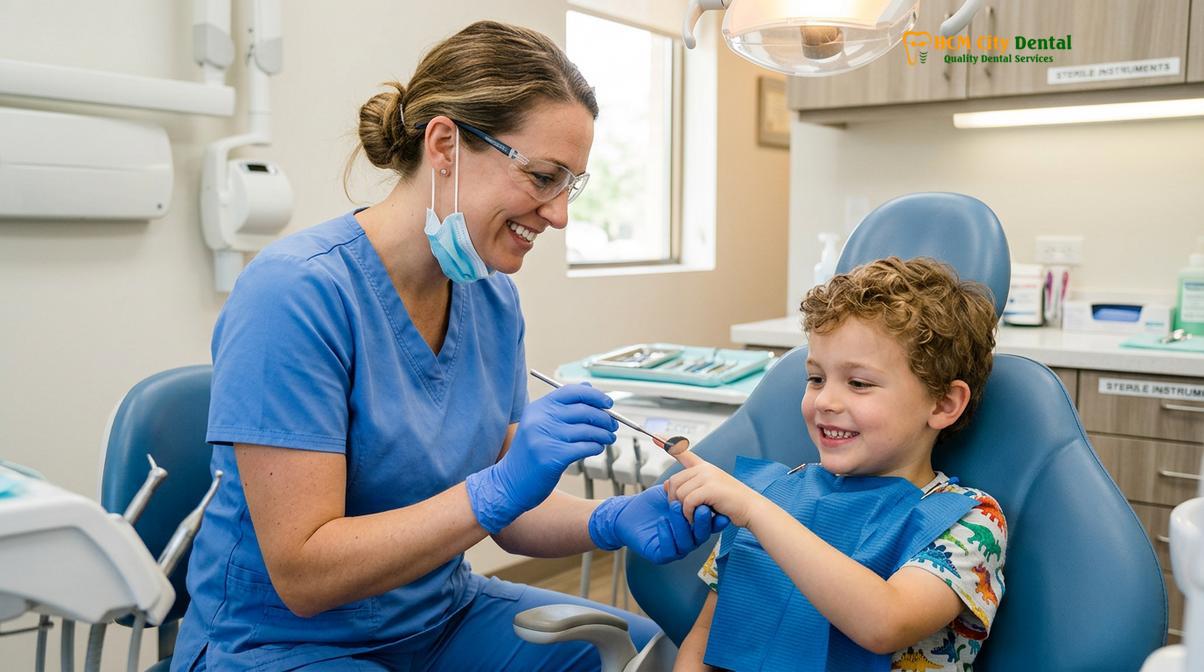
Beyond physical isolation tools, psychological moisture control is equally vital. This is where the “Tell-Show-Do behavioral management” technique becomes indispensable. By explaining the procedure using child-friendly language (e.g., calling the suction a “water whistle” or the rubber dam a “tooth raincoat”), demonstrating the tools on the child’s hand, and proceeding only when the child is comfortable, the dentist can significantly reduce anxiety. A calm, cooperative child moves less, cries less, and produces less stress-induced saliva, directly improving the clinical conditions for a successful, long-lasting filling.
Material Safety & BPA Concerns
Modern pediatric dental materials are rigorously tested for biocompatibility, with contemporary composite resins formulated to be free of harmful Bisphenol A (BPA) derivatives.
As parents become increasingly conscious of the materials used in their children’s healthcare, questions regarding the safety of dental fillings—specifically concerning Bisphenol A (BPA)—have become common. BPA is an industrial chemical used to make certain plastics and resins, and high levels of exposure have been linked to various systemic health concerns. It is important to clarify that dental composites do not contain pure BPA. However, some traditional composite resins and dental sealants utilize BPA derivatives, such as Bis-GMA (bisphenol A-glycidyl methacrylate), as part of their resin matrix.
Extensive clinical research and reviews by major health organizations have consistently shown that the amount of BPA released from these dental materials is infinitesimally small—typically occurring only in the first few hours after placement—and falls well below any established safety thresholds for systemic toxicity[4]. The exposure from a dental filling is exponentially lower than what a child might encounter from everyday environmental sources, such as food packaging or plastic bottles.
Important Clinical Note: While dental materials are highly safe, parents should always inquire about the specific brands used. At HCMC Dental Clinic, we exclusively utilize premium, biocompatible materials that meet stringent international safety standards for pediatric care, ensuring absolute peace of mind.
Despite the proven safety of traditional composites, the dental industry has responded to parental concerns by developing advanced bpa free composite fillings. These modern formulations utilize alternative resin monomers, completely eliminating the presence of Bis-GMA while maintaining the high aesthetic and mechanical properties required for durable restorations. When discussing treatment options, pediatric dentists prioritize transparency, ensuring parents are fully informed about the biocompatibility and safety profiles of the materials being placed in their child’s mouth.
Dr. Cuong’s Recommendations
Selecting the optimal filling material requires a comprehensive clinical assessment of the child’s caries risk, behavioral profile, and the specific tooth’s developmental timeline.
At Children & Pediatric Dentistry clinics, the decision between composite and glass ionomer is never a one-size-fits-all approach. Dr. Nguyen Van Cuong emphasizes that the choice of material must be highly individualized, taking into account the unique clinical presentation of each pediatric patient. For a highly cooperative older child with a cavity on a permanent molar, composite resin is undoubtedly the material of choice due to its longevity and strength. Conversely, for a two-year-old presenting with early childhood caries on a primary incisor, the moisture tolerance and fluoride-releasing properties of GIC make it the superior clinical option.
In cases where a child exhibits extreme dental anxiety or where traditional drilling is contraindicated, Dr. Cuong often recommends Silver Diamine Fluoride (SDF) as an interim or alternative treatment. SDF is a liquid substance that can be painted onto the cavity to instantly halt the progression of decay without the need for local anesthesia or a dental drill. While SDF does leave a localized black stain on the decayed portion of the tooth, it is an invaluable tool for managing caries in uncooperative toddlers until they are mature enough to tolerate a standard filling procedure.
Clinical Case Study: Managing Early Childhood Caries
Patient: A 4-year-old child presenting with moderate decay on two lower primary molars.
Clinical Assessment: The child exhibited high dental anxiety and was unable to tolerate the placement of a rubber dam for moisture control.
Treatment Workflow: Dr. Nguyen Van Cuong utilized the Tell-Show-Do technique to acclimate the child to the dental chair. Given the lack of absolute isolation, Dr. Cuong opted for fluoride-releasing glass ionomer fillings.
Outcome: The procedure was completed swiftly without tears. The GIC successfully sealed the cavities, and the continuous fluoride release will help protect the adjacent teeth until natural exfoliation occurs.
The ultimate goal is to provide restorative care that not only repairs the immediate damage but also fosters a positive, trauma-free relationship with dental care. By carefully selecting the appropriate material and employing empathetic behavioral management, pediatric dentists ensure that the child’s physical and psychological well-being are equally prioritized.
Comprehensive Pediatric Dental Care & Pricing
Beyond restorative fillings, a complete pediatric dental approach includes interceptive orthodontics, airway assessments, and transparent pricing to ensure accessible, high-quality care.
Restorative dentistry is only one facet of comprehensive pediatric oral health. A holistic approach requires evaluating the child’s overall craniofacial development. During routine check-ups, pediatric dentists conduct thorough airway assessments to identify signs of mouth breathing, tongue-ties, or pediatric sleep apnea. Chronic mouth breathing can lead to “adenoid facies” (long-face syndrome) and altered jaw growth. Early identification allows for timely interventions, such as diode laser frenectomies for tongue-ties or referrals to ENT specialists.
Furthermore, early interceptive orthodontics plays a crucial role in guiding proper jaw development and preventing severe crowding. By evaluating the child’s bite early on, dentists can utilize space maintainers to hold room for permanent teeth if a baby tooth is lost prematurely, or recommend Phase 1 orthodontic treatments like palatal expanders to correct crossbites and create sufficient arch space. This proactive approach often reduces the complexity and duration of Phase 2 braces in adolescence.
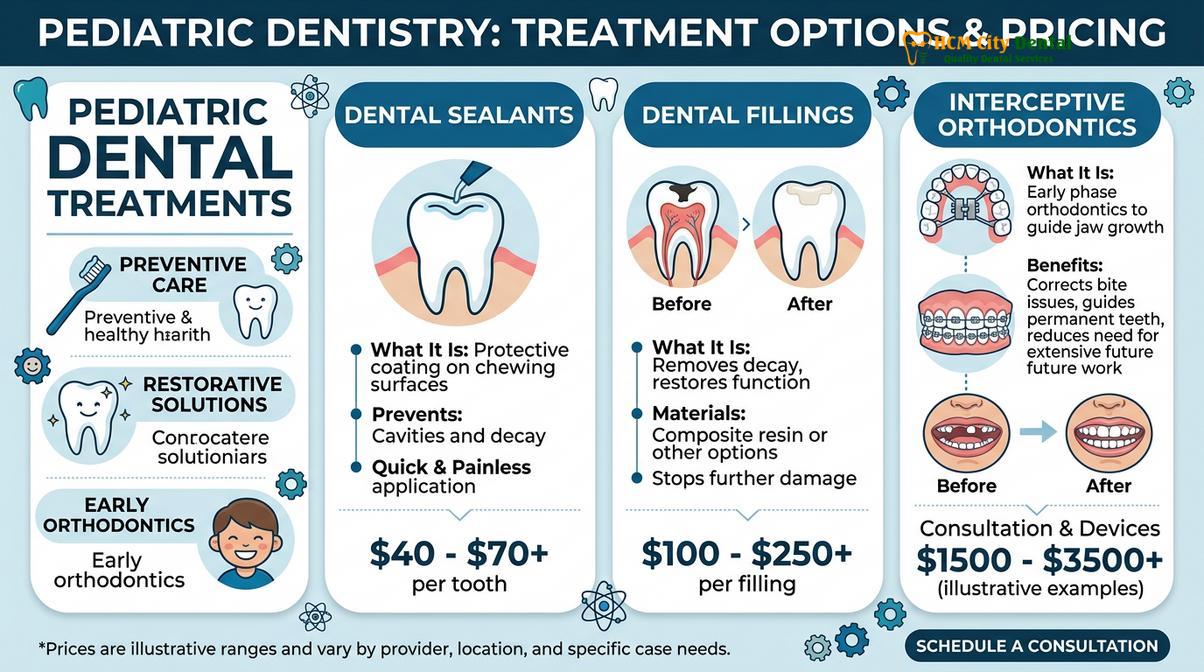
To ensure parents can make informed decisions, transparent pricing is essential. Below is the current estimated pricing structure for comprehensive pediatric dental services at HCMC Dental Clinic in Ho Chi Minh City. (Note: Patients booking via WhatsApp may be eligible for a -40% discount on select walk-in rates).
| Pediatric Dental Treatment | Estimated Cost (VND) | Estimated Cost (USD) |
|---|---|---|
| Kids Consultation & Diagnostic Check-up | 300,000 – 500,000 VND | ~$12 – $20 USD |
| Fissure Sealant (per tooth) | 400,000 – 600,000 VND | ~$16 – $24 USD |
| Fluoride Varnish Application | 300,000 – 500,000 VND | ~$12 – $20 USD |
| Pediatric Composite Filling (per tooth) | 500,000 – 800,000 VND | ~$20 – $32 USD |
| Pediatric Glass Ionomer Filling (GIC) | 400,000 – 600,000 VND | ~$16 – $24 USD |
| Baby Root Canal (Pulpotomy, per tooth) | 1,000,000 – 1,500,000 VND | ~$40 – $60 USD |
| Space Maintainer (fixed, band-and-loop) | 2,000,000 – 3,000,000 VND | ~$80 – $120 USD |
| Custom Pediatric Sports Mouthguard | 1,500,000 – 2,500,000 VND | ~$60 – $100 USD |
When to See a Pediatric Dentist
Establishing a “dental home” early in a child’s life is critical for preventing severe decay and guiding optimal oral development. The American Academy of Pediatric Dentistry recommends that a child’s first dental visit should occur within six months of the eruption of their first tooth, or no later than their first birthday. Early visits allow the dentist to assess caries risk, provide anticipatory guidance on diet and oral hygiene, and apply preventive measures like fluoride varnish.
Parents should schedule an immediate consultation if they notice any white, brown, or black spots on their child’s teeth, as these are early indicators of enamel demineralization or active decay. Additionally, if a child complains of tooth pain, sensitivity to hot or cold foods, or exhibits swelling around the gums, prompt clinical evaluation is necessary to prevent the infection from spreading to the developing permanent tooth underneath[5].
“Early intervention is not just about fixing cavities; it is about guiding craniofacial growth, managing airway health, and building a foundation of positive dental experiences for life.”

Beyond cavity prevention, parents should also be aware of the best age for a child’s first orthodontic evaluation, which is typically around age 7. At this stage, the pediatric dentist can identify potential issues with jaw growth, crossbites, or severe crowding, allowing for timely interceptive orthodontic care. If you are seeking expert, compassionate care for your child, the dedicated pediatric team at HCMC Dental Clinic in Ho Chi Minh City is equipped to provide comprehensive diagnostics and tailored treatment plans.
Frequently Asked Questions
Are glass ionomer fillings better than composite for toddlers?
Yes, glass ionomer fillings are often better for toddlers because they tolerate moisture well and release fluoride to prevent further decay. Since toddlers frequently struggle to sit still and keep their mouths dry, the quick placement and chemical bonding of glass ionomer make it a highly effective, child friendly filling material for primary teeth. It allows the dentist to work swiftly, minimizing the child’s time in the chair and reducing overall dental anxiety.
Do children’s composite dental fillings contain BPA?
Modern pediatric composite fillings are generally considered safe, and many clinics exclusively use BPA free composite fillings to eliminate any systemic risks. While some older or traditional composite resins may release trace amounts of Bis-GMA (a BPA derivative) immediately after placement, the levels are clinically insignificant and far below safety thresholds. Parents are always encouraged to discuss the specific biocompatibility of the materials used with their pediatric dentist.
How long do GIC fillings last in baby teeth?
Glass ionomer cement (GIC) fillings typically last between 3 to 5 years, which is usually sufficient for baby teeth before they naturally fall out. Their longevity depends on the cavity’s size, the tooth’s location, and the child’s chewing habits, though they may wear down faster than composite resins on heavy biting surfaces. If a GIC filling wears down prematurely, it can easily be repaired or replaced by the dentist.
Can Silver Diamine Fluoride be used instead of a filling?
Silver Diamine Fluoride (SDF) can be used as a non-invasive alternative to halt active tooth decay without drilling, making it ideal for highly anxious children. However, SDF permanently turns the decayed portion of the tooth black, so it is typically used on posterior baby teeth or as a temporary measure until a proper filling can be placed. It is an excellent tool for managing early childhood caries when traditional restorative techniques are not immediately feasible.
Is the dental filling procedure painful for children?
The dental filling procedure is highly comfortable when performed using modern pediatric techniques, local anesthesia, and behavioral management strategies. Pediatric dentists utilize the Tell-Show-Do method, child-friendly terminology like “sleepy juice”, and sometimes conscious sedation to ensure the child experiences virtually no pain or psychological trauma during the restorative process. The focus is always on creating a safe, pain-free environment that builds the child’s confidence in dental care.
References
- American Academy of Pediatric Dentistry. Best Practices for Restorative Dentistry. (2021).
- Journal of Dentistry. Clinical evaluation of glass ionomer and composite resin restorations in primary molars. (2020).
- International Journal of Paediatric Dentistry. Behavioral management techniques in pediatric dentistry: A systematic review. (2019).
- Journal of the American Dental Association. Biocompatibility and safety of modern dental composite resins. (2018).
- Pediatric Dentistry. The efficacy of Silver Diamine Fluoride in arresting early childhood caries. (2022).