When comparing a water flosser vs string floss scaling, the clinical consensus is clear: they serve distinct, complementary roles. String floss mechanically scrapes sticky plaque, water flossers flush loose debris from deep pockets, and only professional ultrasonic scaling can safely eradicate hardened calculus.
Clinical Summary:
A comprehensive oral hygiene regimen requires a multi-tiered approach to effectively manage bacterial biofilm and prevent periodontal disease. While traditional string floss excels at the mechanical disruption of adherent plaque on smooth interproximal surfaces, water flossers utilize hydraulic pulsation to flush out unattached bacteria and food debris, particularly in subgingival areas, around orthodontic appliances, and near dental implants. However, neither home interdental cleaning method can eradicate mineralized calculus (tartar). Professional intervention, utilizing advanced ultrasonic scaling and Guided Biofilm Therapy (GBT), remains the only medically viable method to remove hardened deposits, resolve plaque-induced gingivitis, and halt the progression of periodontal disease. Understanding the specific biomechanical action of each tool allows patients to optimize their daily routines and maximize the benefits of their professional dental visits.
Key Takeaways:
- String floss provides essential mechanical friction to detach sticky, adherent plaque from tooth surfaces.
- Water flossers deliver pulsating hydraulic forces that reach deeper into periodontal pockets than traditional floss.
- Interdental brushes are highly effective for cleaning larger embrasure spaces and exposed root concavities.
- No home oral care device can remove hardened calculus; professional ultrasonic scaling is mandatory.
- Guided Biofilm Therapy (GBT) offers a minimally invasive, highly effective professional cleaning alternative to traditional scraping.
String Floss Technique & Limitations
Traditional string floss remains the gold standard for physically scraping adherent plaque from tight interproximal contacts, though its efficacy heavily depends on proper manual technique.
The foundation of interdental cleaning has long been traditional string floss. From a clinical perspective, the primary advantage of string floss lies in its ability to provide direct mechanical friction against the tooth surface. Dental plaque is not merely loose debris; it is a complex, sticky biofilm matrix composed of bacteria, salivary proteins, and extracellular polysaccharides. To effectively disrupt this biofilm, physical scraping is required. When evaluating the debate of water flosser vs string floss scaling, it is crucial to understand that water alone often struggles to shear off highly adherent, mature plaque colonies.
However, the effectiveness of string floss is entirely dependent on the user’s technique. The clinically recommended method is the “C-shape” technique. The floss must be carefully guided through the contact point, wrapped around the side of the tooth in a C-shape, and gently slid beneath the gingival margin (gumline). The user must then apply lateral pressure against the tooth while moving the floss vertically to scrape the surface clean. Simply snapping the floss up and down between the teeth without adapting it to the contours of the enamel leaves significant amounts of biofilm undisturbed and can cause traumatic clefting of the gingival tissue.
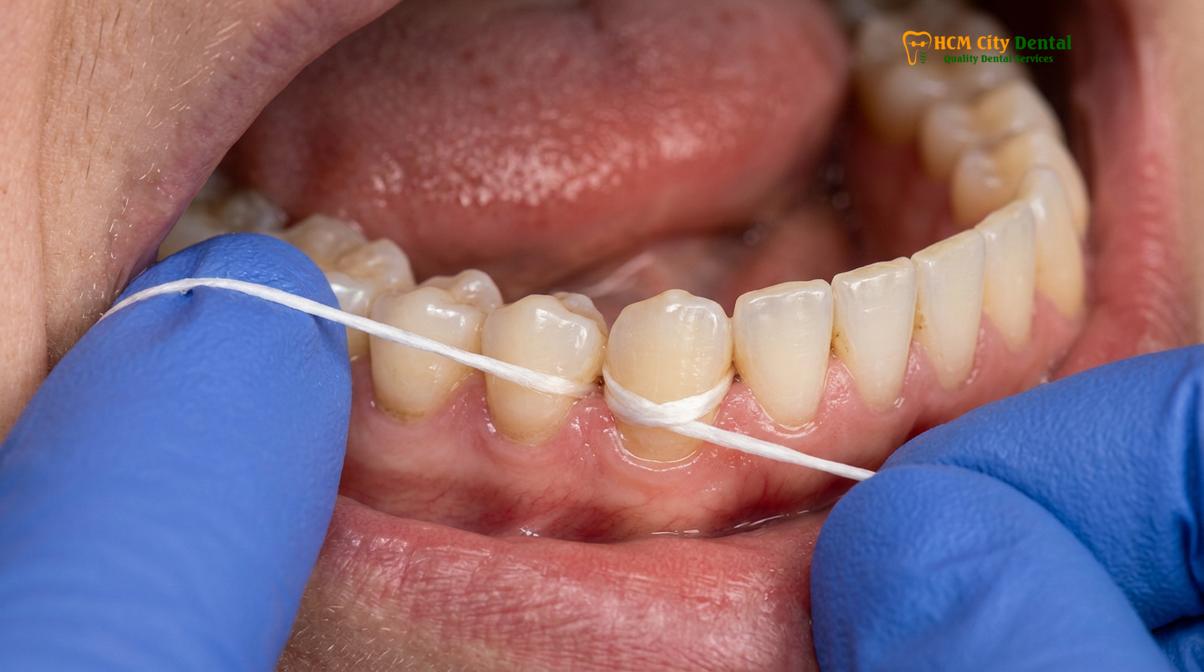
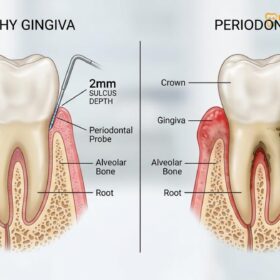
Despite its mechanical advantages, string floss has notable clinical limitations. First, it is highly technique-sensitive, and studies indicate that a vast majority of patients fail to execute the C-shape technique correctly. Second, string floss is generally ineffective at cleaning root concavities—the natural depressions on the roots of teeth, particularly premolars and molars. When floss is pulled taut, it bridges over these concavities, leaving the biofilm within the depression untouched. Finally, string floss has limited subgingival penetration. In healthy gums, it can reach 2 to 3 millimeters below the gumline, but in patients with periodontal pockets deeper than 3 millimeters, floss cannot reach the base of the pocket where the most aggressive anaerobic bacteria reside[1].
“While string floss is unparalleled for tight contact points, its inability to adapt to root concavities or penetrate deep periodontal pockets necessitates the integration of supplementary interdental cleaning methods for comprehensive biofilm management.”
Water Flosser (Waterpik) Efficacy
Water flossers utilize pulsating fluid dynamics to flush out subgingival bacteria and debris, making them exceptionally effective for patients with complex dental anatomy or restorative work.
Water flossers, also known as oral irrigators, operate on a fundamentally different biomechanical principle than string floss. Instead of mechanical scraping, they utilize hydrokinetic activity. A high-quality water flosser delivers a pulsating stream of water—typically between 50 and 90 PSI—that creates two distinct zones of fluid dynamics: the impact zone (where the water initially strikes the tooth) and the flushing zone (where the water deflects and penetrates subgingivally). This pulsation creates a cavitation effect, generating microscopic bubbles that implode and help lyse (break open) bacterial cell walls.
The clinical data regarding waterpik effectiveness is robust, particularly concerning the reduction of gingival bleeding and inflammation. Because the pressurized water can penetrate up to 6 millimeters into periodontal pockets, it is highly efficient at flushing out unattached, free-floating planktonic bacteria and inflammatory cytokines that drive gum disease. For patients with moderate to deep pocketing, a water flosser provides a level of subgingival irrigation that string floss simply cannot match.
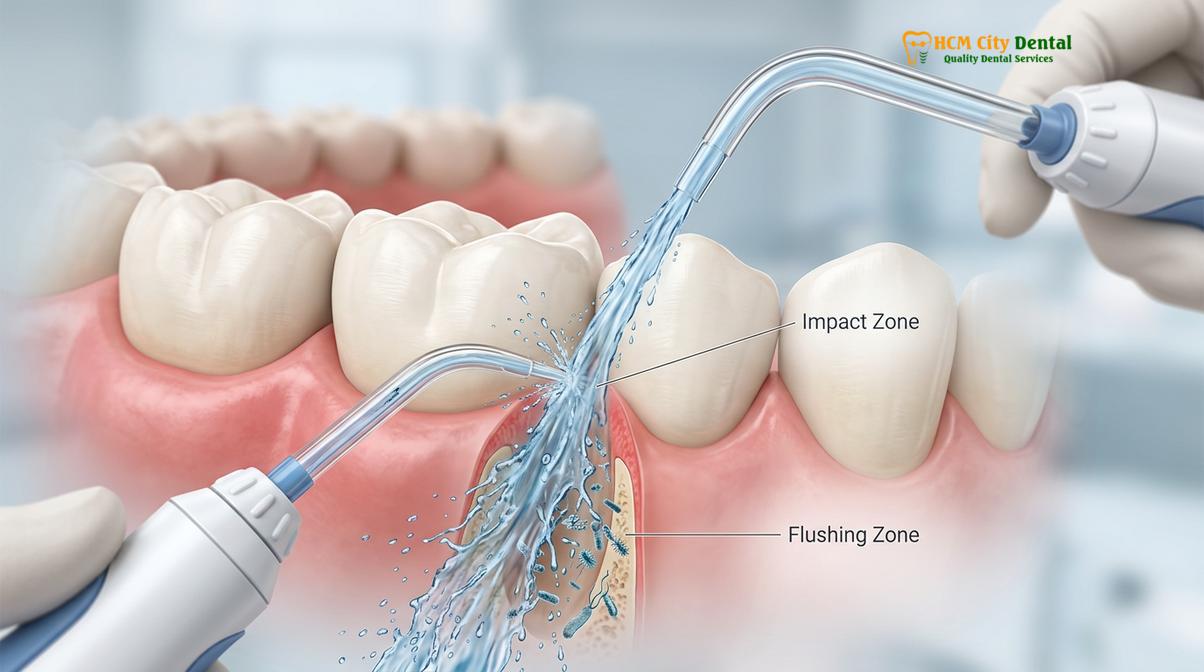
Furthermore, water flossers are widely considered the best flossing method implants, orthodontic braces, and complex bridgework. Traditional floss frequently shreds on orthodontic brackets or struggles to navigate beneath the pontics of dental bridges. A water flosser effortlessly navigates these anatomical obstacles, flushing out food impaction and disrupting the biofilm that leads to peri-implantitis (bone loss around implants) or white spot lesions around braces.
Clinical Case Observation
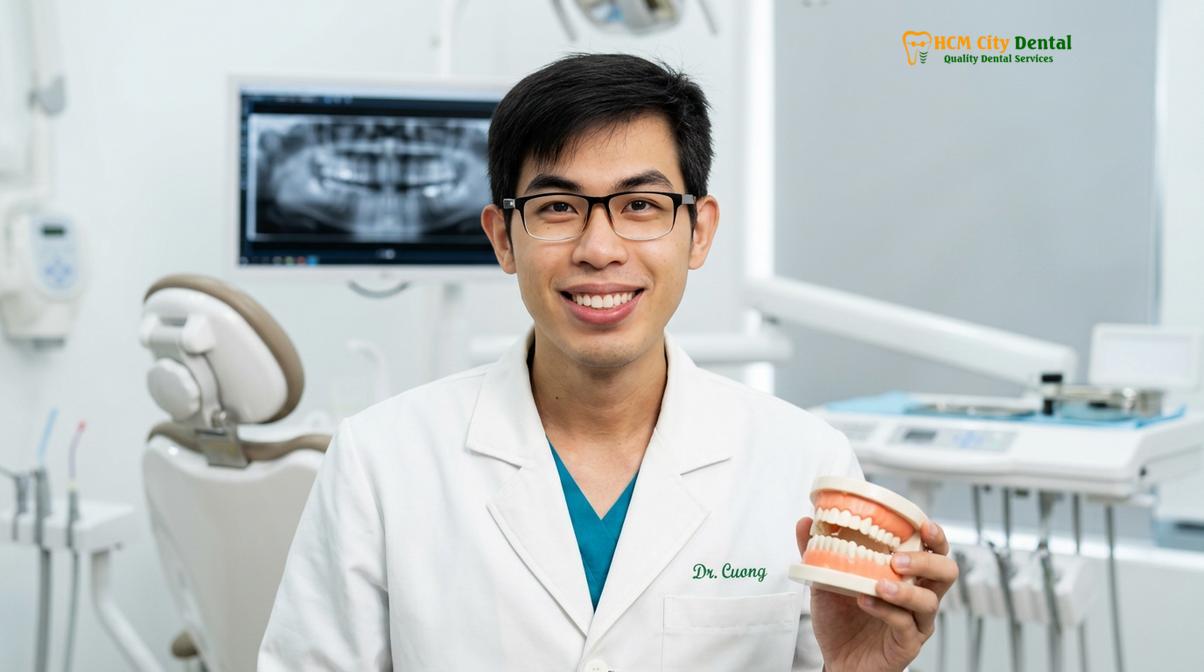
A 45-year-old patient presented to HCMC Dental Clinic in Ho Chi Minh City with generalized gingival bleeding and localized 5mm periodontal pockets around two posterior dental implants. Traditional flossing was proving difficult due to limited dexterity. Dr. Nguyen Van Cuong recommended integrating a daily water flosser regimen alongside professional maintenance. Within six weeks, the patient exhibited a dramatic reduction in bleeding on probing (BOP) and improved peri-implant tissue tone, highlighting the efficacy of hydrokinetic flushing in complex restorative cases.
However, it is vital to acknowledge what a water flosser cannot do. While it excels at flushing loose debris and disrupting newly forming biofilm, it lacks the sheer mechanical friction required to remove mature, highly adherent plaque. Therefore, dental professionals rarely recommend abandoning string floss entirely; rather, the two tools should be viewed as synergistic.
Interdental Brushes
For patients with clinical attachment loss or wider interdental spaces, interdental brushes often outperform both string floss and water flossers in plaque removal efficiency.
When discussing comprehensive interdental cleaning methods, interdental brushes (often referred to as interproximal brushes or TePe brushes) are frequently underutilized by patients but highly revered by periodontists. These small, cylindrical or conical brushes are designed to be inserted directly into the embrasure spaces—the triangular gaps between teeth.
The anatomy of the interdental space is complex. The gingival tissue between two teeth forms a shape known as the “col,” a slight depression that is non-keratinized and highly susceptible to bacterial invasion. As patients age or experience mild periodontal attachment loss, the interdental papilla (the tip of the gum) may recede slightly, creating larger embrasure spaces (Type II or Type III embrasures). In these scenarios, string floss becomes highly inefficient, as it is too thin to sweep the broad surfaces of the adjacent teeth simultaneously.
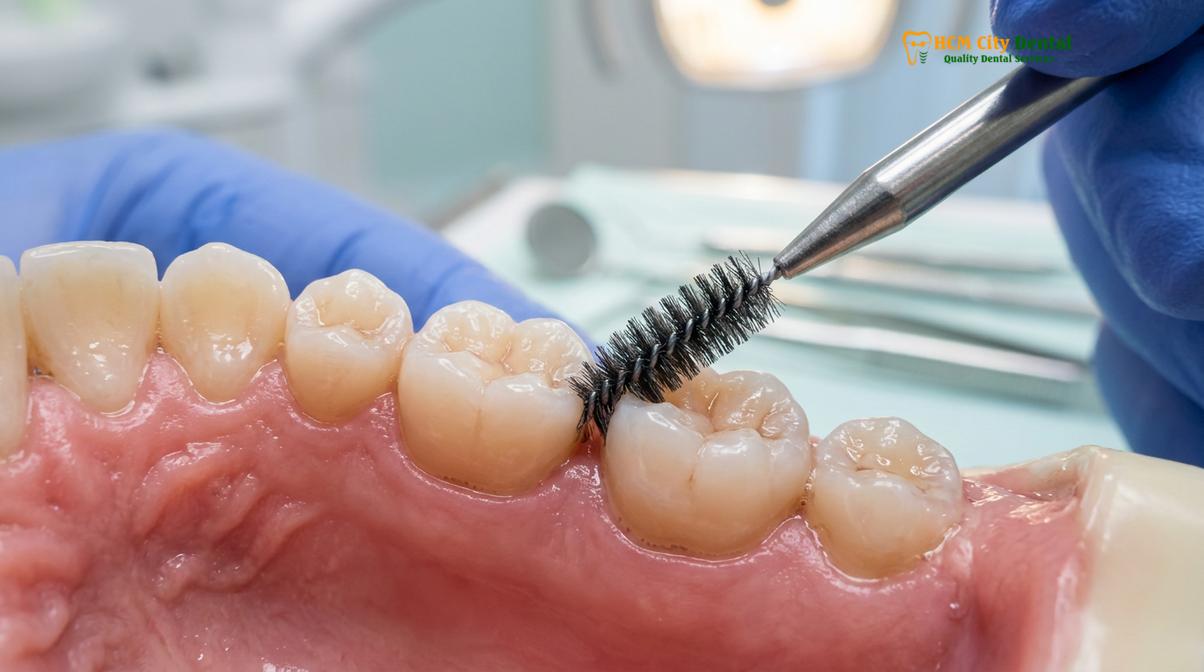
Interdental brushes solve this problem. The bristles expand to fill the entire embrasure space, providing 360-degree mechanical friction. Crucially, the bristles are flexible enough to adapt to the root concavities that string floss bridges over. Clinical studies consistently demonstrate that for open embrasure spaces, interdental brushes remove significantly more plaque than string floss[2]. Proper sizing is critical; the brush should fit snugly but slide through the space without requiring excessive force. Using a brush that is too small will fail to clean the surfaces adequately, while one that is too large can traumatize the gingival tissue.
Why Home Tools Can’t Replace Scaling
Regardless of how rigorous your home oral care routine is, mineralized calculus can only be safely and effectively removed through professional ultrasonic scaling and polishing.
A common misconception in the realm of home oral care vs dentist interventions is the belief that aggressive flossing or high-pressure water flossing can remove tartar. This is physiologically impossible. When dental plaque is left undisturbed for 24 to 72 hours, it begins to absorb calcium and phosphate ions from the saliva and gingival crevicular fluid. This process, known as mineralization, transforms the soft biofilm into a rock-hard substance called calculus (tartar). Once calculus forms, it bonds intimately with the microscopic irregularities of the tooth enamel and root cementum. No home tool possesses the necessary force to fracture this bond without causing severe damage to the tooth.
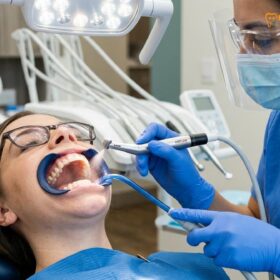
To address calculus, professional intervention is mandatory. At HCMC Dental Clinic, we utilize advanced clinical protocols to ensure thorough debridement while preserving tooth structure. A key component of our approach is the “Dual Scaler Advantage.” We employ both Piezoelectric and Magnetostrictive ultrasonic scalers to customize treatments based on the patient’s specific calculus burden and sensitivity levels.
- Piezoelectric Scalers (e.g., Acteon/Satelec): These devices utilize ceramic crystals that expand and contract when electrical energy is applied, producing a linear back-and-forth motion at the tip. Operating at frequencies up to 32 kHz, piezoelectric scalers generate less heat and require less water for cooling. This linear motion is highly precise and significantly gentler on the tooth surface, making it the preferred choice for patients with sensitive teeth, pediatric patients, and those with extensive restorative work.
- Magnetostrictive Scalers (e.g., Dentsply Cavitron): These scalers use a stack of ferromagnetic metal strips that change length in a magnetic field, creating an elliptical, figure-eight motion at the tip. Because all sides of the tip are active, magnetostrictive scalers are exceptionally efficient at breaking down heavy, tenacious calculus bridges and performing full mouth debridement in cases of severe periodontitis.
Dr. Nguyen Van Cuong frequently emphasizes the importance of selecting the appropriate ultrasonic power level and tip design to maximize calculus removal while ensuring strict enamel preservation safety. “The goal of modern scaling is not merely to scrape the tooth, but to utilize acoustic microstreaming and cavitation to disrupt the subgingival biofilm matrix with minimal abrasive force,” notes Dr. Cuong.
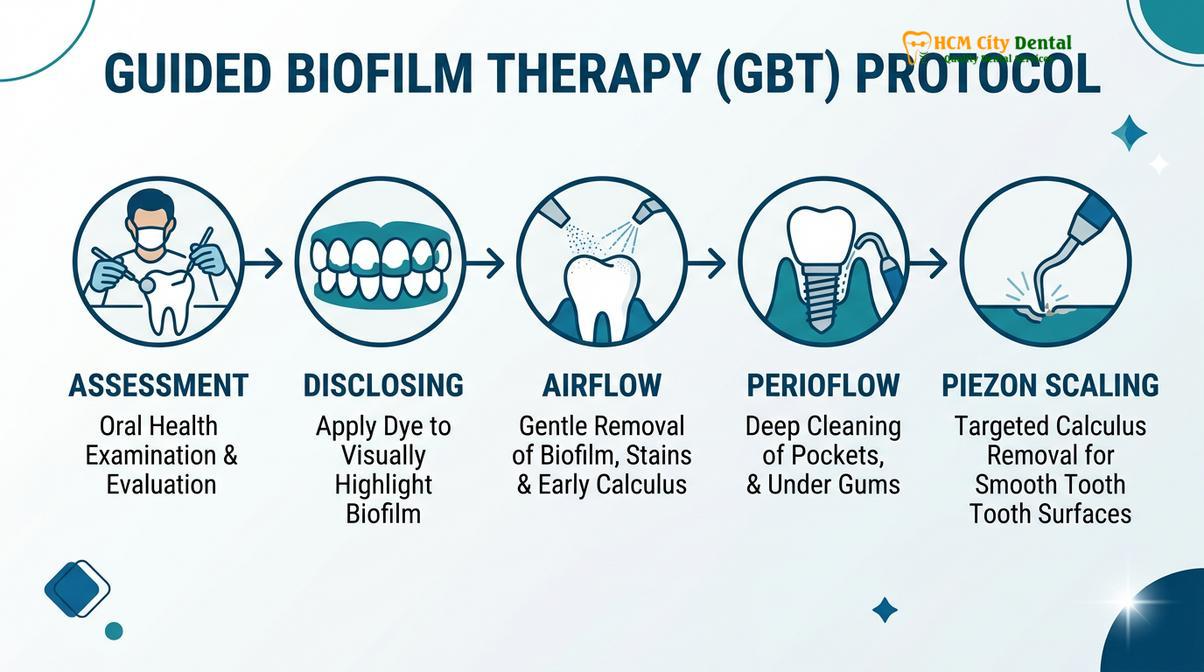
Beyond traditional ultrasonic scaling, the pinnacle of modern dental hygiene is Guided Biofilm Therapy (GBT). Developed by the Swiss company EMS, GBT is a systematic, 8-step protocol that revolutionizes professional prophylaxis. Instead of relying primarily on sharp hand instruments, GBT utilizes Airflow technology. This system delivers a precisely controlled stream of warm water and ultra-fine erythritol powder (with a grain size of just 25μm). Erythritol is minimally abrasive, naturally sweet, and possesses antimicrobial properties. It safely and painlessly eradicates biofilm, fresh plaque, and extrinsic stains from enamel, dentin, soft tissues, titanium implants, crowns, and veneers without causing micro-scratches[3].
Clinical Warning: Avoid DIY Plaque Scrapers
Dental professionals strongly advise against purchasing metal plaque scrapers or “tartar removal kits” for home use. Without proper clinical training, tactile sensitivity, and direct visualization, using sharp metal instruments on your own teeth frequently results in irreversible enamel gouging, severe lacerations to the gingival attachment, and the introduction of bacteria deep into the periodontal pocket.
Understanding the investment in your oral health is important. According to the latest clinic fee schedule, the pricing structure for professional hygiene services is tiered based on the clinical complexity of the case:
- Standard Ultrasonic Scaling & Polishing: 500,000 to 800,000 VND (~$20 to $32 USD). (Walk-in rate: 800,000 to 1,300,000 VND).
- Airflow Prophylaxis / Guided Biofilm Therapy (GBT): 1,500,000 to 2,000,000 VND (~$60 to $80 USD). (Walk-in rate: 2,500,000 to 3,300,000 VND).
- Scaling & Root Planing (SRP deep cleaning per quadrant): 1,000,000 to 1,500,000 VND (~$40 to $60 USD). (Walk-in rate: 1,600,000 to 2,500,000 VND).
- Full Mouth Debridement (Heavy Tartar Removal): 2,000,000 to 3,000,000 VND (~$80 to $120 USD). (Walk-in rate: 3,300,000 to 5,000,000 VND).
Note: Patients who book their appointment in advance via WhatsApp are eligible for a -40% booking discount on the walk-in rates.
For a complete overview of our hygiene services, we encourage patients to explore our comprehensive professional dental hygiene treatments to determine which protocol best suits their clinical needs.
The Complete Daily Protocol
Achieving optimal periodontal health requires a strategic sequencing of interdental cleaning, brushing, and targeted mouth rinses to maximize fluoride retention and biofilm disruption.
To bridge the gap between professional visits, patients must establish a scientifically sound daily oral care routine. The sequence in which you use your tools matters significantly. Clinical guidelines recommend performing interdental cleaning (flossing or water flossing) before brushing. By dislodging impacted food and disrupting the interproximal biofilm first, you clear the pathways between the teeth. When you subsequently brush, the fluoride from your toothpaste can penetrate deeply into these newly cleaned embrasure spaces, enhancing enamel remineralization and providing superior protection against interproximal caries.
A highly effective daily protocol involves a hybrid approach. In the morning, when time is often limited, a water flosser provides a rapid, effective flush of the gingival sulcus, stimulating blood flow and removing overnight bacterial accumulation. In the evening, a more meticulous routine is required. Patients should utilize string floss or interdental brushes to mechanically scrape away the sticky plaque that has adhered to the teeth throughout the day, followed by a thorough two-minute brushing session using the modified Bass technique (angling the bristles at 45 degrees toward the gumline)[4]. After brushing, spit out the excess toothpaste but do not rinse with water; leaving the residual fluoride varnish on the teeth overnight maximizes its therapeutic effect.
| Cleaning Method | Primary Mechanism | Best Suited For | Clinical Limitation |
|---|---|---|---|
| String Floss | Mechanical scraping | Tight contacts, healthy gums, smooth enamel | Cannot reach deep pockets; misses root concavities |
| Water Flosser | Hydrokinetic flushing | Implants, braces, deep pockets, sensitive gums | Less effective at removing highly adherent, sticky plaque |
| Interdental Brushes | 360-degree friction | Open embrasures, root concavities, mild recession | Cannot fit into very tight, healthy contact points |
| Ultrasonic Scaling | Acoustic microstreaming | Hardened calculus, subgingival debridement | Requires professional administration in a clinical setting |
“The ultimate goal of home oral hygiene is not sterilization, but rather the consistent disruption of the biofilm matrix to maintain a state of symbiosis within the oral microbiome, preventing the shift toward pathogenic, disease-causing bacteria.”
When to See a Doctor
While diligent home care is the cornerstone of oral health, certain clinical signs indicate that the bacterial load has overwhelmed your daily efforts and professional periodontal intervention is required. You should schedule a clinical examination if you experience persistent gingival bleeding when brushing or flossing. Healthy gums do not bleed; bleeding is a definitive sign of plaque-induced gingivitis or advancing periodontitis.
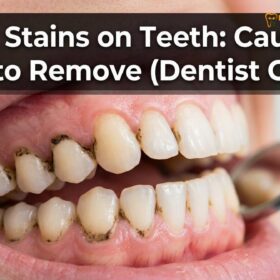
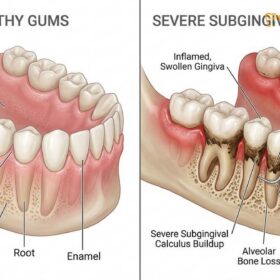
Additionally, if you notice chronic halitosis (bad breath) that does not resolve with brushing, visible yellow or brown calculus deposits along the gumline, gingival recession, or a feeling that your teeth are shifting or becoming mobile, immediate evaluation is necessary. These are symptoms of active periodontal disease, which involves the destruction of the alveolar bone supporting the teeth. During a consultation, a dentist will measure your periodontal pocket depths. Pockets exceeding 3 millimeters indicate clinical attachment loss that cannot be managed with home tools alone, necessitating professional scaling and root planing to halt disease progression[5].
Frequently Asked Questions
Is a water flosser better than regular floss?
A water flosser is not strictly better, but rather complementary to regular floss. While string floss excels at physically scraping sticky plaque from the tooth surface, a water flosser is superior at flushing out loose debris and bacteria from deep periodontal pockets. Dental professionals often recommend using both for optimal interdental hygiene, utilizing the mechanical action of string and the flushing action of water.
Can a water flosser remove hardened tartar?
No home oral care device, including a water flosser, can remove hardened tartar (calculus). Once plaque mineralizes into calculus, it bonds tightly to the enamel and root surfaces. Only professional ultrasonic scaling performed by a dental hygienist or dentist can safely and effectively fracture and remove these hardened deposits without damaging the underlying tooth structure.
How often should I use interdental brushes?
You should use interdental brushes at least once daily, ideally during your evening oral hygiene routine. For patients with wider interdental spaces, clinical attachment loss, or orthodontic appliances, using them after every meal can significantly reduce plaque accumulation and prevent localized gingival inflammation. Ensure you are using the correct size to avoid tissue trauma.
Should I use a water flosser before or after brushing?
Clinical guidelines recommend using a water flosser before brushing your teeth. Flushing the interdental spaces first removes impacted food and loosens biofilm, allowing the fluoride from your toothpaste to penetrate deeper between the teeth during brushing, thereby enhancing enamel remineralization and cavity prevention.
Does professional scaling damage tooth enamel?
When performed correctly by a trained professional using modern equipment, scaling does not damage tooth enamel. Advanced technologies like piezoelectric scalers and Guided Biofilm Therapy (GBT) utilize controlled microscopic vibrations and low-abrasive powders to selectively target calculus and biofilm while preserving the underlying healthy enamel and restorative materials.
References
- Journal of Clinical Periodontology. Efficacy of water flossing on gingival inflammation. (2021).
- International Journal of Dental Hygiene. Mechanical plaque removal: string floss vs interdental brushes. (2020).
- Journal of Periodontology. Subgingival biofilm disruption using hydraulic forces. (2019).
- Clinical Oral Investigations. Erythritol air-polishing powder safety and efficacy in Guided Biofilm Therapy. (2022).
- Journal of the American Dental Association. Professional cleaning recall intervals and periodontal maintenance. (2018).