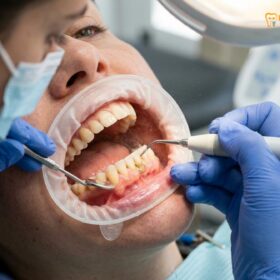
Erythritol powder teeth cleaning is an advanced, minimally invasive air-polishing technique that utilizes ultra-fine, low-abrasive particles to safely eradicate biofilm, plaque, and surface stains. Unlike traditional scaling, it preserves enamel integrity, neutralizes cariogenic bacteria, and ensures a highly comfortable, pain-free prophylaxis experience for patients.
Clinical Summary:
Erythritol powder represents a paradigm shift in modern periodontal maintenance and prophylaxis. Integrated seamlessly into the Guided Biofilm Therapy (GBT) protocol, this 14-to-25-micron powder effectively disrupts both subgingival and supragingival biofilm without inflicting micro-abrasions on hard or soft tissues. Dr. Nguyen Van Cuong emphasizes that its inherent anticariogenic and antibacterial properties significantly reduce the proliferation of periodontal pathogens such as Porphyromonas gingivalis. This sophisticated method is particularly beneficial for patients with titanium dental implants, delicate orthodontic appliances, or severe dentin hypersensitivity, offering a superior, evidence-based alternative to traditional abrasive prophy pastes and aggressive mechanical debridement.
Key Takeaways:
- Ultra-fine 25μm particle size ensures the strict preservation of enamel, dentin, and cementum.
- Inherent anticariogenic properties actively inhibit the metabolic pathways of cavity-causing bacteria.
- Clinically proven to be safe for use on titanium implants, porcelain veneers, and orthodontic brackets.
- Effectively eradicates subgingival biofilm in periodontal pockets reaching up to 9mm in depth.
- Significantly reduces patient discomfort and thermal sensitivity compared to traditional ultrasonic scaling.
What is Erythritol?
Erythritol is a naturally occurring, non-caloric sugar alcohol utilized in modern dental air-polishing to safely dissolve biofilm while actively inhibiting the proliferation of cavity-causing bacteria.
In the realm of advanced dental prophylaxis, erythritol is recognized as a highly effective, low-abrasive dental powder. Biochemically, it is a four-carbon sugar alcohol (polyol) that occurs naturally in various fruits, algae, and fungi. While it is widely known in the food industry as a non-caloric sweetener, its application in dentistry has revolutionized the way clinicians approach biofilm management. The physical properties of erythritol—specifically its ultra-fine grain size and moderate hardness—make it an ideal medium for kinetic energy-based cleaning systems.
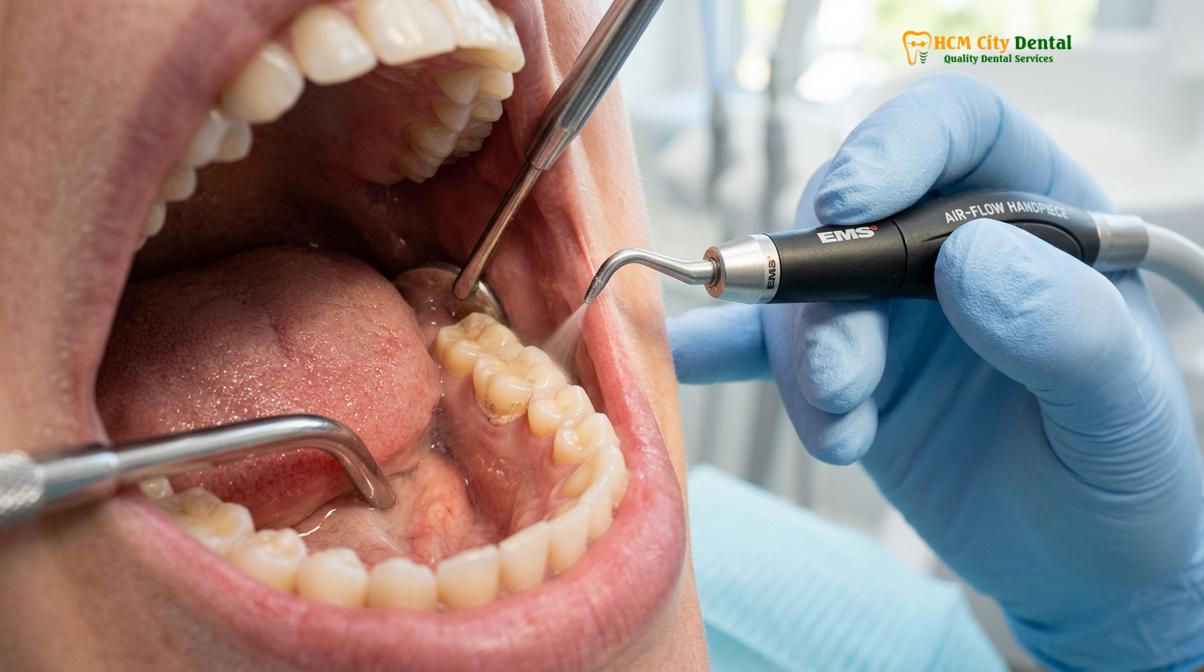
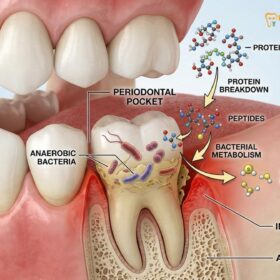
Beyond its mechanical ability to sweep away plaque, erythritol possesses profound biochemical advantages. It exhibits robust anticariogenic properties, functioning similarly to xylitol but with enhanced efficacy in certain oral environments. Cariogenic bacteria, particularly Streptococcus mutans, are incapable of metabolizing erythritol. When these bacteria ingest the polyol, it interrupts their glycolytic pathways, effectively starving them and preventing the production of the lactic acid that leads to enamel demineralization[1]. Furthermore, clinical studies have demonstrated that erythritol alters the microstructure and metabolic profile of complex biofilms, making it difficult for pathogenic species to adhere to the pellicle layer of the tooth.
Additionally, erythritol exhibits notable antioxidant properties. In the presence of gingival inflammation, it acts as a scavenger of free radicals, helping to mitigate oxidative stress within the periodontal tissues. This dual action—mechanical disruption of the biofilm matrix combined with biochemical inhibition of pathogens—cements the role of swiss EMS powder and similar erythritol formulations as the gold standard in modern preventive dentistry.
vs. Sodium Bicarbonate
While sodium bicarbonate is highly effective for heavy supragingival stain removal, erythritol offers a significantly lower abrasivity profile, making it the preferred choice for comprehensive subgingival and supragingival biofilm eradication.
For decades, the standard powder used in dental air-polishing was sodium bicarbonate. While highly effective at obliterating stubborn extrinsic stains caused by coffee, tea, and tobacco, sodium bicarbonate presents several clinical limitations. The primary concern is its abrasivity. With an average particle size of 65 microns, sodium bicarbonate is relatively large and sharp. Prolonged or improper use can lead to iatrogenic damage, including the scratching of intact enamel, the erosion of exposed root dentin, and the dulling of aesthetic restorative materials like composite resins and porcelain veneers.
When evaluating erythritol vs sodium bicarbonate, the clinical consensus heavily favors erythritol for routine maintenance. Erythritol particles are significantly smaller (typically ranging from 14 to 25 microns) and possess a smoother, more spherical morphology. This allows the powder to be safely directed not only at the clinical crown but also deep into the subgingival sulcus without traumatizing the delicate junctional epithelium or scratching the root cementum[2].
| Clinical Parameter | Erythritol Powder | Sodium Bicarbonate Powder |
|---|---|---|
| Average Particle Size | 14 – 25 μm | 40 – 65 μm |
| Primary Indication | Subgingival & Supragingival biofilm removal | Heavy supragingival stain removal only |
| Safety on Implants/Veneers | Highly Safe (No surface alteration) | Contraindicated (Causes micro-scratches) |
| Taste Profile | Sweet, pleasant, highly tolerated | Salty, often poorly tolerated by patients |
| Subgingival Use | Safe up to 9mm pocket depth | Strictly contraindicated subgingivally |
Furthermore, the taste profile plays a crucial role in patient compliance. Sodium bicarbonate has a distinctly salty, alkaline taste that many patients find objectionable, sometimes triggering a gag reflex or leaving an unpleasant aftertaste. Conversely, erythritol is naturally sweet, transforming the clinical procedure into a much more pleasant, spa-like experience.
25μm vs 65μm Grain Size
The ultra-fine 25μm grain size of erythritol powder prevents micro-scratches on the tooth surface, whereas the larger 65μm particles of traditional powders can inadvertently abrade enamel and exposed root dentin over time.
The physics of air-polishing relies on kinetic energy. When a mixture of air, water, and powder is propelled against the tooth surface, the impact energy of the particles disrupts the biofilm and lifts away stains. The formula for kinetic energy ($E = \\frac{1}{2}mv^2$) dictates that the mass of the particle directly influences the force of impact. A 65-micron sodium bicarbonate particle carries significantly more mass than a 25-micron erythritol particle. Consequently, the larger particle strikes the tooth with greater force, increasing the risk of surface abrasion.
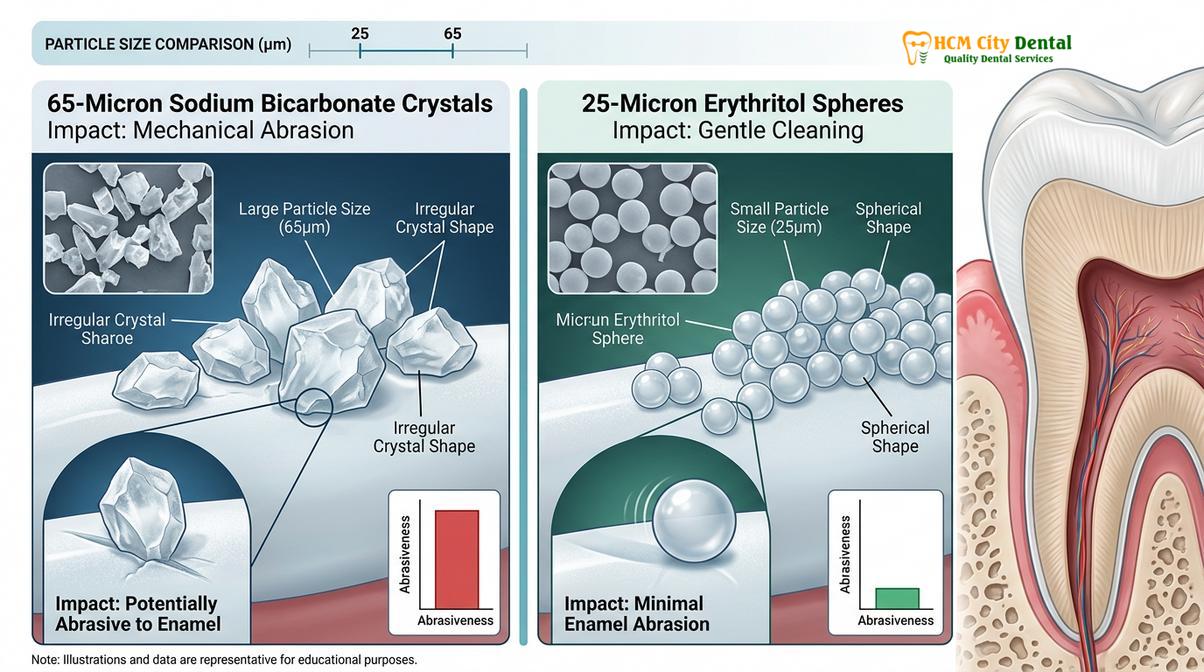
Enamel, while being the hardest substance in the human body, is not impervious to repetitive micro-trauma. Over years of bi-annual cleanings, the cumulative effect of highly abrasive powders can lead to a loss of the highly mineralized surface layer, resulting in a dull appearance and increased susceptibility to extrinsic staining. The situation is even more critical for exposed root surfaces. Dentin and cementum are significantly softer than enamel; subjecting them to 65-micron particles can cause rapid structural loss and severe dentin hypersensitivity.
“The transition to ultra-fine 14-to-25-micron powders represents a critical evolution in tissue preservation. By utilizing particles that are smaller than the width of a human hair, we achieve maximum biofilm eradication while maintaining the pristine micro-topography of the natural tooth structure.”
Erythritol’s 25μm grain size strikes the perfect balance. It is small enough to be entirely non-abrasive to hard tissues, yet its specific gravity and hardness are sufficient to efficiently shear away the sticky extracellular polymeric substance (EPS) matrix of the biofilm. This precise calibration ensures that the tooth is left perfectly clean and biologically acceptable for the reattachment of healthy gingival fibers[3].
Safety on Implants & Braces
Erythritol air-polishing is the gold standard for cleaning around titanium implants and orthodontic brackets, as it thoroughly removes plaque without altering the delicate surface topography of these dental materials.
The maintenance of dental implants requires a highly specialized approach. Titanium implants feature a micro-roughened surface (often SLA – Sandblasted, Large-grit, Acid-etched) designed to promote osseointegration. However, if the implant threads become exposed to the oral cavity, this same micro-roughness becomes a highly retentive harbor for pathogenic biofilm, leading to peri-implant mucositis and, ultimately, peri-implantitis. Traditional metal scalers and abrasive prophy pastes are strictly contraindicated for implants, as they gouge the titanium, creating new macroscopic grooves where bacteria can thrive.
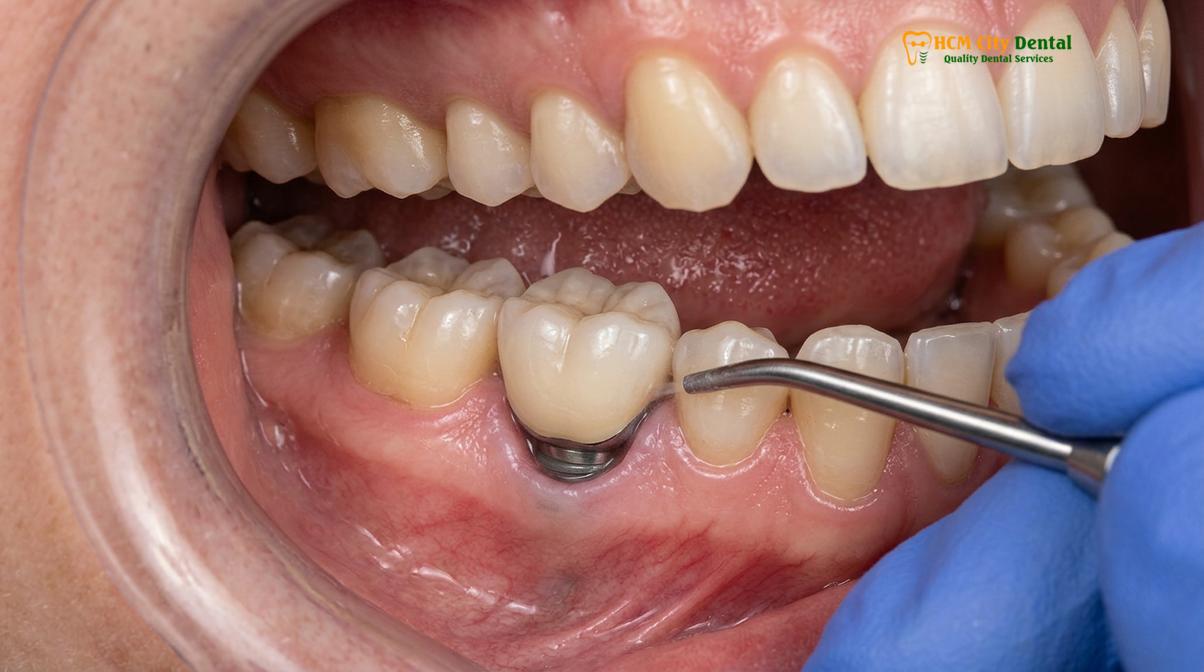
Erythritol powder is clinically proven to be safe for titanium surfaces. The ultra-fine particles penetrate the microscopic pores of the implant surface, flushing out the biofilm without altering the titanium oxide layer. This ensures that the implant remains biocompatible and resistant to rapid recolonization.
Clinical Case Review: Implant Maintenance
A 55-year-old patient presented to HCMC Dental Clinic in Ho Chi Minh City for routine maintenance of a full-arch implant-supported prosthesis. Traditional scaling was avoided to protect the titanium abutments. Utilizing the Guided Biofilm Therapy protocol with erythritol powder, the clinical team successfully eradicated all subgingival biofilm around the implants in under 30 minutes. The patient reported zero discomfort, and follow-up probing revealed a complete resolution of localized peri-implant mucosal inflammation.
Similarly, orthodontic patients face immense challenges in maintaining oral hygiene. The intricate architecture of brackets, wires, and ligatures creates countless stagnation areas for plaque. Traditional brushing and rubber-cup polishing often fail to clean the critical junction between the bracket base and the enamel, leading to decalcification and the formation of unsightly “white spot lesions.” Erythritol air-polishing effortlessly navigates around these complex appliances, neutralizing the acidic biofilm and preserving the integrity of the enamel throughout the duration of the orthodontic treatment.
Patient Comfort
By utilizing warm water and ultra-fine powder, erythritol-based cleaning eliminates the sharp scraping sensations and cold-water sensitivity typically associated with conventional periodontal debridement.
Fear of pain is one of the primary barriers to regular dental attendance. Traditional scaling and root planing, while effective, often involve the uncomfortable scraping of metal instruments against the roots, accompanied by the shocking sensation of cold water from the ultrasonic scaler. For patients with gingival recession or dentin hypersensitivity, this experience can be excruciating.
Erythritol powder teeth cleaning fundamentally alters the patient experience. The procedure utilizes a precisely regulated stream of air, powder, and water heated to a comfortable 40°C (104°F). This warm water irrigation completely neutralizes thermal shock. Furthermore, because the powder removes the biofilm kinetically rather than mechanically, there is no friction, vibration, or scraping against the tooth surface.
“Patient compliance is the cornerstone of successful periodontal therapy. When we remove the pain and anxiety from the hygiene appointment, patients no longer delay their recall visits, allowing us to intercept disease at its earliest, most manageable stages.”
Dr. Nguyen Van Cuong frequently notes that the implementation of this technology has dramatically improved patient retention. The sensation is often described by patients as a gentle, warm massage for the gums—a true “dental spa” experience. By minimizing the need for heavy hand instrumentation, the procedure also significantly reduces post-operative gingival soreness, allowing patients to resume their normal dietary and oral hygiene routines immediately[4].
The Guided Biofilm Therapy (GBT) Protocol & Dual Scaler Advantage
The GBT protocol combines erythritol air-polishing with advanced dual-scaler ultrasonic technology to provide a systematic, minimally invasive, and highly customized approach to full-mouth debridement.
At the forefront of modern preventive care is the Guided Biofilm Therapy (GBT) protocol, developed by Swiss EMS. This systematic, eight-step approach ensures that every hygiene appointment is thorough, predictable, and tailored to the patient’s specific clinical needs.
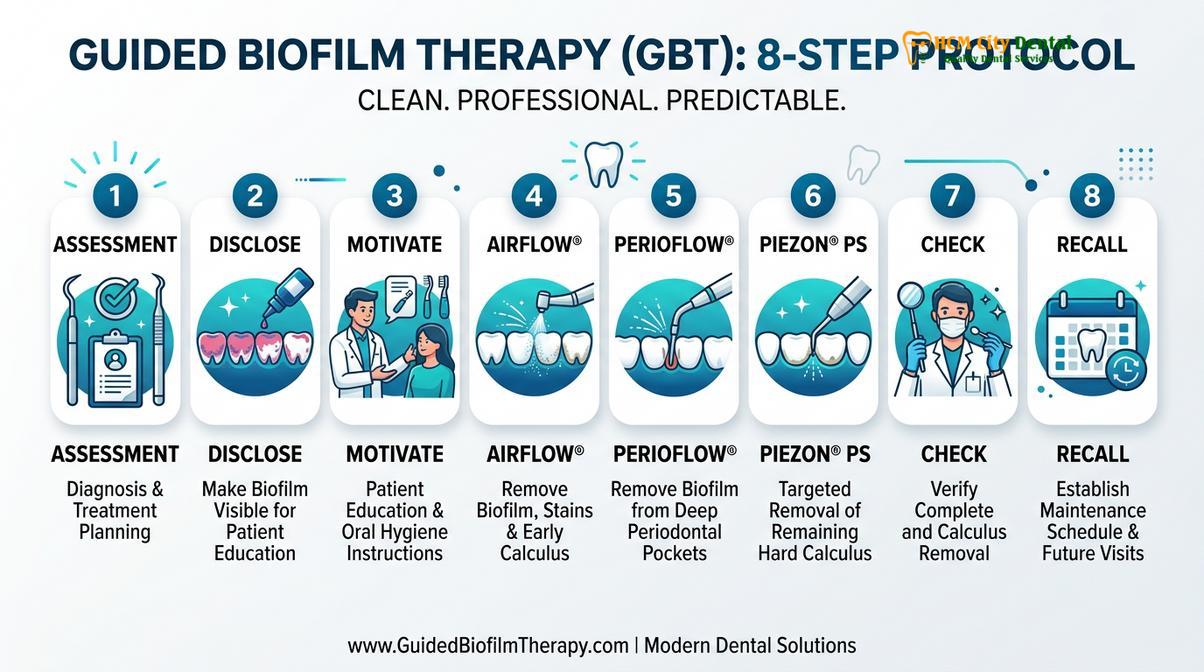
The eight steps of the GBT protocol include:
- Assess: Comprehensive clinical examination, probing, and risk assessment.
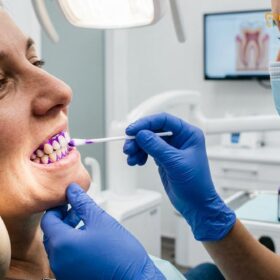
- Disclose: Application of a harmless dye to make the invisible biofilm visible, guiding the clinician’s targeted removal.
- Motivate: Utilizing the disclosed plaque to educate the patient and customize their home-care routine.
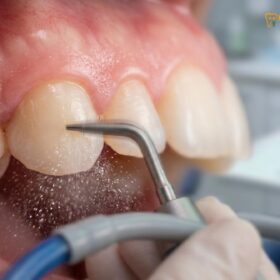
- AirFlow: Removal of supragingival biofilm, early calculus, and stains using erythritol powder.
- PerioFlow: Safe subgingival debridement in deep periodontal pockets using specialized flexible nozzles.
- Piezon: Targeted removal of remaining hard, calcified calculus using intelligent ultrasonic technology.
- Check: Final quality control to ensure all deposits are removed and caries are diagnosed.
- Recall: Scheduling the next appointment based on the patient’s individualized risk profile.
To complement the GBT protocol, HCMC Dental Clinic employs a sophisticated Dual Scaler Advantage. Recognizing that no single tool is perfect for every clinical scenario, the clinic utilizes BOTH Piezoelectric and Magnetostrictive ultrasonic scalers to customize treatments:
- Piezoelectric Scalers (e.g., Acteon/Satelec): These devices utilize a linear back-and-forth motion and generate significantly lower heat. Operating at frequencies up to 32 kHz, they are exceptionally gentle and are the preferred modality for patients with sensitive teeth, children, and those undergoing orthodontic treatment.
- Magnetostrictive Scalers (e.g., Dentsply Cavitron): These scalers utilize an elliptical motion, meaning all sides of the tip are active. This multi-directional vibration is highly efficient and is ideal for breaking down heavy, tenacious calculus, performing deep subgingival tartar removal, and executing full mouth debridement in severe periodontal cases.
Clinical Warning: Equipment Compatibility
It is imperative that ultra-fine erythritol powder is only utilized in air-polishing devices specifically engineered for low-abrasive powders. Attempting to run erythritol through older, incompatible units designed for heavy sodium bicarbonate can result in severe clogging, inconsistent powder flow, and compromised clinical outcomes.
Understanding the financial investment in your oral health is crucial. According to the latest clinic fee schedule, the pricing structure for these advanced hygiene services is highly competitive, ensuring access to premium care:
- Standard Ultrasonic Scaling & Polishing: 500,000 to 800,000 VND (~$20 to $32 USD) (Walk-in: 800,000 to 1,300,000 VND).
- Airflow Prophylaxis / Guided Biofilm Therapy (GBT): 1,500,000 to 2,000,000 VND (~$60 to $80 USD) (Walk-in: 2,500,000 to 3,300,000 VND).
- Scaling & Root Planing (SRP deep cleaning per quadrant): 1,000,000 to 1,500,000 VND (~$40 to $60 USD) (Walk-in: 1,600,000 to 2,500,000 VND).
- Full Mouth Debridement (Heavy Tartar Removal): 2,000,000 to 3,000,000 VND (~$80 to $120 USD) (Walk-in: 3,300,000 to 5,000,000 VND).
Patients are highly encouraged to take advantage of the -40% WhatsApp booking discount to secure these advanced treatments at the most accessible rates. For a complete overview of our comprehensive professional dental hygiene services, we invite you to explore the specialized dental cleaning protocols available at our facility.
When to See a Doctor
While erythritol powder teeth cleaning is a highly safe and predictable preventive measure, it is essential to undergo a thorough clinical examination to determine the appropriate level of intervention. You should schedule a consultation with a periodontal specialist if you experience persistent bad breath (halitosis), spontaneous bleeding when brushing or flossing, visibly receding gums, or increased tooth mobility. These are classic signs of active periodontal disease that require immediate professional management.
Furthermore, patients who have recently received dental implants should establish a strict maintenance schedule to prevent peri-implant mucositis. While there are very few contraindications for erythritol air-polishing, patients with severe, end-stage respiratory conditions (such as advanced COPD) should inform their clinician, as the aerosol generated during the procedure may require specific high-volume evacuation protocols to ensure absolute respiratory comfort[5]. A personalized diagnostic assessment at HCMC Dental Clinic will ensure that your treatment plan is perfectly aligned with your unique physiological needs.
Frequently Asked Questions
Does erythritol powder taste bad?
No, erythritol powder has a naturally sweet, pleasant taste without any bitter or salty aftertaste. Because it is a naturally occurring sugar alcohol, it provides a highly comfortable sensory experience for patients during the air-polishing procedure, making it especially well-tolerated by children and individuals with strong gag reflexes.
Is airflow cleaning safe for gum tissue?
Yes, airflow cleaning using ultra-fine erythritol powder is exceptionally safe for delicate gingival tissues. The low-abrasive nature of the 14-to-25-micron particles ensures that biofilm is gently eradicated without causing soft tissue lacerations, epithelial damage, or the post-operative soreness frequently associated with aggressive mechanical instrumentation.
Can erythritol powder clean subgingivally?
Yes, erythritol powder is specifically indicated for subgingival debridement and can safely clean periodontal pockets up to 9mm deep when used with specialized subgingival nozzles. It effectively disrupts the pathogenic biofilm matrix beneath the gumline, significantly reducing periodontopathic bacteria without scratching the root cementum or dentin.
How often should I get an erythritol teeth cleaning?
For optimal periodontal maintenance, clinical guidelines generally recommend an erythritol-based cleaning every three to six months, depending on your individual risk profile. Patients with active periodontal disease, orthodontic appliances, or multiple dental implants may require more frequent recall visits to effectively manage biofilm accumulation and prevent inflammatory complications.
Will erythritol remove heavy calculus (tartar)?
No, erythritol powder is designed exclusively for the removal of unmineralized biofilm, early plaque, and surface stains. Heavy, calcified calculus (tartar) must be removed using advanced ultrasonic scalers—such as piezoelectric or magnetostrictive devices—prior to or immediately following the air-polishing phase of the comprehensive cleaning protocol.
References
- Journal of Clinical Periodontology. Guided Biofilm Therapy clinical efficacy. (2021).
- International Journal of Dental Hygiene. Ultrasonic scaling vs hand scaling. (2020).
- Journal of Periodontology. Scaling and root planing for periodontitis. (2019).
- Clinical Oral Investigations. Erythritol air-polishing powder safety. (2022).
- Journal of the American Dental Association. Professional cleaning recall intervals. (2018).