Navigating sleep apnea insurance coverage requires understanding that custom oral appliances are typically billed under medical, rather than dental, policies. Securing reimbursement depends on a formal diagnosis from a sleep physician and documented medical necessity for treating obstructive sleep apnea or CPAP intolerance.
Clinical Summary:
Securing reimbursement for mandibular advancement devices (MADs) involves strict clinical and administrative workflows. Because obstructive sleep apnea (OSA) is a medical condition, treatments are evaluated under medical insurance benefits. Dentists collaborate closely with sleep specialists, who provide the official diagnosis via polysomnography (PSG) or home sleep apnea testing (HSAT). Insurers require specific medical codes, letters of medical necessity, and often proof of CPAP intolerance for severe cases. At HCMC Dental Clinic, the process integrates intraoral digital scanning, precise titration, and comprehensive documentation to support international claims, ensuring patients receive medically appropriate, custom-fitted airway management devices.
Key Takeaways:
- Custom oral appliances for sleep apnea are generally covered by medical insurance, not standard dental plans.
- A formal diagnosis via a sleep study by a qualified sleep physician is a mandatory prerequisite for coverage.
- Dentists fabricate and titrate the custom devices but do not legally diagnose obstructive sleep apnea.
- Required documentation includes a written prescription, clinical notes, and specific ADA/CPT medical codes.
- International insurers often operate on a pay-and-claim basis, requiring official invoices and translated medical certificates.
Understanding how global insurers view Dental Sleep Medicine
Global health insurers classify sleep apnea as a medical condition, meaning custom oral appliances are evaluated under medical benefits and require strict proof of medical necessity rather than standard dental coverage criteria.
The intersection of dentistry and sleep medicine often creates confusion regarding insurance benefits. Because Obstructive Sleep Apnea (OSA) involves the cessation of breathing and subsequent oxygen desaturation, it is universally recognized as a systemic medical issue. Consequently, the devices used to treat it—even when fabricated by a dental professional—are classified as Durable Medical Equipment (DME) under medical insurance policies. Understanding this distinction is the first critical step in successfully navigating sleep apnea insurance coverage.
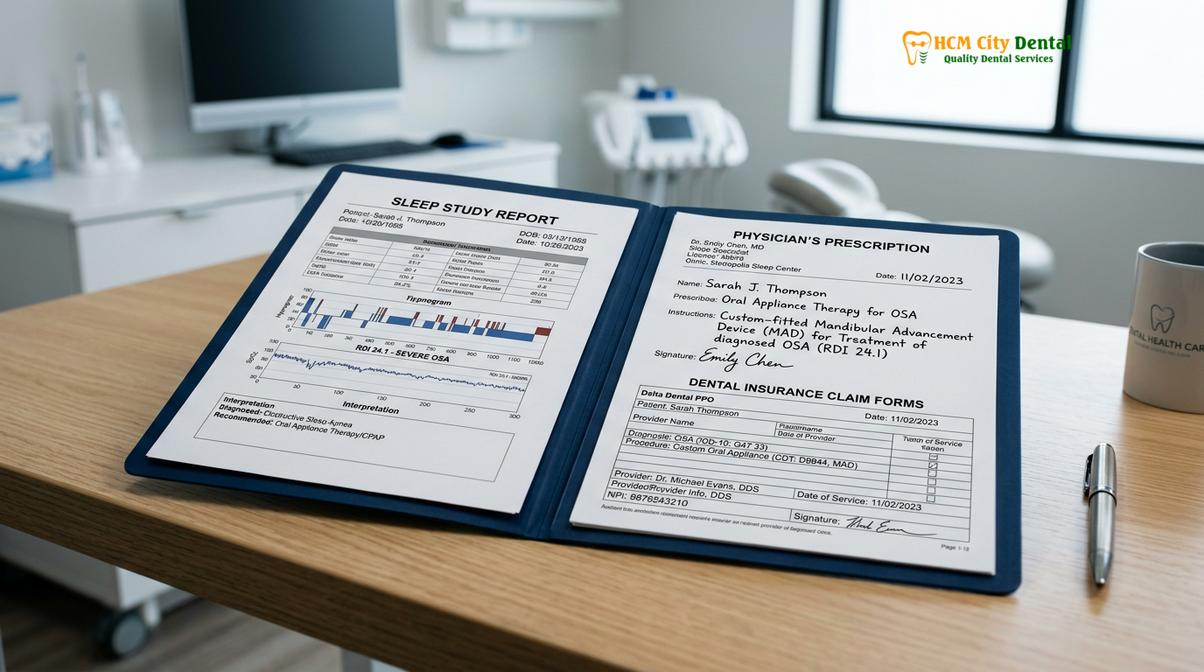
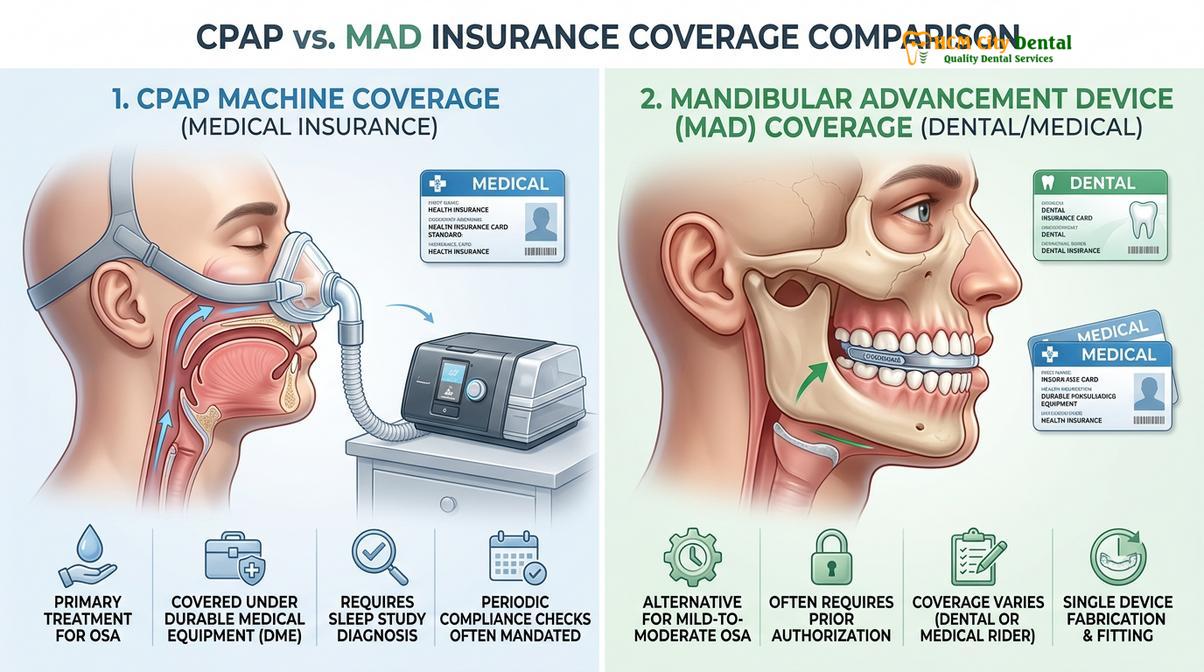
When evaluating a claim, insurers look closely at the Apnea-Hypopnea Index (AHI), which measures the number of breathing pauses per hour of sleep. Patients with mild to moderate OSA (an AHI between 5 and 30) are often immediately eligible for oral appliance therapy coverage. However, for patients with severe OSA (an AHI greater than 30), insurers typically require documented evidence that the patient has attempted Continuous Positive Airway Pressure (CPAP) therapy and found it intolerable before they will authorize coverage for a mandibular advancement device [1].
International insurance providers, such as Cigna International and Allianz Care, maintain specific clinical thresholds that must be met. They require comprehensive medical necessity documentation that outlines the patient’s symptoms, such as excessive daytime sleepiness, hypertension, or cognitive impairment, alongside the objective data from the sleep study. By treating the oral appliance as a medical intervention rather than a dental prosthetic, insurers ensure that the treatment directly addresses the physiological risks associated with airway obstruction.
The paperwork required: Written prescriptions, diagnoses, and ADA codes
Successful reimbursement relies on a comprehensive clinical dossier, including a sleep physician’s prescription, a formal sleep study report, and accurate cross-coding between dental and medical billing systems.
The administrative foundation of any successful insurance claim for sleep apnea treatment is a robust, meticulously prepared clinical dossier. It is a fundamental rule of dental sleep medicine that dentists do not diagnose sleep apnea. The diagnostic phase must be conducted by a board-certified sleep physician who interprets the results of a Polysomnography (PSG) or a Home Sleep Apnea Test (HSAT) [2]. Once the diagnosis is established, the physician issues a written prescription recommending oral appliance therapy.
“A Letter of Medical Necessity (LMN) is the bridge between the physician’s diagnosis and the dentist’s treatment. It must clearly articulate why a custom mandibular advancement device is the most appropriate clinical intervention for the patient’s specific airway anatomy and severity of obstruction.”
When the patient presents this prescription to the dental clinic, the administrative team must utilize specific coding to communicate the treatment to the insurer. While standard dental procedures use ADA codes (such as D9948 for a custom sleep apnea appliance), medical insurers often require HCPCS (Healthcare Common Procedure Coding System) codes, specifically E0486, which denotes a custom-fabricated mandibular advancement device. The clinical notes must explicitly state that the device is custom-made, adjustable, and designed to maintain airway patency during sleep.
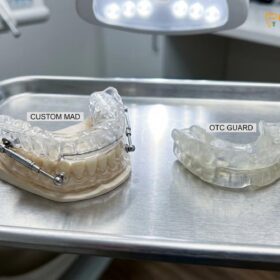
Furthermore, the documentation must detail the clinical workflow, including the initial consultation, the taking of intraoral digital scans, and the delivery and fitting of the device. Insurers scrutinize these records to ensure that the appliance is not a generic, over-the-counter “boil-and-bite” mouthguard, which is universally excluded from medical coverage due to a lack of clinical efficacy and potential risks to the temporomandibular joint.
direct billing vs. pay-and-claim reimbursement at HCMC Dental Clinic
While some international policies allow direct billing, most specialized sleep apnea treatments utilize a pay-and-claim model where patients submit clinic-provided documentation for reimbursement.
For expatriates and international patients seeking treatment, understanding the financial workflow is crucial. A direct billing dental clinic arrangement allows the healthcare provider to invoice the insurance company directly, minimizing the patient’s out-of-pocket expenses at the time of service. However, because sleep apnea appliances bridge the gap between medical and dental coverage, direct billing can sometimes be complex, requiring extensive pre-authorization.
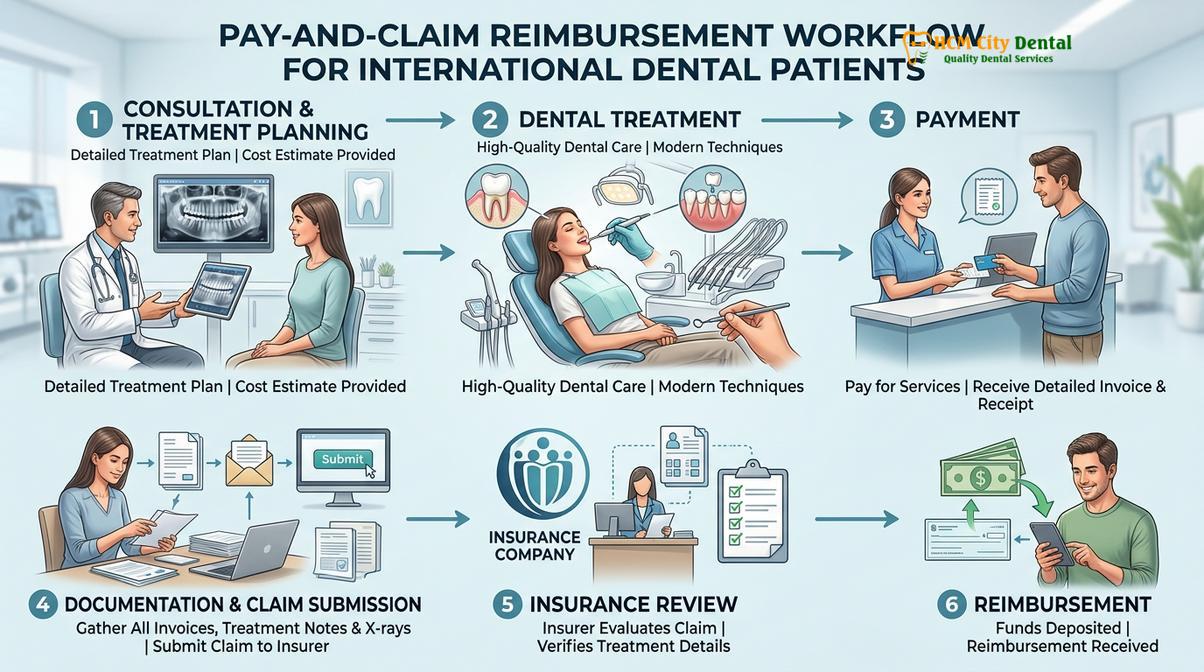
In many cases, patients utilize a pay-and-claim reimbursement model. Under this system, the patient pays for the custom device upfront and subsequently submits a claim to their insurer, such as Allianz Care or through specific LIGA reimbursement protocols for European expats. To facilitate this, the clinic must provide an impeccable set of documents that align perfectly with the insurer’s requirements [3].
| Reimbursement Model | Process Overview | Clinic Responsibility | Patient Responsibility |
|---|---|---|---|
| Direct Billing | Clinic bills the insurer directly; patient pays only the deductible or co-pay. | Submit pre-authorization, clinical notes, and codes directly to the insurer network. | Provide valid insurance card and pay any non-covered percentage. |
| Pay-and-Claim | Patient pays upfront and submits documents to the insurer for a refund. | Provide itemized receipts, red VAT invoices, and English medical certificates. | Submit the complete dossier to the insurance portal and track the claim. |
At HCMC Dental Clinic, the administrative team is highly experienced in supporting patients through the pay-and-claim process. By ensuring that all diagnostic codes, treatment descriptions, and financial records are perfectly aligned, the clinic significantly reduces the likelihood of claim rejection, allowing patients to focus on their treatment and recovery rather than administrative hurdles.
Requesting official red VAT invoices and medical certificates in English
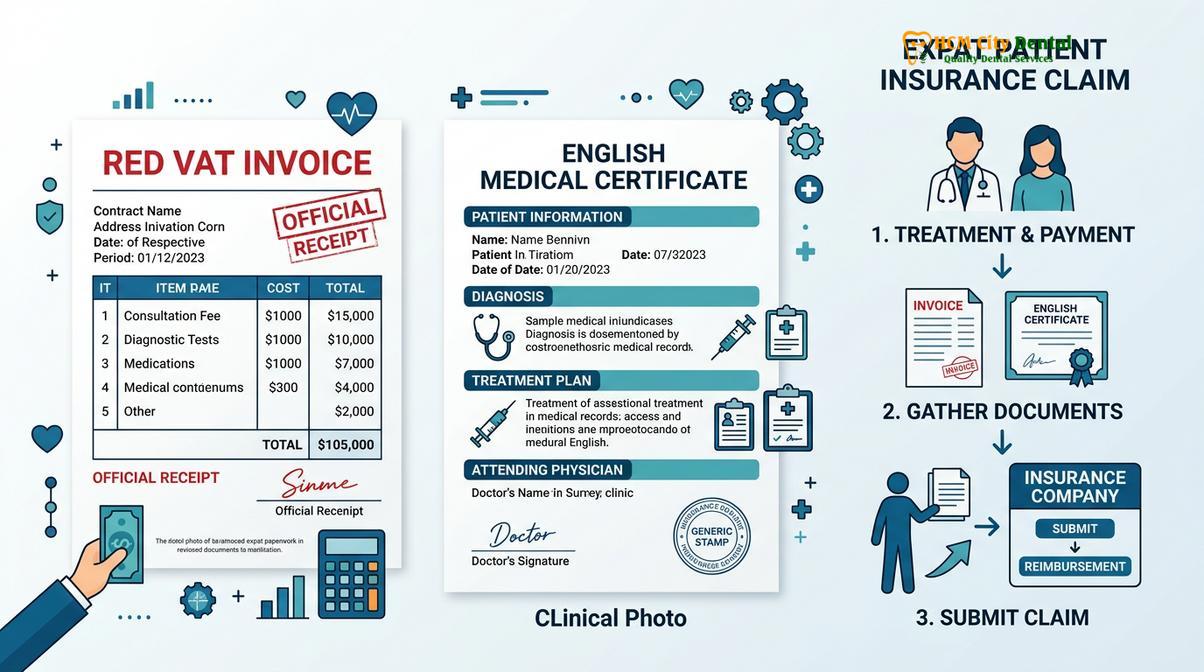
To process international claims seamlessly, patients must submit standardized financial and clinical documents, including government-issued red VAT invoices and translated medical certificates detailing the treatment.
For patients undergoing treatment in Vietnam, the financial documentation required by international insurers is highly specific. The most critical financial document is the official red VAT invoice (Hóa đơn đỏ). This government-regulated electronic invoice serves as undeniable proof of payment and is a mandatory requirement for almost all international health insurance claims. Without it, insurers will likely reject the reimbursement request, regardless of the clinical necessity of the treatment.
Clinical Case Study: Navigating International Claims
An expatriate patient visited HCMC Dental Clinic in Ho Chi Minh City presenting with a sleep physician’s prescription for moderate OSA. The patient opted for the Twinblock Snoring device. Following the intraoral digital scans and fitting, the clinic’s administrative team prepared a comprehensive dossier, including the clinical notes, the ADA/HCPCS cross-coding, an English medical certificate, and the official red VAT invoice. The patient submitted these documents to their international provider and successfully received full reimbursement under their durable medical equipment benefits within three weeks.
In addition to the financial invoice, a detailed medical certificate in English is essential. This certificate must outline the dates of service, the specific type of custom appliance fabricated, and a summary of the clinical workflow. It serves to validate that the treatment was provided by licensed professionals in a clinical setting, reinforcing the medical necessity documentation provided by the diagnosing sleep physician.
Clinical Workflows for Custom Oral Appliances
Fabricating an effective sleep appliance requires precise intraoral digital scans, thorough TMJ joint checks, and meticulous titration to ensure airway patency without compromising jaw health.
The clinical success of a mandibular advancement device relies heavily on the precision of its fabrication and the expertise of the attending dentist. Dr. Nguyen Van Cuong emphasizes that treating sleep apnea is not merely about pushing the lower jaw forward; it requires a deep understanding of craniofacial anatomy and biomechanics. Before any device is recommended, comprehensive TMJ joint checks are performed to ensure the patient’s temporomandibular joint can safely tolerate the advancement required to keep the airway open during sleep.

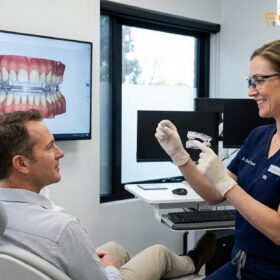
At HCMC Dental Clinic, the workflow begins with high-resolution intraoral digital scans, eliminating the need for uncomfortable traditional impressions. These scans provide a micron-accurate 3D model of the patient’s dentition, ensuring the final appliance fits securely without causing unwanted tooth movement or orthodontic shifting. Based on the patient’s specific anatomical needs and the severity of their airway obstruction, the clinic offers two primary custom devices:
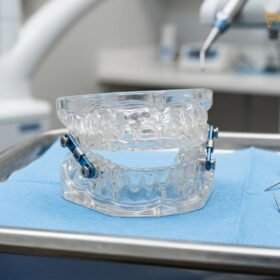
- Antisnoring Telescopic: This premium device utilizes a Herbst-style mechanism with lateral telescopic rods. It allows for both side-to-side and vertical jaw movement, which significantly minimizes TMJ stiffness and maximizes patient comfort during sleep. It is currently priced at 12,000,000 VND (approximately $480 USD with a WhatsApp booking discount).
- Twinblock Snoring: A robust two-piece device featuring interlocking 70-degree bite blocks that gently guide the jaw forward into the desired position. It is highly effective for primary snoring and mild OSA, priced at 11,000,000 VND (approximately $440 USD with a WhatsApp booking discount).
“The titration phase is the most critical aspect of oral appliance therapy. We advance the mandible in precise, millimeter increments over several weeks, carefully balancing maximum airway dilation with optimal joint comfort to achieve long-term compliance.”
Following the delivery of the appliance, Dr. Cuong oversees a meticulous titration calibration process. The patient returns for follow-up visits where the device is gradually adjusted. This step-by-step advancement ensures that the airway remains unobstructed while preventing muscle fatigue or joint pain [4]. Once the optimal position is reached, the patient is often referred back to their sleep physician for a follow-up sleep study to objectively verify the reduction in their AHI and the improvement in oxygen saturation levels [5]. For more information on these specialized treatments, patients can explore the clinic’s comprehensive guide on custom oral appliances for snoring and airway management.
When to See a Doctor
Patients experiencing severe daytime fatigue, loud disruptive snoring, or witnessed breathing pauses during sleep should seek immediate evaluation from a medical sleep specialist.
While custom oral appliances are highly effective, they are not suitable for every patient. It is crucial to recognize the clinical signs that necessitate a comprehensive medical evaluation. If you experience chronic morning headaches, extreme daytime sleepiness that impairs your ability to drive or work, or if your partner witnesses you gasping or choking during sleep, you must consult a sleep physician.
Important Clinical Consideration
Never attempt to treat suspected sleep apnea with over-the-counter “boil-and-bite” mouthguards. These generic devices lack the precise titration required to open the airway effectively and can cause severe, irreversible damage to your temporomandibular joint (TMJ) and alter your natural bite alignment. Always seek professional diagnosis and custom fabrication.
Furthermore, if you have been diagnosed with severe obstructive sleep apnea and are struggling with CPAP intolerance, do not simply abandon treatment. Untreated severe OSA significantly increases the risk of cardiovascular disease, hypertension, and stroke. Schedule a consultation to discuss whether a custom mandibular advancement device, properly documented for your insurance provider, might be a viable, medically sound alternative for your airway management.
Frequently Asked Questions
Does expat health insurance cover custom snoring devices?
Yes, many expat health insurance policies cover custom snoring devices if they are deemed medically necessary for treating diagnosed obstructive sleep apnea. Coverage typically requires a formal sleep study report, a physician’s prescription, and pre-authorization from your provider. Policies rarely cover devices intended solely to stop primary snoring without an underlying medical diagnosis of apnea.
What ADA medical code is used for mandibular advancement devices?
The standard ADA dental code for a custom sleep apnea appliance is D9948, though medical insurers often require cross-coding with HCPCS code E0486. Your clinic will provide the appropriate documentation detailing the custom fabrication of the mandibular advancement device, ensuring the billing aligns with medical durable equipment standards.
How can the clinic help me prepare my insurance claim?
The clinic assists by providing comprehensive clinical notes, intraoral scan records, official English medical certificates, and government-issued red VAT invoices. This complete dossier ensures your insurer has all the necessary evidence to process your pay-and-claim reimbursement efficiently, minimizing the risk of administrative rejection.
Can a dentist diagnose my sleep apnea for an insurance claim?
No, dentists are not legally permitted to diagnose sleep apnea. A formal diagnosis must be made by a qualified sleep physician using data from a polysomnography (PSG) or home sleep apnea test (HSAT) before a dentist can fabricate the appliance. The dentist’s role is strictly therapeutic, focusing on the design and titration of the device.
Are CPAP machines covered under the same policy as oral appliances?
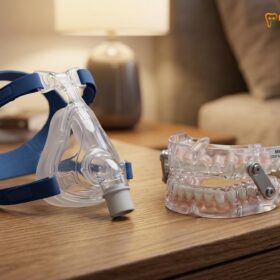
Yes, both CPAP machines and custom oral appliances fall under the durable medical equipment (DME) category of most health insurance policies. However, insurers often require patients with severe sleep apnea to attempt CPAP therapy before approving an oral appliance, requiring documented proof of CPAP intolerance to authorize the alternative treatment.
References
- Journal of Dental Sleep Medicine. Mandibular advancement device efficacy and insurance protocols. (2021).
- American Journal of Respiratory and Critical Care Medicine. CPAP vs oral appliances in clinical practice. (2019).
- Sleep and Breathing. Telescopic Herbst appliance TMJ safety and biomechanics. (2020).
- Journal of Clinical Sleep Medicine. HSAT diagnostic reliability for medical necessity. (2022).
- Journal of Oral Rehabilitation. Titration protocols in dental sleep medicine. (2018).