Navigating the hidden costs of orthodontics in Vietnam requires a thorough understanding of the complete clinical workflow. Beyond the advertised base price of brackets and archwires, patients must account for diagnostic imaging, preparatory extractions, emergency bracket replacements, and post-treatment retainers to ensure a truly transparent dental billing experience.
Clinical Summary:
Comprehensive orthodontic treatment planning must encompass all peripheral clinical fees to avoid patient frustration. An optimal treatment protocol should clearly outline the costs associated with cephalometric X-rays, digital 3D scans, periodontal scaling, and any necessary premolar extractions required for space creation. Furthermore, unforeseen expenses frequently arise from mid-treatment emergencies—such as debonded brackets—or the mandatory post-braces retention phase. By understanding the histological and biomechanical requirements of tooth movement, patients can better anticipate the full financial scope of their orthodontic journey and seek clinics that prioritize transparent, all-inclusive billing structures.
Key Takeaways:
- Diagnostic imaging, including panoramic and cephalometric X-rays, is often billed separately from the core braces package.
- Preparatory treatments like periodontal scaling and strategic tooth extractions are critical for clinical success but add to the initial cost.
- Emergency appointments for broken brackets or snapped wires may incur additional clinical fees due to the required chair time and materials.
- Post-treatment retainers (both removable and fixed) are a mandatory, lifelong investment rarely included in the active treatment quote.
- Seeking an all-inclusive treatment plan ensures financial predictability and continuous clinical care without unexpected interruptions.
Ensuring Financial Transparency in Orthodontics
Financial transparency in orthodontics means providing a comprehensive treatment plan that details every clinical phase, from initial diagnostics to final retention, preventing unexpected out-of-pocket expenses.
The decision to undergo orthodontic therapy is a significant commitment, both biologically and financially. For many international patients and expatriates, Vietnam presents an attractive destination for high-quality dental care at a fraction of Western prices. However, the allure of low advertised prices can sometimes obscure the true total cost of treatment. The phenomenon of hidden orthodontic fees is not unique to any single region, but it requires careful navigation when seeking care abroad. A base quote often covers only the active phase of treatment—specifically, the bonding of brackets, the insertion of archwires, and routine monthly adjustments. It frequently omits the essential preparatory, diagnostic, and retentive phases that are biologically mandatory for a successful outcome.
From a clinical perspective, tooth movement is a complex biomechanical process that involves the controlled induction of localized inflammation. Osteoclasts resorb bone on the pressure side of the periodontal ligament, while osteoblasts deposit new bone on the tension side. This delicate biological remodeling requires a pristine oral environment, precise diagnostic mapping, and long-term stabilization. When clinics separate the billing for these necessary phases, patients may experience “sticker shock” mid-treatment. Achieving transparent dental billing requires a paradigm shift where the clinician and patient discuss the entire lifecycle of the orthodontic intervention before a single bracket is placed. Studies in dental economics highlight that cost-effectiveness and financial transparency are directly linked to higher patient satisfaction and better clinical compliance [5].
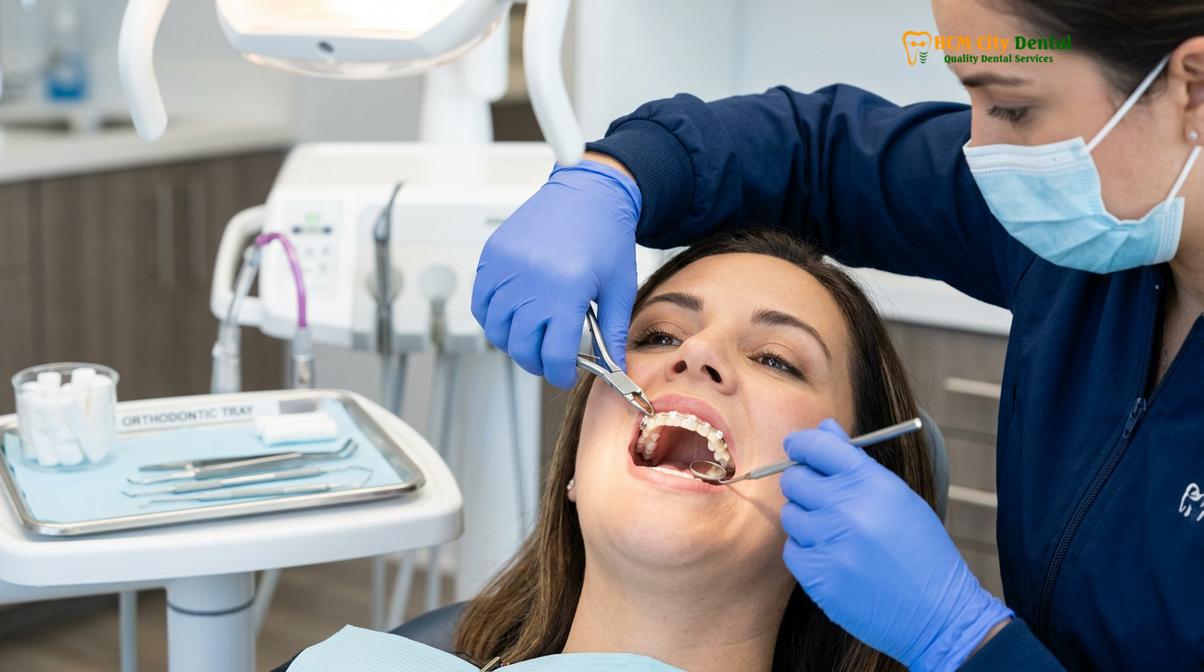
“Ethical orthodontic practice demands that we present the patient with a holistic view of their treatment journey. Financial surprises mid-treatment can compromise patient compliance, which is the cornerstone of successful biomechanical tooth movement and long-term stability.”
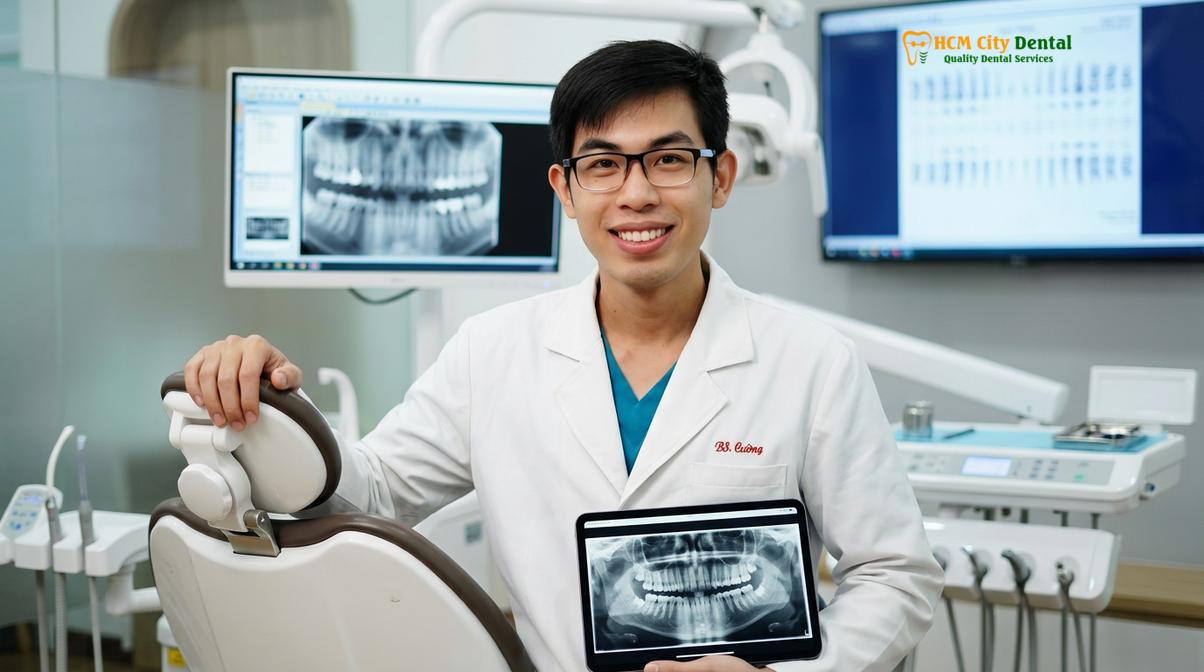
Dr. Nguyen Van Cuong, a leading specialist at HCMC Dental Clinic, emphasizes the importance of comprehensive treatment planning. He routinely educates patients on the full scope of biomechanical tooth movement, ensuring that no hidden fees disrupt their clinical journey. By fostering an environment of trust, Dr. Cuong helps patients navigate their Orthodontics tại HCMC Dental Clinic with confidence and clarity, prioritizing both aesthetic outcomes and financial predictability.
Diagnostics and Scanning Fees: X-Rays and iTero 3D Scans
Accurate orthodontic diagnosis relies on advanced imaging, meaning patients should verify if their initial quote covers panoramic X-rays, cephalometric analysis, and digital iTero 3D impressions.
The foundation of any successful orthodontic intervention is a precise and comprehensive diagnostic workup. Before any physical alterations are made to the dentition, the orthodontist must understand the underlying skeletal architecture, the angulation of the roots, and the spatial relationship between the maxilla and the mandible. This level of clinical insight cannot be achieved through a visual examination alone. It requires advanced radiographic imaging and precise anatomical modeling. Consequently, diagnostic fees are often the first “hidden” cost encountered by patients who assume that a consultation automatically includes all necessary imaging.
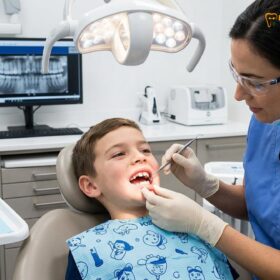
Standard orthodontic diagnostics typically require two specific types of radiographs: the Orthopantomogram (OPG or panoramic X-ray) and the Lateral Cephalogram. The OPG provides a two-dimensional overview of the entire maxillofacial region, allowing the clinician to assess root health, identify impacted wisdom teeth, and evaluate the temporomandibular joint (TMJ). The Lateral Cephalogram is arguably even more critical for orthodontics. It provides a profile view of the skull, enabling the orthodontist to perform cephalometric tracing. This tracing measures specific angles and distances between skeletal landmarks to determine whether the patient’s malocclusion is dental or skeletal. According to the Vietnam Odonto-Stomatology Association (VOSA), these standard diagnostic records are fundamental to patient safety and treatment efficacy [6].
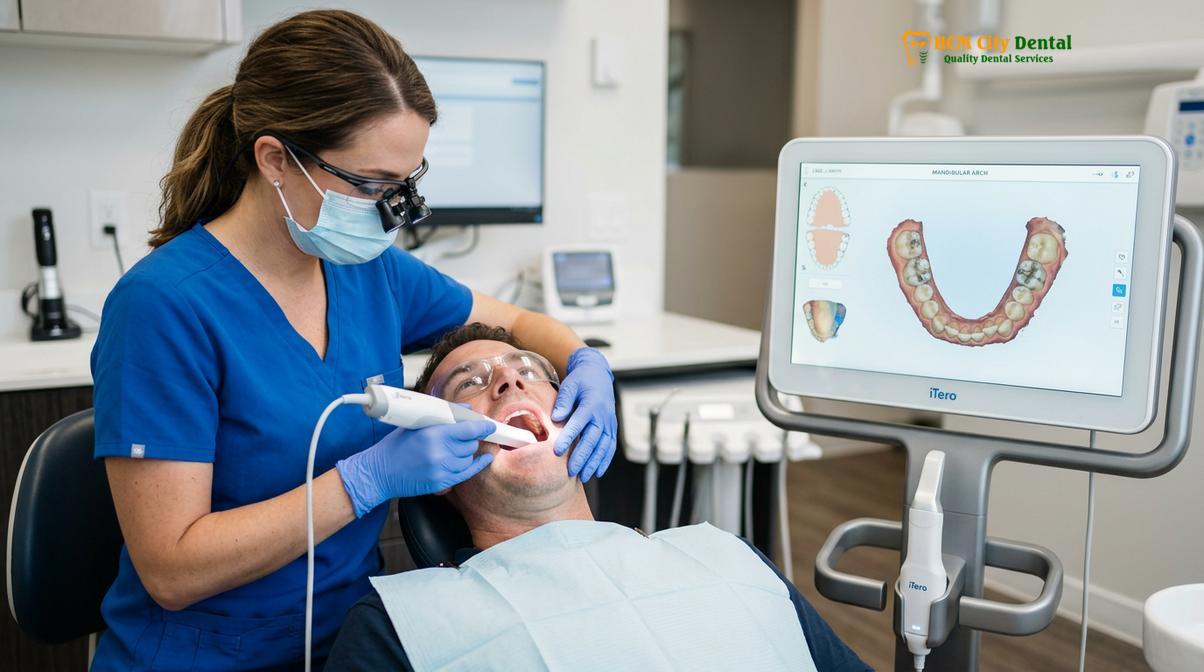
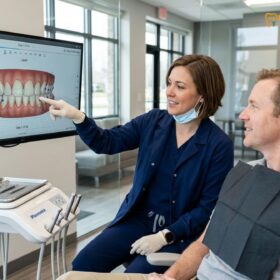
In addition to radiographic imaging, modern orthodontics relies heavily on accurate impressions of the dental arches. Historically, this was achieved using alginate or polyvinyl siloxane (PVS) putty, which was uncomfortable for the patient and prone to dimensional distortion. Today, the standard of care has shifted toward digital intraoral scanning, such as the iTero 3D scanner. A digital scan captures thousands of images per second to create a highly accurate, interactive 3D model of the patient’s teeth and gingiva. Research confirms the superior diagnostic accuracy of digital impressions compared to conventional methods [1]. While digital scanning significantly improves clinical accuracy and patient comfort, the amortization of this advanced technology is often reflected in a separate scanning fee. Patients should explicitly inquire whether the cost of the iTero scan and the subsequent digital treatment simulation are included in their initial quote.
Preparatory Treatments: Scurvy, Scale, and Teeth Extractions
Before placing brackets, the oral cavity must be biologically prepared through periodontal scaling, caries management, and strategically planned tooth extractions to create necessary arch space.
Orthodontic appliances, whether fixed brackets or removable aligners, create numerous retentive areas that harbor dental plaque and pathogenic bacteria. If a patient begins orthodontic treatment with pre-existing gingival inflammation or active dental caries, the introduction of orthodontic forces will rapidly exacerbate these conditions. Therefore, a mandatory preparatory phase must be completed before active tooth movement can safely begin. The costs associated with this biological preparation are highly variable and are almost never included in a standard braces quote, representing a significant source of hidden orthodontic fees.
The most common preparatory requirement is comprehensive periodontal scaling and root planing. Healthy gingival tissue is a prerequisite for orthodontics. Conditions such as gingivitis or more severe periodontitis must be fully resolved. The orthodontist must ensure that the periodontal ligament and surrounding alveolar bone are healthy enough to support the osteoclastic and osteoblastic activity required for tooth movement, as compromised periodontal health can lead to severe complications during active treatment [2]. If a patient requires multiple sessions of deep scaling or periodontal therapy, these clinical fees will be billed independently of the orthodontic package.
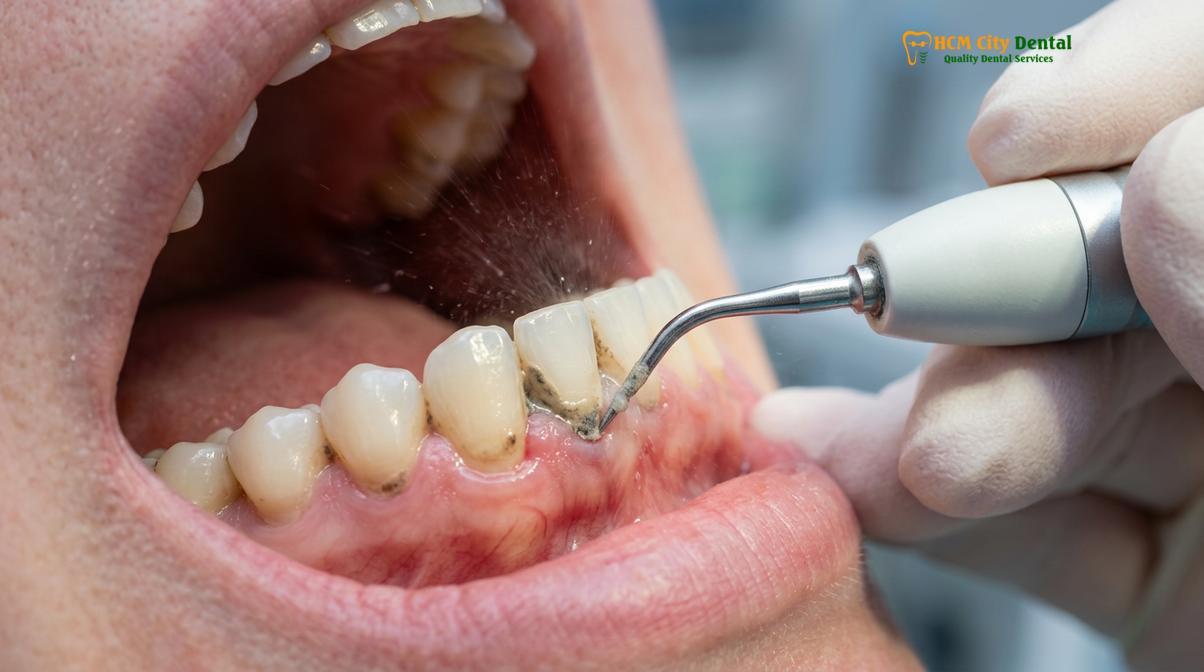
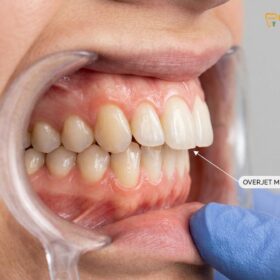
Furthermore, the correction of severe crowding or significant overjets often requires the creation of physical space within the dental arch. When expansion or interproximal reduction (IPR) is insufficient, the orthodontist must prescribe strategic tooth extractions. The most commonly extracted teeth for orthodontic purposes are the first premolars, although second premolars or impacted third molars (wisdom teeth) may also be indicated depending on the specific biomechanical requirements of the case. The tooth extraction cost is a distinct surgical fee. The complexity of the extraction—ranging from a simple elevation of a fully erupted premolar to the surgical sectioning of a bony impacted wisdom tooth—will dictate the final cost.
| Preparatory Procedure | Clinical Rationale | Cost Predictability |
|---|---|---|
| Periodontal Scaling | Removes calculus to resolve gingival inflammation prior to bracket placement. | Highly variable; depends on the patient’s baseline oral hygiene. |
| Caries Restoration (Fillings) | Eliminates active decay to prevent rapid progression under orthodontic appliances. | Variable; depends on the number and depth of carious lesions. |
| Premolar Extractions | Creates necessary arch space to resolve severe crowding or retract anterior teeth. | Predictable; usually identified during the initial cephalometric analysis. |
| Wisdom Tooth Surgery | Prevents late-stage anterior crowding and allows for distalization of molars. | Variable; depends on the degree of impaction and surgical complexity. |
Emergency Adjustments and Bracket Replacement Charges
Mid-treatment emergencies, such as debonded brackets or snapped archwires, often incur additional clinic fees if they fall outside the scope of routine scheduled adjustments.
Once the active phase of orthodontic treatment begins, the patient enters a period of continuous biomechanical adjustment. Routine appointments, typically scheduled every four to eight weeks, involve the activation of the appliance—changing archwires, replacing elastomeric ligatures, or adding power chains to direct specific vectors of force. In an all-inclusive braces package, these routine visits are factored into the total cost. However, the financial landscape changes when a patient experiences an orthodontic emergency due to appliance breakage.
Orthodontic brackets are bonded to the enamel surface using a specialized composite resin. This bond is designed to be strong enough to withstand the forces of tooth movement but weak enough to be safely removed at the end of treatment without damaging the enamel. Because of this delicate balance, brackets are susceptible to debonding (falling off) if subjected to excessive shearing forces. This typically occurs when a patient violates dietary restrictions by consuming hard, crunchy, or sticky foods. Clinical reviews indicate that bracket failure rates are a primary cause of extended treatment times and additional clinical overhead [3].
Clinical Warning: Ignoring a debonded bracket or a snapped archwire can severely disrupt the biomechanical treatment plan. Uncontrolled tooth movement can occur rapidly, potentially adding months to the overall treatment duration and increasing the risk of root resorption.
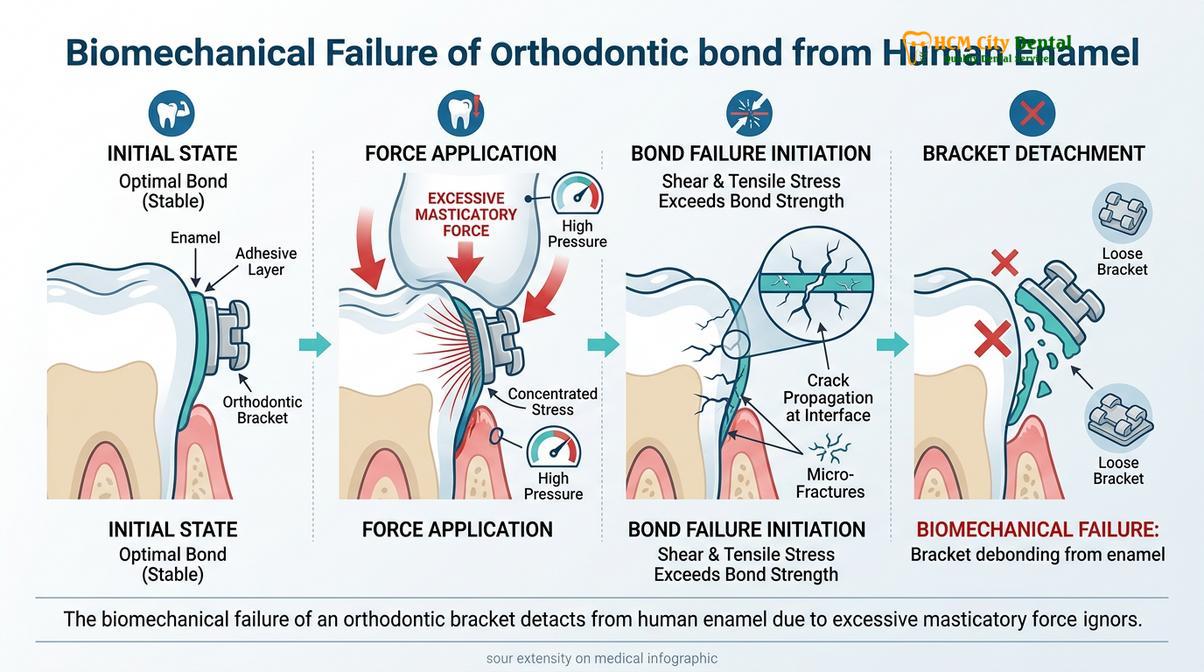
Repairing a broken bracket is not a simple matter of gluing it back on. The clinician must remove the archwire, clean the residual composite from the enamel using a specialized bur, re-etch the tooth surface, apply a new bonding agent, precisely position a new bracket, light-cure the resin, and re-engage the archwire. This process requires significant chair time and consumes expensive clinical materials. Consequently, many clinics implement a policy where the first broken bracket is replaced as a courtesy, but subsequent breakages incur a specific replacement fee. This policy serves both as a cost-recovery mechanism for the clinic and as a behavioral deterrent to encourage patient compliance with dietary guidelines.
Post-Treatment Fees: The True Cost of Lifelong Retainers
The active phase of braces is only half the journey; lifelong retention using fixed or removable appliances is clinically mandatory to prevent orthodontic relapse, representing a significant post-treatment expense.
Perhaps the most universally misunderstood aspect of orthodontic treatment is the retention phase. Many patients operate under the misconception that once the braces are removed, the teeth will permanently remain in their new, aligned positions. Biologically, this is entirely false. The periodontal ligament contains elastic fibers that have a “memory” of the tooth’s original position. Furthermore, the alveolar bone requires several months to fully mineralize and stabilize around the newly moved roots. Even after this initial stabilization period, natural physiological changes exert continuous pressure on the dental arches. Without mechanical retention, orthodontic relapse is a clinical certainty, making retention protocols absolutely vital for long-term stability [4].
“Retention is not the end of orthodontic treatment; it is the beginning of a lifelong commitment to maintaining the achieved functional and aesthetic results. Failing to account for retainer costs is a common oversight that can lead to devastating clinical relapse.”
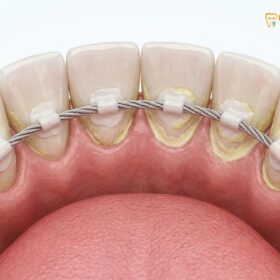
Because retention is a lifelong requirement, the appliances used must be durable, hygienic, and precisely fitted. The cost of these retainers is frequently excluded from the initial braces quote, leading to significant frustration when the patient reaches the debonding stage. Patients must budget for either removable clear aligner-style retainers (like Essix or Vivera) or fixed lingual bonded wires. Furthermore, retainers wear out, break, or get lost over time. Understanding the Retainer Cost Vietnam vs Korea: Clinical Price Guide | HCMC Dental can help international patients appreciate the ongoing financial commitment required to maintain their new smile. If a patient requires a Lost Retainer Replacement in Saigon: Clinical Guide | HCMC Dental, they will incur laboratory and clinical fees for new impressions and appliance fabrication.
Clinical Case Study: Transparent Orthodontic Billing in Saigon
A real-world clinical scenario demonstrates how comprehensive treatment planning and transparent billing protect patients from unexpected financial burdens during their orthodontic journey.
Consider the case of an expatriate patient visiting HCMC Dental Clinic in Ho Chi Minh City for comprehensive braces. During the initial consultation, the clinical team provided a fully itemized treatment plan. Rather than offering a deceptively low base price, the clinic detailed the costs for the mandatory panoramic and cephalometric X-rays, the iTero 3D scan, and the required extraction of two upper first premolars to resolve severe anterior crowding.
The patient was also informed upfront about the clinic’s policy regarding emergency bracket repairs and the separate cost of the final Vivera retainers. Because these “hidden” costs were brought to light before treatment commenced, the patient could budget accurately. Mid-way through treatment, when the patient accidentally debonded a bracket while eating hard candy, they were already aware of the replacement fee, eliminating any friction or mistrust between the patient and the clinical team. This level of transparency is a hallmark of ethical dental practice in Ho Chi Minh City.
When to Consult an Orthodontist: Important Clinical Notes
Understanding when to seek professional orthodontic advice and how to evaluate a proposed treatment plan is crucial for avoiding hidden fees and ensuring clinical success.
Patients should schedule an orthodontic consultation if they experience difficulty chewing, chronic jaw pain, or visible crowding and spacing of the teeth. When evaluating a clinic, it is vital to ask specific questions about the billing structure. A reputable provider will gladly supply a written, itemized estimate that clearly delineates the active treatment phase from diagnostics, preparatory procedures, and retention.
If a quoted price seems unusually low compared to regional averages, it is highly likely that essential clinical phases have been omitted from the estimate. Patients should always request clarification on what happens in the event of an appliance breakage, how many routine adjustments are included, and what type of retainers will be provided at the end of treatment. By asking these critical questions, patients can protect themselves from hidden costs and ensure a smooth, predictable clinical outcome.
References
- American Journal of Orthodontics and Dentofacial Orthopedics. Diagnostic accuracy of digital vs conventional impressions in orthodontics.
- Journal of Periodontology. The impact of orthodontic tooth movement on periodontal health and alveolar bone remodeling.
- European Journal of Orthodontics. Clinical failure rates and bond strength of orthodontic brackets: A systematic review.
- Angle Orthodontist. Long-term stability and relapse following orthodontic treatment: The role of retention protocols.
- International Journal of Dentistry. Cost-effectiveness and financial transparency in comprehensive orthodontic care.
- Vietnam Odonto-Stomatology Association (VOSA). National guidelines on orthodontic treatment standards and patient safety.
For a comprehensive evaluation of your orthodontic needs and a fully transparent, itemized treatment plan, schedule a consultation with the specialists at Broken Fixed Retainer Repair Vietnam: Clinical Guide | HCMC Dental. Experience world-class, ethical dental care at HCMC Dental Clinic, Ho Chi Minh City.
For pricing, booking, and a free clinical assessment, visit our Dental Braces & Orthodontics service page at HCMC Dental Clinic in Ho Chi Minh City.