When facing the loss of all teeth in an arch, choosing between an overdenture and an All-on-4 fixed bridge is a critical clinical decision. An overdenture is a removable prosthetic that snaps securely onto two to four implants, offering excellent stability and easy cleaning. In contrast, an All-on-4 system is a permanently fixed bridge anchored to four or more implants, maximizing chewing power and functioning exactly like natural teeth. The optimal choice depends on your jawbone density, facial anatomy, hygiene preferences, and budget.
Clinical Summary:
The clinical debate between an overdenture and an All-on-4 restoration centers on biomechanics, surgical invasiveness, and daily maintenance. A snap-on implant overdenture utilizes a minimal surgical footprint (typically 2–4 implants) to retain a removable prosthesis, relying on both the implants and the gum tissue for support. This approach simplifies hygiene and provides robust facial support through an acrylic flange. Conversely, a fixed All-on-4 bridge is entirely implant-borne, utilizing strategically angled implants to support a permanent, non-removable hybrid prosthesis. This fixed solution delivers superior chewing efficacy and psychological comfort, closely mimicking natural dentition. Both modalities offer life-changing improvements over traditional dentures, but require careful patient selection based on bone volume, dexterity, and long-term maintenance capabilities.
Key Takeaways:
- Fixation: Overdentures are removable by the patient daily, while All-on-4 bridges are permanently fixed and only removed by a dentist.
- Surgical Scope: Overdentures typically require 2–4 anterior implants; All-on-4 requires 4–6 implants, often utilizing tilted posterior placement.
- Bite Force: Fixed bridges restore up to 90% of natural chewing power, whereas overdentures restore approximately 60-70%.
- Maintenance: Removable options require routine replacement of nylon locator caps, while fixed bridges need professional annual deep cleaning.
- Facial Support: Overdentures excel at restoring lost facial volume via an acrylic flange, which is crucial for patients with severe bone loss.
The Surgical Footprint: 2–4 Implants (Overdenture) vs. 4–6 Implants (All-on-4)
An overdenture typically requires only two to four implants in the anterior jaw, minimizing surgical invasiveness, whereas an All-on-4 procedure necessitates four to six strategically angled implants to support a permanent, full-arch bridge.
The foundation of any implant-supported restoration lies in the surgical strategy and the utilization of available jawbone. When evaluating the surgical footprint, the primary distinction between these two modalities is the number, location, and angulation of the titanium fixtures required to support the final prosthesis. This directly impacts the complexity of the surgery, the need for adjunctive bone grafting, and the overall healing timeline.
For a snap-on implant overdenture, the surgical approach is generally more conservative. The procedure typically involves placing two to four implants in the anterior (front) region of the maxilla or mandible. The anterior jawbone is often the last area to resorb after tooth loss and generally possesses the highest bone density, particularly in the mandibular symphysis. Because the overdenture is tissue-supported in the posterior regions and only implant-retained in the anterior, the biomechanical demands on the implants are lower than those of a fixed bridge[1]. This often allows patients with moderate posterior bone loss to receive an overdenture without the need for extensive sinus lifts or vertical ridge augmentation.
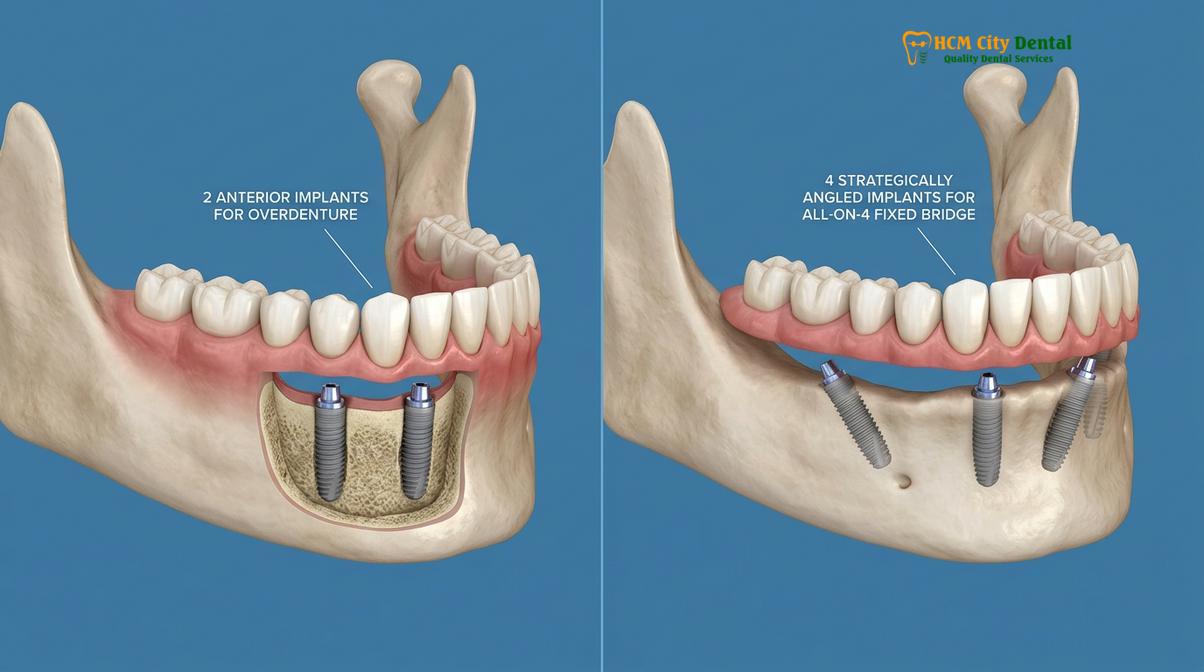
In contrast, the surgical protocol for a fixed All-on-4 bridge is more complex. Because the final prosthesis is entirely implant-borne—meaning it does not rest on the gum tissue at all—the implants must be distributed strategically to withstand the immense forces of mastication. The classic All-on-4 concept involves placing two straight implants in the anterior and two tilted implants in the posterior. Tilting the posterior implants up to 45 degrees serves a dual purpose: it avoids critical anatomical structures like the maxillary sinus cavity and the inferior alveolar nerve, and it increases the anterior-posterior (A-P) spread, which minimizes the cantilever effect on the final bridge[2].
“The architectural difference between a removable overdenture and a fixed full-arch bridge dictates the surgical approach. While two implants can successfully retain a lower denture, a fixed prosthesis demands a rigid, widely distributed foundation to prevent biomechanical overload and ensure long-term osseointegration.”
At HCMC Dental Clinic, the surgical planning phase for either procedure relies heavily on high-resolution 3D Cone Beam Computed Tomography (CBCT). Dr. Nguyen Van Cuong emphasizes that precise digital planning is non-negotiable. By mapping the exact topography of the jawbone, the clinical team can determine whether a patient has sufficient native bone for a fixed All-on-4 bridge or if an overdenture is the more biologically appropriate and predictable option.
Chewing Efficacy: Comparing Removable Stability to Permanent Fusion
While a snap-on implant overdenture significantly improves bite force compared to traditional dentures, a fixed All-on-4 bridge restores up to 90% of natural chewing efficiency by rigidly anchoring to the jawbone.
The primary motivation for most patients seeking Dental Implants is the restoration of functional chewing capacity. The biomechanics of mastication differ profoundly between a prosthesis that is removable and one that is permanently fused to the skeletal structure.
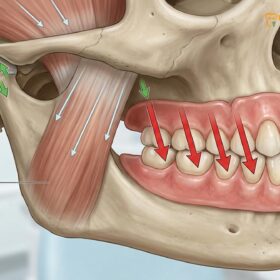
Traditional dentures rely solely on tissue suction and muscle control, yielding a maximum bite force of approximately 50 Newtons. When a patient upgrades to an implant-retained overdenture, that bite force increases dramatically to roughly 150–200 Newtons. The locator attachments securely anchor the prosthesis, preventing the embarrassing dislodgement and lateral slipping that plague conventional denture wearers. However, because an overdenture (particularly one supported by only two implants) still rests on the posterior gum tissue, there is a slight degree of tissue compression during heavy chewing. This “give” means that while chewing efficiency is vastly improved, patients may still need to exercise caution with extremely hard or sticky foods.
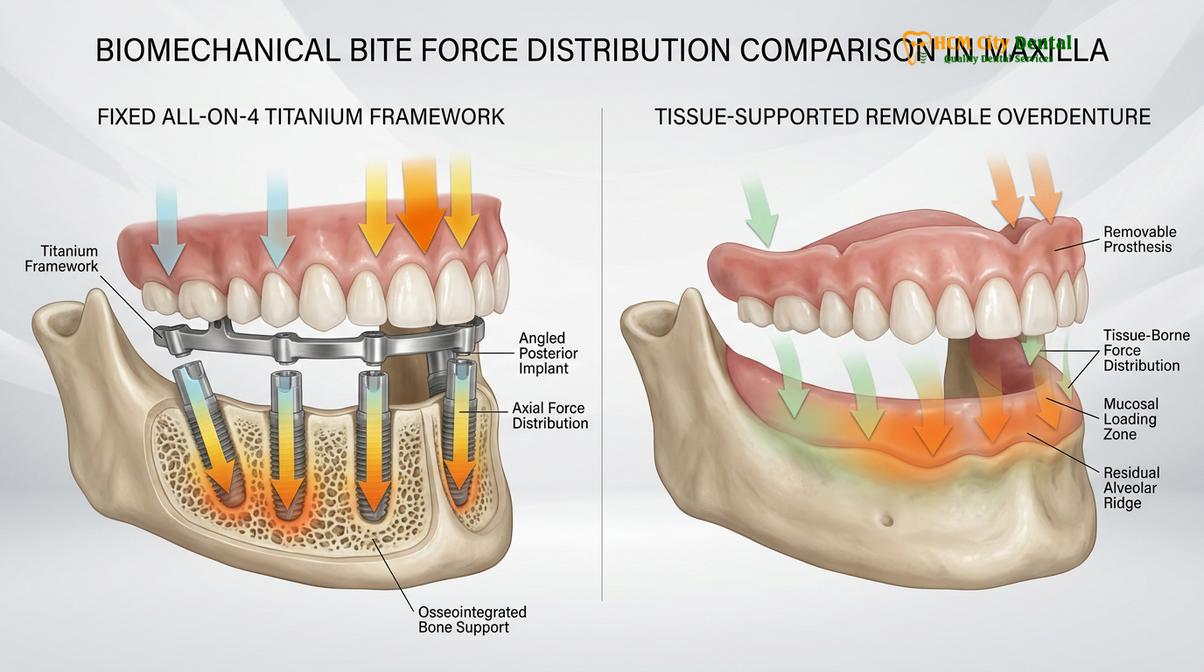
A fixed All-on-4 bridge, on the other hand, operates on a completely different biomechanical paradigm. Because the prosthesis is rigidly screwed into the implants, it is entirely implant-borne. The forces of mastication are transferred directly through the titanium framework into the jawbone, bypassing the soft tissue entirely. This rigid fixation allows patients to generate bite forces upwards of 800 Newtons, closely rivaling natural dentition. Patients with a fixed All-on-4 bridge can confidently consume a completely unrestricted diet, including crisp apples, tough meats, and raw nuts, without any fear of prosthetic movement.
Furthermore, the permanent nature of the fixed bridge restores a degree of proprioception—the sensory feedback mechanism that tells the brain how hard to bite. While implants lack the periodontal ligament of natural teeth, the rigid connection to the bone provides superior tactile feedback compared to a removable acrylic plate resting on compressible gums. When comparing traditional dentures to dental implants, the leap in quality of life achieved through the absolute stability of a fixed bridge is often described by patients as transformative.
Hygiene and Access: Snapping Off to Clean vs. Flossing Under a Fixed Bridge
Overdentures are removed daily for straightforward brushing and soaking, making them ideal for patients with limited dexterity, while All-on-4 bridges require meticulous under-bridge flossing using specialized tools like water irrigators.
The long-term survival of any implant restoration is inextricably linked to the patient’s ability to maintain impeccable oral hygiene. Plaque accumulation around dental implants can lead to peri-implantitis, an inflammatory condition that causes bone loss and, ultimately, implant failure. The daily hygiene protocols for overdentures and fixed bridges are vastly different, and this factor alone often dictates which treatment is most appropriate for a specific patient.
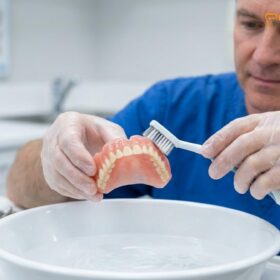
An implant overdenture offers unparalleled ease of access for cleaning. Because the prosthesis is removable, the patient simply snaps it out after meals and before bed. The denture itself can be thoroughly brushed and soaked in a non-abrasive cleansing solution, adhering to comprehensive prosthetic cleaning guidelines. More importantly, removing the denture exposes the locator abutments in the mouth. The patient can easily brush around these smooth, dome-shaped abutments just like natural teeth, ensuring that the peri-implant tissues remain healthy and free of calculus buildup. For elderly patients or those with compromised manual dexterity (such as arthritis), this straightforward hygiene routine is a massive clinical advantage.
Clinical Warning: Peri-Implantitis Risk
Failure to adequately clean beneath a fixed implant bridge allows pathogenic bacteria to colonize the titanium surface. This can trigger peri-implantitis, leading to rapid bone destruction. Patients who cannot commit to rigorous daily interdental cleaning are generally better candidates for a removable overdenture.
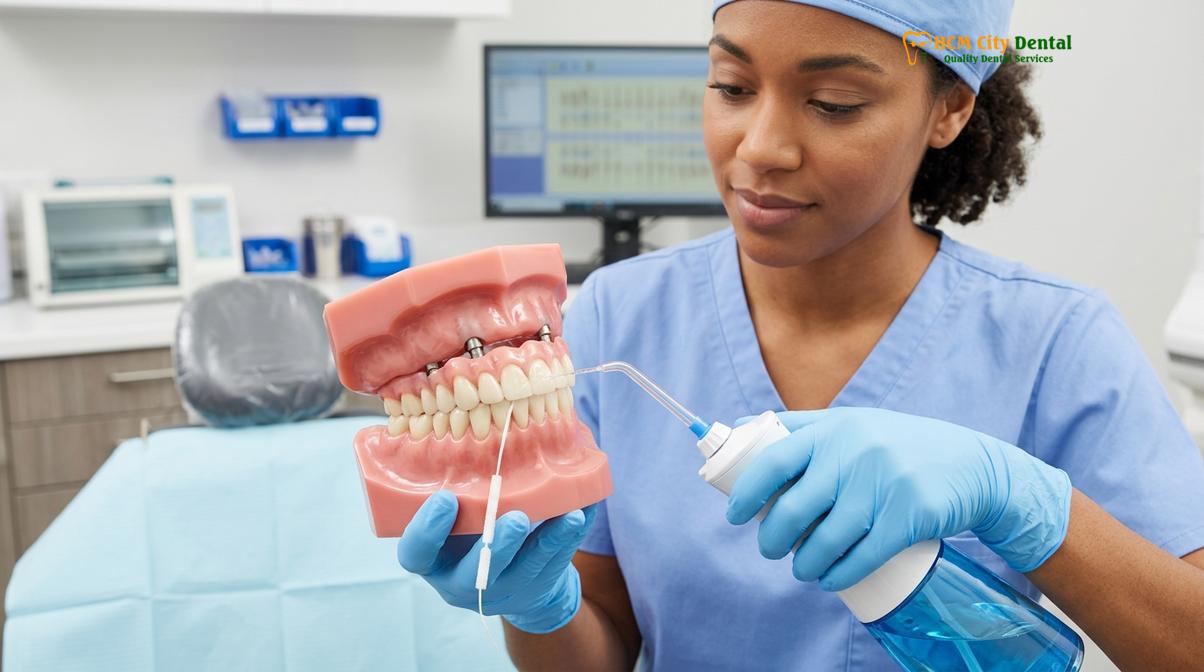
Conversely, maintaining a fixed All-on-4 bridge requires a higher level of commitment and specialized tools. Because the bridge cannot be removed by the patient, a small gap (the intaglio surface) exists between the bottom of the prosthesis and the gum ridge. Food particles and plaque can accumulate in this space. Patients must use a water flosser (oral irrigator) on a daily basis to flush out debris. Additionally, the use of superfloss threaders and interdental brushes is mandatory to mechanically disrupt the biofilm around each individual implant pillar[3].
During consultations in Ho Chi Minh City, the clinical team rigorously assesses a patient’s hygiene habits. If a patient has a history of severe periodontal disease due to poor home care, placing a complex fixed bridge may be contraindicated unless the patient demonstrates a renewed commitment to oral hygiene. In such cases, the easily cleanable overdenture provides a safer, more predictable long-term outcome.
Vertical Dimension and Lip Support: Replacing Lost Gums Height
Overdentures feature an acrylic flange that physically pushes the lips outward to restore facial volume, whereas All-on-4 bridges are streamlined and rely on precise prosthetic design to compensate for severe bone resorption.
Tooth loss is inevitably followed by bone loss. When the alveolar bone resorbs, the lower third of the face begins to collapse, leading to a sunken appearance, deep wrinkles around the mouth, and a prematurely aged profile. Restoring the Vertical Dimension of Occlusion (VDO) and providing adequate lip support are critical aesthetic objectives in full-arch rehabilitation[4].
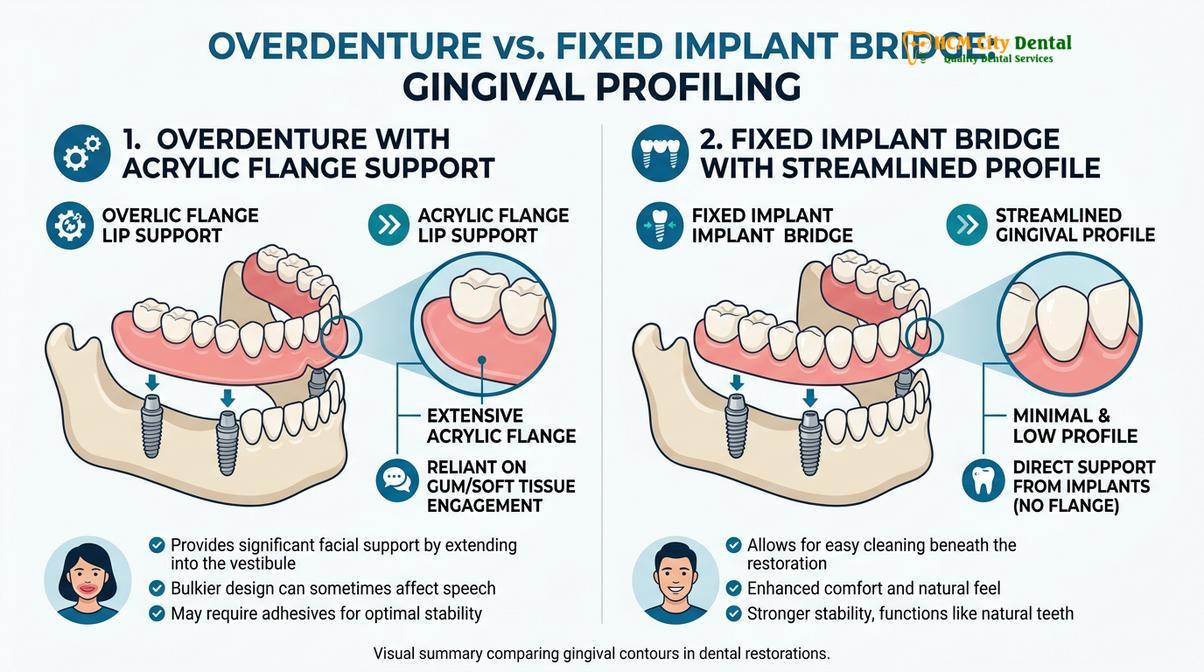
An overdenture is exceptionally effective at restoring lost facial volume. The prosthesis is designed with a pink acrylic flange—an extension of the denture base that fits high into the vestibular vestibule (the space between the gums and the cheeks). This flange acts as a physical scaffold, pushing the upper lip and cheeks outward, instantly smoothing out wrinkles and restoring a youthful facial contour. For patients who have been edentulous (without teeth) for many years and have suffered severe horizontal and vertical bone loss, the acrylic flange of an overdenture is often the only way to achieve optimal facial aesthetics without undergoing massive, complex bone grafting surgeries.
Clinical Case Review: Restoring Facial Harmony
A 65-year-old patient presented to HCMC Dental Clinic with severe maxillary bone resorption after wearing traditional dentures for 15 years. Her primary complaint was a “sunken” facial profile. While she desired a fixed bridge, clinical evaluation revealed that a fixed prosthesis without a flange would leave her upper lip unsupported. Dr. Nguyen Van Cuong recommended an implant-supported overdenture. The custom acrylic flange successfully restored her lip projection, taking years off her appearance while providing excellent chewing stability.
A fixed All-on-4 bridge, by design, lacks this bulky acrylic flange. The prosthesis is streamlined to facilitate cleaning and to feel as natural as possible in the mouth. While the bridge does include pink composite or ceramic material to replace the lost gum height, it does not extend deep into the vestibule to push the lip out. Therefore, if a patient has severe bone loss, a fixed bridge might result in a slightly flatter facial profile compared to an overdenture. To achieve a highly aesthetic result with an All-on-4, the surgeon must carefully plan the bone reduction (alveolectomy) during surgery to ensure the transition line between the artificial gums and the natural gums is hidden behind the smile line.
Financial Realities: Cost Comparisons for Expat Dental Travelers in Vietnam
Overdentures offer a highly cost-effective entry point into implant dentistry, while All-on-4 requires a larger initial investment but provides a permanent, premium solution with exceptional long-term value.
The financial investment required for full-arch implant rehabilitation is a significant consideration for most patients. The cost disparity between an overdenture and an All-on-4 system is substantial, driven by the number of implants, the complexity of the surgical procedure, and the materials used for the final prosthesis.
An implant overdenture is widely regarded as the most cost-effective method to achieve a secure, functional smile. Because it typically requires only two to four implants and utilizes a high-quality acrylic prosthetic base, the material and surgical costs are kept relatively low. For many patients, this represents the perfect balance between affordability and clinical performance. Furthermore, if a patient already has a well-fitting conventional denture, it is sometimes possible to retrofit it with locator attachments, further reducing the initial cost, though relining procedures for loose prosthetics may be necessary to ensure a perfect fit over the new implants.
Conversely, a fixed All-on-4 bridge is a premium, comprehensive rehabilitation. The procedure requires a minimum of four implants, specialized multi-unit abutments, and a highly complex, custom-milled internal framework (usually titanium) to provide rigidity. The final teeth are often crafted from ultra-durable monolithic zirconia or premium reinforced acrylic. The advanced laboratory techniques and the extended clinical chair time required to fabricate and balance a fixed hybrid dental prosthetics system naturally command a higher fee.
| Clinical Feature | Implant Overdenture (Snap-On) | All-on-4 (Fixed Bridge) |
|---|---|---|
| Implant Quantity | 2 to 4 per arch | 4 to 6 per arch |
| Prosthetic Material | High-impact acrylic with denture teeth | Titanium framework with Zirconia or Acrylic |
| Initial Investment | Moderate (Highly cost-effective) | High (Premium investment) |
| Palatal Coverage | Often open palate (upper), minimal bulk | Completely open palate, streamlined |
| Bone Grafting Needs | Minimal (utilizes anterior bone) | Moderate (may require bone reduction) |
For international patients seeking a favorable cost comparison Vietnam has emerged as a premier destination for complex dental implantology. Clinics in Ho Chi Minh City offer world-class surgical expertise, utilizing the exact same premium implant brands (such as Nobel Biocare or Straumann) and digital workflows found in Western countries, but at a fraction of the cost. This economic advantage allows many expat dental travelers to afford the premium All-on-4 fixed solution that might have been financially out of reach in their home countries.
Long-Term Maintenance: Replacing Locator Caps vs. Professional Bridge Polish
Maintenance for overdentures involves routinely replacing nylon locator caps every few months, whereas All-on-4 maintenance requires annual professional removal, deep cleaning, and polishing of the fixed bridge.
The journey does not end once the final prosthesis is delivered. Both overdentures and fixed All-on-4 bridges require ongoing maintenance to ensure longevity, but the nature of that maintenance differs significantly.
For an overdenture, the primary maintenance involves the locator attachments. The system relies on small nylon inserts (caps) housed within the denture base that snap onto the titanium abutments in the mouth. Over time, due to the friction of daily insertion and removal, these nylon caps wear out and lose their retentive grip. Patients will notice the denture feeling slightly looser. Fortunately, locator abutment maintenance is incredibly simple and inexpensive. During a routine clinical visit, the dentist can pop out the worn nylon caps and insert new ones in a matter of minutes, instantly restoring the tight, secure snap. Additionally, because the gum tissue beneath the denture may change shape over the years, the acrylic base may require a professional reline every 3 to 5 years to maintain optimal tissue adaptation.
“Patients must understand that ‘permanent’ implants still require maintenance. While a fixed bridge avoids the need for nylon cap replacements, it demands rigorous annual professional servicing to ensure the integrity of the prosthetic screws and the health of the underlying peri-implant tissues.”
Maintenance for a fixed All-on-4 bridge is more clinical in nature. While there are no nylon caps to wear out, the prosthesis itself must be professionally evaluated. Current clinical protocols recommend that the patient return to the clinic annually. During this visit, the dentist will unscrew the entire bridge, place it in an ultrasonic cleaner to remove any microscopic calculus, and thoroughly clean the multi-unit abutments protruding from the gums. The bridge is then re-seated, and new prosthetic screws are often used and torqued to precise specifications to prevent screw loosening or fracture[5]. The occlusion (bite) is also carefully checked and adjusted, as the rigid nature of the bridge means that any slight imbalance in the bite can place undue stress on the implants.
When to See a Doctor: Clinical Considerations for Full-Arch Restoration
Deciding between an overdenture and an All-on-4 bridge is not merely a matter of preference; it is a complex medical decision that must be based on a thorough diagnostic evaluation. If you are struggling with failing teeth, severe periodontal disease, or ill-fitting traditional dentures, it is imperative to seek a consultation with a qualified implantologist or prosthodontist.
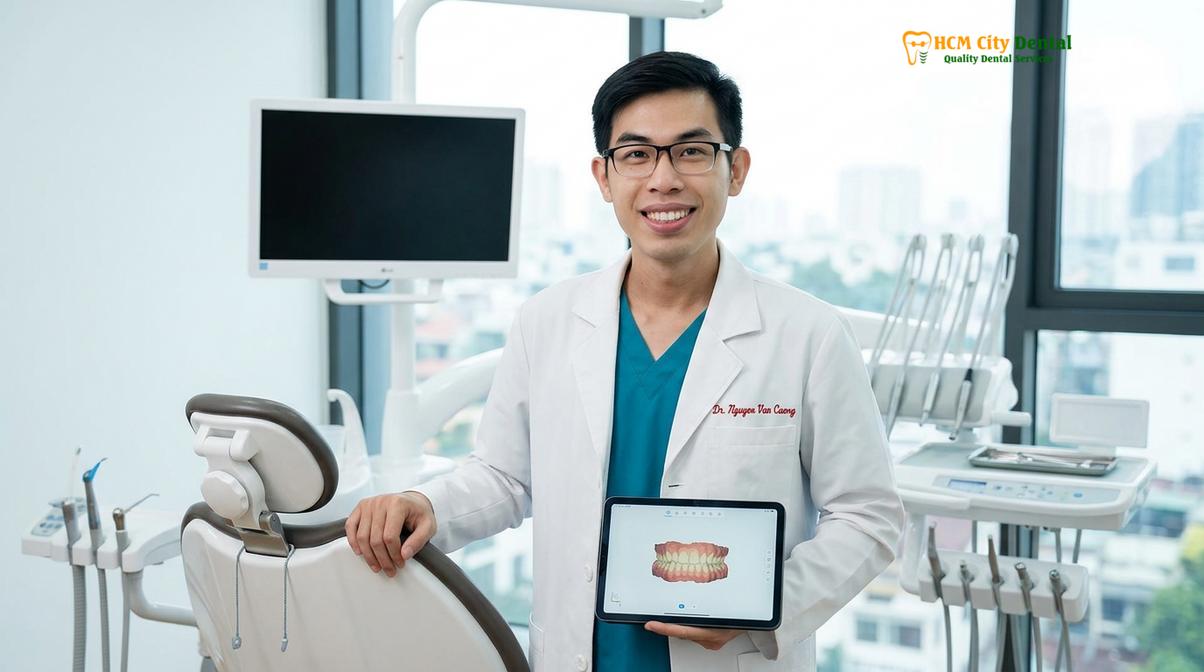
Certain systemic health conditions can influence your candidacy for these procedures. Patients with uncontrolled diabetes, severe osteoporosis, or those undergoing bisphosphonate therapy for bone density issues must be carefully evaluated, as these conditions can impair bone healing and osseointegration. Heavy smoking is also a significant risk factor that dramatically increases the rate of implant failure and peri-implantitis.
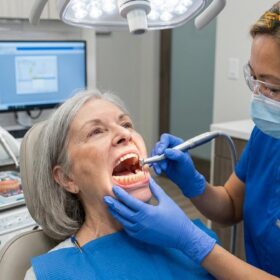
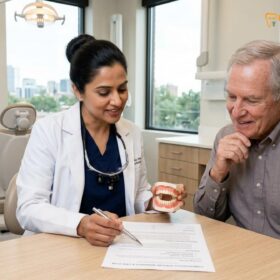
During your consultation at HCMC Dental Clinic, the clinical team will conduct a comprehensive medical history review, perform a 3D CBCT scan to assess your bone volume, and evaluate your facial aesthetics and bite dynamics. Based on these objective clinical findings, the doctor will present a personalized treatment plan, clearly outlining the risks, benefits, and expected outcomes of both the removable overdenture and the fixed All-on-4 options. Never proceed with full-arch implant surgery without a clear understanding of the long-term maintenance requirements and a customized surgical plan.
Frequently Asked Questions
Is All-on-4 significantly more comfortable than an implant overdenture?
Yes, All-on-4 is generally considered more comfortable because it is permanently fixed and does not rest on the gum tissue. It eliminates the slight movement and tissue friction that can occasionally occur with removable overdentures during heavy chewing. Because it is entirely implant-borne, it feels and functions much closer to natural teeth, providing immense psychological comfort to the patient.
Can you upgrade a snap-on overdenture to a fixed All-on-4 later?
Yes, upgrading is often clinically possible if you have sufficient posterior bone volume. The transition requires placing additional implants and fabricating a new permanent hybrid prosthesis to attach to the expanded implant foundation. The existing anterior implants used for the overdenture can frequently be incorporated into the new fixed bridge design, provided they are in optimal positions and fully integrated.
Why does an overdenture require a bulkier palate area than a fixed bridge?
An overdenture requires a slightly bulkier acrylic base to provide structural strength and physical support for the lips and cheeks. However, implant-supported upper overdentures can often be designed with an open palate, unlike traditional suction dentures. A fixed bridge is milled from ultra-strong materials like titanium and zirconia, allowing it to be highly streamlined without sacrificing durability.
How long does the healing process take for these implant procedures?
The initial osseointegration phase typically takes three to six months for both procedures. During this time, the titanium implants fuse with the jawbone before the final, permanent prosthetic teeth can be securely attached. While the bone heals, patients must adhere to a soft food diet to prevent micromovement of the implants, which could disrupt the fusion process.
Will I be without teeth during the transition period?
No, you will not be left without teeth. Patients are provided with a temporary functional prosthesis immediately after surgery, ensuring you maintain aesthetics and basic chewing function while the implants heal. In many All-on-4 cases, a temporary fixed bridge can be attached to the implants on the very same day of surgery, provided the implants achieve high primary stability.
References
- Journal of Prosthetic Dentistry. Biomechanical evaluation of implant-retained overdentures vs fixed full-arch prostheses. (2021).
- International Journal of Oral and Maxillofacial Implants. Long-term survival rates of tilted implants in All-on-4 configurations. (2020).
- Clinical Implant Dentistry and Related Research. Crestal bone loss and peri-implantitis rates in removable vs fixed restorations. (2022).
- Journal of Clinical Periodontology. Oral hygiene maintenance protocols for full-arch implant rehabilitations. (2019).
- American College of Prosthodontists. Guidelines for restoring vertical dimension of occlusion in edentulous patients. (2023).
If you are ready to explore your options for full-arch removable prosthetics or permanent fixed bridges, contact our clinical team to schedule your comprehensive 3D imaging and consultation.