The dental bridge cost in Vietnam ranges from approximately $252 to $864 for a standard 3-unit restoration, depending heavily on the chosen ceramic material. By leveraging advanced digital dentistry and direct laboratory partnerships, patients can access world-class missing teeth replacement options at a fraction of international prices.
Clinical Summary:
A dental bridge is a highly effective fixed prosthetic device designed to replace one or more missing teeth by anchoring an artificial tooth (pontic) to adjacent prepared natural teeth or dental implants. In Vietnam, leading prosthodontic centers utilize state-of-the-art digital scanning technology combined with CAD/CAM milling to fabricate precise restorations. Patients can choose from certified premium materials, including Zirconia HT for ultimate posterior strength and E.max for outstanding anterior aesthetics. With an express turnaround tailored for international patients, direct lab partnerships, and substantial pre-arrival booking discounts, Vietnam has emerged as a premier destination for complex restorative dentistry.
Key Takeaways:
- A 3-unit dental bridge in Vietnam typically costs between $252 (PFM) and $864 (E.max) when utilizing pre-booking discounts.
- Premium materials like Zirconia HT and E.max lithium disilicate offer superior flexural strength and lifelike translucency.
- Digital impressions via intraoral scanners eliminate messy silicone molds, maximizing patient comfort and 3D precision.
- An express turnaround allows complete smile makeovers to be fabricated and fitted within a single week.
- Comprehensive care includes a global warranty policy with remote follow-up support via WhatsApp.
Anatomy and Types of Dental Bridges
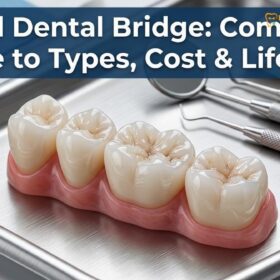
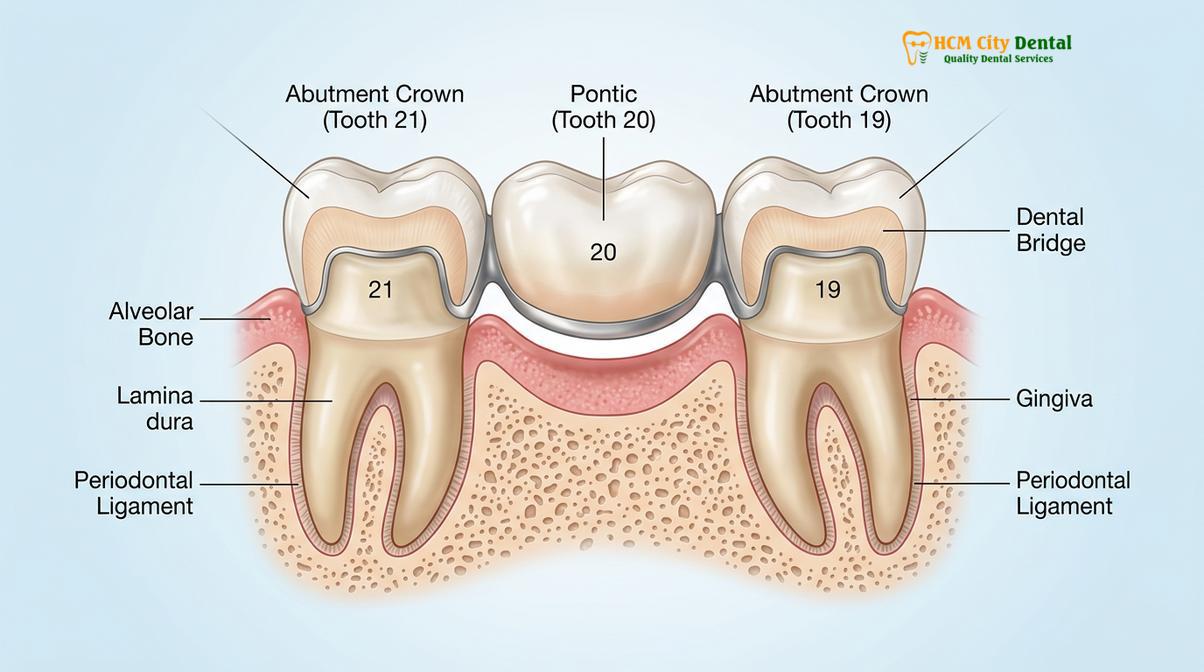
A dental bridge consists of abutment crowns anchored to natural teeth or implants, supporting a pontic that seamlessly fills the edentulous space.
Understanding the structural components and biomechanical principles of a dental bridge is essential for patients considering this restorative treatment. A standard bridge is engineered to restore both the functional chewing capacity and the aesthetic harmony of the smile. The architecture of a bridge relies on two primary components: the abutments (the anchoring supports) and the pontic (the artificial tooth replacing the missing structure)[1].
There are several clinical configurations for dental bridges, each selected based on the patient’s specific anatomical presentation, bite forces, and the location of the edentulous gap:
- Traditional Fixed Bridge: The most common configuration, involving the preparation of healthy natural teeth on both sides of the gap. These teeth are reshaped to receive crowns that hold the pontic securely in place.
- Cantilever Bridge: Utilized when there is an adjacent tooth on only one side of the missing tooth. While conservative, this design is generally restricted to areas of the mouth that experience lower occlusal (biting) forces to prevent torquing of the abutment tooth.
- Maryland (Resin-Bonded) Bridge: A minimally invasive option primarily used for anterior (front) teeth. It employs a metal or zirconia framework bonded to the lingual (back) surfaces of adjacent teeth, requiring minimal tooth preparation.
- Implant-Supported Bridge: Instead of altering natural teeth, this bridge is anchored to surgically placed dental implants. This approach is highly recommended for replacing multiple consecutive missing teeth, offering superior stability and preserving the surrounding jawbone.
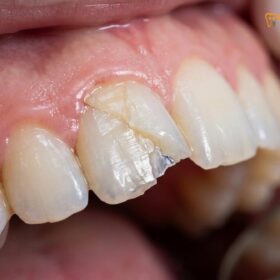
The clinical success of a traditional bridge heavily depends on meticulous tooth preparation. Precise tooth preparation margin designs—whether a chamfer or a shoulder margin—are critical for the long-term success of the restoration. A well-defined margin ensures that the final crown seats perfectly, preventing microleakage and secondary decay. Furthermore, the preparation must respect the biologic width—the natural dimension of the gingival tissues attached to the tooth. If a tooth is fractured or decayed below the gumline, a functional crown lengthening procedure may be required to expose sufficient healthy tooth structure before a bridge can be safely placed[2].
Cost of a 3-Unit Bridge in Vietnam
A 3-unit bridge replaces a single missing tooth and costs from $252 for PFM to $864 for premium E.max when utilizing pre-arrival booking discounts.
For patients seeking to replace a single missing tooth flanked by two healthy teeth, a 3-unit bridge is the standard clinical protocol. The total cost of this restoration is determined by multiplying the per-unit price of the chosen material by three. Vietnam offers exceptionally competitive pricing for these procedures, particularly when patients take advantage of specialized booking incentives.
At leading facilities, the pricing structure is transparent and highly favorable for international patients. By securing a WhatsApp pre-booking discount, patients can reduce their treatment costs significantly. The following breakdown illustrates the estimated costs for a 3-unit bridge based on various material selections:
| Material Type | Walk-in Price (Per Unit) | WhatsApp Discount Price (Per Unit) | Total Estimated Cost (3-Unit Bridge) |
|---|---|---|---|
| PFM Crown | ~$140 (3.5M VND) | From $84 (2.1M VND) | From $252 |
| Zirconia Crown (Cercon) | ~$200 (5.0M VND) | From $120 (3.0M VND) | From $360 |
| Zirconia HT Crown (Cercon HT) | ~$260 (6.5M VND) | From $156 (3.9M VND) | From $468 |
| E.max Crown (Ivoclar) | ~$280 (7.0M VND) | From $168 (4.2M VND) | From $504 |
Note: The specific 3 unit zirconia bridge cost may vary slightly based on the complexity of the tooth preparation and any required foundational treatments, such as a root canal post/core buildup.
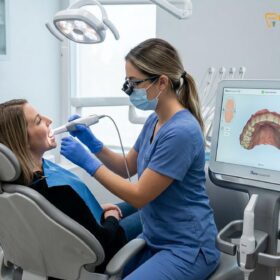
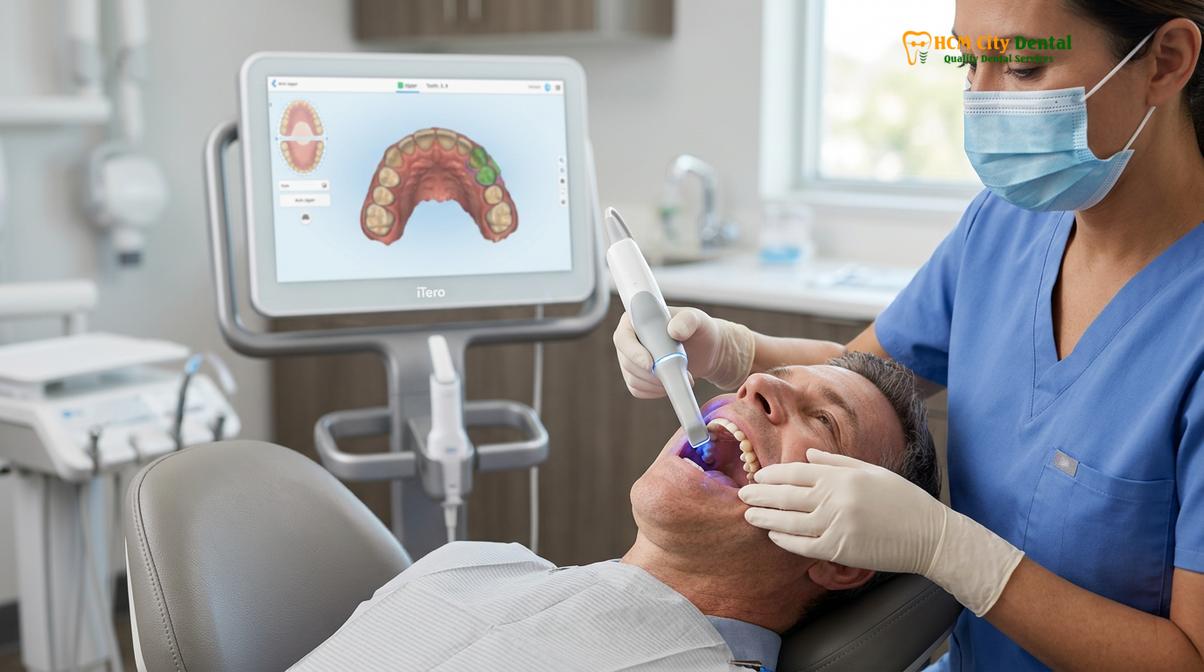
The clinical workflow for delivering a 3-unit bridge is highly streamlined. During the initial visit, the abutment teeth are prepared under local anesthesia. Instead of using traditional, uncomfortable silicone impression materials, the clinician utilizes state-of-the-art Intraoral Scanners. These devices capture thousands of frames per second to create a highly accurate 3D mesh of the prepared teeth, ensuring maximum comfort and unparalleled precision for the crown design. A temporary crown or bridge is then fabricated chairside and cemented to protect the prepared teeth and maintain gingival health while the final restoration is milled.
Cost of a 4-Unit Bridge in Vietnam
Replacing two consecutive missing teeth requires a 4-unit bridge, which costs approximately $384 for premium Zirconia HT with a pre-booking discount.
When a patient presents with two consecutive missing teeth, a 4-unit bridge becomes necessary. This configuration involves two abutment crowns supporting two central pontics. The biomechanics of a 4-unit bridge are significantly more complex than those of a 3-unit bridge. According to Ante’s Law, a fundamental principle in prosthodontics, the combined root surface area of the abutment teeth must equal or exceed that of the teeth being replaced[3]. Because a 4-unit bridge spans a larger gap, it is subjected to greater occlusal forces, necessitating the use of exceptionally strong materials.
“The success of a long-span bridge relies entirely on the structural integrity of the abutment teeth and the flexural strength of the restorative material. Monolithic Zirconia HT is our material of choice for 4-unit posterior bridges due to its exceptional resistance to fracture under heavy masticatory loads.”
The 4 unit bridge price vietnam is structured similarly to the 3-unit model, calculated on a per-unit basis. For a high-strength Zirconia HT restoration, the walk-in price is approximately $640 (16.0M VND). However, with the WhatsApp pre-booking discount, the cost is significantly reduced to from $384 (9.6M VND). This represents a remarkable value for a complex, multi-unit restoration utilizing authentic, certified materials.
In cases where the abutment teeth have suffered extensive decay or previous trauma, a root canal post/core buildup may be required prior to bridge preparation. This procedure involves placing a biocompatible post into the treated root canal space and building up the core with composite resin to provide a solid foundation for the abutment crown. Proper foundational work is critical to prevent the catastrophic failure of a long-span bridge.
Material Choices: PFM vs. Full Zirconia HT
Selecting the right material involves balancing functional bite forces with aesthetic demands, where Zirconia HT offers ultimate strength and E.max provides lifelike translucency.
The longevity and aesthetic success of a dental bridge are intrinsically linked to the materials used in its fabrication. Modern dentistry offers a spectrum of choices, each with specific clinical indications. Top-tier clinics in Vietnam prioritize Material Certification, utilizing only authentic materials from globally recognized manufacturers to ensure biocompatibility and durability.
Porcelain-Fused-to-Metal (PFM): For decades, PFM crowns have been a reliable standard. They consist of a metal alloy substructure layered with tooth-colored porcelain. While they offer good strength and are highly cost-effective, they have aesthetic limitations. Over time, as gums naturally recede, the dark metal margin may become visible at the gumline. Additionally, the opaque metal core prevents the natural transmission of light, making PFM restorations appear slightly less lifelike than all-ceramic options.
Zirconia HT: High-Translucency Zirconia represents a massive leap forward in dental material science. Zirconia is a crystalline oxide of zirconium, known for its extreme toughness and fracture resistance. The “HT” variant has been engineered to allow more light to pass through the material, overcoming the opaque, chalky appearance of older zirconia generations. It is milled using advanced CAD/CAM technology, ensuring a flawless marginal fit[4]. While E.max offers outstanding lifelike aesthetics on front teeth, Zirconia HT is the gold standard for posterior bridges due to its high flexural strength and ability to withstand intense grinding forces.
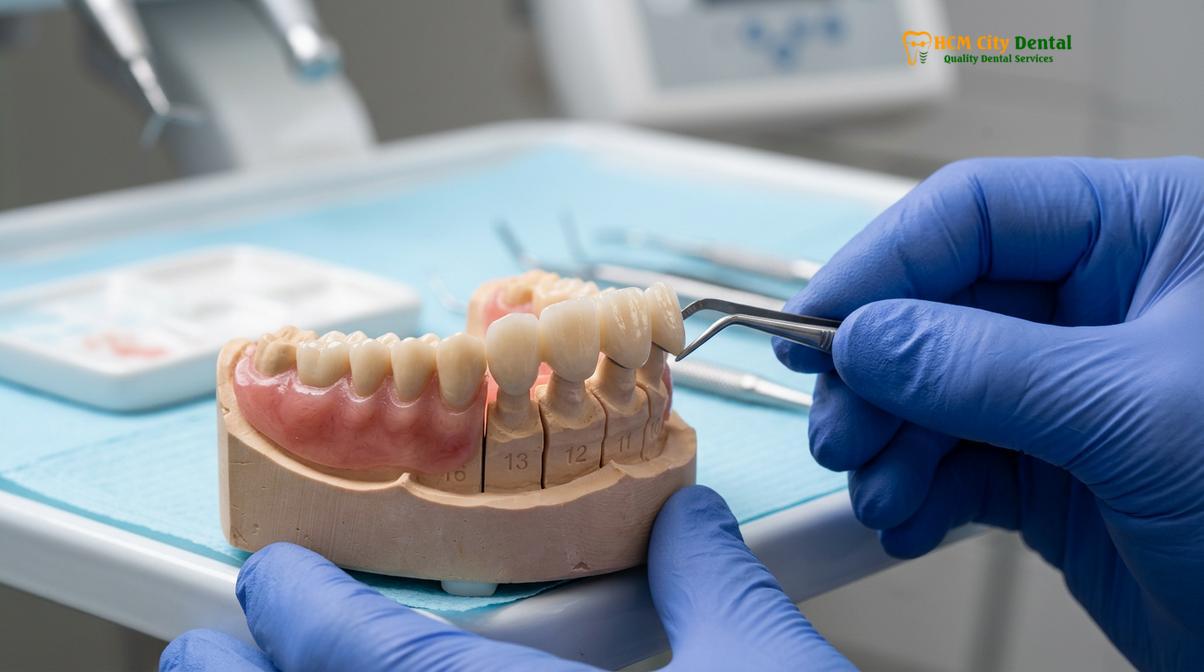
E.max: E.max is a lithium disilicate glass-ceramic renowned for its unparalleled aesthetic properties. It mimics the natural opalescence and translucency of human enamel better than almost any other material. While it possesses excellent strength for single crowns and short-span anterior bridges, it is generally not recommended for long-span posterior bridges where occlusal forces are highest.
Clinical Case Focus: Anterior Aesthetic Restoration
An international patient visiting HCMC Dental Clinic in Ho Chi Minh City presented with a missing upper lateral incisor and desired a highly aesthetic replacement. Because the adjacent teeth required structural reinforcement due to old, failing composite fillings, an E.max 3-unit bridge was selected. The direct lab partnership allowed the ceramist to perform custom shade matching chairside. The final restoration exhibited perfect translucency, blending seamlessly with the patient’s natural dentition, highlighting the superiority of lithium disilicate in the aesthetic zone.
The fabrication of these premium restorations relies heavily on a Direct Lab Partnership. By collaborating directly with a leading laboratory, the prosthodontist and the master ceramist can communicate seamlessly. This synergy allows for precise custom shade matching, rapid adjustments, and complete quality control over the CAD/CAM milling process.
Comparing Bridge Costs: Vietnam vs. Western Countries
Dental tourism in Vietnam allows patients to save up to 70% on restorative treatments while benefiting from international-grade materials and express turnaround times.
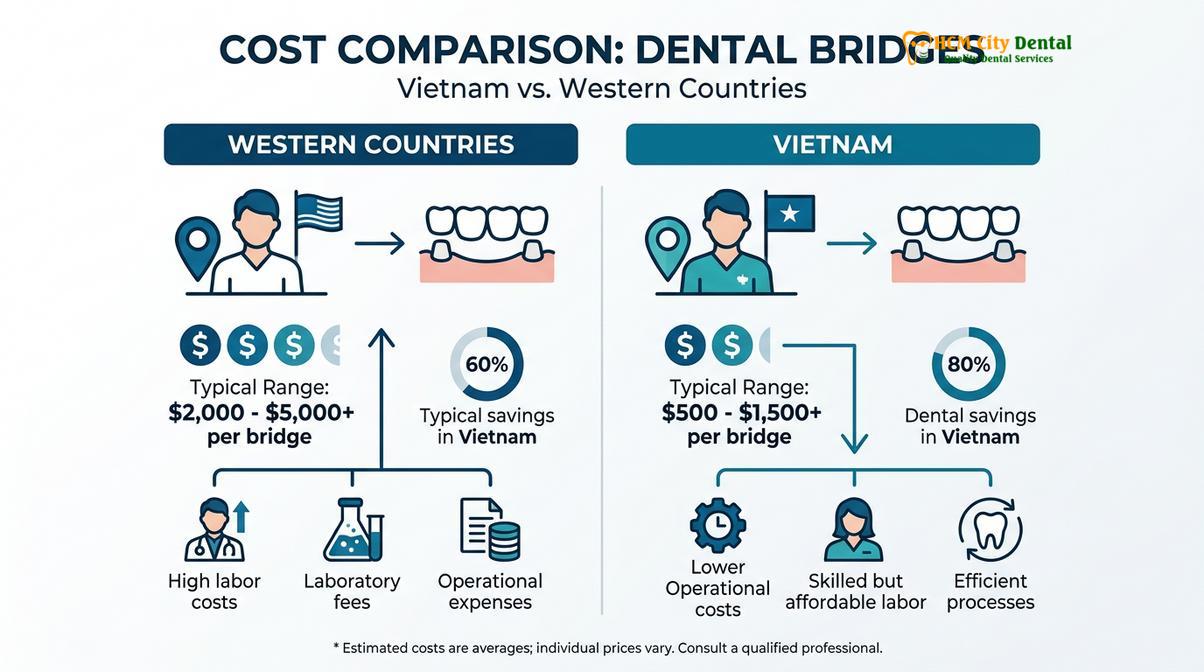
The globalization of healthcare has made dental tourism an increasingly popular option for patients facing prohibitive dental costs in their home countries. When evaluating the fixed bridge cost against prices in the United States, Australia, or the United Kingdom, the financial advantages are stark. A premium Zirconia HT 3-unit bridge that might cost upwards of $3,000 to $4,500 in Western countries can be expertly delivered in Vietnam for under $500.
This dramatic price difference is not a reflection of compromised quality. Rather, it is the result of lower operational overhead, favorable exchange rates, and highly efficient clinical workflows. Clinics catering to international patients are equipped with the exact same technology—such as intraoral scanners and CAD/CAM milling units—found in top-tier practices globally.
One of the most significant advantages for traveling patients is the express turnaround. Traditional dental workflows in Western countries often require patients to wear temporary crowns for two to three weeks while the impressions are shipped to an off-site commercial laboratory. In contrast, the direct lab partnerships in Vietnam allow complete smile makeovers or multiple crowns/bridges to be fabricated and fitted within a single week. This rapid timeline is specifically tailored for dental tourists and expats, minimizing disruption to their schedules.
“The integration of digital intraoral scanning and in-house CAD/CAM milling has revolutionized our delivery timelines. We can now provide international patients with definitive, high-strength zirconia restorations in a matter of days, without ever compromising on marginal adaptation or occlusal harmony.”
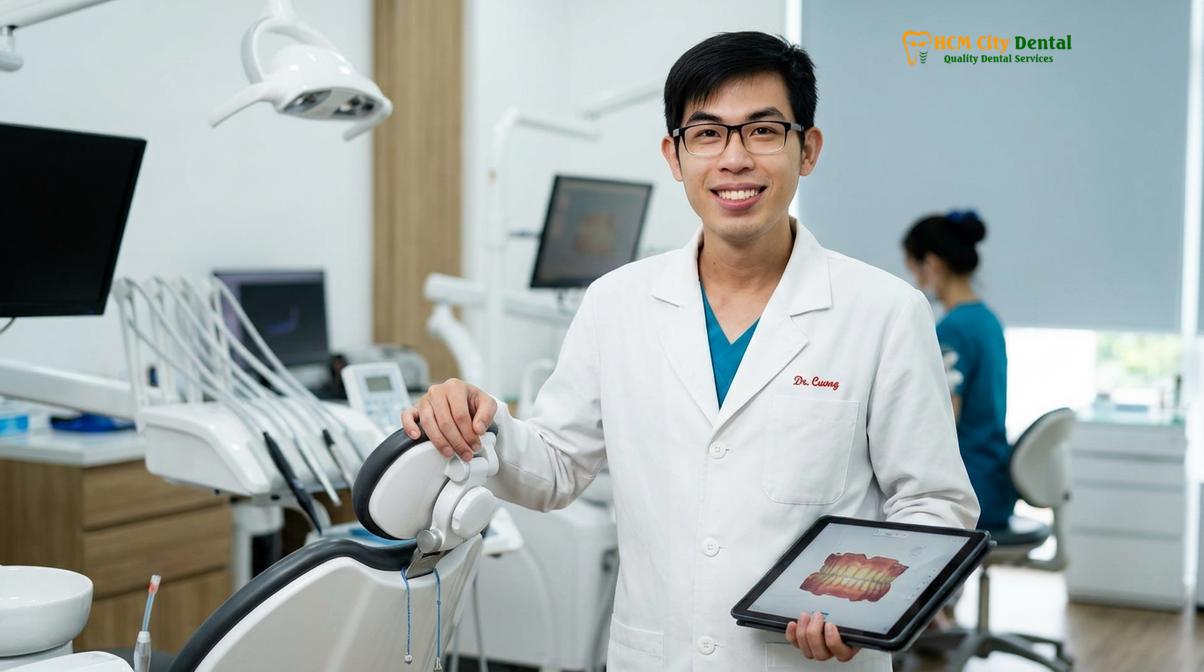
Dr. Nguyen Van Cuong is a leading prosthodontic specialist who oversees complex restorative cases. With extensive clinical experience, Dr. Cuong ensures that every custom bridge meets rigorous international standards for marginal fit and occlusal harmony. His meticulous approach to digital dentistry provides patients with highly aesthetic, long-lasting results.
Furthermore, reputable clinics provide comprehensive post-treatment care, including a Global Warranty policy. This ensures that the restorations are guaranteed against material defects. To support international patients, clinics offer remote follow-up support via WhatsApp, utilizing structured photo and video assessment protocols to monitor healing and address any concerns promptly. These protocols align closely with the Vietnam Ministry of Health (MOH) guidelines for fixed prosthodontics, ensuring high standards of patient safety and care continuity[5].
When to See a Doctor
Prompt clinical evaluation is necessary if you experience pain, mobility, or swelling around your dental bridge to prevent further complications.
While dental bridges are highly durable, they are not impervious to complications. The underlying natural abutment teeth remain susceptible to decay, and the periodontal tissues supporting them can develop inflammation if oral hygiene is not meticulously maintained. It is crucial to seek immediate prosthodontic evaluation if you experience any of the following symptoms:
- Mobility or Looseness: If the bridge feels loose or shifts during chewing, the underlying cement may have washed out, or an abutment tooth may have fractured. Emergency loose crown recementation or replacement is necessary to prevent the abutment teeth from decaying rapidly due to microleakage.
- Pain or Sensitivity: Sharp pain when biting down or lingering sensitivity to hot and cold temperatures can indicate that the nerve of an abutment tooth has become inflamed or infected, potentially requiring a root canal treatment.
- Gingival Swelling or Bleeding: Persistent redness, swelling, or bleeding around the margins of the bridge suggests periodontal inflammation or a violation of the biologic width, which may necessitate professional intervention or crown lengthening.
- Altered Bite: If the bridge suddenly feels “high” or your teeth do not come together properly, it may indicate occlusal trauma or a structural failure of the framework.
Never attempt to temporarily recement a loose dental bridge using over-the-counter glues or household adhesives. These materials are toxic to the dental pulp and can permanently ruin the precise internal fit of the crowns, making it impossible for a dentist to properly reattach the restoration later.
References
- Journal of Prosthodontic Research. Flexural strength of monolithic zirconia crowns and bridges. (2021).
- Journal of Esthetic and Restorative Dentistry. Translucency and clinical performance of lithium disilicate. (2020).
- International Journal of Prosthodontics. Biomechanics of fixed partial dentures and Ante’s Law. (2019).
- Journal of Dentistry. CAD/CAM milling accuracy and marginal adaptation in fixed prosthodontics. (2022).
- Vietnam Ministry of Health (MOH). National Clinical Guidelines for Fixed Prosthodontics and Dental Restorations. (2023).
For those exploring comprehensive Dental Crowns & Bridges, HCMC Dental Clinic in Ho Chi Minh City provides a seamless blend of advanced clinical expertise, transparent pricing, and dedicated international patient support.