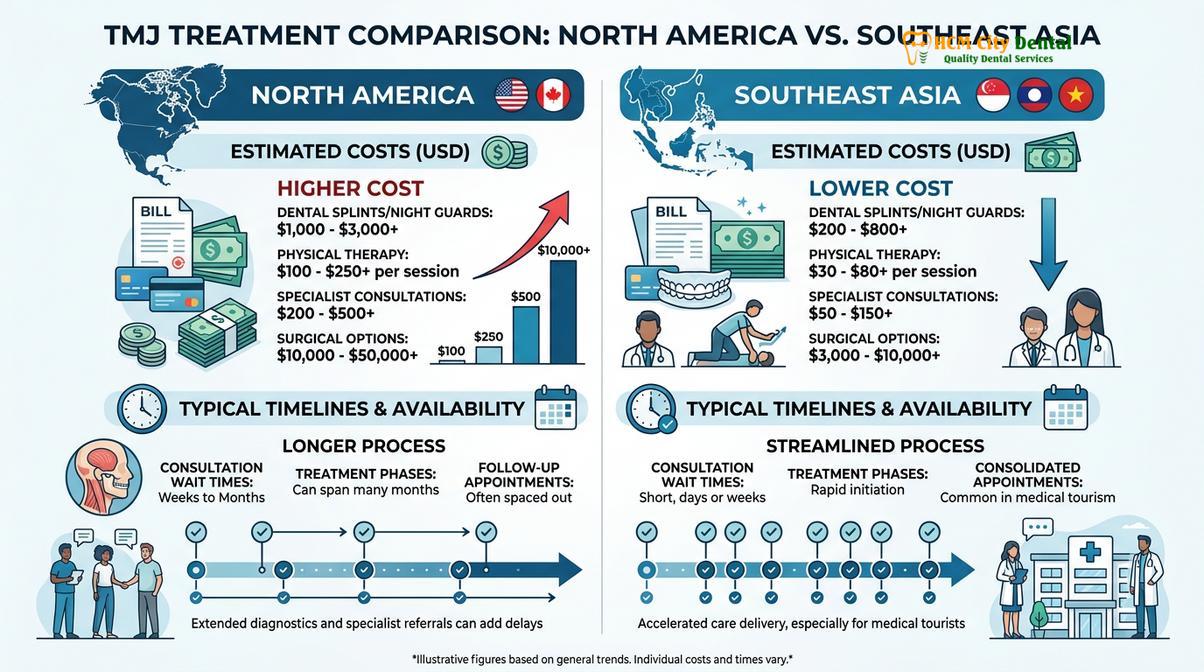
Temporomandibular joint (TMJ) treatment in Vietnam costs approximately 60% to 80% less than in Canada, offering significant savings for uninsured or underinsured patients. While a custom stabilization splint in Vancouver or Toronto may exceed $1,000 CAD, equivalent German-engineered acrylic nightguards in Ho Chi Minh City average $150 to $350 CAD.
Clinical Summary:
Temporomandibular Disorders (TMD) encompass a complex group of musculoskeletal and neuromuscular conditions affecting the temporomandibular joint and associated masticatory musculature. For Canadian patients facing high out-of-pocket expenses for specialized dental care, seeking comprehensive TMJ management in Vietnam presents a clinically viable alternative. Advanced dental centers in Ho Chi Minh City utilize the same globally recognized diagnostic protocols—including Cone Beam Computed Tomography (CBCT) and digital intraoral scanning—as North American clinics. Treatment modalities range from conservative occlusal splint therapy using imported, biocompatible polymethyl methacrylate (PMMA) to advanced interventions like neuromodulator injections and occlusal equilibration. By leveraging lower operational overhead, Vietnamese clinics deliver international-standard care at a fraction of the cost, making multi-disciplinary TMJ rehabilitation highly accessible for international patients.
Key Takeaways:
- Custom TMJ splints in Vietnam cost between $150–$350 CAD, compared to $800–$1,200+ CAD in Canada.
- Diagnostic imaging (CBCT) and digital bite mapping are standard protocols for accurate TMD assessment.
- Vietnamese clinics utilize identical German-engineered acrylics and CAD/CAM milling technologies found in top Canadian labs.
- Expedited digital workflows allow international patients to receive custom-fitted appliances within 3 to 5 days.
- Comprehensive care may include a combination of splint therapy, physical therapy, and targeted neuromodulator injections.
Private Dental Care in Canada: Out-of-Pocket TMJ Costs Explained
Canadian provincial healthcare systems generally exclude routine and specialized dental therapies, leaving TMJ patients reliant on private insurance or out-of-pocket payments for diagnostics and custom splint fabrication.
The Canadian healthcare system, while robust in its coverage of essential medical services, historically categorizes most dental and maxillofacial treatments as non-insured services. Unless a temporomandibular joint disorder requires invasive orthognathic surgery performed in a hospital setting, the financial burden of conservative and non-surgical TMJ management falls entirely on the patient. This structural gap means that diagnostic imaging, clinical consultations, and the fabrication of therapeutic appliances are subject to private clinic fee guides, which vary significantly by province and municipality.
For patients relying on employer-sponsored benefits, navigating coverage can be frustrating. For instance, standard dental insurance Ontario plans often impose strict annual maximums and may categorize TMJ splints under “major restorative” or “orthodontic” tiers, which typically carry a 50% co-pay or exclude the appliance entirely. Consequently, a patient suffering from chronic myofascial pain or disc displacement may quickly exhaust their annual benefits just on the initial diagnostic phase, which often includes panoramic radiographs, Cone Beam Computed Tomography (CBCT), and specialist consultation fees.[1]
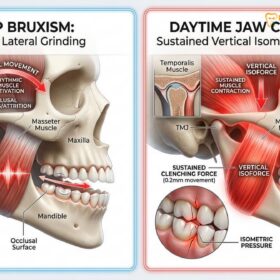
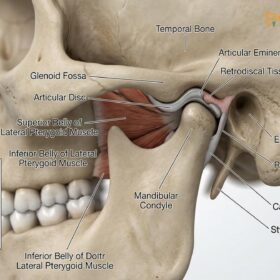
The pathophysiology of Temporomandibular Disorders (TMD) dictates that delayed treatment can lead to progressive joint degeneration. When the articular disc becomes displaced, the resulting bone-on-bone friction can initiate osteoarthritis within the condyle and mandibular fossa. To arrest this degradation, clinicians prescribe rigid stabilization splints designed to decompress the joint space and reprogram the masticatory muscles. However, the high cost of these custom-milled devices in North America frequently acts as a barrier to timely intervention.
“The financial toxicity associated with chronic orofacial pain management in privatized dental markets often forces patients to delay necessary occlusal therapy, inadvertently accelerating degenerative joint changes that later require far more invasive and costly surgical interventions.”
Furthermore, the clinical management of TMD is rarely a single-visit endeavor. It requires a multidisciplinary approach involving initial appliance delivery, subsequent occlusal adjustments, and potentially adjunctive therapies such as physiotherapy or pharmacologic intervention. When every follow-up visit incurs a separate specialist fee, the cumulative out-of-pocket expense in cities like Toronto, Calgary, or Vancouver becomes prohibitive for many individuals, driving the growing trend of medical travel to highly regulated, cost-efficient healthcare hubs in Southeast Asia.
Cost Comparison Table: Vancouver/Toronto vs. District 1 Saigon (CAD/VND)
Patients traveling from Canada to Vietnam can expect to save thousands of dollars on comprehensive TMJ management, including 3D imaging, custom splints, and therapeutic injections.
When evaluating the financial logistics of cross-border dental care, a direct line-item comparison reveals the stark contrast in pricing structures. The cost disparity is not a reflection of compromised material quality or clinical expertise; rather, it is driven by the vastly different macroeconomic factors, including lower commercial real estate costs, reduced administrative overhead, and favorable currency exchange rates. In Ho Chi Minh City (Saigon), particularly in the centrally located District 1, premium dental centers operate with state-of-the-art digital laboratories while maintaining highly competitive fee schedules.
To illustrate the potential savings, consider the standard clinical pathway for a patient presenting with symptomatic bruxism and early-stage disc displacement. The vancouver splint cost alone can consume a patient’s entire dental budget, whereas the equivalent treatment in Vietnam leaves ample room for travel expenses and adjunctive therapies.
| Clinical Procedure / Service | Estimated Cost in Canada (CAD) | Estimated Cost in District 1, Saigon (CAD) | Estimated Cost in Vietnam (VND) |
|---|---|---|---|
| Specialist Consultation & Clinical Exam | $150 – $300 | $0 – $30 (Often Complimentary) | Free – 550,000 ₫ |
| 3D CBCT Imaging (Both Joints) | $250 – $400 | $30 – $50 | 700,000 ₫ – 1,200,000 ₫ |
| Custom Hard Acrylic Stabilization Splint | $800 – $1,500 | $150 – $350 | 3,500,000 ₫ – 8,000,000 ₫ |
| Neuromodulator Injection (Masseter, per session) | $600 – $1,000 | $200 – $400 | 4,500,000 ₫ – 9,500,000 ₫ |
| Comprehensive Occlusal Equilibration | $400 – $800 | $100 – $250 | 2,300,000 ₫ – 5,800,000 ₫ |
Beyond the primary appliance, comprehensive TMJ management often requires addressing the underlying muscular hyperactivity. For patients suffering from severe clenching, clinicians may recommend targeted neuromodulator injections to temporarily paralyze the hypertrophic masseter and temporalis muscles. In Canada, the cost of the neurotoxin combined with the injector’s fee can easily exceed $800 CAD per session. In Vietnam, the exact same FDA-approved neurotoxins (such as Botox® or Dysport®) are administered by licensed maxillofacial specialists for a fraction of the price.[2]
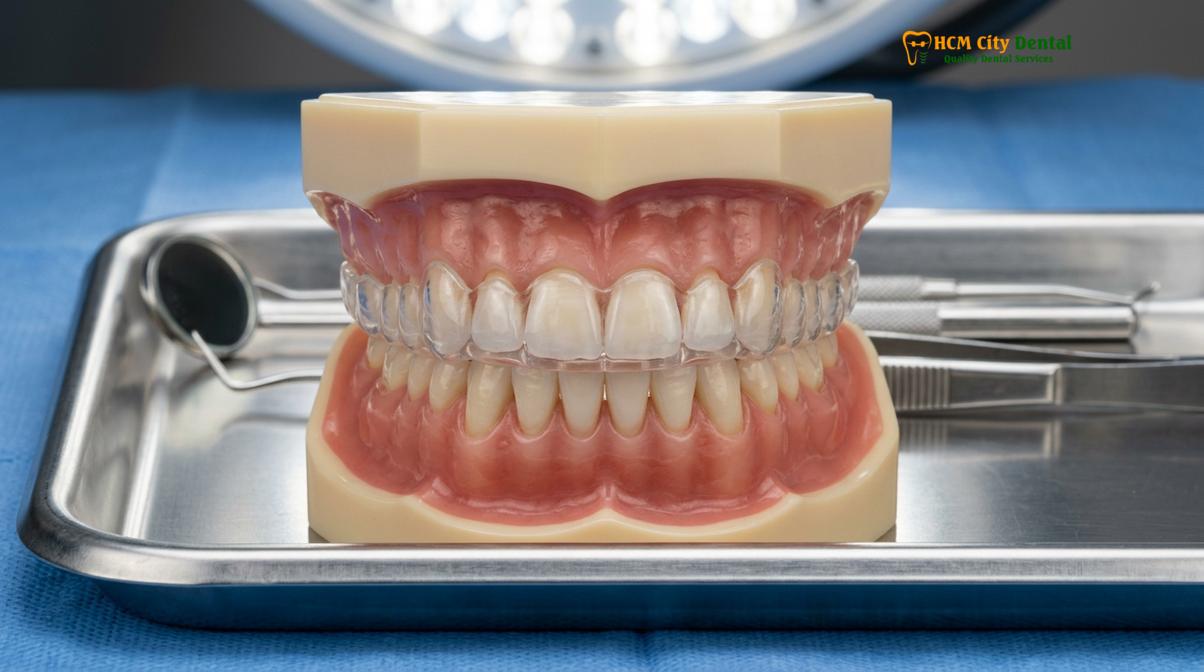
It is crucial to understand that these cost reductions are achieved through operational efficiency. High-volume, internationally focused clinics in Ho Chi Minh City often house their own CAD/CAM milling machines and 3D printers. By eliminating the need to outsource fabrication to third-party commercial laboratories, these clinics drastically reduce both the turnaround time and the final cost passed on to the patient, ensuring that high-fidelity custom nightguards remain accessible.
Travel Package Outlines: Flight Options and District 1 Medical Visits
Coordinating a medical trip requires aligning transpacific flight schedules with clinical appointments to ensure adequate time for diagnostic imaging, appliance fabrication, and precise bite adjustments.
Embarking on a journey for international medical care requires meticulous logistical planning. Fortunately, the rise of specialized dental tourism packages has streamlined the process for North American patients. Ho Chi Minh City’s Tan Son Nhat International Airport (SGN) serves as a major hub, with numerous airlines offering convenient one-stop connections from major Canadian cities such as Vancouver (YVR), Toronto (YYZ), and Montreal (YUL) via transit points in Taipei, Seoul, or Tokyo.
When structuring a trip specifically for TMJ therapy, patients must account for the biological and technical timelines required to fabricate and calibrate a custom intraoral appliance. While a standard dental cleaning can be completed in a single afternoon, treating a temporomandibular disorder demands a phased approach. A typical itinerary for a patient visiting HCMC Dental Clinic in Ho Chi Minh City is structured to maximize clinical efficacy while allowing time for rest and recovery.
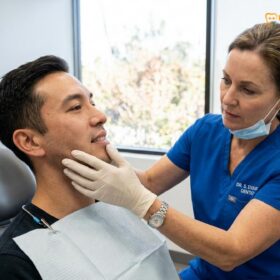
- Day 1: Diagnostics and Data Acquisition. The patient undergoes a comprehensive clinical examination, including muscle palpation, joint auscultation, and a 3D CBCT scan to evaluate condylar positioning. Digital intraoral scanners (such as iTero or Trios) capture the exact topography of the dentition, eliminating the need for uncomfortable traditional putty impressions.
- Day 2: Laboratory Fabrication. The digital impression files are sent to the in-house CAD/CAM laboratory. Specialized software is used to design the splint, ensuring the precise occlusal scheme required to disocclude the posterior teeth and provide anterior guidance. The appliance is then milled from a solid puck of biocompatible acrylic.
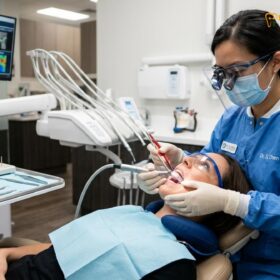
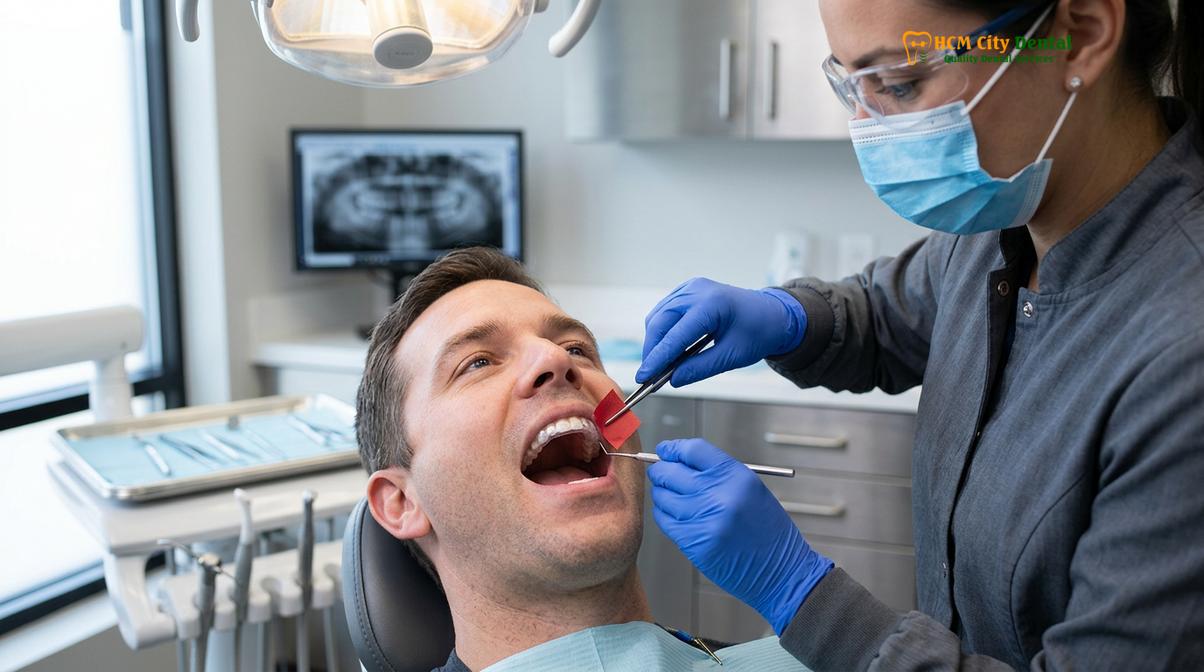
- Day 3: Initial Delivery and Calibration. The milled splint is seated in the patient’s mouth. The clinician uses ultra-thin articulating paper to map the occlusal contacts, making micro-adjustments to ensure even force distribution across the arch.
- Day 5: Follow-up and Final Polish. After wearing the appliance for two nights, the patient returns for a final evaluation. The clinician assesses muscle response, checks for any high spots that may have become apparent during sleep, and performs a final high-gloss polish to prevent bacterial adhesion.
Clinical Case Review: Cross-Border TMJ Rehabilitation
A 42-year-old patient from Calgary presented to HCMC Dental Clinic with chronic bilateral masseter pain and limited maximum incisal opening (28mm). Previous consultations in Canada recommended a treatment plan exceeding $3,500 CAD, which was unfeasible due to limited insurance coverage. Under the care of Dr. Nguyen Van Cuong, the patient underwent a comprehensive diagnostic workup. The treatment protocol included a digitally milled Michigan stabilization splint and bilateral masseter neuromodulator injections to break the cycle of muscle spasm. The total clinical cost was under $600 CAD. Within 72 hours, the appliance was delivered, and by the final follow-up on day six, the patient’s comfortable opening range had improved to 42mm, demonstrating the efficacy of expedited, high-quality international care.
To facilitate this process, many clinics offer dedicated patient coordinators who assist with scheduling, airport transfers, and recommending accommodations in District 1 or District 3, ensuring the patient remains in close proximity to the medical facility. This concierge-level service is a hallmark of modern dental tourism, transforming a potentially stressful medical necessity into a manageable and highly organized experience.
Biocompatible Materials: German-Engineered Acrylics for Canadian Patients
High-quality TMJ stabilization requires rigid, biocompatible materials that resist bruxism forces without warping, utilizing the exact same German-engineered acrylics found in top-tier North American labs.
The success of occlusal splint therapy hinges entirely on the physical properties of the material used. A common misconception among patients is that softer materials provide more comfort. In reality, clinical evidence demonstrates that soft, rubbery nightguards can actually stimulate the masticatory muscles, exacerbating bruxism and increasing joint loading. For therapeutic TMJ management, clinicians universally recommend rigid acrylic appliances that provide a stable, frictionless surface for the opposing teeth to glide against.[3]

Reputable dental centers in Vietnam do not compromise on material science. They import premium, medical-grade polymethyl methacrylate (PMMA) directly from industry-leading manufacturers in Germany, Switzerland, and Liechtenstein. These materials are rigorously tested for biocompatibility, ensuring they are free from bisphenol-A (BPA), residual monomers, and other potential allergens that could irritate the oral mucosa during prolonged nocturnal wear.
The fabrication methodology has also evolved significantly. Historically, hard splints were created using a “salt-and-pepper” technique of mixing acrylic powder and liquid, which often resulted in polymerization shrinkage and a less-than-ideal fit. Today, the gold standard is CAD/CAM milling. A solid, industrially cured puck of PMMA is placed into a 5-axis milling machine, which carves the splint to microscopic tolerances based on the patient’s digital scan. This subtractive manufacturing process eliminates shrinkage, resulting in an appliance that snaps passively onto the dentition without placing orthodontic pressure on the teeth.
Furthermore, the specific design of the appliance is tailored to the patient’s diagnosis. While a standard flat-plane splint may suffice for simple bruxism, patients with disc displacement may require an anterior repositioning splint to temporarily guide the mandible forward and recapture the articular disc. Alternatively, some cases benefit from anterior bite planes, which disengage the posterior teeth entirely to suppress elevator muscle activity. The ability to customize the material and design using advanced digital workflows ensures that international patients receive highly specific, evidence-based therapy.
Advanced Clinical Interventions for Refractory TMJ
When conservative splint therapy is insufficient, advanced clinical interventions such as targeted neuromodulator injections and occlusal equilibration provide necessary relief for chronic temporomandibular joint pain.
While a custom-milled stabilization splint is the cornerstone of TMD management, it is not a panacea for all patients. In cases of chronic, refractory temporomandibular joint pain, a multi-modal approach is often required. When patients travel internationally for care, they benefit from the ability to access a wide range of adjunctive therapies under one roof, guided by experienced specialists.
One of the most effective adjunctive treatments for muscular TMD (myofascial pain syndrome) is the use of botulinum toxin type A. When injected precisely into the bellies of the masseter and temporalis muscles, the neurotoxin inhibits the release of acetylcholine at the neuromuscular junction, effectively reducing the muscle’s ability to contract with excessive force. This does not interfere with normal chewing or speaking but significantly dampens the destructive forces of nocturnal bruxism. Dr. Nguyen Van Cuong frequently integrates this modality for patients presenting with severe muscle hypertrophy and tension headaches, noting that the synergistic effect of a rigid splint and neuromodulators yields the highest success rates for chronic pain resolution.[4]
“The integration of targeted neuromodulator therapy with precise occlusal appliance design represents a paradigm shift in managing refractory TMD. By simultaneously addressing the biomechanical joint space and the hyperactive neuromuscular feedback loop, we can achieve profound and sustained pain relief for patients who have failed conservative monotherapy.”
Another critical intervention is occlusal equilibration, also known as bite adjustment. In some instances, TMD is exacerbated by micro-interferences in the way the upper and lower teeth interlock. A premature contact on a single molar can trigger proprioceptive avoidance patterns, causing the jaw muscles to constantly shift the mandible into an unnatural position to avoid the high spot. Using computerized occlusal analysis systems (such as T-Scan), clinicians can measure the exact force and timing of tooth contacts in real-time. By selectively and conservatively reshaping the enamel or existing restorations, the clinician can harmonize the bite, allowing the condyle to seat fully and comfortably in the fossa without muscular bracing.[5]
When to See a Doctor for TMJ Symptoms
While many instances of jaw clicking or mild muscle fatigue are transient and self-limiting, certain clinical signs indicate the need for immediate professional evaluation. Delaying treatment for acute temporomandibular joint pathology can lead to irreversible joint damage, chronic pain syndromes, and severe functional impairment. Patients should not attempt to self-diagnose or rely solely on over-the-counter, boil-and-bite mouthguards, which can often worsen the condition by altering the bite unpredictably.
Important Clinical Considerations & Red Flags
Seek immediate evaluation from a qualified dental professional or maxillofacial specialist if you experience any of the following symptoms:
- Jaw Locking: Inability to open the mouth fully (closed lock) or inability to close the mouth (open lock), indicating severe disc displacement or joint subluxation.
- Radiating Neuropathic Pain: Sharp, electric-shock-like pain radiating down the neck, into the ear, or across the face, which may indicate nerve impingement or trigeminal neuralgia.
- Sudden Changes in Occlusion: A sudden feeling that your teeth no longer fit together properly, which can be a sign of acute joint effusion (swelling) or condylar degradation.
- Unexplained Ear Symptoms: Severe tinnitus (ringing in the ears), dizziness, or a feeling of fullness in the ear that has been cleared by an ENT specialist but persists alongside jaw pain.
Disclaimer: The information provided is for educational purposes and does not substitute for a personalized clinical examination. Treatment candidacy depends on comprehensive diagnostic imaging and professional assessment.

Frequently Asked Questions
Will Canadian health insurance reimburse TMJ dental work in Vietnam?
Most Canadian provincial health plans do not cover out-of-country dental care, but private extended health insurance may reimburse a portion of the cost. Patients must request a detailed, translated clinical invoice and treatment code breakdown from their Vietnamese clinic to submit to their Canadian provider for potential out-of-network reimbursement. Coverage depends entirely on the specific terms of your private policy, particularly regarding international major restorative or orthodontic codes.
How much does a custom stabilization splint cost in CAD?
A custom hard acrylic stabilization splint in Vietnam typically costs between $150 and $350 CAD, depending on the complexity and fabrication method. This represents a significant reduction compared to Canadian clinics, where the exact same laboratory-milled appliance often ranges from $800 to over $1,200 CAD. The lower cost is due to reduced laboratory overhead and operational expenses, not a reduction in material quality.
Can I complete my diagnostic scan and splint delivery within 3 days?
Yes, expedited digital workflows allow for diagnostic scanning and splint delivery within a 3-day timeframe. By utilizing intraoral scanners and in-house CAD/CAM milling, clinics can capture your bite on day one, fabricate the appliance on day two, and perform the final occlusal calibration on day three. However, patients are advised to stay an additional 2-3 days to allow for a follow-up visit to ensure the splint requires no further micro-adjustments after initial nocturnal use.
Are the materials used for TMJ nightguards in Vietnam safe and biocompatible?
Yes, reputable clinics in Vietnam utilize internationally certified, biocompatible materials imported directly from Germany, Switzerland, or the United States. These medical-grade polymethyl methacrylate (PMMA) acrylics are identical to those used in top-tier North American dental laboratories, ensuring safety, durability, and precise fit. They are strictly regulated to be free of harmful monomers and BPA.
How long does a hard acrylic TMJ splint typically last?
A professionally fabricated hard acrylic TMJ splint generally lasts between three to five years with proper care and maintenance. However, patients with severe bruxism may wear down the occlusal surface faster, requiring periodic clinical adjustments or earlier replacement to maintain optimal joint stabilization. Regular cleaning with non-abrasive solutions and storing the appliance properly when not in use will significantly extend its lifespan.
References
- Journal of the American Dental Association. Occlusal splint therapy for temporomandibular disorders: a clinical review. (2020).
- Journal of Oral Rehabilitation. Efficacy of Michigan repositioning splints in TMD patients. (2019).
- Journal of Prosthetic Dentistry. Computerized occlusal analysis and bite mapping in TMJ therapy. (2021).
- Clinical Oral Investigations. Masseter Botox injections for chronic jaw pain and bruxism. (2018).
- International Journal of Oral and Maxillofacial Surgery. TMJ arthrocentesis and hyaluronic acid injections. (2022).