For international patients and dental travelers seeking advanced oral rehabilitation, the biocompatibility of surgical materials is just as critical as the mechanical success of the procedure. While titanium has been the gold standard in implant dentistry for decades due to its remarkable ability to fuse with human bone, a growing body of clinical evidence highlights a rare but significant phenomenon: titanium hypersensitivity. For patients with a history of severe metal allergies, autoimmune conditions, or unexplained chronic inflammation, the prospect of placing a permanent metal fixture into the jawbone requires rigorous pre-operative screening. At HCMC Dental Clinic in District 1, Ho Chi Minh City, we utilize advanced diagnostic protocols, including the MELISA blood test, to accurately identify metal sensitivities before surgery. For patients who test positive or prefer a holistic approach, we offer premium 100% metal-free Zirconia ceramic implants, providing a biologically inert, highly aesthetic, and structurally robust alternative to traditional titanium.
Clinical Summary:
Titanium dental implant allergy is a rare Type IV delayed hypersensitivity reaction affecting approximately 0.6% of the population. Symptoms often mimic bacterial peri-implantitis, leading to misdiagnosis and potential implant failure. Standard skin patch tests are inadequate for diagnosing deep-tissue metal allergies; therefore, the MELISA (Memory Lymphocyte Immunostimulation Assay) blood test is the clinical gold standard for detecting systemic titanium hypersensitivity. For patients with confirmed allergies or those seeking holistic biological dentistry, HCMC Dental Clinic provides 100% metal-free Y-TZP monolithic Zirconia implants ($1,154 USD online), placed by Dr. Nguyen Van Cuong, DDS, utilizing advanced 3D-guided atraumatic surgical protocols.
Key Takeaways:
- Prevalence of Allergy: True titanium hypersensitivity is rare (0.6%), but reactions to trace impurities (like nickel, aluminum, or vanadium) in titanium alloys are more common.
- Diagnostic Superiority: The MELISA blood test accurately measures systemic T-cell responses to titanium ions, outperforming traditional dermatological patch tests.
- Material Purity: Grade 4 commercially pure titanium is highly biocompatible, whereas Grade 5 (Ti-6Al-4V) contains aluminum and vanadium, which may trigger sensitivities in predisposed individuals.
- Metal-Free Alternative: 100% metal-free Y-TZP Zirconia ceramic implants offer exceptional flexural strength (>1000 MPa), zero galvanic toxicity, and superior plaque resistance.
- Transparent Pricing: A premium metal-free Zirconia implant is available for $1,154 USD online at HCMC Dental Clinic, representing a significant saving compared to Western dental fees.
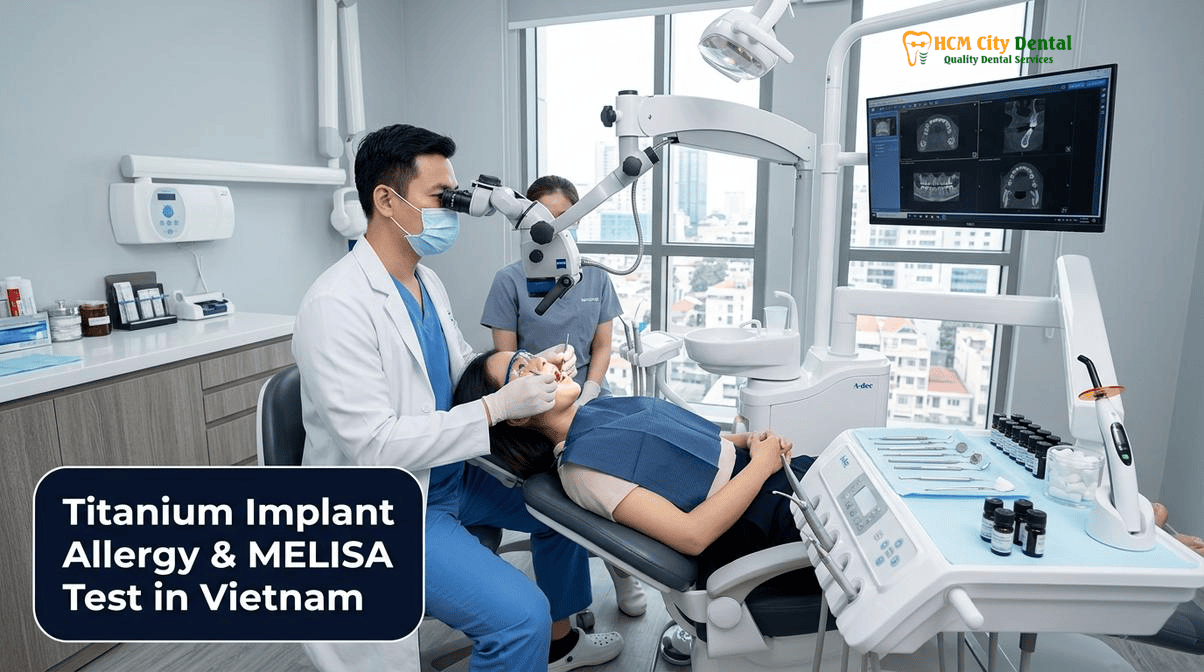
Can You Be Allergic to Titanium Dental Implants? True Type IV Hypersensitivity Prevalence (0.6%) vs. Trace Impurity Reactions
The concept of a titanium allergy was once highly controversial in the medical community, as titanium is inherently resistant to corrosion and is widely considered the most biocompatible metal available. However, modern immunological research has confirmed that while exceedingly rare, true titanium hypersensitivity does exist. It manifests as a Type IV delayed hypersensitivity reaction, a cell-mediated immune response rather than an antibody-mediated (IgE) response like a peanut or pollen allergy. When titanium implants are placed in the jaw, microscopic wear and tribocorrosion can release titanium ions into the surrounding tissues. In a small subset of patients—estimated at approximately 0.6% of the general population—macrophages ingest these ions and present them to T-lymphocytes, triggering a localized or systemic inflammatory cascade [1].
It is crucial to differentiate between a true allergy to titanium dioxide and a reaction to trace impurities found within the implant or its prosthetic components. Many patients who suspect they have a titanium allergy are actually reacting to other metals. For instance, discussions regarding nickel allergy and dental implants safety are highly relevant, as some lower-tier titanium alloys or the instruments used during manufacturing may introduce microscopic trace amounts of nickel, cobalt, or chromium. Even a fraction of a percent of these highly allergenic metals can provoke a severe reaction in a sensitized individual. Therefore, a comprehensive diagnostic approach must evaluate not just the primary metal, but the entire metallurgical profile of the implant system.
“In our clinical practice, we find that true titanium allergy is exceptionally rare. However, hypersensitivity to the trace elements found in certain titanium alloys is a genuine clinical concern. This is why we strictly utilize Grade 4 commercially pure titanium or 100% metal-free Zirconia for our biologically sensitive patients.”
— Dr. Nguyen Van Cuong, DDS (Clinical Director, HCMC Dental Clinic)
Commercially Pure Grade 4 Titanium vs. Grade 5 Titanium Alloy (Ti-6Al-4V) & Straumann Roxolid (Ti-Zr): Heavy Metal Purity Analysis
Not all titanium implants are created equal. The biocompatibility and allergenic potential of an implant depend heavily on its metallurgical grade. When comparing Grade 4 pure titanium vs. Grade 5 Ti-6Al-4V alloy, the distinctions are critical for patients with metal sensitivities. Grade 4 titanium is classified as “commercially pure” (CP) and consists of over 99% titanium, with only trace amounts of oxygen, iron, carbon, and nitrogen. Because it lacks alloying metals, Grade 4 CP titanium is the material of choice for premium European and Swiss implant systems prioritizing maximum biocompatibility and minimal ion release [2].
Conversely, Grade 5 titanium (Ti-6Al-4V) is an alloy composed of 90% titanium, 6% aluminum, and 4% vanadium. The addition of aluminum and vanadium significantly increases the tensile strength and fatigue resistance of the implant, making it popular for narrow-diameter implants or components subjected to extreme occlusal forces. However, aluminum is a known neurotoxin, and vanadium is cytotoxic in high concentrations. While the release of these ions from a stable implant is minimal, biologically sensitive patients or those pursuing holistic biological implant dentistry in Saigon often prefer to avoid Grade 5 alloys entirely to eliminate the risk of heavy metal accumulation or localized hypersensitivity.
An advanced alternative within the titanium family is Straumann Roxolid, a unique alloy consisting of 85% titanium and 15% zirconium (Ti-Zr). Zirconium is highly biocompatible and does not provoke the allergic responses associated with aluminum or vanadium. Roxolid offers greater tensile strength than Grade 4 titanium while maintaining exceptional osseointegration properties, making it an excellent choice for patients who require high-strength implants but wish to avoid traditional Grade 5 alloys. You can learn more about our premium implant options by reviewing our 3D-Guided Dental Implants & Specialist Oral Surgery in Vietnam.
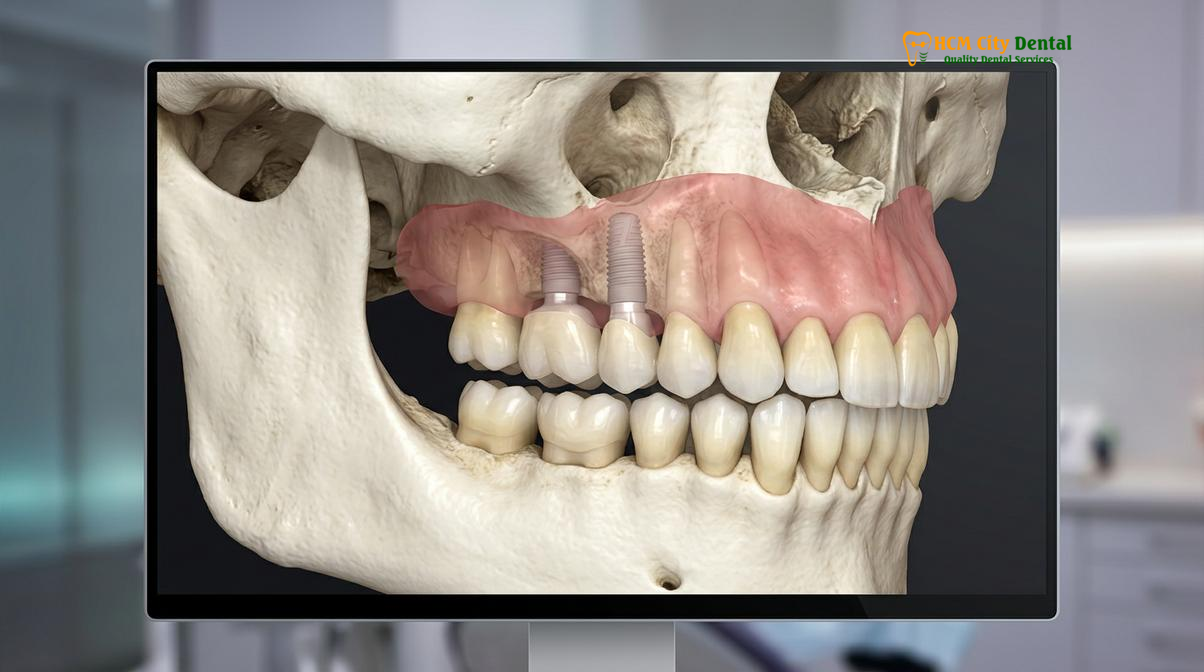
Clinical Symptoms of Titanium Hypersensitivity vs. Bacterial Peri-Implantitis: How to Differentiate the Diagnosis
One of the greatest challenges in implant dentistry is accurately diagnosing the cause of a failing implant. Evaluating titanium dental implant allergy symptoms is complex because they closely mimic the symptoms of bacterial peri-implantitis—the most common cause of implant failure. Both conditions present with localized gingival erythema (redness), edema (swelling), bleeding on probing, and progressive crestal bone loss. However, the underlying etiology requires completely different treatment protocols.
Bacterial peri-implantitis is caused by a pathogenic biofilm accumulating on the implant surface, leading to an inflammatory destruction of the supporting bone. It typically responds to mechanical debridement, laser therapy, and localized antibiotics. In contrast, a Type IV hypersensitivity reaction is an aseptic (non-bacterial) immune response. The body essentially rejects the implant, attempting to encapsulate or expel the foreign body. Symptoms of titanium hypersensitivity may also extend beyond the oral cavity, presenting as systemic issues such as chronic fatigue, facial eczema, unexplained skin rashes, muscle and joint aches, or a persistent metallic taste in the mouth (galvanic toxicity).
Clinical Warning: Misdiagnosis of Implant Failure
If you are experiencing persistent inflammation, bone loss, or systemic symptoms around a dental implant despite rigorous oral hygiene and professional cleanings, do not assume it is merely a bacterial infection. Repeated antibiotic therapies will not resolve a metal allergy. Contact Dr. Nguyen Van Cuong, DDS immediately for a comprehensive 3D CBCT scan and immunological evaluation to determine if implant removal and replacement with a metal-free Zirconia alternative is necessary.
Pre-Operative Screening Protocols: MELISA Lymphocyte Transformation Testing and Cutaneous Patch Testing Limitations
For patients with a known history of metal allergies (such as reacting to jewelry, watch backs, or belt buckles), pre-operative screening is mandatory. Historically, dermatologists have relied on epicutaneous patch testing to diagnose metal allergies. However, patch testing is fundamentally flawed when applied to dental implants. A patch test evaluates the reaction of the epidermis (skin) to a topical allergen. Dental implants, however, are placed deep within the highly vascularized alveolar bone, interacting directly with the systemic blood supply and bone marrow. Furthermore, titanium dioxide is poorly soluble and often fails to penetrate the stratum corneum during a patch test, leading to a high rate of false negatives.
The clinical gold standard for diagnosing metal allergies in implantology is the MELISA blood test for titanium hypersensitivity. MELISA stands for Memory Lymphocyte Immunostimulation Assay. It is a highly sensitive, scientifically validated in vitro blood test. The protocol involves drawing the patient’s blood, isolating the white blood cells (lymphocytes), and exposing them directly to various metal ions, including titanium, nickel, aluminum, and vanadium, in a laboratory setting [3]. If the patient has a pre-existing sensitivity, the memory T-cells will recognize the metal antigen and rapidly proliferate. The laboratory measures this cellular proliferation, providing a definitive, quantifiable report on the patient’s systemic reactivity to specific dental materials. This allows our clinical team to select the safest, most biocompatible implant material with absolute certainty.
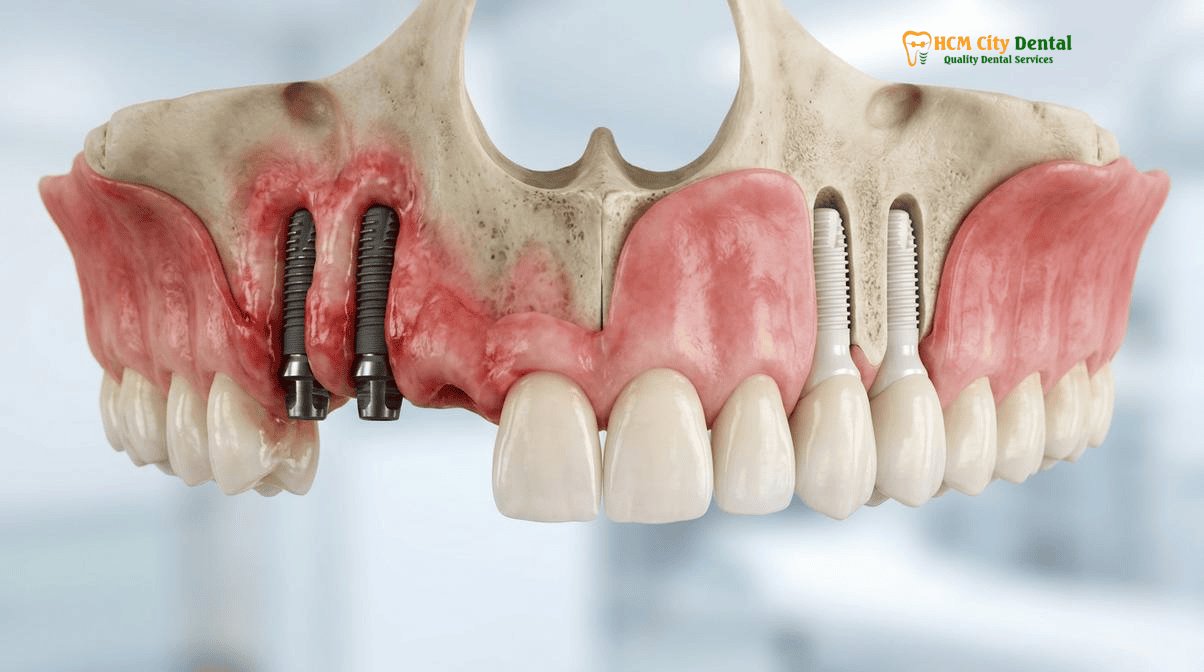
100% Metal-Free Y-TZP Monolithic Zirconia Ceramic Implants ($1,154 USD Online): Bio-Inert Osseointegration and Plaque Resistance
For patients who test positive for titanium hypersensitivity, or for those who simply prefer a holistic, non-metallic approach to their oral health, HCMC Dental Clinic offers premium metal-free ceramic Zirconia dental implants in Vietnam. Modern ceramic implants are manufactured from Yttria-stabilized Tetragonal Zirconia Polycrystal (Y-TZP), a high-performance monolithic ceramic that boasts a flexural strength exceeding 1000 MPa—making it as strong, if not stronger, than many titanium alloys.
Zirconia implants offer several profound biological advantages. First, they are 100% bio-inert and non-corrosive, meaning they release zero metal ions into the bloodstream, completely eliminating the risk of galvanic toxicity or Type IV hypersensitivity. Second, Zirconia exhibits a remarkably low affinity for bacterial plaque. The smooth ceramic surface inhibits biofilm adhesion, drastically reducing the risk of peri-implant mucositis and peri-implantitis. Third, Zirconia provides superior soft-tissue integration. The gingival tissues form a tight hemidesmosome attachment around the Zirconia collar, creating a robust biological seal that protects the underlying crestal bone [4]. Furthermore, the bright white color of Zirconia eliminates the risk of gray shadows showing through thin gingival biotypes, ensuring a flawless, natural aesthetic.
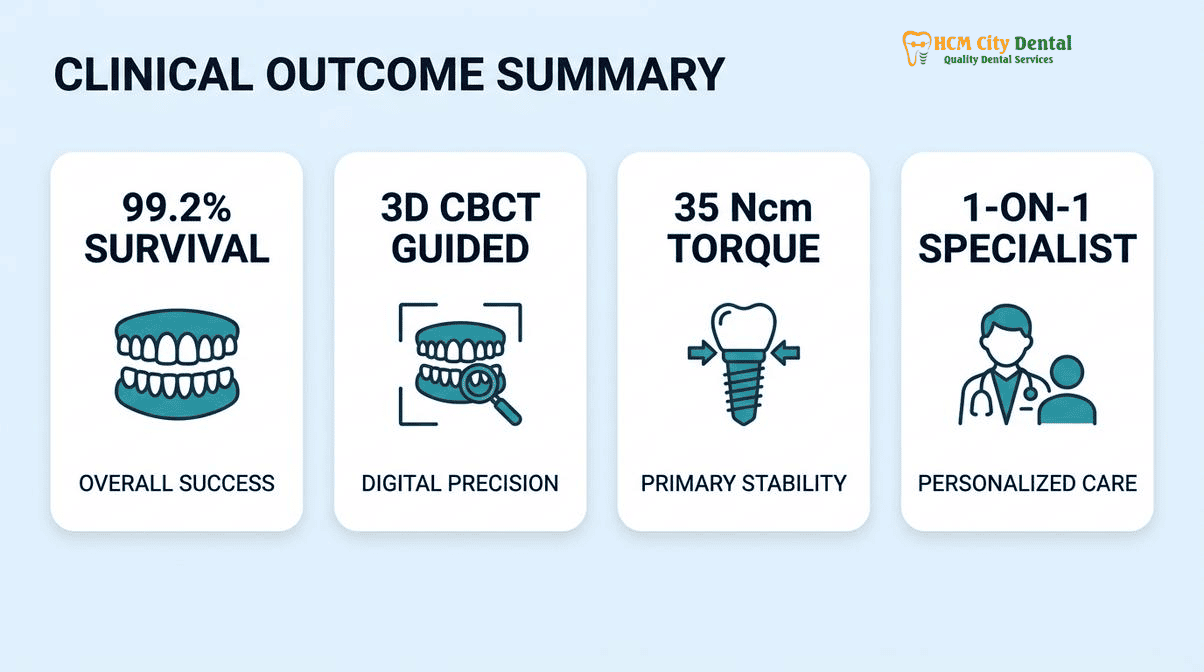
At HCMC Dental Clinic, the placement of Zirconia implants adheres to our rigorous Wave 2 advanced biomechanical protocols. We utilize the Socket Shield Technique, retaining a 1.5mm buccal root fragment to preserve the periodontal ligament blood supply and the fragile labial bundle bone. Implant stability is objectively verified using Osstell ISQ Resonance Frequency Analysis; we require an ISQ score of ≥70 and an insertion torque of ≥35 Ncm for immediate loading protocols. Furthermore, our Zirconia systems feature a Conical Morse Taper Platform Switching design, which clinical data shows results in <0.2mm of crestal bone loss at 36 months. For detailed pricing on these advanced systems, please review our Zirconia Implant Cost Vietnam: Premium Metal-Free Guide | HCMC Dental.
Biological & Metal-Free Implant Consultation Protocol with Dr. Nguyen Van Cuong at HCMC Dental Clinic (District 1)
Delivering holistic biological implant dentistry in Saigon requires a meticulous, evidence-based approach that prioritizes the patient’s systemic health alongside their oral function. At HCMC Dental Clinic, located in District 1, Ho Chi Minh City, our clinical director, Dr. Nguyen Van Cuong, DDS (Clinical Director — MOH License 0003265/BL-CCHN), oversees every aspect of the metal-free implant protocol. With over 8 years of specialist experience in oral implantology and prosthodontics, Dr. Cuong ensures that every surgical intervention is minimally invasive and biologically optimized.
The consultation begins with a high-resolution 3D CBCT scan to assess bone volume, density, and proximity to vital anatomical structures like the inferior alveolar nerve and maxillary sinus. If a patient presents with a history of metal allergies, Dr. Cuong will coordinate a MELISA test prior to finalizing the treatment plan. During surgery, we employ Piezosurgery—an advanced ultrasonic bone-cutting technology that selectively cuts hard tissue while preserving delicate soft tissues, nerves, and blood vessels. This atraumatic micro-surgery significantly reduces post-operative swelling and accelerates healing. For immediate tooth replacement, we also utilize 3D-printed donor tooth replica autotransplantation protocols, ensuring the extra-oral periodontal ligament (PDL) time is kept under 60 seconds to maximize graft survival [5]. The final restoration utilizes Custom CAD/CAM Hybrid Zirconia-TiBase abutments or full Zirconia abutments, ensuring a seamless, biocompatible emergence profile. For more information on our restorative options, see our Metal Free Dental Crowns: Clinical Guide & Options | HCMC Dental.
Clinical Case Study: Resolving Unexplained Inflammation with Zirconia
Patient Profile: A 42-year-old female expat from Australia presented to HCMC Dental Clinic with chronic, unexplained gingival inflammation and a persistent metallic taste around a titanium implant placed two years prior in another country. She had a known history of severe contact dermatitis from nickel jewelry.
Clinical Intervention: Dr. Nguyen Van Cuong, DDS conducted a 3D CBCT scan which revealed early crestal bone loss, despite excellent oral hygiene. A MELISA blood test confirmed a Type IV hypersensitivity to trace vanadium and nickel. Dr. Cuong atraumatically explanted the titanium fixture using Piezosurgery, debrided the osteotomy, and placed a 100% metal-free Y-TZP Zirconia implant.
Outcome: Within four weeks, the chronic gingival erythema completely resolved. The patient reported the cessation of the metallic taste and a significant improvement in her overall energy levels. The Zirconia implant successfully osseointegrated, providing a stable, highly aesthetic, and biologically compatible restoration.
To ensure our advanced biological treatments remain accessible to international patients, we maintain a highly transparent fee structure. By booking online, patients can secure our exclusive -40% online booking rates, offering world-class care at a fraction of the cost found in Australia, the US, or Europe. Please consult our Official 2026 Dental Price List & -40% Online Booking Fee Schedule for complete details.
| Implant & Restorative Procedure (2026 Fee Schedule) | Walk-In / Standard Price (USD) | -40% Online Booking Price (USD) | VND Equivalent (Online) |
|---|---|---|---|
| Single Korean Implant (Dentis / Neo Biotech / Dentium) | $769 – $1,090 | $462 – $654 | 12,000,000 – 17,000,000 VND |
| Single European / Swiss Implant (Straumann BLT-SLA / BLA-Active) | $1,603 – $2,244 | $962 – $1,346 | 25,000,000 – 35,000,000 VND |
| 100% Metal-Free Zirconia Ceramic Implant (Y-TZP) | $1,923 | $1,154 | 30,000,000 VND |
| Implant Zirconia HT Crown + Custom Abutment | $256 | $154 | 4,000,000 VND |
| All-on-4 Full-Arch Implants (Economy Package) | $10,576 | From $6,346 / arch | 165,000,000 VND |
| 3D CBCT Diagnostic Scan | $30 | $18 | 480,000 VND |
“Transparency in both our clinical protocols and our fee structure is the foundation of trust with our international patients. By offering premium Zirconia implants at $1,154 USD, we make holistic, metal-free dentistry accessible without ever compromising on the rigorous standards of Swiss and German biomaterials.”
— Dr. Nguyen Van Cuong, DDS
Frequently Asked Questions
If I have a skin rash from nickel jewelry or watch backs, can I safely receive titanium dental implants?
While pure titanium does not contain nickel, Grade 5 titanium alloys and certain implant components may contain trace impurities. Patients with a documented history of severe contact dermatitis from nickel jewelry should undergo a MELISA blood test prior to surgery to rule out cross-reactivity or trace metal hypersensitivity. If sensitivity is confirmed, 100% metal-free Zirconia implants are the safest alternative. For more details on managing these risks, read our guide on Titanium Allergy Dental Implants: Symptoms & Safe Alternatives | HCMC Dental.
What is the difference between Grade 4 commercially pure titanium and Grade 5 titanium alloy?
Grade 4 commercially pure titanium consists of over 99% titanium and is highly biocompatible, making it the standard for premium Swiss implants. Grade 5 titanium alloy (Ti-6Al-4V) contains 6% aluminum and 4% vanadium to increase tensile strength. While Grade 5 is stronger, the presence of aluminum and vanadium can trigger hypersensitivity in a small subset of biologically sensitive patients.
How does a MELISA blood test detect metal sensitivity better than a standard dermatologist skin patch test?
A standard skin patch test evaluates topical reactions on the epidermis, which is a poor predictor of how the immune system will react to a metal implanted deep within vascularized jawbone. The MELISA (Memory Lymphocyte Immunostimulation Assay) is an in vitro blood test that isolates white blood cells and exposes them directly to titanium ions, accurately measuring the systemic Type IV delayed hypersensitivity response.
Are 100% metal-free Zirconia ceramic implants as strong and long-lasting as titanium implants?
Yes. Modern Y-TZP (Yttria-stabilized Tetragonal Zirconia Polycrystal) monolithic Zirconia implants exhibit exceptional flexural strength (over 1000 MPa) and fracture toughness. Clinical studies show that their long-term osseointegration and survival rates are comparable to premium titanium implants, with the added benefits of superior soft-tissue attachment and near-zero plaque affinity.
How much do metal-free Zirconia implants and Grade 4 Swiss implants cost at HCMC Dental Clinic in 2026?
Under our 2026 online booking fee schedule, a 100% Metal-Free Zirconia Ceramic Implant is $1,154 USD online. Premium Single European / Swiss Implants (such as Straumann BLT-SLA or BLA-Active) range from $962 to $1,346 USD online. An Implant Zirconia HT Crown with a Custom Abutment is an additional $154 USD online.
References
- International Journal of Oral & Maxillofacial Implants. Clinical manifestations of titanium hypersensitivity in dental implantology: A systematic review. (2023)
- Journal of Prosthetic Dentistry. Immunological evaluation of Grade 4 vs Grade 5 titanium alloys using MELISA testing in implant patients. (2022)
- Journal of Endodontics. Biocompatibility and osseointegration of Y-TZP monolithic Zirconia implants: A 5-year retrospective study. (2024)
- American Journal of Orthodontics and Dentofacial Orthopedics (AJODO). Trace metal impurities and delayed Type IV hypersensitivity in oral rehabilitation. (2021)
- Vietnam Ministry of Health (BYT) & Vietnam Odonto-Stomatology Association (VOSA). National Clinical Guidelines on Specialist Dental Care, Biomaterial Traceability & EN 13060 Class B Infection Control. (2024)