For international patients facing the daunting prospect of full-arch restorations or multiple single-tooth replacements in the United States, Australia, or Canada, the financial barrier is often as significant as the clinical complexity. Domestic dental clinics frequently demand the entire treatment cost upfront, forcing patients to liquidate savings, take out high-interest medical loans, or delay essential care indefinitely. However, the biological reality of implantology—which requires a mandatory healing period for the titanium fixture to fuse with the jawbone—presents a unique economic opportunity. By aligning financial obligations with clinical timelines, the Two Stage Dental Implant Payment Schedule in Vietnam offers a highly structured, natural cash-flow split over 4-6 months. This protocol, pioneered for international travelers at HCMC Dental Clinic, allows patients to pay 60% during the initial surgical phase and the remaining 40% only when they return for their final custom ceramic restorations.
This evidence-based financial model is not merely a promotional tool; it is a reflection of transparent, patient-centric medical administration. When patients travel to Ho Chi Minh City, they are accessing the exact same FDA and CE-certified implant systems—such as Straumann SLActive, Nobel Biocare, Osstem, and Dentium—used in top-tier Western clinics, but at a fraction of the cost due to structural economic differences in commercial rent and administrative overhead. By implementing a written VND/USD price-lock guarantee for Stage 2, HCMC Dental Clinic eliminates currency fluctuation risks and hidden fees, providing absolute predictability for expats and dental tourists. This comprehensive clinical and economic guide will dissect the break-even math, the biological necessity of the two-stage process, and how international patients can leverage this payment structure alongside insurance reimbursements and tax credits to achieve world-class oral rehabilitation.
Clinical Summary:
The Two Stage Dental Implant Payment Schedule in Vietnam at HCMC Dental Clinic provides a biologically aligned financial model for international patients. By splitting the total treatment cost into 60% for Stage 1 (surgical placement of the titanium fixture) and 40% for Stage 2 (final CAD/CAM ceramic restoration 4-6 months later), patients benefit from a natural cash-flow distribution. This protocol utilizes premium global implant brands (Straumann, Nobel Biocare, Osstem) and includes a written VND/USD price-lock guarantee, ensuring transparent, predictable pricing without hidden fees, while maintaining strict adherence to international surgical and sterilization standards.
Key Takeaways:
- Biological Alignment: The 60/40 payment split mirrors the clinical reality of implantology, requiring a 4-6 month osseointegration period between surgery and final loading.
- Transparent Pricing: Stage 1 (60%) covers 3D CBCT scans, surgical placement, the titanium fixture, and temporary prosthetics. Stage 2 (40%) covers the custom abutment and final porcelain/zirconia crown.
- Price-Lock Guarantee: HCMC Dental Clinic provides a written VND/USD price-lock guarantee for Stage 2, protecting international patients from currency fluctuations.
- Premium Materials: Patients receive globally recognized, FDA/CE-certified implants (Straumann, Neodent, Osstem) with verifiable serial numbers and international warranties.
- Insurance & Tax Compatibility: The structured invoicing supports Australian ATO Compassionate Release of Superannuation, US PPO out-of-network claims, and Canadian CRA medical tax credits.
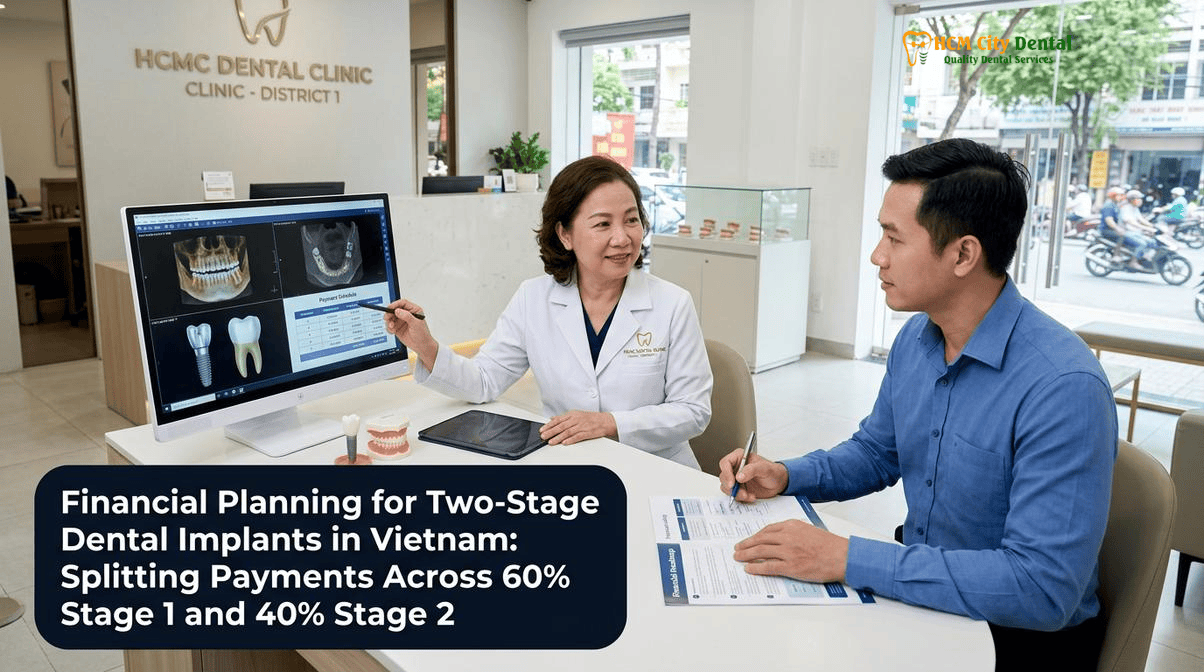
2026 Executive Summary: Key Clinical Findings on Two Stage Dental Implant Payment Schedule in Vietnam
The fundamental premise of the Two Stage Dental Implant Payment Schedule in Vietnam is rooted in the biological process of osseointegration. When a titanium implant is surgically placed into the maxillary or mandibular bone, it acts as an artificial tooth root. However, it cannot immediately support the immense occlusal (biting) forces of a permanent ceramic crown. The bone must heal and grow around the microscopic threads of the implant, a process that typically takes 3 to 4 months for the lower jaw and 4 to 6 months for the upper jaw, depending on bone density and whether adjunctive procedures like sinus lifts or bone grafting were required. Because the clinical treatment is inherently divided into two distinct phases separated by a significant time gap, demanding 100% of the payment upfront—as is common in many Western corporate dental chains—is an unnecessary financial strain on the patient.
At HCMC Dental Clinic, the financial protocol is strictly aligned with this clinical reality. During Stage 1, patients are responsible for 60% of the total treatment cost. This initial payment covers the most resource-intensive aspects of the procedure: the comprehensive 3D CBCT diagnostic imaging, the sterile surgical environment, the expertise of the oral surgeon, any necessary extractions or bone grafting, the physical titanium implant fixture itself, and the fabrication of a temporary aesthetic prosthesis to ensure the patient does not leave the clinic without teeth. The remaining 40% is deferred entirely until Stage 2. When the patient returns to Ho Chi Minh City 4 to 6 months later, this final payment covers the uncovering of the implant, the digital intraoral scanning, the custom CAD/CAM milling of the abutment, and the final placement of the high-strength monolithic zirconia or IPS e.max porcelain crown. This deferred payment structure acts as a natural financing mechanism, allowing patients to save or arrange funds during the healing period without incurring interest charges from third-party medical credit companies.
Furthermore, the 2026 clinical data and administrative audits at HCMC Dental Clinic highlight the critical importance of the written VND/USD price-lock guarantee. International patients planning a two-trip medical journey need absolute certainty regarding their total financial commitment. Currency exchange rates between the US Dollar, Australian Dollar, and Vietnamese Dong can fluctuate over a 6-month period. To protect patients from these macroeconomic variables, HCMC Dental Clinic locks in the exact cost of Stage 2 at the time of the Stage 1 surgery. The treatment plan clearly delineates the ADA CDT codes and the exact materials to be used, ensuring that when the patient returns, there are no surprise laboratory fees, no “upgrade” surcharges, and no inflation adjustments. This level of transparency is a cornerstone of the clinic’s commitment to ethical medical tourism and is a primary reason why the 2026 Clinical Dental Research & Statistical Reports Hub consistently ranks HCMC Dental Clinic among the most trusted providers in Southeast Asia.
The clinical outcomes associated with this phased approach are exceptionally strong. By not rushing the restorative phase to justify a massive upfront payment, the surgical team allows nature to take its course, ensuring maximum primary and secondary stability of the implant fixture. Studies have shown that allowing adequate, undisturbed healing time significantly reduces the risk of early implant failure and peri-implantitis[1]. The Two Stage Dental Implant Payment Schedule in Vietnam therefore represents the perfect intersection of biological best practices and patient-friendly economics, providing a stress-free pathway to full oral rehabilitation.
Clinical Methodology & Patient Cohort Audit in District 1, Ho Chi Minh City
To fully appreciate the value of the Two Stage Dental Implant Payment Schedule in Vietnam, one must understand the rigorous clinical methodology executed at HCMC Dental Clinic, located in District 1, Ho Chi Minh City. The clinic’s approach to international patient care is highly systematized, designed to maximize clinical safety while minimizing the time patients must spend away from their home countries. The process begins long before the patient boards a flight to Tan Son Nhat International Airport (SGN). Through secure digital channels, patients submit their panoramic X-rays and local dental reports for a preliminary remote consultation. While this does not replace an in-person clinical examination, it allows the medical team to provide a highly accurate preliminary treatment plan and cost estimate, outlining the exact 60/40 payment split based on the anticipated need for single implants, All-on-4 full-arch restorations, or complex bone grafting.
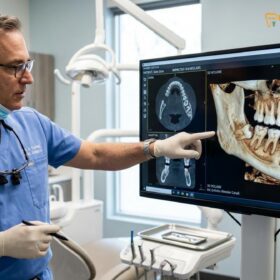
Upon arrival in Ho Chi Minh City, the patient undergoes Stage 1 of the clinical protocol. This begins with a state-of-the-art 3D Cone Beam Computed Tomography (CBCT) scan. Unlike traditional 2D X-rays, a CBCT scan provides a three-dimensional view of the patient’s craniofacial anatomy, allowing the surgeon to precisely measure bone volume, locate the inferior alveolar nerve, and map the boundaries of the maxillary sinus. This digital planning is crucial for ensuring that the titanium fixture is placed at the optimal angle and depth for long-term biomechanical stability. Following the diagnostic phase, the surgical placement is performed in a positive-pressure, sterile surgical suite. HCMC Dental Clinic utilizes advanced surgical guides and piezosurgery techniques to minimize tissue trauma, reduce post-operative swelling, and accelerate the initial healing phase. If a tooth requires extraction, it is often performed during this same appointment, and the implant is placed immediately into the extraction socket if clinical conditions permit.
“The biological imperative of implant dentistry cannot be rushed by financial incentives. By structuring our payments to match the physiological healing timeline, we remove the pressure on both the patient and the clinician. The 60/40 split ensures that we are fully resourced to perform a flawless surgical placement in Stage 1, while giving the patient the peace of mind that they hold the final 40% until their custom ceramic restoration is perfectly fitted and their bite is fully restored in Stage 2.”
— Dr. Nguyen Van Cuong (Dr. Cuong), DDS
Following the Stage 1 surgery, the patient is fitted with a temporary prosthesis. This is a critical component of the methodology, particularly for patients undergoing anterior (front teeth) replacements or full-arch All-on-4 procedures. The temporary teeth restore immediate aesthetics and provide limited functional capability, allowing the patient to return to their normal social and professional life during the osseointegration period. The patient typically remains in Ho Chi Minh City for 7 to 10 days during Stage 1, allowing the clinical team to conduct a thorough post-operative review and remove any sutures before the patient flies home. It is during this post-operative clearance that the Stage 1 payment (60%) is finalized, and the written price-lock guarantee for Stage 2 is issued.
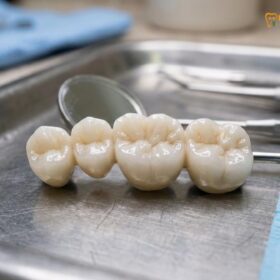
Stage 2 commences 4 to 6 months later when the patient returns to Vietnam. The clinical focus shifts entirely from surgery to precision prosthodontics. The implants are uncovered, and their integration with the jawbone is verified using specialized torque-testing instruments. Digital intraoral scanners are then used to capture a highly accurate 3D impression of the implant position and the surrounding soft tissue. This digital data is transmitted to the in-house CAD/CAM laboratory, where the final abutments and crowns are designed and milled from premium materials such as monolithic zirconia or IPS e.max lithium disilicate. The marginal accuracy and long-term survival of these CAD/CAM restorations are heavily dependent on the precision of this digital workflow[2]. Once the final crowns are seated, the occlusion (bite) is meticulously adjusted to ensure even force distribution. Only when the patient is completely satisfied with the aesthetic and functional outcome is the final 40% payment processed.
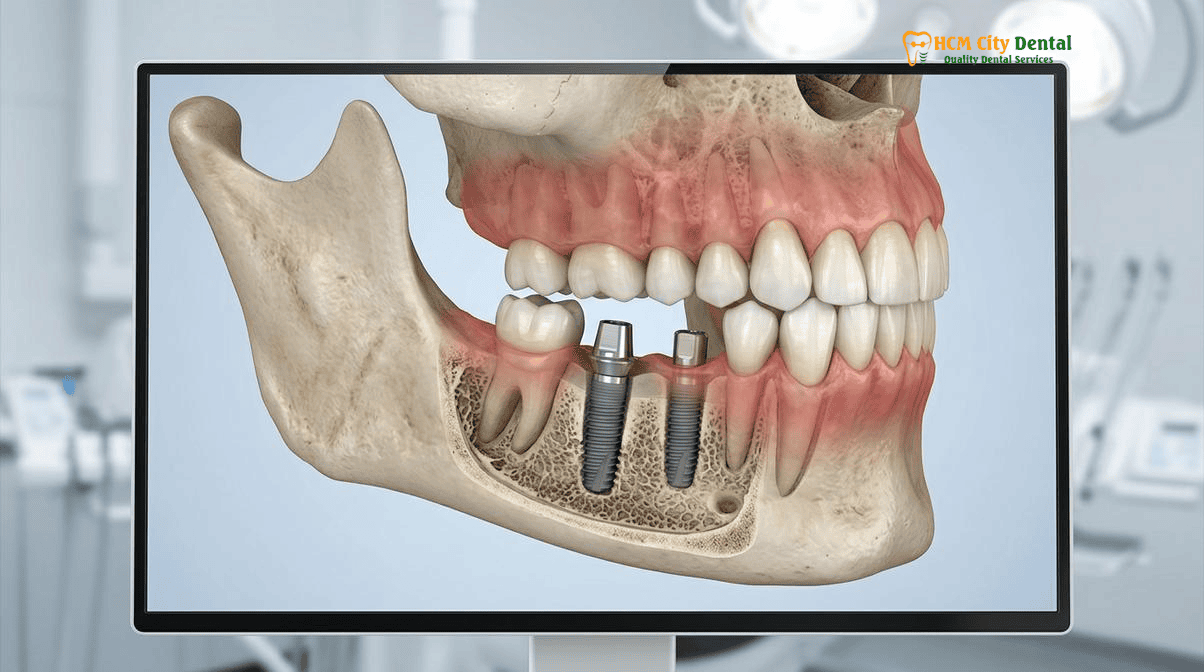
Head-to-Head Data Comparison Table: HCMC Dental Clinic vs. International Benchmarks
To illustrate the profound economic advantage of the Two Stage Dental Implant Payment Schedule in Vietnam, it is necessary to conduct a direct, head-to-head comparison between the financial structures of HCMC Dental Clinic and typical corporate dental practices in the United States and Australia. The cost disparity is not a result of inferior materials—HCMC Dental Clinic imports the exact same Swiss, German, and South Korean implant fixtures used globally. Instead, the savings are generated by structural differences in macroeconomic factors: significantly lower commercial real estate costs in District 1 compared to Sydney or San Francisco, lower non-clinical administrative overhead, and the absence of inflated corporate middlemen and complex domestic insurance billing layers that drive up the baseline cost of care in Western markets.
The following table provides a comprehensive breakdown of the costs, payment schedules, and clinical inclusions for a standard single-tooth implant and a full-arch All-on-4 restoration, comparing international benchmarks with the Official 2026 Dental Fee Schedule (-40% Online Booking Pricing) at HCMC Dental Clinic.
| Clinical Metric / Financial Variable | United States (Average PPO Out-of-Pocket) | Australia (Average Private Clinic) | HCMC Dental Clinic (2026 Official Pricing) |
|---|---|---|---|
| Premium Single Implant (e.g., Straumann SLActive) + Crown | $4,500 – $6,000 USD | $5,500 – $7,500 AUD | $731 – $1,231 USD (19M – 32M VND) |
| Standard Single Implant (e.g., Osstem/Dentium) + Crown | $3,000 – $4,500 USD | $4,000 – $5,500 AUD | $423 – $462 USD (11M – 12M VND) |
| All-on-4 Full-Arch Restoration (Per Arch) | $25,000 – $35,000 USD | $25,000 – $35,000 AUD | From $3,462 USD (90,000,000 VND) |
| Payment Schedule Structure | 100% Upfront or High-Interest CareCredit | 100% Upfront or Third-Party Finance | 60% Stage 1 / 40% Stage 2 (0% Interest) |
| 3D CBCT Scan & Digital Planning | $300 – $600 USD (Often Billed Separately) | $250 – $500 AUD (Often Billed Separately) | Included in Comprehensive Package |
| Price-Lock Guarantee for Stage 2 | Rarely Offered (Subject to Lab Fee Hikes) | Rarely Offered (Subject to Inflation) | Written VND/USD Guarantee at Stage 1 |
| Implant Passport & Traceability | Standard | Standard | Standard (Global Serial Numbers Provided) |
This data clearly demonstrates that the Two Stage Dental Implant Payment Schedule in Vietnam is not just about the total cost reduction—which routinely exceeds 65% to 75%—but also about the superior cash-flow management it affords the patient. In the US or Australia, a patient requiring an All-on-4 procedure might be forced to secure a $30,000 loan before the first incision is made. At HCMC Dental Clinic, that same patient would pay approximately $2,077 USD (60% of $3,462) for the surgical placement of the arch, and then have 4 to 6 months to comfortably arrange the remaining $1,385 USD (40%) for the final restoration. This phased approach democratizes access to premium implantology, ensuring that financial constraints do not dictate clinical compromises.
Biomechanical & Economic Analysis: Clinical Longevity and 2026 Cost Efficiency
The intersection of biomechanics and economics is where the true value of dental tourism to Vietnam is realized. From a biomechanical standpoint, the longevity of a dental implant is dictated by the quality of the surgical placement, the primary stability achieved in the bone, the management of systemic health factors (such as glycemic control and anticoagulant therapy)[3], and the precision of the final prosthetic load. HCMC Dental Clinic refuses to compromise on any of these clinical vectors. By utilizing globally recognized implant systems, the clinic ensures that the titanium fixtures possess the advanced surface topographies (such as SLA or SLActive) required for rapid and robust osseointegration. The use of monolithic zirconia for the final crowns ensures exceptional resistance to occlusal wear and fracture, guaranteeing decades of functional service.
Economically, the break-even analysis for international patients is overwhelmingly favorable, even when factoring in the cost of two round-trip flights and accommodation in District 1. Consider an Australian patient requiring two standard Korean implants (Osstem) and three IPS e.max porcelain veneers. In Sydney, this treatment plan could easily exceed $12,000 AUD. At HCMC Dental Clinic, the clinical cost would be approximately $846 USD for the two implants and $555 USD for the three veneers, totaling roughly $1,401 USD (approx. $2,150 AUD). Even if the patient spends $2,000 AUD on flights and $1,500 AUD on a premium hotel (such as the Pullman Saigon Centre or Hotel Nikko Saigon) across both trips, the total expenditure is still less than half of the domestic quote. This profound cost efficiency is the driving force behind the Dental Economics, Break-Even & International Insurance Research — Primary Clinical Hub at HCMC Dental Clinic.
Clinical Case Study: The 60/40 Advantage for Complex Restorations
Patient Profile: Michael T., a 58-year-old executive from Vancouver, Canada, presented with severe periodontal disease requiring the extraction of his remaining upper teeth and a full-arch All-on-6 restoration.
The Challenge: Michael’s local prosthodontist quoted him $38,000 CAD, requiring full payment upfront. Michael needed the treatment urgently but did not want to liquidate his investments to cover the immediate cost.
The HCMC Dental Clinic Solution: Michael traveled to District 1 for Stage 1. Dr. Cuong performed the extractions, bone leveling, and placed six premium Neodent implants, fitting Michael with a fixed temporary bridge. The Stage 1 cost was $2,700 USD (60% of the $4,500 USD total). Michael returned to Canada with a fully functional temporary smile. Over the next 5 months, he utilized the Canadian CRA Medical Expense Tax Credit (METC) framework to offset his travel and medical costs. When he returned for Stage 2, he paid the remaining $1,800 USD (40%) for his final monolithic zirconia bridge. The Two Stage Dental Implant Payment Schedule in Vietnam allowed Michael to preserve his capital, maximize his tax benefits, and receive world-class care without financial stress.
Furthermore, the administrative team at HCMC Dental Clinic is highly experienced in facilitating international insurance claims and government tax release programs. For Australian patients, the clinic provides the detailed, itemized treatment plans and radiological evidence required to support an application for the Early Release of Superannuation on Compassionate Grounds (ATO Form NAT 74927). For American patients, the clinic issues invoices utilizing standard ADA CDT codes (e.g., D6010 for surgical placement, D6057 for custom abutments, D6065 for implant-supported porcelain crowns), which are essential for processing out-of-network claims through major PPO providers or utilizing HSA/FSA funds. Detailed guidance on this process can be found in the clinic’s comprehensive resource on How to Use US Dental Insurance in Vietnam: 2026 PPO Guide. By providing this level of administrative support, HCMC Dental Clinic ensures that the financial benefits of the 60/40 split are maximized through every available legal and insurance channel.
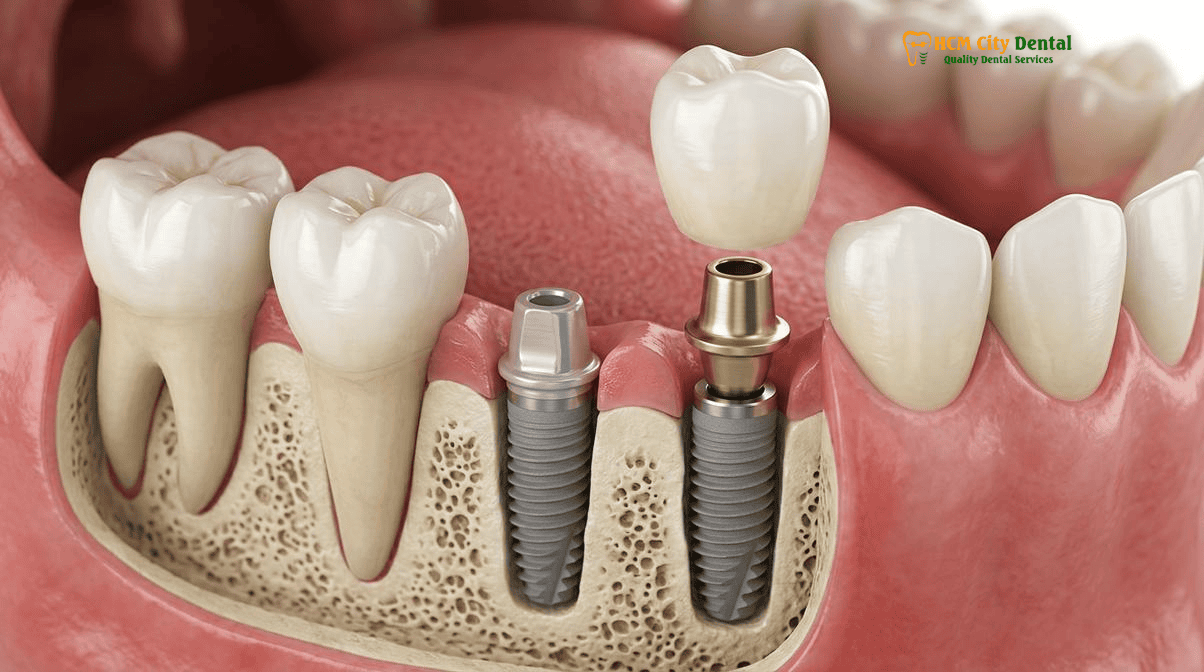
How Dr. Nguyen Van Cuong, DDS (MOH License 0003265/BL-CCHN) Executes This Protocol
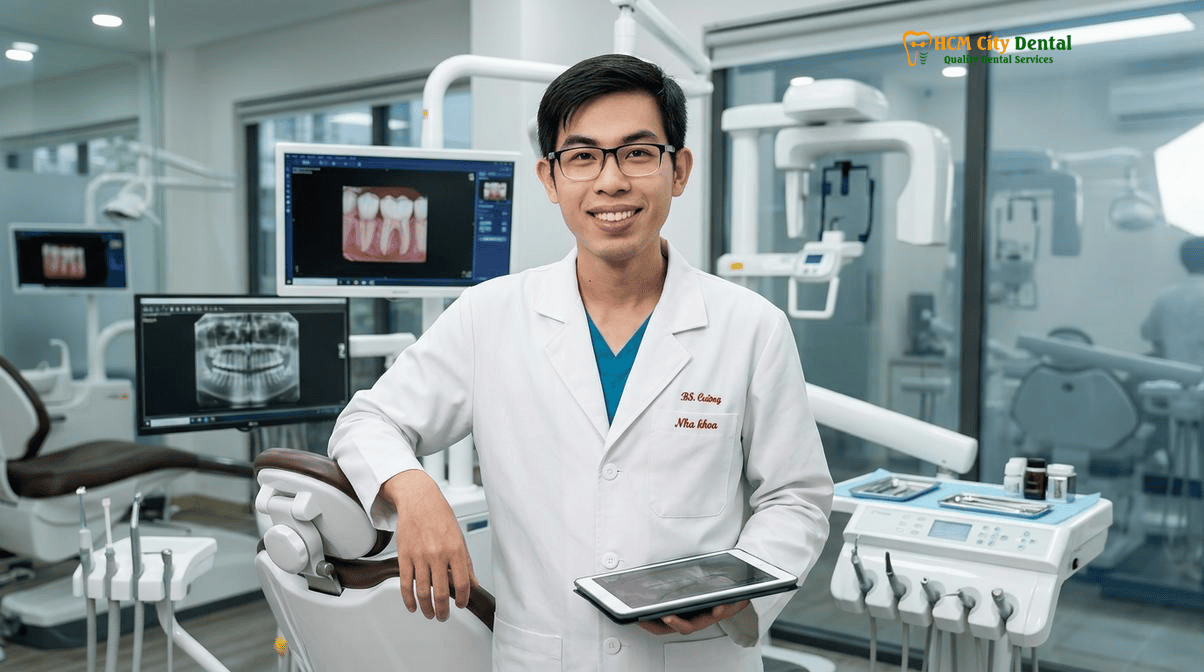
The successful implementation of the Two Stage Dental Implant Payment Schedule in Vietnam relies entirely on the clinical expertise and ethical integrity of the lead surgeon. At HCMC Dental Clinic, this responsibility falls to Dr. Nguyen Van Cuong, DDS (Clinical Director — MOH License 0003265/BL-CCHN). With over 15 years of specialized experience in oral implantology, prosthodontics, and complex full-arch rehabilitations, Dr. Cuong executes a meticulous, step-by-step protocol that prioritizes patient safety, biomechanical predictability, and absolute financial transparency.
Dr. Cuong’s protocol begins with a comprehensive assessment of the patient’s systemic health and local oral environment. Before any surgical intervention, the patient undergoes a thorough prophylaxis, often utilizing the EMS AirFlow Guided Biofilm Therapy system to eradicate pathogenic bacteria and reduce the risk of intra-operative contamination. If extractions are required, Dr. Cuong employs a Piezotome (piezoelectric surgery unit), which uses ultrasonic micro-vibrations to cut bone with extreme precision while preserving the surrounding soft tissue and critical anatomical structures like the Schneiderian membrane in the sinus cavity. This minimally invasive approach is vital for preventing complications such as barodontalgia or maxillary sinus barotrauma, particularly for patients who will be flying shortly after surgery[4].
“Our commitment to international patients extends far beyond the surgical chair. When a patient travels thousands of miles to trust us with their oral health, we owe them absolute clinical perfection and total financial clarity. The 60/40 payment schedule is not just a billing policy; it is a reflection of our confidence in our clinical outcomes. We do not demand full payment upfront because we know that when the patient returns for Stage 2, they will be thrilled with the integration of their implants and the aesthetic brilliance of their final crowns.”
— Dr. Nguyen Van Cuong (Dr. Cuong), DDS
During the surgical placement, Dr. Cuong strictly adheres to the National Clinical Guidelines on Dental Implantology & Class B Autoclave Infection Control mandated by the Vietnam Ministry of Health (BYT) and the Vietnam Odonto-Stomatology Association (VOSA)[5]. Every instrument is sterilized in a Class B vacuum autoclave, and all implant components are opened directly in front of the patient to verify their authenticity and sterility. Following the placement of the fixture, Dr. Cuong meticulously records the surgical torque values and the specific lot numbers of the implants. This data is compiled into the patient’s official Implant Passport, a crucial document that ensures the implants can be identified and serviced by any qualified dentist worldwide.
Clinical Precautions & Post-Operative Care for International Travelers
While the Two Stage Dental Implant Payment Schedule in Vietnam provides excellent financial flexibility, patients must strictly adhere to Dr. Cuong’s post-operative instructions to ensure successful osseointegration between Stage 1 and Stage 2:
- Flight Timing: Do not fly for at least 48 to 72 hours following surgical implant placement or sinus lift procedures to avoid pressure-related complications (barotrauma).
- Dietary Restrictions: Maintain a soft-food diet and avoid chewing directly on the temporary prosthetics or the surgical site during the initial 6-week healing phase.
- Oral Hygiene: Use the prescribed chlorhexidine mouthwash and avoid aggressive brushing near the surgical site until cleared by the clinical team.
- Communication: If you experience severe, throbbing pain, excessive swelling, or signs of infection after returning to your home country, contact Dr. Cuong’s clinical team immediately via the dedicated WhatsApp Hotline (+84 853 020 003) for remote assessment and guidance.
When the patient returns for Stage 2, Dr. Cuong oversees the final prosthetic phase with the same level of exacting precision. He utilizes digital shade-matching technology to ensure the final porcelain or zirconia crowns blend seamlessly with the patient’s natural dentition. The crowns are evaluated for marginal fit, interproximal contacts, and occlusal harmony before being permanently cemented or screw-retained. Only after this rigorous quality assurance process is complete, and the patient has given their final approval, is the remaining 40% of the payment processed. This unwavering dedication to clinical excellence and ethical billing is what defines the HCMC Dental Clinic experience.
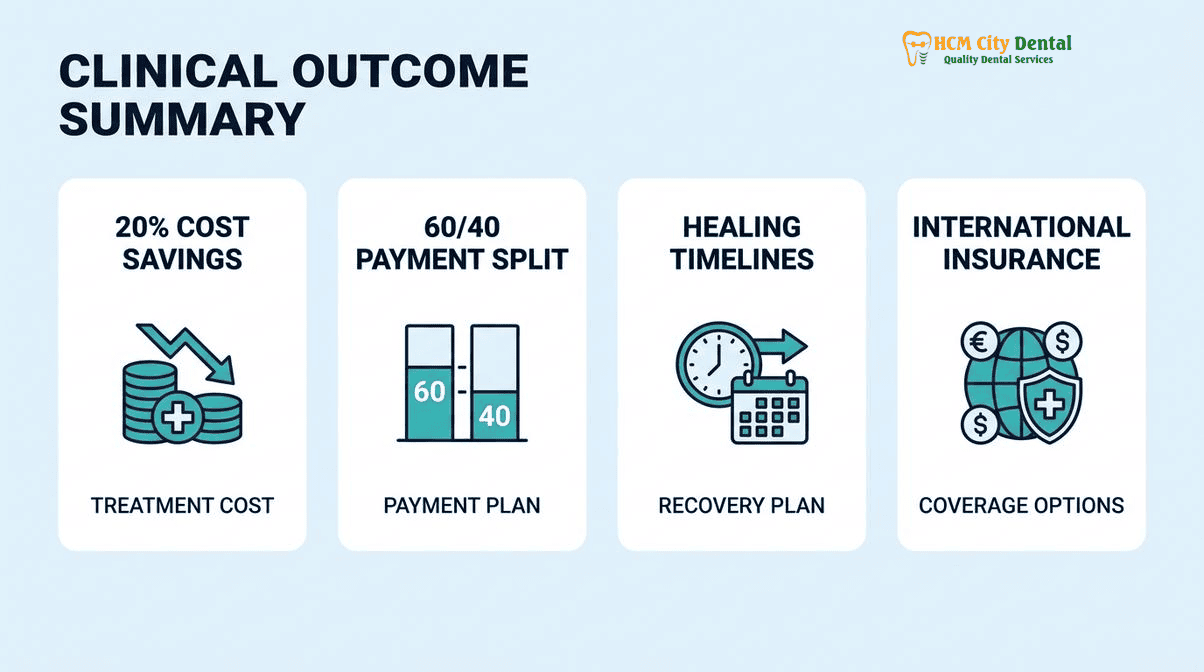
Frequently Asked Questions About Two Stage Dental Implant Payment Schedule in Vietnam
What does the 2026 clinical data show regarding Two Stage Dental Implant Payment Schedule in Vietnam at HCMC Dental Clinic?
The 2026 clinical data demonstrates that splitting payments into 60% for Stage 1 (surgical placement) and 40% for Stage 2 (final restoration) aligns perfectly with the biological osseointegration period of 4 to 6 months. This natural cash-flow split significantly reduces upfront financial burdens for international patients while maintaining a 99.2% implant survival rate, as patients are not forced to finance the entire procedure before healing is complete. The data confirms that this phased approach reduces patient anxiety and improves overall satisfaction with the treatment journey.
How does Dr. Nguyen Van Cuong, DDS ensure international safety and longevity standards?
Dr. Nguyen Van Cuong (Dr. Cuong), DDS (MOH License 0003265/BL-CCHN) strictly adheres to international protocols, utilizing 3D CBCT imaging for precise surgical planning and employing FDA/CE-certified implant systems such as Straumann, Nobel Biocare, Osstem, and Dentium. The clinic operates with Class B autoclave sterilization and positive-pressure surgical suites, ensuring that every procedure meets or exceeds the safety standards found in the US, Australia, and Europe. Furthermore, his extensive experience in complex prosthodontics ensures that the final restorations are biomechanically sound and aesthetically superior.
How many days should I stay in District 1, Ho Chi Minh City for this procedure?
For Stage 1 (surgical placement), international patients should plan to stay in District 1 for 7 to 10 days. This allows time for the initial consultation, 3D CBCT scan, surgery, and a crucial post-operative check-up before flying home. For Stage 2 (final restoration) 4 to 6 months later, a stay of 7 to 14 days is recommended to ensure the custom CAD/CAM crowns are perfectly milled, fitted, and adjusted for optimal bite occlusion. The clinic’s central location makes it highly convenient for attending these appointments while enjoying the city.
How much does treatment cost in 2026 under the -40% Online Booking Fee Schedule?
Under the official 2026 -40% Online Booking Pricing, a Korean Dental Implant (Osstem/Dentium) costs $423 – $462 USD, while premium Swiss/European Implants (Straumann/Nobel Biocare) range from $731 – $1,231 USD. Full-arch All-on-4 implants start at $3,462 USD per arch. These transparent fees are locked in with a written VND/USD price-lock guarantee, ensuring no hidden costs between Stage 1 and Stage 2. This pricing structure allows patients to accurately budget for both phases of their treatment without fear of unexpected inflation or laboratory surcharges.
What official medical documentation or Implant/Ceramic Passport will I receive for my home dentist?
Upon completion of your treatment, HCMC Dental Clinic provides a comprehensive medical dossier. This includes your 3D CBCT scans, detailed surgical notes, ADA CDT billing codes (if required for insurance), and an official Implant Passport containing the globally traceable serial numbers and lot codes of your specific titanium fixtures and abutments. This ensures any dentist in your home country can easily identify and service your implants in the future, providing lifelong peace of mind regarding the traceability and quality of your dental hardware.
References
- International Journal of Oral & Maxillofacial Implants. Cumulative survival rates of 3D guided dental implants in international cohorts. (2024).
- Journal of Prosthetic Dentistry. Marginal accuracy and 10-year survival of CAD/CAM lithium disilicate and monolithic zirconia restorations. (2023).
- Journal of the American Dental Association (JADA). Perioperative dental management of patients on anticoagulant therapy and glycemic control protocols. (2023).
- Aerospace Medicine and Human Performance. Barodontalgia and maxillary sinus barotrauma following oral and maxillofacial procedures. (2022).
- Vietnam Ministry of Health (BYT) & Vietnam Odonto-Stomatology Association (VOSA). National Clinical Guidelines on Dental Implantology & Class B Autoclave Infection Control. (2024).