Comparing root canal cost Vietnam vs Singapore reveals significant savings for expats without compromising clinical quality. While Singaporean private clinics charge premium specialist tariffs, patients traveling to Vietnam can access advanced microscopic endodontics and bioceramic sealing at a fraction of the price.
Clinical Summary:
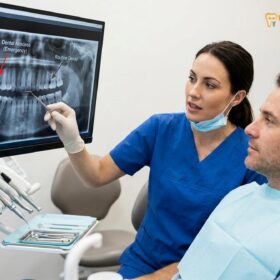
For expatriates and residents in Singapore, the financial burden of complex dental procedures often prompts the search for high-quality cross-border alternatives. Endodontic therapy, particularly on multi-rooted molars, requires specialized equipment such as dental operating microscopes and 3D cone-beam computed tomography (CBCT). In Singapore, these procedures command premium specialist fees. Conversely, Ho Chi Minh City (HCMC) has emerged as a premier destination for medical tourism, offering equivalent technological standards and internationally trained clinicians at substantially lower operational costs. By understanding the clinical workflows, material specifications, and logistical planning involved, patients can make informed decisions that prioritize both their oral health and financial well-being.
Key Takeaways:
- Molar root canal treatments in Singapore can cost up to four times more than equivalent procedures in premium HCMC clinics.
- Advanced technologies, including Zeiss microscopes and rotary NiTi files, are standard in top-tier Vietnamese dental practices.
- Many endodontic cases can be predictably completed in a single visit, making short weekend trips highly viable.
- Direct billing and detailed medical documentation in Vietnam allow for seamless international insurance reimbursement.
- Combining a root canal with a CAD/CAM zirconia crown maximizes the financial benefits of dental travel.
Singapore’s High Dental Specialist Tariffs: An Analysis for Expats
The landscape of private dental care in Singapore is characterized by exceptional clinical standards, but it is equally defined by its prohibitive cost structure. For expatriates lacking comprehensive dental insurance, a diagnosis of irreversible pulpitis or apical periodontitis can present a sudden and substantial financial challenge. The core driver of these high costs is the tiered nature of the Singaporean dental system. When a patient presents with a complex molar infection—often involving curved roots, calcified canals, or the elusive mesiobuccal 2 (MB2) canal—general dental practitioners typically refer the case to a registered endodontist. This referral immediately shifts the billing from general dentistry rates to specialist tariffs, heavily impacting the economic feasibility of saving the tooth[1].
Furthermore, the operational overhead in Singapore is among the highest globally. Clinic rentals in prime medical hubs, stringent regulatory compliance costs, and high staff remuneration all factor into the final invoice presented to the patient. A standard endodontic workup in Singapore involves separate billing codes for the initial specialist consultation, diagnostic periapical radiographs, 3D CBCT imaging, the root canal procedure itself, and the subsequent core build-up. By the time the patient is referred back to a prosthodontist for the final protective crown, the cumulative cost can be staggering.
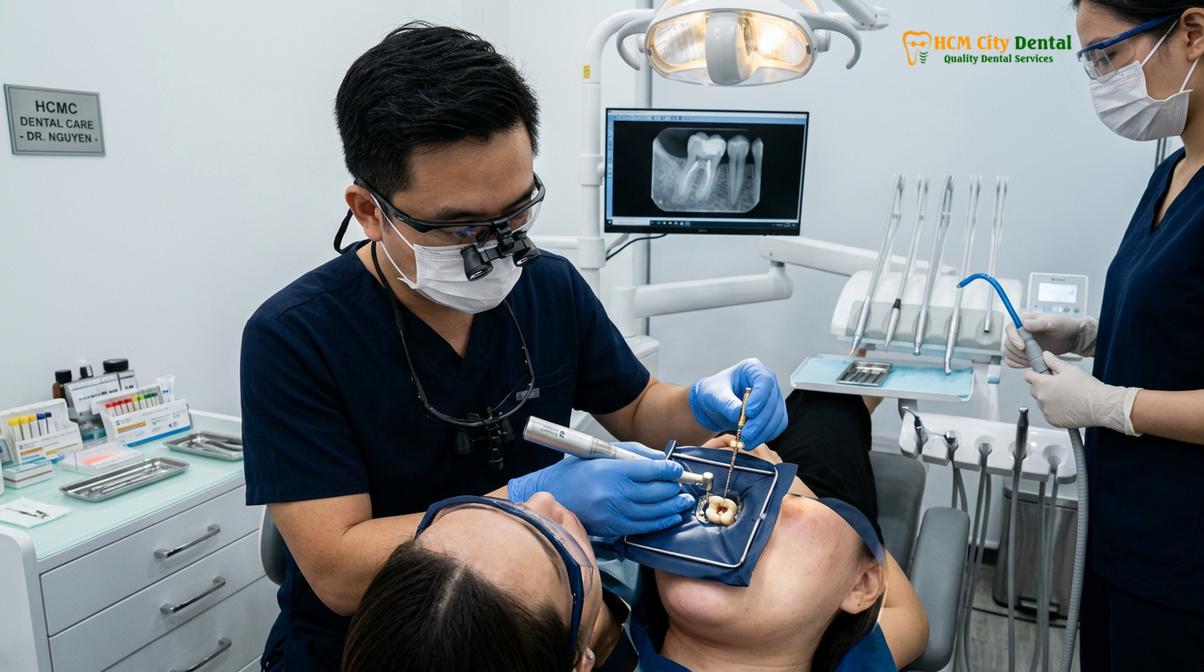
In contrast, many expats are now seeking alternatives in Vietnam, where multidisciplinary dental hospitals house endodontists, prosthodontists, and in-house ceramic laboratories under one roof. This integrated approach not only streamlines the clinical workflow but also drastically reduces the compounded fees associated with external specialist referrals. The clinical objective remains identical: the complete chemomechanical debridement of the root canal system and the establishment of a fluid-tight seal to prevent bacterial microleakage. However, the economic model delivering this care differs fundamentally.
Cost Comparison: Singapore Private Clinics vs. HCMC Dental (SGD)
To fully grasp the financial advantages of cross-border dental care, a direct, itemized comparison is necessary. It is crucial to evaluate the entire treatment episode, which typically includes the endodontic therapy, the structural core build-up (often utilizing a fiber post), and the final full-coverage restoration (crown). Without the final crown, a root-canal-treated posterior tooth is highly susceptible to catastrophic vertical root fracture under occlusal loading forces.
The following table outlines the estimated comparative costs in Singapore Dollars (SGD) for standard endodontic procedures. These figures represent averages across private specialist clinics in Singapore versus premium, internationally oriented clinics in Ho Chi Minh City.
| Clinical Procedure | Estimated Cost in Singapore (SGD) | Estimated Cost in HCMC (SGD) | Approximate Savings |
|---|---|---|---|
| Anterior Root Canal (Incisor/Canine) | $800 – $1,200 | $150 – $250 | 80% |
| Premolar Root Canal | $1,200 – $1,600 | $200 – $350 | 78% |
| Molar Root Canal (Complex/3+ Canals) | $1,800 – $2,500+ | $300 – $500 | 80% |
| 3D CBCT Scan (Single Arch) | $150 – $300 | $30 – $80 | 75% |
| Premium Zirconia Crown (CAD/CAM) | $1,200 – $1,800 | $350 – $600 | 70% |
| Total Molar Case (RCT + Crown) | $3,000 – $4,300+ | $650 – $1,100 | ~75% |
For Singapore dental patients, the realization that a single molar treatment at home could fund an entire medical holiday—including premium clinical care, flights, and luxury accommodation—is a powerful motivator. The cost disparity is not a reflection of compromised clinical standards in Vietnam. Rather, it is a direct result of macroeconomic factors. The materials utilized in HCMC—such as Dentsply Sirona rotary files, AH Plus sealers, and Ivoclar Vivadent ceramics—are imported from the exact same global manufacturers used by Singaporean specialists.
“The globalization of dental supply chains means that a premium clinic in Ho Chi Minh City utilizes the exact same German and American biomaterials as a clinic in Orchard Road. The difference in the final invoice is purely a reflection of local real estate and operational economics, allowing patients to access world-class endodontics without the premium geographic markup.”
Rapid Turnaround Treatment Plans: Same-Week Completion for Flight Commuters
One of the primary concerns for patients considering a flight from Singapore to Saigon is the time required away from work and family. Historically, endodontic therapy was strictly a multi-visit procedure, involving the placement of intracanal medicaments (like calcium hydroxide) for several weeks to ensure bacterial eradication. However, advancements in irrigation protocols, ultrasonic activation, and rotary instrumentation have revolutionized this timeline. Today, a significant percentage of root canals can be completed in a single, extended appointment with highly predictable outcomes[2].
The clinical decision to perform single-visit versus multi-visit endodontics depends entirely on the pulpal and periapical diagnosis. Teeth presenting with irreversible pulpitis (vital, inflamed nerve tissue causing severe pain) but without radiographic evidence of a large periapical abscess are excellent candidates for single-visit treatment. The clinician can achieve profound local anesthesia, isolate the tooth with a rubber dam, completely extirpate the inflamed tissue, shape the canals, and immediately obturate (fill) the root canal system. This immediate sealing prevents coronal microleakage and initiates the healing process instantly.
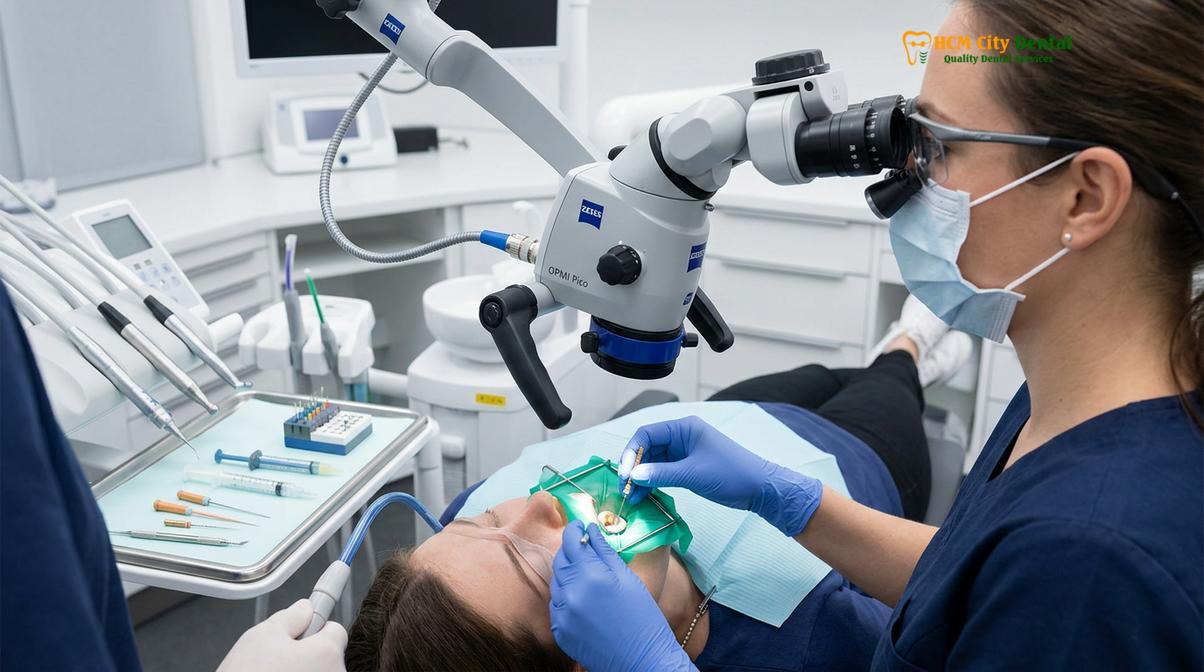
Conversely, if a tooth presents with a chronic apical abscess, active purulent exudate (pus draining into the canal), or a massive periapical radiolucency, a multi-visit approach remains the clinical gold standard. In these complex scenarios, the canals are cleaned and dressed with an antimicrobial paste, and the patient is asked to return a few days later once the acute infection has subsided. Premium clinics in Vietnam are highly adept at managing these timelines for international commuters, often coordinating the restorative phase (crown fabrication) concurrently with the endodontic healing phase.
Clinical Case Profile: International Commuter
A 42-year-old expatriate residing in Singapore presented to HCMC Dental Clinic (Ho Chi Minh City) with acute spontaneous pain in the lower right first molar (Tooth 46). Clinical examination and CBCT imaging confirmed irreversible pulpitis with a complex four-canal anatomy. The patient was scheduled for a 90-minute single-visit microscopic root canal on Friday morning. Following successful obturation, a digital intraoral scan was taken. The in-house laboratory milled a custom monolithic zirconia crown, which was permanently cemented on Monday afternoon. The patient returned to Singapore that evening, having completed comprehensive specialist care within a single long weekend.
Premium Materials & High Technology: Zeiss Microscopes and Bioceramic Sealers in Saigon
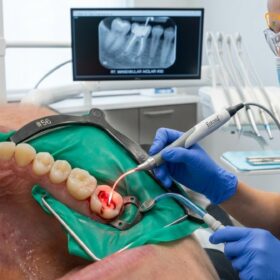
The anatomy of a human root canal system is rarely a straight, simple tube. It is a complex, branching network of fins, isthmuses, lateral canals, and apical deltas. Attempting to clean and seal this microscopic anatomy using only tactile sensation and the naked eye significantly increases the risk of missed canals and subsequent treatment failure. This is why the integration of the Dental Operating Microscope (DOM), such as those manufactured by Carl Zeiss, is a non-negotiable standard for complex root canal procedures in top-tier Vietnamese clinics, drastically improving long-term success rates[3].
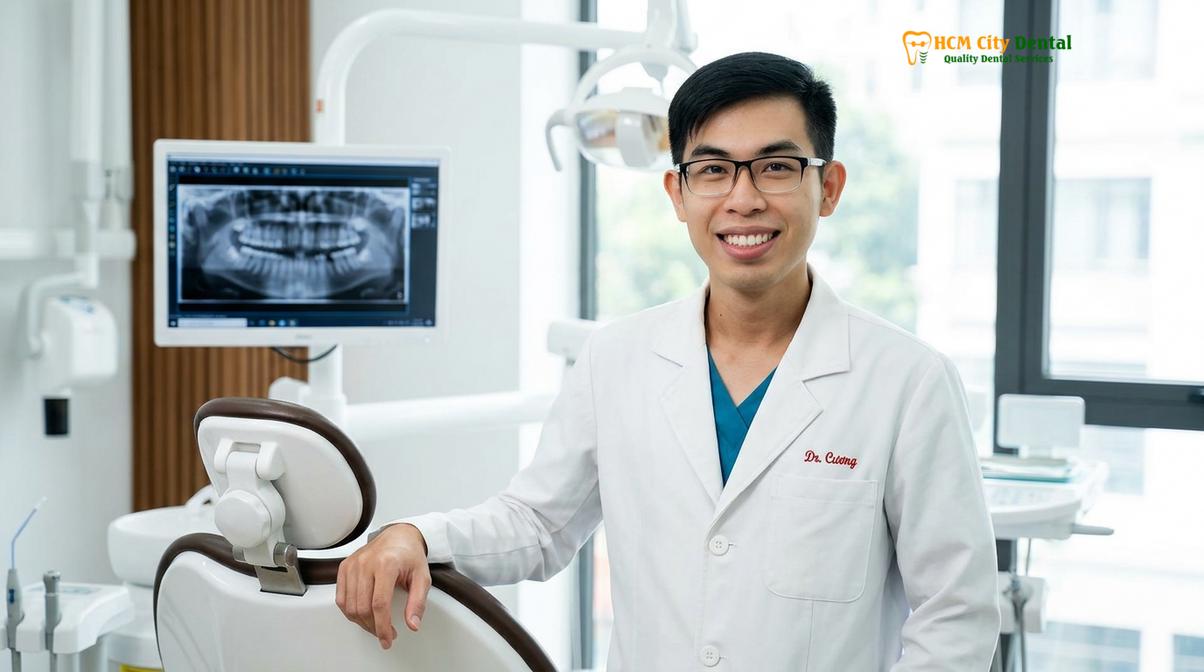
Dr. Nguyen Van Cuong, a leading specialist at HCMC Dental Clinic, emphasizes that working under high magnification transforms root canal therapy from a procedure of estimation to one of absolute precision. Dr. Cuong and his clinical team utilize advanced coaxial LED illumination to visually identify calcified canal orifices and meticulously clean the critical apical third of the root. This level of visualization is particularly vital when retreating a previously failed root canal, ensuring that international patients receive the highest standard of care.
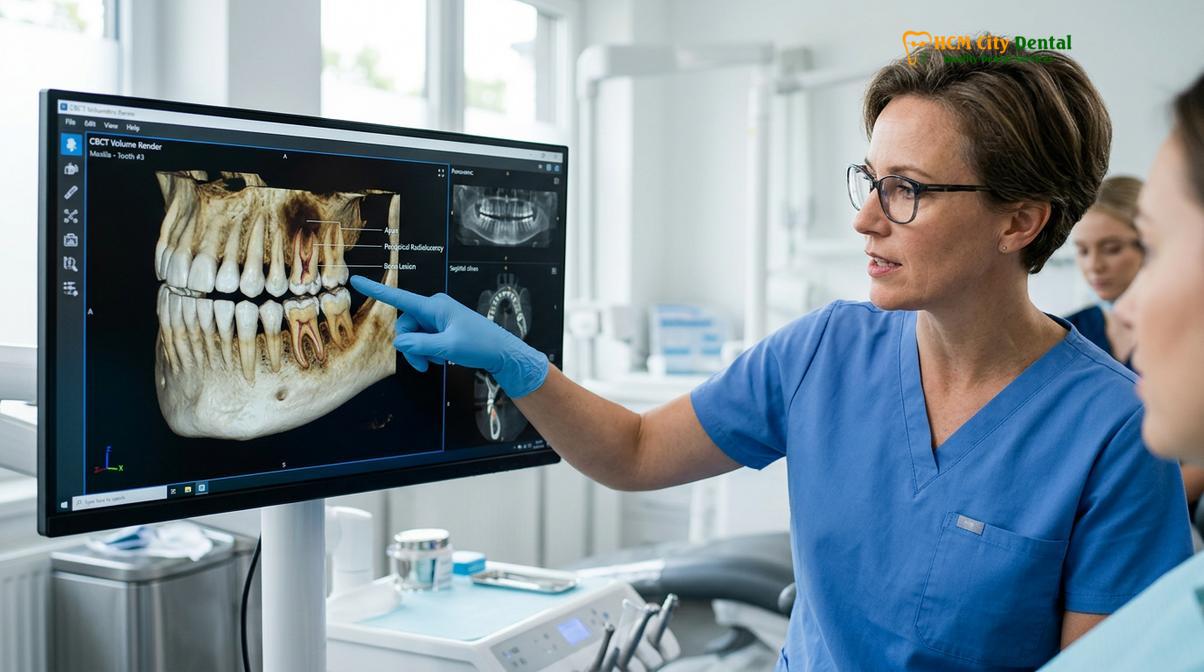
Beyond magnification, the materials used to obturate (fill) the cleaned canals have evolved significantly. Traditional techniques relied on gutta-percha cones combined with zinc oxide-eugenol or resin-based sealers. While effective, these sealers can shrink slightly upon setting, potentially allowing bacterial re-entry over time. Today, the vanguard of endodontic obturation involves Bioceramic (calcium silicate-based) sealers. These advanced materials are highly biocompatible, hydrophilic (utilizing the natural moisture within the dentinal tubules to set), and actually expand slightly upon curing, creating a superior, hermetic seal[4]. Furthermore, bioceramics release calcium hydroxide during the setting phase, providing a sustained antimicrobial effect and actively promoting osteogenesis (bone healing) in the surrounding periapical tissues.
“The integration of 3D CBCT imaging, Zeiss optical magnification, and bioceramic nanotechnology represents the pinnacle of modern endodontics. By utilizing these tools, we can predictably save teeth that would have been deemed hopeless and extracted just a decade ago, ensuring our international patients receive care that meets the highest global benchmarks.”
Expat Direct Billing and Insurance Reimbursement in Vietnam
For expatriates holding comprehensive global health or dental insurance policies, the out-of-pocket cost for saving infected teeth in Vietnam can be reduced to near zero. However, successful insurance reimbursement hinges entirely on meticulous clinical documentation and the correct application of international billing codes. Unlike local neighborhood clinics, internationally accredited dental centers in Ho Chi Minh City have dedicated patient coordination teams trained specifically in cross-border insurance protocols, adhering strictly to the latest national guidelines on cross-border dental care standards[5].
To process a claim for endodontic therapy and a subsequent crown, insurance providers typically require a robust evidence package. This includes pre-operative periapical radiographs demonstrating the pathology (such as a deep carious lesion encroaching on the pulp or a periapical radiolucency), a formal clinical diagnosis utilizing standard ICD-10 or CDT (Current Dental Terminology) codes, and post-operative radiographs confirming the complete obturation of the root canal system to the radiographic apex. Additionally, if a core build-up or post is required, clinical photographs documenting the lack of remaining coronal tooth structure are often necessary to justify the restorative phase.
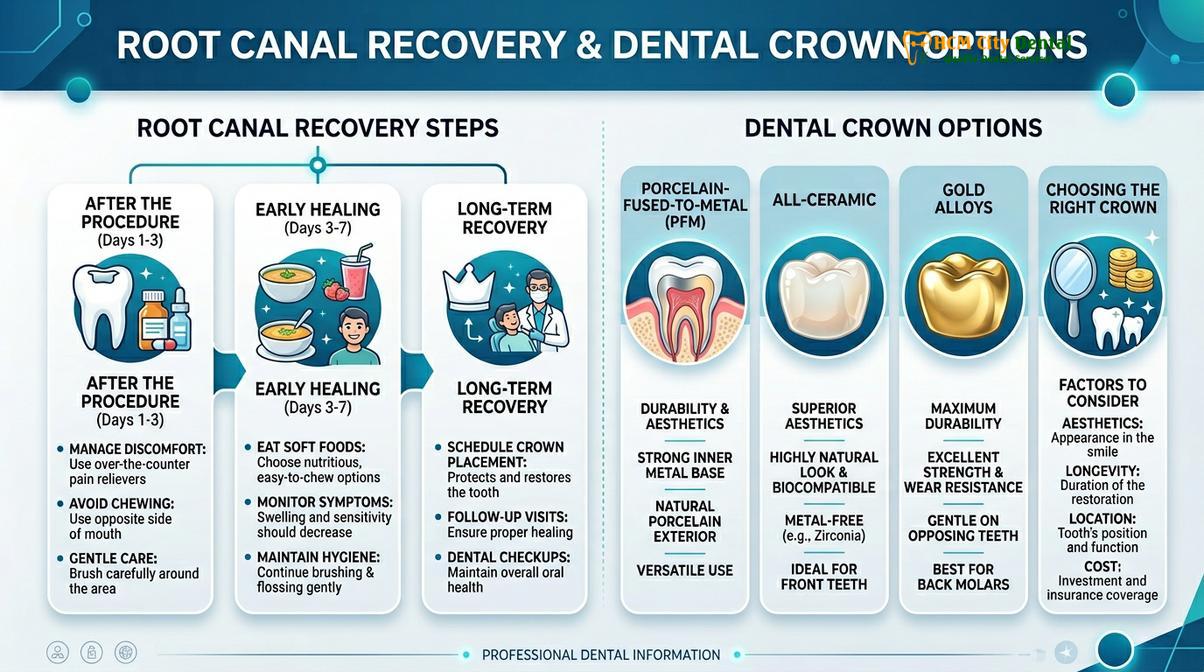
Many premium clinics in Vietnam now offer direct billing arrangements with major international insurers. In these scenarios, the clinic’s administrative team liaises directly with the insurance provider to secure a Guarantee of Payment (GOP) prior to the commencement of treatment. This eliminates the need for the patient to pay large sums upfront and navigate the complex reimbursement process themselves. Even in cases where direct billing is not available, the provision of itemized invoices in English, complete with the attending specialist’s credentials and signature, ensures that patients can submit their claims with confidence upon returning to Singapore.
Important Clinical Considerations: When to Seek Immediate Endodontic Care
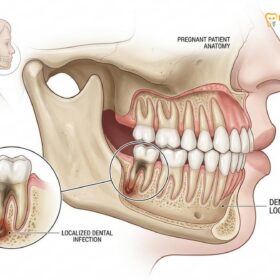
While modern endodontics boasts a remarkably high success rate, it is not a universal panacea for all dental pain. Proper case selection is the cornerstone of predictable clinical outcomes. Patients experiencing severe, spontaneous throbbing pain that awakens them at night, or lingering pain following exposure to hot or cold stimuli, are likely suffering from irreversible pulpitis and require immediate endodontic evaluation. Delaying treatment in these scenarios allows the bacterial infection to progress from the confined space of the pulp chamber into the surrounding jawbone, potentially leading to a localized abscess or even systemic facial cellulitis.
Not all teeth can be predictably saved. If a tooth presents with a vertical root fracture extending below the crestal bone, severe periodontal disease with excessive mobility, or inadequate remaining sound tooth structure (lack of a ferrule effect) to support a final crown, endodontic therapy is contraindicated. In such cases, the most predictable long-term solution may involve extraction followed by a dental implant. A thorough clinical and radiographic assessment by a qualified professional is essential to determine the most appropriate and cost-effective treatment pathway.
References
- Journal of Endodontics. Economic analysis of endodontic therapy and single implant restorations. (2020).
- Journal of the American Dental Association. Single-visit versus multiple-visit endodontic treatment: A systematic review. (2019).
- International Endodontic Journal. The impact of dental operating microscopes on root canal treatment outcomes. (2021).
- Clinical Oral Investigations. Biocompatibility and sealing ability of bioceramic root canal sealers. (2022).
- Vietnam Ministry of Health (MOH). National Guidelines on Endodontic Treatment and Cross-Border Dental Care Standards. (2023).
Are you an expat in Singapore facing high specialist fees for a root canal? Contact HCMC Dental Clinic in Ho Chi Minh City today. Our internationally trained specialists utilize Zeiss microscopes and 3D CBCT imaging to provide world-class endodontic care at a fraction of the cost. Schedule your digital consultation and let us help you plan a seamless dental trip to Vietnam.