For international patients and dental travelers seeking to correct an excessive gingival display, navigating the clinical nuances of lip repositioning surgery vs gummy smile botox crown lengthening can be overwhelming. A “gummy smile” is not a singular diagnosis; rather, it is a complex aesthetic and anatomical condition with multiple distinct etiologies. Attempting to treat a hypermobile upper lip with laser gum contouring, or trying to fix short clinical crowns with botulinum toxin, will inevitably lead to aesthetic failure, biological complications, or rapid relapse. In modern periodontal plastic surgery, achieving a permanent, harmonious smile requires a precise differential diagnosis to determine whether the excess gingival display originates from the teeth, the skeletal maxilla, or the facial musculature.
At HCMC Dental Clinic in District 1, Ho Chi Minh City, our clinical protocols are rooted in evidence-based periodontology and facial aesthetics. Under the direct surgical leadership of Dr. Nguyen Van Cuong, DDS (Clinical Director — MOH License 0003265/BL-CCHN), we utilize 3D CBCT imaging, dynamic smile analysis, and Piezosurgery to deliver highly customized gummy smile corrections. Whether your case requires the delicate osseous recontouring of Aesthetic Crown Lengthening, the muscular restriction of Surgical Lip Repositioning, the temporary neuromodulation of Gummy Smile Botox, or a synergistic combination of these modalities, understanding the underlying anatomy is the first critical step toward a flawless result.
Clinical Summary:
The choice between Aesthetic Crown Lengthening, Surgical Lip Repositioning, and Gummy Smile Botox depends entirely on the anatomical root cause of the excessive gingival display. Crown Lengthening is indicated for Altered Passive Eruption (short, square teeth hidden under excess gum and bone). Lip Repositioning is the definitive surgical solution for a hypermobile upper lip that retracts too far upward during a dynamic smile. Botox serves as a temporary, 4-month neuromodulator to relax the lip elevator muscles, often used as a reversible trial or an adjunct to surgery. Accurate diagnosis via 3D CBCT and periodontal probing is mandatory to select the correct protocol and prevent long-term relapse.
Key Takeaways:
- Altered Passive Eruption (APE): Treated via Aesthetic Crown Lengthening to expose the natural anatomical crown and restore the 1:0.8 golden proportion.
- Hypermobile Upper Lip: Treated via Surgical Lip Repositioning (mucosal strip excision) to permanently restrict the upward pull of the levator labii superioris muscles.
- Gummy Smile Botox: A non-surgical, temporary (3 to 4 months) injection at the Yonsei point, ideal for trial evaluations or post-surgical muscle relaxation.
- Vertical Maxillary Excess (VME): Severe skeletal cases may require orthognathic surgery (Le Fort I osteotomy) or orthodontic intrusion using Temporary Anchorage Devices (TADs).
- Synergistic Treatment: Complex cases often require a combination of Crown Lengthening to adjust the gingival zenith, followed by Lip Repositioning to control muscle dynamics.
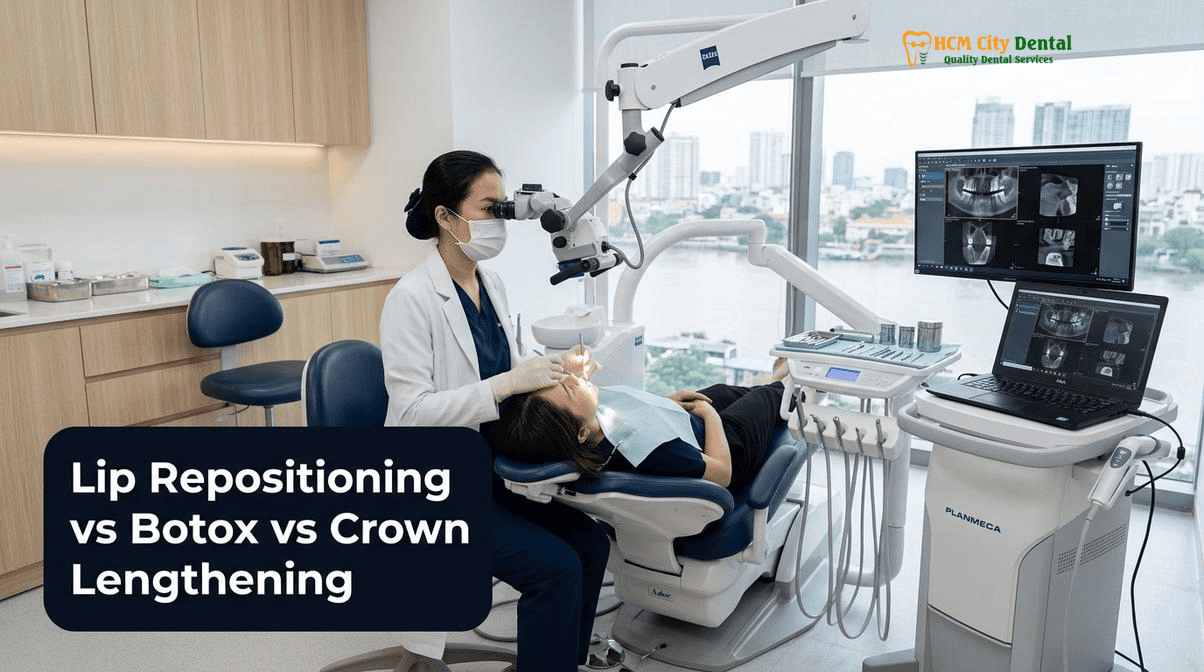
Why One Gummy Smile Treatment Never Fits All: Diagnosing Altered Passive Eruption (APE) vs. Hypermobile Elevator Labii Muscles vs. Vertical Maxillary Excess (VME)
The fundamental error in cosmetic dentistry is treating the symptom (excess gum) rather than the cause. A normal, aesthetically pleasing smile typically displays 1mm to 2mm of pink gingiva above the maxillary central incisors. When the gingival display exceeds 3mm to 4mm, it is clinically classified as an excessive gingival display, commonly referred to as a gummy smile. To determine the correct intervention—whether it be Lip Repositioning Surgery Saigon: Clinical Guide to Gummy Smile Correction or osseous recontouring—the clinician must first identify which of the three primary anatomical factors is responsible.
1. Altered Passive Eruption (APE)
Altered Passive Eruption occurs when the gingival margin fails to recede to its normal adult position at the cementoenamel junction (CEJ) during dental development. As a result, the anatomical crown of the tooth remains partially buried under thick, fibrotic gum tissue and, in many cases, excess crestal bone. Patients with APE typically present with teeth that look abnormally short, square, or “stubby.” The treatment for APE is never Botox or Lip Repositioning; it is Aesthetic Crown Lengthening. By surgically moving the gingival margin and bone apically, the true, natural length of the tooth is revealed[1].
2. Hypermobile Elevator Labii Muscles
In this scenario, the teeth are of normal length and the skeletal jaw is properly positioned, but the muscles that control the upper lip (specifically the levator labii superioris, levator labii superioris alaeque nasi, and zygomaticus minor) are hyperactive. When the patient smiles, these muscles contract with excessive force, pulling the upper lip significantly higher than normal and exposing a wide band of gingiva. This condition is diagnosed by measuring the lip translation from rest to a full dynamic smile. The definitive treatment for a hypermobile lip is Surgical Lip Repositioning, while Gummy Smile Botox offers a temporary, non-surgical alternative.
3. Vertical Maxillary Excess (VME)
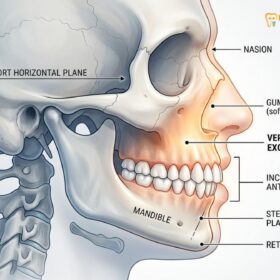
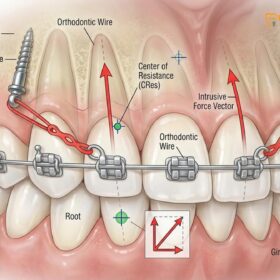
Vertical Maxillary Excess is a skeletal dysplasia where the upper jawbone (maxilla) has grown too far downward in a vertical dimension. Patients with VME often have a long lower facial third, lip incompetence (inability to close the lips at rest without strain), and excessive gingival display even when not smiling. Mild to moderate VME can sometimes be camouflaged with orthodontic intrusion using TAD mini-screws, but severe VME requires orthognathic surgery (Le Fort I maxillary impaction) to physically reposition the jawbone upward.
The 4-Model Objective Clinical Comparison in Ho Chi Minh City
When international patients travel to Vietnam for complex periodontal plastic surgery, selecting the right clinical environment is as critical as the diagnosis itself. The dental landscape in Ho Chi Minh City is divided into four distinct operating models, each offering different levels of surgical continuity and diagnostic precision:
- Model 1 (1-on-1 Doctor-Direct Specialist Boutique): Exemplified by HCMC Dental Clinic in District 1. This model is led personally by Dr. Nguyen Van Cuong, DDS. It guarantees 100% surgeon continuity from the initial 3D CBCT diagnosis to the final surgical suturing and prosthetic delivery. There are zero associate hand-offs, ensuring that the clinician who diagnoses your APE or hypermobile lip is the exact same surgeon performing the delicate Piezosurgery or myotomy. Furthermore, this model offers transparent -40% direct online pre-booking savings.
- Model 2 (Multi-Doctor Expat Clinics & Private Dental Hospitals): Includes facilities like Westcoast International Dental Clinic, Starlight Dental Clinic, Picasso Dental Clinic, Worldwide Dental & Cosmetic Surgery Hospital, Elite Dental, and The East Rose Dental Clinic. These clinics provide high-quality care with international branding, but their heavy administrative overhead and prime real estate costs are often reflected in premium pricing structures that closely mirror Western fees.
- Model 3 (High-Volume Domestic Dental Chains & Multi-Domain Groups): Includes brands such as Peace Dentistry, Kim Dental, Premier Dental, I-DENT Dental Implant Center, Nhan Tam Dental Clinic, and Saigon Center Dental. These high-volume chains operate on a multi-doctor shift model. While highly efficient for routine general dentistry, the shift-based structure may result in associate hand-offs during complex, multi-stage aesthetic procedures like combined crown lengthening and lip repositioning.
- Model 4 (Third-Party Medical Tourism Booking Agencies): Entities like VN Dental Travel, Dental Departures, and WhatClinic. It is vital to understand that these agencies are referral brokers charging 15%–25% commission rather than licensed hospitals. Booking directly with a MOH-licensed clinic like HCMC Dental Clinic ensures direct warranty accountability and eliminates middleman markups.
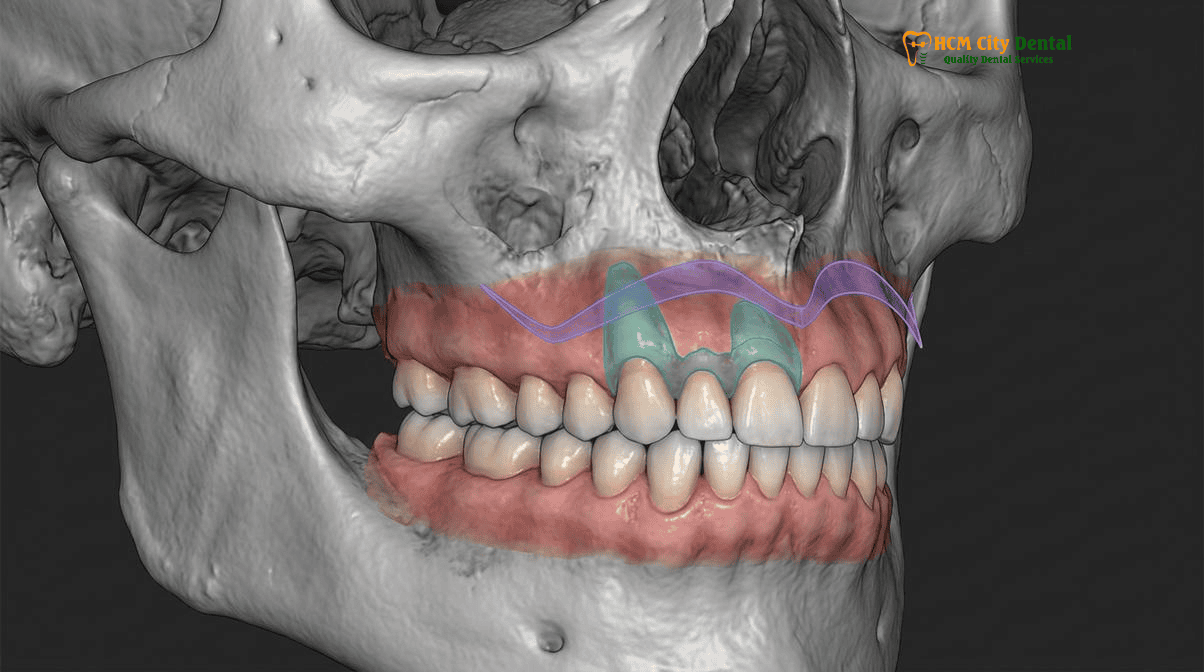
Aesthetic Crown Lengthening (1mm–3mm Gingival Display): Restoring the 1:0.8 Width-to-Length Golden Crown Proportion and Supracrestal Tissue Attachment
When the diagnosis confirms Altered Passive Eruption, the clinical objective is to expose the hidden anatomical crown. However, simply cutting away the excess gum tissue (a simple gingivectomy) is often insufficient and biologically dangerous. If the underlying alveolar bone is too close to the CEJ, the gum tissue will inevitably grow back to re-establish its natural biological barrier, leading to rapid relapse and chronic inflammation.
The Concept of Supracrestal Tissue Attachment (Biologic Width)
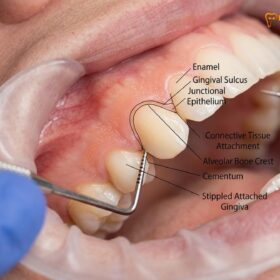
The supracrestal tissue attachment (formerly known as biologic width) is the natural dimension of soft tissue attached to the portion of the tooth above the alveolar crest. It typically measures around 2.04mm to 3mm. During Aesthetic Crown Lengthening, the surgeon must not only remove the excess gingiva but also carefully recontour the underlying bone to ensure that this 3mm safety zone is maintained between the new bone level and the new gingival margin. Failure to respect this dimension results in a violation of the supracrestal attachment, causing chronic bleeding, swollen gums, and unpredictable tissue rebound[2].
Piezosurgery vs. Rotary Instruments
At HCMC Dental Clinic, Dr. Nguyen Van Cuong utilizes advanced Piezosurgery (ultrasonic bone cutting) rather than traditional high-speed rotary burs for osseous recontouring. Piezosurgery uses micro-vibrations to selectively cut bone while preserving adjacent soft tissues, tooth roots, and delicate neurovascular structures. This minimally invasive approach drastically reduces post-operative swelling, minimizes trauma to the root surface, and accelerates healing, allowing for the precise establishment of the golden 1:0.8 width-to-length crown proportion.
“Aesthetic Crown Lengthening is not merely a soft tissue procedure; it is a microscopic architectural reshaping of the periodontium. By utilizing 3D CBCT imaging and Piezosurgery, we can precisely map the cementoenamel junction and re-establish the supracrestal tissue attachment. This ensures that when we restore the golden 1:0.8 proportion—whether with natural enamel or IPS E.max veneers—the gingival zenith remains perfectly stable, healthy, and free of chronic inflammation for decades.”
— Dr. Nguyen Van Cuong, DDS (Clinical Director, HCMC Dental Clinic)
For patients requiring comprehensive smile makeovers, Aesthetic Crown Lengthening is frequently the foundational step before placing porcelain veneers. By establishing symmetrical gingival zeniths and ideal tooth lengths first, the subsequent veneers can be designed with perfect harmony. To explore our specialized protocols, visit our guide on Best Dental Clinics & Specialist Comparison at HCMC Dental Clinic.
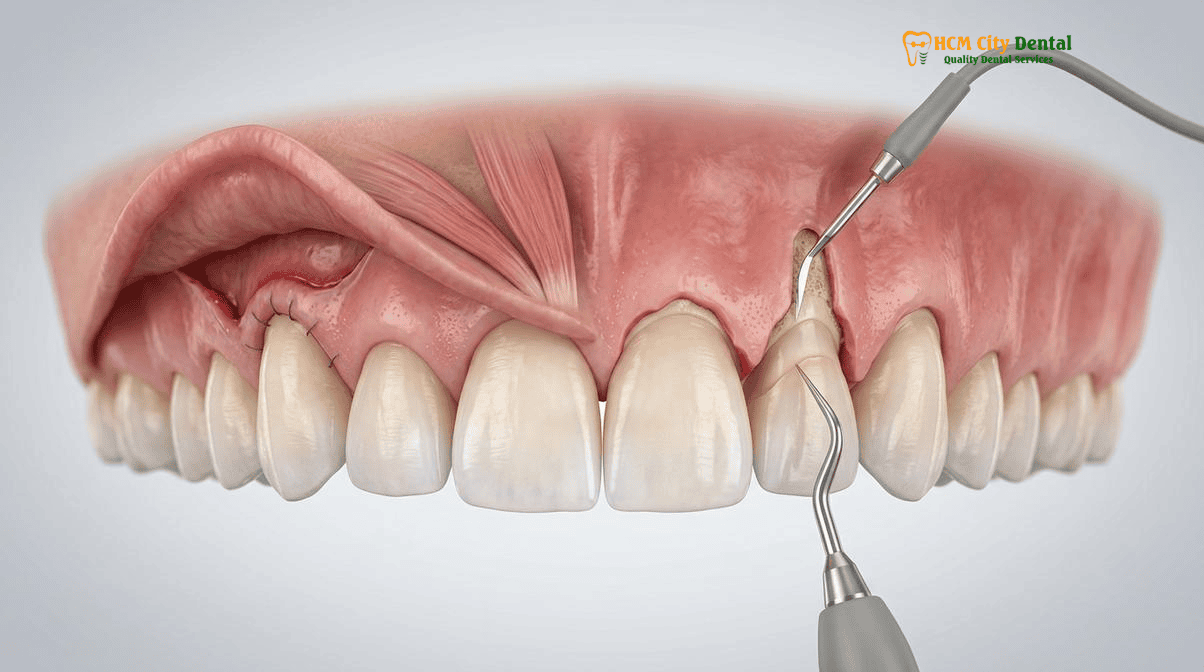
Surgical Lip Repositioning (4mm–6mm Display): Excising a Mucosal Vestibular Strip and Limiting Levator Labii Superioris Muscle Pull
When the teeth are of normal length but the upper lip retracts excessively during a smile, Aesthetic Crown Lengthening is contraindicated. Removing gum and bone from already normal-sized teeth would expose the sensitive tooth roots and create an unnatural, “horse-like” appearance. Instead, the anatomical solution is Surgical Lip Repositioning.
The Surgical Technique
Surgical Lip Repositioning is a highly effective, minimally invasive periodontal plastic surgery designed to permanently restrict the upward movement of the upper lip. The procedure is performed entirely intraorally under profound local anesthesia, ensuring zero external facial scarring.
- Incision Design: The surgeon marks an elliptical outline in the maxillary vestibule (the space between the upper lip and the gums). The lower incision is typically made at the mucogingival junction, while the upper incision is made parallel to it, higher up in the labial mucosa. The distance between these two incisions determines how much the lip will be lowered (usually a 2:1 ratio; excising 10mm of mucosa will lower the lip by approximately 5mm).
- Mucosal Excision: A partial-thickness flap is raised, and the outlined strip of mucosal tissue is carefully excised, leaving the underlying connective tissue and muscle fascia intact.
- Suturing and Lip Lowering: The upper and lower margins of the incision are approximated and sutured together. This physical shortening of the vestibular depth creates a mechanical restriction, preventing the elevator muscles from pulling the lip as high as they previously could[3].
The result is an immediate, dramatic reduction in gingival display. The upper lip now rests at a lower, more aesthetically pleasing position during a full dynamic smile, gracefully framing the teeth rather than exposing the gums.
The Modified Myotomy & Midline Frenum Preservation Technique: How HCMC Dental Clinic Prevents Lip Asymmetry and Long-Term Relapse
While traditional Lip Repositioning is highly effective, historical data indicates a risk of partial relapse over time as the strong elevator muscles stretch the healing tissues. To combat this, Dr. Nguyen Van Cuong employs an advanced surgical modification: the Modified Lip Repositioning with Myotomy and Midline Frenum Preservation.
The Role of Myotomy
During the mucosal excision phase, Dr. Cuong performs a targeted myotomy—a precise severing of the superficial fibers of the levator labii superioris muscles. By releasing the muscle tension directly at the surgical site, the upward pull is significantly weakened. This prevents the muscles from exerting excessive force on the suture line during the critical healing phase, drastically reducing the risk of long-term relapse and ensuring a permanent result.
Midline Frenum Preservation
A common complication of traditional lip repositioning is the loss of the maxillary labial frenum (the small band of tissue connecting the upper lip to the gums in the midline). Removing the frenum can alter the natural contour of the upper lip, leading to a flattened appearance or subtle asymmetries. Dr. Cuong’s modified technique carefully preserves the midline frenum, maintaining the natural “Cupid’s bow” architecture of the upper lip and ensuring perfect bilateral symmetry.
Clinical Case Study: Hypermobile Lip Correction in a 28-Year-Old Australian Expat
Patient Profile: A 28-year-old female patient from Melbourne presented to HCMC Dental Clinic with a chief complaint of a severe gummy smile (7mm gingival display). Clinical examination revealed normal clinical crown lengths but a highly hypermobile upper lip.
Treatment Protocol: Dr. Nguyen Van Cuong performed a Modified Surgical Lip Repositioning with targeted myotomy and midline frenum preservation. To ensure tension-free healing, 4 units of Botox were administered at the Yonsei point one week prior to surgery.
Clinical Outcome: At the 6-month follow-up, the patient exhibited a stable, harmonious smile with only 1.5mm of gingival display. The midline frenum preservation maintained her natural lip contour, and the myotomy prevented any signs of relapse. The patient achieved a permanent aesthetic transformation without the need for invasive orthognathic jaw surgery.
Gummy Smile Botulinum Toxin (Yonsei Point 2U–4U Botox): Ideal as a Reversible 4-Month Trial or Synergistic Adjunct to Lip Repositioning
For patients who are hesitant to undergo surgery, or for those seeking a temporary solution, Gummy Smile Botox offers a highly effective, non-invasive alternative. By injecting Botulinum Toxin Type A into the specific muscles responsible for elevating the upper lip, the neuromuscular signals are temporarily blocked, resulting in a relaxed, lower lip position during smiling.
The Yonsei Point
The success of Gummy Smile Botox relies entirely on precise anatomical targeting. The gold standard injection site is the “Yonsei Point,” a specific anatomical landmark located at the center of the triangle formed by the levator labii superioris, levator labii superioris alaeque nasi, and zygomaticus minor muscles. Injecting 2 to 4 units of Botox at this precise location bilaterally ensures optimal relaxation of the elevator complex without affecting the muscles responsible for speech or chewing[4].
Clinical Precaution: The Limitations of Gummy Smile Botox
While highly effective, Botox is not a permanent cure. The neurotoxin is naturally metabolized by the body, and the effects typically wear off completely within 3 to 4 months, requiring repeated injections to maintain the result. Furthermore, improper injection technique or incorrect dosage can lead to temporary lip asymmetry, a flattened smile arc, or difficulty articulating certain words. Botox should only be administered by a licensed dental or medical specialist with deep knowledge of facial anatomy.
“Gummy Smile Botox is an invaluable tool in our clinical arsenal, but it must be used with clear intent. I frequently utilize Botox not just as a standalone temporary fix, but as a diagnostic trial. It allows the patient to ‘test drive’ their new smile before committing to surgical Lip Repositioning. Additionally, administering Botox prior to surgery acts as a chemical splint, paralyzing the muscles to ensure tension-free healing of the surgical incisions.”
— Dr. Nguyen Van Cuong, DDS (Clinical Director, HCMC Dental Clinic)
To learn more about the longevity and protocols of neuromodulators, read our comprehensive guide on Gummy Smile Botox in Vietnam: Clinical Guide & Treatment Comparison.
2026 Gummy Smile Correction (Laser Gingivectomy, Piezosurgery Crown Lengthening & Lip Repositioning) Fee Schedule at HCMC Dental Clinic (District 1)
A major advantage of choosing HCMC Dental Clinic is our commitment to transparent, direct-to-patient pricing. By operating as a 1-on-1 Doctor-Direct Specialist Boutique, we eliminate the heavy administrative overhead of multi-doctor expat hospitals and the 15%–25% commission fees charged by medical tourism agencies. This allows us to offer our international patients a -40% Online Booking Pricing advantage compared to walk-in rates, making advanced periodontal plastic surgery highly accessible.
Below is the official 2026 fee schedule for gummy smile correction, aesthetic restorations, and implantology at HCMC Dental Clinic. All procedures are performed in strict adherence to Vietnam Ministry of Health (MOH) and EN 13060 Class B infection control standards[5]. For the complete list of services, please visit our Official 2026 Dental Fee Schedule (-40% Online Booking Pricing).
| Clinical Procedure / Treatment Category | 2026 Online Booking Fee (USD) | 2026 Online Booking Fee (VND) | Standard Walk-In / Agency Fee (USD) |
|---|---|---|---|
| Surgical Lip Repositioning (Modified Myotomy) | $450 – $650 USD | 11,700,000 – 16,900,000 VND | $750 – $1,083 USD |
| Aesthetic Crown Lengthening (Piezosurgery, per tooth) | $75 – $115 USD | 1,950,000 – 2,990,000 VND | $125 – $191 USD |
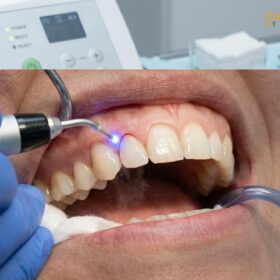
| Laser Gum Contouring / Gingivectomy (per tooth) | $35 – $55 USD | 910,000 – 1,430,000 VND | $58 – $91 USD |
| Gummy Smile Botox (Yonsei Point, Bilateral) | $150 – $250 USD | 3,900,000 – 6,500,000 VND | $250 – $416 USD |
| IPS E.max Porcelain Veneer (per tooth) | $185 USD | 4,800,000 VND | $308 USD |
| Zirconia Veneer (per tooth) | $138 USD | 3,588,000 VND | $230 USD |
| Composite Veneer / Dental Bonding (per tooth) | $35 – $46 USD | 900,000 – 1,200,000 VND | $58 – $76 USD |
| Full Zirconia Crown (Cercon Standard / HT Multilayer) | $154 – $192 USD | 4,000,000 – 5,000,000 VND | $256 – $321 USD |
| IPS E.max All-Ceramic Crown / Inlay / Onlay / Overlay | $231 USD | 6,000,000 VND | $385 USD |
| Single Korean Implant (Dentis / Neo Biotech / Dentium) | $462 – $654 USD | 12,000,000 – 17,000,000 VND | $769 – $1,090 USD |
| Single European / Swiss Implant (Straumann BLT/Active) | $962 – $1,346 USD | 25,000,000 – 35,000,000 VND | $1,603 – $2,244 USD |
| All-on-4 Full-Arch Implants (Complete Package) | From $6,346 USD / arch | 165,000,000 VND | From $10,576 USD |
| Invisalign Comprehensive (Unlimited aligners) | $2,538 USD | 66,000,000 VND | $4,231 USD |
| Invisalign Vivera Retainer (Genuine SmartTrack) | $308 USD | 8,000,000 VND | $513 USD |
| Swiss EMS AirFlow Stain Removal (Erythritol GBT) | $58 USD | 1,500,000 VND | $96 USD |
| Philips Zoom! WhiteSpeed In-Office Whitening | $108 USD | 2,800,000 VND | $180 USD |
| Surgical Wisdom Tooth Extraction (Piezotome) | $58 – $115 USD | 1,500,000 – 3,000,000 VND | $96 – $191 USD |
| Microscopic Endodontic Root Canal (Anterior/Premolar) | $77 – $115 USD | 2,000,000 – 3,000,000 VND | $128 – $192 USD |
| Orthodontic TAD Mini-Screw (IZC / Buccal Shelf) | $77 – $115 USD | 2,000,000 – 3,000,000 VND | $128 – $191 USD |
| 3D CBCT Scan | $18 USD | 480,000 VND | $30 USD |
*Note: The USD fees listed above are calculated at an exchange rate of $1 USD = 26,000 VND. To secure the -40% Online Booking Pricing, international patients must schedule their consultation via our official WhatsApp (+84 853 020 003) prior to arriving in Ho Chi Minh City. For a comprehensive overview of our clinical standards, visit our guide on the Best Dentist & Dental Clinics in Ho Chi Minh City (2026 Comparison Guide).
Frequently Asked Questions
How does Dr. Nguyen Van Cuong determine whether my gummy smile is caused by short clinical crowns, a hyperactive upper lip, or both?
Dr. Nguyen Van Cuong utilizes a comprehensive diagnostic protocol involving 3D CBCT imaging, dynamic smile video analysis, and periodontal probing. By measuring the clinical crown length against the cementoenamel junction (CEJ), he identifies Altered Passive Eruption (short crowns). By measuring lip translation from rest to a full smile, he diagnoses a hyperactive upper lip. Often, a combination of both factors is present, requiring a synergistic treatment plan.
Why does Lip Repositioning leave zero external facial scars, and how long does upper lip tightness last after the procedure?
Surgical Lip Repositioning is performed entirely intraorally. The elliptical incision and mucosal strip excision occur within the maxillary vestibule, hidden completely behind the upper lip, ensuring zero external facial scarring. Patients typically experience a sensation of upper lip tightness and restricted movement for 2 to 4 weeks post-operatively as the internal mucosal tissues heal and adapt to their new, lower position.
Can Gummy Smile Botox at the Yonsei point be combined with surgical Lip Repositioning to prevent muscle tension during healing?
Yes, administering Gummy Smile Botox at the Yonsei point 1 to 2 weeks prior to surgical Lip Repositioning is a highly effective clinical strategy. By temporarily paralyzing the levator labii superioris muscles, Botox eliminates dynamic muscle tension on the surgical suture line during the critical initial healing phase, significantly reducing the risk of incision dehiscence and long-term relapse.
When should Aesthetic Crown Lengthening be combined with 8 to 10 upper IPS E.max porcelain veneers?
Aesthetic Crown Lengthening is combined with IPS E.max porcelain veneers when the patient not only has excess gingival display but also suffers from microdontia (naturally small teeth), severe enamel attrition (wear), or structural discoloration. The crown lengthening establishes the correct gingival zenith and biologic width, while the veneers restore the golden 1:0.8 width-to-length proportion, creating a flawless, balanced smile architecture.
How much does surgical Lip Repositioning vs. Aesthetic Crown Lengthening cost at HCMC Dental Clinic in District 1?
At HCMC Dental Clinic, international patients benefit from transparent, direct-booking pricing. While exact fees depend on the complexity and number of teeth involved, our -40% online booking rates make these advanced periodontal plastic surgeries highly accessible compared to Western benchmarks. Aesthetic Crown Lengthening and Lip Repositioning are customized based on 3D CBCT diagnostics, with comprehensive treatment plans provided during your initial consultation with Dr. Nguyen Van Cuong.
References
- Journal of Periodontology. Clinical Evaluation of Surgical Lip Repositioning for the Treatment of Excessive Gingival Display: A Systematic Review. (2022).
- International Journal of Periodontics & Restorative Dentistry. Aesthetic Crown Lengthening and Biologic Width: Piezosurgery vs. Rotary Instruments in Altered Passive Eruption. (2021).
- Journal of Oral and Maxillofacial Surgery. Modified Lip Repositioning with Myotomy: Long-Term Relapse Prevention in Hypermobile Upper Lip Patients. (2023).
- Aesthetic Surgery Journal. Botulinum Toxin Type A at the Yonsei Point for Gummy Smile Correction: Dosage, Efficacy, and Longevity. (2020).
- Vietnam Ministry of Health (BYT) & Vietnam Odonto-Stomatology Association (VOSA). National Clinical Guidelines on Specialist Dental Care, Biomaterial Traceability & EN 13060 Class B Infection Control. (2024).