Lip repositioning surgery in Saigon is a minimally invasive clinical procedure designed to correct a gummy smile by restricting the hyperactive upper lip muscles. This targeted treatment reduces excessive gingival display, creating a balanced, aesthetically pleasing smile without the immediate need for extensive orthognathic jaw surgery.
Clinical Summary:
Lip repositioning, often referred to as lip lowering surgery, is an advanced periodontal plastic surgery technique utilized to manage excessive gingival display caused by a hypermobile upper lip. By excising a precise partial-thickness strip of mucosa from the maxillary vestibule and suturing the lip in a lower position, the procedure mechanically limits the upward excursion of the elevator muscles during smiling. When combined with modern technologies like the AMD Picasso Diode laser, the surgery offers a bloodless field, rapid recovery, and highly predictable aesthetic outcomes. It serves as a highly effective, long-term alternative to temporary neurotoxin injections and a less invasive option compared to orthognathic surgery for appropriate candidates.
Key Takeaways:
- Mechanically restricts hyperactive levator muscles to significantly reduce excessive gum exposure during a full smile.
- Serves as a minimally invasive, long-term alternative to temporary Botox injections and complex jaw surgeries.
- Utilizes advanced AMD Picasso Lasers (810nm) for precise, bloodless mucosal incisions and rapid tissue coagulation.
- Strictly preserves the biological width and calibrates gingival zenith points for optimal pink-white aesthetic harmony.
- Features a rapid initial recovery timeline of 48 to 72 hours, with complete mucosal healing occurring within weeks.
Understanding Lip Repositioning (Lip Lowering Surgery)
Lip lowering surgery is a targeted mucosal excision technique that shortens the vestibular depth, physically limiting the upward movement of the upper lip during a full smile to prevent excessive gum exposure.
Excessive gingival display, commonly known as a gummy smile, is a multifactorial aesthetic concern that can significantly impact a patient’s self-confidence. While a natural smile typically reveals up to 2 millimeters of gingival tissue, exposure exceeding 3 to 4 millimeters is often perceived as disproportionate. Among the various etiologies of a gummy smile—which include altered passive eruption, vertical maxillary excess, and gingival hyperplasia—a hypermobile upper lip is one of the most prevalent yet frequently misdiagnosed causes. Lip repositioning surgery in Saigon has emerged as a highly predictable and minimally invasive solution specifically tailored to address this muscular hypermobility.
The fundamental principle of lip lowering surgery involves the surgical alteration of the maxillary vestibule. By removing a continuous, partial-thickness band of alveolar mucosa and suturing the newly created margins together, the depth of the vestibule is deliberately shortened. This structural modification creates a physical tether that restricts the upward excursion of the upper lip when the patient smiles. Unlike procedures that alter the dental hard tissues or the underlying skeletal framework, lip repositioning focuses entirely on soft tissue dynamics, making it a highly appealing option for patients seeking significant aesthetic improvement with minimal physiological disruption.
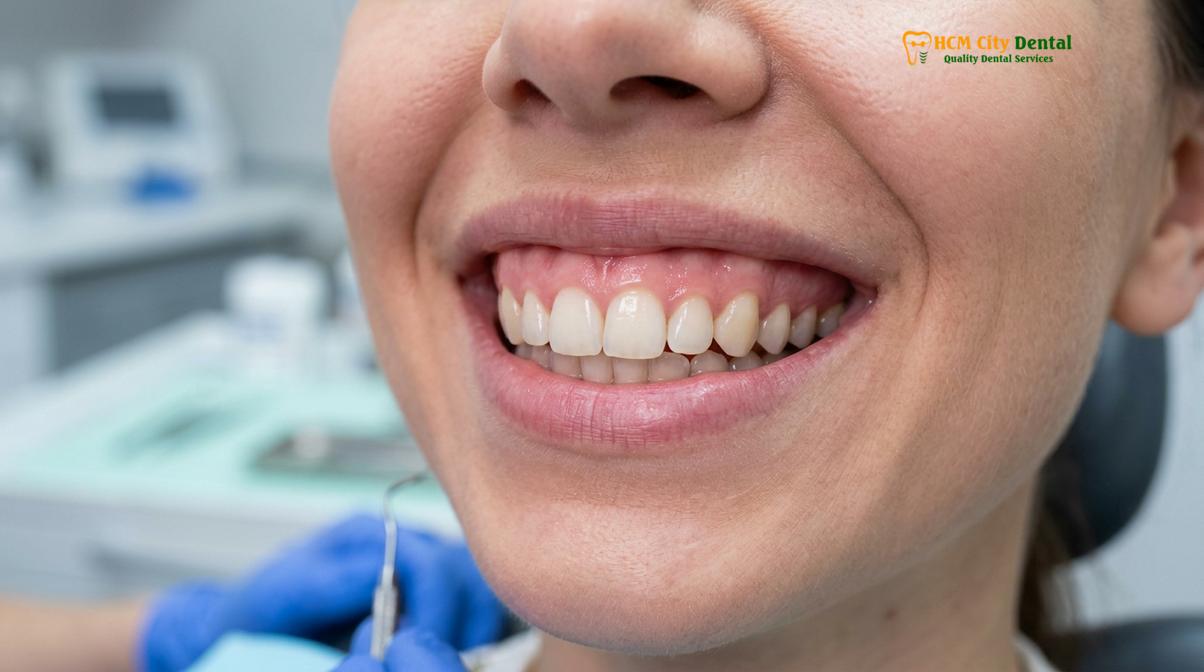
Clinical diagnostics play a paramount role in determining a patient’s candidacy for this procedure. A thorough dynamic smile analysis is required to measure the exact millimeter of lip translation from rest to a maximum dynamic smile. Dr. Nguyen Van Cuong emphasizes that precise zenith calibration and respecting the supracrestal tissue attachment are critical when evaluating patients for this procedure. If the gummy smile is compounded by short clinical crowns, the surgical plan must be adapted to include advanced aesthetic gum contouring prior to or in conjunction with the lip repositioning to achieve optimal proportions.
Furthermore, the procedure is highly technique-sensitive. The surgeon must carefully calculate the apicocoronal dimension of the mucosal strip to be excised. A general clinical guideline suggests that the width of the excised tissue should be approximately twice the amount of the excessive gingival display measured in millimeters. However, this mathematical approach must be balanced against the patient’s unique anatomical constraints, ensuring that sufficient attached gingiva remains and that the functional mobility of the lip for speech and mastication is not compromised. This meticulous planning is what elevates gummy smile surgery HCMC from a simple excision to a sophisticated exercise in facial harmony.
How We Restrict the Hyperactive Lip Elevators
By removing a partial-thickness strip of mucosa from the maxillary vestibule and suturing the lip lower, the procedure mechanically restricts the hyperactive levator labii superioris muscles from pulling the lip too high.
To fully comprehend how we restrict lip elevators, it is essential to understand the complex muscular anatomy that governs facial expressions. The elevation of the upper lip is primarily controlled by a synergistic group of muscles, including the levator labii superioris, the levator labii superioris alaeque nasi, the zygomaticus minor, and the levator anguli oris. In patients with a hypermobile upper lip, these muscles contract with excessive force or have a shorter resting length, causing the lip to retract significantly higher than the standard anatomical norm during a smile. [1]
Surgical lip repositioning does not involve the severing or direct myotomy of these muscles, which carries a higher risk of altering the patient’s natural facial expressions or causing asymmetrical movement. Instead, the procedure relies on the principles of tissue restriction and cicatrization. By excising the mucosal strip and advancing the lip mucosa coronally to meet the mucogingival junction, the surgeon effectively shortens the mucosal lining of the vestibule. This creates a mechanical barrier. When the elevator muscles contract, their upward pull is counteracted by the newly established, shortened mucosal tether, preventing the lip from rising past the desired aesthetic line.
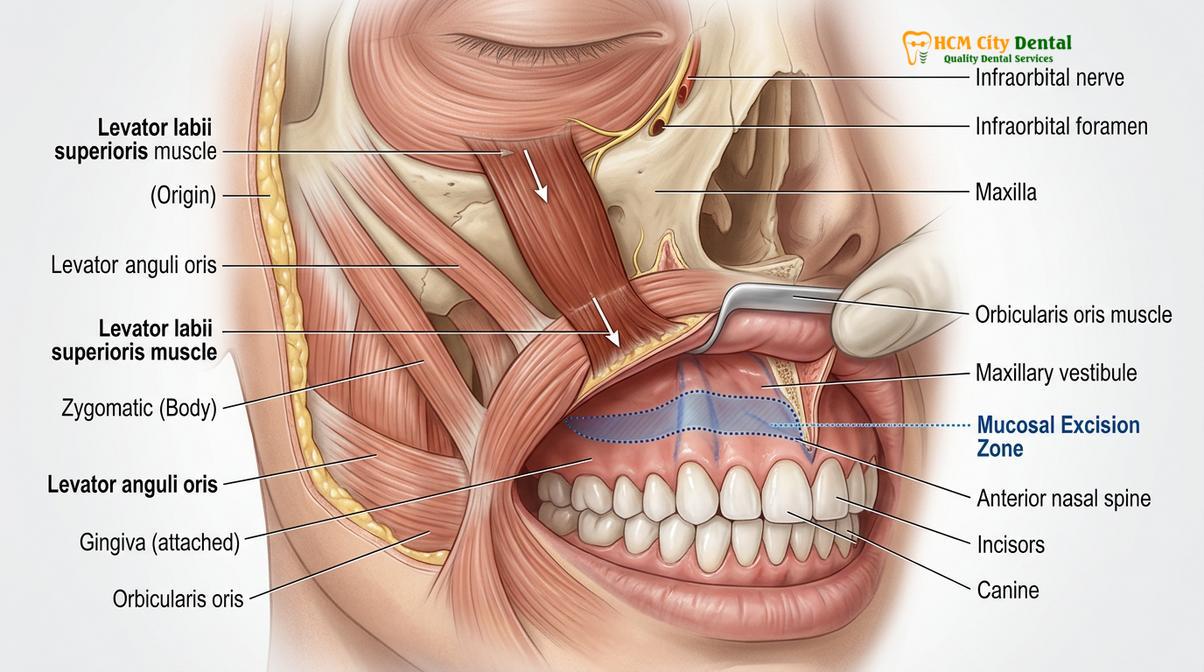
“The elegance of lip repositioning lies in its ability to modulate muscle dynamics through soft tissue restriction rather than muscle denervation or transection, preserving the natural warmth and spontaneity of the patient’s smile.”
During the healing phase, the formation of a stable, fibrous scar at the incision line further reinforces this restriction. This cicatricial tissue acts as an internal anchor, providing long-term resistance against the upward pull of the hyperactive muscles. It is this combination of immediate mechanical shortening and subsequent fibrous stabilization that makes hyperactive upper lip correction so effective. The procedure effectively recalibrates the resting and dynamic tension of the lip, ensuring that the vermilion border rests gracefully at or just above the gingival margins of the maxillary central incisors during a full smile.
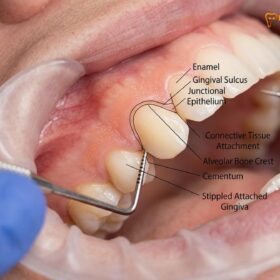
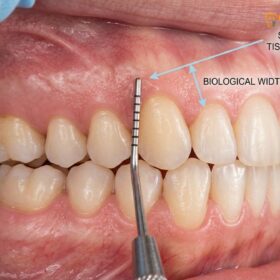
It is also crucial to differentiate this surgical approach from temporary chemical denervation. While neurotoxins can temporarily paralyze the elevator muscles to reduce gingival display, they do not alter the underlying structural anatomy. The surgical restriction provided by lip repositioning offers a permanent anatomical modification. This structural approach requires a deep understanding of the biological width—specifically ensuring that the minimum 2mm supracrestal tissue attachment is never violated during any concurrent gingival contouring, thereby preventing chronic inflammation or iatrogenic bone resorption. [2]
Surgical Steps: Mucosa Incision and Suture Techniques
The surgical workflow involves precise mucosal marking, partial-thickness excision using advanced diode lasers, and meticulous suturing to anchor the lip in its new, lower position while ensuring rapid healing.
The clinical workflow for lip repositioning is a meticulously orchestrated sequence designed to maximize aesthetic outcomes while minimizing patient morbidity. The procedure begins with profound local anesthesia, typically achieved through bilateral infraorbital nerve blocks combined with local infiltration in the maxillary vestibule. This ensures complete patient comfort and provides necessary hemostasis. Once the surgical field is anesthetized, the surgeon uses a sterile marking pen to outline the elliptical incision design. The coronal incision is placed precisely at the mucogingival junction, while the apical incision is positioned higher in the vestibular mucosa, with the distance between them dictated by the pre-calculated required restriction.
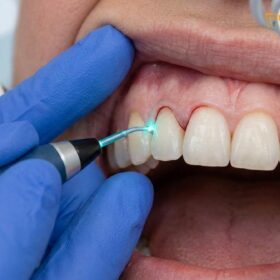
At our clinic, the excision phase is highly modernized through the integration of AMD Picasso Lasers. Operating at an optimal wavelength of 810nm, this diode soft tissue laser is specifically absorbed by melanin and hemoglobin, making it the gold standard for mucosal surgery. The laser is used to perform the partial-thickness dissection, carefully peeling away the mucosal epithelium and underlying connective tissue while strictly preserving the periosteum covering the maxillary bone. The use of the AMD Picasso Laser ensures bloodless, sutureless cuts (in terms of the excision itself), instant coagulation, and cauterization. This sterile beam significantly minimizes the risk of postoperative infection and drastically reduces tissue trauma compared to traditional cold steel scalpels. [3]
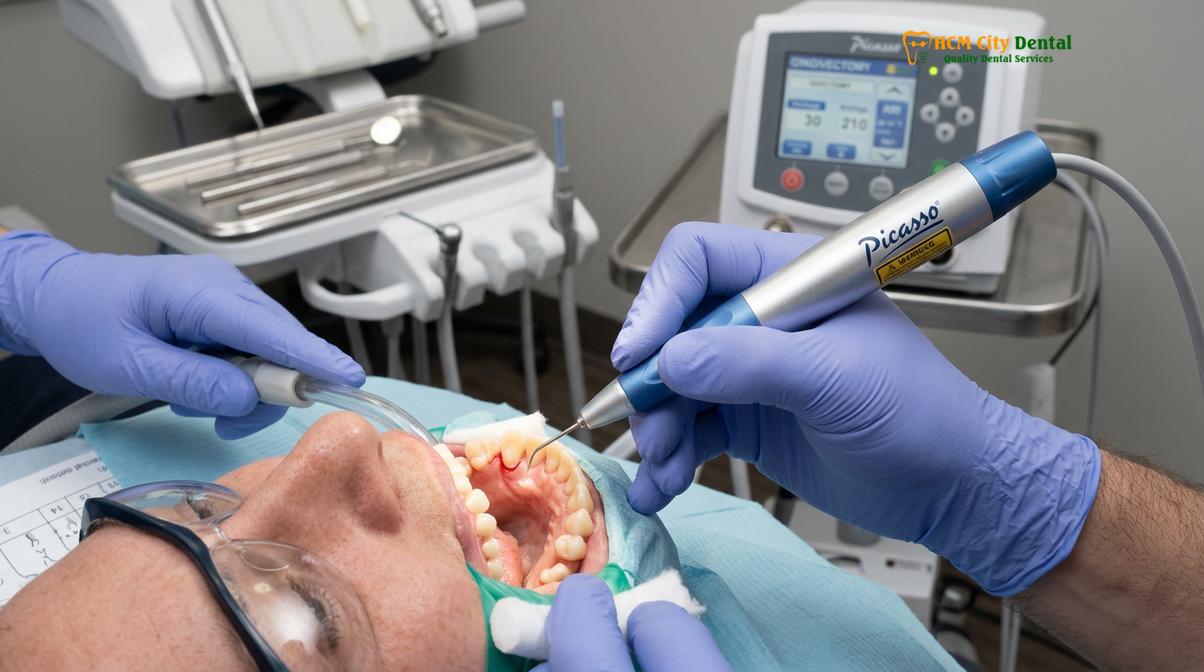
Following the complete removal of the mucosal strip, the surgical site is thoroughly irrigated with sterile saline. The critical phase of suturing then begins. The goal is to advance the apical mucosal margin coronally and approximate it to the mucogingival junction. This is typically achieved using a combination of interrupted and continuous interlocking sutures. High-quality resorbable sutures, such as 4-0 or 5-0 polyglactin or chromic gut, are utilized to ensure precise tissue approximation without excessive tension. The suturing technique must be meticulous to prevent flap dehiscence, minimize scarring, and ensure that the midline frenum is properly aligned to maintain facial symmetry.
Clinical Warning: Precise suturing is critical in lip repositioning. Inadequate tissue approximation or excessive tension can lead to flap dehiscence, delayed healing, or an asymmetrical smile line. Patients must strictly adhere to postoperative instructions, avoiding excessive facial movements and mechanical trauma to the surgical site during the initial healing phase.
The integration of laser technology not only refines the surgical precision but also accelerates the healing cascade. The photobiomodulation effects of the 810nm wavelength stimulate cellular metabolism and reduce the release of inflammatory mediators. As a result, patients experience a rapid 48-hour initial recovery period, with significantly less postoperative pain and swelling than historically associated with this procedure. The sutures are designed to dissolve naturally within two to three weeks, leaving a virtually seamless, hidden scar high within the maxillary vestibule.
Is Lip Repositioning Permanent Compared to Botox?
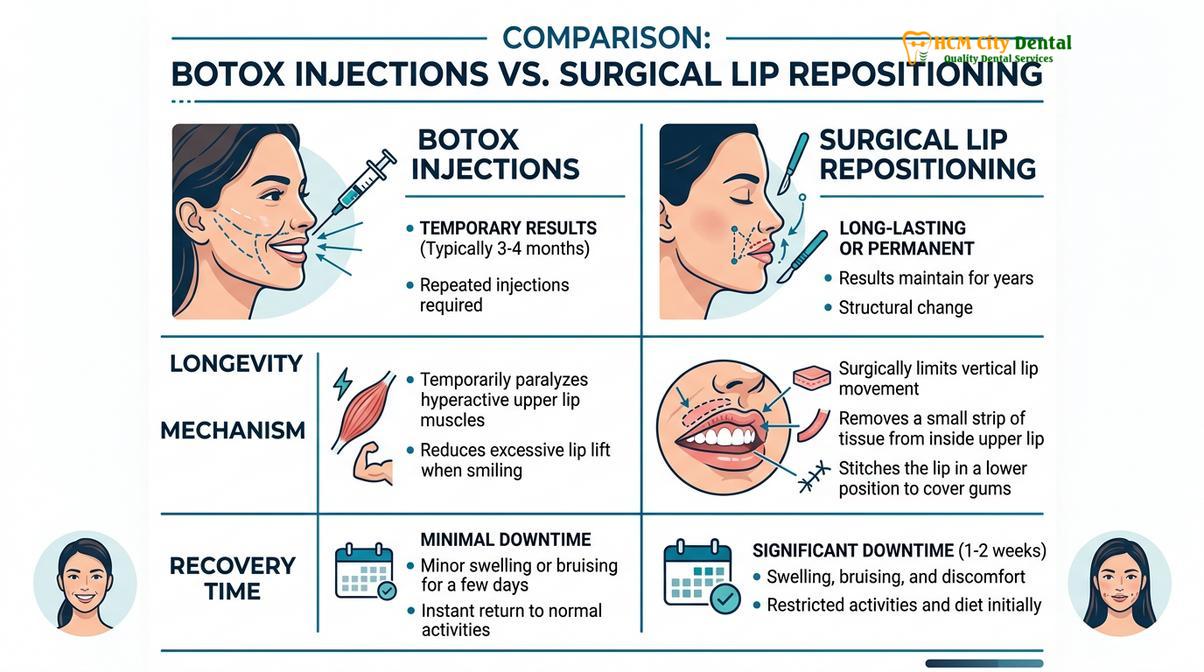
While Botox offers a temporary chemical restriction of lip muscles lasting three to six months, surgical lip repositioning provides a long-term, structural modification with significantly lower relapse rates.
When patients explore options for gummy smile correction, the comparison between surgical lip repositioning and Botulinum Toxin (Botox) injections is inevitable. Botox works by temporarily blocking the release of acetylcholine at the neuromuscular junction, effectively paralyzing the hyperactive levator muscles. While this provides an immediate reduction in gingival display, the effects are transient. The neurotoxin is gradually metabolized by the body, and muscle function fully returns within three to six months, necessitating repeated, ongoing treatments to maintain the aesthetic result.
In contrast, lip repositioning is designed as a long-term structural intervention. By physically shortening the vestibular mucosa and creating a stable fibrous attachment, the surgery permanently alters the anatomical limits of lip mobility. Clinical studies evaluating the longevity of lip repositioning have demonstrated high success rates and excellent patient satisfaction over extended follow-up periods. While some minor relapse (typically 1 to 2 millimeters) can occur over several years due to the natural elasticity of soft tissues and continuous muscle function, the results remain significantly more stable and enduring than any injectable alternative. [4]
For patients presenting with severe skeletal discrepancies, such as Vertical Maxillary Excess (VME), neither Botox nor soft tissue repositioning may be sufficient. In these complex cases, the clinic works in collaboration with Surgical Jaw Partners. Specifically, we coordinate with elite maxillofacial specialists at the National Hospital of Odonto-Stomatology in Ho Chi Minh City (Bệnh viện Răng Hàm Mặt Trung Ương TP.HCM)—the highest clinical authority in the region. These specialists perform Le Fort I osteotomy orthognathic surgery, which involves physically impacting and repositioning the entire upper jaw to correct the skeletal deformity at its source.
| Treatment Modality | Mechanism of Action | Longevity of Results | Invasiveness & Recovery |
|---|---|---|---|
| Botox Injections | Chemical denervation of levator muscles | Temporary (3 to 6 months) | Non-invasive; immediate recovery |
| Lip Repositioning Surgery | Mucosal excision and mechanical restriction | Long-term (minor relapse possible over years) | Minimally invasive; 48-72 hour initial recovery |
| Le Fort I Osteotomy (Jaw Surgery) | Skeletal impaction of the maxilla | Permanent | Highly invasive; several weeks of recovery |
The decision between these modalities is entirely dependent on accurate clinical diagnosis. A hypermobile lip is best treated with repositioning, a mild muscular issue may be managed with Botox, and severe skeletal overgrowth requires orthognathic intervention. By offering a comprehensive diagnostic approach, we ensure that patients receive the most appropriate, biologically sound treatment for their specific anatomical presentation.
Comprehensive Pricing Structure for Gummy Smile Treatments
Our transparent fee schedule reflects the advanced technology and clinical expertise utilized, offering competitive rates for laser gingivectomy, crown lengthening, and lip lowering procedures in Vietnam.
Understanding the financial investment required for aesthetic dental procedures is a crucial aspect of patient care. At our facility, we maintain a transparent and comprehensive pricing structure that reflects the utilization of advanced clinical technologies, such as the AMD Picasso Diode laser, and the high level of surgical expertise provided by our specialists. The cost of treatment varies depending on the specific etiology of the gummy smile and the complexity of the required intervention.
According to the latest clinic fee schedule, the pricing for gummy smile correction procedures is structured as follows to accommodate both localized and comprehensive full-arch treatments:
- Laser Gingivectomy (per tooth): 1,500,000 VND (~$60 USD) (Walk-in: 2,500,000 VND). This is ideal for minor, localized tissue overgrowth where bone contouring is not required.
- Full-Arch Laser Gum Contouring (up to 10 teeth): 12,000,000 VND (~$480 USD) (Walk-in: 20,000,000 VND). A comprehensive approach for patients requiring a complete redesign of their smile line.
- Functional/Esthetic Crown Lengthening (per tooth, including bone contouring): 3,000,000 VND (~$120 USD) (Walk-in: 5,000,000 VND). Necessary when the biological width must be re-established by modifying the underlying alveolar crest.
- Surgical Lip Repositioning / Lip Lowering: 15,000,000 VND (~$600 USD) (Walk-in: 25,000,000 VND). The definitive soft tissue procedure for restricting a hypermobile upper lip.
- Botox Gummy Smile Correction (both sides): 4,500,000 VND (~$180 USD) (Walk-in: 7,500,000 VND). A temporary, non-surgical alternative for muscle relaxation.
To make these advanced treatments more accessible, especially for international patients engaging in dental tourism, we offer a significant -40% WhatsApp booking discount. This initiative ensures that patients can secure priority scheduling and receive world-class periodontal plastic surgery at highly competitive rates compared to Western dental markets, without compromising on clinical safety or aesthetic excellence.
Clinical Case Study: Correcting Severe Gingival Display
A detailed clinical review demonstrates how combining digital smile design with precise mucosal excision successfully resolves severe gingival display, restoring facial harmony and patient confidence.
The true efficacy of lip repositioning is best illustrated through documented clinical outcomes. Consider the case of a 28-year-old female patient who presented to HCMC Dental Clinic in Ho Chi Minh City with a chief complaint of excessive gum exposure when smiling. Clinical examination revealed a gingival display of 7 millimeters during a dynamic smile. Periodontal sounding confirmed normal biological width and adequate clinical crown length, ruling out altered passive eruption. The diagnosis was definitively established as a hypermobile upper lip, making her an ideal candidate for surgical lip repositioning.
Case Study: Multidisciplinary Gummy Smile Correction
Patient Profile: 28-year-old female, non-smoker, excellent oral hygiene.
Diagnosis: Severe hypermobile upper lip resulting in 7mm of dynamic gingival display.
Treatment Protocol: Dr. Cuong utilized digital smile design (DSD) to map the ideal gingival zenith points before proceeding with the mucosal excision. An 810nm diode laser was employed to remove a 12mm strip of vestibular mucosa. The flap was advanced and secured with 5-0 resorbable sutures.
Outcome: At the 6-month follow-up, the patient exhibited a stable, harmonious smile with only 1.5mm of gingival display. The vestibular scar was imperceptible, and full lip competence was maintained.
This case highlights the importance of precise preoperative planning. Dr. Nguyen Van Cuong emphasizes that the integration of digital smile design (DSD) allows the surgical team to visualize the final outcome before a single incision is made. By mapping the zenith points and calculating the exact millimeter of restriction required, the surgery transitions from an empirical procedure to a highly predictable, data-driven intervention. [5]
“The successful management of a gummy smile requires a harmonious blend of artistic vision and strict adherence to biological principles. When we respect the tissue architecture, the results are not only beautiful but enduring.”
The patient’s postoperative recovery was uneventful, characterized by minimal swelling that resolved within 72 hours. The use of the diode laser significantly contributed to this rapid healing phase by minimizing collateral tissue damage and providing immediate hemostasis. This case exemplifies the high standard of care and the transformative psychological impact that precise periodontal plastic surgery can achieve for patients suffering from smile-related insecurities.
When to See a Doctor for Gummy Smile Correction
Determining the right time to seek professional consultation for a gummy smile depends on both aesthetic concerns and underlying functional issues. If you find yourself consciously altering your smile, covering your mouth when laughing, or feeling significant psychological distress due to excessive gum exposure, it is highly recommended to schedule a clinical evaluation. A gummy smile is not merely a cosmetic issue; in some cases, it can be indicative of underlying skeletal discrepancies, such as vertical maxillary excess, or periodontal conditions like gingival hyperplasia that require medical management.
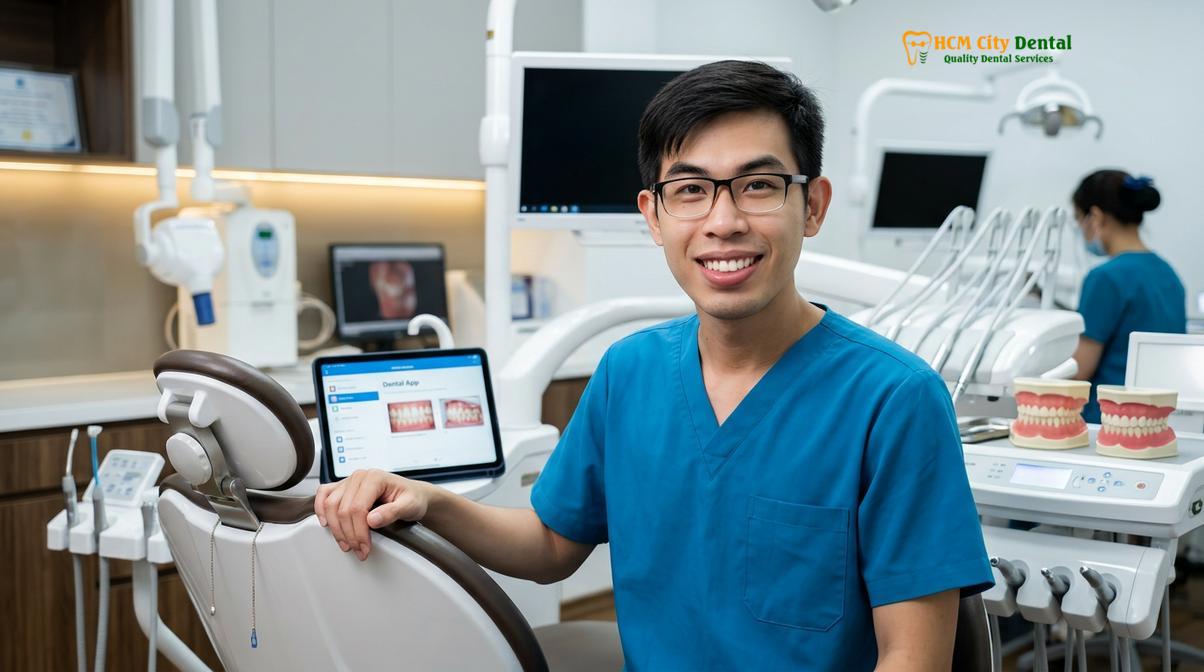
During a consultation at HCMC Dental Clinic, our specialists will conduct a comprehensive diagnostic workup. This includes a dynamic smile analysis, periodontal probing to assess the supracrestal tissue attachment, and radiographic imaging to evaluate the alveolar bone crest. It is important to note that lip repositioning has specific contraindications. Patients with inadequate attached gingiva, severe skeletal deformities unwilling to undergo orthognathic surgery, or active periodontal disease are not immediate candidates for this procedure. A personalized clinical examination is essential to determine the precise etiology of your gummy smile and to formulate a safe, effective, and individualized treatment plan.
Frequently Asked Questions
Will lip repositioning change my facial expression?
No, lip repositioning will not alter your fundamental facial expression at rest. It only restricts the upward movement of the upper lip during a full smile, ensuring your resting face remains completely natural while reducing excessive gingival display. The procedure specifically targets the vestibular mucosa to create a mechanical limit, leaving the complex network of facial muscles intact so that your ability to convey emotion remains unchanged.
Is lip repositioning surgery painful?
Lip repositioning surgery is not painful during the procedure, as it is performed under profound local anesthesia. Postoperative discomfort is typically mild, characterized by a feeling of tightness, and is easily managed with standard over-the-counter pain relievers. The use of advanced diode lasers further minimizes tissue trauma, significantly reducing the incidence of postoperative swelling and pain compared to traditional scalpel techniques.
What is the recovery timeline for lip repositioning?
The initial recovery timeline for lip repositioning spans 48 to 72 hours, during which mild swelling and tension may occur. Complete mucosal healing and the dissolution of resorbable sutures generally take about two to three weeks. Patients are advised to limit excessive facial movements, avoid strenuous physical activity, and adhere to a soft diet during the first week to ensure optimal healing and prevent suture dehiscence.
Can lip repositioning be combined with gum contouring?
Yes, lip repositioning is frequently combined with aesthetic laser gum contouring. This dual approach addresses both a hypermobile lip and excess gingival tissue, ensuring optimal smile harmony and proper gingival zenith calibration. When a patient presents with both a hyperactive lip and short clinical crowns, performing these procedures concurrently yields the most dramatic and aesthetically pleasing transformation.
Are the results of lip lowering surgery permanent?
The results of lip lowering surgery are considered long-term and highly stable, though minor relapse can occasionally occur over several years. It provides a significantly more permanent structural solution compared to temporary Botox injections. While the natural aging process and continuous muscle function may cause a slight recurrence of 1 to 2 millimeters over a decade, the vast majority of patients enjoy enduring satisfaction with their reduced gingival display.
References
- Journal of Periodontology. Surgical management of the hypermobile upper lip. (2021).
- International Journal of Periodontics & Restorative Dentistry. Diode laser applications in mucosal surgery. (2020).
- Journal of Aesthetic and Restorative Dentistry. Biological width and supracrestal tissue attachment. (2019).
- Journal of Oral and Maxillofacial Surgery. Le Fort I osteotomy for vertical maxillary excess. (2022).
- Clinical Oral Investigations. Long-term stability of surgical lip repositioning. (2018).