A gummy smile is effectively corrected through various clinical methods depending on the underlying anatomical cause. Treatments range from non-invasive neuromodulator injections for hyperactive lip muscles to precision laser gingivectomy for excess gum tissue, and orthognathic surgery for severe skeletal discrepancies, ensuring a balanced and aesthetic gingival display.
Clinical Summary:
Gummy smile correction methods are tailored to individual anatomical etiologies, including altered passive eruption, vertical maxillary excess, or a hyperactive levator muscle. Clinical interventions span from minimally invasive diode laser gingivectomy and aesthetic crown lengthening to temporary neuromodulator injections and permanent orthognathic surgery. A comprehensive diagnostic tree, incorporating digital smile design and biological width sounding, is essential to determine the most predictable and biologically sound treatment pathway for optimal gingival zenith calibration.
Key Takeaways:
- Treatment selection depends entirely on whether the root cause is dental, muscular, or skeletal in nature.
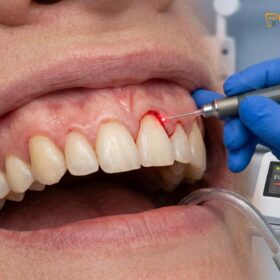
- Laser gingivectomy offers a bloodless, rapid-healing solution for excess gingival tissue covering the dental crowns.
- Neuromodulators provide a temporary, non-surgical fix for hyperactive upper lip muscles that retract too high.
- Severe skeletal cases may require Le Fort I osteotomy, performed in partnership with specialized maxillofacial surgeons.
- Respecting the supracrestal tissue attachment is critical during any contouring to prevent postoperative bone resorption.
Diagnostic Trees: Aligning Symptoms to the Right Treatment
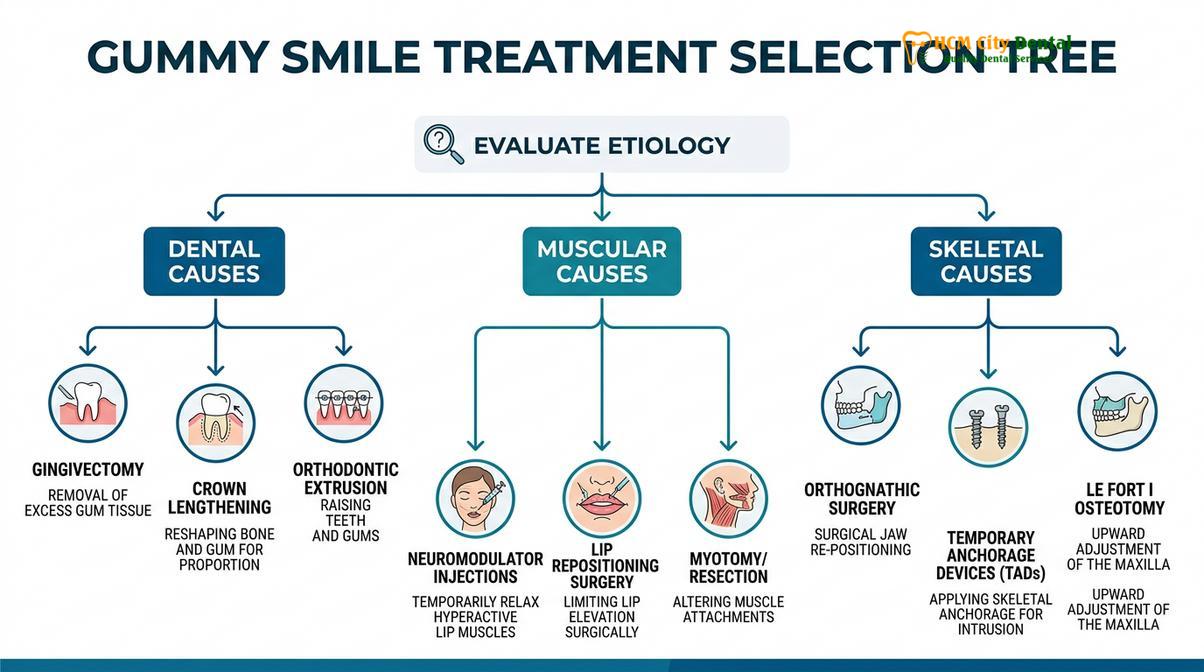
Accurate diagnosis is the cornerstone of gummy smile correction, requiring a systematic evaluation of dental, muscular, and skeletal factors to map out the most effective and biologically respectful treatment protocol.
The clinical manifestation of excessive gingival display—commonly referred to as a gummy smile—is rarely a one-size-fits-all condition. It is a multifactorial aesthetic concern that requires a precise diagnostic approach. Clinicians utilize a comprehensive treatment selection tree to categorize the etiology into three primary domains: dentoalveolar, muscular, and skeletal. Identifying the exact origin is paramount, as applying a soft-tissue solution to a skeletal problem will yield suboptimal and highly unpredictable results.
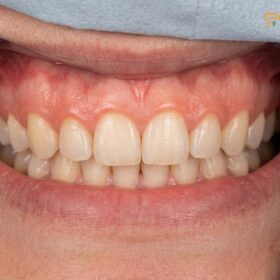
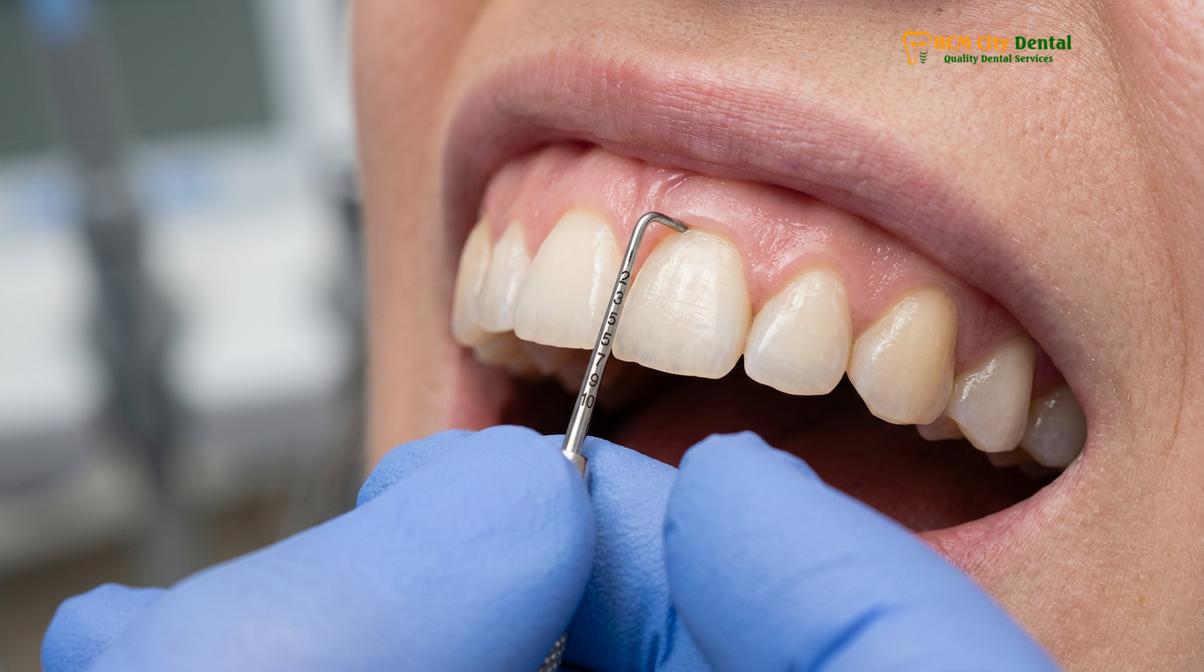
Dentoalveolar causes frequently involve altered passive eruption, a condition where the gingival tissue fails to recede to its normal physiological position during tooth development, leaving the clinical crowns looking disproportionately short and square. In these instances, the underlying anatomical crown is of normal length but remains hidden beneath excess soft tissue. To accurately diagnose this, clinicians perform bone sounding under local anesthesia. As Dr. Nguyen Van Cuong frequently emphasizes during clinical evaluations, measuring the distance from the gingival margin to the alveolar bone crest is a non-negotiable step. This measurement determines whether a simple soft-tissue excision is sufficient or if osseous recontouring is required to respect the biological width[1].
Muscular etiologies are typically driven by a hyperactive levator muscle complex—specifically the levator labii superioris alaeque nasi. In these patients, the teeth and jaw may be perfectly proportioned, but upon smiling, the upper lip retracts excessively, exposing a wide band of gingiva. Diagnosing this involves dynamic video analysis of the patient’s smile in transition from repose to maximum animation. Conversely, skeletal causes, such as Vertical Maxillary Excess (VME), involve an overgrowth of the upper jaw bone in a downward direction. This requires cephalometric radiographic analysis to confirm the skeletal discrepancy, which often presents alongside a long lower facial third and lip incompetence at rest.
Comparison Chart: Gingivectomy vs. Botox vs. Surgery vs. Ortho
Comparing gummy smile correction methods reveals distinct differences in invasiveness, recovery time, and clinical indications, allowing patients to weigh temporary cosmetic fixes against permanent structural modifications.
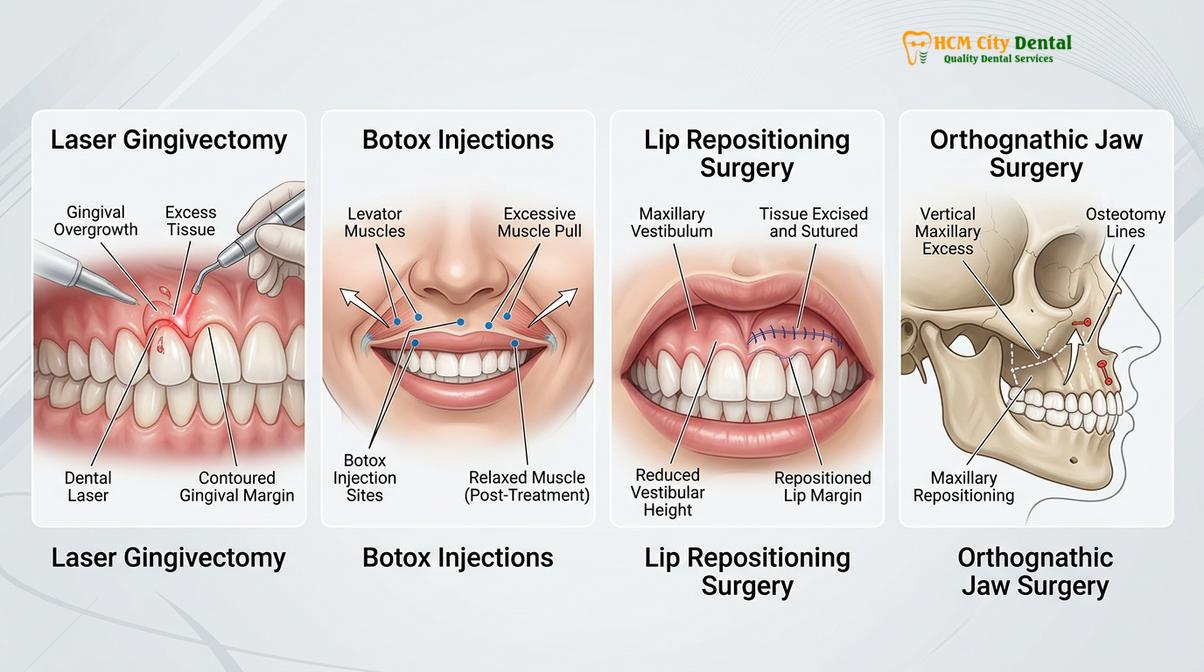
When navigating a gummy smile procedures comparison, patients and clinicians must evaluate the specific advantages, limitations, and biological impacts of each modality. The spectrum of care ranges from completely non-invasive injectables to comprehensive orthognathic surgery. Understanding these distinctions ensures that patient expectations align with clinical realities.
| Treatment Method | Primary Indication | Invasiveness | Longevity | Estimated Recovery |
|---|---|---|---|---|
| Laser Gingivectomy | Excess gum tissue (Altered passive eruption) | Minimally Invasive | Permanent (if bone levels permit) | 48 – 72 Hours |
| Neuromodulators (Botox) | Hyperactive upper lip muscles | Non-Invasive (Injection) | Temporary (3 – 6 Months) | Immediate |
| Surgical Lip Repositioning | Hypermobile lip / Short upper lip | Moderate (Soft Tissue Surgery) | Long-term to Permanent | 1 – 2 Weeks |
| Orthognathic Surgery | Vertical Maxillary Excess (Skeletal) | Highly Invasive (Bone Surgery) | Permanent | 4 – 6 Weeks |
| Orthodontics (Intrusion) | Deep bite / Dentoalveolar extrusion | Non-Invasive (Appliance-based) | Permanent (with retention) | 12 – 24 Months |
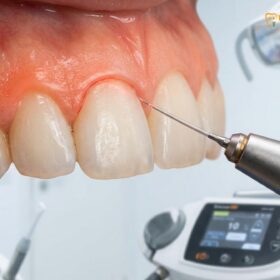
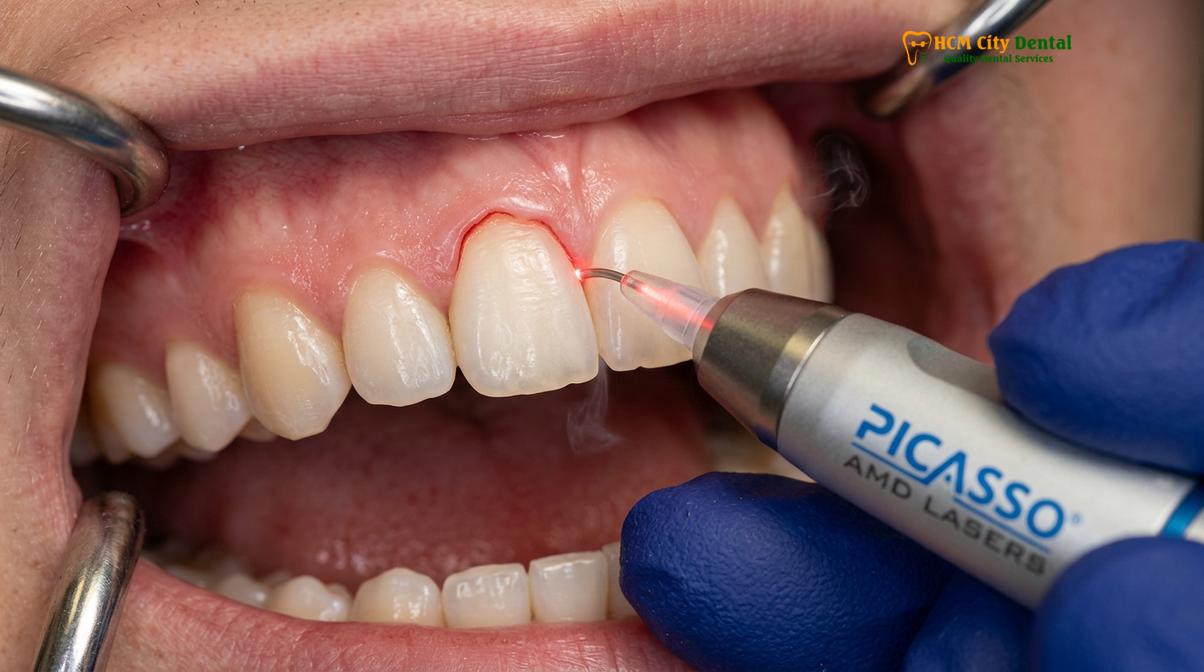
For soft-tissue discrepancies, the advent of advanced laser technology has transformed the patient experience. The use of AMD Picasso Lasers (an 810nm diode soft tissue laser) represents the gold standard in modern periodontics. This specific wavelength has a high affinity for melanin and hemoglobin, allowing the laser to vaporize excess tissue while simultaneously providing instant coagulation and cauterization. The result is a bloodless, sutureless procedure that drastically minimizes postoperative pain and swelling, facilitating a rapid 48-hour recovery[2]. Furthermore, the sterile nature of the laser beam significantly reduces the risk of opportunistic oral infections during the healing phase.
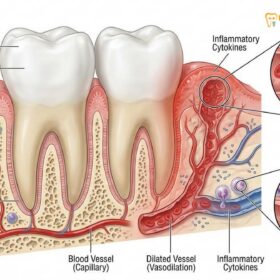
However, when the bone level is too close to the cementoenamel junction (CEJ), a simple laser gingivectomy is contraindicated. In such cases, functional or esthetic crown lengthening is required. This involves not only the removal of soft tissue but also an osteotomy (removal of supporting bone) and osteoplasty (reshaping of the bone) to re-establish a healthy supracrestal tissue attachment (formerly known as biological width). Failing to perform this crucial osseous step will inevitably lead to tissue rebound or chronic gingival inflammation as the body attempts to recreate its necessary biological seal[3].
“The integration of 810nm diode lasers in periodontal plastic surgery has revolutionized gingival contouring, providing instantaneous coagulation and significantly reducing postoperative morbidity compared to traditional scalpel techniques.”
Analyzing Longevity: Permanent Skeletal Fixes vs. Temporary Muscle Blocks
The durability of gummy smile treatments varies significantly, with skeletal and surgical interventions offering lifetime results, whereas muscular neuromodulators require consistent maintenance to sustain aesthetic outcomes.
When evaluating an invasive vs non invasive smile correction, longevity is often the deciding factor for patients. Non-surgical interventions, while appealing due to their lack of downtime, inherently offer transient results. Neuromodulator injections (such as Botox) work by temporarily blocking the release of acetylcholine at the neuromuscular junction, effectively weakening the hyperactive levator muscle. While this provides an excellent, immediate reduction in gingival display, the physiological effects naturally dissipate over three to six months as the nerve terminals regenerate. Consequently, patients must commit to a lifelong schedule of maintenance injections to preserve their smile aesthetics.
Conversely, surgical interventions provide definitive, structural changes. Surgical lip repositioning, also known as lip lowering, involves removing a strip of mucosa from the maxillary vestibule and suturing the lip to a lower position, physically restricting its upward mobility. While highly effective, some studies suggest a slight potential for partial relapse over several years due to muscle memory and tissue elasticity, though the majority of the correction remains stable.
For the most severe cases driven by Vertical Maxillary Excess, orthognathic surgery is the only biologically appropriate solution. This involves a Le Fort I osteotomy, where the entire upper jaw is surgically sectioned, moved upward (impacted) to reduce the vertical height, and secured with rigid titanium plates and screws. Because of the profound complexity of altering the facial skeleton, these procedures require an elite level of surgical expertise. For such severe skeletal cases, clinics often collaborate with specialized Surgical Jaw Partners. For instance, complex orthognathic cases are referred to and co-managed with maxillofacial specialists at the National Hospital of Odonto-Stomatology in Ho Chi Minh City (Bệnh viện Răng Hàm Mặt Trung Ương TP.HCM), ensuring patients receive care from the highest clinical authority in the region[4].
Choosing Your Path at HCMC Dental Clinic
Selecting the optimal treatment involves a collaborative approach combining advanced digital smile design, transparent pricing, and expert clinical execution to achieve a harmonious and lasting aesthetic result.
Navigating the myriad of gummy smile options HCMC has to offer requires a structured, patient-centric approach. At HCMC Dental Clinic, the journey begins with a comprehensive diagnostic protocol utilizing Digital Smile Design (DSD). This technology allows clinicians to capture high-resolution photography and dynamic video to analyze the relationship between the lips, teeth, and gingival architecture. By superimposing digital rulers and aesthetic grids over the patient’s face, the dental team can precisely calibrate the ideal gingival zenith points—the highest point of the gum scallop, which should be displaced slightly distal to the long axis of the tooth for maximum aesthetic appeal.
Dr. Cuong notes that pre-surgical preparation is just as critical as the procedure itself. A thorough professional dental scaling and prophylaxis are mandatory prior to any soft tissue or osseous surgery to ensure the surgical field is entirely free of calculus and pathogenic biofilm, thereby optimizing the healing environment and preventing postoperative complications[5].
Understanding the financial investment is a crucial part of the decision-making process. HCMC Dental Clinic maintains a highly transparent Pricing Structure designed to accommodate both local residents and international patients engaging in dental tourism. According to the latest clinic fee schedule, the costs are structured as follows:
- Laser Gingivectomy (per tooth): 1,500,000 VND (~$60 USD) (Standard Walk-in: 2,500,000 VND).
- Full-Arch Laser Gum Contouring (up to 10 teeth): 12,000,000 VND (~$480 USD) (Standard Walk-in: 20,000,000 VND).
- Functional/Esthetic Crown Lengthening (per tooth, including bone contouring): 3,000,000 VND (~$120 USD) (Standard Walk-in: 5,000,000 VND).
- Surgical Lip Repositioning / Lip Lowering: 15,000,000 VND (~$600 USD) (Standard Walk-in: 25,000,000 VND).
- Botox Gummy Smile Correction (both sides): 4,500,000 VND (~$180 USD) (Standard Walk-in: 7,500,000 VND).
To make these advanced treatments more accessible, the clinic offers a significant -40% WhatsApp booking discount for patients who schedule their consultations and procedures in advance through the clinic’s dedicated digital communication channels.
A 28-year-old patient traveled from Australia to Ho Chi Minh City seeking treatment for a moderate gummy smile characterized by short, square clinical crowns. Following a comprehensive DSD analysis at HCMC Dental Clinic, it was determined that altered passive eruption was the primary etiology. The patient underwent a full-arch aesthetic crown lengthening procedure utilizing the AMD Picasso Diode laser combined with precise osteoplasty. The minimally invasive nature of the laser allowed the patient to enjoy the rest of their vacation with virtually no downtime, returning home with a perfectly proportioned, harmonious smile.
“Digital Smile Design empowers clinicians to pre-visualize the exact gingival zenith modifications, ensuring that every laser ablation or osseous recontouring step is mathematically calibrated to the patient’s unique facial proportions.”
Whether you require a simple laser adjustment or a comprehensive surgical intervention, exploring your options for Gum Contouring & Gummy Smile correction with a qualified specialist is the first step toward achieving the confidence you deserve.
When to See a Doctor
While a gummy smile is predominantly an aesthetic concern, certain underlying conditions warrant immediate clinical evaluation. You should schedule a consultation with a dental specialist if your excessive gingival display is accompanied by chronic gum inflammation, persistent bleeding during brushing, or significant tooth mobility. Additionally, if your gummy smile is associated with a severe malocclusion (such as a deep bite or open bite) that causes difficulty in chewing, speaking, or breathing, it may indicate a more complex skeletal discrepancy that requires comprehensive orthodontic or orthognathic intervention. A thorough clinical examination is essential to rule out periodontal disease and to ensure that any cosmetic treatment plan is built upon a foundation of optimal oral health.
Frequently Asked Questions
What is the least invasive way to treat a gummy smile?
The least invasive method is the injection of botulinum toxin (Botox) into the hyperactive upper lip muscles. This non-surgical approach temporarily relaxes the levator muscles, preventing the lip from retracting too high during a smile. While highly effective and requiring zero downtime, the results are temporary and typically require maintenance treatments every three to six months to sustain the aesthetic improvement.
Can I combine laser gingivectomy with Botox?
Yes, combining laser gingivectomy with Botox is a highly effective, multidisciplinary approach for patients with multiple etiologies. If a patient has both excess gingival tissue covering the dental crowns and a hyperactive levator muscle, the laser removes the excess gum tissue for immediate crown lengthening, while Botox controls the lip elevation. This dual approach provides a comprehensive and harmonious aesthetic outcome.
Which option is best for long term durability?
For permanent, long-term durability, surgical interventions such as aesthetic crown lengthening (with osseous recontouring) or orthognathic surgery (Le Fort I osteotomy) are the definitive choices. Unlike neuromodulators that wear off, these procedures physically alter the hard and soft tissue architecture. Once the bone and gingival margins are surgically repositioned and fully healed, the results are designed to last a lifetime.
Is the laser gum contouring procedure painful?
Laser gum contouring is generally very well tolerated and involves minimal discomfort. Utilizing advanced diode laser technology, the procedure is performed under local anesthesia, ensuring the patient feels no pain during the tissue ablation. Postoperatively, the laser’s ability to instantly cauterize nerve endings and blood vessels significantly reduces swelling and pain compared to traditional scalpel surgery, allowing for a rapid recovery.
How does a hyperactive lip muscle affect my treatment choices?
A hyperactive lip muscle primarily dictates that treatments focusing solely on the teeth or gums may be insufficient. If the levator muscles pull the lip excessively high, even perfectly proportioned teeth will appear alongside too much gum tissue. In these cases, treatment must address the muscle directly, either temporarily through neuromodulator injections or permanently via surgical lip repositioning to restrict the upward movement of the lip.
References
- Journal of Clinical Periodontology. Esthetic crown lengthening outcomes and biological width. (2021).
- International Journal of Periodontics & Restorative Dentistry. Diode laser vs scalpel gingivectomy healing. (2020).
- Journal of Aesthetic and Restorative Dentistry. Management of altered passive eruption. (2019).
- Journal of Oral and Maxillofacial Surgery. Le Fort I osteotomy stability in vertical maxillary excess. (2022).
- Clinical Oral Investigations. Surgical lip repositioning longevity and patient satisfaction. (2018).