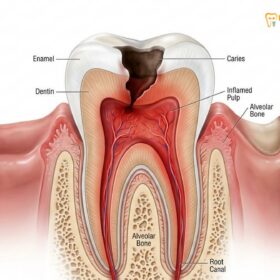
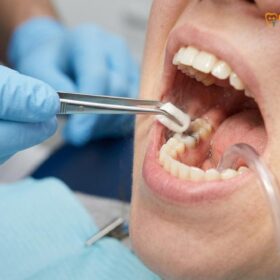
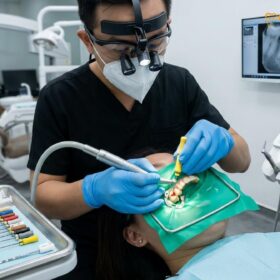
Comparing the root canal cost Vietnam vs Japan reveals a stark contrast for patients seeking premium, microscope-assisted care. While Japanese National Health Insurance covers basic multi-visit treatments, private high-tech endodontics in Tokyo remains highly expensive, driving many patients to seek advanced, cost-effective single-visit solutions in Vietnam. The long-term success of these procedures relies heavily on the quality of the coronal restoration and the precision of the initial endodontic therapy[1].
Clinical Summary:
For international patients and expatriates, navigating endodontic care requires balancing clinical quality, treatment time, and financial investment. The Japanese dental system offers highly subsidized care through the National Health Insurance (NHI), but these treatments are often constrained by strict time limits and material restrictions, leading to multiple short appointments. Conversely, private dental care in Japan (Jiyuu Shinryou) provides access to advanced technologies like dental operating microscopes and bioceramic sealers, but at a premium cost often exceeding 150,000 JPY per tooth. Vietnam has emerged as a leading destination for high-end dental care, offering the exact same private-tier clinical standards—utilizing 3D CBCT imaging, rotary endodontics, and premium CAD/CAM crowns—at a significantly lower price point. Clinics in Ho Chi Minh City cater specifically to international standards, providing comprehensive, single or dual-visit treatments with dedicated language support, making it a highly viable clinical alternative for those requiring complex root canal therapy.
Key Takeaways:
- Japanese NHI covers basic root canals but restricts appointment times and advanced materials.
- Private endodontic treatment in Tokyo can cost upwards of 150,000 JPY per molar.
- Top clinics in Vietnam offer microscope-assisted root canals at a fraction of Tokyo’s private fees.
- Advanced materials like MTA, bioceramic sealers, and rotary NiTi files are standard in Vietnam’s premium clinics.
- Comprehensive care, including CAD/CAM zirconia crowns, can typically be completed in a 5-to-7-day visit to Ho Chi Minh City.
Japanese National Health Insurance (NHI) vs. Private Dental Care Overseas
Japanese NHI covers standard root canals but restricts the use of advanced materials and limits time per visit, whereas private overseas care allows for comprehensive, single-visit microscope endodontics.
To fully understand the dynamics of international dental travel, one must first examine the structural differences between the Japanese National Health Insurance (NHI) system and the private dental sector available overseas. The Japanese NHI is a highly accessible system that ensures the vast majority of the population can receive basic dental care with a minimal out-of-pocket co-payment, typically around 30%. However, this system operates on a strict fee-for-service schedule dictated by the government, which inherently limits the amount of time and the types of materials a dentist can allocate to a single procedure. Because the reimbursement rates for endodontic therapy under NHI are historically low, clinics are often forced to adopt a high-volume model. This results in root canal treatments being divided into multiple short appointments, sometimes lasting only 15 to 20 minutes each. From a clinical perspective, effective endodontic disinfection requires adequate time for chemical irrigants, such as sodium hypochlorite, to dissolve necrotic tissue and eradicate bacterial biofilms within the complex root canal anatomy[2].
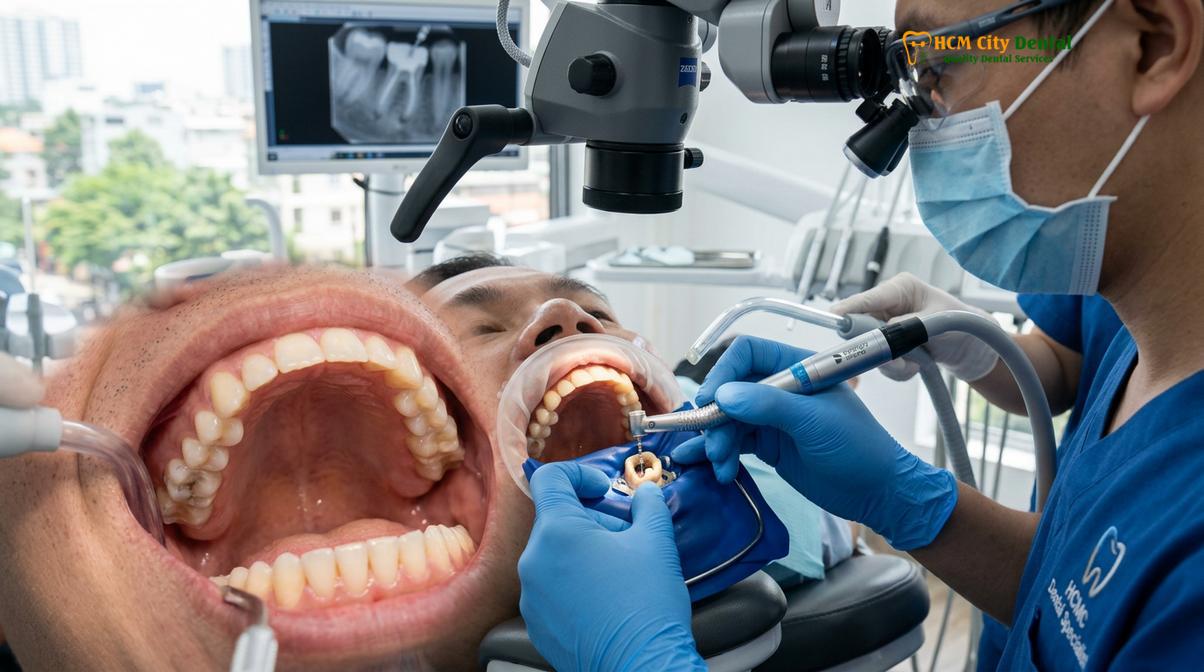
Furthermore, the NHI system restricts the use of certain advanced endodontic technologies. For instance, the use of a dental operating microscope, which provides up to 25x magnification and intense coaxial illumination, is generally not covered under standard NHI protocols. Similarly, advanced obturation materials like bioceramic sealers or Mineral Trioxide Aggregate (MTA), which offer superior biocompatibility and sealing properties, are often excluded from insurance coverage. Patients in Japan who desire these advanced standards must opt for private treatment, known as Jiyuu Shinryou (freelance or non-insurance treatment). Under this private model, dentists are free to spend 60 to 90 minutes per session, utilize microscopes, and apply premium materials, but the financial burden shifts entirely to the patient.
“The biological objective of endodontic therapy is the complete chemomechanical debridement of the root canal system. Achieving this requires not just skill, but adequate clinical time. A single, well-isolated, extended session under magnification is often far superior to multiple brief interventions.”
For expatriates and international patients, the choice often comes down to compromising on clinical technology under a subsidized system or paying exorbitant out-of-pocket fees for private care locally. The third option—traveling to a medical hub like Ho Chi Minh City—provides a pathway to access uncompromising clinical quality without the prohibitive price tag associated with private care in major metropolitan centers like Tokyo.
Price Contrast: Tokyo Private Dental Fees vs. Saigon Dental Clinic (JPY)
Private root canal therapy in Tokyo often exceeds 100,000 to 150,000 JPY per tooth, while equivalent microscope-assisted treatments in Saigon typically range from 15,000 to 45,000 JPY.
When conducting a Tokyo dental fee comparison, the financial disparity between private endodontic care in Japan and premium care in Vietnam is striking. The cost of a root canal is not a flat rate; it is intrinsically linked to the anatomical complexity of the tooth being treated. Anterior teeth (incisors and canines) typically possess a single, relatively straight canal, making them the most straightforward to treat. Premolars generally have one or two canals, while molars—the large teeth at the back of the mouth—are highly complex, often containing three, four, or even five narrow and curved canals. The time, expertise, and specialized equipment required to successfully navigate and seal a molar root canal system dictate a higher clinical fee.
In Tokyo, if a patient opts for private, microscope-assisted endodontics, the fees reflect the high overhead costs of operating a clinic in one of the world’s most expensive cities. A private root canal on an anterior tooth might cost between 70,000 and 100,000 JPY. For a complex molar, the fee frequently escalates to between 120,000 and 180,000 JPY. It is crucial to note that these figures typically cover only the endodontic procedure itself; the subsequent core buildup and final permanent crown are billed separately, potentially adding another 100,000 to 150,000 JPY to the total treatment plan.
Conversely, the root canal cost Japan residents face when seeking private care can be heavily mitigated by traveling to Vietnam. The structural economics of Vietnam—lower commercial real estate costs, reduced administrative overhead, and different labor market dynamics—allow top-tier clinics to offer the exact same level of private care at a fraction of the price. The clinical materials, from the nickel-titanium rotary files to the digital imaging sensors, are imported from the same global manufacturers used in Tokyo, meaning the cost savings are derived entirely from operational efficiencies, not from a reduction in clinical quality.
| Tooth Type / Complexity | Tokyo NHI (Co-pay Estimate) | Tokyo Private (Microscope) | Saigon Private (Microscope) |
|---|---|---|---|
| Anterior (Incisors/Canines) | ~3,000 – 5,000 JPY | 70,000 – 100,000 JPY | ~15,000 – 20,000 JPY |
| Premolar (1-2 Canals) | ~4,000 – 6,000 JPY | 90,000 – 130,000 JPY | ~20,000 – 30,000 JPY |
| Molar (3-4+ Canals) | ~6,000 – 9,000 JPY | 120,000 – 180,000 JPY | ~30,000 – 45,000 JPY |
| Complex Retreatment | ~8,000 – 12,000 JPY | 150,000 – 200,000+ JPY | ~40,000 – 60,000 JPY |
This economic reality makes the decision to travel highly compelling, particularly for patients requiring treatment on multiple teeth or complex molar retreatments. When a patient requires a molar root canal followed by a custom CAD/CAM zirconia crown, the combined savings can easily cover the cost of round-trip airfare and premium lodging in Ho Chi Minh City.
Sourcing High-Tech Endodontic Equipment: Matching Japanese Clinical Standards
Top-tier clinics in Vietnam utilize the exact same diagnostic and endodontic technology found in premium Japanese practices, including Zeiss microscopes and 3D CBCT imaging.
The cornerstone of modern endodontics is visualization and precision. The days of performing root canal therapy based solely on tactile feedback and two-dimensional radiography are largely behind us in the realm of premium dental care. When evaluating the root canal cost Vietnam vs Japan, patients must look beyond the price and scrutinize the technological infrastructure of the treating facility. Leading international clinics in Vietnam have made massive capital investments to ensure their operatories mirror, and sometimes exceed, the technological standards of private Tokyo practices.
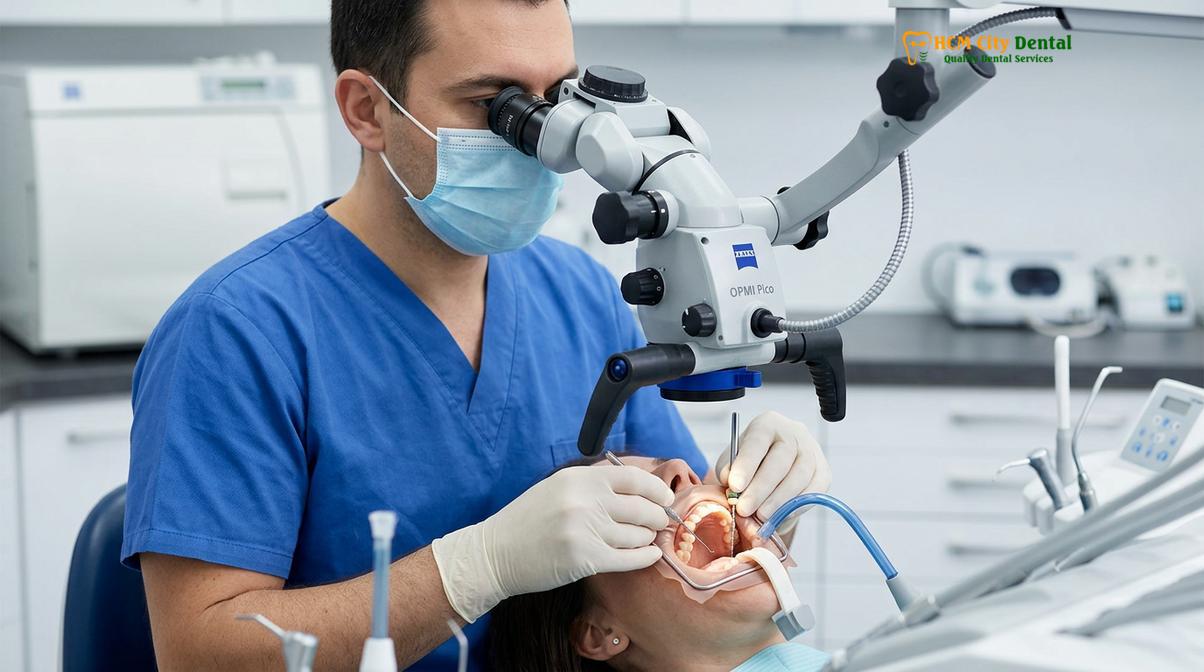
The most critical piece of equipment in this arsenal is the Dental Operating Microscope (DOM). The root canal system is microscopic and highly complex, often featuring accessory canals, severe curvatures, and calcifications that are invisible to the naked eye. Maxillary first molars, for example, have a second mesiobuccal canal (the MB2) in over 90% of cases. Failure to locate, clean, and seal this hidden canal is a primary cause of endodontic failure[3]. High-end clinics in Vietnam utilize industry-leading microscopes, such as those manufactured by Carl Zeiss or Leica, providing the clinician with brilliant illumination and high magnification to navigate these intricate anatomical challenges with confidence.
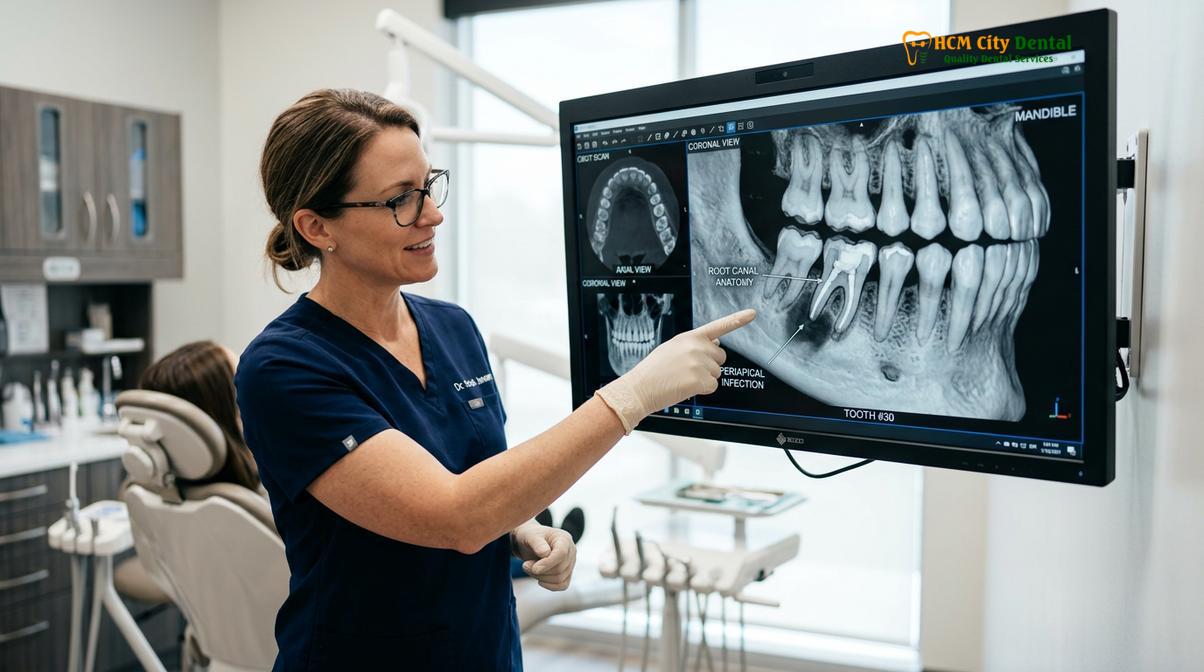
In addition to optical magnification, three-dimensional diagnostic imaging has revolutionized treatment planning. Cone Beam Computed Tomography (CBCT) allows the dentist to capture a high-resolution 3D scan of the tooth and surrounding jawbone. Unlike traditional 2D X-rays, which suffer from anatomical superimposition, a CBCT scan allows the clinician to view the tooth in axial, coronal, and sagittal planes. Furthermore, clinical protocols in premium Vietnamese facilities strictly adhere to the infection control and endodontic standards outlined by the Vietnam Odonto-Stomatology Association (VOSA)[6], ensuring patient safety at every step.
Expat Services in HCMC: English and Japanese Communication Support
Navigating complex dental procedures abroad is simplified through dedicated patient coordinators providing seamless English and Japanese translation during clinical consultations.
Undergoing a medical procedure in a foreign country can be a source of significant anxiety, primarily due to the potential for miscommunication. In dentistry, particularly in complex fields like endodontics, informed consent and a clear understanding of the treatment plan are paramount. A patient must fully comprehend the diagnosis, the proposed intervention, the prognosis, and any potential risks before proceeding. Recognizing this critical need, premium dental facilities in Vietnam have developed robust support systems tailored specifically for the international community.
For a Japanese expat, Saigon offers a unique blend of vibrant lifestyle and accessible, high-quality healthcare. Clinics catering to this demographic employ dedicated international patient coordinators who are fluent in English, Japanese, and Vietnamese. These coordinators act as a bridge between the patient and the clinical team. From the initial inquiry sent from Tokyo to the final post-operative follow-up in Ho Chi Minh City, the coordinator ensures that all medical terminology is accurately translated and that the patient’s concerns are fully addressed.
Clinical Case Review: Complex Molar Retreatment
A 45-year-old patient traveled from Tokyo to HCMC Dental Clinic in Ho Chi Minh City presenting with acute pain in a previously treated lower right first molar. A 3D CBCT scan revealed a missed distal canal and a large periapical radiolucency indicating active infection. Under microscope magnification, the endodontic specialist successfully removed the old, failing gutta-percha, located the hidden canal, and thoroughly disinfected the root canal system using ultrasonic activation. The tooth was sealed with a biocompatible bioceramic sealer and restored with a custom CAD/CAM zirconia crown. The patient reported complete resolution of symptoms within 48 hours, highlighting the efficacy of combining advanced diagnostics with precise microscopic execution.
Crowns and Post-Treatment Sealing Options Sourced in Saigon
Following endodontic therapy, teeth require robust coronal seals; Saigon clinics offer premium CAD/CAM zirconia and E.max crowns at highly competitive rates compared to Japan.
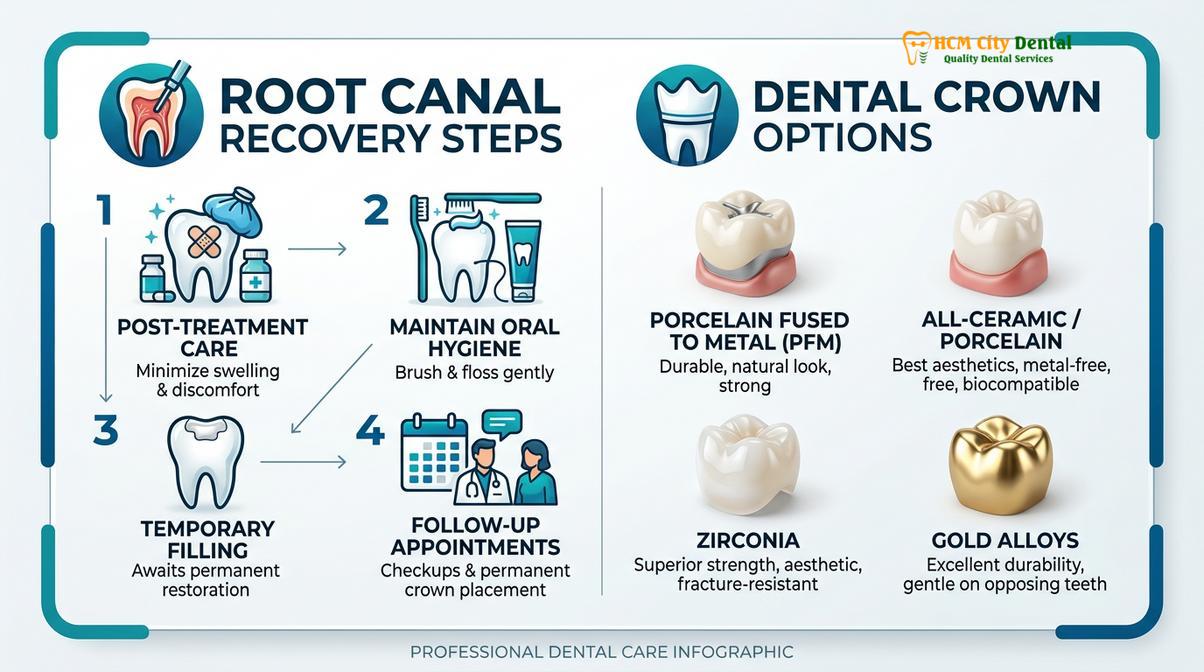
A successful root canal treatment is only half of the clinical equation; the long-term survival of the tooth depends heavily on the quality of the final coronal restoration. When the pulp tissue is removed during endodontic therapy, the tooth loses its internal blood supply, becoming more brittle and susceptible to fracture over time. To protect the remaining tooth structure and restore full masticatory function, a full-coverage crown is generally required, particularly for posterior teeth that bear the brunt of chewing forces.
In Vietnam, the materials used for these restorations are identical to those used in top-tier Japanese clinics. Advanced biocompatible bioceramic sealers are often used to ensure a tight seal within the root canal system before the core buildup and crown are placed[4]. Patients can choose from a variety of premium materials, including monolithic zirconia, which offers exceptional strength and durability, or lithium disilicate (E.max), known for its superior aesthetic properties that closely mimic natural tooth enamel. The integration of CAD/CAM (Computer-Aided Design and Computer-Aided Manufacturing) technology allows for these crowns to be digitally designed and milled on-site, often reducing the waiting time for the final restoration to just a few days.
When to Seek Immediate Endodontic Care
Recognizing the early signs of pulpal infection can prevent the need for tooth extraction and simplify the endodontic procedure.
Patients should not wait for unbearable pain before seeking an endodontic evaluation. Early intervention generally yields a more predictable clinical outcome and preserves more of the natural tooth structure. Symptoms that warrant immediate attention include prolonged sensitivity to hot or cold temperatures, spontaneous throbbing pain that awakens you at night, tenderness when chewing or applying pressure, and swelling or tenderness in the nearby gums. Delaying treatment can exacerbate dental anxiety and lead to severe pain management challenges, making the eventual procedure more complex[5].
“Timely endodontic intervention is crucial. An untreated pulpal infection will inevitably progress to the periapical tissues, potentially causing an abscess and compromising the surrounding alveolar bone. Early diagnosis through CBCT imaging allows us to halt this progression effectively.”
If you experience a persistent pimple on the gums (a sinus tract) or notice a darkening of the tooth, these are strong indicators that the nerve tissue has become necrotic and requires professional debridement and sealing.
Expert Clinical Care with Dr. Nguyen Van Cuong
Choosing the right specialist is paramount for successful endodontic therapy, ensuring both clinical precision and patient comfort.
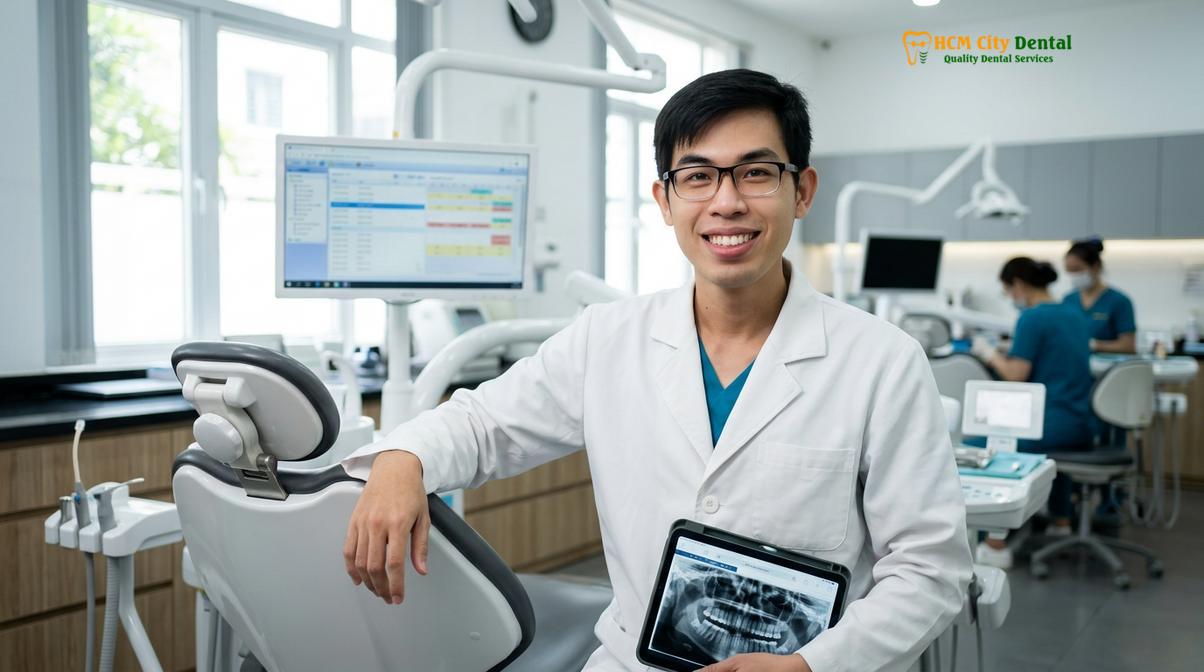
Dr. Nguyen Van Cuong is a highly regarded specialist at HCMC Dental Clinic, known for his meticulous approach to microscope-assisted endodontics. Dr. Cuong emphasizes patient comfort and precise diagnostics, ensuring that every root canal procedure meets rigorous international standards. His expertise allows international patients to receive complex treatments efficiently, often completing therapy in a single extended visit. For more details on these procedures and to understand how advanced technology is applied, patients can explore the Root Canal tại HCMC Dental Clinic services.
Conclusion & Next Steps
The decision to travel for dental care involves careful consideration of both clinical standards and financial implications. By comparing the root canal cost Vietnam vs Japan, it becomes evident that patients do not have to compromise on quality to achieve affordability. With access to state-of-the-art technology, premium materials, and highly skilled specialists, Vietnam offers a compelling alternative to the expensive private dental sector in Tokyo. If you are facing complex endodontic needs and are seeking uncompromising care, consider scheduling a consultation with HCMC Dental Clinic in Ho Chi Minh City to explore your treatment options and begin your journey toward optimal oral health.
References
- Journal of Endodontics. Outcomes of root canal treatment and restoration longevity.
- International Endodontic Journal. Biofilms in endodontics and disinfection strategies.
- Journal of the American Dental Association. Microscope-assisted endodontics and missed canals.
- Clinical Oral Investigations. Biocompatibility of bioceramic root canal sealers.
- British Dental Journal. Pain management and dental anxiety in endodontics.
- Vietnam Odonto-Stomatology Association (VOSA). National guidelines on endodontic treatment standards and infection control.