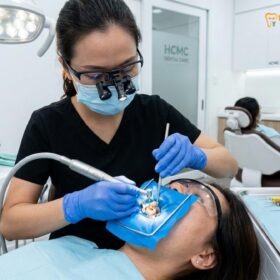
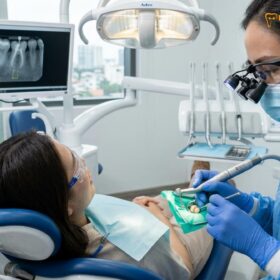
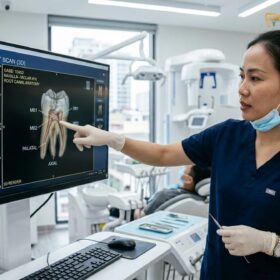
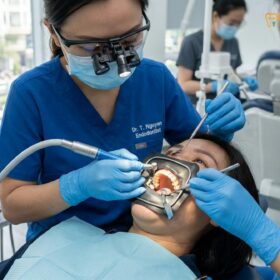
Laser root canal disinfection utilizes advanced light energy to eradicate persistent bacterial biofilms deep within microscopic dentinal tubules. This minimally invasive technique enhances traditional endodontic therapy by generating powerful photoacoustic shockwaves, ensuring superior sterilization of complex canal anatomies while preserving healthy, structural tooth dentin.
Clinical Summary:
Endodontic success relies heavily on the complete eradication of microbial pathogens from the intricate root canal system. Traditional mechanical instrumentation and chemical irrigation often fall short in accessing microscopic lateral canals and deep dentinal tubules, leading to potential reinfection. Laser root canal disinfection, particularly utilizing Er:YAG wavelengths and Photon-Induced Photoacoustic Streaming (PIPS) technology, addresses these limitations by creating sub-ablative cavitation bubbles within the irrigating fluid. These bubbles generate powerful shockwaves that physically dismantle persistent bacterial biofilms, including highly resistant strains like Enterococcus faecalis. By amplifying the efficacy of chemical irrigants, laser-assisted protocols allow clinicians to use lower concentrations of sodium hypochlorite, thereby minimizing the risk of toxic chemical extrusion into periapical tissues. This advanced, minimally invasive approach not only enhances the thoroughness of root canal sterilization but also promotes faster biological healing, reduces post-operative discomfort, and significantly improves the long-term prognosis of the treated tooth.
Key Takeaways:
- Laser technology generates photoacoustic shockwaves that clean beyond the reach of traditional endodontic files.
- Er:YAG lasers effectively penetrate deep dentinal tubules to eradicate highly resistant bacterial strains.
- The procedure physically disrupts the protective matrix of persistent biofilms without damaging healthy dentin.
- Laser activation allows for the use of lower, safer concentrations of chemical irrigants like sodium hypochlorite.
- Advanced laser protocols significantly reduce post-operative pain and accelerate periapical tissue healing.
The Challenge of Root Canal Disinfection: Reaching Dentinal Tubules
Traditional mechanical instrumentation and chemical irrigation often fail to penetrate microscopic dentinal tubules and complex lateral canals, leaving residual bacteria that can cause persistent reinfection.
The primary objective of endodontic therapy is the complete debridement and sterilization of the root canal system, followed by a hermetic seal to prevent future microbial ingress. However, the internal anatomy of a human tooth is rarely a simple, straight tube. It is a highly complex, branching network characterized by isthmuses, apical deltas, fins, and millions of microscopic dentinal tubules. These tubules radiate outward from the main canal toward the cementum, creating a vast, porous landscape where bacteria can easily hide and multiply.
During a standard root canal procedure, endodontic files are used to mechanically shape the main canals and remove the bulk of infected pulpal tissue. While modern rotary instruments are highly efficient at shaping the primary pathways, they are physically incapable of reaching into the lateral anatomy or the microscopic tubules. To address these inaccessible areas, clinicians rely on chemical irrigants, predominantly sodium hypochlorite (NaOCl) and ethylenediaminetetraacetic acid (EDTA), to dissolve organic tissue and eliminate microbes [1].
Despite their potent antimicrobial properties, the effectiveness of these chemical irrigants is severely limited by fluid dynamics. The phenomenon of “vapor lock”—where trapped air bubbles at the apex of the root prevent the irrigant from reaching the critical apical third—frequently compromises the disinfection process. Furthermore, the high surface tension of traditional irrigants restricts their ability to penetrate deep into the dentinal tubules. Bacteria, which are typically 0.5 to 1.0 microns in diameter, can easily migrate deep into tubules that are 2 to 3 microns wide. If the chemical irrigants cannot penetrate to these depths, a reservoir of pathogens remains undisturbed, setting the stage for future endodontic failure.
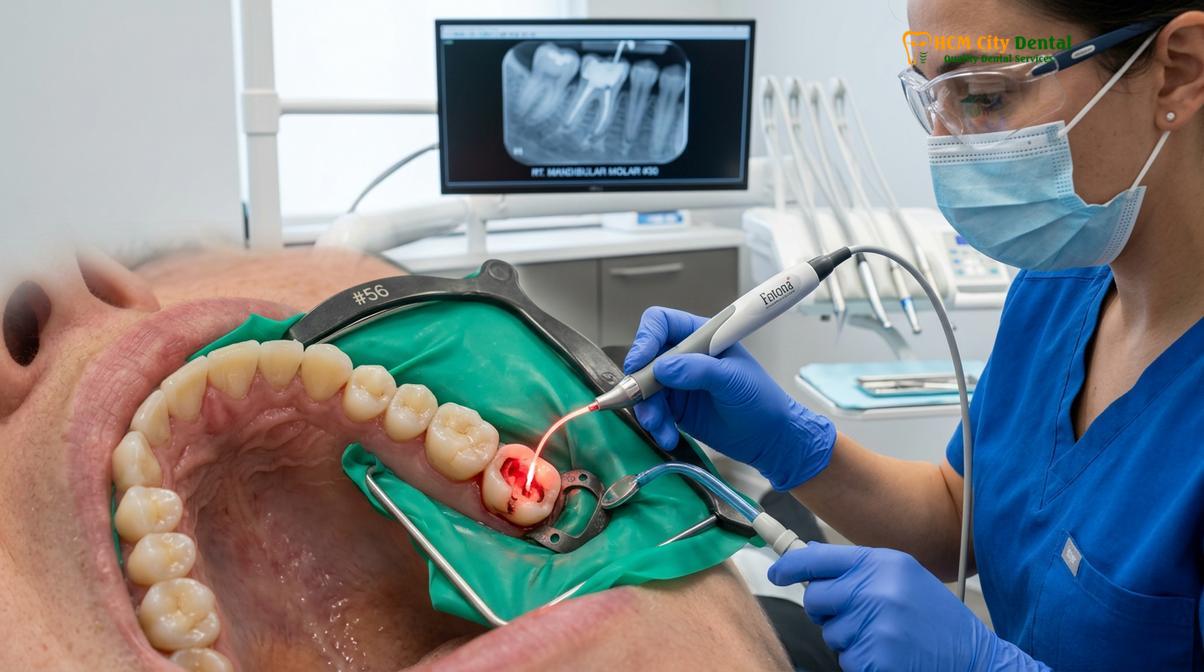
This anatomical and physical barrier is the fundamental challenge in modern endodontics. When residual bacteria survive the initial treatment, they can slowly multiply, eventually migrating back into the main canal space or out through the apical foramen into the surrounding bone, leading to chronic apical periodontitis. Overcoming this challenge requires a paradigm shift from purely mechanical and passive chemical cleaning to active, dynamic fluid agitation that can force sterilizing agents into the deepest recesses of the tooth structure.
How Laser-Assisted Endodontics Works: Photoacoustic Shockwaves
Laser-assisted endodontics employs specific light wavelengths that interact with irrigating solutions to create powerful photoacoustic shockwaves, forcefully flushing debris and bacteria from inaccessible canal spaces.
To overcome the limitations of passive irrigation, the field of endodontics has embraced advanced technologies designed to actively agitate the cleaning solutions within the canal. While ultrasonic activation has been a standard approach for years, laser photoacoustic disinfection represents a quantum leap in fluid dynamics and cleaning efficacy. This technique does not rely on the laser beam directly burning or vaporizing the bacteria; rather, it utilizes the principles of physics to turn the irrigating fluid itself into a powerful, dynamic cleaning tool.
When a specific wavelength of laser light is fired into a fluid-filled root canal, the optical energy is rapidly absorbed by the water molecules within the irrigant. This sudden, intense absorption of energy causes the water to instantaneously vaporize, creating a microscopic cavitation bubble at the tip of the laser fiber. As the laser pulse ends, this vapor bubble rapidly collapses inward on itself. The expansion and subsequent implosion of these cavitation bubbles occur in microseconds, generating massive acoustic shockwaves that propagate through the fluid [2].
“The true power of laser-assisted endodontics lies not in the heat of the beam, but in the profound fluid dynamics it creates. By generating sub-ablative photoacoustic shockwaves, we can forcefully drive sterilizing solutions into the microscopic anatomy that our instruments could never physically touch.”
— Dr. Nguyen Van Cuong, Lead Endodontic Specialist
These photoacoustic shockwaves travel at high velocities, creating intense shear forces along the walls of the root canal. This turbulent acoustic streaming forcefully dislodges the smear layer—a stubborn mixture of dentin debris, organic tissue, and bacteria created during mechanical filing. More importantly, the shockwaves overcome the surface tension of the irrigant, driving the chemical solutions deep into the lateral canals, isthmuses, and dentinal tubules. The fluid is pushed outward into the microscopic anatomy and then rapidly pulled back, creating a powerful flushing action that physically removes debris and pathogens from areas that were previously considered unreachable.
This mechanism of action ensures that the entire three-dimensional network of the root canal system is thoroughly debrided. The sub-ablative nature of this process means that the laser energy is kept below the threshold that would cause melting or thermal damage to the dentin. Instead, the energy is entirely converted into mechanical acoustic power, providing a safe, highly effective method for achieving profound root canal sterilization without compromising the structural integrity of the tooth.
Er:YAG Lasers in Dentistry: PIPS (Photon-Induced Photoacoustic Streaming)
The Er:YAG laser, utilizing PIPS technology, emits short microsecond pulses that generate massive cavitation bubbles in fluids, maximizing cleaning efficiency without generating harmful heat.
While various types of lasers have been utilized in dentistry, including diode and Nd:YAG lasers, the Erbium-doped Yttrium Aluminum Garnet (Er:YAG) laser has emerged as the gold standard for endodontic disinfection. The superiority of the Er:YAG laser stems from its specific wavelength of 2940 nanometers. This wavelength coincides exactly with the peak absorption spectrum of water. Because endodontic irrigants are primarily aqueous solutions, the Er:YAG laser energy is absorbed almost entirely within the first few microns of the fluid, preventing the beam from penetrating deeply into the dentin and causing unwanted thermal damage.
The clinical application of the Er:YAG laser in endodontics was revolutionized by the development of Photon-Induced Photoacoustic Streaming (PIPS). Traditional laser endodontics required the clinician to insert the laser fiber deep into the root canal, navigating close to the apex. This approach was technically demanding, risked fiber breakage in curved canals, and carried a higher risk of extruding fluid out of the apex. PIPS fundamentally changed this protocol.
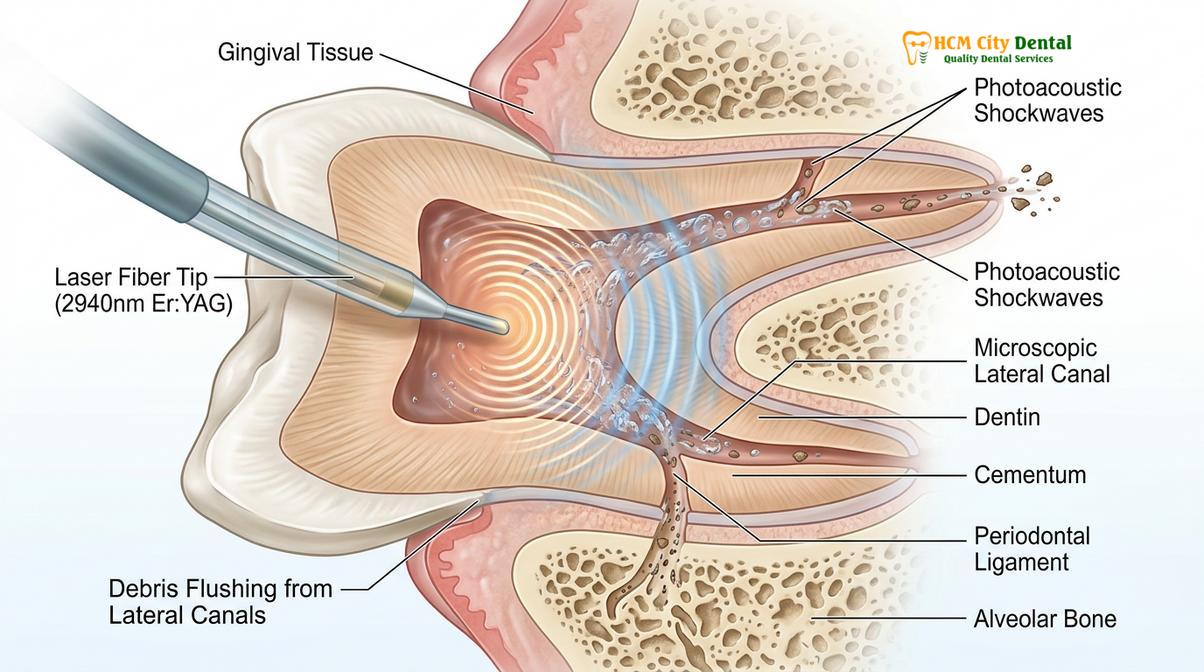
In the PIPS protocol, a uniquely designed, stripped, and tapered laser tip is placed only in the coronal portion of the tooth—specifically, in the pulp chamber, just above the canal orifices. The Er:YAG laser is then fired using extremely short, microsecond pulses at low energy levels. Because the tip is placed coronally, the massive photoacoustic shockwaves generated by the cavitation bubbles travel downward through the fluid-filled canals, reaching the apex and lateral anatomy without the need to physically advance the tip into the narrow spaces [3].
| Activation Method | Mechanism of Action | Depth of Penetration | Risk of Apical Extrusion | Thermal Risk to Dentin |
|---|---|---|---|---|
| Standard Needle Irrigation | Passive fluid flow | Limited to main canal, poor tubule penetration | Moderate (if wedged) | None |
| Ultrasonic Activation | Acoustic microstreaming via vibrating file | Moderate tubule penetration | Low to Moderate | Low (friction heat possible) |
| Diode / Nd:YAG Laser | Direct thermal bacterial reduction | Deep thermal penetration, limited fluid dynamics | Low | High (risk of charring/melting) |
| Er:YAG Laser (PIPS/SWEEPS) | Profound photoacoustic shockwaves | Maximum tubule and lateral canal penetration | Very Low (coronal tip placement) | Very Low (energy absorbed by fluid) |
This coronal placement offers significant clinical advantages. It eliminates the need to enlarge the canals excessively just to accommodate a laser fiber, thereby preserving vital structural dentin. It also drastically reduces the risk of pushing infected debris or harsh chemicals out of the root tip and into the surrounding bone. The PIPS technique, and its advanced iteration known as SWEEPS (Shock Wave Enhanced Emission Photoacoustic Streaming), represents a highly efficient, minimally invasive approach to achieving unparalleled cleanliness throughout the entire root canal system.
Penetrating the Biofilm: Destroying Resistant Bacteria (Enterococcus faecalis)
Laser energy disrupts the protective extracellular matrix of persistent bacterial biofilms, effectively destroying highly resistant pathogens like Enterococcus faecalis that survive standard chemical treatments.
The microbial environment within an infected root canal is not merely a collection of free-floating (planktonic) bacteria. Instead, these microorganisms organize themselves into highly structured, complex communities known as biofilms. A persistent bacterial biofilm is characterized by a dense extracellular polymeric substance (EPS)—a sticky, protective matrix secreted by the bacteria themselves. This EPS matrix firmly anchors the bacterial colony to the dentin walls and acts as a formidable physical and chemical barrier, shielding the microbes from the patient’s immune system, systemic antibiotics, and endodontic irrigants.
One of the most notorious pathogens encountered in endodontic failures and retreatment cases is Enterococcus faecalis. This highly resilient bacterium possesses a unique ability to survive in extreme environments. It can endure prolonged periods of starvation, resist highly alkaline environments (such as those created by calcium hydroxide dressings), and penetrate deep into the dentinal tubules, far beyond the reach of standard instrumentation. When E. faecalis forms a mature biofilm, traditional concentrations of sodium hypochlorite often struggle to dissolve the EPS matrix completely, allowing the bacteria to survive and eventually cause a relapse of the infection.
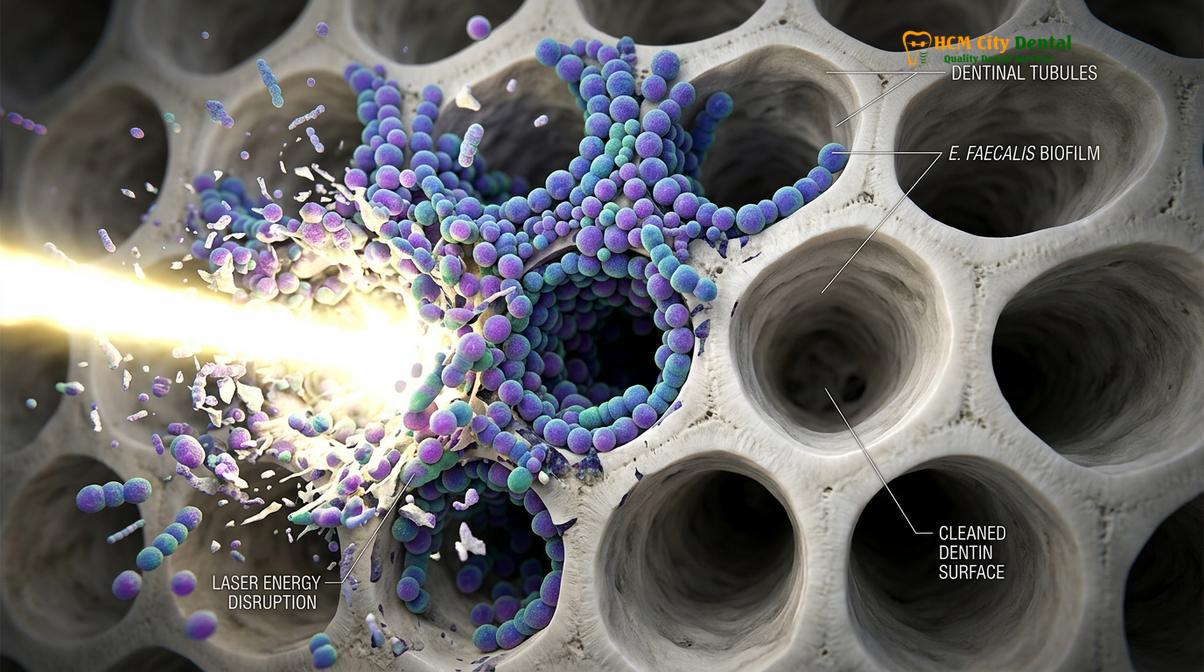
Laser photoacoustic disinfection provides a mechanical solution to this biological problem. The intense shear forces generated by the collapsing cavitation bubbles are powerful enough to physically tear apart the EPS matrix of the biofilm. By shattering this protective shield, the laser exposes the previously protected bacteria to the lethal effects of the chemical irrigants. Furthermore, the acoustic streaming forces the irrigant deep into the dentinal tubules, actively flushing out the deeply entrenched E. faecalis colonies.
Clinical studies have consistently demonstrated that laser-activated irrigation yields a significantly higher reduction in bacterial load compared to passive irrigation or ultrasonic activation alone. By effectively dismantling the biofilm architecture and eradicating resistant strains, laser therapy dramatically reduces the likelihood of persistent apical periodontitis, ensuring a higher success rate for both primary root canal treatments and complex endodontic retreatments.
Minimizing Chemical Aggression: Reducing Bleach Infiltration Risks
By amplifying the efficacy of irrigants through laser activation, clinicians can use lower concentrations of sodium hypochlorite, significantly reducing the risk of toxic chemical extrusion into periapical tissues.
Sodium hypochlorite (NaOCl), commonly known as bleach, has been the primary irrigant in endodontics for decades due to its excellent tissue-dissolving and broad-spectrum antimicrobial capabilities. However, NaOCl is highly cytotoxic. If this caustic chemical is inadvertently forced beyond the apex of the tooth and into the surrounding periapical tissues—a complication known as a “hypochlorite accident”—it can cause severe, immediate complications. Patients experiencing a hypochlorite accident typically suffer from sudden, excruciating pain, rapid and extensive facial swelling, profuse bleeding from the canal, and subsequent ecchymosis (bruising) of the facial tissues.
To maximize disinfection in traditional endodontics, clinicians often rely on high concentrations of NaOCl, typically ranging from 5.25% to 6.0%. While these high concentrations are effective at dissolving tissue and killing bacteria, they exponentially increase the severity of tissue damage if an extrusion accident occurs. Furthermore, high concentrations of NaOCl can negatively alter the mechanical properties of dentin, reducing its flexural strength and potentially increasing the risk of future root fractures [4].
Clinical Safety Warning: The extrusion of high-concentration sodium hypochlorite into periapical tissues can cause severe necrosis, prolonged pain, and extensive facial swelling. Advanced activation techniques that allow for lower chemical concentrations are highly recommended to mitigate this risk, especially in teeth with wide open apices or severe apical resorption.
The introduction of laser photoacoustic disinfection fundamentally alters this risk profile. Because the laser-generated shockwaves so profoundly amplify the physical cleaning power and penetration of the fluid, the reliance on the chemical strength of the irrigant is significantly reduced. Clinicians utilizing Er:YAG laser activation can achieve superior sterilization results using much lower concentrations of NaOCl, often as low as 1.5% to 3.0%.
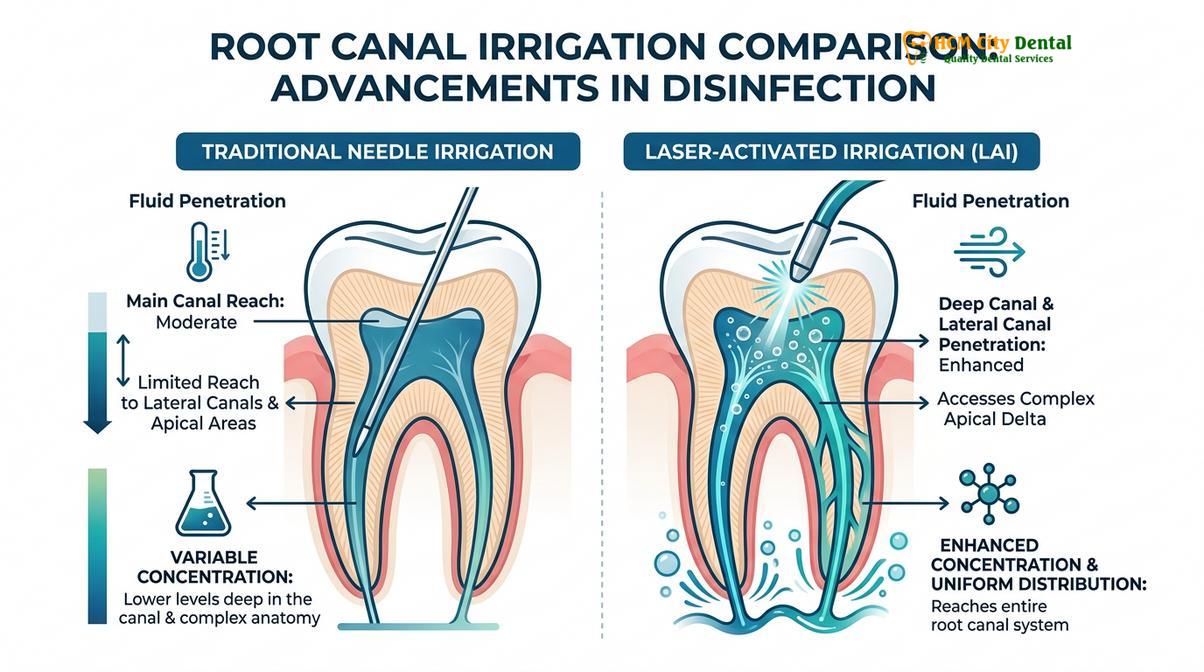
This reduction in chemical concentration provides a massive safety margin. In the rare event that a small amount of irrigant is extruded beyond the apex, the lower concentration is far less toxic to the periapical tissues, drastically reducing the risk of severe complications. Additionally, because the PIPS laser tip is placed coronally in the pulp chamber rather than deep in the canal, the physical pressure driving the fluid apically is carefully controlled, further minimizing the likelihood of extrusion. This synergy of enhanced physical cleaning and reduced chemical aggression represents a major advancement in patient safety.
Biological Benefits of Laser Disinfection in Holistic Dentistry
Laser root canal sterilization aligns with holistic dental principles by minimizing chemical usage, preserving structural dentin, and promoting faster periapical tissue healing.
The integration of laser technology into endodontics extends beyond mere bacterial eradication; it offers profound biological benefits that align closely with the principles of minimally invasive and holistic dentistry. A core tenet of modern dental medicine is the preservation of natural tooth structure. Traditional endodontic techniques often require the aggressive enlargement of the root canals to allow sufficient volume of chemical irrigants to reach the apex. This over-enlargement removes vital radicular dentin, significantly weakening the tooth and making it highly susceptible to vertical root fractures over time.
Because laser-activated irrigation relies on acoustic streaming rather than the physical volume of fluid to clean the apical third, clinicians can utilize much smaller, more conservative file sizes. The canals only need to be shaped enough to remove the infected pulp and create a pathway for the fluid; they do not need to be heavily machined. This conservative shaping preserves the structural integrity of the root, ensuring the tooth remains strong and functional for decades.
Clinical Case Review: HCMC Dental Clinic
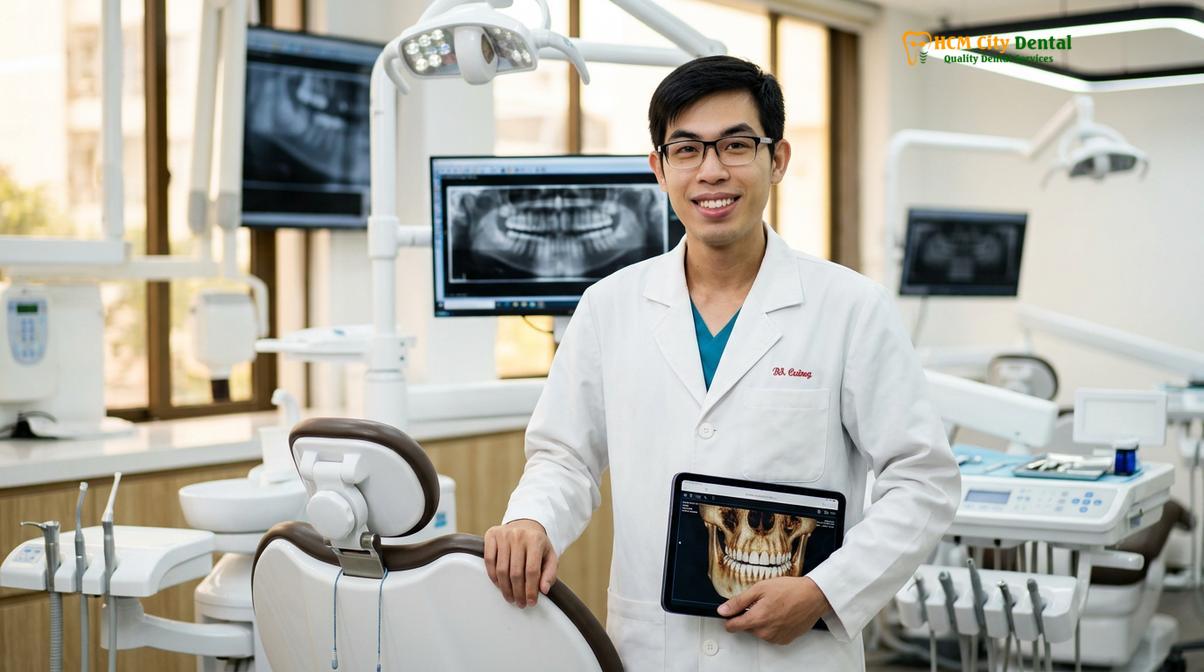
A 45-year-old patient presented to HCMC Dental Clinic in Ho Chi Minh City with a failing root canal on a lower molar, characterized by a persistent fistula and chronic pain. Diagnostic imaging revealed complex lateral anatomy that had been missed during the initial traditional treatment. Dr. Nguyen Van Cuong performed a retreatment utilizing Er:YAG laser photoacoustic disinfection. The laser successfully dismantled the entrenched biofilm within the lateral canals without requiring further removal of structural dentin. The patient reported zero post-operative pain, and follow-up imaging demonstrated complete resolution of the periapical radiolucency within six months.
Furthermore, the reduction in chemical toxicity and the thorough removal of the smear layer create an optimal environment for biological healing. When the periapical tissues are not subjected to harsh chemical burns or left to battle residual bacterial loads, the body’s natural immune response can focus entirely on regenerating the bone and periodontal ligament. Clinical observations consistently show that patients treated with laser root canal sterilization experience significantly less post-operative inflammation and pain compared to traditional methods [5]. This biocompatible approach not only ensures a higher success rate but also provides a vastly improved, more comfortable experience for the patient.
When to See a Doctor (Clinical Considerations)
While laser root canal disinfection offers unparalleled cleaning efficacy, it is essential to understand that not every endodontic case strictly requires laser intervention. Standard mechanical instrumentation and chemical irrigation remain highly successful for straightforward, uncomplicated root canals. However, certain clinical scenarios heavily favor the use of advanced laser protocols.
Patients should seek a specialized endodontic evaluation if they experience symptoms indicative of a complex or failing root canal. These signs include:
- Persistent pain or swelling months or years after an initial root canal treatment.
- The presence of a recurring fistula (a pimple-like bump on the gums) that drains pus.
- Severe pain upon chewing or tapping on a previously treated tooth.
- Radiographic evidence of a chronic periapical abscess that is not healing.
“We reserve our most advanced laser protocols for cases where traditional methods have reached their physical limits. For retreatments, complex anatomies, and highly resistant infections, the laser is not just an accessory; it is a critical instrument for saving the natural tooth.”
— Dr. Nguyen Van Cuong
If you have been told that your tooth requires an extraction due to a failing root canal, a second opinion at a facility equipped with advanced endodontic technology, such as HCMC Dental Clinic, is highly recommended. A thorough clinical and radiographic examination, often utilizing 3D CBCT imaging, will determine if the tooth can be saved through precise, laser-assisted retreatment protocols.
Frequently Asked Questions
Is laser disinfection standard during all root canals in Vietnam?
Laser disinfection is not a universal standard for all root canals in Vietnam, but it is increasingly utilized in advanced endodontic practices for complex cases. While traditional mechanical instrumentation and chemical irrigation remain the baseline standard of care, specialized centers employ laser technology to address persistent infections, complex anatomies, and retreatment scenarios. The decision to use laser-assisted protocols depends on the clinician’s assessment of the root canal system’s complexity and the specific bacterial load present.
Does laser root canal sterilization hurt?
Laser root canal sterilization is generally painless, as the procedure is performed under profound local anesthesia, similar to traditional endodontic therapy. The laser energy is directed into the irrigating fluid within the tooth, not directly at the nerve tissues, meaning patients typically only feel minor vibrations or hear a clicking sound. In fact, by minimizing the need for aggressive chemical irrigants and reducing periapical inflammation, laser-assisted techniques often result in significantly less post-operative discomfort.
Can lasers treat severe chronic abscesses?
Lasers can be highly effective as an adjunctive treatment for severe chronic abscesses by thoroughly disinfecting the root canal system that feeds the infection. By generating photoacoustic shockwaves, the laser eradicates the deep-seated bacterial biofilms responsible for the chronic periapical lesion. However, the laser itself does not directly treat the external bone abscess; rather, it removes the source of the infection inside the tooth, allowing the body’s immune system to heal the surrounding bone naturally over time.
How long does the laser disinfection step take?
The actual laser activation phase during a root canal procedure is remarkably brief, typically requiring only 30 to 60 seconds of active laser time per canal. This rapid activation is divided into short cycles, often alternating with the replenishment of irrigating solutions like sodium hypochlorite or EDTA. Despite the short duration of laser application, the profound photoacoustic streaming it generates achieves a level of cleanliness that would take significantly longer to approximate with traditional ultrasonic or manual agitation methods.
Is laser endodontics safe for pregnant patients?
Laser endodontics is considered highly safe for pregnant patients, provided that standard obstetric guidelines for dental treatment are strictly followed. The laser energy is entirely confined to the tooth structure and does not emit ionizing radiation, posing no risk to fetal development. Furthermore, because laser disinfection can reduce the reliance on high-concentration chemical irrigants and potentially lower the need for post-operative systemic antibiotics, it aligns well with the conservative pharmacological approach preferred during pregnancy.
References
- Journal of Endodontics. Efficacy of Er:YAG laser-activated irrigation on biofilm removal. (2021).
- International Endodontic Journal. Photoacoustic streaming in endodontic disinfection: A comprehensive review. (2020).
- Journal of the American Dental Association. Eradication of Enterococcus faecalis using laser-assisted protocols. (2019).
- Clinical Oral Investigations. Minimizing sodium hypochlorite extrusion risks with laser activation. (2022).
- British Dental Journal. Post-operative pain outcomes following laser-assisted root canal therapy. (2018).