Overcoming dental fear requires a multifaceted approach combining psychological coping strategies, open communication with your clinical team, and modern pharmacological support. By understanding the root causes of dentophobia and utilizing progressive desensitization or conscious sedation, patients can safely reclaim their oral health without overwhelming anxiety.
Clinical Summary:
Dental anxiety and dentophobia are recognized psychological barriers that prevent patients from seeking necessary oral healthcare, often leading to a detrimental cycle of avoidance and deteriorating dental health. Evidence-based management strategies range from behavioral modifications—such as diaphragmatic breathing, cognitive distraction, and phased exposure—to advanced pharmacological interventions like conscious sedation. A patient-centered approach, emphasizing clinical transparency, environmental control, and predictability, significantly reduces physiological stress responses. By integrating these multidisciplinary techniques, dental professionals can facilitate a safe, comfortable environment, allowing even the most phobic patients to receive comprehensive care.
Key Takeaways:
- Dental fear triggers a physiological fight-or-flight response, which can inadvertently increase pain perception during treatment.
- Behavioral techniques, such as diaphragmatic breathing, actively lower heart rate and cortisol levels by stimulating the vagus nerve.
- Phased appointments allow for systematic desensitization, helping patients gradually adapt to the clinical environment.
- Conscious sedation offers a safe, pharmacologically controlled route to bypass severe phobia for complex procedures.
- Open communication and establishing a “stop signal” with a specialized dental team provide crucial psychological control.
The Psychology of Dental Fear and Avoidance
Dental fear stems from a complex interplay of past traumatic experiences, fear of pain, and a perceived loss of control, triggering a physiological stress response that exacerbates pain sensitivity.
To effectively address how to cope with dental phobia, it is essential to first understand the underlying psychological and neurobiological mechanisms that drive this intense aversion. Dental fear exists on a spectrum, ranging from mild anticipatory anxiety to severe, paralyzing dentophobia (also known as odontophobia). While mild anxiety may cause a patient to feel nervous in the waiting room, true dentophobia often results in the complete avoidance of dental care, even in the presence of acute pain or severe infection[1].
The etiology of dental fear is typically multifactorial. For many individuals, the root cause can be traced back to a traumatic conditioning experience, often occurring during childhood. A painful or highly stressful dental visit can create a lasting Pavlovian response, where the sights, sounds, and smells of a dental clinic become conditioned stimuli that trigger an immediate fight-or-flight response. When a patient with dental trauma enters a clinic, their amygdala—the brain’s fear-processing center—activates the sympathetic nervous system. This leads to a cascade of physiological changes: increased heart rate, elevated blood pressure, rapid shallow breathing, and the release of stress hormones like cortisol and adrenaline[2].
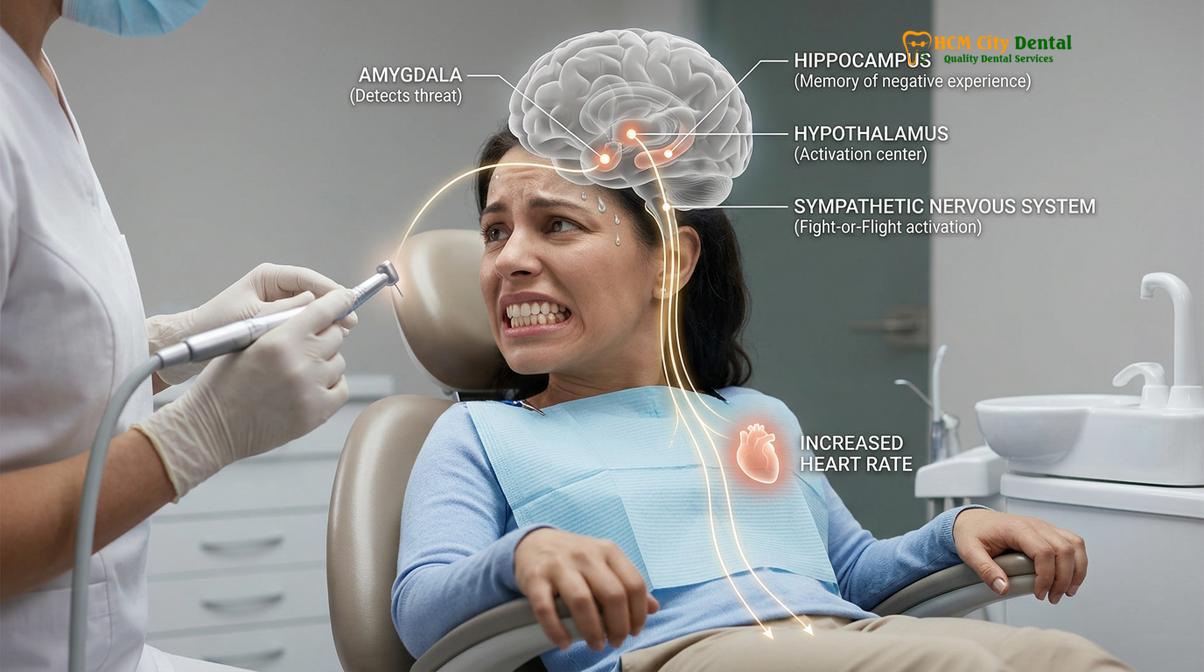
Furthermore, this heightened state of physiological arousal directly impacts pain perception. Anxiety lowers the pain threshold, meaning that a stimulus that would normally be perceived as mild pressure is instead interpreted by the hyper-vigilant nervous system as acute pain. This phenomenon creates a self-fulfilling prophecy: the patient fears pain, their anxiety amplifies their sensory perception, they experience discomfort, and their fear is subsequently reinforced.
Dr. Nguyen Van Cuong frequently emphasizes the importance of recognizing the “cycle of avoidance” in clinical practice. This well-documented psychological model, originally described by Berggren, illustrates how dental fear leads to the avoidance of routine care. Avoidance inevitably results in deteriorating oral health, which eventually culminates in a dental emergency. Because emergency treatments are often more invasive and complex, they reinforce the patient’s initial fear, causing the cycle to repeat and intensify. Breaking this cycle requires profound clinical empathy and the implementation of targeted psychological interventions.
Communication Tips: Finding the Right Foreigner-Friendly Dentist
Establishing clear, transparent communication with a culturally competent, foreigner-friendly dentist builds trust, mitigates the fear of the unknown, and returns a sense of control to the patient.
One of the most significant contributors to dental anxiety is the fear of the unknown and the perceived loss of control while sitting in the dental chair. When a patient is reclined, with their personal space invaded and their ability to speak temporarily compromised, feelings of vulnerability can quickly escalate into panic. This dynamic is often exacerbated for expatriates or medical tourists who may face language barriers. Therefore, finding a foreigner-friendly dentist who prioritizes clear, fluent communication is a critical step in getting over fear of dentist appointments.
Effective clinical communication begins long before the patient sits in the chair. It starts with the initial consultation, where the dentist must actively listen to the patient’s concerns without judgment. A cornerstone of managing anxious patients is the “Tell-Show-Do” technique. Originally developed for pediatric dentistry, this method is highly effective for adults with dentophobia. The clinician first explains the procedure in simple, non-threatening language (Tell), demonstrates the instruments or the process outside the mouth (Show), and only then proceeds with the actual treatment (Do)[3].
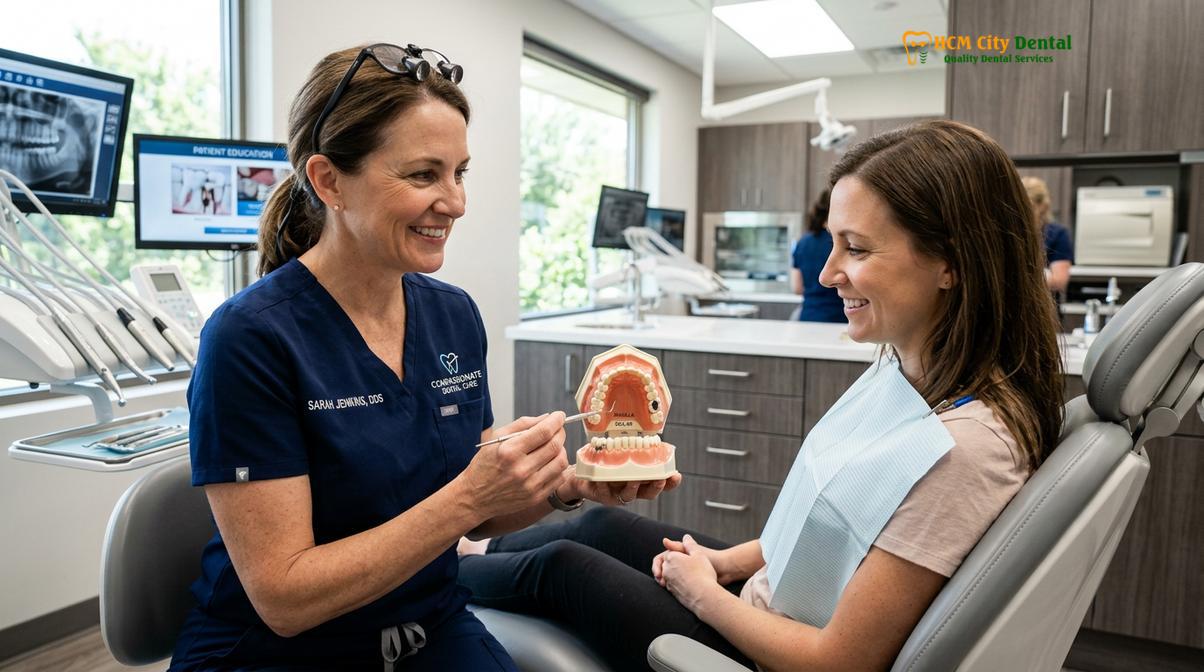
Another vital communication strategy is the establishment of a “stop signal.” Before any procedure begins, the dentist and patient agree on a non-verbal cue—typically raising the left hand—that indicates the patient needs a break. Knowing that they have the absolute power to halt the procedure at any moment profoundly shifts the psychological dynamic. It restores a sense of autonomy and control, which is often enough to significantly reduce baseline anxiety.
“Empowering the patient with a simple stop signal transforms the dental chair from a place of vulnerability into a collaborative environment. When patients know they control the pacing of their treatment, their physiological stress markers drop dramatically.”
At institutions like HCMC Dental Clinic in Ho Chi Minh City, clinical teams are specifically trained in cross-cultural communication and anxiety management. Ensuring that every step of the treatment plan, including potential sensations and expected durations, is clearly articulated in the patient’s native language eliminates the anxiety born from uncertainty. Transparent communication regarding treatment costs, recovery times, and pain management protocols further solidifies the therapeutic alliance between the patient and the provider.
Relaxation Techniques: Deep Breathing and Grounding Exercises
Activating the parasympathetic nervous system through diaphragmatic breathing and grounding exercises effectively neutralizes the clinical fight-or-flight response during dental visits.
When psychological reassurance is not enough to quell the physiological symptoms of anxiety, patients can employ specific relaxation techniques dentist recommended to manually override their body’s stress response. The autonomic nervous system consists of two main branches: the sympathetic nervous system (responsible for fight-or-flight) and the parasympathetic nervous system (responsible for rest-and-digest). By engaging in targeted behavioral exercises, patients can consciously stimulate the vagus nerve, which acts as the primary braking system for the sympathetic stress response.
Diaphragmatic breathing, also known as belly breathing, is one of the most accessible and effective tools for immediate anxiety reduction. When a person is anxious, their breathing becomes rapid and shallow, utilizing only the upper chest. This chest breathing signals to the brain that the body is in danger. Conversely, deep, slow breathing that expands the diaphragm sends a powerful neurochemical signal to the brain that the environment is safe. The 4-7-8 breathing technique is highly recommended in clinical settings: inhale quietly through the nose for 4 seconds, hold the breath for 7 seconds, and exhale completely through the mouth for 8 seconds. This specific ratio forces the heart rate to slow down and reduces circulating cortisol levels[4].
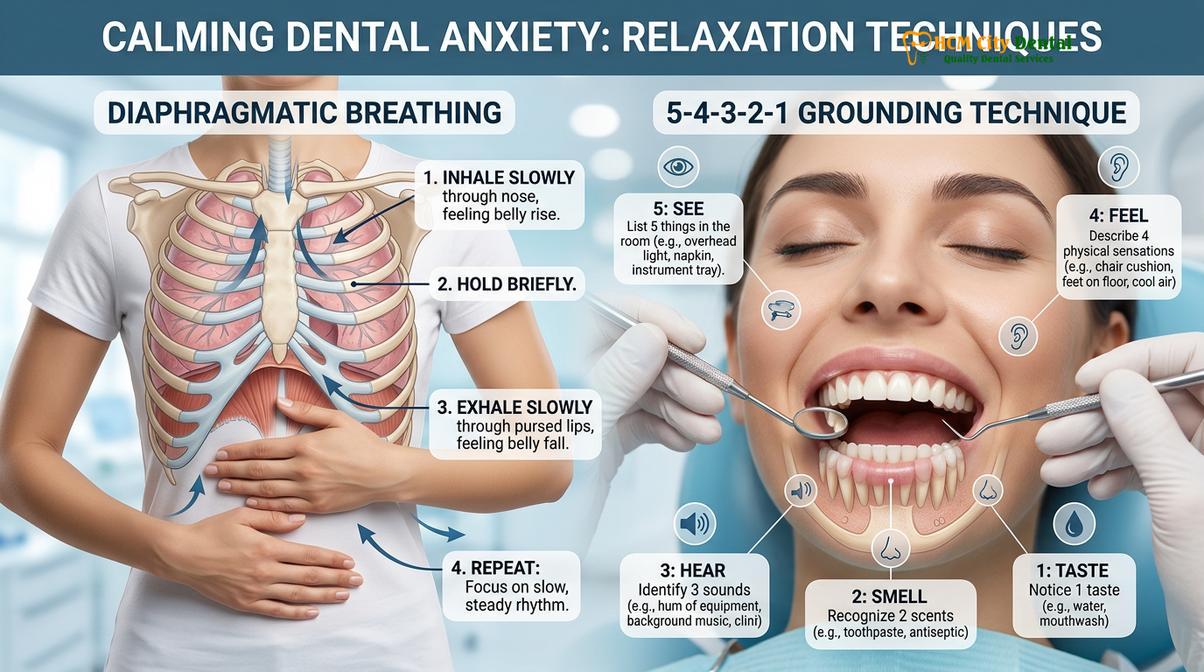
In addition to breathwork, grounding exercises are invaluable for patients who experience dissociation or panic attacks in the dental chair. Grounding techniques force the brain to shift its focus away from internal catastrophic thoughts and anchor it in the present physical reality. The 5-4-3-2-1 method is a widely utilized cognitive behavioral tool. The patient is instructed to silently identify:
- 5 things they can see (e.g., the light fixture, the dentist’s mask).
- 4 things they can physically feel (e.g., the texture of the chair, their feet on the footrest).
- 3 things they can hear (e.g., the hum of the air conditioning, background music).
- 2 things they can smell (e.g., the clinical sterilization scent, their own lip balm).
- 1 thing they can taste (e.g., the mint from toothpaste).
Progressive Muscle Relaxation (PMR) is another evidence-based strategy. Anxiety causes involuntary muscle tension, particularly in the jaw, neck, and shoulders. PMR involves systematically tensing and then consciously releasing specific muscle groups, starting from the toes and working up to the forehead. This practice not only relieves physical tension but also occupies the mind, serving as a dual-purpose coping mechanism.
Coping Mechanisms: Distractions and Comfort Objects
Utilizing sensory distractions and familiar comfort objects redirects the brain’s attentional focus away from clinical stimuli, significantly lowering subjective anxiety levels.
Cognitive load theory suggests that the human brain has a limited capacity for processing information at any given time. By intentionally flooding the sensory pathways with pleasant or neutral stimuli, patients can effectively “crowd out” the negative stimuli associated with the dental environment. These dental coping strategies are particularly useful for managing the sensory triggers of dentophobia, such as the high-pitched whine of a dental drill or the clinical smell of the operatory.
Auditory distraction is one of the most common and effective methods. The sound of the dental handpiece is a universal trigger for anxiety. Wearing noise-canceling headphones and listening to a carefully curated playlist, an engaging audiobook, or a compelling podcast can isolate the patient from the clinical environment. Binaural beats—specific acoustic frequencies that are purported to induce brainwave states associated with relaxation—are also increasingly used by anxious patients to promote a sense of calm during procedures.
Visual distractions are equally important. Many modern dental clinics are equipped with ceiling-mounted monitors, allowing patients to watch movies or nature documentaries while reclined. Virtual Reality (VR) headsets are also emerging as a powerful tool in dental anxiety management. By immersing the patient in a completely different visual environment—such as a serene beach or a quiet forest—VR significantly reduces the brain’s processing of the immediate clinical surroundings.
Tactile comfort objects should not be underestimated, even for adult patients. The clinical environment can feel sterile and alienating. Bringing a familiar object, such as a stress ball to squeeze during moments of tension, provides a physical outlet for nervous energy. Weighted blankets are also gaining popularity in dental settings. The deep pressure stimulation provided by a weighted blanket mimics the sensation of being held or hugged, which stimulates the release of serotonin and dopamine while simultaneously decreasing cortisol.
Phased Appointments: Starting with a Consultation Only
Breaking treatment into phased, non-invasive appointments allows for systematic desensitization, helping patients build tolerance and trust before any clinical intervention occurs.
For patients with severe dentophobia, the prospect of sitting in the chair for an immediate procedure is often an insurmountable barrier. In these cases, attempting to force treatment can result in a traumatic experience that further entrenches the phobia. Instead, a psychological approach known as systematic desensitization is employed. This involves gradually exposing the patient to the feared stimuli in a controlled, phased manner, allowing them to build tolerance and trust over time.
The first step in this phased approach is often a “consultation-only” appointment. During this visit, no clinical treatment is performed. The patient may not even sit in the dental chair. Instead, they meet with the dentist in a neutral consultation room to discuss their medical history, their specific fears, and their oral health goals. This removes the immediate threat of pain or invasion of personal space, allowing the patient to evaluate the clinician’s empathy and communication style.
Clinical Case Study: Overcoming Severe Avoidance
A 45-year-old patient presented to HCMC Dental Clinic in Ho Chi Minh City after avoiding dental care for over a decade due to a traumatic childhood extraction. The patient required extensive restorative work but suffered from severe panic attacks at the thought of treatment. Dr. Nguyen Van Cuong initiated a phased desensitization protocol. The first visit involved only a conversation in the consultation room. The second visit included sitting in the dental chair while it was upright, with a simple visual inspection using a mirror. By the third visit, the patient felt secure enough to undergo a professional cleaning. Eventually, through this gradual exposure and the establishment of deep trust, the patient successfully completed their complex restorative treatment plan without the need for deep sedation.
Following a successful consultation, subsequent appointments are designed to incrementally increase the level of clinical interaction. A second visit might involve taking diagnostic X-rays and performing a visual examination, while a third visit might introduce a minor, painless procedure like a prophylactic cleaning. By breaking the treatment plan into manageable, predictable steps, the patient experiences a series of “small wins.” These positive experiences gradually overwrite the previous traumatic conditioning, fundamentally altering their psychological relationship with dental care.
Modern Technology: The Role of Conscious Sedation
For patients with severe dentophobia, conscious sedation provides a safe, pharmacologically controlled state of deep relaxation, allowing complex procedures to be completed comfortably.
While behavioral techniques and phased appointments are highly effective for mild to moderate anxiety, some patients present with phobias so severe that psychological interventions alone are insufficient. In these scenarios, or when extensive, time-consuming procedures are required, modern pharmacological technology plays a crucial role. Conscious sedation options offer a safe, predictable way to bypass the psychological barriers of dentophobia, ensuring that patients can receive the care they need without emotional trauma.
Conscious sedation differs from general anesthesia in that the patient remains awake, breathes independently, and can respond to verbal commands, yet they exist in a state of profound relaxation and altered perception. There are several modalities of conscious sedation utilized in modern dentistry, each tailored to the patient’s specific level of anxiety and the complexity of the procedure[5].
Inhalation Sedation (Nitrous Oxide): Commonly known as “laughing gas,” nitrous oxide is a mild sedative mixed with oxygen and inhaled through a small nasal mask. It induces a rapid sense of euphoria and relaxation, while also slightly elevating the pain threshold. One of the primary advantages of nitrous oxide is its rapid onset and equally rapid recovery time; the effects dissipate within minutes of removing the mask, allowing the patient to drive themselves home.
Oral Sedation: This involves the administration of anxiolytic medications, typically from the benzodiazepine class (such as Midazolam or Diazepam), taken orally prior to the appointment. These medications enhance the effect of GABA, an inhibitory neurotransmitter in the brain, resulting in significant anxiety reduction and mild amnesia regarding the procedure. Patients under oral sedation will feel drowsy but remain conscious.
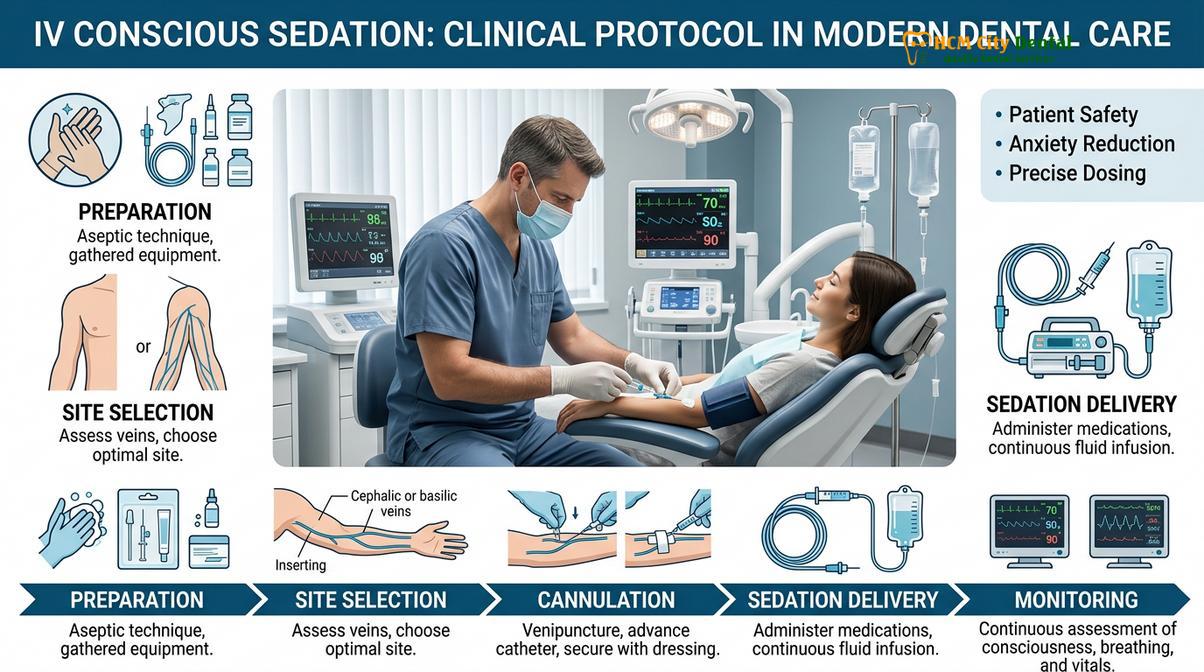
Intravenous (IV) Sedation: For severe dentophobia or complex surgical procedures, IV sedation provides a deeper, highly controlled level of relaxation. Administered directly into the bloodstream by a trained anesthesiologist or certified specialist, IV sedation allows for precise titration of the medication. Patients often have little to no memory of the procedure, perceiving a lengthy surgery as having passed in mere minutes.
| Sedation Type | Administration Route | Level of Relaxation | Amnesic Effect | Recovery Time |
|---|---|---|---|---|
| Nitrous Oxide | Inhalation (Nasal Mask) | Mild to Moderate | Minimal | Rapid (Minutes) |
| Oral Sedation | Enteral (Pill/Liquid) | Moderate | Moderate | Prolonged (Hours) |
| IV Sedation | Parenteral (Intravenous) | Moderate to Deep | High (Profound) | Prolonged (Hours) |
“The integration of advanced conscious sedation protocols has revolutionized our ability to treat dentophobic patients. By safely modulating the central nervous system, we can perform comprehensive, full-mouth rehabilitations in a single session while the patient rests comfortably, entirely free from psychological distress.”
It is important to note that all sedation protocols require a thorough review of the patient’s medical history, current medications, and baseline physiological status. Continuous monitoring of vital signs, including pulse oximetry, blood pressure, and capnography, is standard clinical practice to ensure absolute patient safety during pharmacologically assisted routine general dentistry or complex surgical interventions.
When to See a Doctor
While dental anxiety is a common psychological barrier, it should never preclude a patient from seeking immediate medical attention when acute symptoms arise. Delaying care due to fear can lead to severe, sometimes life-threatening systemic complications. You must bypass your anxiety and seek immediate emergency dental care if you experience any of the following red-flag symptoms:
- Severe, Unrelenting Pain: Throbbing pain that disrupts sleep or cannot be managed with over-the-counter analgesics often indicates irreversible pulpitis or an acute abscess.
- Facial Swelling: Swelling in the gums, cheek, jaw, or neck is a critical sign of a spreading bacterial infection (cellulitis) that requires immediate antibiotic therapy and clinical intervention.
- Fever and Chills: The presence of a fever alongside dental pain indicates that a localized oral infection has entered the systemic circulation.
- Difficulty Swallowing or Breathing: This is a severe medical emergency. Swelling that compromises the airway requires immediate evaluation at a hospital emergency department or an advanced maxillofacial clinic.
- Trauma: Avulsed (knocked-out) teeth, fractured jaws, or severe lacerations require prompt treatment to save the dentition and prevent permanent damage.
Clinical Warning: Do not rely on self-medication or temporary home remedies to manage acute dental infections. If you suffer from severe dentophobia, contact a clinic that specializes in sedation dentistry immediately and inform them of your anxiety so they can prepare appropriate pharmacological support upon your arrival.
Frequently Asked Questions
What is the easiest way to overcome dental fear?
The easiest way to overcome dental fear is by communicating openly with your dentist and starting with a non-invasive consultation. This establishes trust and allows the clinical team to tailor a gradual desensitization plan or recommend appropriate sedation options. By taking the pressure off the first visit and focusing solely on conversation, you regain a sense of control over the clinical environment.
How can I relax my mind before a dental procedure?
You can relax your mind by practicing diaphragmatic breathing, utilizing grounding exercises, and listening to calming music. Activating the parasympathetic nervous system through controlled breathing significantly reduces the physiological symptoms of pre-appointment anxiety. Techniques like the 4-7-8 breathing method actively lower your heart rate and decrease the production of stress hormones like cortisol.
Does listening to music help at the dentist?
Yes, listening to music through noise-canceling headphones is a highly effective cognitive distraction technique. It masks the high-frequency sounds of dental instruments, reducing sensory overload and lowering subjective anxiety levels during treatment. By occupying your brain’s auditory processing centers with familiar, pleasant sounds, you limit its capacity to focus on clinical stressors.
Can I ask for a dental consultation without any treatment?
Absolutely, requesting a consultation-only appointment is a standard clinical approach for anxious patients. This phased method allows you to meet the team, discuss your fears, and familiarize yourself with the environment without any clinical intervention. It is a crucial first step in systematic desensitization, helping to build a foundation of trust before any physical examination occurs.
Are there drugs that can help me relax for dental work?
Yes, dentists can administer pharmacological anxiolytics, such as oral sedatives or nitrous oxide, to induce relaxation. For severe phobias, intravenous conscious sedation provides a deeper, highly controlled state of comfort during complex procedures. These medications safely depress the central nervous system, reducing anxiety and often providing an amnesic effect so you remember very little of the appointment.
References
- Journal of Oral and Maxillofacial Surgery. Patient safety in dental sedation and anesthesia. (2021).
- International Journal of Oral and Maxillofacial Surgery. Intravenous conscious sedation protocols for complex oral surgery. (2020).
- British Dental Journal. Nitrous oxide inhalation sedation in dentistry: a review of safety. (2019).
- Journal of the American Dental Association. Patient satisfaction and anxiety levels under conscious sedation. (2022).
- Clinical Oral Investigations. Safety and recovery profiles of conscious sedation vs general anesthesia. (2018).
For pricing, booking, and a free clinical assessment, visit our Sedation Dentistry service page at HCMC Dental Clinic in Ho Chi Minh City.