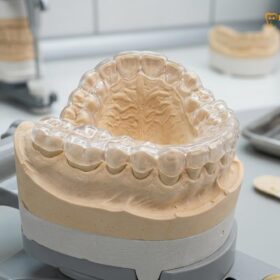
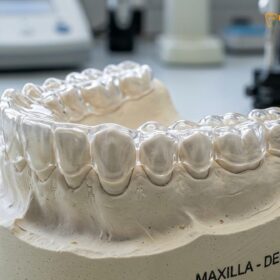
A dual laminate night guard is a custom-fitted dental appliance featuring a soft inner layer for comfort and a hard outer layer for durability. It is clinically designed to protect teeth from moderate grinding while minimizing jaw strain and helping to prevent occlusal wear.
Clinical Summary:
The dual-laminate night guard represents a significant advancement in the conservative management of sleep bruxism and dental attrition. By combining a compliant ethylene-vinyl acetate (EVA) interior with a rigid polycarbonate or acrylic exterior, this appliance offers a dual-action biomechanical advantage. The soft interior cushions the dentition, absorbs occlusal shock, and enhances patient comfort, while the hard exterior prevents the teeth from grinding through the material and allows for smooth excursive movements of the mandible. This specific type of layered mouth guard is highly recommended for moderate bruxers who find traditional hard acrylic splints too rigid or soft silicone guards too easily destructible. Comprehensive clinical diagnostics are essential to ensure proper occlusal alignment and to rule out severe temporomandibular joint (TMJ) disorders before prescribing this appliance.
Key Takeaways:
- Constructed with a soft inner lining (EVA) and a hard outer shell (acrylic/polycarbonate) for an optimal balance of comfort and protection.
- Provides superior patient compliance compared to traditional rigid acrylic splints due to the cushioning effect on the teeth.
- Effectively mitigates dental attrition and protects restorations caused by moderate nocturnal bruxism.
- Requires professional dental impressions and laboratory thermoforming for an accurate, custom fit.
- Typically maintains structural integrity for one to three years, depending on the severity of the patient’s grinding habits.
What Is a Dual-Laminate Guard?
A dual-laminate guard is a specialized dental orthotic that utilizes two distinct bonded materials to protect teeth from grinding forces while maintaining high patient comfort.
In the realm of restorative dentistry and orofacial pain management, the protection of the natural dentition and dental restorations from parafunctional habits is a primary clinical objective. Sleep bruxism, characterized by the involuntary clenching and grinding of teeth during sleep, exerts immense biomechanical forces on the masticatory system. These forces can lead to severe dental attrition, abfraction lesions, fractured cusps, and hypertrophy of the masseter and temporalis muscles. To mitigate these destructive forces, dental professionals frequently prescribe occlusal appliances. Among the various designs available, the dual laminate night guard has emerged as a highly effective and patient-friendly solution.
Often referred to in clinical settings as a hybrid night guard, this appliance is uniquely engineered to address the primary complaints associated with single-material guards. Traditional hard acrylic splints, while excellent for durability and providing a smooth surface for the opposing teeth to glide against, can feel excessively tight, rigid, and uncomfortable, leading to poor patient compliance. Conversely, soft silicone or vinyl guards are comfortable but can stimulate a chewing reflex in some patients, leading to increased muscle activity and rapid degradation of the appliance. The dual-laminate design bridges this gap by offering the best characteristics of both materials.
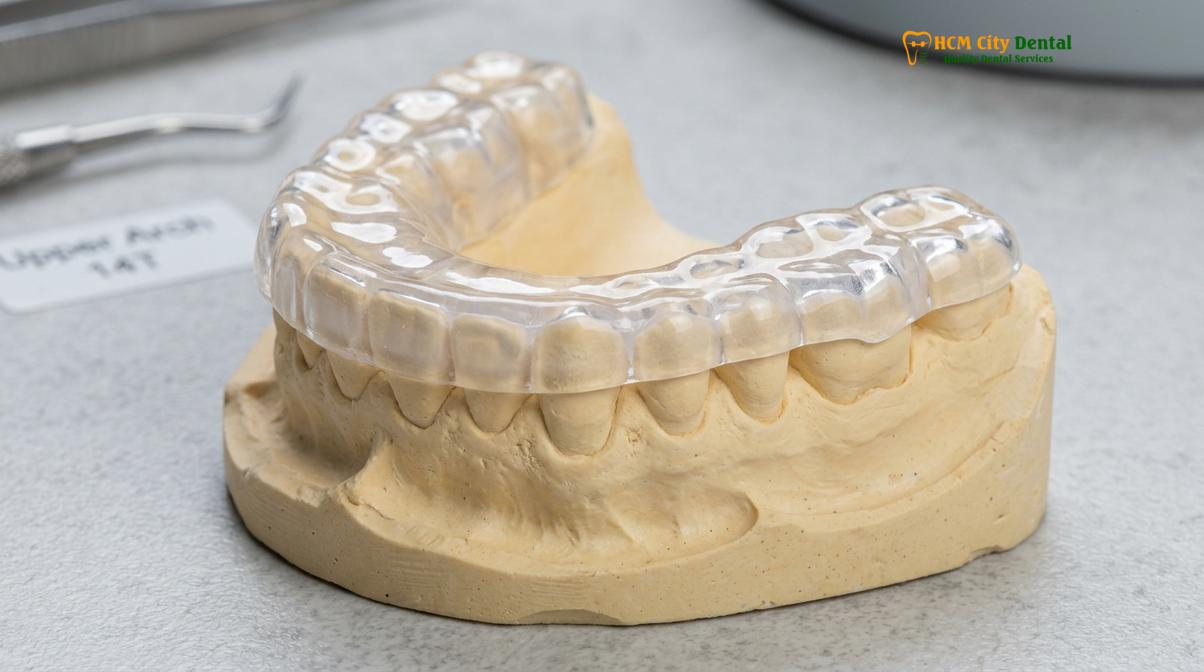
The fundamental principle behind the dual laminate guard is shock absorption combined with surface durability. When a patient clenches their jaw, the soft inner layer compresses slightly, absorbing the kinetic energy and distributing the occlusal load evenly across the dental arch. This cushioning effect reduces the strain on the periodontal ligaments and minimizes the proprioceptive feedback that can trigger further muscle contraction. Simultaneously, the hard outer layer provides a rigid barrier that prevents the opposing teeth from locking into the material, allowing the mandible to move freely during excursive grinding movements without causing shear stress on the teeth [1]. For a deeper understanding of how these forces impact the oral cavity, patients can review What Is Bruxism Teeth Grinding? Causes & Treatments | HCMC Dental.
How It’s Made: Layers Explained
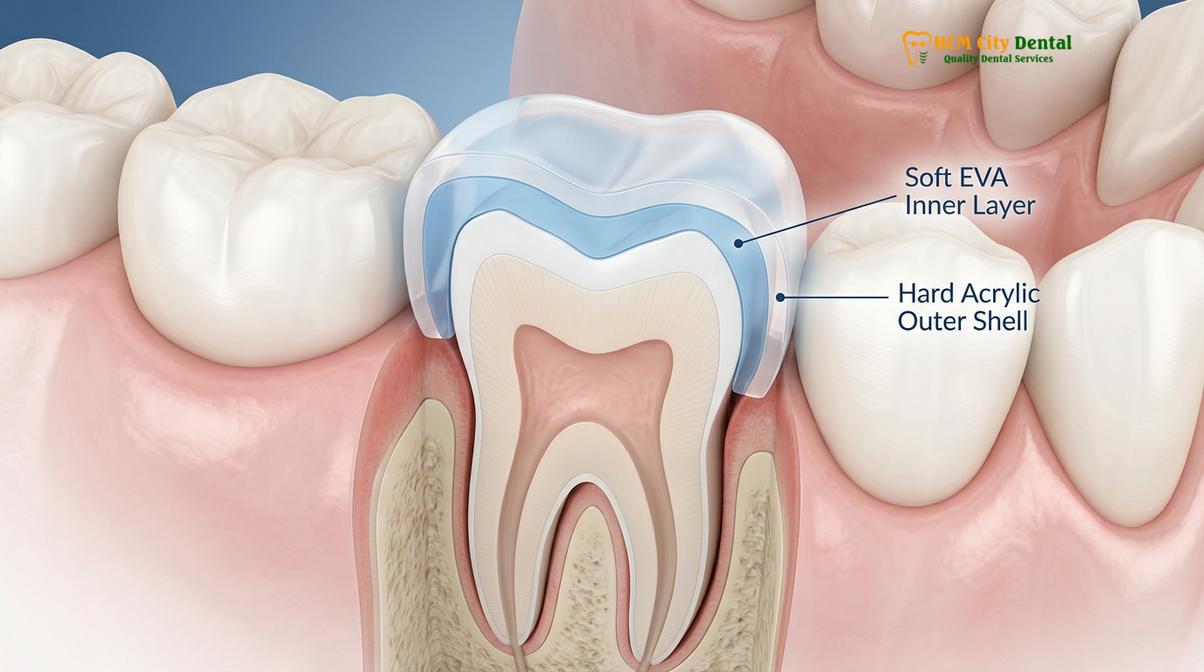
The manufacturing process involves thermoforming a soft ethylene-vinyl acetate (EVA) inner layer and chemically bonding it to a rigid polycarbonate or acrylic outer shell under high heat and pressure.
The fabrication of a custom dual laminate guard is a precise laboratory process that requires accurate clinical data and specialized equipment. Unlike over-the-counter “boil-and-bite” guards, which offer a poor fit and inadequate protection, a professional layered mouth guard is tailored to the exact micro-anatomy of the patient’s dentition. The process begins in the dental chair and concludes in a professional dental laboratory.
The Clinical Impression Phase
The first step in creating a highly accurate appliance is capturing the exact morphology of the patient’s teeth and surrounding gingival tissues. Traditionally, this is achieved using high-quality impression materials such as polyvinyl siloxane (PVS) or alginate. The dentist carefully seats the impression tray to ensure all occlusal surfaces, interproximal spaces, and the gingival margins are captured without distortion. In modern clinical workflows, digital intraoral scanners are frequently employed. These scanners capture thousands of images per second to create a highly precise 3D digital model of the dental arches, eliminating the discomfort of traditional impression materials and reducing the margin of error.
The Laboratory Thermoforming Process
Once the physical or digital impression reaches the dental laboratory, a master cast is poured using high-strength dental stone. The technician then examines the cast and blocks out any severe undercuts—areas where the guard might lock onto the teeth and become difficult to remove. The core of the fabrication process involves a specialized thermoforming machine and a dual-laminate thermoplastic blank.
These blanks are pre-manufactured sheets consisting of two distinct layers that have been chemically bonded during their initial production. The inner layer is typically made of ethylene-vinyl acetate (EVA), a highly biocompatible, flexible, and compressible polymer. The outer layer is composed of a rigid copolyester, polycarbonate, or a modified hard acrylic. The standard thickness for a dual-laminate blank is usually around 3.0mm, though variations exist depending on the clinical requirement [2]. The thermoforming machine heats the dual-laminate blank until it reaches a precise state of plasticity. It is then rapidly adapted over the master cast using a powerful vacuum or positive pressure system. This ensures that the soft EVA layer intimately adapts to every contour of the teeth, providing the custom fit that is the hallmark of professional Nightguards tại HCMC Dental Clinic.
Advantages Over Single-Material Guards
Dual-laminate guards offer the optimal balance of compliance-enhancing comfort and wear-resistant durability, outperforming single-material soft or hard guards for moderate bruxers.
When a dentist evaluates a patient for occlusal appliance therapy, material selection is a critical decision that directly impacts the success of the treatment. Single-material guards—either entirely soft or entirely hard—have specific indications but also notable drawbacks that can hinder long-term management of bruxism.
Overcoming the Drawbacks of Soft Guards
Soft night guards, made entirely of flexible EVA or silicone, are often the most comfortable option initially. They are easy to insert, gentle on the teeth, and relatively inexpensive to produce. However, from a clinical perspective, they present significant challenges for patients who actively grind their teeth. The compressible nature of the soft material can inadvertently stimulate the proprioceptors in the periodontal ligaments, tricking the brain into thinking there is a bolus of food in the mouth. This can trigger a chewing reflex, actually increasing masseter and temporalis muscle activity during sleep. Furthermore, the soft material is highly susceptible to wear and tear; a moderate to heavy grinder can easily chew through a soft guard in a matter of months.
Overcoming the Drawbacks of Hard Guards
Hard acrylic splints are the gold standard for severe bruxism and complex TMJ disorders. They are incredibly durable, allow for precise occlusal adjustments, and provide a frictionless surface that helps relax the jaw muscles. However, their primary drawback is patient comfort. Because they are entirely rigid, they must fit the teeth perfectly. Even a microscopic discrepancy in the fit can cause the guard to feel excessively tight, placing uncomfortable pressure on individual teeth. This discomfort is the leading cause of poor patient compliance; patients simply stop wearing the appliance, leaving their teeth unprotected [3]. For a detailed breakdown of these differences, patients can read Hard vs Soft Night Guard: Clinical Differences | HCMC Dental.
The Dual-Laminate Advantage
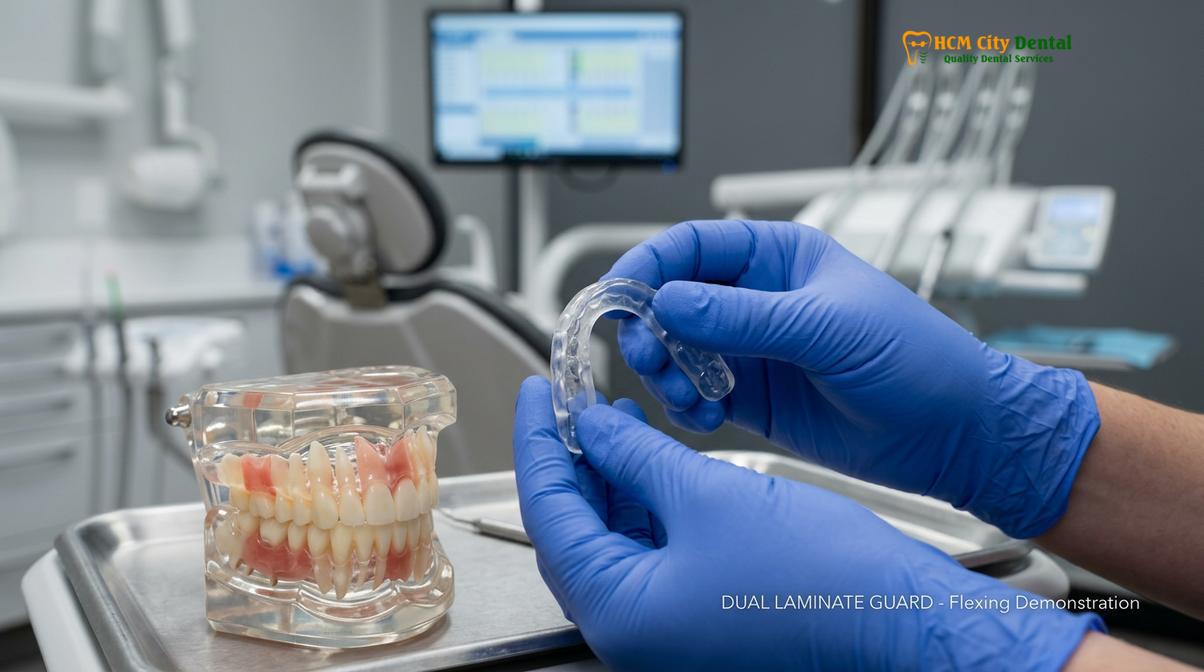
The dual laminate guard provides a synergistic solution. The soft inner layer yields slightly upon insertion, accommodating minor anatomical variations and eliminating the feeling of tightness associated with hard acrylic. This immediate comfort significantly boosts patient compliance, ensuring the guard is worn consistently. Meanwhile, the hard outer layer provides the necessary durability to withstand grinding forces and offers the smooth surface required to prevent the jaw from locking during excursive movements.
Disadvantages and Limitations
Despite their benefits, dual-laminate guards are thicker than single-layer options and may delaminate over time, making them unsuitable for severe, heavy bruxers.
While the dual laminate guard is an excellent choice for a broad demographic of patients, it is not a universal panacea for all occlusal disorders. Understanding its limitations is crucial for proper patient selection and setting realistic expectations regarding the lifespan and performance of the appliance.
While dual-laminate guards offer exceptional comfort, their layered construction makes them susceptible to delamination under extreme bruxing forces, necessitating careful patient selection.
One of the primary clinical considerations is the inherent thickness of the appliance. Because it requires two distinct layers to function effectively, a dual-laminate guard is typically thicker than a standard hard acrylic splint. This increased thickness alters the patient’s vertical dimension of occlusion and encroaches upon the natural resting gap between the upper and lower teeth when the jaw is relaxed. For some patients, this increased bulk can feel intrusive, temporarily causing excessive salivation or a feeling of lip incompetence. While most patients adapt to this within a few nights, those with a naturally small resting space may find the thickness bothersome.
The most significant structural limitation of a dual laminate guard is the potential for delamination. Delamination occurs when the chemical bond between the soft inner EVA layer and the hard outer polycarbonate layer begins to fail, causing the two materials to separate. This is usually the result of intense, repetitive shear forces generated by heavy grinding. Once delamination begins, the structural integrity of the guard is compromised. Unlike hard acrylic guards, which can often be repaired or relined chairside by a dentist, a delaminated dual-laminate guard cannot be reliably repaired and must be completely replaced [4]. Patients diagnosed with severe, destructive sleep bruxism are generally better suited for a full hard acrylic stabilization splint. To understand why custom fabrication is vital regardless of material, see Custom vs Store Bought Night Guard: Clinical Comparison | HCMC Dental.
Ideal Candidates for Dual-Laminate
The ideal candidate for a dual-laminate night guard is a patient with moderate sleep bruxism who requires durable occlusal protection but struggles with the rigidity of traditional hard acrylic splints.
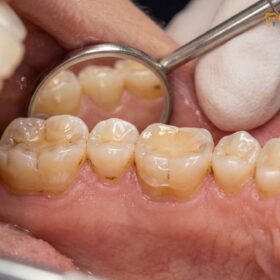
Patient selection is paramount when prescribing a dual-laminate appliance. Dental professionals typically recommend this specific type of guard for individuals who exhibit signs of moderate nocturnal grinding and clenching. These patients often present with early to moderate signs of dental attrition, such as flattened cusps on their posterior teeth or slight chipping on the incisal edges of their anterior teeth, but they do not yet show signs of severe structural damage or advanced TMJ pathology.
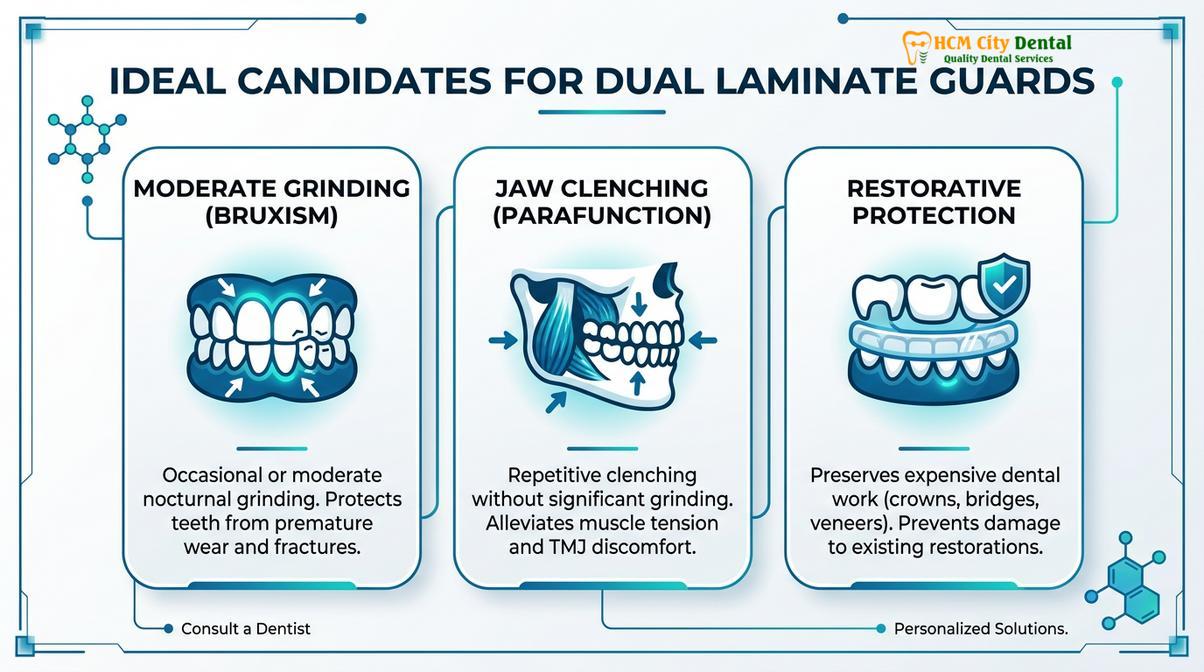
Furthermore, dual-laminate guards are highly beneficial for patients who have recently undergone extensive restorative dental work. Individuals with multiple porcelain veneers, dental crowns, or implant-supported restorations require a protective barrier to prevent the porcelain from fracturing under parafunctional loads. The soft inner layer of the dual-laminate guard gently hugs these restorations without placing undue stress on the margins, while the hard outer shell absorbs the brunt of the grinding forces [5]. It is also an excellent transitional appliance for patients who are learning How to Stop Grinding Teeth: Clinical Guide | HCMC Dental and need immediate, comfortable protection.
Pricing and Availability in Vietnam
Dual-laminate night guards are widely available at premium dental centers in Vietnam, offering an excellent balance of cost-effectiveness and high-quality clinical fabrication.
For patients seeking treatment for bruxism, understanding the financial investment is an important part of the decision-making process. In Vietnam, particularly at modern facilities like HCMC Dental Clinic, the cost of custom occlusal appliances is highly competitive compared to Western countries, without compromising on material quality or clinical precision. The pricing of a dual-laminate guard generally falls between the cost of a simple soft guard and a complex, fully adjustable hard acrylic splint.
| Night Guard Type | Relative Cost Profile | Expected Durability | Best Clinical Indication |
|---|---|---|---|
| Soft Silicone / EVA Guard | $ (Most Affordable) | Low (6-12 months) | Light clenching, temporary relief |
| Dual-Laminate Guard | $$ (Moderate) | Medium (1-3 years) | Moderate grinding, restorative protection |
| Hard Acrylic Splint | $$$ (Premium) | High (3-5+ years) | Severe bruxism, TMJ disorders |
When visiting Ho Chi Minh City for dental care, patients can expect a streamlined process. The initial consultation, digital scanning, and final delivery of the custom dual-laminate guard can typically be completed within a few days, making it a convenient option for both local residents and international visitors seeking reliable dental protection.
Clinical Case Study: Success in Ho Chi Minh City
A recent clinical case demonstrates how a custom dual-laminate guard successfully managed moderate bruxism and improved sleep quality for a patient experiencing morning jaw pain.
Patient Case: A 34-year-old patient presented to HCMC Dental Clinic in Ho Chi Minh City complaining of chronic morning jaw soreness and visible wear on their anterior teeth. The patient had previously tried an over-the-counter boil-and-bite guard, which they found too bulky and soft, leading to increased clenching during the night. They had also attempted to wear a rigid hard acrylic splint provided by another clinic but discontinued its use due to severe discomfort and a feeling of tightness on their upper teeth.
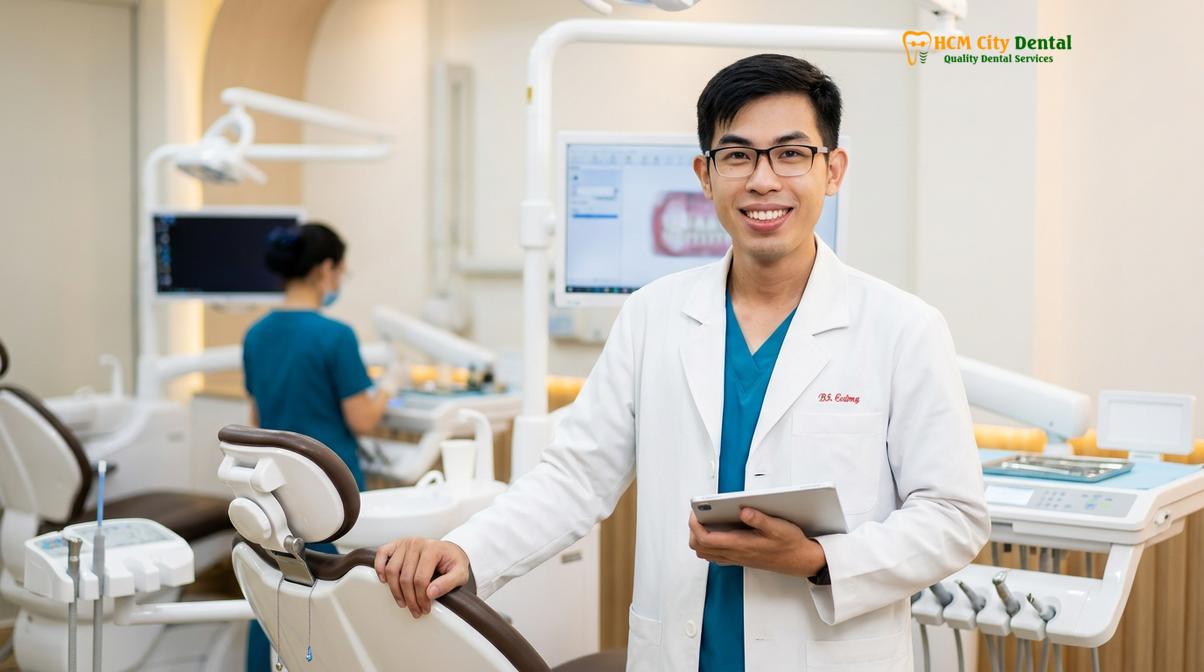
Dr. Nguyen Van Cuong, a leading specialist at HCMC Dental Clinic, emphasizes that proper diagnosis is the cornerstone of effective bruxism management. Dr. Cuong routinely evaluates patients to determine if a dual-laminate appliance is the most appropriate intervention for their specific occlusal forces. His clinical approach ensures that every custom device not only protects the dentition but also supports long-term temporomandibular joint health. For more insights on this condition, patients can explore Teeth Grinding in Sleep: Clinical Causes & Treatments | HCMC Dental.
After a comprehensive occlusal analysis and digital scanning, the clinical team fabricated a custom dual-laminate night guard for the patient’s maxillary arch. At the delivery appointment, the patient immediately noted the comfortable, snug fit provided by the soft inner layer, without the painful pressure they had experienced with the hard acrylic splint. At the one-month follow-up, the patient reported a complete cessation of morning jaw soreness and consistent nightly wear of the appliance, highlighting the superior compliance achieved with the dual-laminate design.
When to Consult a Dental Professional
It is crucial to seek professional dental evaluation if you experience chronic morning jaw pain, frequent headaches, or notice visible flattening and chipping of your teeth.
Bruxism is often a subconscious habit, meaning many patients are unaware they are grinding their teeth until significant damage has already occurred or a sleep partner points out the noise. According to clinical guidelines supported by the Vietnam Odonto-Stomatology Association (VOSA), early diagnosis of sleep bruxism is critical to preventing irreversible damage to the enamel and underlying dentin [6].
Important Clinical Note: Over-the-counter mouth guards are not a substitute for professional diagnosis and treatment. Ill-fitting store-bought guards can alter your bite, exacerbate muscle tension, and fail to provide adequate protection against heavy grinding forces.
Early intervention in sleep bruxism not only preserves natural tooth structure but also mitigates the risk of developing complex temporomandibular joint disorders.
If you wake up with a dull headache, experience sensitivity when consuming hot or cold foods, or notice that your teeth appear shorter or flatter than they used to, it is time to schedule a consultation. A thorough dental examination can reveal the subtle signs of occlusal trauma. To learn more about the long-term consequences of untreated grinding, read Bruxism Effects on Teeth: Clinical Damage & Treatments | HCMC Dental. If you are experiencing jaw pain or suspect you grind your teeth, contact HCMC Dental Clinic in Ho Chi Minh City for a comprehensive evaluation and to discuss whether a dual-laminate night guard is the right solution for you.
References
- Journal of Prosthetic Dentistry. Efficacy of dual-laminate occlusal splints in bruxism management. (2021).
- International Journal of Prosthodontics. Material wear characteristics of thermoformed night guards. (2019).
- Journal of Oral Rehabilitation. Patient compliance and comfort with various occlusal appliance materials. (2020).
- American Dental Association (ADA). Clinical guidelines on the management of sleep bruxism and attrition. (2022).
- Cranio: The Journal of Craniomandibular & Sleep Practice. Neuromuscular effects of soft versus hard occlusal splints. (2018).
- Vietnam Odonto-Stomatology Association (VOSA). Clinical guidelines on the management of sleep bruxism and dental attrition. (2022).
For pricing, booking, and a free clinical assessment, visit our Night Guard & Mouthguard service page at HCMC Dental Clinic in Ho Chi Minh City.