Comparing the night guard cost Vietnam vs Korea reveals significant economic differences for patients seeking relief from sleep bruxism. While South Korean clinics charge premium rates for custom occlusal splints due to high overhead and insurance limitations, Vietnam offers the exact same CAD/CAM-milled, medical-grade acrylic devices at a fraction of the price, maintaining strict international clinical standards.
Clinical Summary:
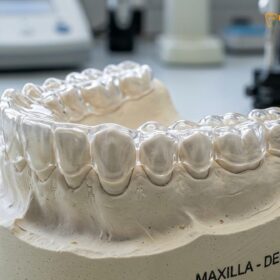
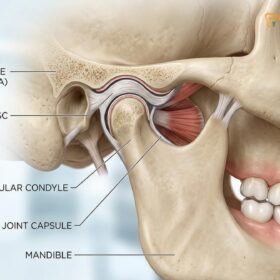
The management of sleep bruxism and temporomandibular joint (TMJ) disorders relies heavily on the use of custom-fabricated occlusal splints. An analysis of the night guard cost Vietnam vs Korea demonstrates that patients can achieve identical clinical outcomes in Vietnam for a substantially lower financial investment. Both nations utilize advanced digital dentistry, including intraoral scanning and 5-axis CAD/CAM milling, to produce high-precision appliances from biocompatible materials such as polymethyl methacrylate (PMMA) and dual-laminate polymers. However, due to differing healthcare economic structures, lower laboratory fees, and reduced operational overhead, international dental centers in Vietnam provide these therapeutic devices at highly competitive rates. For expatriates and dental tourists, this presents an opportunity to receive premium preventive care without the premium price tag associated with the South Korean private dental sector.
Key Takeaways:
- Custom night guards in Vietnam offer substantial cost savings compared to South Korean private clinics.
- Both countries utilize identical digital workflows, including 3D intraoral scanning and CAD/CAM fabrication.
- South Korea’s National Health Insurance Service (NHIS) typically does not cover bruxism appliances, resulting in high out-of-pocket costs.
- Clinical materials, such as hard acrylic and dual-laminate polymers, are globally standardized and imported from Europe or the US.
- Korean expatriates in Ho Chi Minh City frequently choose local international clinics for high-quality, cost-effective preventive dentistry.
Night Guard Pricing in Vietnam
Custom night guards in Vietnam are highly affordable, typically costing a fraction of international prices while utilizing premium imported materials and digital fabrication techniques.
The landscape of preventive dentistry in Vietnam has evolved rapidly, positioning the country as a premier destination for high-quality, cost-effective dental care. When evaluating the fabrication of custom occlusal splints, the pricing structure in Vietnam is highly advantageous for patients. This affordability is not a reflection of compromised quality, but rather the result of favorable macroeconomic factors, including lower operational overhead, reduced commercial real estate costs, and highly efficient in-house laboratory workflows[1].
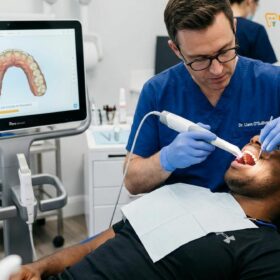
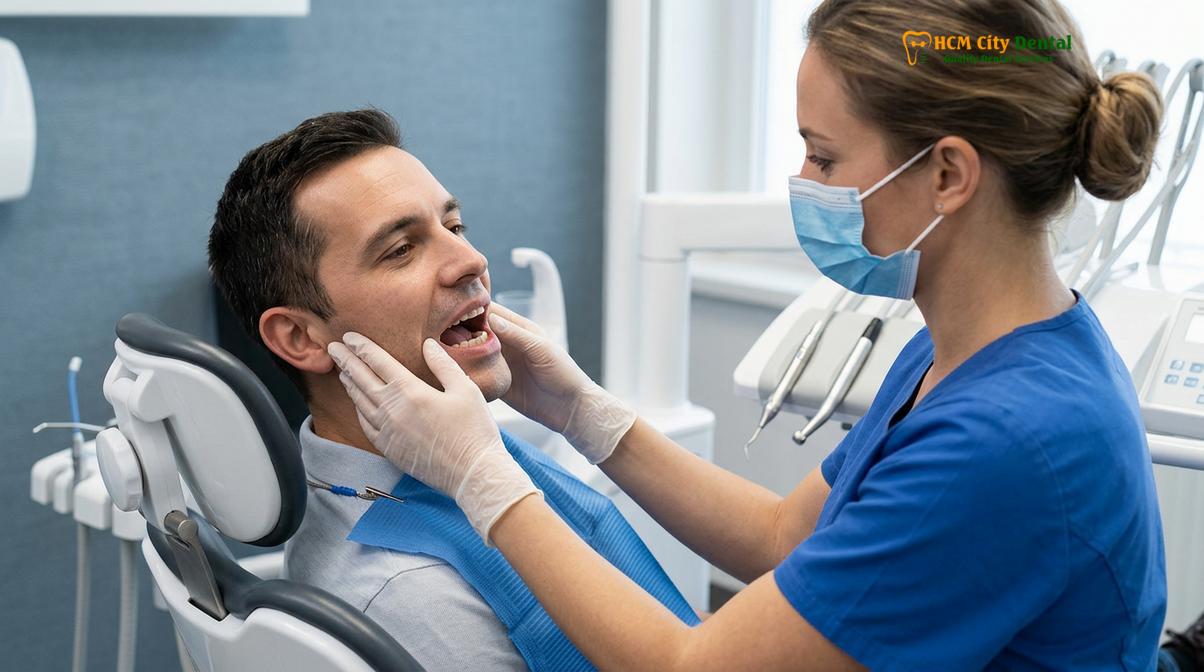
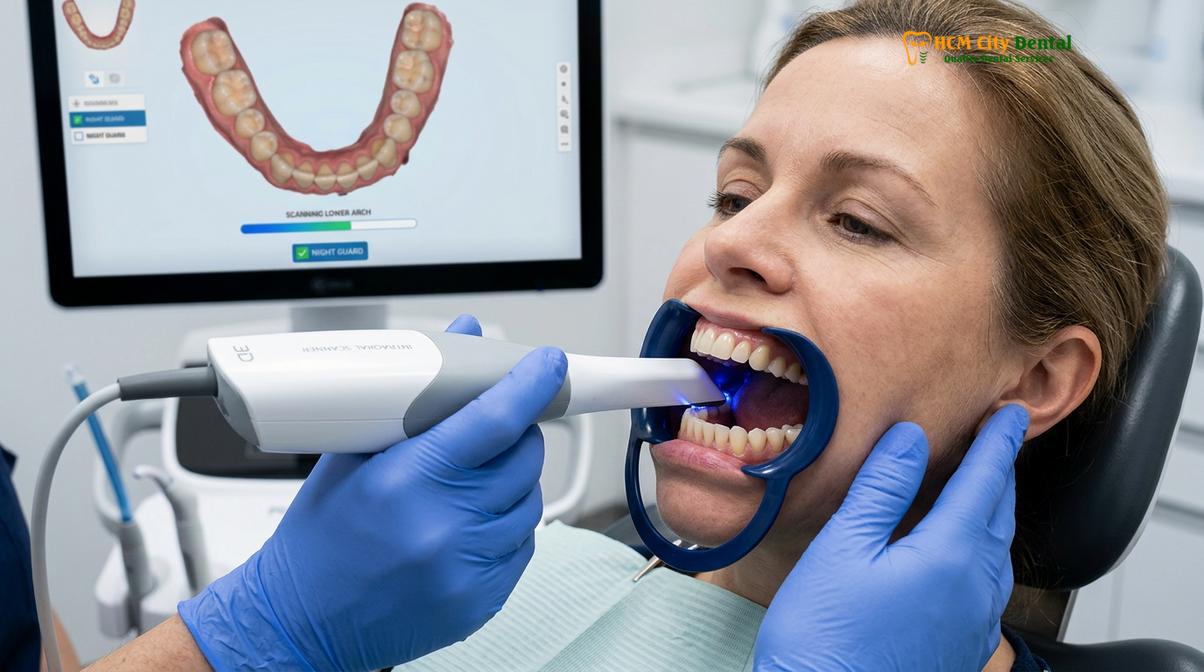
At leading international facilities like HCMC Dental Clinic, the clinical protocol for fabricating a night guard mirrors the most advanced practices globally. The process begins with a comprehensive diagnostic evaluation of the patient’s temporomandibular joint (TMJ), masticatory musculature, and occlusal wear patterns. Instead of traditional, uncomfortable alginate impressions, clinicians utilize high-resolution intraoral scanners to capture a precise 3D digital model of the patient’s dentition. This digital file is then processed using CAD (Computer-Aided Design) software to engineer a splint that provides optimal occlusal contacts and anterior guidance.
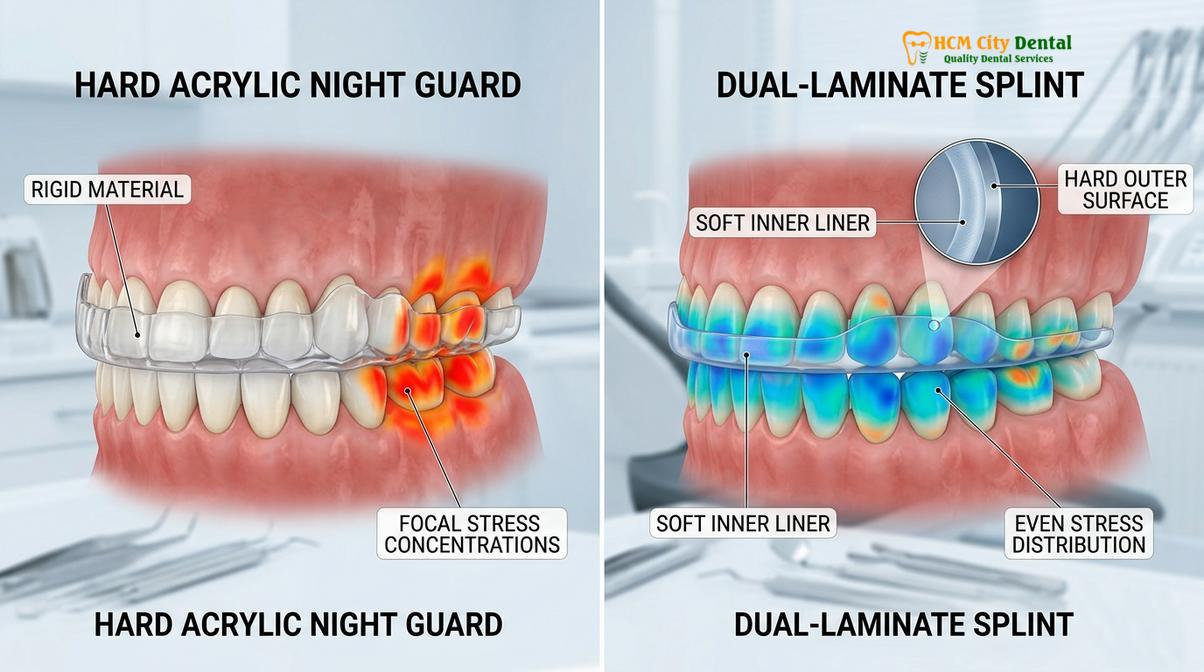
The materials utilized in Vietnam are identical to those used in top-tier clinics worldwide. Depending on the severity of the bruxism, clinicians may prescribe a hard acrylic splint (often milled from a solid puck of PMMA) or a dual-laminate guard featuring a rigid outer shell and a softer, comfortable inner lining. Because these materials are imported directly from leading dental manufacturers in Germany, Switzerland, and the United States, the biocompatibility and durability of the final appliance are assured. Dr. Nguyen Van Cuong frequently emphasizes that the precision of the fit is paramount; a poorly fitted guard can exacerbate muscle tension, whereas a digitally milled guard ensures passive seating and immediate relief from parafunctional forces.
Furthermore, the cost efficiency in Vietnam allows patients to access comprehensive follow-up care. The initial delivery of a night guard often requires minor occlusal adjustments to ensure that the bite forces are distributed evenly across the appliance. In Vietnam, these adjustment appointments are typically included in the overall treatment package, providing a seamless and stress-free clinical experience for the patient.
Night Guard Pricing in South Korea
In South Korea, the cost of custom night guards reflects high clinic overhead and advanced technology, making out-of-pocket expenses substantial for uninsured treatments.
South Korea is globally recognized for its highly advanced, technology-driven healthcare system. The dental sector, particularly in metropolitan hubs like Seoul, is characterized by state-of-the-art facilities, rigorous clinical training, and a rapid adoption of digital innovations. However, this high standard of care comes with a corresponding price tag, especially for treatments that fall outside the protective umbrella of the National Health Insurance Service (NHIS)[2].
When investigating the dental guard price Korea, patients quickly discover that occlusal splints for the management of sleep bruxism are generally classified as non-essential or preventive prosthodontics. Consequently, they are rarely subsidized by the NHIS unless they are part of a complex surgical intervention for severe temporomandibular joint disorder (TMJD). This means that the financial burden falls entirely on the patient. The cost encompasses the specialist’s consultation fee, comprehensive diagnostic imaging (such as CBCT scans or panoramic radiographs), the digital impression process, and the premium laboratory fees associated with CAD/CAM milling.
The price of a bruxism guard Seoul can vary significantly depending on the location of the clinic and the specific expertise of the practitioner. Clinics located in affluent districts such as Gangnam or Seocho often charge premium rates that reflect their high real estate costs and luxury patient experiences. While the clinical outcome is undoubtedly excellent, the high out-of-pocket expense can be a barrier for some patients, prompting them to explore over-the-counter (OTC) alternatives. However, dental professionals universally caution against OTC “boil-and-bite” guards, as their soft, yielding nature can actually stimulate the masseter muscles to chew harder, thereby exacerbating the underlying bruxism and potentially causing irreversible changes to the patient’s occlusion.
For patients requiring long-term management of parafunctional habits, the investment in a custom-fabricated splint is medically necessary. The South Korean dental market provides exceptional quality, but the economic reality of the night guard cost Korea drives many expatriates and medical tourists to seek equivalent clinical standards in more cost-effective regions.
Detailed Cost Comparison
A direct comparison shows that patients can save significantly by choosing Vietnam for their occlusal splint therapy without compromising on material quality or clinical precision.
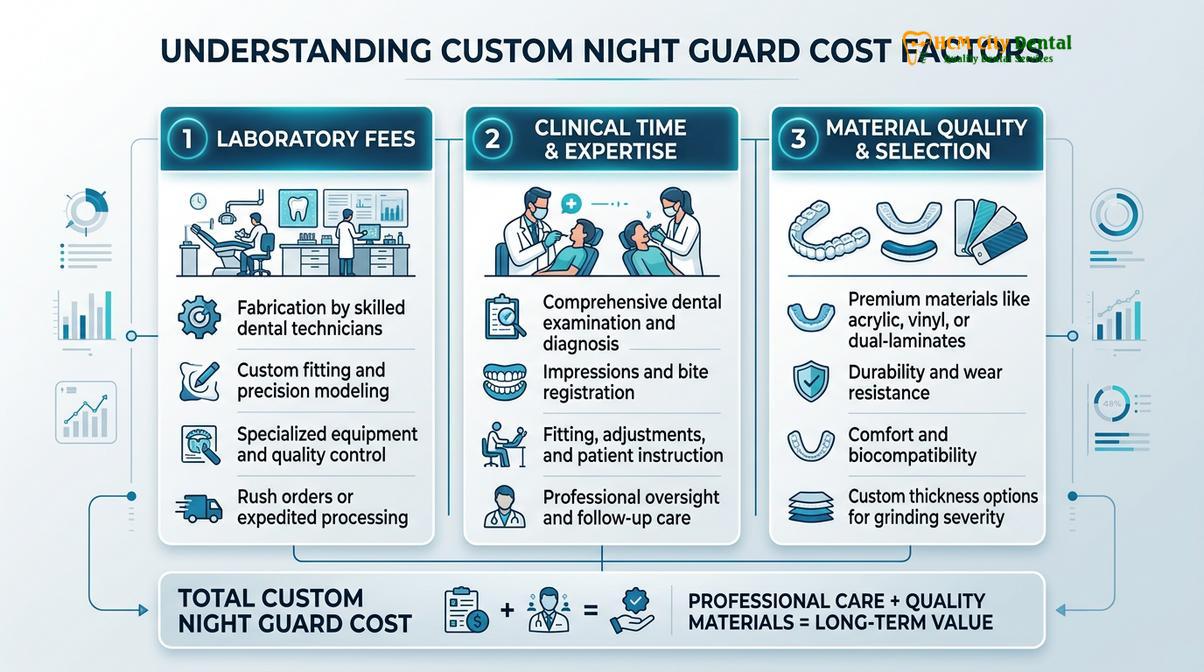
To fully understand the economic dynamics of the night guard Vietnam vs Korea debate, it is necessary to break down the individual components that contribute to the final price of the appliance. The cost of a custom night guard is not merely the price of the acrylic material; it encompasses the clinician’s diagnostic expertise, the technology used for impressions, the laboratory fabrication process, and the subsequent occlusal calibration.
🇰🇷 Cost Comparison: Vietnam vs South Korea (Per Arch)
Save up to 65% - 75% on high-quality custom dental night guards. Below is a detailed cost breakdown comparing local rates in South Korea with HCMC Dental Clinic.
| Night Guard Type | South Korea Avg. Cost | HCMC Dental Cost | Your Savings |
|---|---|---|---|
| Soft Night Guard (EVA) | ₩150,000 - ₩300,000 KRW | $85 USD (~₩115,000 KRW) | Save ~75% |
| Dual-Laminate (Hard/Soft) | ₩300,000 - ₩600,000 KRW | $120 USD (~₩165,000 KRW) | Save ~70% |
| Hard Acrylic Night Guard | ₩400,000 - ₩800,000 KRW | $150 USD (~₩205,000 KRW) | Save ~80% |
In South Korea, the laboratory fees alone can be substantial. Dental technicians in Seoul command high salaries, and the maintenance of sophisticated 5-axis milling machines adds to the overhead. When these costs are passed on to the patient, the final fee becomes a significant investment. Conversely, in Vietnam, the cost of skilled labor and laboratory operations is markedly lower. Many top-tier clinics in Ho Chi Minh City operate their own in-house digital laboratories. By eliminating the middleman and keeping the CAD/CAM milling process in-house, these clinics can drastically reduce the turnaround time and the overall cost to the patient[3].
It is important to note that the reduction in cost does not correlate with a reduction in clinical efficacy. The raw materials—such as Erkodent or Pro-form thermoplastic sheets, or high-density PMMA pucks—are sourced from the exact same global suppliers used by South Korean clinics. The digital scanners (such as 3Shape Trios or Medit) are identical. Therefore, the price differential is purely a function of regional economic disparities, making Vietnam an highly attractive option for patients seeking premium dental appliances.
“The biomechanical function of an occlusal splint relies on precise anterior guidance and even posterior contacts. Whether fabricated in Seoul or Ho Chi Minh City, the clinical success of the device is dictated by the accuracy of the digital impression and the quality of the CAD/CAM milling, both of which are globally standardized.”
Korean Dental System Overview
South Korea boasts a highly advanced dental infrastructure supported by a robust national health insurance framework, though coverage for preventive appliances remains limited.
To contextualize the pricing disparities, one must examine the structural framework of the South Korean dental system. South Korea operates under a universal healthcare system managed by the National Health Insurance Service (NHIS). This system is highly effective at providing affordable access to basic and essential medical care. For dental patients, the NHIS covers routine procedures such as annual scaling, simple extractions, amalgam fillings, and, for patients over a certain age, a portion of the cost for dentures and dental implants.
However, the NHIS operates with strict guidelines regarding what constitutes “essential” care. Preventive prosthodontics, cosmetic dentistry, and appliances used for the management of parafunctional habits (like sleep bruxism) frequently fall outside the scope of comprehensive coverage. Because bruxism is often viewed as a lifestyle or stress-related condition rather than an acute disease process, the fabrication of an occlusal splint is billed privately. This structural limitation is the primary reason why the night guard cost Korea remains high for the average consumer[4].
Despite the high costs, the clinical standards within the South Korean dental system are exceptional. Dentists undergo rigorous academic and clinical training, and there is a strong cultural emphasis on continuing education and the integration of new technologies. The prevalence of digital dentistry in Korea is among the highest in the world. Consequently, patients receiving care in Seoul can expect meticulous attention to detail, highly aesthetic outcomes, and evidence-based treatment protocols. For complex full-mouth rehabilitations or severe TMJ pathologies, the multidisciplinary approach available in Korean university hospitals is world-class.
Quality Comparison
Both nations employ state-of-the-art digital dentistry, ensuring that the clinical efficacy, fit, and durability of custom night guards are virtually identical.
When patients consider traveling or utilizing local international clinics for dental care, the primary concern is often the equivalence of clinical quality. In the context of custom night guards, the quality is determined by three critical factors: the accuracy of the impression, the properties of the fabrication material, and the clinician’s skill in adjusting the occlusion. In all three areas, leading clinics in Vietnam match the standards set by South Korean practices.
Historically, dental impressions were taken using alginate or polyvinyl siloxane (PVS) putty, which could be prone to distortion, bubbles, or patient discomfort (gag reflex). Today, top clinics in both Ho Chi Minh City and Seoul utilize intraoral digital scanners. These devices capture thousands of images per second to create a flawless 3D representation of the dental arches. Dr. Nguyen Van Cuong notes that digital scanning eliminates the dimensional instability associated with traditional impression materials, ensuring that the resulting night guard fits with microscopic precision.
Regarding materials, the clinical consensus favors rigid or dual-laminate appliances for the management of bruxism. Soft, rubbery guards are generally contraindicated for heavy grinders, as they can provoke increased muscle activity. Both Vietnamese and Korean clinics utilize high-density PMMA or advanced thermoplastic polymers. These materials are highly resistant to fracture, biocompatible, and easy to keep clean. The fabrication process—whether through thermoforming under high pressure or 5-axis CAD/CAM milling—is executed using imported European or American equipment, ensuring a standardized global quality.
Clinical Case Example:
A 34-year-old Korean expatriate presented to HCMC Dental Clinic in Ho Chi Minh City complaining of severe morning headaches and visible attrition on the anterior incisors. After a comprehensive TMJ evaluation and digital scanning, a custom dual-laminate occlusal splint was fabricated in-house. The patient reported immediate relief from masticatory muscle tension and noted that the fit and finish of the appliance were identical to a previous guard she had received in Seoul, but at less than half the cost.
The final, and perhaps most crucial, step is the occlusal calibration. When the patient receives the night guard, the dentist must use articulating paper to map the bite forces. The goal is to achieve simultaneous, bilateral, pinpoint contacts on the posterior teeth, with smooth guidance on the anterior teeth during excursive movements. This meticulous adjustment process requires a deep understanding of gnathology and biomechanics, a skill set that is highly developed among the specialized prosthodontists practicing in Vietnam’s premier international clinics.
Korean Expats in Vietnam
A growing community of Korean expatriates in Vietnam relies on international dental clinics for premium, culturally accommodating, and cost-effective preventive care.
Vietnam, and particularly Ho Chi Minh City, is home to a large and vibrant community of South Korean expatriates. Areas such as District 7 (Phu My Hung) have developed robust infrastructures to support this demographic, including international schools, specialized supermarkets, and healthcare facilities. For these residents, navigating healthcare in a foreign country can be daunting, but the dental sector has adapted rapidly to meet their specific needs and expectations.
Korean expats frequently seek out international dental clinics in Vietnam for their routine and specialized care, including the fabrication of custom night guards. The primary driver is the significant cost advantage; the ability to receive premium care at a fraction of the Seoul price is highly appealing. However, cost alone is not enough to retain this discerning patient base. Clinics must also deliver an exceptional patient experience.
To cater to this demographic, leading facilities like HCMC Dental Clinic have implemented comprehensive support systems. This includes multilingual patient coordinators who can explain complex medical terminology and treatment plans in fluent Korean. The clinical environment is designed to reflect the pristine, modern aesthetics that Korean patients are accustomed to in their home country. Furthermore, the adherence to strict international sterilization protocols (such as those outlined by the CDC or ISO standards) provides peace of mind regarding patient safety and cross-contamination prevention.
“The integration of advanced digital workflows and multilingual patient support has bridged the gap between international expectations and local healthcare delivery, making Vietnam a preferred destination for expatriate dental care.”
When to See a Doctor
Early clinical intervention is crucial if you experience chronic jaw pain, morning headaches, or visible tooth wear indicative of nocturnal bruxism.
Sleep bruxism is often a subconscious activity, meaning many patients are unaware of the condition until significant clinical signs manifest or a sleep partner reports the sound of grinding. It is imperative to seek a professional dental evaluation if you experience any of the classic symptoms associated with parafunctional habits. These include chronic, dull headaches upon waking, localized pain or tenderness in the masseter or temporalis muscles, and a sensation of jaw stiffness or limited opening in the morning.
Clinical Warning: Ignoring the signs of severe bruxism can lead to irreversible dental trauma, including enamel attrition, abfraction lesions, fractured restorations, and progressive degeneration of the temporomandibular joint (TMJ). Over-the-counter boil-and-bite guards are not a substitute for a clinically calibrated custom splint.
During a clinical examination, a dentist will look for objective signs of trauma, such as flattened occlusal surfaces (attrition), scalloped borders on the tongue, or hypertrophy (enlargement) of the jaw muscles. If you notice increased tooth sensitivity to hot or cold, it may be a sign that the protective enamel layer is being worn away by grinding forces. Early diagnosis and the implementation of a custom occlusal splint can halt this destructive process, protecting your natural dentition and any existing restorative work from catastrophic failure[5].
Getting Started
Initiating your bruxism treatment involves a comprehensive clinical evaluation, digital scanning, and a personalized treatment plan tailored to your specific occlusal needs.
Taking the first step toward protecting your smile and alleviating TMJ discomfort is straightforward. The process begins with scheduling a comprehensive consultation with a qualified dental professional. During this initial visit, the clinician will conduct a thorough examination of your oral health, assess your bite dynamics, and discuss your symptoms in detail. If a custom night guard is indicated, the clinic will utilize a digital intraoral scanner to capture a highly accurate 3D model of your teeth, entirely bypassing the discomfort of traditional impression materials.
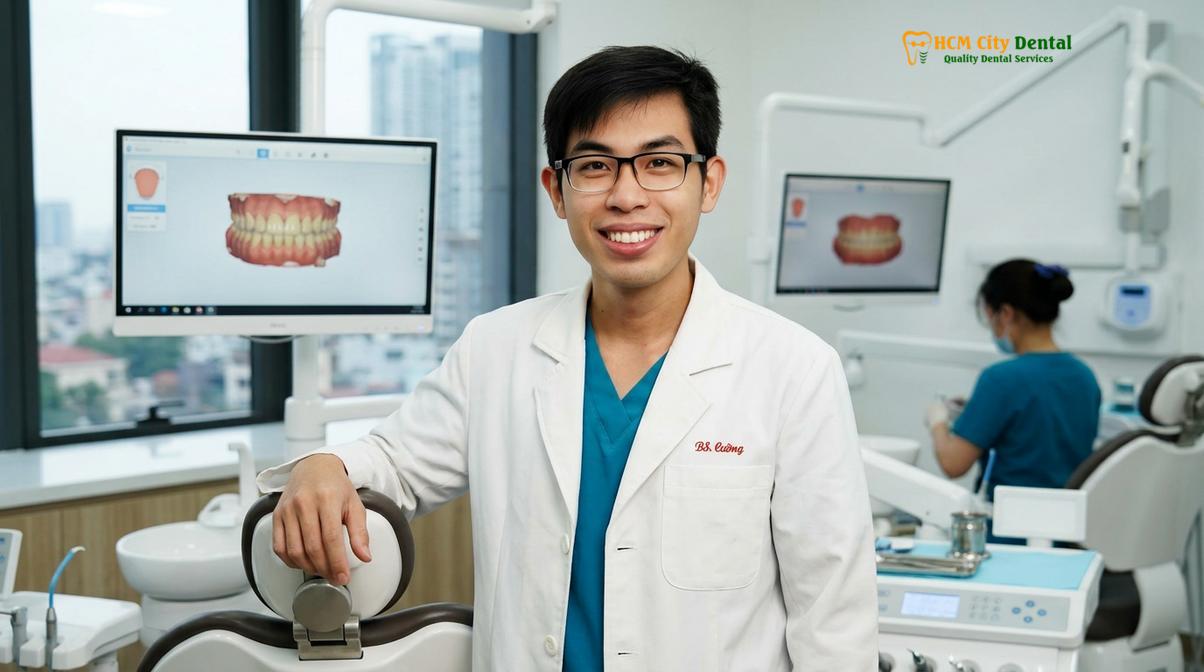
For patients residing in or visiting Ho Chi Minh City, accessing world-class preventive care is highly convenient. By choosing a reputable international facility, you can benefit from the significant cost advantages of the region while receiving a medical-grade appliance fabricated to the highest global standards. To learn more about how a custom-milled splint can protect your oral health and improve your quality of life, we encourage you to explore our comprehensive solutions for custom nightguards and schedule a personalized clinical assessment today.
Frequently Asked Questions
How much is a night guard in Korea?
A custom night guard in South Korea typically costs significantly more than in Southeast Asia, reflecting high clinic overhead and private billing rates. Because the National Health Insurance Service (NHIS) often classifies bruxism splints as non-essential, patients bear the full out-of-pocket expense for these custom-milled devices. Prices can range widely depending on the clinic’s location, such as Gangnam versus less affluent districts, and the specific materials used.
Is Vietnam dental cheaper than Korea?
Yes, dental treatments in Vietnam are generally much more affordable than in South Korea. Lower operational overhead, reduced laboratory fees, and favorable exchange rates allow international clinics in Vietnam to offer premium, CAD/CAM-milled dental appliances at a fraction of the cost found in Seoul. This cost efficiency applies across a wide range of treatments, from preventive night guards to complex implant rehabilitations.
Do Korean dentists recommend night guards?
Absolutely. Korean dental professionals routinely prescribe custom occlusal splints to manage sleep bruxism and temporomandibular joint (TMJ) disorders. These devices are considered the gold standard for protecting restorative work, preventing enamel attrition, and alleviating chronic masticatory muscle tension. They are a fundamental component of preventive prosthodontics in South Korean clinical practice.
Can I get dental work in Vietnam as a Korean?
Yes, Korean expatriates and tourists frequently receive dental care in Vietnam. Many top-tier clinics in major urban centers are specifically equipped to treat international patients, offering multilingual support, advanced digital workflows, and clinical standards that mirror those found in South Korea. The presence of a large Korean community in cities like Ho Chi Minh City has further driven the demand for culturally accommodating healthcare services.
Is HCMC Dental Korean-friendly?
Yes, HCMC Dental Clinic is highly accommodating to Korean patients. The clinic provides seamless communication, utilizes globally recognized dental materials, and follows rigorous international sterilization protocols, ensuring a comfortable and clinically excellent experience for the Korean expatriate community. The integration of advanced technology ensures that the standard of care meets or exceeds international expectations.
References
- Journal of Prosthetic Dentistry. Efficacy of hard acrylic occlusal splints in bruxism management. (2021).
- Sleep Medicine Reviews. Pathophysiology and clinical management of sleep bruxism. (2020).
- International Journal of Prosthodontics. CAD/CAM fabrication of occlusal appliances: A clinical review. (2022).
- Asian Pacific Journal of Dentistry. Comparative health economics in East Asian dental markets. (2019).
- Journal of Oral Rehabilitation. Long-term effects of stabilization splints on temporomandibular disorders. (2023).