Root Canal in Vietnam: What to Expect (Pain-Free Guide)

Root canal treatment in Vietnam from $150. This guide covers the procedure, pain levels, how long it takes, and why modern root canals at HCMC Dental are no more uncomfortable than a filling.
Few dental procedures evoke as much anxiety as a root canal. Historically associated with pain and multiple lengthy visits, modern endodontics has completely transformed this narrative. Today, a root canal is a highly precise, virtually painless procedure designed to save a tooth that would otherwise need to be extracted. For international patients visiting Ho Chi Minh City, accessing world-class endodontic care using the latest rotary technologies and bio-ceramic sealers offers a seamless, pain-free solution at a fraction of the cost back home.
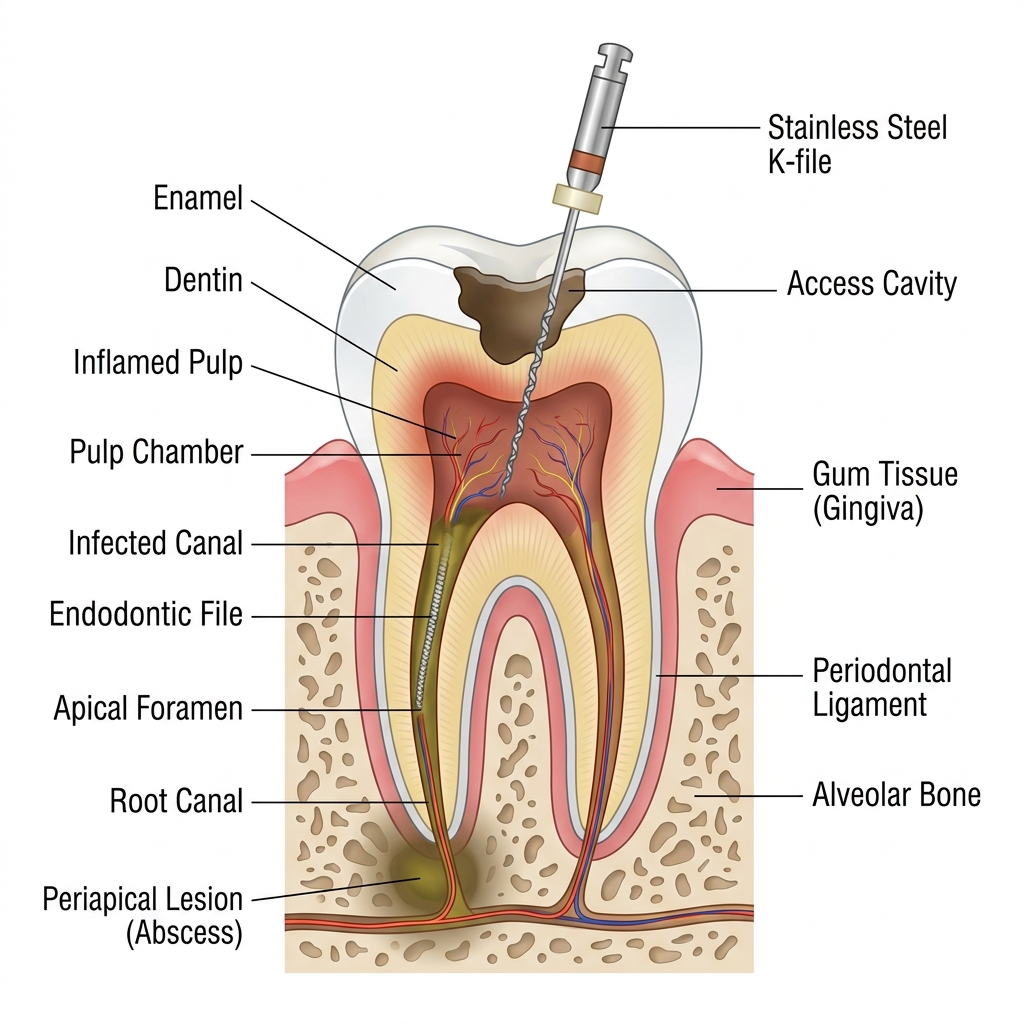
1. What is Root Canal Therapy?
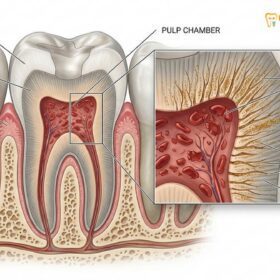
A root canal (endodontic therapy) is required when the soft inner core of the tooth—the dental pulp—becomes inflamed or infected. The pulp contains the tooth’s nerves, blood vessels, and connective tissue. It is vital during the tooth’s growth and development, but once a tooth is fully mature, it can survive without the pulp by relying on the nourishment from the surrounding periodontal ligament.
The primary causes of pulp infection include:
- Deep Decay: A cavity that is left untreated and eventually breaks through the enamel and dentin into the pulp chamber.
- Repeated Dental Procedures: Multiple deep fillings or crowns on the same tooth can stress the nerve to the point of irreversible inflammation.
- Trauma: A blow to the mouth can sever the blood supply to the tooth, causing the nerve to die silently, even if the tooth doesn’t visibly crack.
- Cracked Tooth Syndrome: Microscopic fractures in the enamel can open under chewing pressure, allowing bacteria to slowly seep into the nerve over time.
2. Signs You Need an Emergency Root Canal
Pulpitis (inflammation of the nerve) can be either reversible or irreversible. If the inflammation is irreversible or the nerve has died (necrosis), a root canal is the only way to save the tooth. Look for these critical warning signs:
- Spontaneous Throbbing Pain: A severe toothache that wakes you up at night or starts without any chewing trigger is a hallmark of irreversible pulpitis.
- Prolonged Temperature Sensitivity: If a tooth hurts when you drink something hot or cold, and that pain lingers for 30 seconds or longer after the stimulus is removed.
- Pain on Chewing or Tapping: As the infection exits the tip of the root, it inflames the surrounding bone and ligament. The tooth will feel highly tender to bite on or even to tap with a fingernail.
- Gum Fistula (Pimple on the Gums): A small, pimple-like bump on the gums near the root of the tooth. This is a drain tract where pus from a root abscess is escaping into the mouth, often causing a bad taste.
- Tooth Discoloration: A tooth that suddenly turns dark gray or black indicates that the nerve inside has died and the internal blood vessels have ruptured.
3. Step-by-Step Clinical Procedure
At HCMC Dental, we utilize a highly standardized, tech-driven protocol to ensure your root canal is completed efficiently, often in a single 90-minute visit.
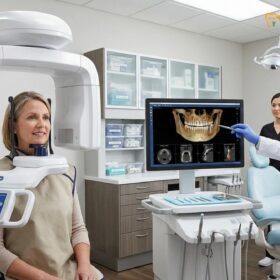
- 3D CBCT Imaging: Unlike traditional 2D X-rays that can hide curved or hidden root canals, a 3D CBCT scan allows the endodontist to map the exact anatomy of the root system before the procedure begins.
- Isolation with a Dental Dam: A thin sheet of rubber is placed around the tooth. This is mandatory; it prevents the harsh disinfecting chemicals from entering your mouth and keeps the bacteria in your saliva from entering the sterile tooth.
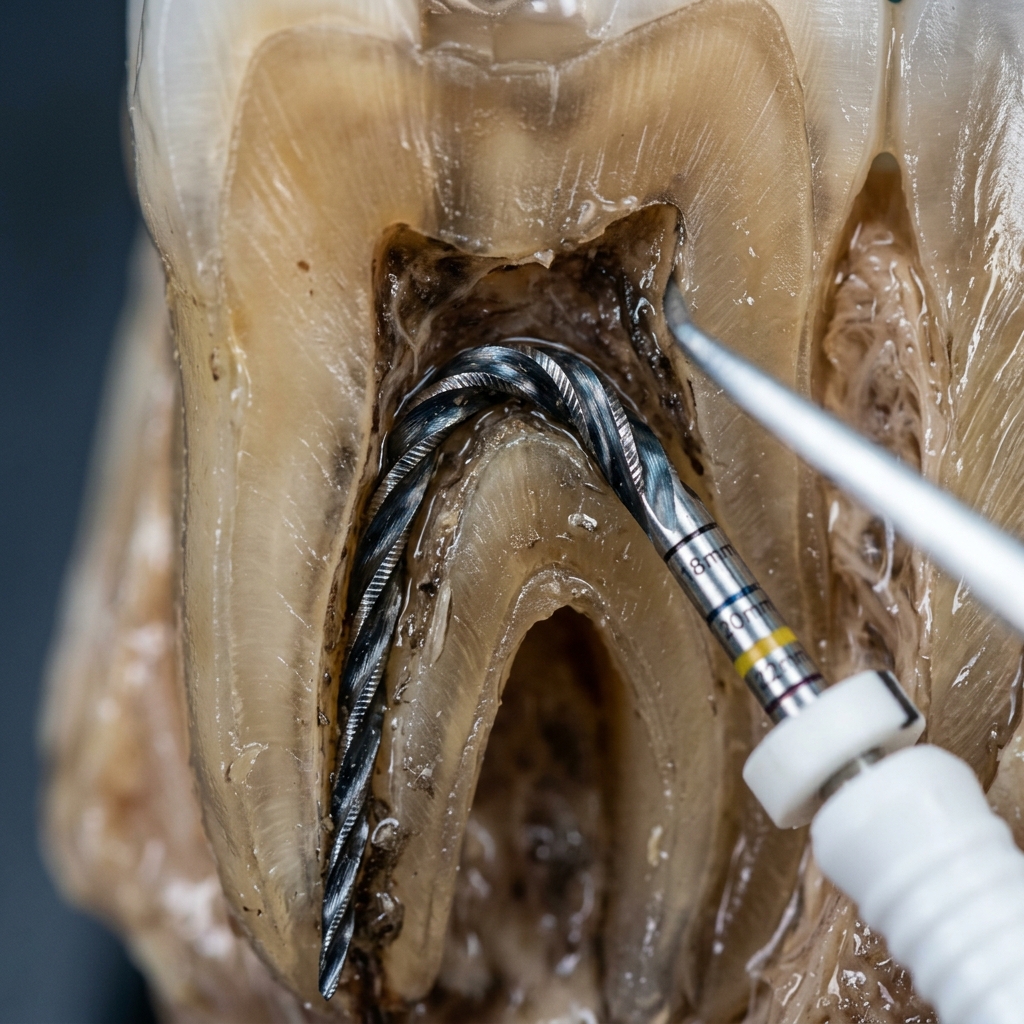
- Access and Mechanical Cleaning: The dentist makes a small opening in the top of the tooth. We then use advanced Nickel-Titanium (NiTi) Rotary Files (such as the Dentsply Protaper system). These flexible, motor-driven files rapidly and smoothly clean out the infected nerve tissue and shape the canals.
- Chemical Disinfection: The hollowed-out canals are aggressively flushed with sodium hypochlorite and EDTA to kill bacteria and dissolve organic debris. In complex cases, we utilize Laser-Assisted Disinfection to vaporize bacteria hidden deep in microscopic dentinal tubules.
- Obturation (Sealing): Once sterilized and dried, the canals are tightly filled with a biocompatible rubber-like material called Gutta-Percha. To ensure a completely watertight seal and prevent future leakage, we use advanced Bio-ceramic Sealers that chemically bond to the root walls.
4. Anesthesia & Pain Control Protocols
The myth that root canals are painful stems from outdated techniques used decades ago. The procedure itself is no more uncomfortable than receiving a standard dental filling.
The pain patients experience is before the procedure—caused by the inflamed nerve trapped inside the rigid tooth. Once local anesthesia is administered, that pain vanishes instantly.
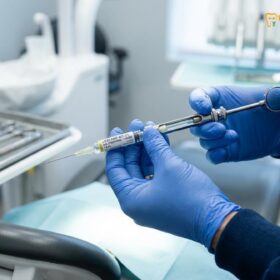
- The Wand (Computer-Controlled Anesthesia): We use this system to deliver the anesthetic fluid at a precisely controlled, slow rate, eliminating the stinging sensation usually associated with injections.
- Profound Numbing: Because severely inflamed “hot” teeth can sometimes be difficult to numb, our specialists are trained in advanced anesthetic techniques, including intraosseous and intraligamentary injections, ensuring you feel absolutely nothing before we begin.
5. Post-Treatment Restorations: Why a Crown is Essential
A root canal saves the tooth, but it alters its structural integrity. Once the nerve and blood supply are removed, the tooth is considered “non-vital” (dead). Over time, it becomes dehydrated, brittle, and highly susceptible to catastrophic fracturing under biting pressure.
For this reason, a permanent dental crown is clinically mandatory for all back teeth (premolars and molars) following a root canal. The crown acts like a protective helmet, encasing the brittle tooth structure and distributing chewing forces evenly. Without a crown, a root-canaled molar has a very high probability of splitting down the middle within a year, requiring extraction.
6. Cost Comparison: Root Canals in Vietnam vs. The West
Root canal therapy, especially on multi-rooted molars, is notoriously expensive in Western countries. Dental tourists visiting Ho Chi Minh City can save up to 80% without compromising on endodontic technology or sterilization standards.
| Procedure | Estimated Cost (Vietnam) | Avg. Cost (USA/Australia) |
|---|---|---|
| Anterior Root Canal (1 Canal) | $100 – $150 USD | $800 – $1,200 USD |
| Molar Root Canal (3-4 Canals) | $150 – $250 USD | $1,200 – $1,800 USD |
| Post and Core Build-up | $50 – $80 USD | $250 – $400 USD |
| Zirconia Protective Crown | $250 – $400 USD | $1,500 – $2,500 USD |
| Total Molar Treatment Package | $450 – $730 USD | $2,950 – $4,700 USD |
7. Clinical Safety, Risks, and Warranties
Safety and sterility are our highest priorities. Endodontic files undergo immense stress and can separate (break) inside a root canal if reused. HCMC Dental strictly enforces a single-use policy for all rotary files; they are discarded after your treatment to eliminate the risk of separation and cross-contamination.
While root canals boast a success rate of over 95%, a very small percentage may fail due to hidden accessory canals or resistant bacterial biofilms. If a root canal performed at our clinic fails within the first year, we offer a comprehensive retreatment or credit the cost of the root canal toward an extraction and dental implant.
8. Frequently Asked Questions (FAQ)
1. How long will the procedure take?
A simple front tooth with one canal can be completed in 45 minutes. A complex molar with four curved canals may require 90 minutes to 2 hours. Most treatments are completed in a single visit, though severe infections may require two visits (the first to place an antibiotic paste inside the tooth).
2. Will I be in pain after the procedure?
The severe nerve pain will be gone instantly. However, for 2 to 3 days following the procedure, the tooth will feel “bruised” and tender to bite on. This is because the ligament surrounding the root tip is inflamed from the procedure itself. Over-the-counter Ibuprofen or Paracetamol easily manages this mild discomfort.
3. Why is an extraction cheaper? Shouldn’t I just pull the tooth?
While an extraction is cheaper initially, it is the most expensive option long-term. Pulling a tooth causes the jawbone to shrink and adjacent teeth to shift, collapsing your bite. To replace that extracted tooth with an implant or bridge will cost significantly more than a root canal and crown would have cost.
4. I am flying in for dental tourism. How many days do I need for a root canal and crown?
We recommend a minimum of 5 to 7 days. Day 1: 3D scan and Root Canal. Day 2: Crown Preparation and digital scan (temporary crown placed). Day 5: Final Zirconia Crown cementation. We advise waiting 24 hours after final cementation before flying.
5. Can I eat normally after a root canal?
Immediately after the root canal, your tooth will only have a temporary filling in the access hole. You must avoid chewing on that side of your mouth entirely until the final permanent crown is placed, or you risk fracturing the fragile tooth structure.
6. What is a “Root Canal Retreatment”?
If a root canal performed years ago becomes reinfected (due to a leaky crown or missed anatomy), a specialist can remove the old filling material, re-disinfect the canals, and reseal it. This is a complex procedure but often highly successful at saving the tooth.
7. Are antibiotics necessary?
Usually not. The primary source of the infection (the necrotic nerve) is physically removed during the procedure. Antibiotics are only prescribed if you present with severe systemic symptoms (fever, rapid facial swelling, lymph node involvement).
8. Can a root-canaled tooth get a cavity again?
Yes. The tooth no longer has a nerve, so you will not feel a cavity forming. However, the outer enamel and the root surface can still decay if you don’t brush and floss. You must maintain excellent hygiene and attend regular check-ups to protect the tooth and its crown.