For thousands of adult patients worldwide, completing years of expensive orthodontic treatment with traditional braces or clear aligners feels like crossing a major finish line. However, a frustrating reality often emerges months or years later: the teeth begin to shift, spaces reopen, and a noticeable gap between the upper and lower front teeth returns. This phenomenon, known as anterior open bite relapse, is rarely a failure of the orthodontic hardware itself. Instead, it is almost always a failure to address the powerful, invisible muscular forces acting upon the teeth—specifically, an undiagnosed tongue thrust, chronic mouth breathing, and improper resting tongue posture. At HCMC Dental Clinic in District 1, Ho Chi Minh City, we recognize that straightening teeth without retraining the surrounding oral musculature is like building a beautiful house on a shifting foundation. Through the integration of advanced digital orthodontics and evidence-based Orofacial Myofunctional Therapy (OMT), we provide international patients, expats, and dental travelers with comprehensive solutions that treat the root cause of orthodontic relapse, ensuring a lifetime of functional stability and optimal airway health.
Clinical Summary:
Orofacial Myofunctional Therapy (OMT) is a specialized neuromuscular re-education program designed to correct improper tongue resting posture, eliminate tongue thrust swallowing patterns, and establish obligate nasal breathing. When combined with advanced digital orthodontics—such as Align Technology Invisalign, Damon Ultima passive self-ligating brackets, or Adult MARPE (Miniscrew-Assisted Rapid Palatal Expansion)—OMT addresses the muscular imbalances that cause severe orthodontic relapse in adults. Under the clinical direction of Dr. Nguyen Van Cuong, DDS, HCMC Dental Clinic utilizes 3D CBCT airway analysis, functional laser lingual frenuloplasty for adult tongue-ties, and targeted myofunctional exercises to permanently stabilize the dental arches, resolve TMJ tension, and treat sleep-disordered breathing without relying on outdated, punitive habit-breaking appliances.
Key Takeaways:
- The Force Imbalance: A human tongue exerts up to 500 grams of forward pressure during a tongue thrust swallow, easily overpowering the 50 grams of light continuous force applied by orthodontic wires or clear aligners, leading to inevitable relapse.
- The Role of Posture: Proper resting tongue posture on the palate acts as nature’s internal retainer, counterbalancing inward cheek pressure to maintain a wide maxillary arch and a clear nasal airway.
- Beyond the Teeth: Chronic mouth breathing and a low resting tongue posture are primary drivers of a narrow maxilla, anterior open bites, and Obstructive Sleep Apnea (OSA) in adults.
- Surgical Synergy: For adults with restricted lingual frenums (ankyloglossia), a functional laser lingual frenuloplasty combined with pre- and post-op OMT is essential to achieve the tongue mobility required for palatal suction.
- Modern Alternatives: Evidence-based myofunctional exercises have largely replaced archaic, punitive devices like spiky metal tongue cribs, offering a permanent, neuromuscular solution to swallowing dysfunction.
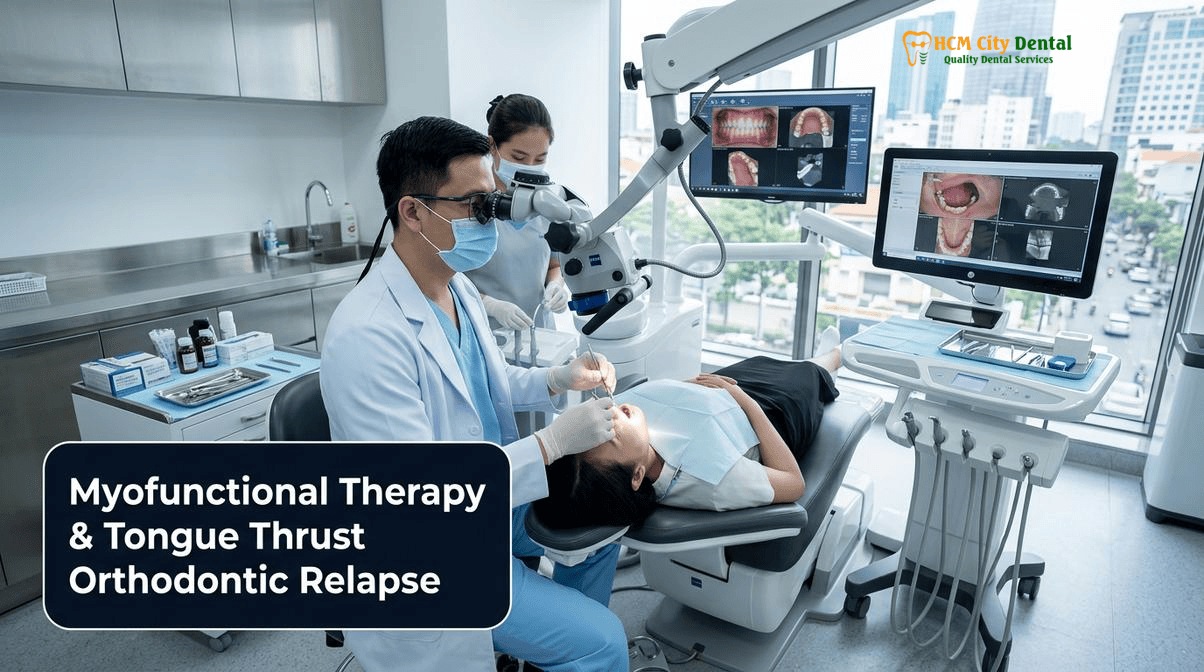
Why 500 Grams of Resting Tongue Force Overpowers 50 Grams of Orthodontic Wire Force: The Root Cause of Open-Bite Relapse
To understand why teeth move after braces are removed, one must first understand the biomechanical principles of the Equilibrium Theory of Tooth Position. Teeth are not rigidly fixed in the jawbone; they are suspended in the periodontal ligament and are constantly subjected to forces from the surrounding environment. According to this well-established orthodontic principle, the position of the teeth is dictated by a delicate balance of muscular forces: the inward pressure of the lips and cheeks (the buccinator mechanism) and the outward pressure of the tongue. When these forces are in harmony, the dental arches remain stable. When they are imbalanced, the teeth will inevitably shift to a new position of equilibrium, regardless of how perfectly they were aligned by an orthodontist.
During a normal, mature swallow, the tip of the tongue rests firmly against the incisive papilla (the small bump of tissue just behind the upper central incisors), and the body of the tongue suctions up against the hard palate. The teeth come together lightly, and the swallow is executed with minimal involvement of the facial muscles. However, in a patient with an orofacial myofunctional disorder (OMD), this pattern is disrupted. The patient exhibits a “reverse swallow” or tongue thrust, where the tongue pushes forward against or between the anterior teeth to create a seal. [1]
The mathematics of this dysfunction are staggering. A typical adult swallows between 500 and 1,000 times a day. During a tongue thrust swallow, the tongue can exert up to 500 grams of forward pressure against the incisors. In stark contrast, modern orthodontic systems—such as Damon Ultima/Q2 passive self-ligating brackets with Copper NiTi archwires or Align Technology Invisalign (utilizing SmartTrack polymer)—rely on light, continuous forces of approximately 50 to 100 grams to move teeth through bone. It is a simple matter of physics: the intermittent, heavy force of a tongue thrust, repeated hundreds of times daily, will always overpower the light forces of orthodontic retention over time. This is the primary mechanism behind anterior open bite relapse after braces Invisalign.
“We frequently see adult patients who are frustrated because their open bite has returned for the second or third time after orthodontic treatment. They often blame their retainers, but the reality is that no piece of plastic can permanently hold back the strongest muscle in the human head. If we do not retrain the tongue to rest on the palate and swallow correctly, relapse is not just a possibility; it is a biomechanical certainty.”
— Dr. Nguyen Van Cuong, DDS (Clinical Director, HCMC Dental Clinic)
Furthermore, the concept of “resting tongue posture on palate mewing science” has gained significant traction in recent years, highlighting what myofunctional therapists have known for decades. The tongue is nature’s palatal expander. When it rests continuously on the roof of the mouth, it provides the necessary outward lateral force to maintain the width of the maxilla. If the tongue rests low in the floor of the mouth—often due to chronic mouth breathing or a physical restriction—the inward pressure of the cheeks dominates, leading to a narrowing of the upper arch, crowding of the teeth, and a high-vaulted palate.
Diagnosing Tongue Thrust (Reverse Swallow), Low Resting Tongue Posture, Mentalis Muscle Strain, and Chronic Mouth Breathing
Diagnosing an orofacial myofunctional disorder requires a comprehensive, multi-disciplinary approach that looks far beyond the alignment of the teeth. At HCMC Dental Clinic, our diagnostic protocol for international patients seeking Specialist Orthodontics, TADs & Adult Palatal Expanders in Ho Chi Minh City involves a detailed clinical examination, functional testing, and advanced 3D imaging to uncover the root causes of muscular dysfunction.
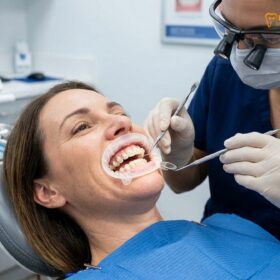
The clinical signs of a tongue thrust and low resting tongue posture are often subtle but highly consistent. During the initial consultation, Dr. Nguyen Van Cuong, DDS, observes the patient’s face at rest and during dynamic function. One of the most common indicators of an immature swallowing pattern is mentalis muscle strain. Because the tongue is thrusting forward rather than suctioning upward, the patient must recruit the muscles of facial expression to create an anterior oral seal. This results in a hyperactive mentalis muscle, often visible as a dimpled, “golf ball” appearance on the chin during swallowing, accompanied by a tightening of the orbicularis oris (the muscle surrounding the lips).
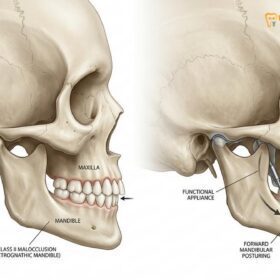
Chronic mouth breathing is another critical diagnostic marker. Humans are obligate nasal breathers by design. When a patient breathes through their mouth—whether due to enlarged adenoids, chronic allergies, a deviated septum, or simply a retained childhood habit—the jaw must drop, and the tongue must rest low in the floor of the mouth to allow air to pass over it. This low posture removes the tongue’s supportive force from the maxilla. Over time, this leads to the classic “long face” syndrome, a narrow V-shaped upper arch, and a retrognathic (recessed) mandible. [2] The connection between mouth breathing narrow maxilla airway orthodontics is profound; a narrow palate directly correlates to a narrow nasal floor, increasing nasal airway resistance and perpetuating the mouth-breathing cycle.
Clinical Case Study: Adult Orthodontic Relapse and Airway Dysfunction
A 32-year-old Australian expat presented to HCMC Dental Clinic with a recurrent 4mm anterior open bite, despite having completed two previous rounds of traditional braces in her teens and early twenties. She reported chronic neck tension, frequent morning headaches, and a history of mouth breathing. A 3D CBCT scan revealed a severely constricted maxillary arch and a narrowed posterior airway space. Clinical functional assessment demonstrated a classic tongue thrust swallow with significant mentalis strain and a low resting tongue posture. Rather than simply prescribing a third round of aligners, Dr. Nguyen Van Cuong, DDS, developed a comprehensive treatment plan integrating Orofacial Myofunctional Therapy (OMT) to retrain her swallowing pattern, followed by Invisalign Comprehensive therapy combined with Orthodontic TADs for posterior molar intrusion. Within 8 months, the open bite was closed, her nasal breathing was restored, and her TMJ tension resolved—achieving a level of stability she had never previously experienced.
To accurately assess the airway and skeletal structures, we utilize high-resolution 3D CBCT (Cone Beam Computed Tomography) scanning. This allows us to visualize the volume of the oropharyngeal airway, the position of the hyoid bone, and the transverse width of the maxilla. By combining these digital diagnostics with a thorough functional assessment of the tongue, lips, and swallowing mechanics, we can develop a targeted myofunctional therapy program that addresses the specific anatomical and neuromuscular deficits of each individual patient.
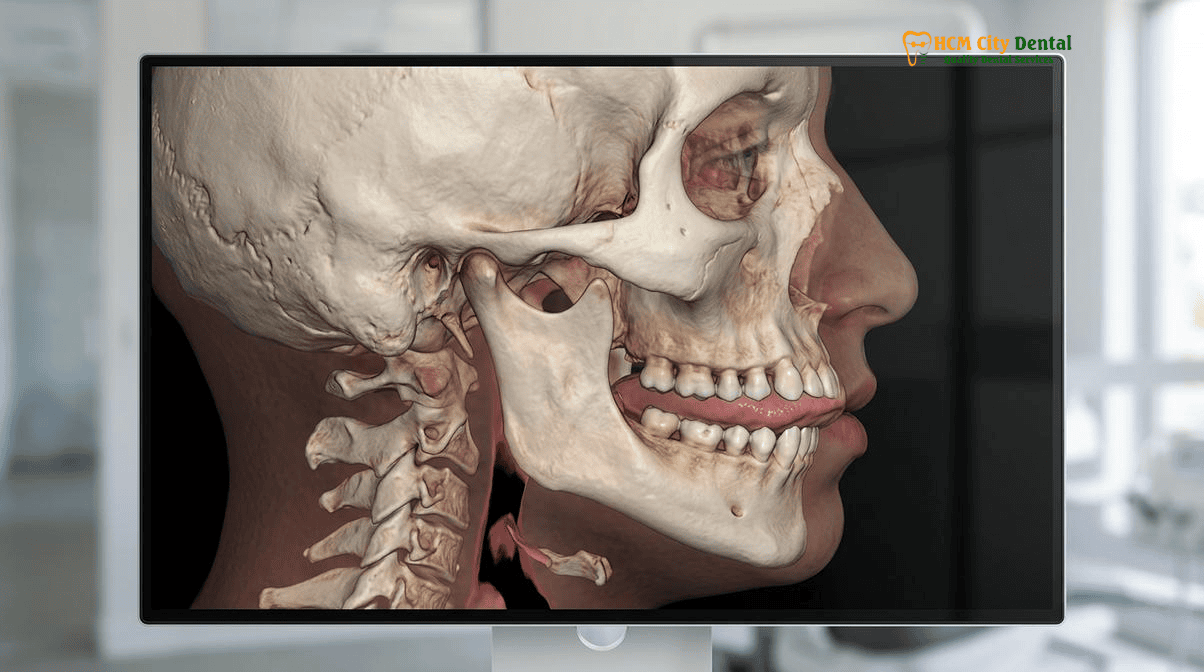
How Restricted Lingual Frenum (Adult Ankyloglossia / Tongue-Tie) Prevents Palatal Tongue Suction and Widening
In many cases of persistent tongue thrust and orthodontic relapse, the inability to maintain proper resting tongue posture is not merely a bad habit; it is a physical impossibility due to a structural tether. The lingual frenum is a band of fascial tissue that connects the underside of the tongue to the floor of the mouth. When this tissue is abnormally short, thick, or tight, it restricts the tongue’s range of motion—a condition known as ankyloglossia, or tongue-tie.
While tongue-ties are frequently discussed in the context of infant breastfeeding difficulties, adult ankyloglossia is a widely underdiagnosed condition that plays a massive role in orofacial myofunctional disorders. If the lingual frenum is restricted, the tongue simply cannot elevate fully to reach the hard palate. [3] Consequently, the patient is physically incapable of achieving the palatal tongue suction required for a mature swallow and stable resting posture. The tongue is forced to remain low in the mouth, resting against the mandibular incisors, which drives the lower jaw forward or causes the lower teeth to crowd, while simultaneously depriving the upper arch of its natural expansive force.
The structural implications of an adult tongue tie extend far beyond the mouth. The tongue is anatomically connected to the hyoid bone and the deep cervical fascia of the neck. When the tongue is tethered to the floor of the mouth, it creates a downward and forward pull on the hyoid bone and the anterior neck structures. To compensate for this tension and maintain an open airway, patients often develop a forward head posture. This chronic postural compensation leads to severe tension in the suprahyoid muscles, the sternocleidomastoid (SCM), and the upper trapezius, frequently manifesting as chronic TMJ disorders, tension headaches, and neck pain.
Addressing a restricted lingual frenum requires a delicate balance of surgical release and neuromuscular re-education. Simply clipping the tissue (a traditional frenotomy) is rarely sufficient for adults, as the deeply ingrained muscle compensations will remain, and the tissue is highly prone to re-attachment. Instead, the modern standard of care involves a functional laser lingual frenuloplasty combined with intensive myofunctional therapy. This approach ensures that the newly released tongue has the strength, coordination, and neural pathways necessary to elevate to the palate and function correctly, breaking the cycle of adult tongue tie laser frenuloplasty myofunctional dysfunction.
Integrating Orofacial Myofunctional Therapy (OMT) Exercises with Invisalign Bite Ramps, TADs, and MARPE Expansion
Treating complex adult malocclusions and preventing relapse requires a synergistic approach that combines the biomechanical control of modern orthodontics with the neuromuscular retraining of Orofacial Myofunctional Therapy. At HCMC Dental Clinic, we have moved far beyond the outdated paradigm of using a tongue crib habit appliance vs myofunctional exercises. Spiky metal tongue cribs are punitive devices that act as physical barricades; they do not teach the tongue where it *should* go, they only punish it for going where it *shouldn’t*. Once the appliance is removed, the brain’s motor cortex has not learned a new swallowing pattern, and the tongue thrust inevitably returns.
Instead, we integrate active OMT exercises with advanced digital orthodontic systems to achieve lasting stability. For patients undergoing treatment with Align Technology Invisalign (utilizing SmartTrack polymer and SmartForce attachments) or Angel Aligner Pro (featuring the 7+3 MasterControl S dual-shell system), we frequently incorporate precision bite ramps into the aligner design. These bite ramps are small, custom-designed protrusions on the lingual surface of the upper anterior aligners. While their primary orthodontic purpose is to disocclude the posterior teeth and aid in deep bite correction, they also serve as an excellent proprioceptive guide for the tongue. Myofunctional therapists use these bite ramps as a tactile target, instructing the patient to find the “spot” just behind the bite ramps to establish proper resting posture.
For patients presenting with severe anterior open bites driven by a hyperactive tongue and posterior maxillary excess, we utilize Orthodontic TADs (Temporary Anchorage Devices): Non-Surgical Gummy Smile, Open Bite & Molar Intrusion in Vietnam. TADs are biocompatible titanium mini-screws placed temporarily into the jawbone (such as the infrazygomatic crest or buccal shelf) to provide absolute anchorage. By applying upward force from the TADs to the posterior teeth, we can actively intrude the molars, allowing the mandible to auto-rotate upward and forward, effectively closing the anterior open bite non-surgically. [4] However, this biomechanical closure will only remain stable if OMT is simultaneously employed to eliminate the forward tongue thrust that created the open bite in the first place.
In cases where chronic mouth breathing and a low tongue posture have resulted in a severely constricted maxilla and high-vaulted palate, orthodontic tooth movement alone is insufficient. We must expand the skeletal base. For adult patients whose midpalatal suture has fused, we employ Non-Surgical Adult MARPE (Miniscrew-Assisted Rapid Palatal Expansion) or MSE (Maxillary Skeletal Expander). By anchoring the expander directly into the palatal bone using 4 to 6 micro-implants, we can achieve true skeletal expansion of the maxilla, widening the nasal floor and dramatically increasing airway volume. As the palate widens, it creates the necessary physical space for the tongue to finally rest in its proper palatal home, making the subsequent myofunctional therapy exercises significantly more effective.
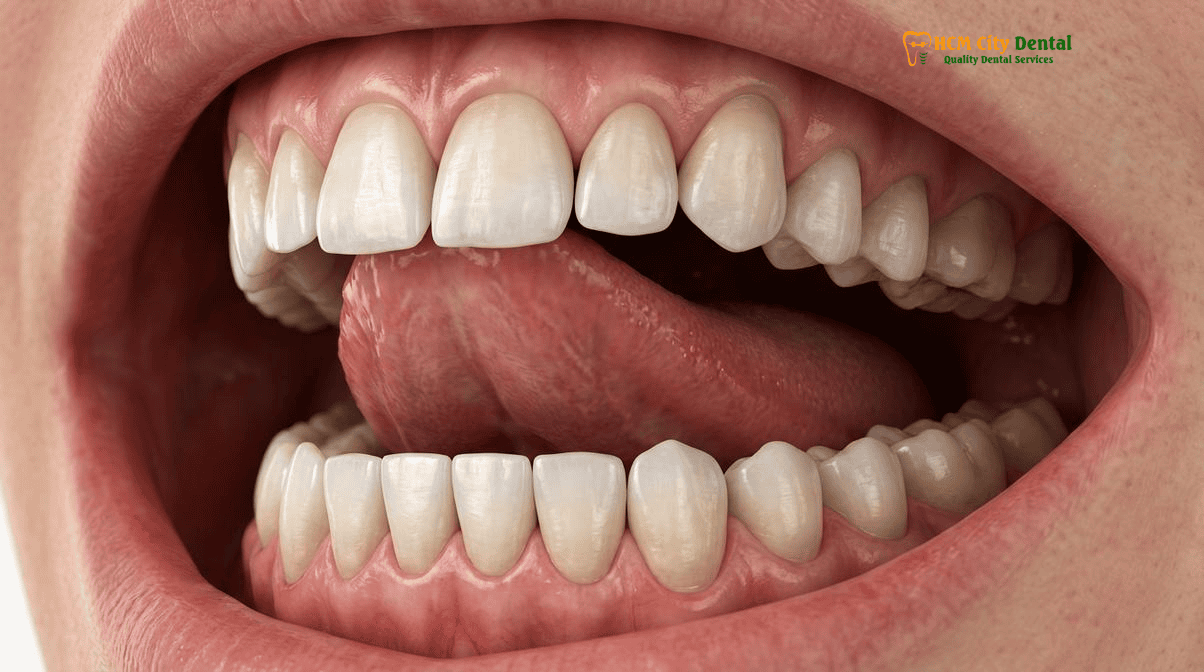
Functional Laser Lingual Frenuloplasty Protocols: Pre-Op and Post-Op Neuromuscular Retraining to Prevent Re-Attachment
When a restricted lingual frenum is diagnosed as the primary barrier to achieving proper tongue posture and swallowing mechanics, a surgical release is indicated. At HCMC Dental Clinic, under the expert care of Dr. Nguyen Van Cuong, DDS (Clinical Director — MOH License 0003265/BL-CCHN), we utilize an advanced Functional Laser Lingual Frenuloplasty protocol. This minimally invasive procedure utilizes a soft-tissue diode laser or an Erbium YAG laser to precisely ablate the restrictive fascial fibers with minimal bleeding, reduced thermal damage, and accelerated healing compared to traditional scalpel surgery.
However, the surgery itself is only one component of the treatment. The success of a functional frenuloplasty is entirely dependent on the patient’s compliance with pre-operative and post-operative Orofacial Myofunctional Therapy. The tongue is a complex muscular hydrostat composed of eight distinct intrinsic and extrinsic muscles. When it has been tethered for decades, these muscles are weak, uncoordinated, and neurologically programmed to function in a restricted state.
Clinical Precaution: The Importance of Pre-Operative Therapy
Performing a lingual frenuloplasty on an adult without at least 4 to 6 weeks of pre-operative myofunctional therapy is highly discouraged. The tongue muscles must be strengthened and toned prior to the release. If the surgery is performed on weak, uncoordinated muscles, the patient will not have the strength to elevate the tongue to the palate post-operatively. This lack of movement allows the raw surgical margins to rest against each other, leading to rapid scar tissue formation and re-attachment of the frenum, often resulting in a restriction that is tighter than the original condition.
Our comprehensive protocol requires patients to master specific OMT exercises before the laser procedure. These include the “4S exercise” (Spot, Salivate, Squeeze, Swallow), targeted tongue clicks to build palatal suction strength, and lateral tongue movements to improve mobility. Immediately following the laser frenuloplasty, active wound management and post-operative OMT begin. Patients are instructed to perform gentle, active stretching exercises every 4 to 6 hours for the first three weeks to ensure the surgical site heals by secondary intention with maximal mobility. As healing progresses, the therapy shifts focus toward integrating the newly acquired range of motion into subconscious, automatic functions: obligate nasal breathing, continuous palatal resting posture, and a mature, palate-driven swallow.
This integrated approach is also highly relevant for patients suffering from Obstructive Sleep Apnea (OSA) and CPAP intolerance. By releasing the tongue-tie and utilizing OMT to tone the genioglossus and pharyngeal muscles, we significantly reduce the collapsibility of the upper airway during sleep. When combined with custom titratable Dorsal-Fin or Herbst Mandibular Advancement Devices (MAD calibrated at 50–70% maximum protrusion), we can provide a highly effective, multi-disciplinary solution for sleep-disordered breathing.
2026 Myofunctional Airway Orthodontics, Tongue-Tie Release & Relapse Correction Fee Schedule at HCMC Dental Clinic (District 1)
At HCMC Dental Clinic, we are committed to providing world-class, evidence-based digital orthodontics and myofunctional therapy at highly accessible price points for our international patients. By booking your consultation and treatment plan online prior to your arrival in Vietnam, you secure our exclusive -40% online booking rates. Below is the Official 2026 Dental Price List & -40% Online Booking Fee Schedule for our advanced orthodontic and relapse correction protocols.
| Orthodontic & Myofunctional Procedure | 2026 Online Booking Fee (USD) | Walk-In / Standard Fee (USD) | VND Equivalent (Online) |
|---|---|---|---|
| Invisalign Go / Lite / Express (up to 14–20 aligners) | $1,615 USD | $2,692 USD | 42,000,000 VND |
| Invisalign Comprehensive (Unlimited aligners) | $2,538 USD | $4,231 USD | 66,000,000 VND |
| Invisalign Vivera Retainer (SmartTrack Polymer) | $308 USD | $513 USD | 8,000,000 VND |
| Essix Clear Retainer (Per Pair) | $97 USD | – | 2,520,000 VND |
| Hawley Wire Retainer (Per Pair) | $115 USD | – | 3,000,000 VND |
| Non-Surgical Adult MARPE / MSE Palatal Expander | $769 – $1,154 USD | – | Variable |
| Orthodontic TAD Mini-Screw (IZC / Buccal Shelf) | $77 – $115 USD / screw | – | Variable |
| Custom Night Guard / Occlusal Splint | $81 – $115 USD | – | Variable |
| 3D CBCT Scan (Airway & Skeletal Analysis) | $18 USD | – | 480,000 VND |
| Surgical Wisdom Tooth Extraction (Piezotome) | $58 – $115 USD / tooth | – | 1,500,000 – 3,000,000 VND |
Note: All fees are based on the fixed exchange rate of $1 USD = 26,000 VND. Treatment plans for complex myofunctional therapy, laser frenuloplasty, and sleep apnea appliances (MADs) are customized based on the patient’s specific anatomical and functional diagnosis following a comprehensive 3D CBCT and clinical evaluation by Dr. Nguyen Van Cuong, DDS.
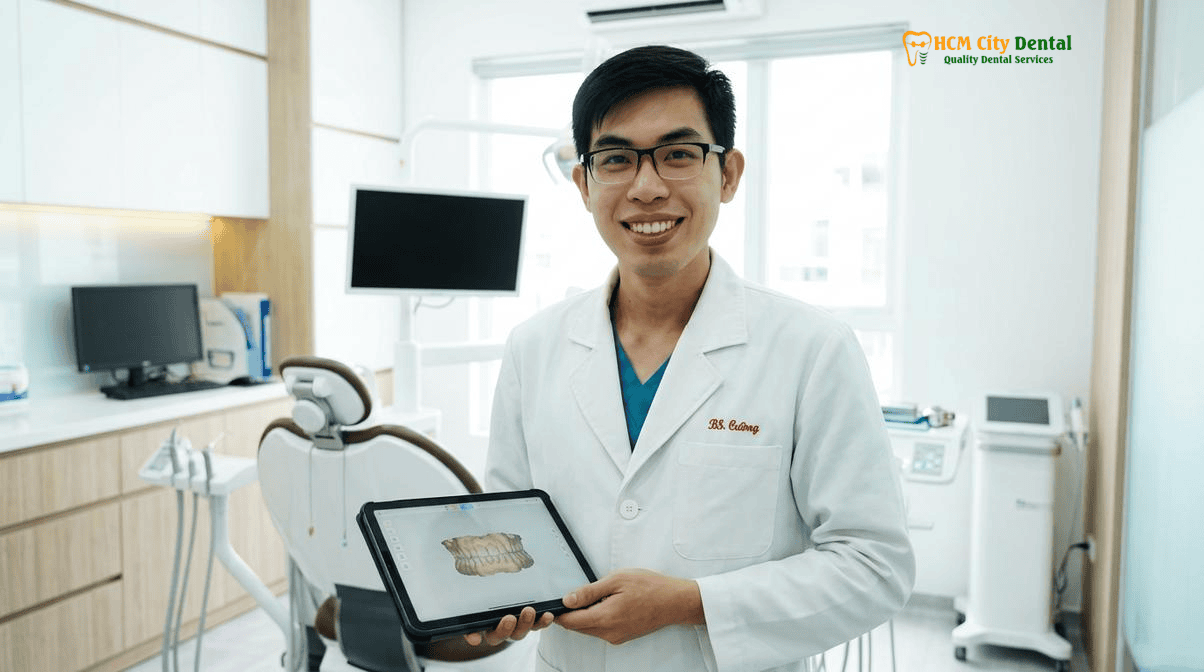
Dr. Cuong’s Orthodontic & Airway Pearl: Closing an anterior open bite with Invisalign or TADs without correcting a low resting tongue posture and reverse tongue-thrust swallow carries a >40% risk of orthodontic relapse within 24 months. Combining aligner mechanics with structured Orofacial Myofunctional Therapy (OMT) and, when indicated, functional laser lingual frenuloplasty permanently stabilizes the palatal vacuum seal.
Frequently Asked Questions
Why did my front teeth separate into an open bite again 2 years after finishing braces or Invisalign?
Orthodontic relapse, particularly the recurrence of an anterior open bite, is rarely a failure of the braces or clear aligners themselves. Instead, it is almost always a failure to address the underlying muscular forces acting upon the teeth. If you have an undiagnosed tongue thrust or a low resting tongue posture, your tongue exerts up to 500 grams of forward pressure against your incisors every time you swallow—which happens 500 to 1,000 times a day. Over a period of two years, this repetitive, heavy muscular force easily overpowers the stabilizing effect of your retainers, pushing the teeth forward and apart. To achieve permanent stability, the muscular habit must be corrected through Orofacial Myofunctional Therapy (OMT) alongside any necessary orthodontic refinement.
Where should the human tongue naturally rest 24 hours a day to keep the upper dental arch stable?
In a healthy, physiologically stable human airway and stomatognathic system, the entire dorsal surface of the tongue should rest firmly against the roof of the mouth (the hard palate), with the tip resting lightly on the incisive papilla—the small bump of tissue just behind the upper central incisors. The tongue should never touch the back of the front teeth. This continuous palatal resting posture acts as nature’s internal retainer, providing outward pressure that counterbalances the inward pressure of the cheeks (the buccinator mechanism). This balance maintains the width of the maxillary arch, supports the midface, and ensures a clear nasal airway.
Can adults retrain a lifelong tongue-thrust swallowing habit without wearing spiky metal tongue cribs?
Yes, absolutely. While traditional orthodontics often relied on punitive habit-breaking appliances like spiky metal tongue cribs or rakes to physically block the tongue, modern evidence-based dentistry recognizes that these devices only manage the symptom temporarily. Once the crib is removed, the habit often returns because the neuromuscular pathway was never actually retrained. Adults can successfully retrain a lifelong tongue thrust through a structured program of Orofacial Myofunctional Therapy (OMT). By performing specific, targeted exercises daily, adults can build new neural pathways and muscle memory, transitioning from an infantile reverse swallow to a mature, palate-driven swallow without the need for uncomfortable metal appliances.
How do you diagnose whether a posterior tongue-tie is causing my TMJ neck tension and orthodontic relapse?
Diagnosing a posterior tongue-tie (adult ankyloglossia) requires a comprehensive functional and anatomical assessment. At HCMC Dental Clinic, Dr. Nguyen Van Cuong, DDS, utilizes a multi-step protocol. First, we measure your maximum interincisal opening (MIO) with the tongue resting on the floor of the mouth, and then again with the tongue tip held to the incisive papilla. A significant reduction in opening (greater than 50%) indicates severe lingual restriction. We also palpate the floor of the mouth to assess fascial tension, evaluate the presence of a mucosal or submucosal tether, and analyze 3D CBCT scans to check airway volume and hyoid bone position. Chronic TMJ pain and neck tension often result from the suprahyoid muscles overcompensating for a restricted tongue, pulling the head forward and straining the cervical spine [5].
Can international patients combine Invisalign relapse refinement in Ho Chi Minh City with remote myofunctional coaching?
Yes. Many international patients and dental travelers visit HCMC Dental Clinic in District 1 to initiate their orthodontic relapse correction using advanced systems like Align Technology Invisalign or Angel Aligner Pro. During your visit to Ho Chi Minh City, we perform the comprehensive 3D CBCT diagnostics, digital intraoral scanning, and any necessary clinical procedures, such as a functional laser lingual frenuloplasty or the placement of orthodontic TADs. Once your aligners are delivered and your initial OMT instruction is complete, you can return to your home country. We then provide structured, remote myofunctional coaching via telehealth consultations, allowing you to progress through your neuromuscular retraining exercises while your clear aligners gently guide your teeth back into perfect occlusion.
References
- Smithpeter, J., & Covell, D. (2010). Relapse of anterior open bites treated with orthodontic appliances with and without orofacial myofunctional therapy. American Journal of Orthodontics and Dentofacial Orthopedics, 137(5), 605-614.
- Guilleminault, C., & Huang, Y. S. (2018). From oral facial dysfunction to sleep-disordered breathing. Sleep Medicine Clinics, 13(1), 1-8.
- Zaghi, S., Valcu-Pinkerton, S., Jabara, M., Norouz-Knutsen, L., Govardhan, C., Moeller, J., … & Yoon, A. (2019). Lingual frenuloplasty with myofunctional therapy: Exploring safety and efficacy in 348 cases. Laryngoscope Investigative Otolaryngology, 4(5), 489-496.
- Proffit, W. R. (1978). Equilibrium theory revisited: factors influencing position of the teeth. The Angle Orthodontist, 48(3), 175-186.
- Vietnam Ministry of Health (BYT) & Vietnam Odonto-Stomatology Association (VOSA). National Clinical Guidelines on Specialist Dental Care, Biomaterial Traceability & EN 13060 Class B Infection Control. (2024).