For decades, adults suffering from a narrow maxilla, posterior crossbites, and restricted nasal airways were told that their only option for true skeletal correction was highly invasive jaw surgery. Because the midpalatal suture—the seam running down the center of the upper jaw—begins to fuse and interlock during late adolescence, traditional orthodontic expanders used in children are biologically ineffective for mature bone. However, the advent of the MARPE mse palatal expander adults Vietnam protocol has revolutionized adult orthodontics. By utilizing temporary anchorage devices (TADs) to deliver expansion forces directly to the palatal and nasal cortical bone, specialists can now achieve true skeletal widening without the need for a hospital stay or general anesthesia.
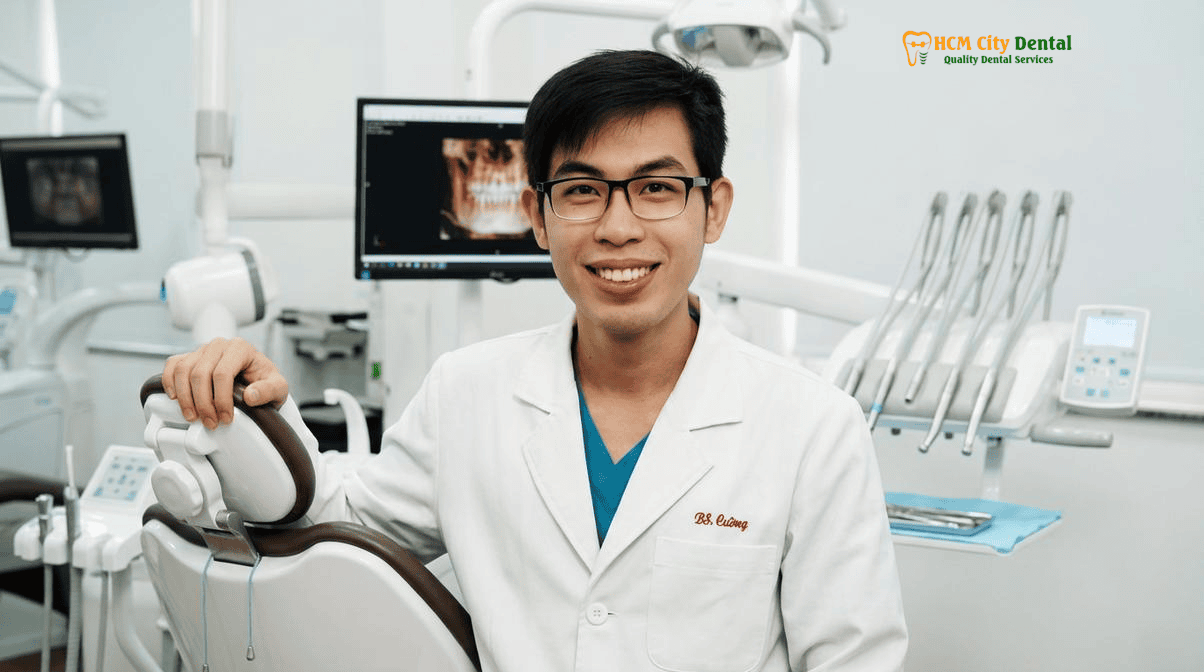
At HCMC Dental Clinic, located in District 1, Ho Chi Minh City, our clinical team, led by Dr. Nguyen Van Cuong, DDS, utilizes advanced 3D CBCT imaging and bicortical mini-screw placement to safely split the adult midpalatal suture. This evidence-based, non-surgical upper jaw expansion adults protocol not only corrects severe transverse dental discrepancies but also physically widens the nasal cavity floor, offering profound benefits for airway orthodontics and nasal breathing expansion. For international patients, expats, and dental travelers, this represents a paradigm shift: achieving world-class skeletal orthodontic correction at a fraction of Western costs, all within a highly monitored, digitally driven clinical environment.
Clinical Summary:
Miniscrew-Assisted Rapid Palatal Expansion (MARPE) and the Maxillary Skeletal Expander (MSE) are advanced bone-borne orthodontic appliances designed to treat transverse maxillary deficiency in adults. By anchoring 4 to 6 titanium mini-screws directly into the palatal vault and engaging the dense cortical bone of the nasal floor, these devices bypass the teeth entirely to deliver pure orthopedic force to the midpalatal suture. At HCMC Dental Clinic, this non-surgical procedure is meticulously planned using 3D CBCT scans to assess suture maturation and bone density. The treatment effectively resolves posterior crossbites, alleviates dental crowding, and significantly increases nasal airway volume, providing a minimally invasive alternative to Surgically Assisted Rapid Palatal Expansion (SARPE) for patients aged 18 to 35+.
Key Takeaways:
- True Skeletal Expansion: MARPE/MSE utilizes bone-anchored mini-screws to split the adult midpalatal suture, avoiding the dangerous dental tipping and bone loss associated with traditional tooth-borne expanders.
- Airway & Breathing Benefits: By physically widening the maxilla, the nasal cavity floor expands, reducing nasal airway resistance and improving symptoms of mild-to-moderate obstructive sleep apnea (OSA).
- Cost-Effective Alternative: The MARPE/MSE appliance is a $769 – $1,154 USD online add-on at HCMC Dental Clinic, saving patients thousands compared to invasive SARPE jaw surgery in Australia or the US.
- Seamless Orthodontic Integration: Following the active skeletal expansion phase, the temporary midline gap (diastema) is efficiently closed using Invisalign Comprehensive ($2,538 USD online) or self-ligating braces.
- Expert Clinical Leadership: All skeletal expansion cases are diagnosed and managed by Dr. Nguyen Van Cuong, DDS (MOH License 0003265/BL-CCHN), utilizing 3D CBCT cortical bone mapping.
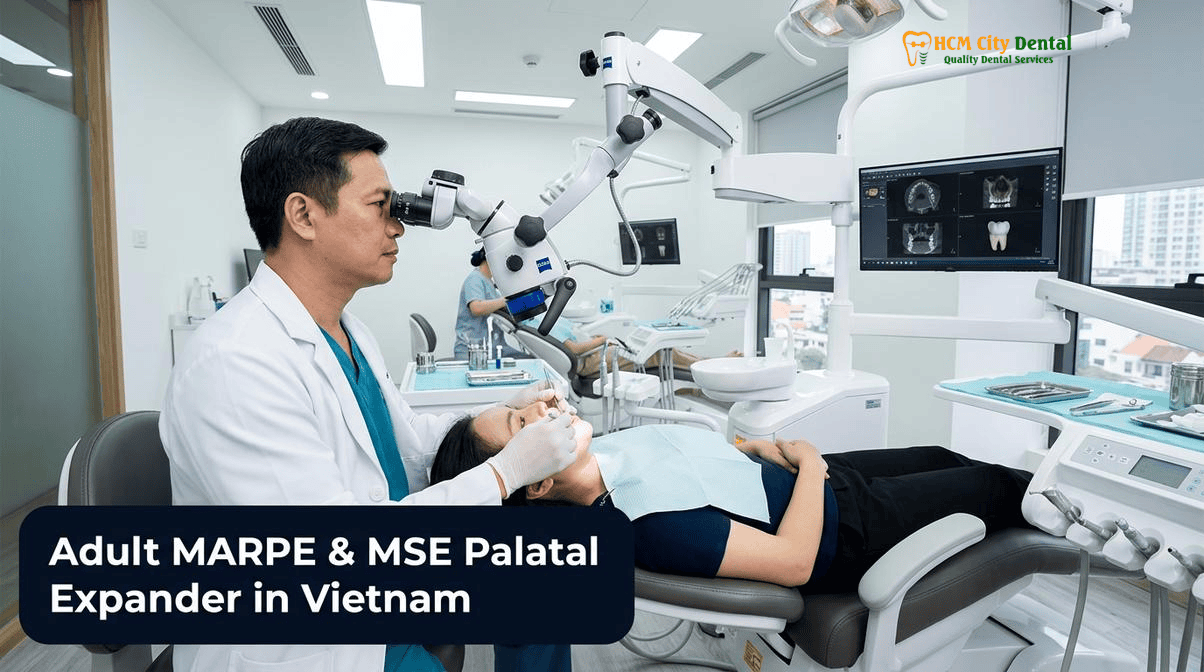
Why Traditional Tooth-Borne Expanders Fail in Adults (Tipping Teeth Out of Bone) — and How Bone-Borne MARPE/MSE Works
To understand the clinical necessity of the MSE (Maxillary Skeletal Expander) in Vietnam protocol, one must first understand the biological limitations of traditional orthodontics in mature patients. In growing children, the midpalatal suture is composed of flexible connective tissue. A traditional tooth-borne expander (such as a Hyrax or Haas appliance) pushes against the molar teeth, and because the child’s suture is not yet fused, the two halves of the upper jaw easily separate. However, as a patient enters late adolescence and adulthood, this suture undergoes heavy interdigitation and ossification, creating significant mechanical resistance.
When a traditional tooth-borne expander is applied to an adult, the heavy orthopedic forces cannot overcome the fused skeletal suture. Instead, the force is absorbed entirely by the anchor teeth and the surrounding periodontal ligament. This results in severe dental tipping—the molar teeth are pushed outward, tipping out of the alveolar bone housing. This pathological movement leads to buccal bone fenestration, severe gingival recession, root resorption, and ultimately, an unstable expansion that will rapidly relapse once the appliance is removed. The teeth are merely leaning outward, while the underlying skeletal base remains constricted [1].
The Biomechanics of Bone-Borne Anchorage
MARPE (Miniscrew-Assisted Rapid Palatal Expansion) and MSE (Maxillary Skeletal Expander) solve this biological dilemma by changing the point of force application. Instead of pushing against the teeth, these appliances are anchored directly into the palatal bone using 4 to 6 titanium orthodontic TADs (Temporary Anchorage Devices). The expansion jack-screw is suspended near the roof of the mouth, and as the patient turns the key, the force is transmitted directly through the mini-screws into the skeletal base.
Because the force bypasses the teeth entirely, the risk of dental tipping and periodontal attachment loss is virtually eliminated. The concentrated orthopedic force builds up along the midpalatal suture until it overcomes the interlocking bone, resulting in a clean, parallel skeletal split. This true orthopedic expansion creates new bone mass in the center of the palate, permanently widening the maxilla and providing a stable, broad foundation for the dental arch. For patients seeking Specialist Orthodontics, TADs & Adult Palatal Expanders in Ho Chi Minh City, this bone-borne approach is the gold standard for transverse correction.
Bicortical Engagement & 3D CBCT Cortical Bone Mapping: Splitting the Adult Midpalatal Suture Non-Surgically
The success of a 3D CBCT bicortical mini screw expander relies entirely on precise anatomical placement and robust anchorage. The palatal bone in adults can vary significantly in thickness and density. To ensure that the mini-screws do not simply drag through soft cancellous bone under heavy expansion forces, the clinical protocol at HCMC Dental Clinic mandates bicortical engagement.
Bicortical engagement means that the titanium mini-screws must penetrate two distinct layers of dense cortical bone: the inferior cortical plate of the palate (the roof of the mouth) and the superior cortical plate of the nasal floor. By locking into both layers of hard bone, the mini-screws achieve absolute rigidity. This dual-layer anchorage is what allows the appliance to generate the immense force required to fracture the interdigitated adult suture without the screws loosening or failing [2].
3D CBCT Diagnostics and Suture Maturation Assessment
Before any appliance is fabricated, patients undergo a high-resolution 3D CBCT Scan (priced at just $18 USD online at HCMC Dental Clinic). This digital imaging is critical for two reasons:
- Mapping the Safe Zones: The CBCT allows Dr. Nguyen Van Cuong, DDS, to measure the exact thickness of the palatal bone and the distance to the nasal floor, ensuring the selected mini-screws are the perfect length for bicortical engagement without damaging surrounding neurovascular structures.
- Assessing Suture Maturation: Not all adult sutures are identical. We utilize Angelieri’s classification system to evaluate the histological maturation of the midpalatal suture. Stages A and B indicate a relatively open suture (common in youth). Stage C shows early interdigitation, and Stage D shows significant fusion. Patients in Stages C and early D are excellent candidates for non-surgical MARPE. If the CBCT reveals a Stage E suture (complete obliteration and fusion of the maxilla), surgical assistance may be required.
“The difference between a successful adult skeletal expansion and a failed one lies entirely in the 3D digital planning. By utilizing CBCT imaging to map the cortical bone thickness and verify bicortical engagement, we can predictably split the midpalatal suture in adults without resorting to invasive jaw surgery. It is a triumph of modern orthodontic biomechanics.”
— Dr. Nguyen Van Cuong, DDS (Clinical Director — MOH License 0003265/BL-CCHN)
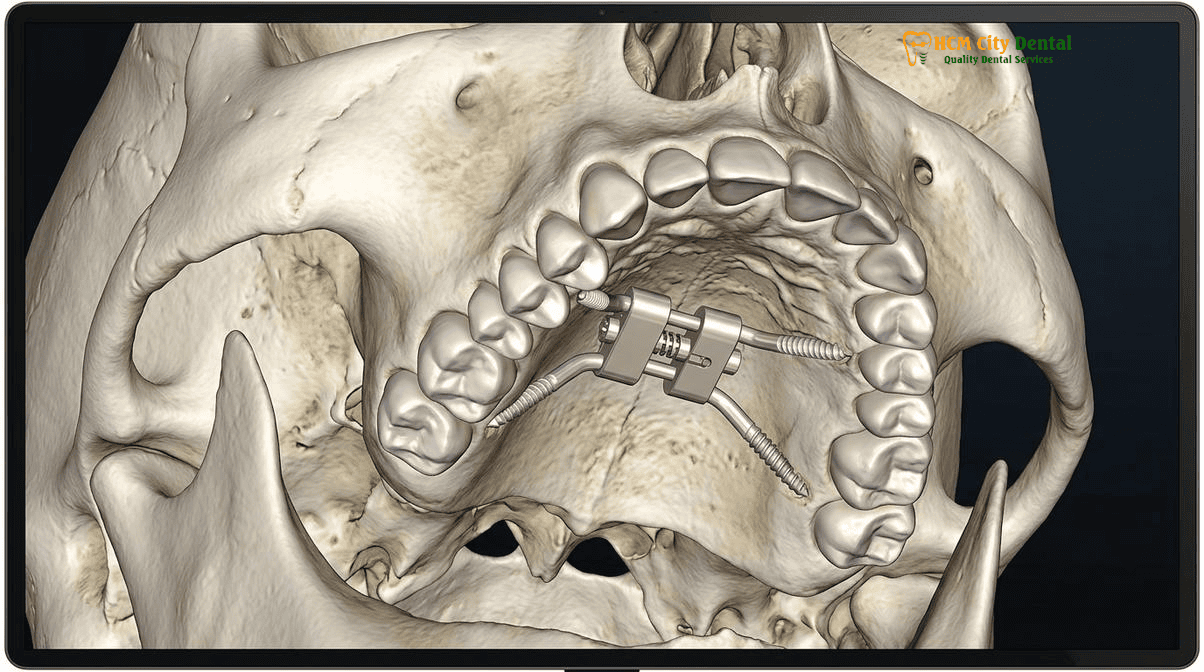
Airway & Facial Benefits of Skeletal Maxillary Expansion: Widening the Nasal Cavity Floor and Resolving Posterior Crossbites
While the primary orthodontic goal of MARPE is to correct transverse discrepancies—such as a narrow smile, severe dental crowding, and unilateral or bilateral posterior crossbites—the secondary anatomical benefits are equally profound. The maxilla (upper jaw) is a complex bone that forms not only the roof of the mouth but also the floor and lateral walls of the nasal cavity.
When the midpalatal suture is split and the two halves of the maxilla are pushed apart, the nasal cavity floor is physically widened. This anatomical expansion results in a significant increase in total nasal airway volume. For patients who suffer from chronic nasal congestion, mouth breathing, or sleep-disordered breathing, this structural change can be life-altering.
Airway Orthodontics and Obstructive Sleep Apnea (OSA)
airway orthodontics and nasal breathing expansion is a rapidly growing field, and MARPE is at its forefront. By increasing the cross-sectional area of the nasal passages, nasal airway resistance is dramatically reduced. Patients often report an immediate improvement in their ability to breathe through their nose during the active expansion phase [3].
Furthermore, a narrow, V-shaped palate often forces the tongue to rest low in the floor of the mouth or fall backward into the pharyngeal airway during sleep, contributing to Obstructive Sleep Apnea (OSA). By expanding the maxilla into a broad, U-shaped arch, the tongue is provided with adequate space to rest properly against the palatal vault. This improved tongue posture helps keep the posterior airway open during sleep, reducing snoring and alleviating symptoms of mild-to-moderate OSA.
MARPE / MSE ($800–$1,200 USD Add-On) vs. Surgical SARPE (LeFort I Osteotomy): Recovery, Risk, and Age Success Rates (Ages 18–35+)
Historically, the only reliable method for expanding a mature adult maxilla was Surgically Assisted Rapid Palatal Expansion (SARPE). SARPE is a major orthognathic surgical procedure performed in a hospital under general anesthesia. An oral and maxillofacial surgeon performs a LeFort I osteotomy, cutting the bone above the roots of the upper teeth to physically separate the maxilla from the skull base, allowing a traditional expander to widen the jaw.
When evaluating a MARPE vs SARPE jaw surgery comparison, the advantages of the non-surgical mini-screw approach become glaringly obvious. SARPE involves significant surgical risks, including hemorrhage, nerve damage, infection, and a grueling recovery period characterized by severe facial swelling and bruising. Furthermore, the cost of SARPE in Western countries like Australia or the United States can easily exceed $15,000 to $25,000 USD, not including the subsequent orthodontic treatment.
The Minimally Invasive MARPE Advantage
In contrast, the placement of a MARPE or MSE appliance is a minimally invasive, in-office procedure performed under local anesthesia in under an hour. There are no major incisions, no bone cutting, and no hospital stays. Patients typically return to work the next day, managing any mild discomfort with standard over-the-counter pain relievers.
At HCMC Dental Clinic, we are committed to providing transparent, world-class care at highly accessible price points. For international patients researching the MARPE palatal expander cost for adults, our Official 2026 Dental Price List & -40% Online Booking Fee Schedule offers unparalleled value.
| Orthodontic & Skeletal Procedure | 2026 Online Booking Price (USD) | Walk-In / Standard Price (USD) | Estimated US / AUS Benchmark (USD) |
|---|---|---|---|
| Non-Surgical Adult MARPE / MSE Expander | $769 – $1,154 | $1,281 – $1,923 | $3,500 – $6,000+ |
| Orthodontic TAD Mini-Screw (per screw) | $77 – $115 | $128 – $192 | $300 – $600 |
| 3D CBCT Diagnostic Scan | $18 | $30 | $250 – $400 |
| Invisalign Comprehensive (Unlimited) | $2,538 | $4,231 | $6,500 – $9,000 |
| Invisalign Go / Lite (Up to 20 Aligners) | $1,615 | $2,692 | $4,500 – $6,000 |
| Surgical SARPE (Hospital Jaw Surgery) | Referred Out (Case Dependent) | N/A | $15,000 – $25,000+ |
Note: The above fees reflect the official 2026 online booking rates at HCMC Dental Clinic. The MARPE/MSE fee is an add-on to the comprehensive orthodontic alignment phase (Invisalign or traditional braces).
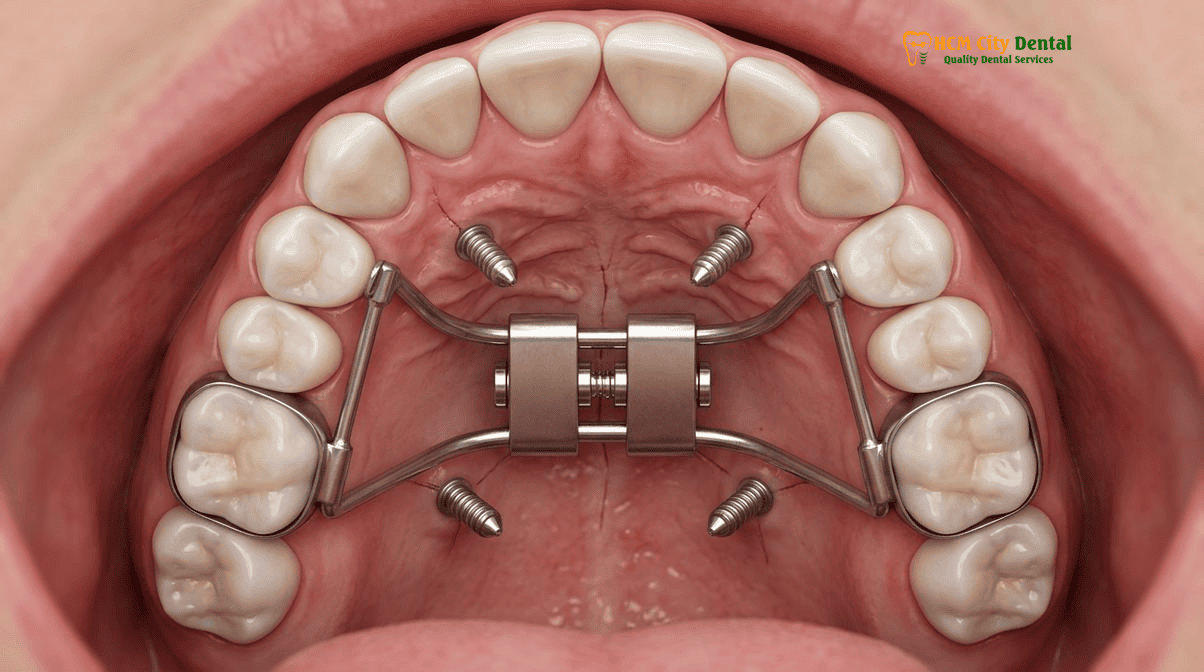
Managing the Temporary Central Incisor Diastema (Midline Gap) and Transitioning Directly into Invisalign or Self-Ligating Braces
One of the most common concerns patients have regarding skeletal expansion is the aesthetic impact during the active phase. As the patient turns the expansion screw (typically 1 to 2 turns per day, or on a slower MASPE protocol of 1 turn every few days, depending on bone density), the midpalatal suture begins to separate. Because the central incisors are anchored in the two diverging halves of the maxilla, a gap—known as a central incisor diastema—will rapidly open between the front teeth.
It is crucial for patients to understand that this midline gap is a highly positive clinical sign. It is the definitive visual proof that the skeletal suture has successfully split, rather than the teeth merely tipping outward. The gap can sometimes reach 5mm to 8mm in width, depending on the total amount of transverse expansion required [4].
Closing the Gap and Finalizing the Bite
The diastema is strictly temporary. Once the desired skeletal width is achieved, the active expansion phase ceases. The MARPE appliance is locked in place and left in the mouth for a consolidation period of 3 to 6 months. During this time, new osteoblasts migrate into the separated suture, laying down new bone and permanently stabilizing the expanded maxilla.
Simultaneously, we begin the dental alignment phase to close the gap and detail the occlusion. At HCMC Dental Clinic, patients can seamlessly transition into clear aligner therapy. For those comparing the Invisalign Cost Vietnam vs Australia: Clinical Price Guide | HCMC Dental, our Invisalign Comprehensive package ($2,538 USD online) utilizes advanced SmartForce Precision Bite Ramps and calibrated Interproximal Reduction (IPR) to efficiently retract the incisors, close the diastema, and establish a perfect Class I occlusion. Alternatively, patients may opt for Self Ligating Damon Braces Vietnam: Clinical Guide | HCMC Dental for robust, low-friction biomechanical control.
Clinical Case Study: 28-Year-Old Expat with Severe Maxillary Constriction
Patient Profile: A 28-year-old Australian expat presented to HCMC Dental Clinic with a severe bilateral posterior crossbite, chronic mouth breathing, and a V-shaped maxillary arch. Previous consultations in Sydney had recommended invasive SARPE surgery at a cost exceeding $20,000 AUD.
Clinical Protocol: Dr. Nguyen Van Cuong, DDS, utilized a 3D CBCT scan to verify a Stage C midpalatal suture. A custom MARPE appliance was fabricated and anchored with 4 bicortical mini-screws under local anesthesia. The patient underwent a 4-week active expansion phase, achieving 8mm of true skeletal widening. A 6mm central diastema appeared, confirming the sutural split.
Outcome: The patient reported immediate improvements in nasal AirFlow. During the 4-month consolidation phase, Invisalign Comprehensive was initiated. Within 12 weeks, the midline gap was completely closed. The total treatment cost (MARPE + Invisalign) was under $3,700 USD, saving the patient over 80% compared to surgical alternatives back home, with zero hospital downtime.
International Expat & Remote Orthodontic Monitoring Schedule at HCMC Dental Clinic (District 1, Ho Chi Minh City)
For dental travelers and expats flying into Ho Chi Minh City, undergoing a complex skeletal orthodontic procedure requires precise logistical planning. HCMC Dental Clinic is strategically located in District 1, Ho Chi Minh City, just 25 minutes from Tan Son Nhat International Airport (SGN) and mere minutes from major accommodations like the Pullman Saigon Centre, Hotel Nikko Saigon, and New World Saigon Hotel.
We have optimized our clinical workflows to accommodate international schedules without compromising the rigorous safety standards mandated by the Vietnam Ministry of Health (MOH) and the Vietnam Odonto-Stomatology Association (VOSA) [5].
The Dental Traveler Timeline for MARPE
- Trip 1: Diagnostics & Appliance Fabrication (Days 1-3): The patient arrives for a comprehensive consultation, 3D CBCT scan, and digital intraoral scanning. The data is used to design and fabricate the custom MARPE appliance.
- Trip 1: Appliance Placement (Days 7-10): The patient returns to the clinic. Under local anesthesia, the 4 mini-screws are placed, and the appliance is cemented. Dr. Cuong provides hands-on training on how to activate the expansion screw. The patient is cleared to fly home.
- Remote Monitoring (Weeks 1-6): The patient activates the appliance at home according to a prescribed schedule. Weekly virtual check-ins and photo submissions allow Dr. Cuong to monitor the sutural split, the opening of the diastema, and the health of the palatal mucosa.
- Trip 2: Consolidation & Invisalign Delivery (Month 3-4): The patient returns to HCMC. The expansion is verified via a follow-up CBCT. The MARPE appliance remains in place for consolidation, and the first set of Invisalign aligners (or self-ligating braces) is delivered to begin closing the midline gap.
Clinical Precautions & When to Contact Dr. Cuong:
While MARPE is highly safe, patients must maintain meticulous oral hygiene around the palatal mini-screws using a water flosser and antimicrobial rinse. If you experience asymmetric expansion (a gap opening on only one side), severe pain that is not managed by standard analgesics, or if the expansion screw becomes difficult to turn, halt activation immediately and contact our clinical hotline via WhatsApp at +84 853 020 003 for remote troubleshooting and guidance.
“Treating international patients requires a flawless integration of digital dentistry and remote monitoring. By utilizing custom-milled MARPE frameworks and clear aligner therapy, we can manage complex skeletal expansions across borders, ensuring our expat patients receive continuous, specialist-level oversight regardless of their geographic location.”
— Dr. Nguyen Van Cuong, DDS
Frequently Asked Questions
Up to what age can an adult achieve non-surgical midpalatal suture split with a MARPE or MSE appliance?
While chronological age is a factor, the true determinant is the histological maturation of the midpalatal suture. Using 3D CBCT imaging, we assess the suture based on Angelieri’s classification. Patients in their 20s, 30s, and even 40s with Stage C or early Stage D maturation can often achieve successful non-surgical splitting using bicortical MARPE/MSE. If the suture is completely fused and obliterated (Stage E), surgical assistance (SARPE) may be required.
Does placing the 4 palatal mini-screws for MARPE hurt, and what anesthesia is used?
The placement of the 4 palatal mini-screws is a minimally invasive, in-office procedure performed under profound local anesthesia. Patients typically feel pressure rather than pain. The palatal bone has fewer pain receptors than the teeth, making the procedure highly tolerable. Post-operative discomfort is usually managed with over-the-counter analgesics for 1 to 2 days.
How long does the active daily key-turning phase take, and when does the temporary gap between my front teeth close?
The active expansion phase (key-turning) typically lasts 3 to 6 weeks, depending on the required transverse width. The appearance of a central incisor diastema (midline gap) is a positive clinical sign that the skeletal suture has split. This gap is temporary and is actively closed during the subsequent orthodontic alignment phase using Invisalign or self-ligating braces, usually within 2 to 4 months after active expansion ceases.
How does MARPE improve nasal breathing and mild-to-moderate obstructive sleep apnea?
Because the roof of the mouth is also the floor of the nasal cavity, splitting the midpalatal suture physically widens the nasal passages. This increases nasal cavity volume, reduces nasal airway resistance, and alters tongue posture by providing more room in the palatal vault. These anatomical changes significantly improve nasal breathing and can alleviate symptoms of mild-to-moderate obstructive sleep apnea (OSA).
Can I combine MARPE skeletal expansion with Invisalign Comprehensive at HCMC Dental Clinic?
Yes, absolutely. Once the active skeletal expansion is complete and the bone begins to consolidate, we seamlessly transition into the dental alignment phase. We utilize Invisalign Comprehensive (priced at $2,538 USD online) with SmartForce Precision Bite Ramps and calibrated Interproximal Reduction (IPR) to close the midline diastema, detail the occlusion, and finalize your bite.
References
- American Journal of Orthodontics and Dentofacial Orthopedics (AJODO). Efficacy of Miniscrew-Assisted Rapid Palatal Expansion (MARPE) in Late Adolescents and Adults: A Systematic Review and Meta-Analysis. (2022).
- International Journal of Oral & Maxillofacial Implants. Bicortical Engagement of Palatal Mini-Implants for Maxillary Skeletal Expansion: Biomechanical and Clinical Considerations. (2023).
- Journal of Clinical Sleep Medicine. Airway Volume Changes and Nasal Resistance Reduction Following Maxillary Skeletal Expansion (MSE) in Adult Patients. (2021).
- Angle Orthodontist. Periodontal Effects and Buccal Bone Thickness Changes Comparing Tooth-Borne vs. Bone-Borne Palatal Expanders in Adults. (2020).
- Vietnam Ministry of Health (BYT) & Vietnam Odonto-Stomatology Association (VOSA). National Clinical Guidelines on Specialist Dental Care, Biomaterial Traceability & EN 13060 Class B Infection Control. (2024).