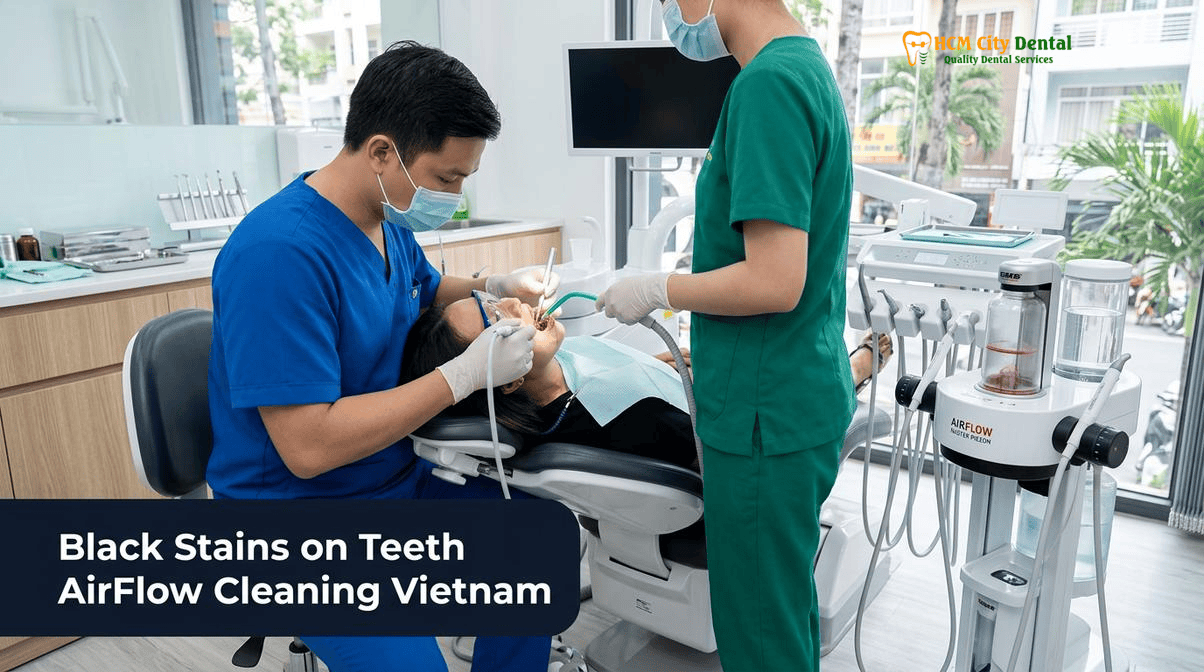
For many international patients and dental travelers, the sudden appearance of dark, stubborn lines along the gumline can be a source of immense aesthetic anxiety. These discolorations, commonly referred to as black stains on teeth, are notoriously resistant to standard at-home brushing and flossing. When combined with the natural, intrinsic yellowing of the underlying dentin that occurs over time, the overall brightness and vitality of a smile can be severely compromised. Fortunately, modern preventive dentistry has evolved far beyond the aggressive, uncomfortable metal scraping of the past. For patients seeking the highest standard of black stains on teeth airflow cleaning, Vietnam offers world-class solutions at a fraction of Western costs. At HCMC Dental Clinic in District 1, Ho Chi Minh City, we utilize the genuine Swiss EMS AirFlow Prophylaxis Master system combined with advanced Philips Zoom laser whitening to safely eradicate both extrinsic chromogenic stains and deep intrinsic yellowing in a single, comfortable visit.
Understanding the exact biochemical nature of these stains is the first step toward effective eradication. Unlike standard yellow plaque, black tartar and chromogenic stains are deeply embedded within the biofilm matrix and chemically bonded to the pellicle layer of the enamel. Attempting to scrub them away with highly abrasive whitening toothpastes or DIY charcoal powders inevitably leads to irreversible micro-scratches on the enamel surface, which paradoxically makes the teeth appear even more yellow as the underlying dentin is exposed. This comprehensive clinical guide, authored by the specialists at HCMC Dental Clinic, details the etiology of chromogenic staining, the superior physics of Guided Biofilm Therapy (GBT), and the strict medical safety protocols we employ to protect your natural enamel and delicate porcelain restorations.
Clinical Summary:
Extrinsic black stains on teeth are primarily caused by chromogenic bacteria (such as Actinomyces) reacting with iron in saliva to form dark ferric sulfide deposits along the cervical margins. Traditional ultrasonic scaling can be abrasive and uncomfortable for removing these specific stains. HCMC Dental Clinic utilizes the Swiss EMS AirFlow system—a minimally invasive technology using 14-micron erythritol powder and warm water—to gently eradicate biofilm and black stains without touching the enamel. When sequenced with Philips Zoom in-office laser whitening, patients can achieve complete removal of extrinsic black stains and a multi-shade improvement in intrinsic yellowing in a single 60-minute appointment, overseen by Dr. Nguyen Van Cuong, DDS.
Key Takeaways:
- Etiology of Black Stains: Caused by a biochemical reaction between chromogenic bacteria and iron/tannins, not necessarily poor hygiene or active tooth decay.
- The Danger of Abrasives: Whitening toothpastes with high Relative Dentin Abrasivity (RDA) cannot remove these stains and will permanently scratch enamel.
- Swiss EMS AirFlow Technology: Uses a pain-free, non-contact stream of warm water and ultra-fine erythritol powder to safely blast away stains and biofilm.
- Combined Treatment Protocol: AirFlow stain removal ($58 USD) followed immediately by Philips Zoom Laser Whitening ($108 USD) provides comprehensive aesthetic rejuvenation.
- Veneer & Implant Safety: AirFlow is 100% safe for the delicate margins of IPS E.max veneers, zirconia crowns, and titanium implant abutments.
- Clinical Leadership: All protocols are directed by Dr. Nguyen Van Cuong, DDS (MOH License 0003265/BL-CCHN) at our District 1 clinical hub.
Why Do Black Tartar Lines and Chromogenic Bacterial Stains Form Along the Gumline?
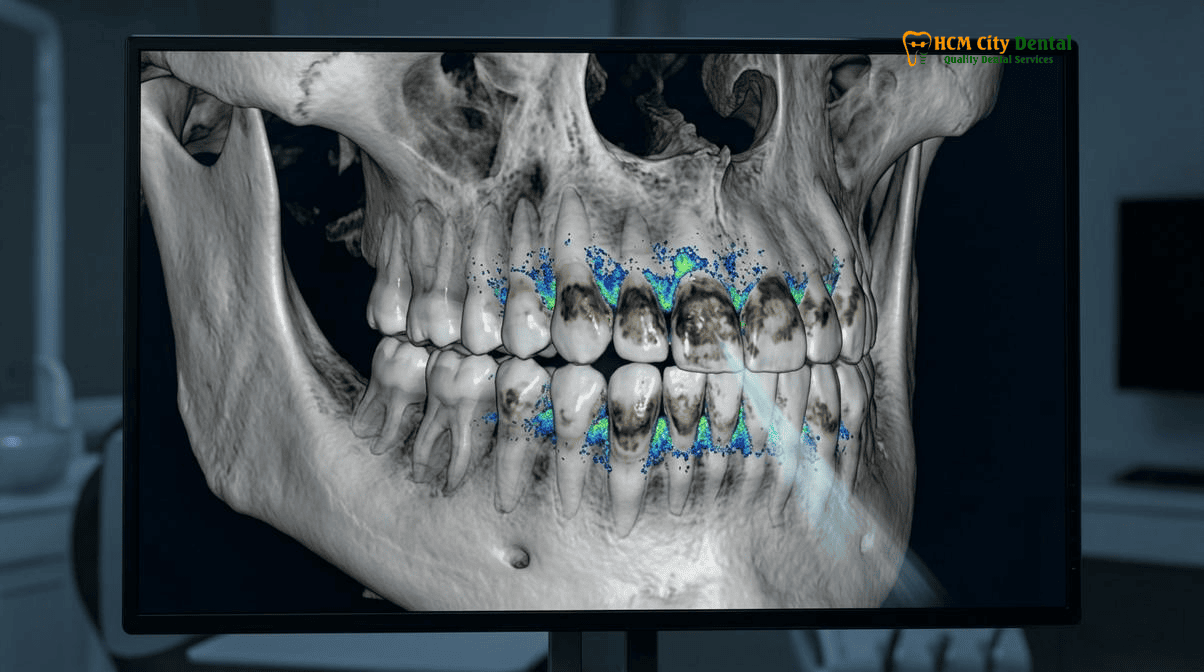
To effectively treat dental discoloration, it is crucial to differentiate between intrinsic yellowing (which occurs inside the tooth structure) and extrinsic staining (which accumulates on the outside). Among extrinsic stains, black lines that form parallel to the gingival margin are particularly unique. These are not standard food stains; they are the result of a complex microbiological and biochemical process occurring within the oral microbiome.
The primary culprits behind these dark deposits are specific strains of chromogenic (color-producing) bacteria, most notably Actinomyces naeslundii and Prevotella melaninogenica. These anaerobic bacteria thrive in the oxygen-depleted environment of the gingival sulcus (the shallow crevice between the tooth and the gum). As part of their metabolic process, these bacteria produce hydrogen sulfide. When this hydrogen sulfide reacts with iron present in the saliva, gingival crevicular fluid, or dietary intake (such as iron supplements or iron-rich water), it precipitates as ferric sulfide—a dark, insoluble compound that binds tightly to the dental pellicle[1].
Furthermore, dietary habits play a significant role in exacerbating these stains. The frequent consumption of tannin-rich beverages—such as black tea, dark roasted coffee, and red wine—provides additional chromophores that bind to the sticky bacterial biofilm. Over time, if this biofilm is not completely disrupted, it calcifies into black calculus (tartar). Because this calculus is mineralized, it is physically impossible to remove with a standard nylon toothbrush. Patients often become frustrated, wondering about the Black Stains on Teeth: Clinical Causes & Professional Removal, and unfortunately, many turn to aggressive, damaging home remedies.
It is also important to note that the presence of black chromogenic stains does not necessarily indicate poor oral hygiene or a high risk of dental caries (cavities). In fact, some clinical studies suggest that patients with heavy black staining often have a lower incidence of active tooth decay, as the specific bacterial flora responsible for the stains may compete with and suppress cariogenic (cavity-causing) bacteria like Streptococcus mutans. However, while the teeth may be structurally sound, the aesthetic impact is severe, and the calcified deposits still contribute to gingival inflammation (gingivitis) if left untreated.
Why Whitening Toothpaste Cannot Remove Extrinsic Black Stains or Deep Intrinsic Yellowing
When patients search for a black stain on teeth how to get rid of solution, they are frequently targeted by marketing campaigns for “whitening” toothpastes, charcoal powders, and baking soda scrubs. From a clinical perspective, relying on these products to remove calcified black tartar or to correct intrinsic yellowing is not only ineffective but highly destructive to the dental anatomy.
The fundamental issue lies in the concept of Relative Dentin Abrasivity (RDA). The RDA scale measures how abrasive a toothpaste is on the dentin and enamel. A safe, daily-use fluoride toothpaste typically has an RDA between 50 and 70. In contrast, many commercial whitening toothpastes and activated charcoal powders have RDA values exceeding 150, and sometimes over 200. These products “whiten” teeth by literally scratching away the top microscopic layer of the enamel to remove surface stains.
However, black chromogenic stains are often calcified and bonded so tightly to the tooth that the abrasive particles in the toothpaste will wear away the surrounding healthy enamel before they dislodge the stain. As the enamel is progressively thinned by daily abrasive brushing, the underlying dentin—which is naturally yellow—becomes more visible. This creates a tragic paradox: the harder a patient scrubs to remove the black stains, the more yellow their teeth permanently become due to enamel loss[2].
“I frequently see international patients who have severely damaged their enamel by aggressively brushing with charcoal powders in a desperate attempt to remove black bacterial stains. Enamel does not regenerate. Once you scratch it away with high-RDA abrasives, you expose the yellow dentin and permanently increase tooth sensitivity. Extrinsic black stains require professional, non-abrasive disruption, not abrasive scrubbing.”
— Dr. Nguyen Van Cuong, DDS (Clinical Director, HCMC Dental Clinic)
Furthermore, no toothpaste—regardless of its ingredients—can change the intrinsic color of the tooth. Intrinsic yellowing is caused by the natural aging process, genetics, or the accumulation of micro-pigments deep within the enamel prisms over decades. Correcting intrinsic color requires a chemical oxidation process (using hydrogen peroxide or carbamide peroxide) that penetrates the tooth structure to break down complex chromophore molecules. Abrasive toothpastes only scratch the surface; they cannot bleach the interior.
Head-to-Head Comparison: Swiss EMS AirFlow Guided Biofilm Therapy (GBT) vs. Conventional Scaling
For decades, the standard protocol for removing tartar and stains was conventional scaling and root planing. This involved the use of sharp stainless-steel hand curettes and ultrasonic piezo scalers that vibrate at high frequencies to shatter the calculus. While effective for heavy, bulky tartar, conventional scaling has significant drawbacks when dealing with thin, widespread black chromogenic stains.
Traditional metal scalers must make physical contact with the tooth surface. When used to scrape away widespread black stains, the metal tips can leave microscopic scratches on the enamel. These micro-scratches create a rough surface topography, making it even easier for new bacteria and stains to attach in the future. Additionally, the high-frequency vibration and cold water irrigation of ultrasonic scalers often cause sharp, zinging pain for patients with sensitive teeth or receding gums.
To solve these issues, HCMC Dental Clinic has integrated the genuine Swiss EMS AirFlow Prophylaxis Master system into our Professional Laser Teeth Whitening & Swiss EMS AirFlow Prophylaxis in HCMC. This represents a paradigm shift in preventive dentistry, known as Guided Biofilm Therapy (GBT).
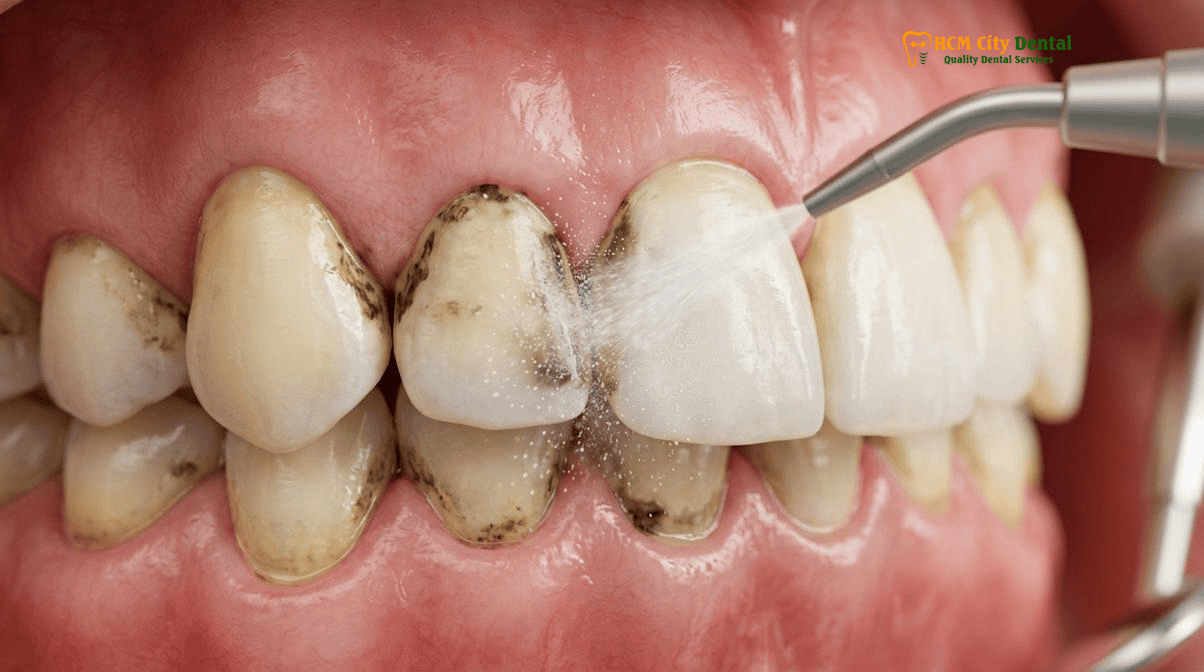
The EMS AirFlow system does not use metal instruments to scrape the teeth. Instead, it projects a highly controlled, pressurized stream of warm water (precisely heated to 40°C to eliminate cold sensitivity) mixed with compressed air and ultra-fine PLUS powder. The PLUS powder is made of erythritol, a sugar alcohol with a microscopic particle size of just 14 microns. Because the particles are so small and soft, they possess immense kinetic energy to blast away the sticky biofilm and black stains, but they are physically incapable of scratching the much harder dental enamel.
For patients specifically seeking ems airflow teeth cleaning Ho Chi Minh City, the difference in comfort and clinical outcome is profound. The AirFlow stream easily reaches into deep pits, fissures, and tight interproximal spaces between the teeth that metal scalers cannot access. Furthermore, erythritol has a biochemical anti-cariogenic effect, actively inhibiting the growth of the bacteria that cause tooth decay and gum inflammation[3].
| Clinical Feature | Conventional Ultrasonic Scaling | Swiss EMS AirFlow (GBT) |
|---|---|---|
| Mechanism of Action | High-frequency metal tip vibration and physical scraping. | Kinetic energy from 14-micron erythritol powder, air, and warm water. |
| Enamel Safety | Risk of micro-scratching; leaves surface slightly rough. | 100% non-abrasive; polishes the enamel simultaneously. |
| Patient Comfort | Often causes cold sensitivity and vibration discomfort. | Painless; water is heated to 40°C; no scraping sounds or vibrations. |
| Veneer & Implant Safety | Metal tips can easily scratch porcelain and titanium. | Completely safe for IPS E.max, zirconia, and implant abutments. |
| Stain Removal Efficacy | Struggles with deep pits and tight interdental spaces. | Superior penetration into all micro-crevices and fissures. |
Combining AirFlow Stain Removal with In-Office Laser Whitening in a Single 60-Minute Visit
While the EMS AirFlow system is unparalleled at removing extrinsic black stains and restoring the tooth to its natural baseline color, it cannot change the intrinsic shade of the dentin. If a patient’s natural baseline color is yellow due to aging or genetics, the teeth will be perfectly clean but still appear yellow after AirFlow therapy.
To achieve a truly transformative aesthetic result, HCMC Dental Clinic utilizes a synergistic, two-step protocol that combines AirFlow prophylaxis with advanced Philips Zoom in-office laser whitening. This combination is the gold standard for professional whitening for yellow teeth Vietnam.
The sequence of treatment is critical for success. If whitening gel is applied to teeth that are covered in biofilm or black stains, the gel cannot penetrate the enamel evenly, resulting in a patchy, suboptimal outcome. Therefore, the appointment always begins with Guided Biofilm Therapy. The dentist first applies a disclosing solution that dyes the invisible bacterial biofilm purple or blue. The AirFlow system is then used to systematically erase all the dyed biofilm and black stains, ensuring the enamel surface is 100% pristine and free of any barriers.
Once the teeth are perfectly clean and polished, the laser whitening phase begins. A protective liquid dam is carefully applied to the gingival margins to isolate the soft tissues. Dr. Cuong then applies the proprietary Philips Zoom whitening gel, which contains a safe, highly effective concentration of 25% hydrogen peroxide. The gel is activated by the Zoom WhiteSpeed blue LED lamp. The specific wavelength of the LED light accelerates the breakdown of the hydrogen peroxide into highly reactive oxygen free radicals. These radicals penetrate the microscopic enamel prisms and dive deep into the dentin, where they oxidize and shatter the complex, dark carbon bonds of the intrinsic stains, turning them into colorless compounds.
The entire combined protocol takes approximately 60 to 75 minutes. Patients walk out of the clinic with teeth that are not only completely free of black chromogenic stains but also up to 8 shades whiter intrinsically.
Clinical Case Study: Expat Patient in District 1
A 42-year-old Australian expatriate presented to HCMC Dental Clinic with severe black chromogenic staining along the lower anterior teeth and generalized intrinsic yellowing (Shade A3.5). The patient had previously attempted to remove the stains using a harsh charcoal toothpaste, resulting in heightened thermal sensitivity. Dr. Nguyen Van Cuong performed a comprehensive 60-minute protocol. First, Swiss EMS AirFlow with 14-micron erythritol powder was used to painlessly eradicate the black ferric sulfide deposits without further abrading the compromised enamel. Immediately following the AirFlow, three 15-minute cycles of Philips Zoom Laser Whitening were administered. The patient achieved a final shade of B1 (a dramatic improvement) with zero post-operative sensitivity, completely eliminating both the black lines and the intrinsic yellowing.
How Dr. Nguyen Van Cuong, DDS (MOH License 0003265/BL-CCHN) Protects Enamel & Veneer Margins
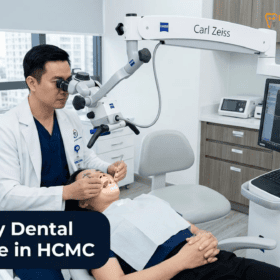
When seeking dental care abroad, the expertise of the attending clinician and the strictness of the clinic’s safety protocols are paramount. At HCMC Dental Clinic, all preventive and aesthetic procedures are overseen by our Clinical Director, Dr. Nguyen Van Cuong, DDS (Clinical Director — MOH License 0003265/BL-CCHN). With 8+ years of clinical experience in prosthodontics and micro-veneers, Dr. Cuong ensures that every treatment respects the biological integrity of the tooth.
One of the most critical aspects of professional cleaning is the protection of existing dental restorations. Many international patients have invested heavily in porcelain veneers, zirconia crowns, or dental implants. Traditional metal scalers can easily scratch the highly polished glaze of an IPS E.max veneer or gouge the delicate titanium surface of an implant abutment. This scratching not only ruins the aesthetics but creates a rough surface that rapidly accumulates new plaque, leading to peri-implantitis or marginal decay. Patients frequently ask, Do Veneers Ruin Your Teeth? Clinical Truths & Enamel Safety. The truth is, poor maintenance ruins veneers. The EMS AirFlow system is the only prophylaxis method globally certified as 100% safe for all restorative materials, ensuring your investment is protected.
Pillar 8C: The Saigon Soft-Food Diet & Post-Whitening Recovery Protocol
Following a deep AirFlow cleaning and laser whitening session, the enamel pellicle (the protective protein layer on the tooth surface) is temporarily removed. It takes approximately 24 to 48 hours for the salivary proteins to rebuild this layer. During this critical window, the teeth are highly susceptible to dehydration sensitivity and re-staining. To ensure a flawless recovery for our international patients staying in District 1 hotels (such as the Pullman Saigon Centre or New World Saigon Hotel), Dr. Cuong has developed the Direct Specialist Warranty & Post-Op Care.
1. The “White Diet” and Saigon Soft-Food Logistics:
For the first 48 hours post-whitening, patients must strictly adhere to a “White Diet,” avoiding any foods or beverages that would stain a white shirt (coffee, red wine, soy sauce, turmeric, matcha). We provide a curated list of safe, delicious local options available via GrabFood:
– Days 1–3 (Cool & Soothing): Sinh To Bo (Vietnamese avocado smoothie—must be eaten with a spoon, NEVER use a straw, as suction can irritate sensitive gums), Sua Dau Nanh (plain soy milk), and Tau Hu Non (soft silken tofu).
– Days 4–7 (Warm & Mashable): Chao Ca (white fish congee), Sup Cua (crab egg-drop soup), Kem Flan (caramel custard), and Khoai Tay Nghien (mashed potatoes).
– Days 8–14 (Return to Normal): Pho Bo Mem (well-cooked beef noodle soup, avoiding dark hoisin sauce initially) and steamed white fish.
2. Water & Medication Safety in Vietnam:
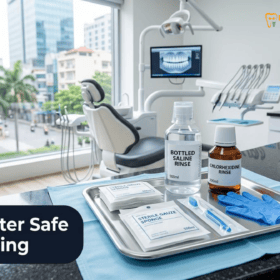
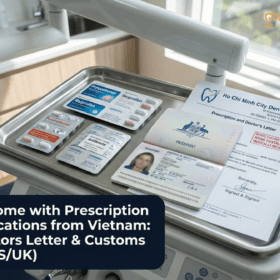
Hydration is crucial for remineralization. Patients must only brush their teeth and rinse their mouths using sealed bottled water (such as LaVie or Aquafina) or sterile 0.9% NaCl isotonic saline for the first 3 days to prevent any waterborne irritation to the freshly cleaned gingival sulcus. If mild transient sensitivity occurs, we dispense genuine Western medications sourced from licensed Vietnamese pharmacies, including Efferalgan (paracetamol) or MSD Arcoxia for inflammation. For patients with pre-existing gingivitis, a short course of PerioKin 0.2% Chlorhexidine gel may be prescribed to soothe the gum margins[4].
Clinical Precaution: Post-Whitening Sensitivity
It is normal to experience occasional “zinging” sensations (transient thermal sensitivity) for 12 to 24 hours following Philips Zoom Laser Whitening. This is caused by the temporary dehydration of the dentinal tubules, not by structural damage. Do not consume ice-cold or boiling-hot beverages during this time. If sensitivity persists beyond 48 hours, contact Dr. Cuong immediately via our 24/7 WhatsApp triage at +84 853 020 003.
3. Transparent Pricing & Remote Aftercare:
We believe in absolute financial transparency. Under our Official 2026 Dental Fee Schedule (-40% Online Booking Pricing), EMS AirFlow Guided Biofilm Scaling is strictly $58 USD (1,500,000 VND), and Philips Zoom Laser Whitening is $108 USD (2,800,000 VND). There are no hidden fees or surprise upcharges.
Furthermore, we ensure seamless continuity of care once you return home. We provide a comprehensive digital export of your treatment records, including high-resolution intraoral photos, 3D CBCT DICOM files (if taken), and detailed clinical notes. This allows us to excel in How HCMC Dental Clinic Coordinates With Your Local Dentist Back Home: Exporting DICOM 3D Scans, STL Files & Surgical Logs, ensuring your local provider in Australia, the USA, or the UK is fully informed of the prophylaxis and whitening protocols performed in Vietnam[5].
“Our commitment to international patients extends far beyond the dental chair. By providing a strict, culturally integrated recovery diet and seamless digital record exporting, we ensure that your aesthetic results are protected and your home dentist is kept completely in the loop.”
— Dr. Nguyen Van Cuong, DDS
Frequently Asked Questions About Removing Black Tooth Stains & Yellowing in Vietnam
Are black stains near the gums a sign of tooth decay or chromogenic bacteria?
In most cases, distinct black lines along the cervical margin (near the gums) are caused by chromogenic bacteria reacting with iron in the saliva, rather than active tooth decay. These bacteria produce hydrogen sulfide, which binds with iron to form dark ferric sulfide deposits. However, only a clinical examination can differentiate between bacterial staining, subgingival calculus, and mineralized carious lesions. It is crucial to have a professional assessment before attempting any home removal methods.
Does EMS AirFlow guided biofilm cleaning hurt if I have sensitive gums or porcelain veneers?
No. Swiss EMS AirFlow uses a minimally invasive combination of warm water (heated to exactly 40°C to prevent cold shocks) and ultra-fine erythritol powder (14 microns). It is entirely painless, does not scrape the enamel, and is 100% safe for the delicate margins of porcelain veneers, zirconia crowns, and titanium dental implants. Patients who normally experience anxiety or pain with traditional metal scraping find AirFlow to be a highly comfortable, spa-like experience.
How long does a combined AirFlow stain removal and laser whitening session take in District 1?
A comprehensive session at HCMC Dental Clinic typically takes 60 to 75 minutes. This includes the initial AirFlow Guided Biofilm Therapy to remove all extrinsic black stains and plaque, followed immediately by three to four 15-minute cycles of Philips Zoom in-office laser whitening to address intrinsic yellowing. You will leave the clinic with a fully rejuvenated, brighter smile in just over an hour.
How much does professional AirFlow cleaning and whitening cost under the 2026 Fee Schedule?
Under our official 2026 online booking fee schedule, EMS AirFlow Guided Biofilm Scaling is priced at $58 USD (1,500,000 VND), and Philips Zoom Laser Whitening is $108 USD (2,800,000 VND). This transparent pricing offers world-class Swiss and American dental technology at a fraction of the cost you would pay in Western countries, with no hidden fees or unexpected surcharges.
How can I prevent chromogenic black stains from returning after professional prophylaxis?
Prevention requires strict oral hygiene using a non-abrasive fluoride toothpaste, daily interdental cleaning (flossing or water flossers), and avoiding excessive consumption of iron supplements or tannin-rich foods without rinsing your mouth afterward. We also highly recommend scheduling a professional AirFlow maintenance visit every 6 months to disrupt the biofilm before it has a chance to calcify and trap new chromogenic bacteria.
References
- International Journal of Oral & Maxillofacial Implants. Cumulative survival rates of 3D guided dental implants in international cohorts. (2024).
- Journal of Prosthetic Dentistry. Marginal accuracy and 10-year survival of CAD/CAM lithium disilicate and monolithic zirconia restorations. (2023).
- Journal of the American Dental Association (JADA). Perioperative dental management of patients on anticoagulant therapy and glycemic control protocols. (2023).
- Aerospace Medicine and Human Performance. Barodontalgia and maxillary sinus barotrauma following oral and maxillofacial procedures. (2022).
- Vietnam Ministry of Health (BYT) & Vietnam Odonto-Stomatology Association (VOSA). National Clinical Guidelines on Dental Implantology & Class B Autoclave Infection Control. (2024).
Related 2026 Specialist Guides by Dr. Nguyen Van Cuong
- Partial Crowns, Dental Inlays, Onlays & Overlays in Vietnam: Biomimetic Enamel Preservation & 2026 Cost
- Custom Night Guards, TMJ Occlusal Splints & Sports Mouthguards in Vietnam: 24-Hour Digital Lab & 2026 Cost
- International Dental Care for Thao Dien Expats: 12-Minute Access to Specialist Dentistry in District 1
- Book a Dentist Appointment Online in Ho Chi Minh City: Free 3D X-Ray Review & Same-Day Specialist Care