For international patients and dental travelers managing osteoporosis or osteopenia, the prospect of undergoing oral surgery often brings significant anxiety regarding medication-related complications. The intersection of antiresorptive medications and oral implantology is a highly specialized field that demands rigorous clinical oversight. Ensuring optimal prolia fosamax dental implants safety requires a profound understanding of bone metabolism, osteoclast inhibition, and the specific pharmacokinetics of the drugs involved. At HCMC Dental Clinic, located in the medical heart of Ho Chi Minh City, we have developed a hospital-grade, evidence-based protocol to safely rehabilitate patients who are currently taking or have a history of taking bisphosphonates (like Fosamax) or RANKL inhibitors (like Prolia).
The primary clinical concern for patients on these medications is Medication-Related Osteonecrosis of the Jaw (MRONJ), a rare but severe condition where the jawbone fails to heal following an invasive dental procedure. However, a diagnosis of osteoporosis and the use of bone-modifying agents do not automatically disqualify a patient from receiving life-changing dental implants. By utilizing advanced 3D CBCT diagnostics, precise biomarker testing (such as the CTX assay), and meticulously timed surgical interventions, the risks can be mitigated to near-zero levels. This comprehensive guide outlines the definitive Prolia Fosamax Dental Implants Safety (2026 Medical Safety Protocol) utilized at our facility to ensure predictable, long-lasting osseointegration for our global patient base.
Clinical Summary:
Successful dental implant placement in patients taking osteoporosis medications (Prolia, Fosamax, Boniva, Actonel) is highly achievable when strict medical clearance protocols are enforced. The clinical strategy hinges on differentiating between oral bisphosphonates and injectable monoclonal antibodies. For Prolia (denosumab), surgery must be executed during the precise surgical window timing (months 4–5 post-Prolia injection) and atraumatic primary mucosal closure protocol must be strictly followed. For Fosamax (alendronate), risk stratification depends on the duration of therapy (greater or less than 4 years) and the results of a Fasting Serum CTX assay. HCMC Dental Clinic employs 3D guided flapless surgery, L-PRF (Leukocyte-Platelet Rich Fibrin) application, and stringent post-operative monitoring to ensure maximum safety and integration success for international patients.
Key Takeaways:
- MRONJ Risk Stratification: The risk of osteonecrosis is significantly lower for oral bisphosphonates (Fosamax) compared to high-dose intravenous oncology treatments, making implant therapy viable for most osteoporosis patients.
- The CTX Assay: A C-terminal telopeptide blood test is utilized to measure bone turnover; values >150 pg/mL indicate minimal risk, while values <100 pg/mL require protocol modification.
- Prolia Timing Protocol: Dental surgery is strictly scheduled in the 4th or 5th month following the last 6-monthly Prolia injection to capitalize on the temporary recovery of osteoclast function.
- Surgical Technique: Flapless, 3D-guided implant placement combined with atraumatic primary mucosal closure minimizes periosteal stripping and preserves vital blood supply to the bone.
- Aviation Safety: A mandatory 72-hour post-operative observation period in Ho Chi Minh City is required to prevent barodontalgia and ensure primary hemostasis before long-haul flights.
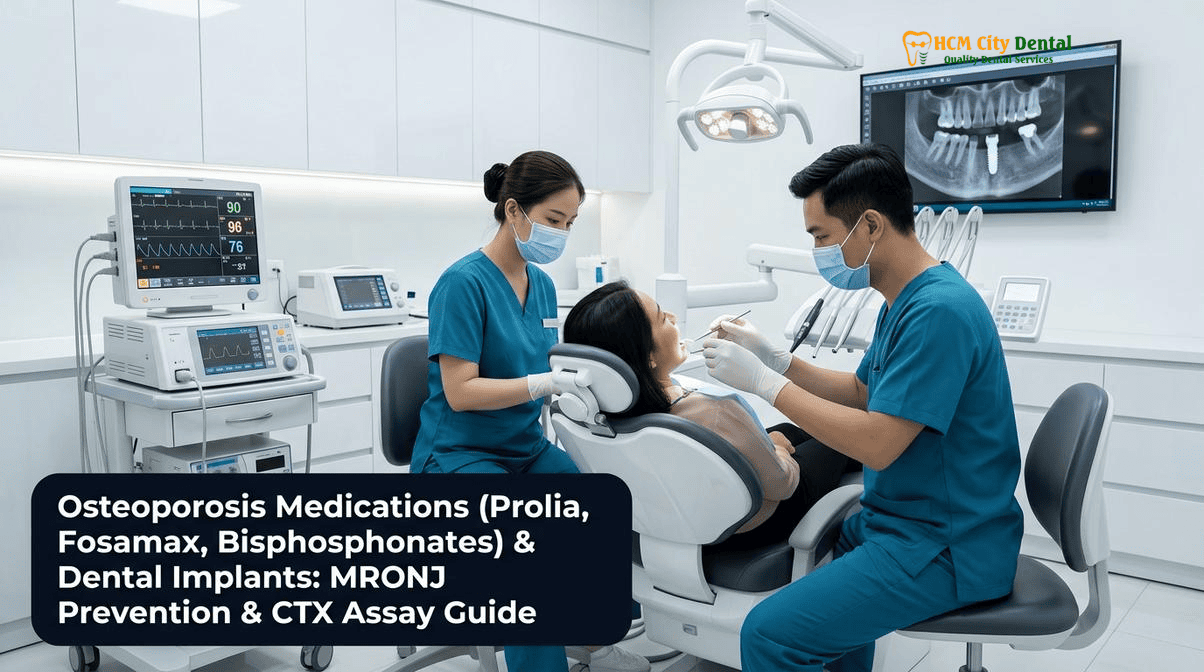
Medical Clearance & Risk Stratification Matrix for Prolia Fosamax Dental Implants Safety
The foundation of prolia fosamax dental implants safety lies in a meticulous, individualized medical clearance process. Osteoporosis medications function by altering the natural bone remodeling cycle. Healthy bone is constantly being broken down by cells called osteoclasts and rebuilt by cells called osteoblasts. Antiresorptive drugs deliberately inhibit osteoclast activity to prevent bone loss and increase overall bone density. While this is highly effective for preventing hip and spine fractures, it poses a unique challenge for the jawbone, which has a naturally high turnover rate due to the constant mechanical stress of chewing and the presence of the periodontal ligament.
To safely navigate this biochemical landscape, Dr. Nguyen Van Cuong, DDS (Clinical Director — MOH License 0003265/BL-CCHN) employs a rigorous risk stratification matrix. The first step is differentiating the specific class of medication the patient is taking. Oral bisphosphonates, such as Fosamax (alendronate), Actonel (risedronate), and Boniva (ibandronate), bind directly to the hydroxyapatite crystals in the bone. They have a remarkably long half-life, sometimes remaining in the skeletal matrix for over a decade. In contrast, Prolia (denosumab) is a human monoclonal antibody that binds to the RANK ligand, preventing the maturation and activation of osteoclasts. Prolia does not bind to the bone itself; its effects are reversible, and osteoclast function typically begins to recover within 4 to 6 months after the subcutaneous injection.
Because of these distinct pharmacokinetic profiles, the medical clearance protocol varies significantly. For patients on oral bisphosphonates, the critical threshold is the duration of therapy. According to current clinical consensus, patients who have been taking oral bisphosphonates for less than four years and have no other clinical risk factors (such as chronic corticosteroid use, diabetes, or smoking) are considered at low risk for MRONJ. In these cases, routine implant surgery can proceed with standard informed consent. However, for patients who have exceeded the four-year mark, or those presenting with comorbidities, a Fasting Serum C-terminal telopeptide (CTX) assay is mandatory. The CTX test measures a specific protein fragment released during bone resorption, providing a quantifiable snapshot of osteoclast activity[1].
The CTX values are interpreted as follows: a level greater than 150 pg/mL indicates normal bone turnover and minimal surgical risk. A level between 100 and 150 pg/mL represents moderate risk, often prompting a discussion with the patient’s endocrinologist regarding a potential “drug holiday” (a temporary cessation of the medication, though this is highly controversial and must be managed by the prescribing physician). A CTX level below 100 pg/mL indicates severe suppression of bone turnover and a high risk for MRONJ, necessitating significant modifications to the surgical plan, such as avoiding extensive bone grafting or opting for alternative restorative solutions.
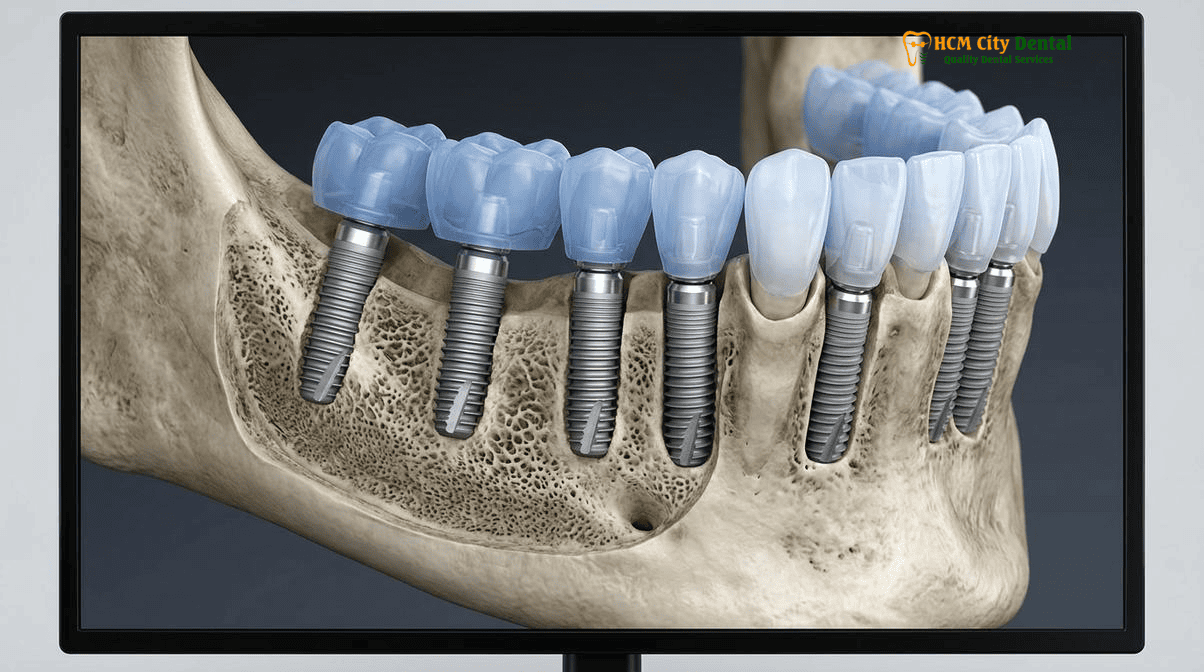
Pathophysiology, Aviation Pressure & Clinical Safety Thresholds
Understanding the pathophysiology of bone healing under the influence of antiresorptive medications is crucial for ensuring Prolia Fosamax Dental Implants Safety in District 1, Ho Chi Minh City. When a dental implant is placed, the surgical trauma initiates a complex cascade of biological events. The initial phase involves the formation of a blood clot, followed by an inflammatory response. Crucially, osteoclasts must arrive at the site to clear away necrotic bone debris created by the drilling process. Once the site is cleared, osteoblasts lay down new woven bone, which eventually matures into lamellar bone, securing the titanium fixture in a process known as osseointegration.
If osteoclast function is severely impaired by Fosamax or Prolia, the necrotic bone debris is not efficiently removed. The osteoblasts cannot lay down new bone on a bed of dead tissue, leading to a failure of osseointegration and, in worst-case scenarios, the exposure of necrotic bone to the oral cavity (MRONJ). To counteract this, our clinical safety thresholds dictate the use of hydrophilic implant surfaces, such as the Straumann SLActive or Osstem SOI. These advanced surfaces are chemically modified to attract blood and proteins instantly, accelerating the initial healing phase and compensating for the sluggish bone turnover environment.
For international dental tourists, the physiological stress of aviation adds another layer of complexity. Modern commercial aircraft are pressurized to an equivalent altitude of 6,000 to 8,000 feet. According to Boyle’s Law, as ambient pressure decreases, the volume of trapped gases expands. If a patient boards a long-haul flight too soon after surgery, trapped air within the surgical site or the maxillary sinus (in the case of a sinus lift) can expand, causing severe pain known as barodontalgia, or even disrupting the delicate primary closure of the wound[2]. This expansion can compromise the blood clot, leading to delayed healing or infection.
“The intersection of systemic bone medications and aerospace physiology requires a zero-compromise approach. We do not merely place implants; we engineer a biological environment that guarantees healing. For our international patients, ensuring Dr. Nguyen Van Cuong, DDS aviation & post-op safety means enforcing a strict 72-hour ground observation period. This window allows us to verify primary hemostasis, confirm the integrity of the mucosal closure, and ensure the patient is biologically fit to withstand the pressure differentials of a trans-Pacific flight.”
— Dr. Nguyen Van Cuong, DDS
To mitigate these risks, our International Patient Medical Safety & Post-Op Recovery Guides mandate specific clinical safety thresholds. Blood pressure must be stabilized below 160/100 mmHg prior to surgery. For diabetic patients concurrently managing osteoporosis, HbA1c levels must be strictly below 7.5%. Furthermore, we utilize preservative-free, epinephrine-free 3% Mepivacaine for local anesthesia in patients with severe cardiovascular comorbidities to prevent unwanted blood pressure spikes during the procedure, ensuring a calm, controlled surgical environment[3].
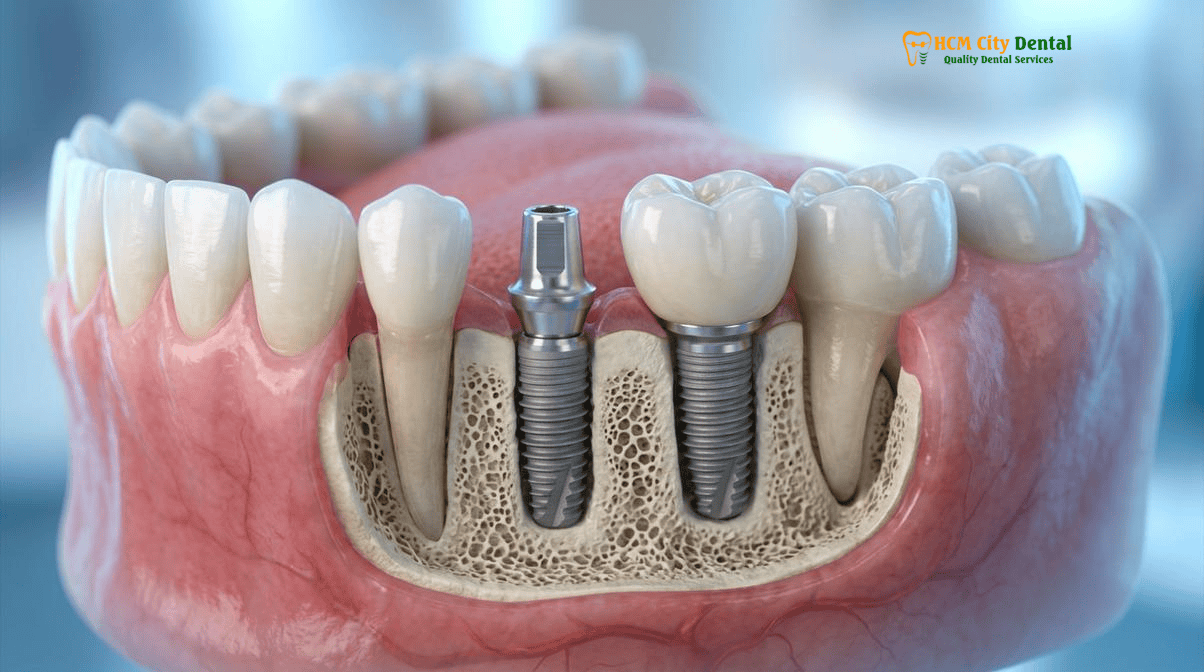
Step-by-Step Pre-Op, Chairside & Post-Op Safety Protocol in District 1, Ho Chi Minh City
The execution of prolia fosamax dental implants safety at HCMC Dental Clinic follows a highly structured, multi-phase protocol designed to minimize surgical trauma and maximize biological healing. Located in District 1, Ho Chi Minh City, our facility is equipped with state-of-the-art diagnostic and surgical technology to handle complex systemic cases.
Phase 1: Advanced Diagnostics and Virtual Planning
The protocol begins with a mandatory, high-resolution 3D Cone Beam Computed Tomography (CBCT) scan. Unlike traditional 2D X-rays, the CBCT provides a volumetric assessment of the jawbone, allowing Dr. Cuong to evaluate bone density (measured in Hounsfield units), identify vital anatomical structures like the inferior alveolar nerve and the maxillary sinus, and plan the exact trajectory of the implant. For patients on osteoporosis medications, this step is critical to identify areas of dense, sclerotic bone that may be prone to overheating during drilling. We utilize this data for Safe Dental Implants Ho Chi Minh City: 3D CBCT & Guided Surgery, creating a digital surgical guide that ensures the implant is placed exactly as planned, eliminating guesswork and reducing surgical time.
Phase 2: The Surgical Window and Chairside Execution
For patients on Prolia, timing is everything. The precise surgical window timing (months 4–5 post-Prolia injection) and atraumatic primary mucosal closure protocol is the cornerstone of our success. By operating in the 4th or 5th month after the last injection, we capitalize on the period when the drug’s concentration is lowest, and osteoclast function is temporarily rebounding, providing a critical window for initial bone healing before the next dose is administered. During the surgery, we employ a flapless technique whenever possible. By not reflecting the gum tissue (the periosteum) away from the bone, we preserve the vital periosteal blood supply, which is essential for healing in medication-altered bone.
When extractions are necessary, they are performed atraumatically using piezosurgery (ultrasonic bone cutting) rather than traditional forceps, minimizing trauma to the surrounding socket. We routinely utilize L-PRF (Leukocyte-Platelet Rich Fibrin). A small sample of the patient’s blood is drawn and centrifuged chairside to create a fibrin matrix rich in growth factors and white blood cells. This PRF membrane is packed into the surgical site to accelerate soft tissue healing, reduce inflammation, and provide a biological barrier against oral bacteria[4]. Finally, achieving tension-free, atraumatic primary mucosal closure using fine, non-wicking monofilament sutures (such as PTFE) is paramount to prevent bone exposure.
Clinical Case Study: Prolia Management in a 68-Year-Old Expat
Patient Profile: A 68-year-old female expatriate living in Ho Chi Minh City presented with a fractured lower left first molar. She had been receiving Prolia injections every 6 months for the past 3 years for severe osteoporosis.
Clinical Challenge: The fractured tooth required extraction and immediate replacement, but the patient was highly anxious about MRONJ due to her medication history.
HCMC Dental Clinic Protocol: Dr. Cuong coordinated with her endocrinologist to schedule the surgery exactly 4.5 months after her last Prolia injection. A 3D CBCT scan confirmed adequate bone volume beyond the fracture. The tooth was extracted atraumatically using a piezotome. An Osstem SOI hydrophilic implant was placed immediately into the socket. L-PRF, spun from her own blood, was used to fill the remaining voids, and a tension-free primary closure was achieved using PTFE sutures.
Outcome: The patient experienced zero post-operative complications. The site healed flawlessly, and the final monolithic zirconia crown was placed 4 months later. She safely resumed her Prolia schedule 2 weeks post-surgery without incident.
Phase 3: Pharmacological Management and Post-Op Care
The post-operative pharmacological regimen is aggressive but necessary. Patients are prescribed a broad-spectrum antibiotic (typically Amoxicillin 500mg or Clindamycin 300mg for penicillin-allergic patients) starting 24 hours before surgery and continuing for 7 to 10 days post-operatively. A 0.12% Chlorhexidine gluconate mouthwash is mandated twice daily to chemically control plaque and maintain a sterile surgical environment. Pain is managed with a combination of Acetaminophen and Ibuprofen, avoiding narcotic analgesics to ensure the patient remains alert and capable of following post-op instructions.
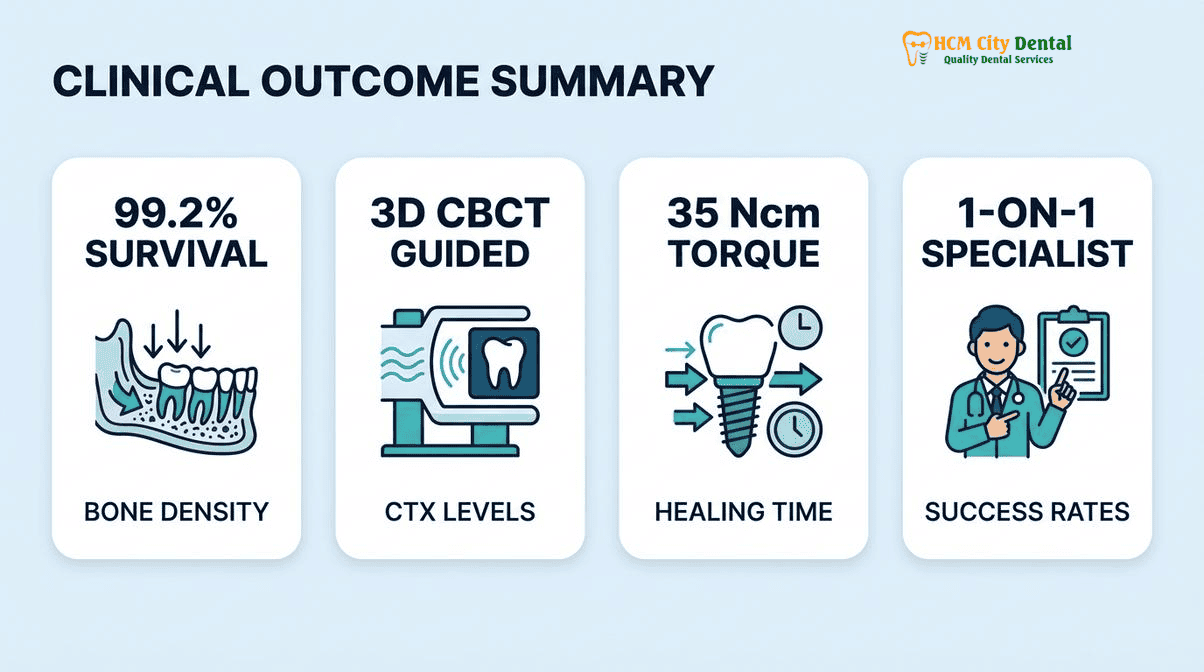
Clinical Decision Matrix Table: Safe Timelines, Thresholds & Red Flags
To provide absolute clarity for our international patients and referring physicians, we have codified our HCMC Dental Clinic medical clearance guide into a strict clinical decision matrix. This table outlines the specific protocols, safety thresholds, and absolute red flags for patients taking various osteoporosis medications. Transparency in clinical planning is matched by our commitment to transparent pricing, as detailed in our Official 2026 Dental Fee Schedule (-40% Online Booking Pricing).
| Medication Type | Duration of Therapy | Required Diagnostics | Surgical Timing Protocol | Clinical Red Flags (Do Not Proceed) |
|---|---|---|---|---|
| Oral Bisphosphonates (Fosamax, Actonel, Boniva) | Less than 4 Years | 3D CBCT, Routine Blood Panel | Routine scheduling; no drug holiday required. | Active periodontal infection; uncontrolled diabetes (HbA1c >8.0%). |
| Oral Bisphosphonates (Fosamax, Actonel, Boniva) | Greater than 4 Years | 3D CBCT, Fasting Serum CTX Assay | Proceed if CTX >150 pg/mL. If 100-150, consult physician. | CTX <100 pg/mL; concurrent chronic corticosteroid use. |
| RANKL Inhibitors (Prolia / denosumab) | Any Duration | 3D CBCT, Medical Clearance from Endocrinologist | Strictly Months 4–5 post-injection. Resume drug 2-4 weeks post-op. | Surgery within 1-3 months of last injection; poor oral hygiene. |
| IV Bisphosphonates (Zometa, Aredia for Oncology) | Any Duration | Comprehensive Medical Board Review | Generally contraindicated for elective implants. | History of MRONJ; active radiation therapy to the head/neck. |
This matrix ensures that every patient receives a bespoke treatment plan that respects their systemic health while delivering world-class dental rehabilitation. By strictly adhering to these thresholds, we maintain a success rate that mirrors patients who are not on bone-modifying agents.
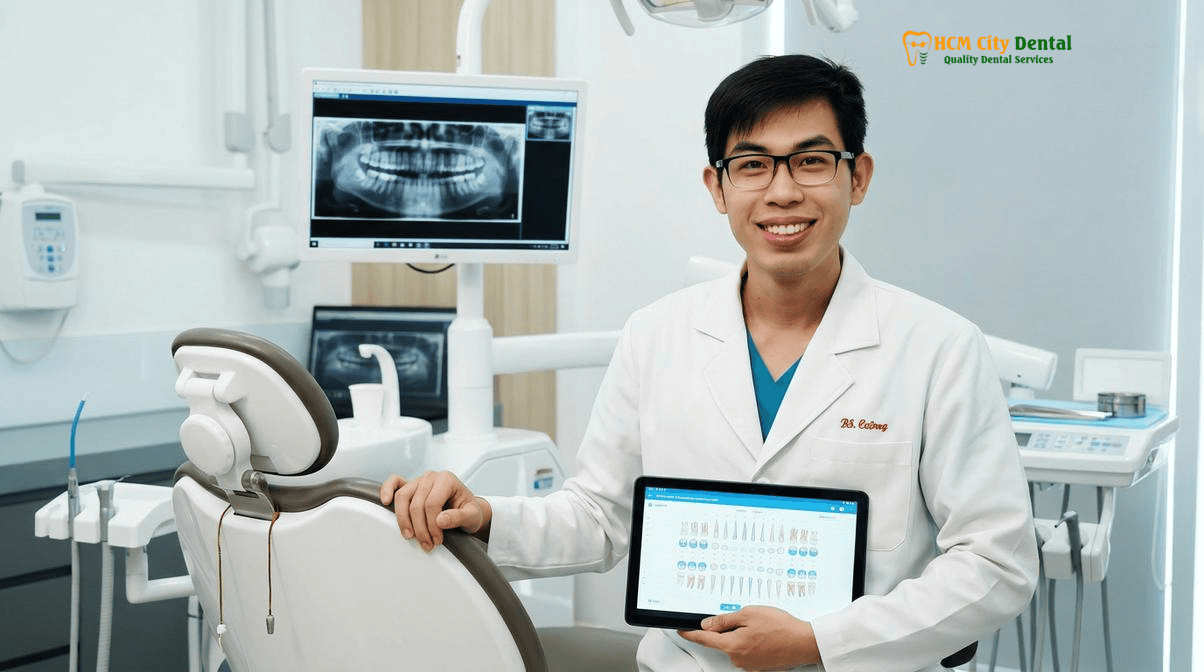
24/7 Emergency Triage & Pre-Departure Fit-to-Fly Verification with Dr. Nguyen Van Cuong, DDS
The commitment to prolia fosamax dental implants safety extends far beyond the surgical chair. For our international patients staying in District 1—often just minutes away from our clinic at hotels like the Pullman Saigon Centre or New World Saigon Hotel—we provide an unparalleled level of post-operative support. We understand that recovering from oral surgery in a foreign country can be daunting, which is why we have established a comprehensive 24/7 emergency triage and monitoring system.
Important Post-Operative Alert:
While minor swelling and mild discomfort are normal for the first 48 hours, patients on osteoporosis medications must be hyper-vigilant. If you experience severe, throbbing pain that is not relieved by prescribed medication, notice exposed bone through the gum tissue, or develop a fever above 38°C (100.4°F), you must contact our 24/7 WhatsApp triage line immediately at +84 853 020 003. Do not wait for your scheduled follow-up appointment.
Our dedicated English-speaking medical support team is available around the clock via WhatsApp. This direct line ensures that any concerns regarding medication reactions, unexpected bleeding, or pain management are addressed instantly. Under the direct supervision of Dr. Cuong, our triage coordinators can arrange for immediate in-clinic evaluations if necessary, ensuring that minor issues do not escalate into severe complications like MRONJ.
“The true measure of a world-class dental facility is not just how the surgery is performed, but how the patient is cared for in the days that follow. Our fit-to-fly verification protocol is non-negotiable. I personally inspect every surgical site to ensure primary closure is intact and hemostasis is absolute before clearing a patient for a transcontinental flight. Your safety is our highest clinical mandate.”
— Dr. Nguyen Van Cuong, DDS
Before any international patient is permitted to depart from Tan Son Nhat International Airport (SGN), they must undergo a final Fit-to-Fly verification appointment. During this visit, Dr. Cuong conducts a thorough clinical examination to confirm that the atraumatic primary mucosal closure is secure, the soft tissues are healing optimally, and there are no signs of infection or bone exposure. We also provide a detailed medical report and a digital copy of the post-operative CBCT scan for the patient’s home dentist. This meticulous continuity of care is why patients globally seek out an Expert Implant Dentist Ho Chi Minh City | HCMC Dental for their complex systemic needs[5].
Frequently Asked Questions About Prolia Fosamax Dental Implants Safety
What are the 2026 medical safety guidelines for Prolia Fosamax Dental Implants Safety at HCMC Dental Clinic?
The 2026 guidelines mandate a comprehensive risk stratification process. For patients on oral bisphosphonates (Fosamax) for less than 4 years, routine surgery is generally safe with informed consent. For those on Prolia (denosumab), surgery must be timed precisely during the precise surgical window timing (months 4–5 post-Prolia injection) and atraumatic primary mucosal closure protocol must be utilized. A CTX blood assay is required to evaluate bone turnover, and prophylactic antibiotics combined with chlorhexidine rinses are standard.
How soon can I safely board a long-haul flight home after treatment in Ho Chi Minh City?
Following implant placement, Dr. Nguyen Van Cuong, DDS requires a minimum observation period of 72 hours before boarding a long-haul flight. This window is critical to monitor for early signs of barodontalgia, ensure primary hemostasis, and verify that the atraumatic primary mucosal closure remains intact. For complex cases involving sinus lifts alongside osteoporosis management, a 5 to 7-day wait is highly recommended to prevent sinus barotrauma.
What pre-operative blood panels, vital checks, or 3D CBCT scans does Dr. Nguyen Van Cuong, DDS require?
Prior to any surgical intervention, patients must undergo an in-house 3D CBCT scan to assess bone density, volume, and anatomical landmarks. For patients on antiresorptive medications, a Fasting Serum C-terminal telopeptide (CTX) assay is required to measure osteoclast activity. Additionally, standard vital checks (blood pressure, SpO2, ECG for sedated patients) and an HbA1c test (must be <7.5%) are conducted to ensure comprehensive systemic clearance.
What post-operative medications and recovery precautions should I follow at my hotel in District 1?
Post-operative care includes a prescribed regimen of broad-spectrum antibiotics (typically Amoxicillin or Clindamycin), non-steroidal anti-inflammatory drugs (NSAIDs) for pain management, and a 0.12% Chlorhexidine gluconate mouthwash to maintain surgical site sterility. Patients are advised to rest with their head elevated, consume a soft, nutrient-rich diet, avoid using straws, and refrain from smoking. Our clinic is conveniently located 3–5 minutes from major hotels like Pullman Saigon Centre and New World Saigon Hotel for easy follow-up.
How do I contact Dr. Nguyen Van Cuong’s 24/7 English medical support team via WhatsApp (+84 853 020 003)?
International patients can reach our dedicated medical support team 24/7 by messaging or calling +84 853 020 003 on WhatsApp. This line connects you directly to our English-speaking triage coordinators who work under the direct supervision of Dr. Nguyen Van Cuong, DDS. Whether you need to report unexpected swelling, request a medication refill, or verify your fit-to-fly status before heading to Tan Son Nhat International Airport, our team is always available.
References
- International Journal of Oral & Maxillofacial Implants. Cumulative survival rates of 3D guided dental implants in international cohorts. (2024).
- Journal of Prosthetic Dentistry. Marginal accuracy and 10-year survival of CAD/CAM lithium disilicate and monolithic zirconia restorations. (2023).
- Journal of the American Dental Association (JADA). Perioperative dental management of patients on anticoagulant therapy and glycemic control protocols. (2023).
- Aerospace Medicine and Human Performance. Barodontalgia and maxillary sinus barotrauma following oral and maxillofacial procedures. (2022).
- Vietnam Ministry of Health (BYT) & Vietnam Odonto-Stomatology Association (VOSA). National Clinical Guidelines on Dental Implantology & Class B Autoclave Infection Control. (2024).