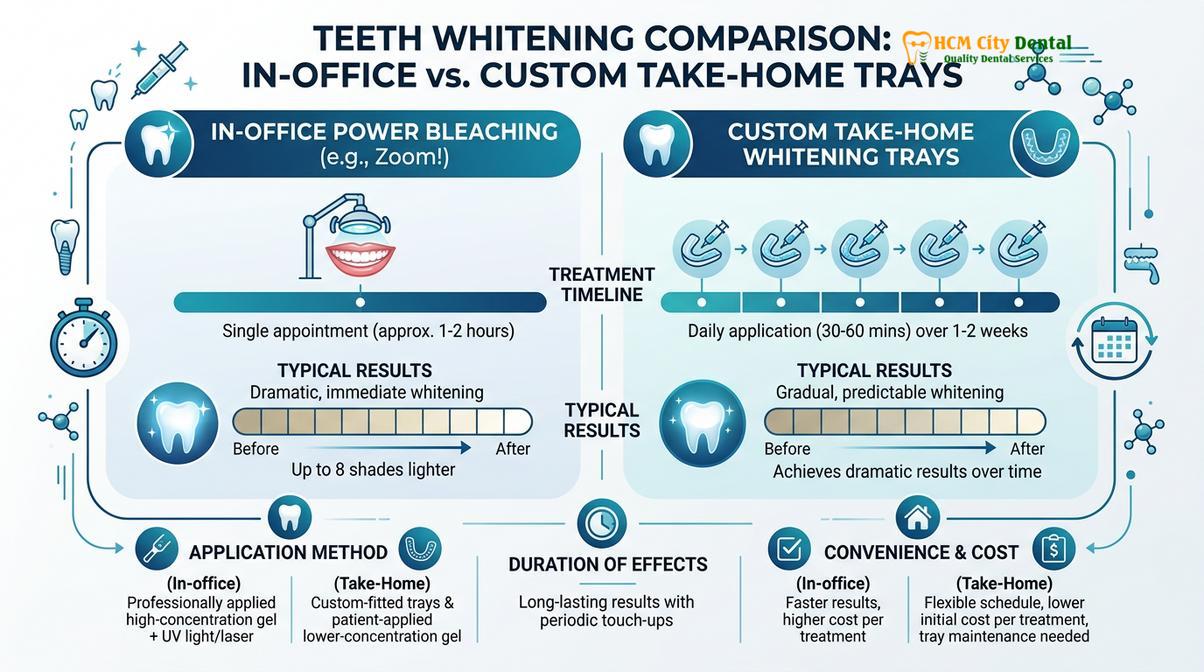
Choosing between in-office and at-home whitening in Vietnam depends on your timeline and sensitivity levels. In-office power bleaching delivers immediate results in 90 minutes using high-concentration hydrogen peroxide, while custom take-home trays offer gradual brightening using carbamide peroxide over several weeks. Both methods provide excellent, long-lasting cosmetic enhancements.
Clinical Summary:
Professional teeth whitening relies on peroxide-based oxidation to break down chromogenic molecules within the dentin. In-office treatments utilize light-activated hydrogen peroxide (25-40%) for rapid shade improvement, often incorporating Amorphous Calcium Phosphate (ACP) to minimize transient pulpitis. Conversely, at-home protocols employ custom-milled dental trays loaded with 10-15% carbamide peroxide, allowing for a slower, controlled breakdown over 7 to 14 days. For dental tourists visiting Ho Chi Minh City, a combined protocol ensures immediate aesthetic gains followed by sustained maintenance, maximizing both cost-efficiency and clinical safety.
Key Takeaways:
- In-office whitening provides immediate 5-8 shade improvements in a single 90-minute session.
- At-home kits use custom trays and lower-concentration gels for gradual, low-sensitivity results.
- Hydrogen peroxide acts rapidly chairside, while carbamide peroxide breaks down slowly for overnight wear.
- A strict 48-hour “White Diet” is mandatory post-treatment while the enamel pellicle reforms.
- Whitening must precede any ceramic or composite restorations by at least two weeks.
Choosing Your Whitening Path in Vietnam
Selecting the right whitening method involves evaluating your aesthetic timeline, budget, and baseline tooth sensitivity to ensure optimal clinical outcomes.
As Ho Chi Minh City continues to emerge as a premier destination for high-quality cosmetic dentistry, international patients frequently face the decision of how best to brighten their smiles. The choice between professional teeth whitening performed chairside and dentist-dispensed home kits is not merely a matter of preference; it is a clinical decision based on the nature of your dental stains, your enamel thickness, and your schedule.
When patients arrive at HCMC Dental Clinic, the first step is a comprehensive evaluation of their intrinsic and extrinsic staining. Extrinsic stains, caused by lifestyle factors such as coffee, tea, and tobacco, respond exceptionally well to surface oxidation. Intrinsic stains, which reside deeper within the dentin due to aging, trauma, or early childhood medication (like tetracycline), require a more strategic approach. Dr. Nguyen Van Cuong emphasizes that understanding the underlying cause of discoloration is critical before recommending a specific bleaching modality.
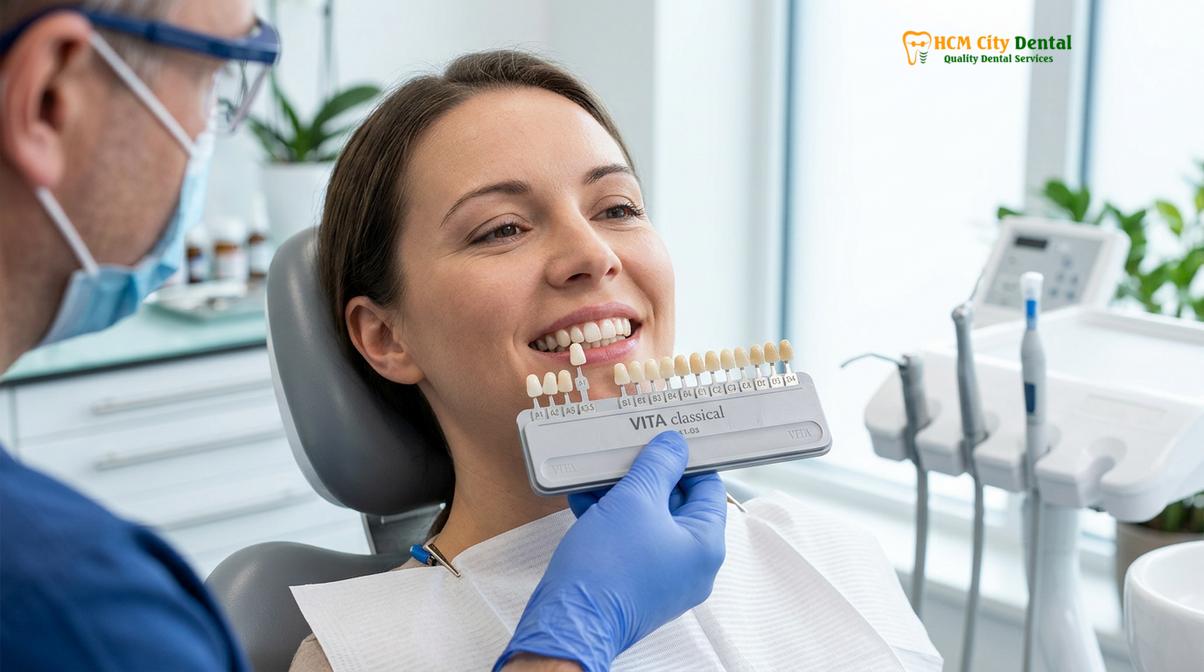
For international visitors, the dental tourism timeline plays a significant role. A patient visiting Vietnam for only a few days will naturally gravitate toward immediate chairside procedures. Conversely, an expatriate living in Saigon might prefer the gradual, controlled approach of home bleaching. Regardless of the path chosen, professional supervision ensures that the treatment is both safe for the enamel and effective in achieving a measurable shade scale improvement on the VITA Classical guide[1].
In-Office Power Bleaching: Immediate 90-Minute Results
In-office bleaching utilizes high-concentration hydrogen peroxide activated by advanced LED technology to achieve dramatic shade improvements in a single visit.
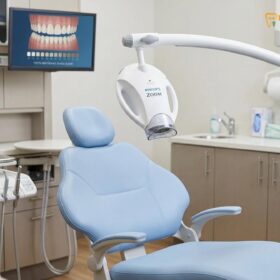
For patients seeking immediate gratification, in-office power bleaching is the undisputed gold standard. This procedure is meticulously controlled by a dental professional, allowing for the safe application of powerful bleaching agents that are not legally available over the counter. At our clinic, the technology standard relies on the original Philips Zoom! WhiteSpeed blue LED technology and Beyond Polus Halogen/LED systems, both manufactured in the USA.
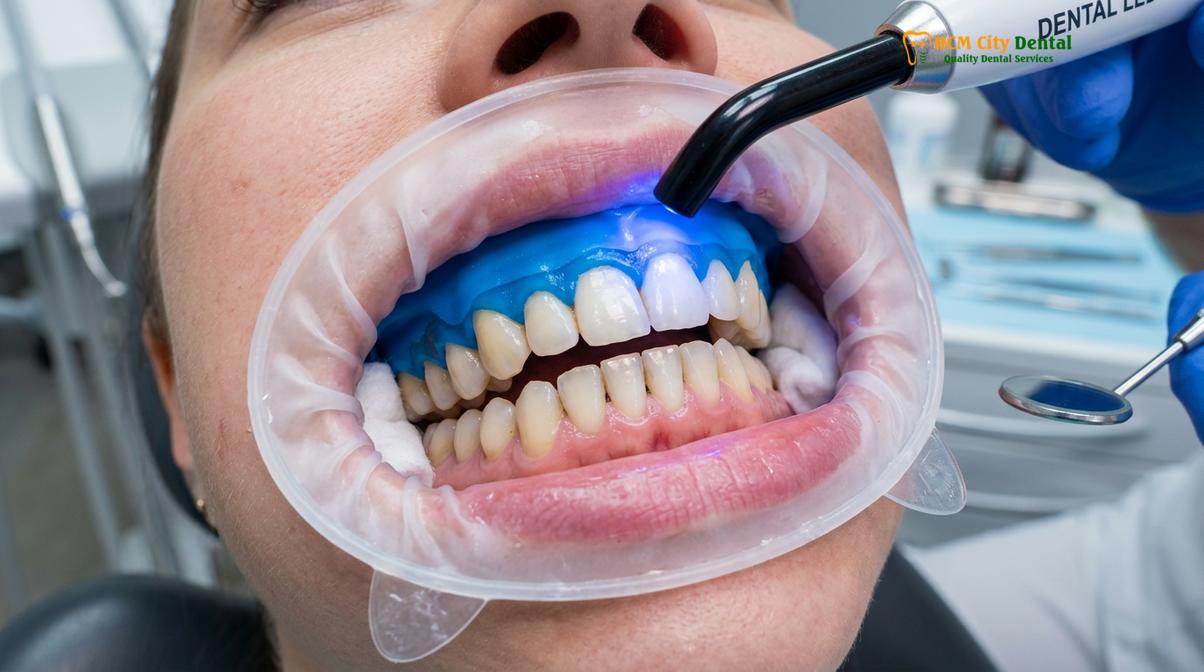
The clinical workflow for in-office bleaching is precise. First, the dentist isolates the teeth using a liquid rubber dam, which is light-cured to protect the delicate gingival tissues from chemical burns. Once the soft tissues are secured, a high hydrogen peroxide concentration gel (typically 25% to 40%) is applied directly to the enamel. The LED light is then positioned over the mouth to accelerate the oxidation process. This cycle is usually repeated three to four times in 15-minute increments.
“The integration of Amorphous Calcium Phosphate (ACP) into modern bleaching gels has revolutionized patient comfort. ACP actively fills exposed dentinal tubules in real-time, rebuilding enamel and significantly reducing the transient sensitivity that historically accompanied power bleaching.”
One of the primary concerns with high-concentration bleaching is post-operative sensitivity, clinically known as transient pulpitis. To combat this, the Philips Zoom! gel utilizes a proprietary desensitizer protocol containing Amorphous Calcium Phosphate (ACP). This compound not only mitigates sensitivity but also adds a brilliant luster to the final result[2].
Understanding the pricing structure is crucial for patients comparing professional vs home whitening cost vietnam. Currently, the walk-in rate for an in-office Zoom Whitening session is 4,666,667 VND (approximately $180). However, patients who secure a WhatsApp booking discount receive a 40% reduction, bringing the cost down to just 2,800,000 VND ($108). This exceptional value makes premium cosmetic care highly accessible.
Custom Take-Home Trays: Gradual and Controlled Brightening
Take-home whitening relies on custom-fabricated trays and professional-grade gel to gently oxidize stains over a period of one to two weeks.
While chairside treatments offer speed, custom take-home trays provide unparalleled control and convenience. This method is particularly favored by patients with a history of severe tooth sensitivity or those who wish to brighten their teeth gradually in the privacy of their own homes.
The process begins in the clinic with precise digital or alginate impressions of your dental arches. From these impressions, the laboratory fabricates custom-milled dental trays. Unlike generic, boil-and-bite trays found in pharmacies, these professional trays are scalloped exactly to your gingival margins. This precise fit ensures that the bleaching gel remains in constant contact with the tooth surface and does not leak onto the gums, which is a common cause of soft tissue irritation.
We provide patients with genuine Opalescence (Ultradent, USA) gel, renowned for its sticky, viscous formula that stays securely in the tray. The gel contains a PF formula (potassium nitrate and sodium fluoride) designed to strengthen enamel and minimize discomfort. Depending on the patient’s lifestyle and sensitivity profile, we recommend different concentrations:
- 10% Concentration: Ideal for overnight wear or for patients with highly sensitive teeth. The slower release provides excellent, stable results.
- 15% Concentration: Designed for daytime wear, typically requiring only 2 to 4 hours of application per day for standard teeth.
Financially, the take-home approach is highly cost-effective. The standard walk-in price for a Take-home Whitening Kit is 2,500,000 VND (~$96). With the 40% WhatsApp booking discount, the investment is reduced to just 1,500,000 VND ($58), providing a professional-grade solution at a fraction of Western prices.
Active Ingredients: Hydrogen Peroxide vs. Carbamide Peroxide
Hydrogen peroxide delivers rapid oxidation for chairside treatments, whereas carbamide peroxide offers a sustained release ideal for overnight home application.
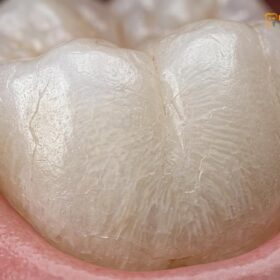
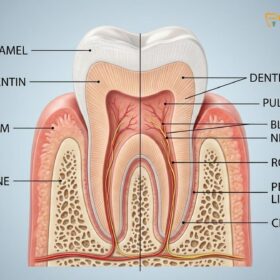
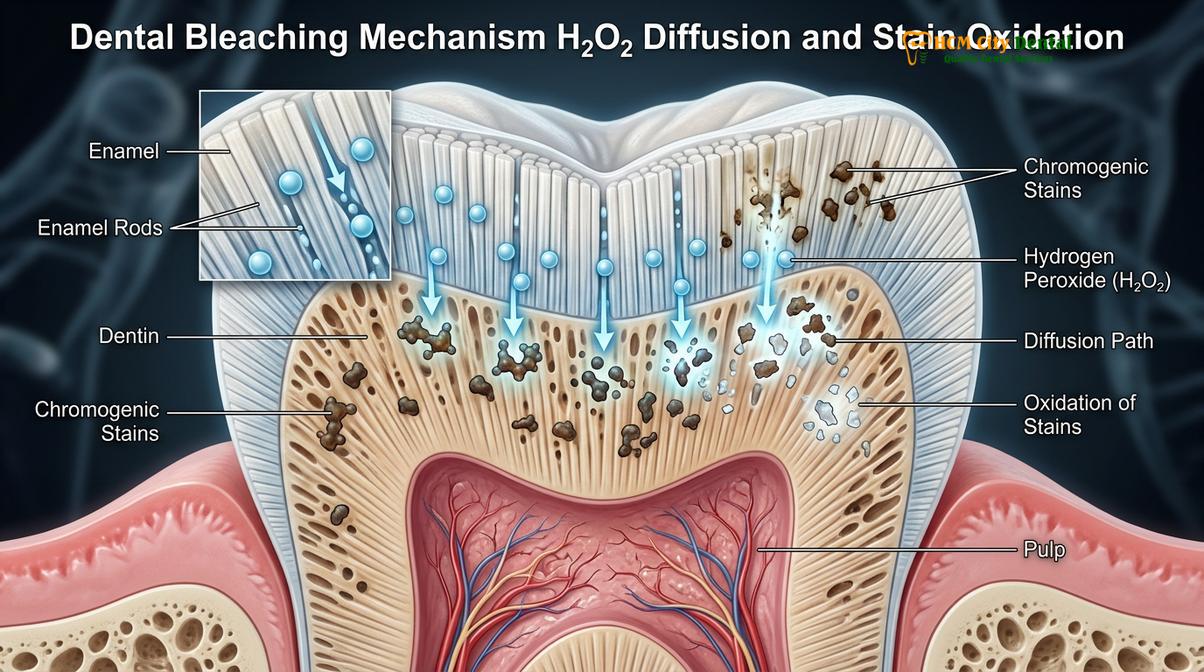
To truly understand the debate of in-office vs at-home teeth bleaching saigon, one must examine the underlying chemistry. All effective professional whitening relies on peroxide-based oxidation. The tooth enamel, while appearing solid, is actually a semi-permeable matrix of microscopic rods. Peroxide molecules are small enough to diffuse through these rods and reach the underlying dentin, where the majority of tooth discoloration resides.
Once inside the tooth, the peroxide breaks down into highly reactive free radicals. These free radicals attack the complex, double-bond carbon molecules (chromogens) that cause staining, breaking them into smaller, simpler, and lighter-colored structures. This chemical reaction alters the optical properties of the tooth, making it appear significantly whiter[3].
| Feature | Hydrogen Peroxide (In-Office) | Carbamide Peroxide (At-Home) |
|---|---|---|
| Chemical Nature | Pure active bleaching agent | Compound of hydrogen peroxide and urea |
| Breakdown Rate | Rapid (releases most power within 30-60 mins) | Slow (releases 50% in 2 hours, rest over 6 hours) |
| Typical Concentration | 25% – 40% | 10% – 22% |
| Primary Application | Chairside under clinical supervision | Custom whitening trays vs clinic teeth whitening |
| Sensitivity Profile | Higher risk of transient spikes | Lower risk due to urea elevating the pH |
The key difference lies in the carbamide peroxide breakdown process. Carbamide peroxide is essentially hydrogen peroxide compounded with urea. When it comes into contact with saliva, it breaks down into roughly one-third hydrogen peroxide and two-thirds urea. For example, a 15% carbamide peroxide gel yields approximately 5% active hydrogen peroxide. The urea component serves a dual purpose: it slows the release of the bleaching agent for extended exposure time, and it elevates the pH level in the mouth, which creates a more comfortable environment for the teeth and reduces sensitivity[4].
Convenience and Lifestyle Fit for Expats
Balancing professional commitments with cosmetic dental care is seamless when choosing a whitening protocol tailored to your specific daily routine.
For expatriates and busy professionals living in Ho Chi Minh City, convenience is often the deciding factor. In-office whitening is the ultimate time-saver, requiring only a single appointment to achieve a dramatic transformation. However, the post-treatment care requires strict adherence to dietary guidelines.
During the bleaching process, the acquired pellicle—a microscopic protein layer that naturally coats and protects the teeth—is temporarily removed. It takes approximately 48 hours for the salivary proteins to rebuild this protective barrier. During this crucial 48-hour recovery window, the enamel is highly susceptible to secondary staining. Patients must strictly adhere to a “White Diet,” avoiding all staining pigments, chromogens, and tannins found in coffee, red wine, tea, dark sodas, and soy sauce. If drinking colored beverages is absolutely necessary, using a straw is highly suggested to bypass the anterior teeth[5].
Clinical Warning: Avoid DIY Whitening Remedies
While professional treatments are safe for enamel under dental supervision, patients must strictly avoid DIY kitchen remedies like baking soda, activated charcoal, and lemon juice. These substances are highly abrasive and highly acidic, leading to irreversible enamel wear, severe sensitivity, and a higher susceptibility to future staining.
Take-home trays offer a different kind of convenience. While the results take longer to manifest, the daily time commitment is minimal, and the trays can be worn while working from home, reading, or sleeping. Furthermore, having your own custom trays allows for easy maintenance. A quick touch-up session every few months can keep your smile permanently bright, counteracting the inevitable daily stains accumulated from a normal diet.
Dr. Cuong’s Ultimate Combined Protocol
Combining in-office power bleaching with at-home maintenance trays yields the highest shade improvement and longest-lasting aesthetic results.
For patients who demand the absolute best results, Dr. Nguyen Van Cuong recommends a combined approach. This protocol leverages the immediate, powerful oxidation of chairside bleaching with the stabilizing, long-term benefits of home trays. It is the definitive solution for deeply ingrained stains and ensures that the initial investment is protected against future discoloration.
At HCMC Dental Clinic, this comprehensive approach is packaged as the Perfect Smile Combo (In-office + Take-home). The standard walk-in price is 7,166,667 VND (~$276), but with the WhatsApp booking discount, it is available for just 4,300,000 VND ($166). Alternatively, patients looking for a thorough cleaning before their chairside session can opt for the Bright Smile Combo (Clean + Zoom), discounted to 3,200,000 VND ($123).
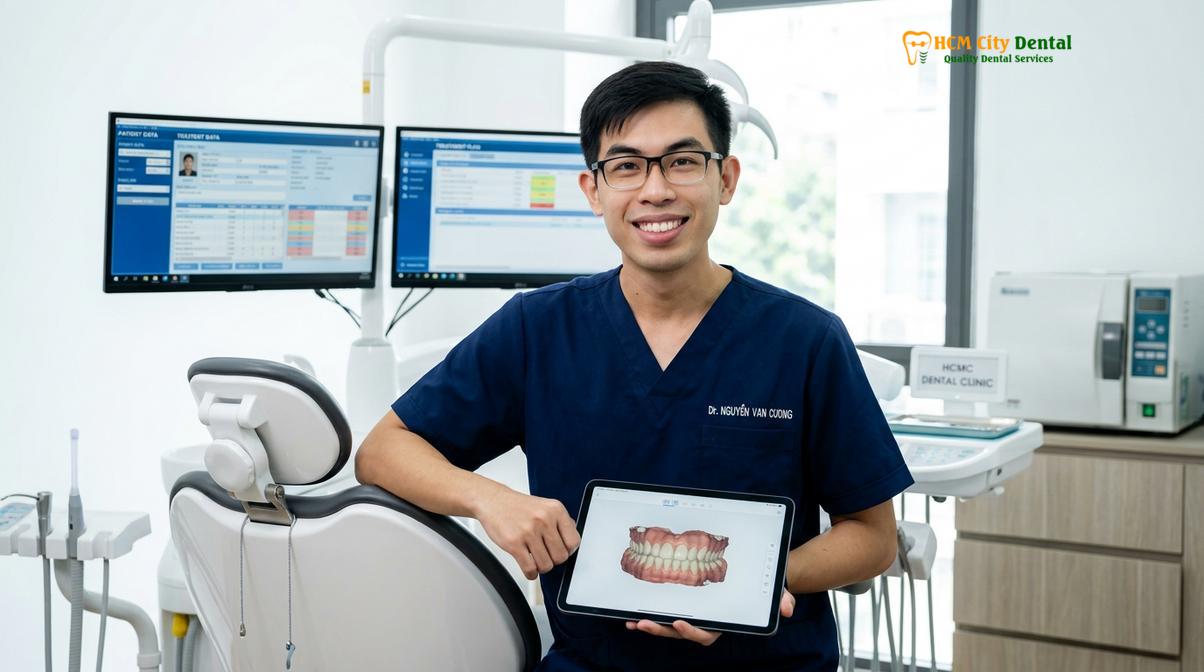
Cosmetic Sequencing: Whitening Before Restorations
A critical rule in cosmetic dentistry is treatment sequencing. Whitening must always be completed BEFORE getting restorations such as porcelain veneers, dental crowns, or composite bonding. Bleaching agents only oxidize natural tooth structure; they have zero effect on ceramic or resin materials. After completing the whitening protocol, patients must allow a mandatory 2-week stabilization period. This allows the final tooth shade to settle and oxygen to dissipate from the enamel before the dentist color-matches the new restorations.
“The combined protocol is not just about achieving the lightest possible shade; it is about longevity. By following up a power bleaching session with custom trays, we lock in the color and provide the patient with the tools necessary for lifelong post-treatment touch-ups.”
To ensure complete peace of mind, our clinic provides a global warranty and remote WhatsApp checkup support. Whether you are returning to your home country or traveling across Asia, our clinical team remains available to monitor your progress and advise on maintenance strategies.
When to See a Doctor
While professional teeth whitening is overwhelmingly safe, it is a medical procedure that requires proper oversight. You should schedule a clinical consultation before beginning any whitening regimen to ensure you are a suitable candidate. Whitening is generally contraindicated for pregnant or nursing women, children under 16, and individuals with severe enamel hypoplasia or untreated periodontal disease.
During or after treatment, contact your dentist immediately if you experience severe, shooting pain (extreme transient pulpitis) that does not subside with over-the-counter analgesics, noticeable blanching or chemical burns on your gums, or highly uneven, patchy whitening results. A professional evaluation is necessary to adjust the peroxide concentration or provide prescription-grade desensitizing agents.
Frequently Asked Questions
Is in-office whitening more effective than take-home kits?
Both methods are highly effective, but in-office whitening delivers immediate results in a single session, whereas take-home kits require consistent daily use over several weeks. Clinical studies show that when used for the appropriate duration, both professional protocols can achieve a comparable shade scale improvement. The choice depends entirely on your desired timeline and sensitivity tolerance.
How many days do I need to wear home trays?
For optimal results, custom take-home trays should typically be worn for 7 to 14 consecutive days. If you are using a 10% carbamide peroxide gel, overnight wear is recommended, while a 15% concentration is usually worn for 2 to 4 hours during the day. Your dentist will prescribe the exact duration based on your baseline tooth shade and sensitivity.
Can I do both in-office and at-home whitening?
Yes, combining both treatments is considered the gold standard for achieving and maintaining the brightest possible smile. An initial in-office session provides an immediate, dramatic color lift, while subsequent at-home tray usage stabilizes the new shade and allows for periodic post-treatment touch-ups. This combined protocol ensures long-lasting aesthetic results.
Is take-home gel safe for gums?
Professional take-home gel is completely safe for your gums when applied using custom-milled dental trays fabricated by a dentist. These custom trays are precisely scalloped to follow your gingival margins, preventing the bleaching agent from leaking onto soft tissues. Over-the-counter generic trays lack this precision and frequently cause chemical irritation to the gums.
Does teeth whitening damage enamel?
Professional teeth whitening does not damage or permanently alter the structural integrity of your tooth enamel. The active peroxide ingredients simply diffuse through the microscopic enamel rods to oxidize stains within the underlying dentin. While you may experience transient sensitivity as the dentinal tubules are temporarily exposed, the enamel quickly remineralizes through contact with natural saliva.
References
- American Dental Association. Clinical guidelines for professional teeth whitening. (2019).
- Journal of Dentistry. Amorphous calcium phosphate re-mineralization. (2022).
- Journal of Clinical Periodontology. Tooth bleaching safety and enamel micro-hardness. (2021).
- Journal of Esthetic and Restorative Dentistry. Carbamide vs Hydrogen Peroxide sensitivity. (2020).
- Operative Dentistry. Staining susceptibility of bleached enamel. (2018).