When replacing multiple missing teeth, dental implants offer independent, bone-preserving artificial roots, while dental bridges utilize adjacent natural teeth as anchors to support a continuous prosthetic. The optimal choice depends on jawbone density, the structural integrity of neighboring teeth, and your long-term functional goals. Prompt clinical intervention is essential to restore masticatory function and prevent complex structural collapse, as outlined by national prosthodontic guidelines[5].
Clinical Summary:
The clinical decision between a dental bridge vs implant for multiple teeth hinges on biomechanical, anatomical, and financial factors. Traditional bridges provide a rapid, non-surgical restoration by reshaping adjacent teeth to support a suspended prosthetic. Conversely, dental implants surgically replace the missing tooth roots with biocompatible titanium, offering superior jawbone preservation and independent structural support without compromising healthy adjacent dentition. Advanced digital workflows, including iTero and Medit i700 intraoral scanning, ensure microscopic precision for both modalities. Material selection, such as high-translucency Zirconia HT and aesthetic E.max lithium disilicate, provides lifelike results. Ultimately, while bridges present a lower initial cost and faster turnaround, implant-supported restorations deliver exceptional long-term stability and prevent progressive alveolar bone resorption.
Key Takeaways:
- Structural Independence: Implants are freestanding and do not require the irreversible reduction of healthy adjacent teeth.
- Bone Preservation: Only dental implants stimulate the alveolar ridge, preventing the progressive bone loss associated with missing roots.
- Treatment Timeline: Traditional bridges can be completed in a matter of days, whereas implants require a multi-month osseointegration phase.
- Material Excellence: Both options utilize premium CAD/CAM milled materials like Zirconia HT and E.max for maximum durability and aesthetics.
- Cost Efficiency: Bridges offer a lower upfront investment, but implants provide superior lifetime value by minimizing future structural failures.
The Challenge of Multiple Missing Teeth
Losing multiple adjacent teeth disrupts bite alignment, accelerates jawbone deterioration, and places excessive occlusal stress on remaining dentition. Addressing these gaps quickly is vital for maintaining the overall equilibrium of the dental arch.
The human dentition operates as a highly synchronized biomechanical system. When multiple adjacent teeth are lost, the equilibrium of the dental arch is immediately compromised. The remaining teeth are subjected to abnormal occlusal forces, which can lead to micro-fractures, accelerated enamel wear, and hypermobility. Furthermore, the absence of natural tooth contacts allows adjacent teeth to drift or tilt into the edentulous space, while opposing teeth may super-erupt (extrude) out of their sockets in search of a biting partner. This cascading effect severely complicates future restorative efforts and can trigger temporomandibular joint (TMJ) dysfunction.
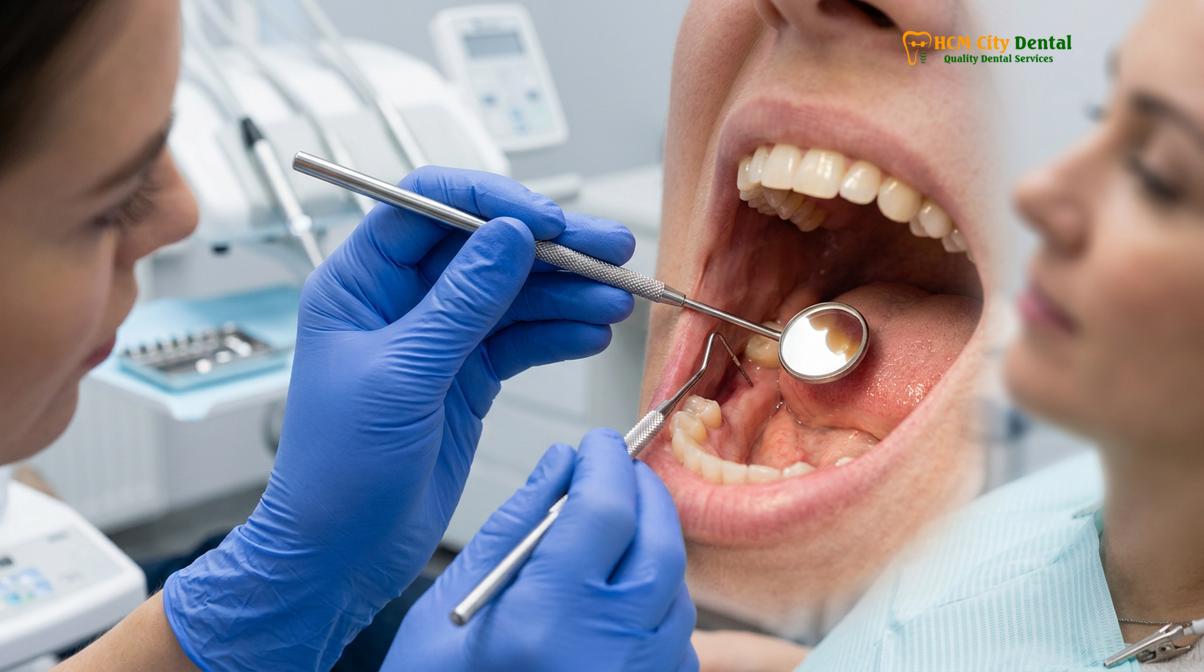
Beyond the visible shifting of teeth, the most insidious consequence of tooth loss occurs beneath the gum line. The alveolar bone, which forms the tooth sockets, relies on the mechanical stimulation of chewing forces transmitted through the periodontal ligament to maintain its volume and density. When teeth are extracted, this stimulation ceases, initiating a process known as jawbone resorption. The bone rapidly atrophies, losing both width and height. This not only compromises the foundation for future prosthetics but also leads to premature facial aging, characterized by sunken cheeks and unsupported lips.
“The loss of multiple teeth is not merely an aesthetic inconvenience; it is a progressive structural deficit. Our primary clinical objective is to halt the biomechanical collapse of the dental arch while restoring optimal masticatory function and facial harmony.”
Addressing multiple missing teeth requires a comprehensive prosthodontic strategy. The clinician must evaluate the span of the edentulous gap, the periodontal health of the remaining dentition, the volume of available bone, and the patient’s aesthetic expectations. Historically, removable partial dentures were the standard of care; however, modern dentistry prioritizes fixed restorations that closely mimic natural tooth function and appearance.
Traditional Dental Bridges: Structure and Preparation
A traditional bridge requires reshaping healthy adjacent teeth to serve as abutments, supporting a custom-milled pontic that spans the edentulous gap. This fixed prosthetic delivers rapid aesthetic and functional restoration without surgical intervention.
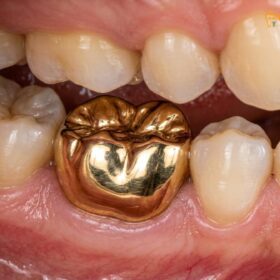
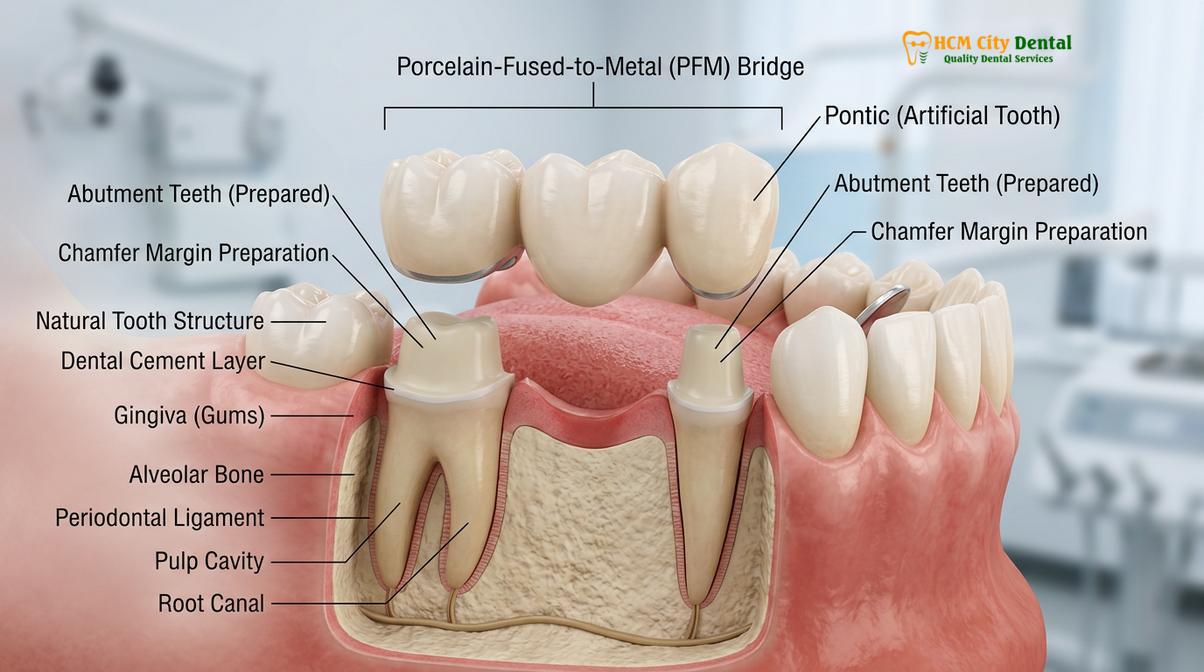
A traditional dental bridge is a continuous, multi-unit prosthetic designed to span the gap left by missing teeth. It consists of two primary components: the abutment crowns, which are cemented onto the natural teeth adjacent to the space, and the pontics, which are the artificial teeth suspended between the abutments. To accommodate the abutment crowns, the supporting natural teeth must undergo irreversible preparation. This involves the circumferential reduction of tooth enamel and dentin to create sufficient restorative space for the ceramic material.
The precision of tooth preparation is paramount to the success of the bridge. Clinicians must meticulously design the preparation margins—typically utilizing a chamfer or shoulder design—to ensure a seamless transition between the restoration and the natural tooth structure. This microscopic marginal seal prevents bacterial microleakage and recurrent decay. Furthermore, the preparation must respect the biologic width, the natural dimension of the soft tissue attached to the tooth above the alveolar crest. Violating the biologic width can trigger chronic gingival inflammation and unpredictable bone loss.
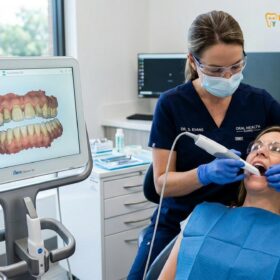
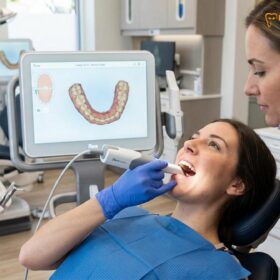
The fabrication of modern dental bridges has been revolutionized by digital dentistry. At HCMC Dental Clinic in Ho Chi Minh City, the integration of state-of-the-art iTero and Medit i700 Intraoral Scanners has entirely replaced messy, uncomfortable traditional silicone impressions. These optical scanners capture highly accurate 3D topographical data of the prepared teeth and surrounding soft tissues in real-time. This digital file is instantly transmitted to the laboratory, ensuring unparalleled precision in the CAD/CAM milling process[4].
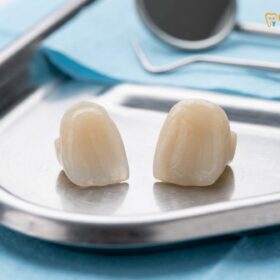
Material selection is critical for multi-unit restorations. We utilize only authentic, certified materials from industry-leading manufacturers. For posterior bridges requiring ultimate flexural strength to withstand heavy chewing forces, Zirconia HT is the material of choice. Zirconia is a biocompatible ceramic that offers exceptional fracture toughness while maintaining high translucency[1]. For anterior restorations where lifelike aesthetics are the primary concern, E.max lithium disilicate provides outstanding optical properties, mimicking the natural opalescence and light transmission of human enamel[2].
Dental Implants: Anchored Stability and Bone Preservation
Dental implants surgically replace missing tooth roots with biocompatible titanium posts, providing a freestanding foundation for crowns or bridges. This approach preserves adjacent natural teeth and actively stimulates the underlying jawbone.
Dental implants represent the most anatomically accurate method of tooth replacement available in modern dentistry. Unlike bridges that rely on the structural integrity of neighboring teeth, implants are freestanding fixtures surgically embedded into the alveolar bone. Constructed from medical-grade titanium, these posts possess a unique biocompatible property that allows living bone cells to grow directly onto their surface—a process known as osseointegration. Once fully integrated, the implant serves as a rigid, immovable anchor capable of supporting immense occlusal loads.
For patients missing multiple adjacent teeth, an implant-supported bridge is often the most biomechanically sound solution. Instead of placing an individual implant for every missing tooth—which can be anatomically challenging and cost-prohibitive—clinicians can strategically place two implants to support a 3-unit or 4-unit bridge. For example, if three consecutive teeth are missing, an implant is placed at each end of the gap. After the healing phase, a custom 3-unit bridge is fabricated, with the two outer crowns attaching to the implants and the middle pontic suspended between them. This configuration provides exceptional stability while minimizing surgical intervention.
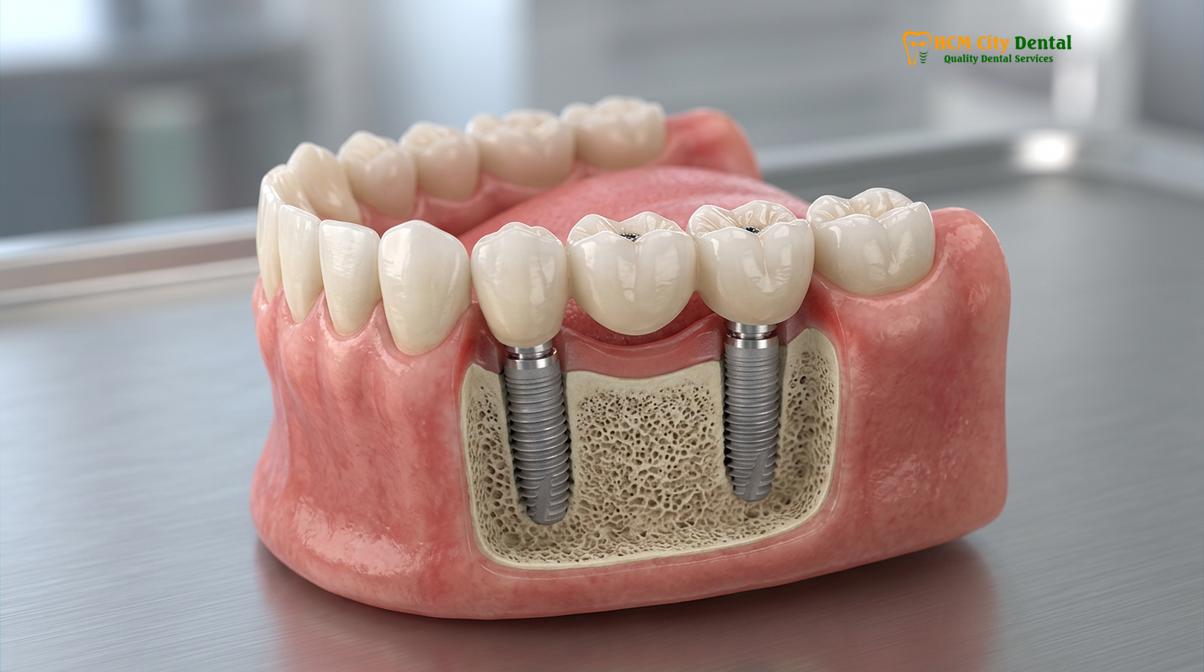
The connection between the implant fixture and the final ceramic restoration is mediated by an abutment. In modern implant prosthodontics, the choice between screw-retained vs. cement-retained implant crowns is a critical clinical decision. Screw-retained restorations are secured via a small access hole in the occlusal surface, which is later sealed with composite resin. This design allows for easy retrievability if the ceramic chips or if the abutment screw requires tightening. Cement-retained restorations utilize a custom abutment onto which the crown is permanently cemented, offering superior aesthetics in the anterior zone. However, extreme care must be taken to remove all excess cement, as residual subgingival cement is a primary cause of peri-implantitis[3].
Clinical Case Study: Implant-Supported Restoration
A 55-year-old patient presented to HCMC Dental Clinic in Ho Chi Minh City with three missing posterior teeth in the lower right quadrant, resulting in severe chewing difficulty and adjacent tooth migration. Instead of preparing the healthy neighboring teeth for a massive 5-unit traditional bridge, the clinical team strategically placed two titanium implants. Following a standard osseointegration period, a highly durable 3-unit Zirconia HT implant-supported bridge was fabricated using CAD/CAM technology. The patient regained excellent masticatory function, preserved their natural adjacent teeth, and halted localized bone resorption.
Bone Loss Prevention and Clinical Considerations
Without the mechanical stimulation of natural tooth roots, the alveolar ridge undergoes rapid atrophy. Dental implants are the only restorative solution that mimics natural root function to halt progressive bone resorption.
The preservation of alveolar bone volume is a critical, yet often overlooked, aspect of restorative dentistry. The jawbone is a dynamic, living tissue that constantly remodels itself in response to mechanical stress. According to Wolff’s Law of bone adaptation, bone density increases in areas subjected to functional loading and decreases in areas where loading is absent. Natural tooth roots transmit the forces of mastication deep into the alveolar bone, signaling the body to maintain the structural integrity of the ridge.
When teeth are extracted, this vital bio-mechanical feedback loop is severed. The body, perceiving the bone in the edentulous area as no longer necessary, begins to resorb the calcium and structural matrix. The resulting loss of vertical height and horizontal width not only makes future implant placement difficult—often necessitating complex bone grafting procedures—but also alters the patient’s facial architecture.
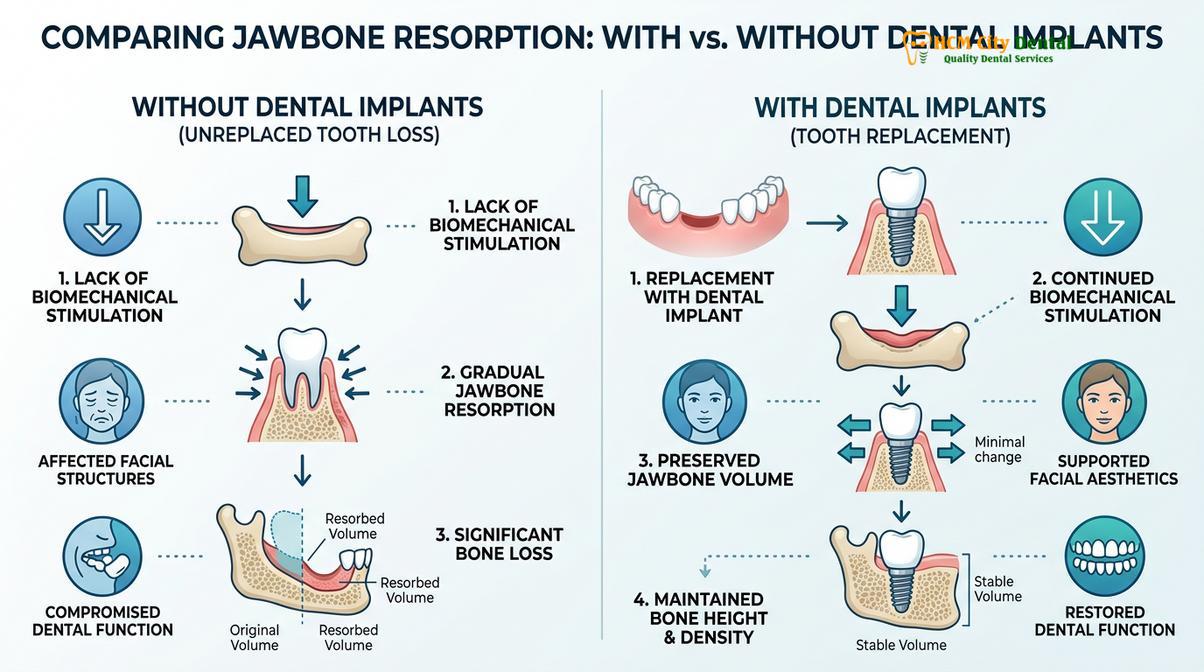
Traditional dental bridges, while excellent at restoring the visible crown portion of the teeth and preventing the shifting of adjacent dentition, do absolutely nothing to stimulate the underlying bone. The pontics simply rest on or slightly above the gum tissue. Over time, as the bone beneath the bridge resorbs, a visible gap may develop between the pontic and the gingiva, creating an unesthetic space and a trap for food debris.
When to Consult a Specialist:
Patients experiencing shifting teeth, chronic jaw pain, or difficulty chewing after tooth loss should seek immediate clinical evaluation. Delaying treatment accelerates alveolar bone resorption and complicates future restorative procedures. Furthermore, patients with existing traditional bridges must maintain meticulous oral hygiene using specialized floss threaders; failure to remove plaque beneath the pontic can lead to severe gingival inflammation and recurrent decay on the supporting abutment teeth.
Cost vs. Long-Term Value Comparison
While dental bridges present a lower initial financial investment, implant-supported restorations often yield superior long-term value by minimizing the need for future abutment repairs and preventing costly bone grafting procedures.
When evaluating a dental bridge vs implant for multiple teeth, the financial investment is a primary consideration for most patients. It is essential to analyze not only the upfront costs but also the projected long-term value, maintenance requirements, and the potential biological cost to surrounding tissues. Clinical guidelines from organizations such as the Vietnam Odonto-Stomatology Association (VOSA) emphasize the importance of weighing these long-term biological factors during treatment planning.
| Clinical Feature | Traditional Dental Bridge | Implant-Supported Bridge |
|---|---|---|
| Structural Support | Relies on reshaping healthy adjacent teeth | Freestanding titanium fixtures in the jawbone |
| Bone Preservation | Does not stimulate underlying alveolar bone | Actively prevents progressive jawbone resorption |
| Treatment Timeline | Rapid completion within a few days | Requires multi-month osseointegration phase |
| Long-Term Value | Moderate; abutment teeth may require future care | High; protects adjacent teeth and bone structure |
Traditional bridges generally require a lower initial financial outlay and offer a significantly faster treatment timeline. Because the procedure does not involve surgery or a prolonged osseointegration phase, the entire restoration can be completed in a matter of days. However, the biological cost must be factored into the equation. The irreversible preparation of healthy abutment teeth increases their susceptibility to future complications, such as pulpal necrosis requiring root canal therapy, or recurrent decay at the crown margins. If an abutment tooth fails, the entire bridge must be sectioned and replaced, often leading to a more extensive and costly intervention down the line.
Implant-supported restorations demand a higher initial investment due to the cost of the titanium fixtures, surgical placement, and specialized prosthetic components. However, their long-term value is widely considered superior. Because implants do not rely on adjacent teeth for support, the neighboring natural dentition remains untouched and healthy. Furthermore, by preserving the alveolar bone, implants prevent the cascading structural issues associated with jawbone atrophy. Over a lifetime, the reduced need for replacement and the preservation of natural tooth structure often make dental implants the more cost-effective and biologically sound choice.
Dr. Nguyen Van Cuong, a leading prosthodontic specialist, emphasizes that comprehensive treatment planning is the cornerstone of successful full-arch rehabilitation. At HCMC Dental Clinic, Dr. Cuong meticulously evaluates each patient’s unique anatomical constraints and aesthetic goals before recommending a specific restorative pathway. His evidence-based approach ensures that whether a patient receives a traditional bridge or an implant-supported prosthesis, the final result delivers optimal masticatory function and long-term stability.
“Choosing between a bridge and an implant is a decision that impacts the biomechanical future of your smile. We prioritize patient education, ensuring you understand the long-term implications of each modality on your bone health and adjacent teeth.”
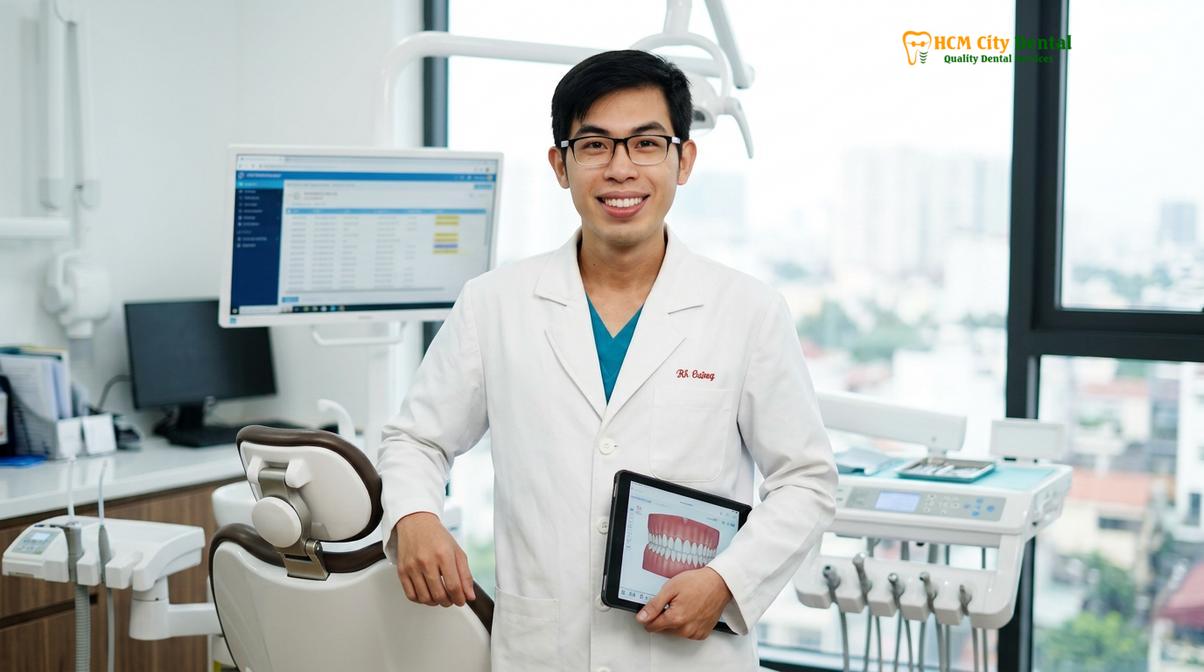
If you are missing multiple teeth and want to explore the best restorative options for your specific clinical needs, professional evaluation is the first step. Contact HCMC Dental Clinic in Ho Chi Minh City today to schedule a comprehensive consultation and discover how advanced dental crowns and bridges or implant therapies can permanently restore your smile and oral health.
References
- Journal of Prosthodontic Research. Flexural strength and marginal adaptation of zirconia crowns.
- Journal of Esthetic and Restorative Dentistry. Translucency and clinical performance of lithium disilicate.
- International Journal of Prosthodontics. Screw-retained versus cement-retained implant crowns: A clinical review.
- Journal of Dentistry. CAD/CAM milling accuracy and intraoral scanning protocols.
- Vietnam Odonto-Stomatology Association (VOSA). Clinical guidelines for fixed partial dentures and implant restorations.