A pulpotomy is a highly effective, minimally invasive procedure to save an infected baby tooth, and it is generally well-tolerated by kids. Using modern local anesthesia and behavioral management, pediatric dentists strive to ensure the treatment is comfortable, relieving toothaches while preserving the natural tooth structure.
Clinical Summary:
When a child experiences severe tooth decay that reaches the inner nerve (pulp) of a primary tooth, a pulpotomy—often referred to as a baby root canal—is the clinical standard of care. Parents frequently worry about pulpotomy pain in kids, but the procedure is designed to eliminate existing pain, not cause it. By utilizing advanced topical numbing gels, precise local anesthesia, and proven psychological desensitization techniques like Tell-Show-Do, pediatric specialists can remove the infected coronal pulp while keeping the child entirely comfortable. Preserving the baby tooth through a pulpotomy is crucial for maintaining space for permanent teeth, preventing complex orthodontic issues, and supporting healthy jaw development. Recovery is typically swift, with only mild, temporary tissue tenderness that resolves within 48 hours.
Key Takeaways:
- Pain Relief, Not Pain Creation: A pulpotomy removes the infected nerve tissue causing your child’s toothache, providing immediate relief under profound local anesthesia.
- Minimally Invasive: Unlike adult root canals, a pulpotomy only removes the upper portion of the pulp, leaving the healthy root structure intact and vital.
- Rapid Recovery: Most children resume normal activities within 24 hours, requiring only mild over-the-counter analgesics for temporary gum tenderness.
- Orthodontic Prevention: Saving the primary tooth prevents neighboring teeth from shifting, reducing the future need for complex braces or space maintainers.
- Behavioral Support: Techniques like Tell-Show-Do ensure the child feels safe, informed, and in control throughout the entire clinical workflow.
Pulpotomy vs. Adult Root Canal
A pulpotomy removes only the infected upper portion of the nerve in a baby tooth, whereas an adult root canal removes the entire nerve down to the roots.
Understanding the distinction between pediatric and adult endodontic treatments is essential for alleviating parental anxiety. When a dentist recommends a primary tooth nerve treatment, parents often envision the lengthy, complex root canal procedures performed on adults. However, the anatomical differences between primary (baby) teeth and permanent teeth dictate a vastly different, much gentler clinical approach. Primary teeth have thinner enamel and relatively larger pulp chambers, meaning decay can reach the nerve much faster than in adult teeth[1].
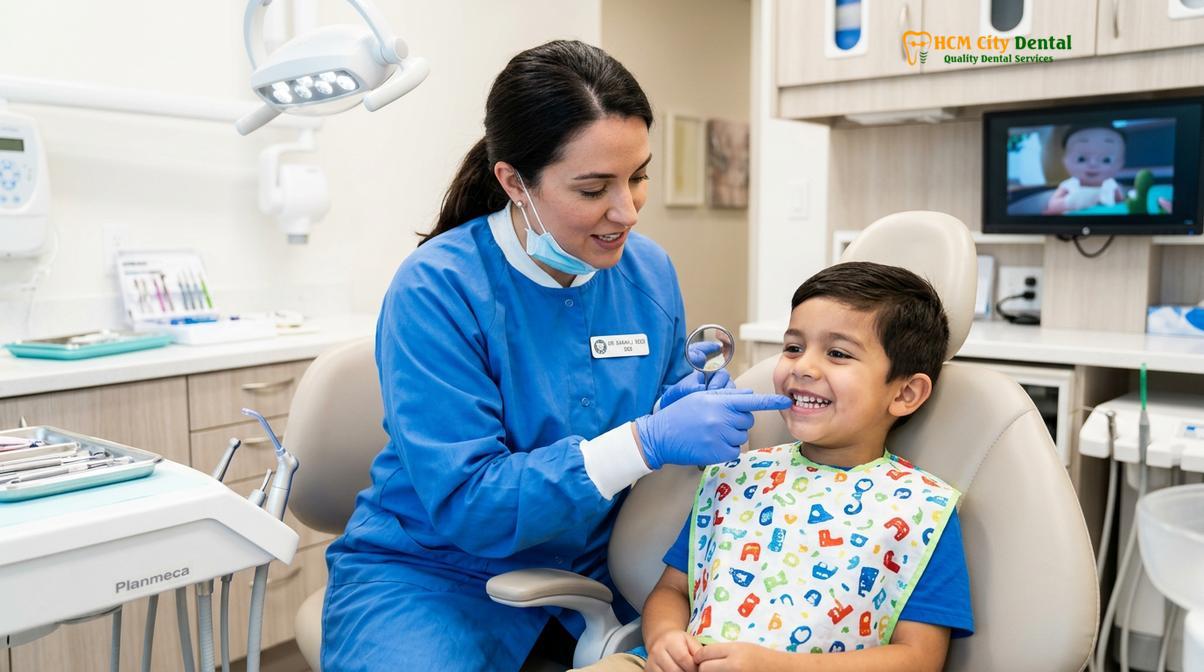
A pulpotomy is specifically designed for primary teeth where the infection is confined to the coronal pulp—the nerve tissue located in the crown of the tooth above the gumline. During this procedure, the pediatric dentist amputates the inflamed coronal pulp, applies a soothing medicament to the remaining healthy radicular (root) pulp to arrest bleeding and prevent bacterial ingress, and then seals the tooth. This keeps the roots of the baby tooth vital and healthy, allowing them to resorb naturally when it is time for the permanent tooth to erupt.
In contrast, an adult root canal (or a pediatric pulpectomy) is required when the infection has spread deep into the root canals. When comparing pulpectomy vs pulpotomy, a pulpectomy involves the complete extirpation of all pulp tissue from both the crown and the roots, followed by filling the canals with a resorbable material. Whenever clinically viable, a pulpotomy is preferred due to its shorter chair time, high success rate, and minimal invasiveness, which is highly beneficial for a child’s tolerance and cooperation.
| Clinical Feature | Pediatric Pulpotomy | Adult Root Canal (Pulpectomy) |
|---|---|---|
| Target Tissue | Coronal pulp (upper nerve only) | Entire pulp (crown and root canals) |
| Tooth Type | Primary (baby) teeth | Permanent teeth (or severely infected baby teeth) |
| Procedure Time | 15 to 30 minutes | 60 to 90+ minutes |
| Root Vitality | Roots remain vital and healthy | Roots are completely cleaned and filled |
| Primary Goal | Preserve tooth until natural shedding | Permanent preservation of the tooth |
When is a Pulpotomy Required?
A pulpotomy is clinically necessary when deep tooth decay breaches the pulp chamber of a primary tooth, causing inflammation, sensitivity, or a persistent toothache.
Early childhood caries can progress rapidly. Because the enamel of a baby tooth is significantly thinner than that of an adult tooth, cavities can breach the protective outer layers and invade the sensitive inner pulp chamber in a matter of months. When this occurs, simple fissure sealants or standard fillings are no longer sufficient. The bacteria cause pulpitis (inflammation of the nerve), which leads to the classic symptoms of a pediatric toothache: pain when chewing, sensitivity to hot or cold foods, and spontaneous throbbing pain that may wake the child at night.
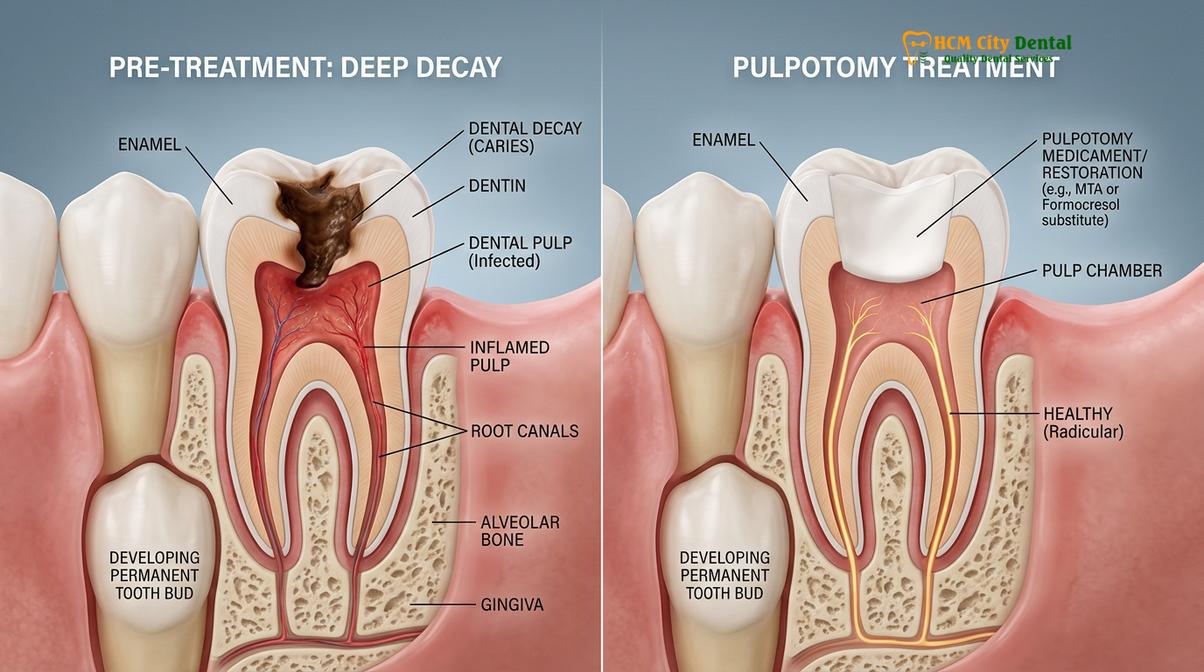
Parents often ask why a severely decayed baby tooth cannot simply be extracted. The clinical reasoning is rooted in holistic pediatric development. Primary teeth are not just temporary chewing tools; they are critical biological space maintainers. If a baby molar is extracted prematurely, the adjacent teeth will naturally drift into the empty space. This blocks the eruption pathway for the developing permanent tooth underneath, leading to severe crowding, impaction, and the inevitable need for complex orthodontic intervention later in life[5].
Furthermore, premature tooth loss can impact a child’s speech articulation, chewing efficiency, and nutritional intake. According to national health guidelines in Vietnam, preserving the primary dentition is a cornerstone of preventing broader systemic and developmental issues in children[6]. At HCMC Dental Clinic, our diagnostic protocol involves a comprehensive evaluation. Before recommending a pulpotomy, we assess the child’s overall oral health, including an airway assessment to check for mouth breathing, which can exacerbate dry mouth and decay. We also evaluate the need for interceptive orthodontics to ensure the jaw is developing correctly. By saving the tooth with a pulpotomy, we maintain the structural integrity of the dental arch.
Pain Control: Anesthesia & Local Numbing Gels
Pediatric dentists use topical numbing gels followed by precise local anesthesia, ensuring the child feels absolutely no sharp pain during the pulpotomy procedure.
The most common query from anxious parents is whether a baby root canal is painful. The definitive clinical answer is no. The primary objective of a pulpotomy is to eliminate the severe pain caused by the bacterial infection. To achieve this comfortably, pediatric dentistry relies on a dual approach: advanced pharmacological pain control and specialized behavioral management techniques[2].
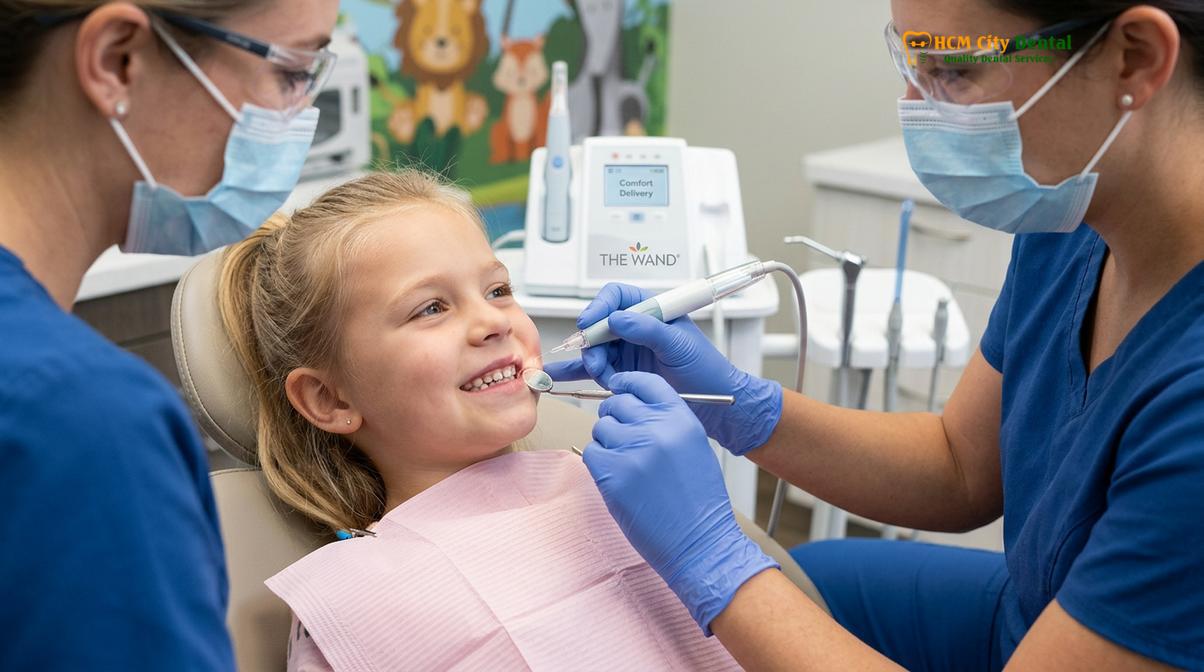
Before any injection is administered, the dentist applies a high-strength topical anesthetic gel (often fruit-flavored) to the child’s gums. This gel numbs the surface tissue completely. Once the mucosa is desensitized, a precise dose of local anesthetic is delivered slowly to numb the tooth and surrounding nerves. During the procedure, the child will feel pressure and vibration, but no sharp pain. For children with severe dental anxiety or special needs, conscious sedation or nitrous oxide (laughing gas) may be utilized to induce a state of deep relaxation while maintaining vital reflexes.
“Effective pediatric pain management extends beyond the syringe. It is about building trust. When a child understands what is happening in a non-threatening way, their perception of pain decreases dramatically, allowing for a smooth, cooperative clinical experience.”
Equally important to the anesthesia is the “Tell-Show-Do” behavioral management technique. This psychological desensitization protocol is a cornerstone of pediatric dentistry[3]. We walk children through the procedure using child-friendly terminology:
- Tell: We explain the steps using imaginative language. Anesthesia becomes “sleepy juice,” the rubber dam isolation is a “tooth raincoat,” and the ultrasonic cleaner is a “water whistle.”
- Show: We demonstrate the instrument on their finger or hand. For example, letting them feel the soft vibration of the rotating cup or the gentle puff of the air syringe.
- Do: We proceed with the treatment only when the child is comfortable. We also establish a “stop on request” protocol, empowering the child to raise their left hand if they need a break. This sense of control significantly reduces anxiety.
Step-by-Step Procedure
The workflow involves numbing the tooth, removing the decayed tissue and coronal pulp, applying a soothing medication, and sealing the tooth with a biocompatible filling or crown.
A pediatric pulpotomy is a highly streamlined procedure, typically completed in a single visit lasting 15 to 30 minutes. The efficiency of the workflow is crucial to accommodate the limited attention span of a young child. Here is the standard clinical protocol followed by specialists:
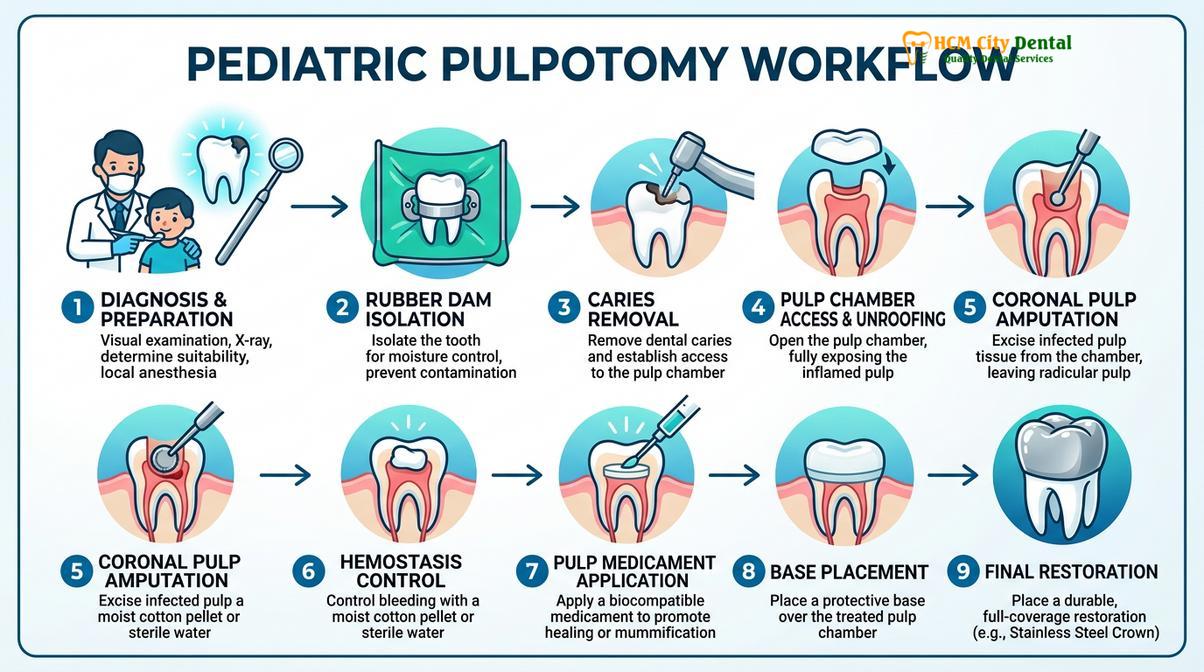
- Isolation and Preparation: After profound local anesthesia is achieved, the tooth is isolated using a dental rubber dam. This prevents saliva and bacteria from contaminating the sterile workspace and protects the child’s airway from water and debris.
- Caries Excavation: The dentist uses specialized instruments to carefully remove all decayed enamel and dentin, gaining access to the pulp chamber.
- Coronal Pulp Amputation: The infected upper portion of the nerve (coronal pulp) is gently removed. The healthy nerve tissue residing in the root canals is left undisturbed.
- Hemostasis and Medication: A sterile cotton pellet is applied to stop any bleeding. A specialized medicament is then placed over the root stumps. This medication soothes the remaining nerve, prevents bacterial growth, and promotes healing.
- Final Restoration: The empty pulp chamber is filled with a biocompatible base. Finally, the tooth must be sealed to restore its strength and function.
Regarding the final restoration, material selection is critical. We prioritize fluoride-releasing glass ionomer cement (GIC) for baby teeth due to its chemical bonding ability, moisture tolerance, and continuous fluoride release, which actively prevents recurrent decay around the filling margins[4]. Composite resin is utilized in areas where higher structural strength and perfect aesthetics are required. For molars with extensive structural loss, a pre-fabricated Stainless Steel Crown or a white Zirconia crown is often the most durable solution until the tooth sheds naturally.
Clinical Case Study: HCMC Dental Clinic
A 6-year-old patient visited our facility at HCMC Dental Clinic in Ho Chi Minh City presenting with spontaneous pain in a lower right primary molar, disrupting his sleep. Clinical and radiographic examination revealed deep caries communicating with the pulp chamber. Utilizing the Tell-Show-Do technique and profound local anesthesia, a pulpotomy was performed in under 20 minutes. The tooth was restored with a fluoride-releasing GIC base and a stainless steel crown. The patient reported zero pain during the procedure and returned to normal chewing function the following day, successfully preserving the arch space for his future permanent premolar.
Post-Treatment Sensitivity & Care
Baby root canal recovery is typically rapid, with most children experiencing only mild, temporary gum tenderness that resolves within 24 to 48 hours.
Parents are often pleasantly surprised by how quickly children bounce back after a pulpotomy. Because the procedure removes the source of the severe toothache, the child generally feels significantly better than they did before the appointment. However, proper post-operative care is essential to ensure a smooth baby root canal recovery and to protect the new restoration.
Immediately following the procedure, the child’s lips, cheeks, and tongue will remain numb for 1 to 2 hours. During this window, it is crucial to monitor the child closely to prevent accidental biting or scratching of the numb tissues. Do not allow the child to eat any solid foods until the anesthesia has completely worn off.
Mild tissue inflammation around the injection site or the treated tooth is a normal physiological response. This minor discomfort can be easily managed with age-appropriate doses of over-the-counter pediatric ibuprofen or acetaminophen, as directed by your dentist. The child should continue their normal oral hygiene routine, brushing twice daily and flossing, though they should be gentle around the treated area for the first few days.
“The success of a pediatric dental treatment relies heavily on post-operative compliance. Maintaining excellent oral hygiene and attending scheduled follow-ups ensures the treated primary tooth remains a healthy space maintainer until natural exfoliation.”
When to Seek Immediate Dental Care
While complications are rare, parents should monitor their child for specific signs that indicate the need for a prompt follow-up visit.
Although a pulpotomy has a very high clinical success rate, it is important to be aware of potential warning signs during the recovery phase. If your child experiences any of the following symptoms, you should contact your pediatric dentist immediately:
- Persistent or Worsening Pain: While mild tenderness is normal, severe throbbing pain that does not respond to over-the-counter analgesics is a sign that the infection may have spread to the root canals.
- Swelling: Any visible swelling on the gums (such as a pimple-like bump or fistula), cheek, or jaw indicates an active abscess that requires immediate clinical evaluation.
- Fever: An unexplained fever following a dental procedure can be a sign of systemic infection.
- Loose Restoration: If the temporary filling or the stainless steel crown becomes loose or falls out, it must be replaced promptly to prevent bacterial re-contamination of the pulp chamber.
Pediatric Dentistry Pricing & Treatment Options
Transparent pricing and comprehensive care plans ensure that children receive the highest standard of pediatric dentistry, from preventive sealants to space maintainers.
Dr. Nguyen Van Cuong, a leading specialist at HCMC Dental Clinic, emphasizes that early intervention is key to preventing severe dental anxiety in children. With extensive experience in pediatric care, Dr. Cuong utilizes advanced behavioral management techniques to ensure every child feels safe and comfortable. His clinical approach focuses on preserving primary teeth to support optimal jaw development and future orthodontic success, which is why he strongly advocates for comprehensive pediatric dentistry protocols.
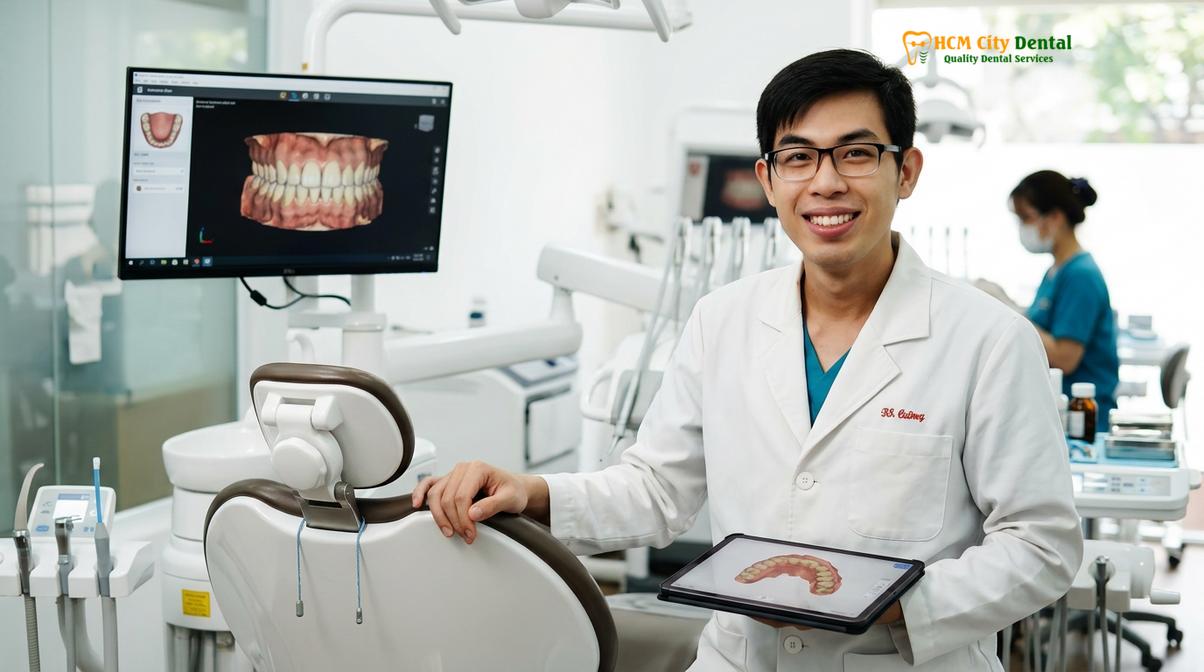
At our facility in Saigon, we believe in providing transparent, accessible, and world-class pediatric dental care. Our treatment protocols are designed not only to address immediate restorative needs but also to guide the child’s long-term oral development. We strongly recommend scheduling the best age for kids first orthodontic evaluation by age 7 to monitor jaw growth and tooth eruption patterns.
According to the latest clinic fee schedule, our comprehensive pediatric services are structured to provide exceptional value, especially for families utilizing our direct booking channels. Please note that patients can take advantage of a -40% WhatsApp booking discount on select services.
- Kids Consultation & Diagnostic check-up: 300,000 to 500,000 VND (~$12 to $20 USD) (Walk-in: 500,000 to 800,000 VND).
- Fissure Sealant (per tooth): 400,000 to 600,000 VND (~$16 to $24 USD) (Walk-in: 700,000 to 1,000,000 VND).
- Fluoride Varnish Application: 300,000 to 500,000 VND (~$12 to $20 USD) (Walk-in: 500,000 to 800,000 VND).
- Pediatric Pulpotomy (Baby Root Canal): 1,000,000 to 1,500,000 VND (~$40 to $60 USD) (Walk-in: 1,500,000 to 2,000,000 VND).
- Stainless Steel Crown (SSC): 1,200,000 to 1,800,000 VND (~$48 to $72 USD) (Walk-in: 1,800,000 to 2,500,000 VND).
If your child is experiencing a severe toothache or sensitivity, do not wait for the infection to worsen. Contact HCMC Dental Clinic in Ho Chi Minh City today to schedule a gentle, comprehensive pediatric evaluation and ensure their smile remains healthy and pain-free.
References
- American Academy of Pediatric Dentistry. Guideline on Pulp Therapy for Primary and Immature Permanent Teeth. (2022).
- Journal of Endodontics. Clinical Outcomes of Pulpotomy in Primary Molars: A Systematic Review. (2021).
- International Journal of Paediatric Dentistry. Behavior Management Techniques in Pediatric Dentistry. (2020).
- Pediatric Dentistry Journal. Biocompatible Materials for Primary Tooth Restorations: GIC vs Composite. (2019).
- Journal of the American Dental Association. The Role of Primary Teeth in Space Maintenance and Interceptive Orthodontics. (2023).
- Vietnam Ministry of Health (MOH). National Guidelines on Pediatric Dental Care and Caries Prevention. (2021).