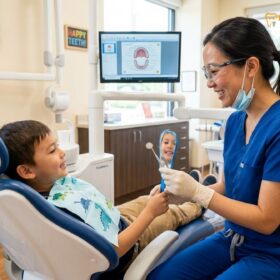
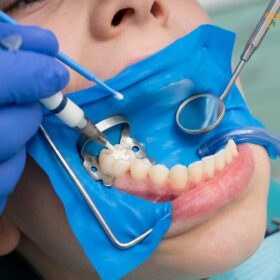
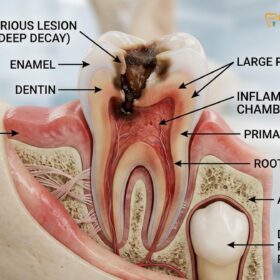
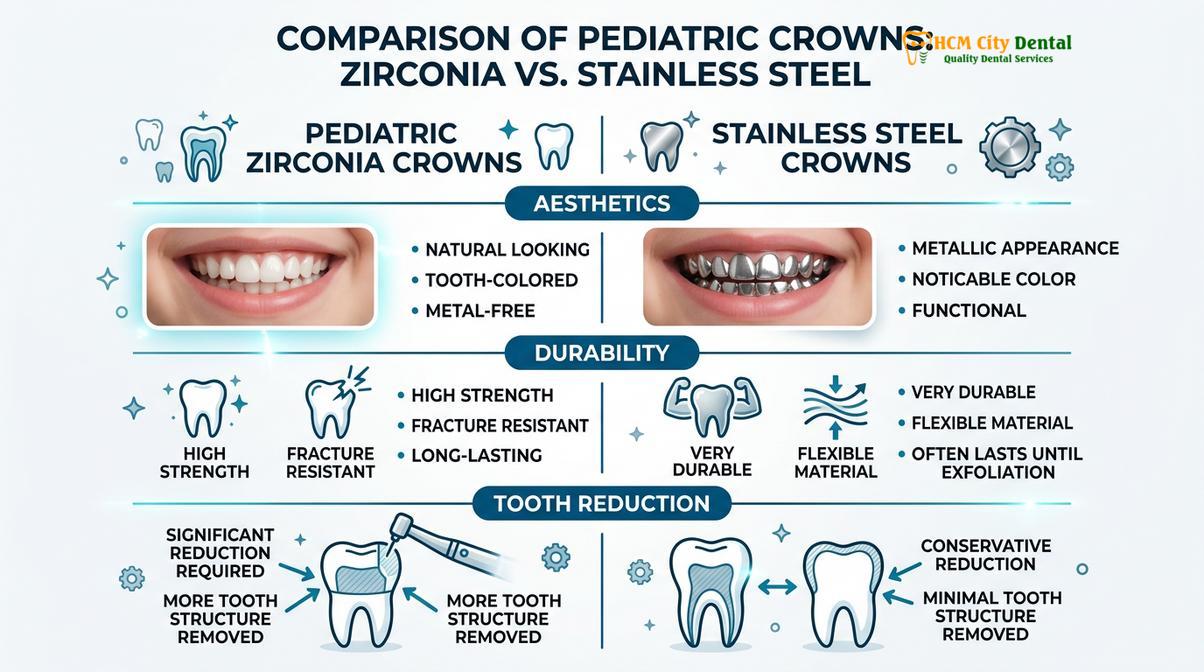
When choosing between pediatric zirconia crowns vs stainless steel, the decision hinges on aesthetics, durability, and tooth location. Zirconia offers a natural, tooth-colored appearance ideal for front teeth, while stainless steel provides unmatched durability and cost-effectiveness, making it the gold standard for restoring posterior primary molars.
Clinical Summary:
Pediatric dental crowns are essential for restoring primary teeth following severe decay or pulpotomy procedures. Stainless steel crowns (SSCs) are highly durable, require minimal tooth preparation, and are cost-effective, making them ideal for back teeth. Conversely, zirconia crowns provide superior aesthetics and biocompatibility but require more extensive tooth reduction and precise moisture control during cementation. The optimal choice depends on the child’s clinical needs, behavior management profile, and parental aesthetic preferences, ensuring the primary tooth is preserved until natural exfoliation.
Key Takeaways:
- Stainless steel crowns are highly durable and require minimal tooth reduction, making them ideal for posterior molars.
- Zirconia crowns are metal-free, biocompatible, and mimic natural tooth color, perfect for anterior restorations.
- SSCs are more forgiving during placement, which is highly beneficial for young children with limited cooperation.
- Zirconia requires strict moisture control and a passive fit, making the procedure slightly more technique-sensitive.
- Both materials effectively preserve the primary tooth until natural exfoliation, preventing future orthodontic crowding.
Restoring Severely Decayed Baby Teeth
Restoring severely decayed primary teeth is critical to prevent premature tooth loss, which can lead to space loss, impaired chewing, and future orthodontic crowding.
Early childhood caries is a prevalent condition that can rapidly compromise the structural integrity of primary teeth. Because baby teeth possess thinner enamel and relatively larger pulp chambers compared to permanent teeth, decay can progress swiftly into the nerve. When a cavity becomes too extensive for a standard filling, or if the tooth has undergone a baby root canal (pulpotomy), full coronal coverage is clinically indicated. Saving badly decayed baby teeth is not merely about maintaining a child’s smile; it is a fundamental aspect of guiding proper jaw development and ensuring the correct eruption pathway for permanent teeth.
According to Dr. Nguyen Van Cuong, a leading specialist at HCMC Dental Clinic, preserving the primary dentition is not just about chewing function; it is a critical component of early interceptive orthodontic evaluation and pediatric airway diagnosis. Premature loss of primary molars often results in mesial drift, where adjacent teeth shift into the empty space, blocking the permanent tooth from erupting and necessitating complex orthodontic interventions later in life. By utilizing preformed crowns, pediatric dentists can effectively seal the tooth, prevent recurrent decay, and maintain the arch length.[1]
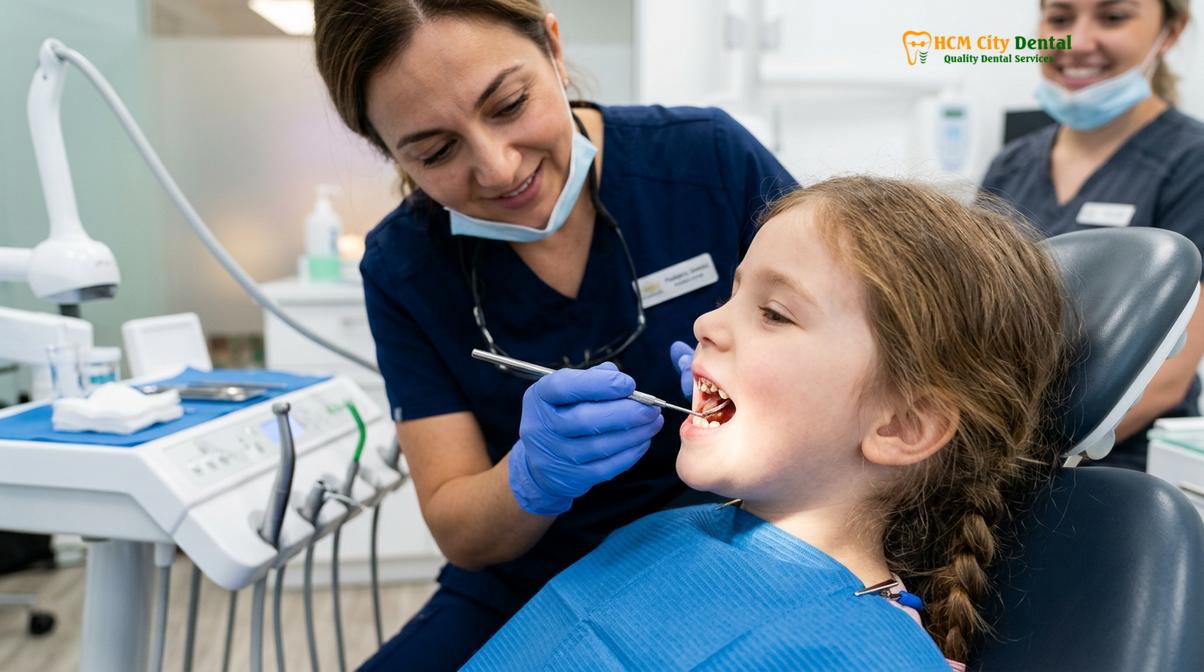
The clinical approach to Children & Pediatric Dentistry emphasizes minimally invasive techniques whenever possible. However, when structural loss is significant, crowns provide a reliable, leak-proof seal that traditional composite or glass ionomer fillings cannot guarantee under heavy masticatory forces. The decision then transitions to selecting the appropriate material: the time-tested stainless steel or the modern aesthetic zirconia.
Stainless Steel Crowns (SSC): The Durable Standard
Stainless steel crowns are the traditional, highly durable choice for posterior primary teeth, offering excellent longevity and minimal preparation requirements.
For decades, preformed metal crowns have been the cornerstone of pediatric restorative dentistry. Composed of an iron-carbon alloy mixed with chromium and nickel, stainless steel crowns (SSCs) are engineered to withstand the intense occlusal forces generated during chewing and grinding. Their primary advantage lies in their exceptional durability; they rarely fracture, chip, or wear down, ensuring the restored tooth remains fully functional until it naturally exfoliates.
“Stainless steel crowns have long been considered the gold standard for full-coverage restorations in primary molars due to their simplicity in preparation, durability, and strength.”
From a clinical workflow perspective, SSCs are highly advantageous. They require minimal tooth reduction—typically just 1 to 1.5 mm of occlusal clearance and breaking the interproximal contacts. Because the metal is malleable, the dentist can crimp and contour the margins of the crown to adapt perfectly to the natural undercut of the tooth. This “snap fit” provides excellent mechanical retention. Furthermore, the cementation process using glass ionomer cement (GIC) is relatively forgiving of moisture, which is a crucial factor when treating young, uncooperative patients where maintaining a perfectly dry field is challenging.[2]
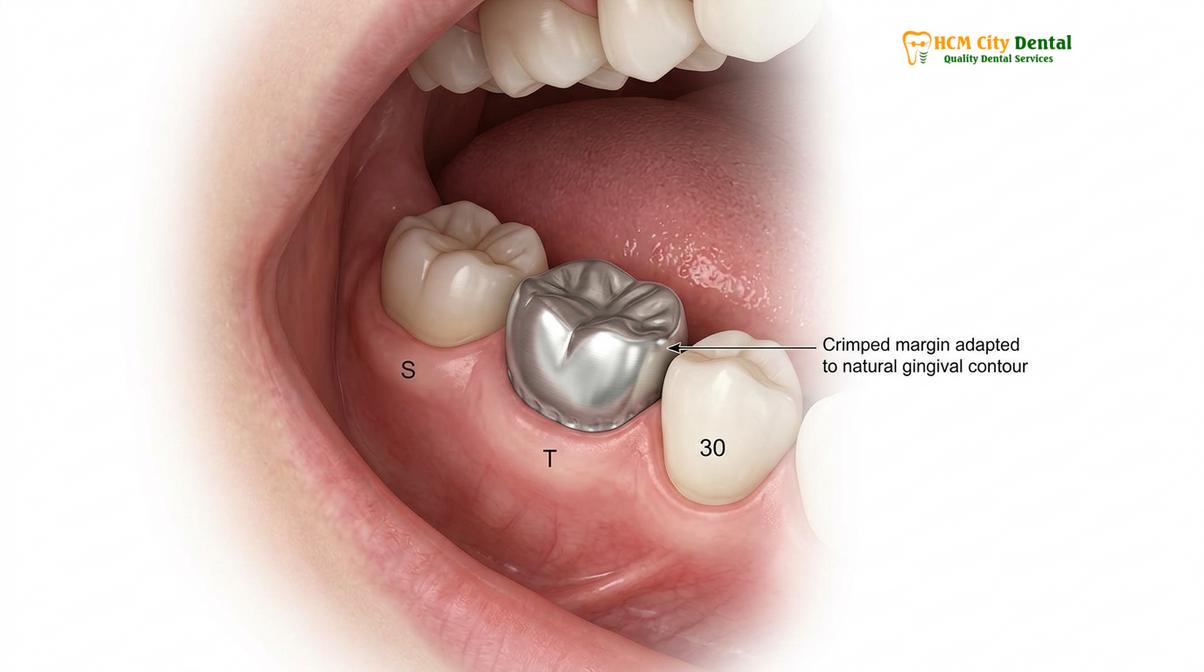
Despite their clinical superiority in strength and ease of placement, the primary drawback of stainless steel crowns is their metallic, silver appearance. While this is generally acceptable for posterior molars hidden at the back of the mouth, it often raises aesthetic concerns for parents when anterior teeth or visible premolars are involved. Additionally, in very rare cases, children with severe nickel allergies may experience localized gingival sensitivity, though biocompatibility is generally excellent for the vast majority of patients.
Pediatric Zirconia Crowns: Aesthetic White Option
Zirconia crowns provide a metal-free, highly aesthetic solution that closely mimics natural enamel, making them the preferred choice for visible primary teeth.
As parental demand for aesthetic dental solutions has increased, pediatric zirconia crowns have emerged as a premier alternative to traditional metal crowns. Manufactured from yttria-stabilized tetragonal zirconia polycrystal, these crowns are often referred to as “ceramic steel” due to their remarkable fracture toughness combined with a natural, tooth-colored appearance. Zirconia crowns are completely metal-free, rendering them highly biocompatible and an excellent option for children with metal sensitivities.
The aesthetic pediatric crowns feature a smooth, highly polished surface that resists plaque accumulation and staining better than natural enamel or composite resins. This smooth surface promotes excellent gingival health, as plaque is less likely to adhere to the crown margins. When placed on anterior primary teeth, zirconia crowns blend seamlessly with the surrounding dentition, restoring not only the child’s bite but also their confidence and social comfort.[3]
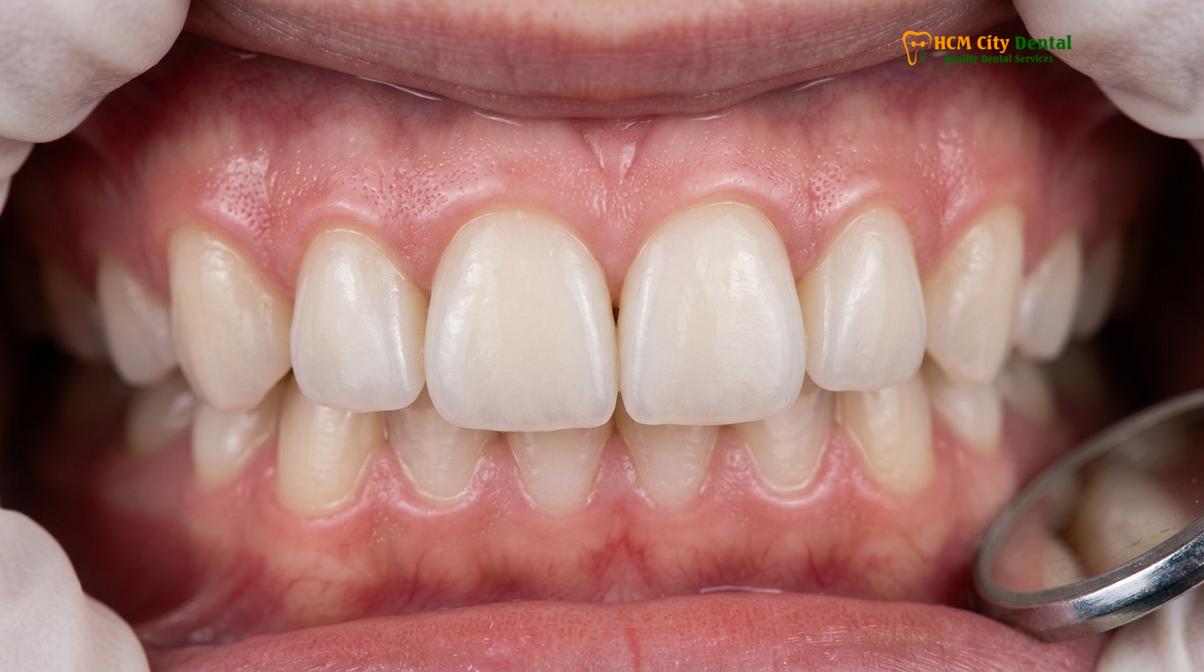
However, the clinical placement of zirconia crowns is significantly more technique-sensitive than that of stainless steel. Because zirconia is rigid and cannot be crimped or contoured chairside, the tooth must be prepared to fit the internal dimensions of the preformed crown perfectly. This requires a greater amount of tooth reduction—often 1.5 to 2 mm occlusally and a subgingival feather-edge margin circumferentially. Furthermore, zirconia crowns rely heavily on dual-cure resin cements for retention, which demand strict hemorrhage and moisture control. If the preparation bleeds or saliva contaminates the field, the bond strength is severely compromised, potentially leading to crown failure.
Material Efficacy & Wear Patterns
Both materials demonstrate high clinical success rates, but they differ significantly in wear resistance, opposing tooth interaction, and retention mechanisms.
When evaluating primary tooth crowns, clinical efficacy is measured by retention rates, marginal integrity, gingival health, and wear on opposing teeth. Studies indicate that both stainless steel and zirconia crowns exhibit overall success rates exceeding 90% over a 12-month follow-up period. However, their physical properties dictate different clinical behaviors in the oral cavity.[4]
Zirconia is exceptionally hard. While this prevents the crown itself from wearing down, it can potentially cause wear on the opposing natural teeth, especially in children who exhibit severe bruxism (teeth grinding). To mitigate this, high-quality pediatric zirconia crowns are highly polished to reduce friction. Conversely, stainless steel is softer and tends to wear at a rate more similar to natural enamel, making it highly forgiving in dynamic occlusal relationships.
| Clinical Parameter | Stainless Steel Crowns (SSC) | Pediatric Zirconia Crowns |
|---|---|---|
| Aesthetics | Metallic / Silver | Natural Tooth Color / White |
| Durability | Extremely high; malleable | Very high; rigid (prone to fracture under extreme stress) |
| Tooth Reduction | Minimal (1 – 1.5 mm) | Moderate to High (1.5 – 2 mm) |
| Moisture Control | Forgiving (GIC cement) | Strictly required (Resin cement) |
| Cost Profile | Highly cost-effective | Premium pricing |
Retention failure in stainless steel crowns is exceedingly rare and usually stems from cement washout rather than material fracture. In contrast, zirconia crowns, while highly retentive when properly bonded, can occasionally experience chipping or complete debonding if the initial tooth preparation lacked sufficient height or if moisture contamination occurred during the critical cementation phase.
How to Choose for Front vs. Back Teeth
The selection between zirconia and stainless steel depends heavily on the tooth’s location, with zirconia favored for anterior aesthetics and stainless steel for posterior strength.
Treatment planning in pediatric dentistry requires a customized approach based on the specific tooth involved. For anterior teeth (incisors and canines), aesthetics are paramount. Children are highly conscious of their appearance, and visible metallic restorations can impact their self-esteem. Therefore, zirconia crowns are almost universally recommended for front teeth, providing a beautiful, natural-looking restoration that functions perfectly for biting and speech development.
For posterior teeth (molars), the primary functional requirement is withstanding heavy masticatory forces. Stainless steel crowns excel in this region. Because molars are less visible, the metallic appearance is usually a secondary concern. However, if parents strongly prefer a metal-free oral environment, posterior zirconia crowns can be successfully utilized, provided the child has sufficient tooth structure remaining to support the required preparation and does not exhibit severe bruxism.
Clinical Case Review: A 5-year-old patient visiting HCMC Dental Clinic in Ho Chi Minh City presented with severe early childhood caries affecting both a maxillary central incisor and a mandibular second molar. To balance aesthetics and function, the clinical team placed a highly polished zirconia crown on the front incisor to restore the child’s natural smile, while utilizing a durable stainless steel crown for the back molar to ensure long-term chewing stability.
Dr. Cuong emphasizes that the choice of biocompatible filling materials and crown types must align with the child’s behavior management profile; a highly anxious child may benefit more from the rapid placement of an SSC, whereas a cooperative child is an excellent candidate for the precise workflow required for zirconia.
Comprehensive Pediatric Dentistry Workflows & Pricing
Modern pediatric dentistry integrates advanced behavior management, minimally invasive treatments, and transparent pricing to ensure a stress-free experience.
Creating a positive dental experience for children is paramount. Clinics employ the “Tell-Show-Do” behavioral management technique to desensitize young patients. This involves explaining the procedure using child-friendly language (Tell)—such as calling anesthesia “sleepy juice,” the rubber dam a “tooth raincoat,” and the ultrasonic scaler a “water whistle.” The dentist then demonstrates the instrument on the child’s finger (Show) before proceeding with the treatment (Do). The child is empowered with a “stop on request” signal, usually raising their hand, ensuring they feel safe and in control.
Before considering crowns, early intervention is key. For non-invasive cavity arrest, Silver Diamine Fluoride (SDF) is highly effective. It halts decay without drilling or pain, though it leaves a localized black stain on the decayed area. When fillings are required, pediatric dentists often prioritize Glass Ionomer Cement (GIC) over composite resin for baby teeth. GIC offers chemical bonding, moisture tolerance, and continuous fluoride release (fluoride recharge) to prevent recurrent decay. Composite is reserved for areas demanding higher strength and perfect aesthetics.
Beyond restorations, comprehensive care includes early interceptive orthodontics and airway assessments. Evaluating early jaw development helps identify thumb-sucking habits, tongue-ties (treated painlessly with diode laser frenectomies), and mouth breathing. Chronic mouth breathing can lead to “adenoid facies” (long-face syndrome) and pediatric sleep apnea, conditions that require timely intervention. Parents can learn more about these evaluations in our Pediatric Sleep Apnea: Clinical Signs, Diagnosis & Treatment Workflows guide.
Understanding the financial aspect of pediatric dental care is crucial for parents. According to the latest clinic fee schedule, the pricing structure is designed to be transparent (Note: Walk-in rates are higher, but a -40% WhatsApp booking discount is often available):
- Kids Consultation & Diagnostic check-up: 300,000 to 500,000 VND (~$12 to $20 USD)
- Fissure Sealant (per tooth): 400,000 to 600,000 VND (~$16 to $24 USD) – Learn more in our Kids Dental Cleaning & Fissure Sealants: Clinical Guide.
- Fluoride Varnish Application: 300,000 to 500,000 VND (~$12 to $20 USD)
- Pediatric Glass Ionomer Filling (GIC): 400,000 to 600,000 VND (~$16 to $24 USD)
- Pediatric Composite Filling: 500,000 to 800,000 VND (~$20 to $32 USD)
- Baby Root Canal (Pulpotomy): 1,000,000 to 1,500,000 VND (~$40 to $60 USD)
- Space Maintainer (fixed, band-and-loop): 2,000,000 to 3,000,000 VND (~$80 to $120 USD)
- Custom Pediatric Sports Mouthguard: 1,500,000 to 2,500,000 VND (~$60 to $100 USD)
For children requiring orthodontic evaluation, early assessment is vital. Discover more about interceptive treatments in our Pediatric Interceptive Orthodontics Myofunctional guide.
When to See a Doctor
While pediatric crowns are highly successful, parents must monitor the restored teeth for any signs of complications. Routine dental check-ups every six months are essential to evaluate the integrity of the crown, the health of the surrounding gingival tissue, and the normal eruption pattern of the underlying permanent tooth.
Important Clinical Considerations: Seek immediate dental care if your child experiences severe, spontaneous pain, localized swelling (an abscess or “gum boil”) near the crowned tooth, or if the crown becomes loose or dislodged. These symptoms may indicate an underlying infection or cement failure.
“Immediate clinical evaluation is required if a child experiences spontaneous pain or localized swelling near a crowned tooth, as this may indicate underlying pulpal necrosis.”
If a child reports that their bite feels “high” or uncomfortable several days after the crown placement, a minor occlusal adjustment may be necessary. Never attempt to recement a dislodged crown at home using over-the-counter adhesives, as this can alter the bite and trap bacteria against the vulnerable tooth structure. Always consult a qualified pediatric dentist for proper diagnosis and intervention.[5]
For personalized advice and to determine the best restorative options for your child, schedule a consultation with our expert team at HCMC Dental Clinic.
Frequently Asked Questions
Are white zirconia crowns better than silver crowns for kids?
White zirconia crowns are not universally better, but they offer superior aesthetics and biocompatibility compared to silver crowns. While zirconia is ideal for visible front teeth and metal-sensitive patients, stainless steel remains the highly durable, cost-effective gold standard for posterior molars that endure heavy chewing forces. The choice depends entirely on the tooth’s location and the child’s specific clinical needs.
How long do stainless steel crowns last on baby teeth?
Stainless steel crowns are designed to last until the primary tooth naturally falls out, which typically occurs between the ages of 10 and 12 for molars. Their robust metal alloy construction resists fracturing and wear, providing excellent long-term protection for severely decayed baby teeth without requiring replacement. They are considered a definitive restoration for the lifespan of the primary tooth.
Is general anesthesia needed for pediatric dental crowns?
General anesthesia is not strictly required for pediatric dental crowns, as many procedures are successfully completed using local anesthesia and conscious sedation. However, general anesthesia may be recommended for extremely anxious children, patients with special needs, or cases requiring multiple complex restorations in a single visit. Techniques like nitrous oxide (laughing gas) and Tell-Show-Do are often sufficient for cooperative children.
Can a primary tooth crown fall out before the tooth is ready to shed?
While uncommon, a primary tooth crown can dislodge prematurely due to sticky foods, recurrent decay beneath the margin, or cement failure. If a crown falls out, parents should keep the crown and schedule an immediate dental visit, as the dentist can often recement it if the underlying tooth structure remains intact and free of new decay.
Do pediatric crowns require special maintenance or cleaning?
Pediatric crowns do not require specialized cleaning tools, but they do demand rigorous daily oral hygiene, including brushing twice daily with fluoride toothpaste and flossing. Flossing is particularly crucial to prevent plaque accumulation at the crown margins, which can lead to gingival inflammation or secondary decay. Routine professional cleanings and check-ups are also essential to monitor the crown’s stability.
References
- American Academy of Pediatric Dentistry. Pediatric Restorative Dentistry Guidelines. (2022).
- International Journal of Clinical Pediatric Dentistry. Clinical Evaluation of Pediatric Posterior Zirconia and Stainless Steel Crowns. (2021).
- Journal of Dentistry for Children. Aesthetic Options for Primary Anterior Teeth. (2020).
- Pediatric Dentistry Journal. Wear Patterns of Zirconia vs Preformed Metal Crowns. (2019).
- Journal of the American Dental Association. Behavior Management and Sedation in Pediatric Dentistry. (2023).
| Clinical Feature | Pediatric White Zirconia | Stainless Steel Crown (SSC) |
|---|---|---|
| Aesthetics | Tooth-colored / Natural | Silver / Metallic Appearance |
| Biocompatibility | 100% Biocompatible, Tissue-friendly | Contains Nickel (Potential allergy) |
| Durability | High Strength & Wear Resistant | Extremely Durable & Flexible Fit |
| Primary Indication | Anterior (Front) & Premium Posterior | Posterior Molars (Back Teeth) |