Kids mouthwash safety depends primarily on a child’s age, neurological development, and their ability to spit reliably without swallowing. Children under six are generally advised to avoid mouthwash due to ingestion risks, while older children can often safely use alcohol-free fluoride rinses under strict parental supervision to enhance cavity protection.
Clinical Summary:
The introduction of mouthwash into a child’s oral hygiene routine requires careful clinical consideration of their developmental milestones. Pediatric dental guidelines strongly advise against mouthwash use for children under six years old due to an immature swallow reflex, which significantly elevates the risk of accidental ingestion. When a child is developmentally ready, parents should conduct a swallow test using water to confirm motor control. Safe pediatric oral care prioritizes the use of alcohol-free formulations to protect sensitive oral mucosa. Furthermore, the decision between fluoride and non-fluoride rinses should be based on an individualized caries risk assessment performed by a pediatric dentist. Mouthwash serves as a supplementary adjunct and is not intended to replace the mechanical biofilm disruption achieved through proper brushing and flossing.
Key Takeaways:
- Children under the age of six are generally advised against using mouthwash due to the high risk of accidental swallowing and systemic absorption.
- A clinical swallow reflex assessment using plain water is highly recommended before introducing any oral rinse to a child.
- Pediatric mouthwashes should be alcohol-free to help prevent mucosal irritation and dry mouth.
- Fluoride rinses offer targeted enamel remineralization but require careful dosing to minimize the risk of dental fluorosis.
- Active parental supervision is recommended until at least age twelve to ensure correct usage and prevent ingestion.
Age Restrictions: The 6-Year-Old Rule
Pediatric dental authorities strongly advise against mouthwash use for children under six years old due to underdeveloped swallowing reflexes and the risk of systemic fluoride toxicity.
The foundation of kids mouthwash safety is rooted in pediatric physiological development. The oropharyngeal phase of swallowing is a complex neuromuscular process that requires precise coordination between the tongue, soft palate, and epiglottis. In children under the age of six, this coordination is often immature. When a young child attempts to swish a liquid in their mouth, the natural physiological response is to trigger the swallow reflex rather than to hold the liquid and expel it. This involuntary action makes the use of therapeutic oral rinses potentially hazardous for toddlers and preschool-aged children[1].
Introducing mouthwash prematurely exposes the child to unnecessary risks. The primary concern is the ingestion of active ingredients, particularly fluoride and artificial dyes, which are not intended for systemic absorption. The pediatric mouthwash guidelines established by leading dental authorities generally agree that the age of six serves as a developmental baseline where most children acquire the necessary motor control to swish and spit effectively.
| Age Group | Mouthwash Recommendation | Supervision Level |
|---|---|---|
| Under 6 Years | Generally contraindicated | N/A (Do not use) |
| 6 to 12 Years | Alcohol-free fluoride rinse (if swallow test passed) | Direct active supervision required |
| 12+ Years | Standard fluoride or therapeutic rinse | Periodic monitoring |
Parents should understand that the “6-Year-Old Rule” is a general guideline rather than an absolute milestone. Even at age six, a child’s ability to manage liquids in the oral cavity while breathing through the nose requires practice and cognitive focus. The introduction of mouthwash should be viewed as a gradual transition in their daily routine. Until the child demonstrates consistent mastery over their swallowing reflexes, mechanical plaque removal via brushing and flossing remains the most effective method of maintaining oral hygiene.
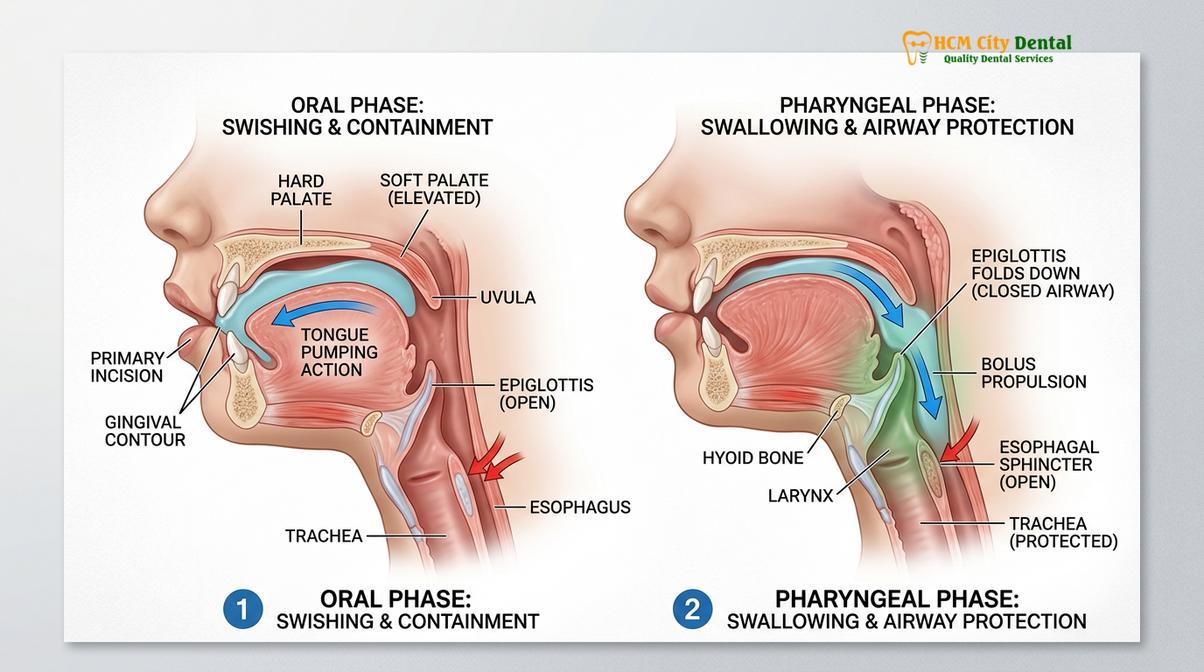
Swallow Reflex Assessment
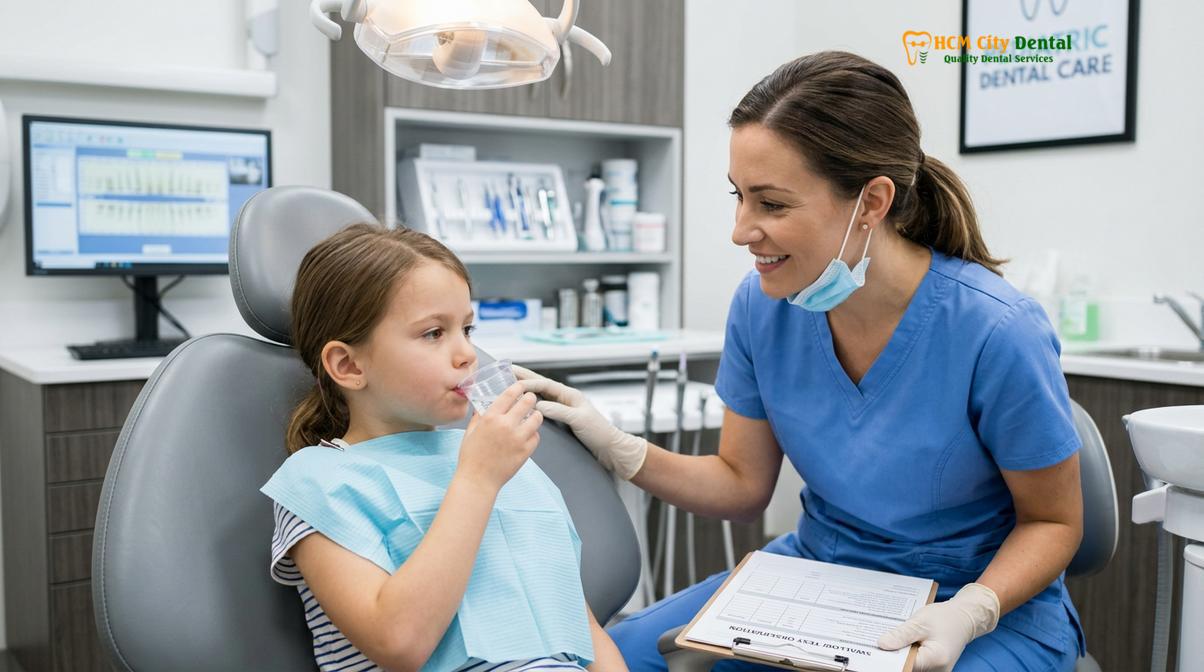
Before introducing any oral rinse, parents should conduct a clinical swallow reflex assessment using plain water to ensure the child can reliably swish and spit without ingesting the fluid.
To mitigate the fluoride rinse ingestion risk, a practical and safe evaluation method can be employed at home. This evaluation is commonly referred to as the mouthwash swallow test. The objective of this test is to observe the child’s voluntary control over their oral musculature and their ability to suppress the involuntary urge to swallow a pooled liquid.
The protocol for the mouthwash swallow test is straightforward but requires close observation. Parents should provide the child with a small cup containing exactly one teaspoon (approximately 5ml) of plain water. Instruct the child to take the water into their mouth, close their lips tightly, and “puff out their cheeks” to swish the water around their teeth for thirty seconds. During this time, the parent should watch the child’s throat; any bobbing of the larynx indicates that a swallow has occurred. After the thirty seconds, the child must spit the water into the sink. The parent should verify that the volume of water expelled roughly matches the volume taken in.
Clinical Warning: Fluoride Rinse Ingestion Risk
Accidental ingestion of fluoride mouthwash can lead to acute gastrointestinal distress, including nausea, vomiting, and abdominal pain. Chronic ingestion of small amounts during the years of tooth development increases the risk of dental fluorosis—a condition characterized by white streaks, spots, or brown discoloration on the enamel. Always store mouthwash out of reach of young children.
If the child swallows the water, coughs, or struggles to keep their lips sealed during the swishing phase, they have not yet passed the mouthwash swallow test and are likely not ready for therapeutic rinses. This test can be repeated periodically until the child demonstrates consistent success. Only after the child has proven their ability to spit reliably with water should a parent consider introducing a commercial pediatric mouthwash[2].
Alcohol-Free Formulations
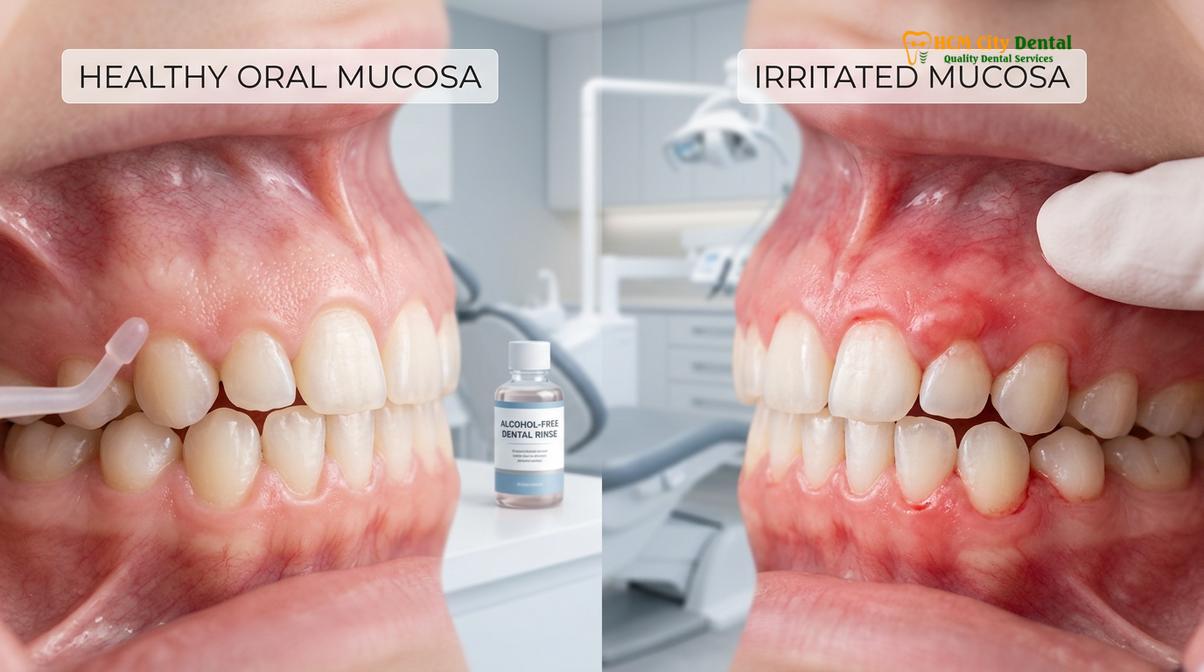
Pediatric dental rinses should be alcohol-free to help prevent oral mucosa irritation, dry mouth, and potential systemic absorption risks associated with ethanol.
When selecting a product for a child who has passed the swallow test, the ingredient list must be scrutinized. A critical requirement is choosing an alcohol-free dental rinse formulation. Historically, many adult mouthwashes contained high concentrations of ethanol to act as a solvent for essential oils and as an antimicrobial agent. However, exposing a child’s delicate oral mucosa to such high concentrations of alcohol is generally discouraged in pediatric dentistry.
The pediatric oral epithelium is thinner and more permeable than that of an adult. Alcohol acts as an astringent and desiccant, which can strip the oral cavity of its natural protective mucin layer. This may lead to xerostomia (dry mouth), which paradoxically increases the risk of tooth decay, as saliva is the mouth’s primary defense mechanism against acidogenic bacteria. Furthermore, the burning sensation caused by alcohol can create a strong negative psychological association with oral hygiene, leading to behavioral resistance during daily brushing routines.
Modern pediatric dentistry relies on alternative active ingredients that provide efficacy without the harsh side effects of ethanol. Ingredients such as cetylpyridinium chloride (CPC) or low-dose sodium fluoride are suspended in aqueous, alcohol-free bases. These formulations help maintain the natural pH balance of the oral cavity, support a healthy salivary flow, and provide a comfortable experience that encourages compliance among young patients[3].
Fluoride vs. Non-Fluoride Rinses
Fluoride rinses actively remineralize enamel and help prevent decay in high-risk children, whereas non-fluoride rinses primarily serve to freshen breath and wash away loose debris.
The decision to use a fluoride versus a non-fluoride mouthwash is best guided by a professional caries risk assessment. Fluoride is a naturally occurring mineral that plays a pivotal role in dental health by integrating into the tooth structure. When teeth are exposed to dietary sugars, oral bacteria produce lactic acid that demineralizes the enamel, leaching out calcium and phosphate ions. Topical fluoride from mouthwash interacts with the enamel surface, converting hydroxyapatite into fluorapatite—a crystalline structure that is significantly more resistant to acid attacks.
For children with a high risk of early childhood caries, those undergoing orthodontic treatment, or those with deep anatomical grooves in their molars, a daily fluoride rinse can be a highly beneficial therapeutic adjunct. The liquid can penetrate interproximal spaces (between the teeth) and flow around orthodontic brackets where a toothbrush cannot easily reach. Conversely, for children with a low caries risk who already receive adequate fluoride from their toothpaste and municipal water supply, a non-fluoride rinse may be sufficient simply to help dislodge food particles.
Dr. Nguyen Van Cuong, a leading specialist at HCMC Dental Clinic in Ho Chi Minh City, frequently emphasizes the importance of individualized preventive care for young patients. He notes that while mouthwash is a helpful adjunct, it must be integrated safely into a comprehensive Children & Pediatric Dentistry routine. His clinical approach focuses on educating parents to ensure optimal home care practices.
“Mouthwash is an excellent delivery system for topical fluoride, especially for children navigating the challenges of orthodontic braces. However, it is chemically impossible for a liquid rinse to remove organized plaque biofilm. Mechanical friction from a toothbrush and floss is essential; mouthwash is simply an additional protective layer applied to a clean surface.”
Parents should also monitor the total daily fluoride intake. If a child is using a prescription high-fluoride toothpaste, adding a fluoride mouthwash might exceed the optimal therapeutic threshold. Consulting with a pediatric dentist ensures that the child’s preventive regimen is balanced for their specific physiological needs[4].
Parental Supervision Guidelines
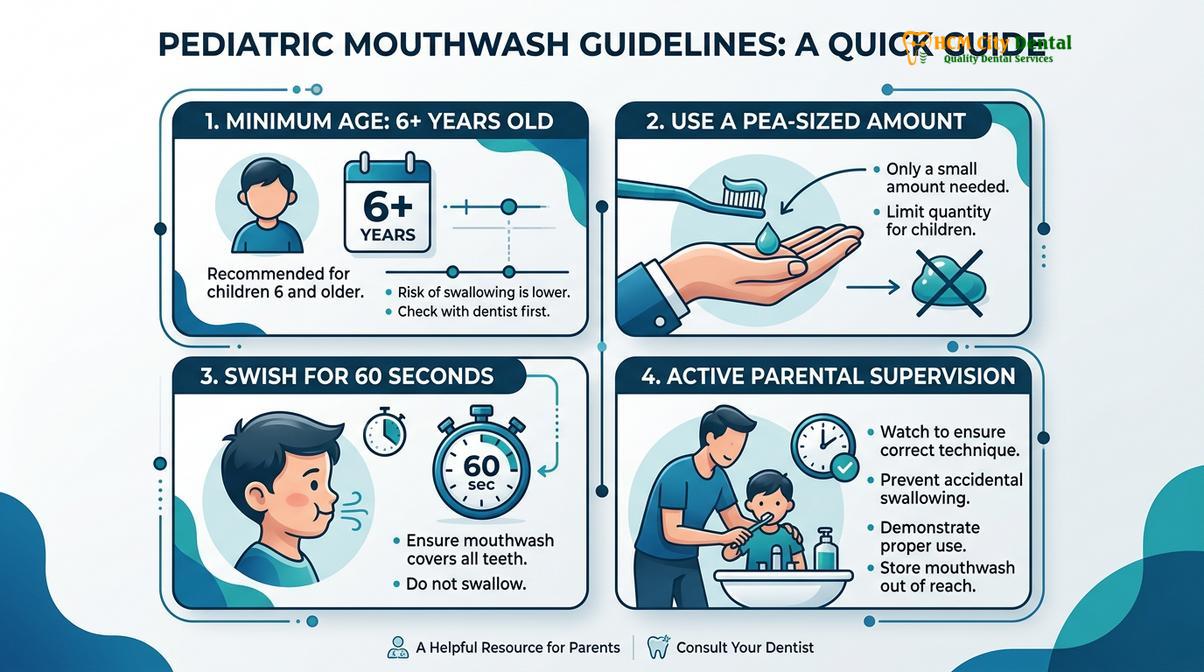
Active parental supervision is recommended for all children using mouthwash until at least age twelve to ensure correct dosing, timing, and to help prevent accidental ingestion.
Establishing safe pediatric mouthwash guidelines in the home requires vigilant parental oversight. The presence of a parent during the oral hygiene routine serves multiple purposes: it encourages compliance, helps correct technique, and provides immediate intervention if the child attempts to swallow the product. Dental professionals generally recommend that parents actively supervise mouthwash use until the child is at least twelve years old, as cognitive understanding of risk does not always translate to consistent behavioral compliance in younger children.
The dosing of the mouthwash should be controlled by the adult. Children should not be allowed to drink directly from the bottle or pour the liquid themselves. Parents should measure out the exact recommended dose—typically 10ml (two teaspoons)—into a designated dosing cup. This precise measurement helps minimize the risk of acute toxicity even in the rare event of accidental ingestion.
Timing is another critical component of the supervision protocol. If a child is using a standard fluoride toothpaste, they should generally not use a mouthwash immediately after brushing. Rinsing immediately can wash away the concentrated fluoride left behind by the toothpaste. Instead, mouthwash is often most effective when used at a different time of day, such as after lunch or as a standalone mid-afternoon routine, to provide an additional exposure to fluoride. If used at night, the child must spit the mouthwash out completely and go straight to bed without eating or drinking, allowing the active ingredients to remain on the teeth overnight[5].
Comprehensive Pediatric Dental Care Workflows
Beyond home care, professional pediatric dentistry utilizes advanced behavioral management and minimally invasive treatments to help maintain optimal oral health and airway development.
While home care routines involving brushing, flossing, and safe mouthwash use are foundational, they are best supported by professional clinical interventions. At HCMC Dental Clinic in Ho Chi Minh City, pediatric dental care is approached through a comprehensive, child-centric workflow that prioritizes psychological comfort and minimally invasive techniques. The goal is to build a foundation of trust while delivering precise dental care.
Behavioral Management: The Tell-Show-Do Technique
Dental anxiety can be a significant barrier to effective pediatric care. To help overcome this, clinicians often employ the “Tell-Show-Do” behavioral management technique. This psychological approach demystifies the dental environment by breaking down procedures into understandable, non-threatening steps. First, the dentist will “Tell” the child what is going to happen using child-friendly terminology. Next, the dentist will “Show” the child the instrument, often demonstrating how it works on the child’s fingernail or the back of their hand. Finally, the dentist will “Do” the procedure, but only after establishing a “stop on request” protocol, giving the child a crucial sense of control over their environment.
Minimally Invasive Caries Management
When early childhood caries are detected, the clinical preference is often to preserve the natural tooth structure using minimally invasive protocols. Silver Diamine Fluoride (SDF) is a liquid treatment that can help arrest active tooth decay without the need for local anesthesia or drilling in many cases. The silver ions act as an antimicrobial agent, while the fluoride promotes remineralization.
Clinical Case Study: Comprehensive Pediatric Intervention
A 7-year-old patient presented at HCMC Dental Clinic in Ho Chi Minh City with multiple early childhood caries and a high risk of future decay. The clinical team initiated a minimally invasive treatment plan utilizing Silver Diamine Fluoride (SDF) to help stabilize the active lesions, followed by Glass Ionomer Cement (GIC) restorations. To support the clinical work, the parents were educated on conducting a swallow reflex assessment. Once the child demonstrated the ability to spit reliably, an alcohol-free fluoride mouthwash was introduced into their daily routine under strict parental supervision. At the six-month recall appointment, the patient exhibited stabilized oral health with no new carious lesions, demonstrating the potential efficacy of combining professional intervention with optimized home care.
When to Consult a Pediatric Dentist (Important Notes)
Parents should consult a pediatric dentist to determine the appropriate timing for introducing mouthwash and to establish a personalized preventive care plan based on the child’s specific risk factors.
Determining the right time to introduce mouthwash is a decision best made in consultation with a dental professional. Regular dental check-ups, ideally beginning by the child’s first birthday, allow the dental team to monitor the child’s oral development and caries risk profile. According to pediatric dental frameworks, including those aligned with the Vietnam Ministry of Health (MOH), early childhood caries management requires a multifaceted approach tailored to the individual child’s needs[6].
“Preventive pediatric dentistry is most successful when clinical interventions are seamlessly integrated with age-appropriate home care routines, ensuring that products like fluoride rinses are introduced only when the child is developmentally ready to use them safely.”
A consultation is particularly important if a child is undergoing orthodontic treatment, such as Phase 1 vs Phase 2 Braces Children: Clinical Guide | HCMC Dental, where maintaining oral hygiene becomes more complex. Additionally, early evaluations, as detailed in the Best Age for Kids First Orthodontic Evaluation | HCMC Dental, can help identify structural issues that might benefit from specific preventive rinses.

For personalized advice on kids mouthwash safety and to establish a comprehensive preventive care plan for your child, schedule a consultation with the pediatric specialists at HCMC Dental Clinic in Ho Chi Minh City today.
References
- American Academy of Pediatric Dentistry. Best Practices for Preventive Dental Care.
- Journal of Clinical Pediatric Dentistry. Development of the Swallow Reflex in Children.
- International Journal of Paediatric Dentistry. Efficacy of Alcohol-Free Fluoride Rinses.
- Pediatric Dentistry Journal. Behavior Management Techniques: Tell-Show-Do.
- Journal of the American Dental Association. Silver Diamine Fluoride and Glass Ionomer Cements in Primary Dentition.
- Vietnam Ministry of Health (MOH). National Guidelines on Early Childhood Caries Management and Fluoride Application.