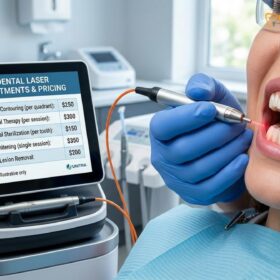
Waterlase laser gums treatment utilizes advanced hydro-photonic technology to precisely reshape gingival tissue and underlying bone without the heat, vibration, or trauma of traditional drills. This minimally invasive approach ensures rapid healing, reduced bleeding, and highly predictable aesthetic outcomes for patients seeking cosmetic or functional periodontal corrections.
Clinical Summary:
Waterlase technology combines YSGG laser energy with a continuous water spray to perform precise soft and hard tissue procedures. By eliminating thermal damage and micro-fractures, it preserves the biological width and accelerates postoperative recovery. It is highly effective for gingivectomy, functional crown lengthening, and complex gummy smile corrections, often utilized alongside diode lasers for optimal tissue coagulation. For severe skeletal discrepancies, laser therapy is integrated with advanced orthognathic surgical protocols to achieve comprehensive facial harmony.
Key Takeaways:
- Utilizes a patented combination of laser energy and water to cut tissue without generating destructive heat.
- Significantly reduces the need for local anesthesia, scalpels, and postoperative sutures.
- Preserves the critical 2mm supracrestal tissue attachment to prevent bone resorption and chronic inflammation.
- Accelerates recovery time to approximately 48 hours with minimal postoperative swelling or discomfort.
- Integrates seamlessly with Digital Smile Design (DSD) for precise gingival zenith point calibration.
Understanding Waterlase Technology: Water, Air, and Laser Energy
Waterlase operates on the principle of hydro-photonics, using laser-energized water droplets to gently ablate dental tissues, eliminating the friction and thermal damage associated with conventional surgical instruments.
The advent of all-tissue dental lasers has fundamentally transformed the landscape of periodontics and cosmetic dentistry. At the core of this revolution is the Er,Cr:YSGG (Erbium, Chromium: Yttrium-Scandium-Gallium-Garnet) laser, commercially known as Waterlase. Unlike traditional rotary instruments that rely on mechanical friction to remove hard tissue, or standard scalpels that slice through soft tissue, Waterlase utilizes a highly sophisticated mechanism known as hydro-photonic technology. This process involves the emission of laser energy at a specific wavelength (2780 nm) that is highly absorbed by water molecules present in both the dental tissue and the accompanying dental laser water spray.
When the laser energy interacts with the water droplets in the spray, it excites the water molecules, causing them to expand rapidly and create localized micro-explosions. These micro-explosions gently and precisely ablate the target tissue—whether it is gingiva, enamel, dentin, or alveolar bone. Because the cutting action is performed by the energized water rather than a solid metal bur, there is absolutely no physical contact, no friction, and consequently, no heat generation. This is a critical clinical advantage, as thermal damage is a primary cause of postoperative pain and delayed healing in traditional periodontal surgery [1].
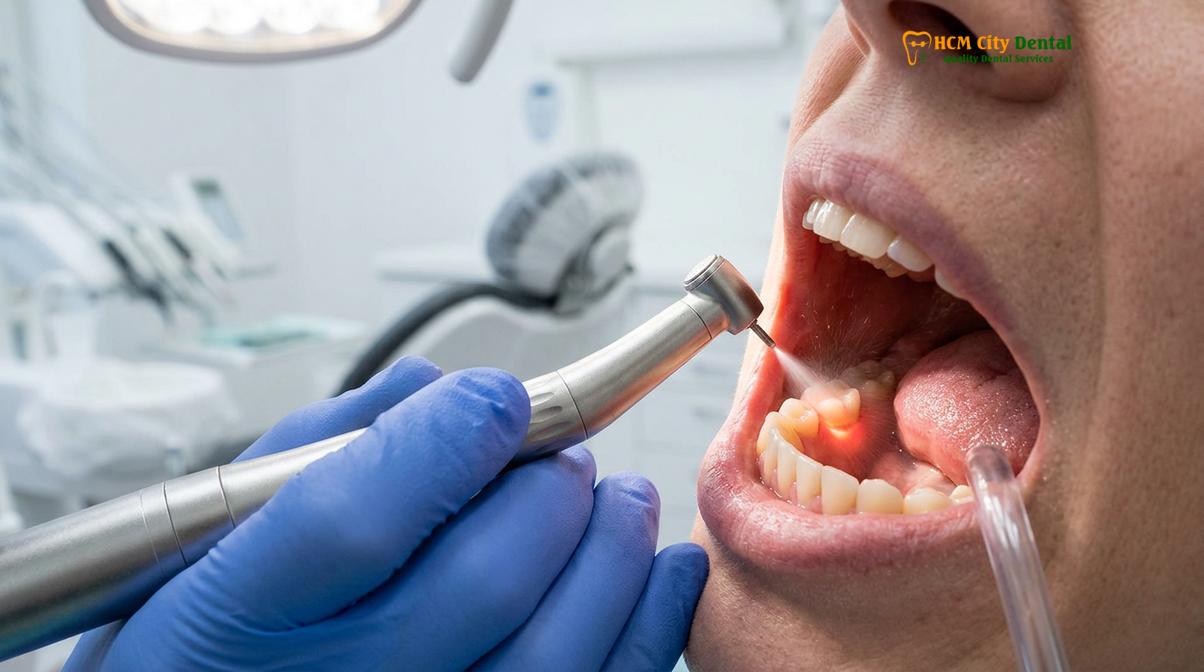
Furthermore, the continuous flow of water acts as a highly effective coolant and irrigant, constantly flushing the surgical site of debris and bacteria. This continuous irrigation ensures a sterile operating field, significantly reducing the risk of opportunistic postoperative infections. The precision of the hydro-photonic laser bone cuts allows clinicians to sculpt the gingival margins with microscopic accuracy, a level of control that is virtually impossible to achieve with a vibrating drill or a manual scalpel. For patients seeking advanced periodontal care, the biolase waterlase HCMC protocols represent the pinnacle of minimally invasive surgical intervention.
Why Waterlase Reshapes Bone (Osteoplasty) Without Generating Heat
By absorbing laser energy into water molecules, the system vaporizes target cells instantly, allowing for osteoplasty and osteotomy procedures without transferring destructive heat to surrounding healthy bone.
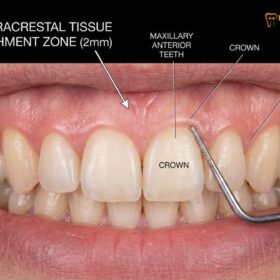
In cases of altered passive eruption or when preparing a tooth for a restorative crown, simply removing excess gum tissue (gingivectomy) is often insufficient. If the underlying alveolar bone is too close to the new gingival margin, the body will naturally attempt to re-establish its biological width—a critical physiological dimension. The biological width, recently reclassified in periodontal literature as the supracrestal tissue attachment, requires a minimum of 2mm of space above the bone crest to accommodate the junctional epithelium and connective tissue attachment [2]. Failing to respect this dimension leads to chronic gingival inflammation, unpredictable tissue rebound, and localized bone resorption.
To establish a healthy supracrestal tissue attachment, the clinician must perform an osteoplasty (reshaping the bone) or an osteotomy (removing supporting bone). Traditionally, this required laying a large surgical flap and using high-speed rotary burs to grind away the bone. Bone is highly susceptible to thermal necrosis; if the temperature of the bone exceeds 47°C for more than one minute, the osteocytes die, leading to sequestration and unpredictable healing. Waterlase circumvents this risk entirely. The laser energy vaporizes the bone tissue molecule by molecule, while the integrated water spray keeps the ambient temperature well below the threshold of thermal necrosis.
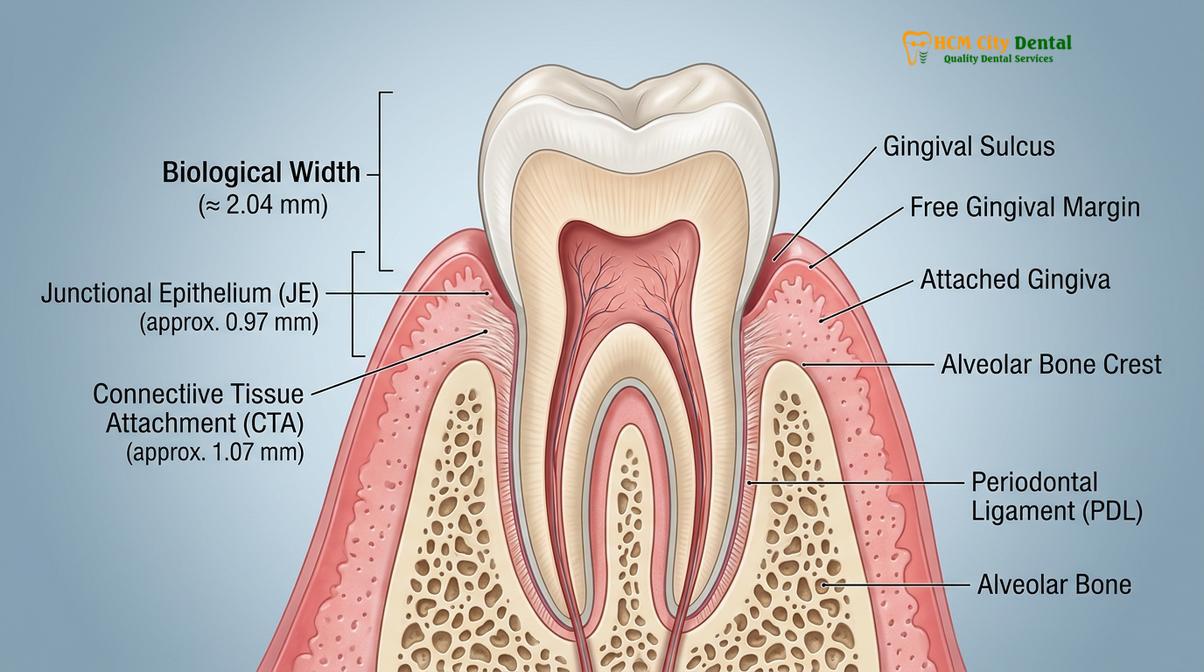
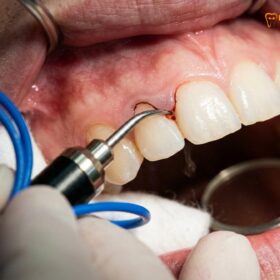
This capability enables painless bone contouring, often performed in a “flapless” or minimally invasive manner. The laser tip is carefully inserted into the gingival sulcus, and the crestal bone is gently recontoured without the need to peel back the gums entirely. This closed-flap approach drastically reduces surgical trauma, preserves the periosteal blood supply, and maintains the delicate interdental papillae. The result is a highly predictable, stable gingival margin that serves as the perfect foundation for aesthetic restorations.
| Clinical Parameter | Waterlase (Er,Cr:YSGG) | Traditional Drill / Scalpel |
|---|---|---|
| Heat Generation | Negligible (cooled by water spray) | High (requires heavy irrigation to prevent necrosis) |
| Tissue Trauma | Minimal (non-contact ablation) | Moderate to Severe (mechanical friction and tearing) |
| Bleeding Control | Excellent (simultaneous coagulation) | Poor (often requires sutures and pressure) |
| Anesthesia Requirement | Minimal to None (laser induces temporary analgesia) | High (profound local anesthesia mandatory) |
| Recovery Time | Rapid (typically 48 hours) | Prolonged (7 to 14 days with suture removal) |
Minimizing Micro-Fractures and Tissue Traumas
The non-contact nature of laser dentistry prevents the mechanical stress and micro-fractures commonly induced by rotary burs, ensuring the structural integrity of the tooth and rapid soft tissue coagulation.
When a traditional high-speed drill contacts a tooth or bone, the mechanical vibration sends shockwaves through the crystalline structure of the hydroxyapatite. This stress frequently induces micro-fractures—microscopic cracks that weaken the tooth and can propagate over time, leading to structural failure or heightened sensitivity. Furthermore, rotary instruments leave behind a “smear layer,” a microscopic layer of organic and inorganic debris that clogs the dentinal tubules and can interfere with the bonding of dental adhesives. Waterlase, being a non-contact instrument, eliminates mechanical vibration entirely, preserving the structural integrity of the tooth and leaving a clean, smear-free surface that is highly receptive to restorative bonding [3].
While the Er,Cr:YSGG Waterlase is exceptional for hard tissue and bone, comprehensive periodontal contouring often requires a dual-laser approach for optimal soft tissue management. At HCMC Dental Clinic, the clinical protocol frequently integrates AMD Picasso Lasers. The AMD Picasso is a highly advanced diode soft tissue laser operating at an 810nm wavelength. This specific wavelength is highly absorbed by melanin and hemoglobin, making it the gold standard for soft tissue surgery.
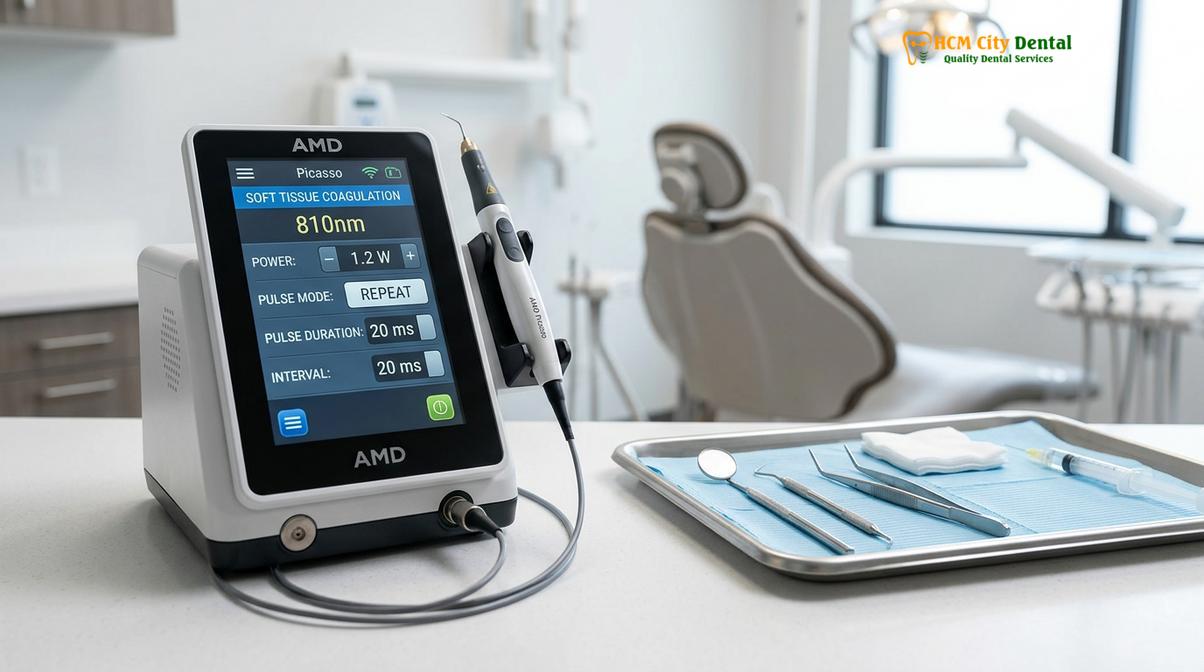
The use of the AMD Picasso diode laser allows for bloodless, sutureless cuts. As the laser energy vaporizes the excess gingival tissue, it simultaneously cauterizes the blood vessels and nerve endings. This instant coagulation creates a dry, clear surgical field, allowing the clinician to evaluate the aesthetic contours in real-time without the interference of bleeding. Furthermore, the cauterization of nerve endings significantly reduces postoperative pain, while the sterile nature of the laser beam minimizes the risk of infection. Patients undergoing this dual-laser protocol typically experience a rapid 48-hour recovery, returning to their daily routines with minimal disruption.
“The integration of hydro-photonic hard tissue lasers and diode soft tissue lasers has revolutionized our approach to periodontal aesthetics. By eliminating mechanical trauma and thermal necrosis, we can achieve microscopic precision in zenith calibration while ensuring our patients experience virtually no postoperative discomfort. The tissue response is profoundly different from traditional scalpel surgery.”
— Dr. Nguyen Van Cuong, Lead Periodontal Specialist
Why Waterlase is Ideal for Cosmetic Gum Contouring and Veneer Prep
Laser precision allows clinicians to accurately sculpt gingival zenith points and harmonize the gum line, creating an ideal biological and aesthetic foundation for porcelain veneers and digital smile design.
The creation of a flawless smile extends far beyond the color and shape of the teeth; it relies heavily on the architecture of the surrounding gingiva. The gums act as the frame for the teeth, and any asymmetry, bulkiness, or excessive display can detract from an otherwise perfect dentition. When preparing a patient for porcelain veneers, establishing the correct gingival zenith points is paramount. The zenith point is the most apical (highest) point of the gingival scallop, and it should ideally be displaced slightly distal to the long axis of the tooth. Using Waterlase, clinicians can perform micro-adjustments to these zenith points, ensuring perfect symmetry across the anterior sextant.
This level of precision is heavily utilized in conjunction with Digital Smile Design (DSD). DSD allows the clinician to digitally map the patient’s facial proportions, lip dynamics, and tooth dimensions to calculate the mathematically ideal gum line. The laser is then used to translate this digital blueprint into clinical reality. For patients dealing with a gummy smile—where an excessive amount of gingiva is displayed during a full smile—the etiology must be carefully diagnosed before treatment begins.
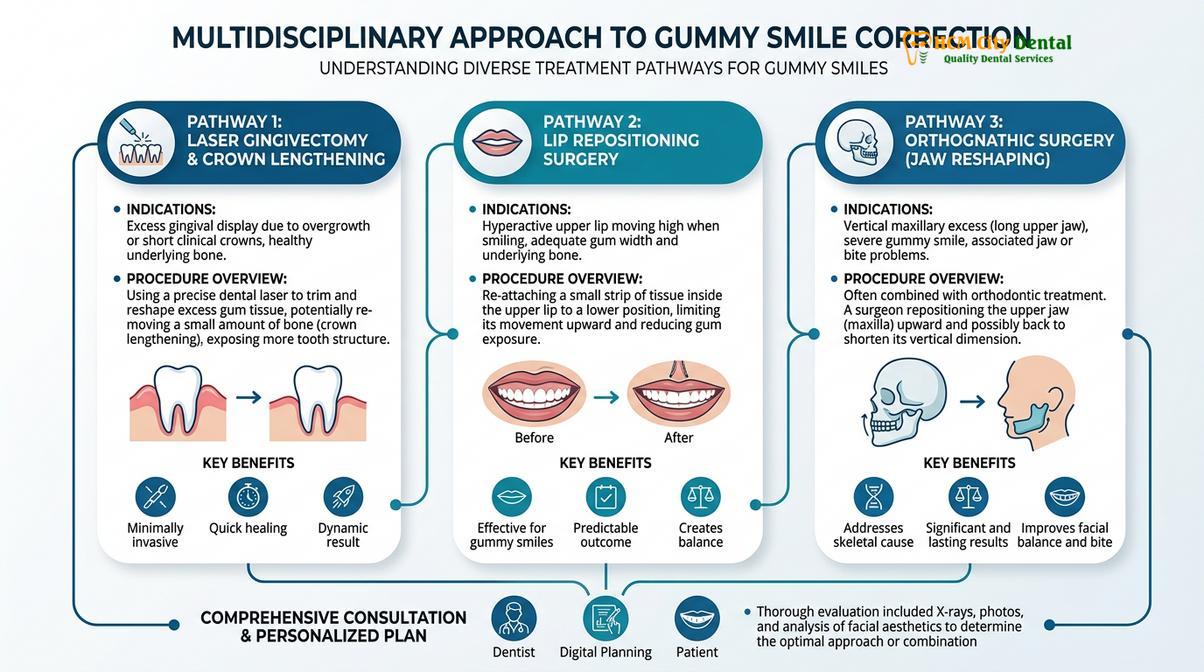
If the gummy smile is caused by altered passive eruption (where the gums have failed to recede normally during tooth development), laser gingivectomy and functional crown lengthening are the treatments of choice. However, if the gummy smile is caused by a hyperactive levator muscle (the muscle that pulls the upper lip up), Botox injections or surgical lip repositioning may be required to restrict the lip’s upward movement.
Clinical Case Review: Comprehensive Gummy Smile Correction
A 28-year-old patient presented to HCMC Dental Clinic in Ho Chi Minh City with a chief complaint of a severe gummy smile and short, square-looking teeth. Clinical examination by Dr. Nguyen Van Cuong revealed altered passive eruption combined with a hyperactive levator muscle. The treatment plan utilized a multidisciplinary approach: Waterlase was used to perform closed-flap crown lengthening, removing 2mm of crestal bone to establish a healthy supracrestal tissue attachment and lengthen the clinical crowns. This was followed by targeted Botox therapy to relax the upper lip. The dual approach yielded a harmonious, highly aesthetic smile with a rapid, comfortable recovery.
Understanding the financial investment is a crucial part of the treatment planning process. HCMC Dental Clinic offers a transparent pricing structure for these advanced procedures. According to the current fee schedule, a standard Laser Gingivectomy is priced at 1,500,000 VND (~$60 USD) per tooth, with a walk-in rate of 2,500,000 VND. For patients requiring extensive aesthetic enhancement, Full-Arch Laser Gum Contouring (covering up to 10 teeth) is available at 12,000,000 VND (~$480 USD), compared to the 20,000,000 VND walk-in rate. When bone modification is necessary, Functional or Esthetic Crown Lengthening (including bone contouring) is 3,000,000 VND (~$120 USD) per tooth, down from the 5,000,000 VND walk-in price.
For soft tissue and muscular corrections, Surgical Lip Repositioning (Lip Lowering) is offered at 15,000,000 VND (~$600 USD), reduced from 25,000,000 VND, and Botox Gummy Smile Correction (covering both sides) is 4,500,000 VND (~$180 USD), down from 7,500,000 VND. International patients participating in dental tourism can take advantage of a -40% WhatsApp booking discount, making world-class periodontal care highly accessible.
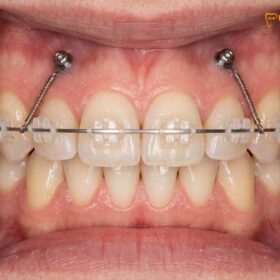
It is important to note that not all gummy smiles can be resolved with soft tissue or minor bone contouring. In severe skeletal cases diagnosed as Vertical Maxillary Excess (VME)—where the entire upper jaw bone has grown too far downward—orthognathic surgery is required. For these complex skeletal cases, HCMC Dental Clinic works in close collaboration with elite Surgical Jaw Partners. Patients requiring a Le Fort I osteotomy are referred to the maxillofacial specialists at the National Hospital of Odonto-Stomatology in Ho Chi Minh City (Bệnh viện Răng Hàm Mặt Trung Ương TP.HCM), the highest clinical authority in the region, ensuring the safest and most predictable skeletal correction [4].
For more information on aesthetic gingival procedures and to view detailed before-and-after galleries, explore our comprehensive guide on advanced gum contouring procedures.
When to See a Doctor for Laser Gum Treatment
Determining the appropriate clinical intervention for gingival aesthetics or periodontal disease requires a comprehensive professional evaluation. Patients should seek a consultation if they experience an excessive display of gum tissue when smiling, asymmetrical or uneven gum margins, or teeth that appear disproportionately short or square. Additionally, individuals suffering from chronic gingival inflammation, deep periodontal pockets, or peri-implantitis (infection around a dental implant) are excellent candidates for laser-assisted decontamination and tissue repair.
Before any surgical or laser intervention can commence, the oral environment must be optimized. A prerequisite for laser gum contouring is a thorough professional dental scaling and root planing. Removing calculus and plaque biofilm ensures that the gingival tissues are free from active infection and acute inflammation, which is critical for predictable surgical outcomes and precise zenith point calibration. Operating on inflamed, edematous tissue can lead to inaccurate contouring and postoperative tissue rebound.
Important Clinical Considerations
While Waterlase and diode lasers are exceptionally safe, they are not universally applicable. Contraindications may include patients with uncontrolled systemic diseases (such as unmanaged diabetes), severe immunodeficiency, or active, untreated periodontal disease with massive bone loss. Furthermore, laser contouring cannot correct severe skeletal discrepancies (like Vertical Maxillary Excess) without adjunctive orthognathic surgery. A personalized diagnostic workup, including 3D CBCT imaging and periodontal probing, is mandatory to determine true candidacy.
“Aesthetic success in periodontics is built upon a foundation of biological health. We never compromise the supracrestal attachment for the sake of cosmetics. Every laser contouring procedure must be preceded by rigorous diagnostics and thorough biofilm debridement to ensure long-term stability and prevent iatrogenic damage.”
— Clinical Protocol Guidelines, HCMC Dental Clinic
If you are considering enhancing your smile architecture or require advanced periodontal care, we encourage you to schedule a comprehensive evaluation. Our team in Ho Chi Minh City utilizes state-of-the-art diagnostic imaging to map your biological width and design a customized, minimally invasive treatment plan tailored to your unique anatomical needs.
Frequently Asked Questions
Does Waterlase require local anesthesia?
In many minor soft tissue cases, Waterlase does not require local anesthesia due to its gentle hydro-photonic mechanism. However, for deeper osteoplasty or extensive crown lengthening, a minimal amount of local anesthetic is administered to ensure absolute patient comfort. The laser’s numbing effect significantly reduces the volume of anesthetic needed compared to traditional scalpel surgery, allowing for a faster return to normal sensation post-procedure.
Is Waterlase safe for children’s gum surgery?
Yes, Waterlase is highly safe and often preferred for pediatric periodontal procedures, including frenectomies and exposure of unerupted teeth. The absence of a terrifying drill noise, combined with minimal vibration and reduced need for needles, makes it an excellent clinical choice for children. It lowers dental anxiety while providing precise, bloodless tissue modification, ensuring a cooperative and stress-free environment for young patients.
What are the benefits of Waterlase over drill bits?
Waterlase eliminates the friction, heat, and mechanical vibration associated with traditional rotary drill bits, preventing thermal necrosis and micro-fractures in the bone. It offers superior precision, simultaneous coagulation for a bloodless field, and preserves more healthy tissue. This results in significantly less postoperative swelling, a much faster healing trajectory, and the elimination of the smear layer, which improves the bond strength of subsequent dental restorations.
How long is the recovery after laser gum contouring?
Recovery after laser gum contouring is remarkably fast, with most patients resuming normal activities within 48 hours. Because the laser cauterizes as it cuts, there are typically no sutures required and minimal bleeding. Patients may experience mild tissue tenderness for a few days, which is easily managed with over-the-counter anti-inflammatory medications and warm saltwater rinses. Complete tissue maturation occurs over several weeks, but the aesthetic results are visible immediately.
Can laser treatment fix a severe gummy smile?
Laser treatment is highly effective for gummy smiles caused by altered passive eruption or gingival overgrowth, but severe skeletal cases require a multidisciplinary approach. If the gummy smile is due to Vertical Maxillary Excess (VME), laser contouring is combined with orthognathic surgery (Le Fort I osteotomy) or surgical lip repositioning to achieve optimal facial harmony. A thorough clinical and radiographic examination is required to diagnose the exact etiology and formulate the correct treatment plan [5].
References
- Journal of Clinical Periodontology. Esthetic crown lengthening outcomes and biological width preservation. (2021).
- International Journal of Periodontics & Restorative Dentistry. Diode laser versus scalpel gingivectomy: Healing and pain assessment. (2020).
- Journal of Aesthetic and Restorative Dentistry. The significance of supracrestal tissue attachment around restorations. (2019).
- Journal of Oral and Maxillofacial Surgery. Long-term stability of Le Fort I osteotomy for Vertical Maxillary Excess. (2022).
- Clinical Oral Investigations. Surgical lip repositioning longevity and patient satisfaction rates. (2018).