The cost of gum contouring in Vietnam ranges from 1,500,000 VND (~$60 USD) per tooth to 12,000,000 VND (~$480 USD) for a full arch. This highly accessible pricing, combined with advanced laser technology, makes Vietnam a premier destination for patients seeking clinical excellence without prohibitive expenses.
Clinical Summary:
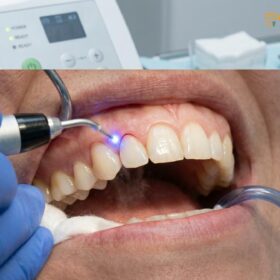
Gum contouring in Vietnam offers a clinically sound, minimally invasive solution for excessive gingival display and asymmetrical gum lines. Utilizing 810nm diode lasers, such as the AMD Picasso system, specialists perform precise gingivectomies that respect the biological width and gingival zenith points. The procedure ensures rapid coagulation, reduced postoperative edema, and swift recovery. For severe skeletal discrepancies, multidisciplinary approaches involving orthognathic surgery are coordinated with top maxillofacial hospitals. The financial framework provides substantial savings compared to Western dental fees, making comprehensive aesthetic and functional crown lengthening highly accessible.
Key Takeaways:
- Laser gingivectomy costs approximately 1,500,000 VND (~$60 USD) per tooth.
- Full-arch laser gum contouring (up to 10 teeth) is priced at 12,000,000 VND (~$480 USD).
- Treatments utilize AMD Picasso Diode Lasers (810nm) for bloodless, sutureless incisions.
- Clinical protocols strictly maintain a minimum 2mm supracrestal tissue attachment to prevent bone resorption.
- Severe cases involving Vertical Maxillary Excess (VME) are managed via surgical jaw partnerships with leading national hospitals.
Why Cosmetic Dentistry in Australia Exceeds Average Budgets
Australian dental fees are driven by high commercial overheads, stringent regulatory compliance costs, and the premium pricing models of specialized periodontists, often placing aesthetic gingival procedures beyond the reach of average household budgets.
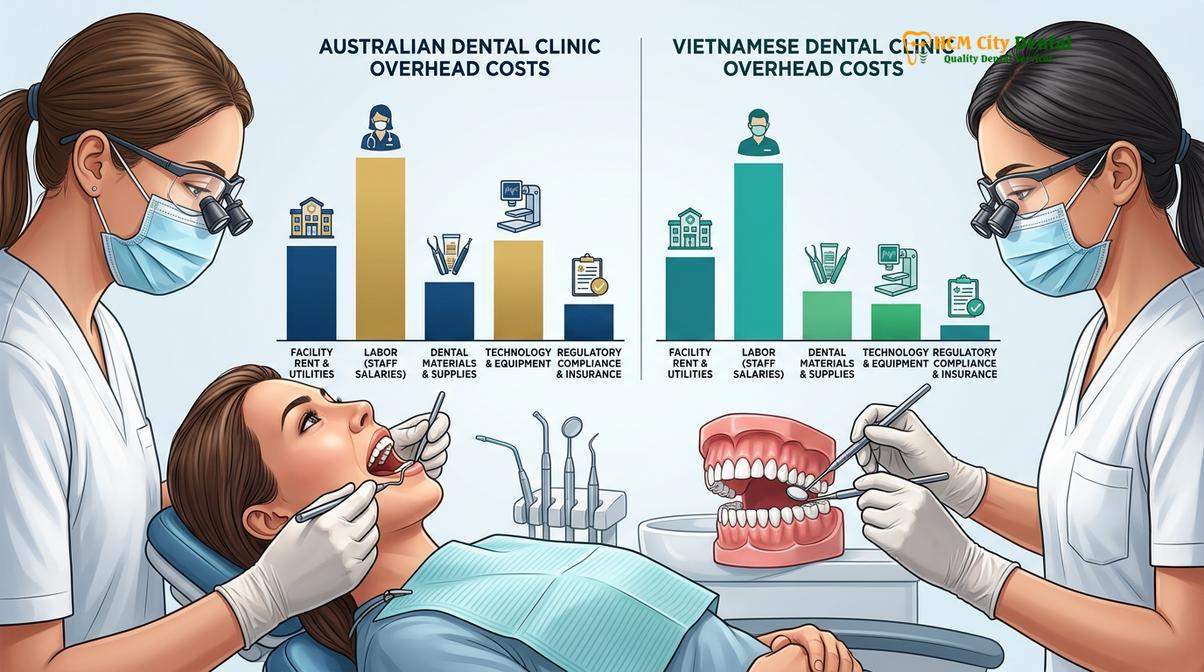
The economic landscape of cosmetic dentistry in Western nations is characterized by significant overhead expenses that directly inflate patient fees. When analyzing Australian dental fees, it becomes evident that the cost structure is heavily influenced by commercial real estate leases in major metropolitan areas, high staff remuneration, and the continuous costs associated with maintaining domestic regulatory compliance. These operational expenditures necessitate higher profit margins per procedure, making elective aesthetic treatments financially burdensome for many individuals.
For instance, the gingivectomy price Sydney clinics quote often reflects not just the clinical expertise of the periodontist, but also the premium associated with specialized dental care in a high-cost economy. Patients seeking to correct a gummy smile or uneven gingival margins are frequently presented with treatment plans that run into several thousands of dollars. This financial barrier has catalyzed a significant shift in patient behavior, prompting many to explore international alternatives where clinical standards remain rigorous but economic models are more favorable to the consumer [1].
“The globalization of healthcare has allowed patients to access top-tier medical technologies, such as diode lasers and digital smile design, in emerging economies without the prohibitive markups inherent to Western healthcare systems.”
In contrast, the economic environment in Southeast Asia allows for a different pricing paradigm. Clinics can invest heavily in state-of-the-art technology and continuous medical education for their staff while maintaining lower operational overheads. This efficiency translates directly into patient savings, enabling comprehensive smile makeovers that include both hard and soft tissue management at a fraction of the domestic cost.
Price Comparison Table: Australian Specialist Rates vs. Saigon Clinics
Comparing international rates reveals that patients can access premium laser gum contouring in Vietnam for a fraction of Western prices, with full-arch treatments costing approximately $480 USD compared to thousands in Australia.
Understanding the specific financial parameters is crucial for patients planning their treatment. The saigon cosmetic dentist cost structure is highly transparent, allowing international visitors to accurately budget for their clinical needs. The following pricing framework outlines the standard fees for various gummy smile correction modalities, utilizing advanced clinical protocols.
According to the latest clinic fee schedule, the pricing structure is as follows:
- Laser Gingivectomy (per tooth): 1,500,000 VND (~$60 USD). The standard walk-in rate is 2,500,000 VND.
- Full-Arch Laser Gum Contouring (up to 10 teeth): 12,000,000 VND (~$480 USD). The standard walk-in rate is 20,000,000 VND.
- Functional/Esthetic Crown Lengthening: 3,000,000 VND (~$120 USD) per tooth. This includes necessary bone contouring (osteoplasty/osteotomy). The standard walk-in rate is 5,000,000 VND.
- Surgical Lip Repositioning / Lip Lowering: 15,000,000 VND (~$600 USD). The standard walk-in rate is 25,000,000 VND.
- Botox Gummy Smile Correction (both sides): 4,500,000 VND (~$180 USD). The standard walk-in rate is 7,500,000 VND.
Patients who utilize the dedicated digital communication channels can often secure a -40% WhatsApp booking discount, which is reflected in the lower tier of the pricing mentioned above. This promotional structure is designed to facilitate international patient intake and streamline the consultation process prior to arrival in the country.
| Procedure Type | Estimated Cost in Australia (AUD) | Cost in Vietnam (VND / USD) | Clinical Technology Utilized |
|---|---|---|---|
| Single Tooth Gingivectomy | $300 – $500 | 1,500,000 VND (~$60 USD) | 810nm Diode Laser |
| Full-Arch Gum Contouring | $2,500 – $4,000 | 12,000,000 VND (~$480 USD) | Laser + Digital Smile Design |
| Crown Lengthening (with bone reduction) | $800 – $1,200 per tooth | 3,000,000 VND (~$120 USD) | Piezosurgery / Micro-motor |
| Surgical Lip Repositioning | $3,000 – $5,000 | 15,000,000 VND (~$600 USD) | Microsurgical Suturing |
This comparative data highlights the profound economic advantage of seeking treatment abroad. Even when factoring in the complexity of procedures that require osseous recontouring, the financial accessibility remains unparalleled [2].
Calculating Total Travel Costs: Flights, District 1 Hotels, and Treatments
A comprehensive dental tourism itinerary requires factoring in flight expenses, accommodation in central districts, and clinical fees; however, the overall financial outlay remains significantly lower than domestic treatment.
When evaluating dental package deals vietnam, prospective patients must adopt a holistic view of the financial commitment. The total cost of the medical journey encompasses not only the clinical fees but also the logistical expenses associated with international travel. Fortunately, Ho Chi Minh City offers a highly developed tourism infrastructure that caters to a wide range of budgets.
Return flights from major Australian hubs (such as Sydney, Melbourne, or Brisbane) to Tan Son Nhat International Airport generally range from $600 to $900 AUD, depending on the carrier and booking window. Upon arrival, patients typically seek accommodation in District 1 or District 3, which places them in close proximity to major medical facilities like HCMC Dental Clinic. Boutique hotels in these central areas offer comfortable, modern amenities for approximately $50 to $100 AUD per night.
Patient Logistics Example:
A patient traveling from Brisbane for a full-arch laser gum contouring procedure spent approximately $800 AUD on flights and $400 AUD for a 5-night stay in District 1. The clinical procedure cost roughly $720 AUD (equivalent to $480 USD). The total expenditure of $1,920 AUD was still less than half the $4,500 AUD quote received from a local domestic periodontist, demonstrating the viability of the medical travel model.
Local transportation via ride-hailing applications is exceptionally affordable, and the cost of daily sustenance is minimal compared to Western standards. This favorable exchange rate and low cost of living mean that the ancillary expenses of the trip do not negate the substantial savings achieved on the medical procedures themselves.
Quality of Technology: Matching Australian Standards in HCMC
Clinics in Ho Chi Minh City deploy advanced 810nm diode lasers and digital smile design protocols that mirror the highest international clinical standards, ensuring precise, minimally invasive outcomes.
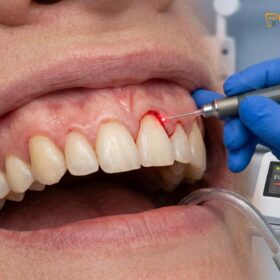
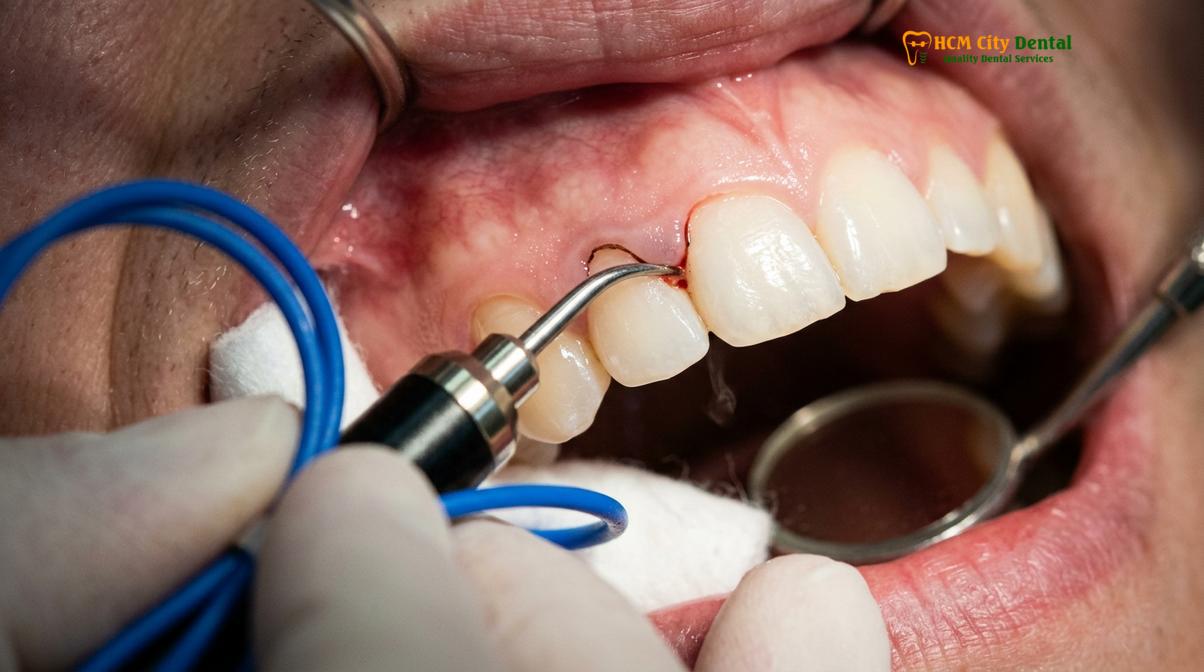
The cornerstone of modern gingival aesthetics is the integration of advanced biophotonic technology. Leading facilities utilize AMD Picasso Lasers, which are diode soft tissue lasers operating at an 810nm wavelength. This specific wavelength is highly absorbed by hemoglobin and melanin, making it exceptionally effective for soft tissue ablation and hemostasis. The clinical benefits of this technology are profound: it allows for bloodless, sutureless cuts, instant coagulation, and cauterization of the surgical site.
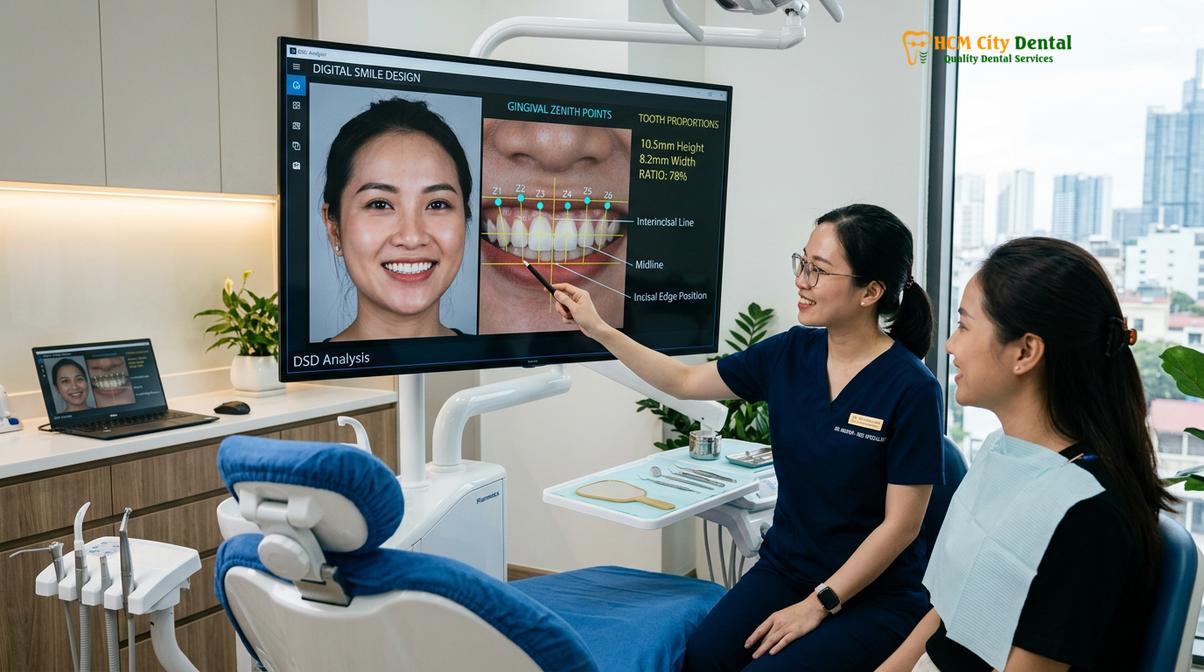
According to Dr. Nguyen Van Cuong, precise zenith calibration is critical for achieving a natural aesthetic outcome. The gingival zenith points—the highest point of the gum scallop—must be displaced slightly distal to the long axis of the tooth. The precision afforded by the diode laser allows the clinician to sculpt these micro-architectural details with a level of control that is difficult to achieve with a traditional scalpel. Furthermore, the sterile beam of the laser minimizes the risk of postoperative infection and facilitates a rapid 48-hour recovery period [3].
Prior to any tissue modification, comprehensive aesthetic gum contouring planning is conducted using Digital Smile Design (DSD) software. This allows the clinical team to analyze the patient’s facial midline, interpupillary line, and lip dynamics. By superimposing the proposed gingival margins over high-resolution digital photographs, the patient and the clinician can visualize the final outcome before any irreversible procedures are initiated.
Clinical Workflows and Medical Reasoning in Gum Contouring
Successful gingival modification demands strict adherence to biological width principles and precise management of osseous structures, with multidisciplinary approaches essential for complex skeletal or muscular etiologies.
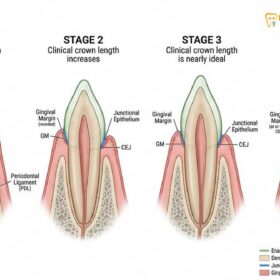
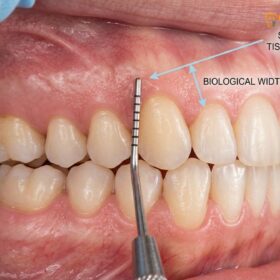
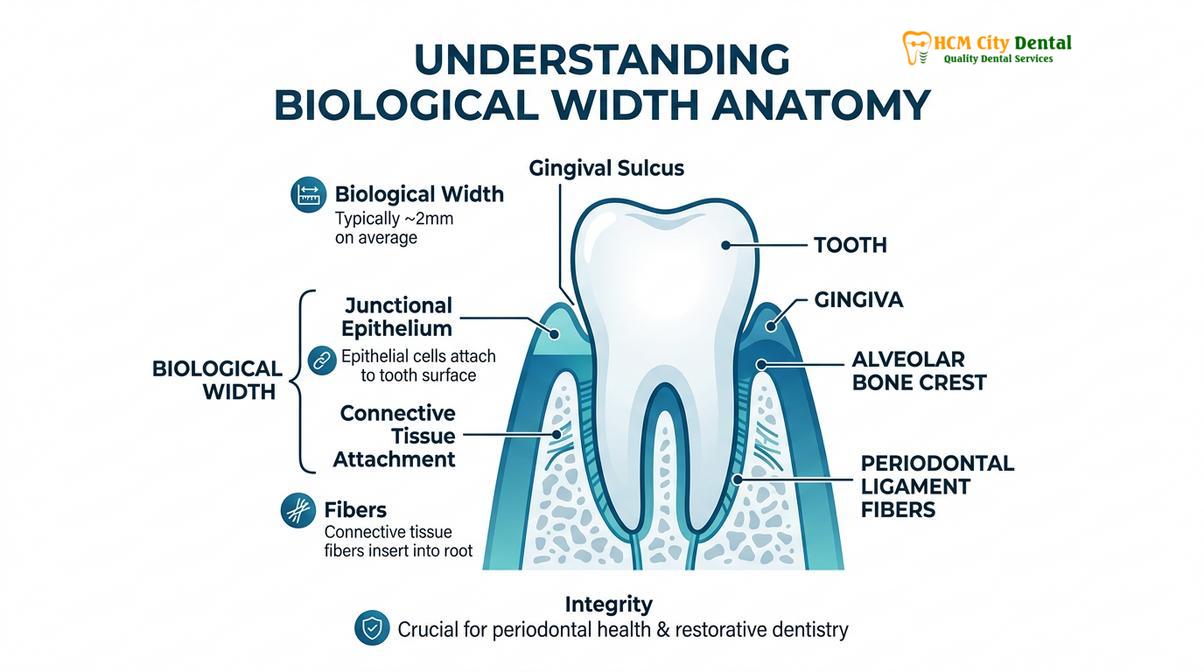
The medical reasoning behind gummy smile correction extends far beyond simple tissue excision. The periodontium is a complex anatomical structure, and any surgical intervention must respect its physiological boundaries. The most critical concept in this regard is the supracrestal tissue attachment (formerly known as the biological width). This refers to the combined dimension of the junctional epithelium and the supracrestal connective tissue attachment, which typically measures a minimum of 2mm above the alveolar bone crest.
Dr. Cuong emphasizes that biological width sounding is a mandatory diagnostic step prior to any gingivectomy. If a patient presents with altered passive eruption and the distance from the bone crest to the gingival margin is less than 3mm, a simple laser gingivectomy is contraindicated. Removing tissue in this scenario would violate the biological width, leading to chronic inflammation, unpredictable tissue rebound, and eventual localized bone resorption. In such cases, functional or esthetic crown lengthening is required, which involves raising a mucoperiosteal flap and performing precise osteotomy (bone removal) and osteoplasty (bone reshaping) to re-establish the correct anatomical dimensions [4].
Clinical Warning: Biological Width Violation
Performing a gingivectomy without assessing the underlying alveolar bone crest can lead to severe iatrogenic complications. If the supracrestal tissue attachment is compromised, the body will attempt to recreate space by resorbing bone, leading to chronic periodontal pockets, persistent bleeding, and aesthetic failure.
For patients whose excessive gingival display is caused by a hyperactive levator muscle of the upper lip, surgical lip repositioning or targeted neuromodulator (Botox) injections may be indicated. Botox temporarily paralyzes the hyperactive muscle, preventing the lip from retracting excessively during a full smile. While effective, this is a transient solution requiring periodic maintenance.
In the most severe cases, where the gummy smile is a result of Vertical Maxillary Excess (VME)—a skeletal discrepancy where the upper jaw has grown too far downward—soft tissue procedures alone are insufficient. For these complex skeletal cases, clinics rely on Surgical Jaw Partners. The multidisciplinary team at HCMC Dental Clinic coordinates with maxillofacial specialists at the National Hospital of Odonto-Stomatology in Ho Chi Minh City (Bệnh viện Răng Hàm Mặt Trung Ương TP.HCM), the highest clinical authority in the region. Treatment involves a Le Fort I osteotomy, a major orthognathic surgery where the maxilla is sectioned, impacted superiorly, and stabilized with titanium plates and screws to permanently correct the skeletal architecture [5].
“The etiology of a gummy smile is multifactorial, encompassing dentoalveolar, muscular, and skeletal components. Accurate differential diagnosis is the linchpin of successful, long-term aesthetic rehabilitation.”
When to See a Doctor
Patients should seek a professional clinical evaluation if they experience any of the following indications related to their gingival architecture:
- Excessive Gingival Display: Showing more than 3-4mm of gum tissue when smiling naturally, which may indicate altered passive eruption, a hyperactive lip, or vertical maxillary excess.
- Asymmetrical Gum Margins: Uneven gum lines that create the illusion of crooked or disproportionate teeth, even if the teeth themselves are straight.
- Short Clinical Crowns: Teeth that appear unusually small or square, often due to excess gum tissue covering the enamel.
- Chronic Gingival Inflammation: Red, swollen, or bleeding gums that do not resolve with standard dental scaling and oral hygiene, potentially indicating a biological width violation from previous dental work.
- Pre-Prosthetic Preparation: When planning for porcelain veneers or crowns, and the dentist advises that the gum line needs to be leveled to achieve optimal aesthetic proportions.
It is crucial to understand that gum contouring is a medical procedure. Patients with uncontrolled periodontal disease, severe systemic health issues, or those taking certain medications that affect bleeding or healing must undergo a thorough medical clearance before proceeding with any surgical intervention.
Frequently Asked Questions
How much can a patient from Sydney save on gum contouring?
A patient traveling from Sydney can typically save between 60% to 75% on comprehensive gum contouring procedures. While Australian specialist fees often exceed several thousand dollars for a full arch, the equivalent laser treatment in Vietnam costs approximately $480 USD. Even when factoring in the cost of flights and accommodation, the financial difference remains substantial, allowing patients to access premium care without the prohibitive domestic markups.
How many days should I stay in Saigon for cosmetic gum surgery?
Patients should plan to stay in Saigon for a minimum of 5 to 7 days for cosmetic gum surgery. This timeframe allows for the initial clinical consultation, 3D imaging, the laser procedure itself, and a mandatory postoperative evaluation. This follow-up ensures proper tissue coagulation, assesses early healing, and confirms that the patient is medically cleared before undertaking international air travel.
Can I pay in AUD at your Saigon clinic?
Yes, many major dental facilities in Saigon accept payments via international credit cards which automatically process AUD conversions. Additionally, direct bank transfers or cash payments in major foreign currencies are often accommodated. However, it is highly advisable to confirm the exact exchange rate protocols and any potential international transaction fees with the clinic’s financial coordinator prior to finalizing your treatment plan.
Is laser gum contouring a painful procedure?
Laser gum contouring is generally associated with minimal discomfort due to the use of local anesthesia and the cauterizing effect of the diode laser. The 810nm wavelength seals nerve endings and blood vessels simultaneously as it ablates the tissue. This significantly reduces postoperative pain, swelling, and bleeding compared to traditional scalpel incisions, allowing most patients to resume normal activities within 48 hours.
Will my gummy smile return after surgical treatment?
When performed correctly with respect to the biological width and necessary bone recontouring, surgical gum contouring yields highly stable, long-lasting results. The removed tissue does not typically regenerate. However, if the gummy smile is caused by a hyperactive lip muscle and treated solely with Botox, the results are temporary (lasting 3-6 months) and will require ongoing maintenance injections to sustain the aesthetic effect.
References
- Journal of Clinical Periodontology. Esthetic crown lengthening outcomes and biological width. (2021).
- International Journal of Periodontics & Restorative Dentistry. Diode laser vs scalpel gingivectomy: A clinical comparison. (2020).
- Journal of Aesthetic and Restorative Dentistry. Management of gingival zenith points in smile design. (2019).
- Journal of Oral and Maxillofacial Surgery. Le Fort I osteotomy stability in vertical maxillary excess. (2022).
- Clinical Oral Investigations. Surgical lip repositioning longevity and patient satisfaction. (2018).