Open gingival embrasures, commonly referred to as “black triangles,” represent one of the most challenging aesthetic and functional dilemmas in modern periodontics and restorative dentistry. These dark, unappealing spaces between the teeth occur when the interdental papilla—the small, triangular peak of gingival tissue that normally fills the space below the contact point of adjacent teeth—recedes or fails to regenerate. For international patients, expats, and dental tourists seeking world-class cosmetic rehabilitation, the presence of black triangles can severely compromise the results of otherwise flawless orthodontic alignment or porcelain veneer treatments. Beyond aesthetics, the loss of the interdental papilla leads to phonetic difficulties, lateral food impaction, increased biofilm accumulation, and a heightened risk of recurrent periodontal disease.
Historically, the surgical reconstruction of the interdental papilla has been notoriously unpredictable due to the microscopic size of the tissue, the fragile nature of the underlying interproximal bone, and the limited collateral blood supply in the interdental col. However, advancements in minimally invasive biomaterials have revolutionized the management of open gingival embrasures. Today, papilla reconstruction hyaluronic acid dermal filler black triangle closure offers a non-surgical, highly effective modality for mild to moderate papilla deficiencies. When soft-tissue volumization alone is insufficient, restorative interventions such as Bioclear injection molding or ultra-thin porcelain veneers can predictably alter the tooth morphology to close the gap. At HCMC Dental Clinic in District 1, Ho Chi Minh City, our clinical protocols integrate these cutting-edge therapies to restore both the pink and white aesthetics of the smile.
Clinical Summary:
The management of open gingival embrasures (black triangles) requires a precise diagnostic understanding of the underlying osseous architecture. According to Tarnow’s 5mm rule, the predictability of papilla fill is directly dictated by the distance from the alveolar bone crest to the interproximal contact point. For Class I and mild Class II deficiencies, the micro-injection of cross-linked dental Hyaluronic Acid (HA) provides a non-surgical method to stimulate fibroblast proliferation and volumize the tissue. For larger defects where the distance exceeds 5mm, restorative approaches such as heated Bioclear injection molding or IPS E.max veneers are utilized to apically reposition the contact point. In severe cases of peri-implant or Class III papilla loss, microsurgical subepithelial connective tissue grafting (tunnelling technique) may be indicated. HCMC Dental Clinic offers these advanced, evidence-based protocols under the direct supervision of Dr. Nguyen Van Cuong, DDS, providing international patients with predictable, aesthetic outcomes at highly transparent, competitive fee structures.
Key Takeaways:
- Tarnow’s 5mm Rule: Complete papilla fill is 98% predictable when the distance from the bone crest to the contact point is 5mm or less, but drops to 27% at 7mm.
- Hyaluronic Acid Efficacy: Cross-linked dental HA (16–20 mg/mL) acts as a hydrophilic scaffold, mechanically plumping the tissue while stimulating localized collagen synthesis for 6 to 12 months.
- Restorative Synergy: When soft-tissue injection is insufficient, Bioclear injection molding or porcelain veneers can physically lower the contact point to recreate the ideal 5mm biological environment.
- Microsurgical Options: Advanced tunnelling techniques with connective tissue grafts are reserved for severe Class III defects and complex peri-implant aesthetic zones.
- Cost-Effective Excellence: HCMC Dental Clinic offers world-class black triangle closure therapies, including Bioclear molding from $69 to $115 USD per tooth, providing significant savings for dental tourists in Vietnam.
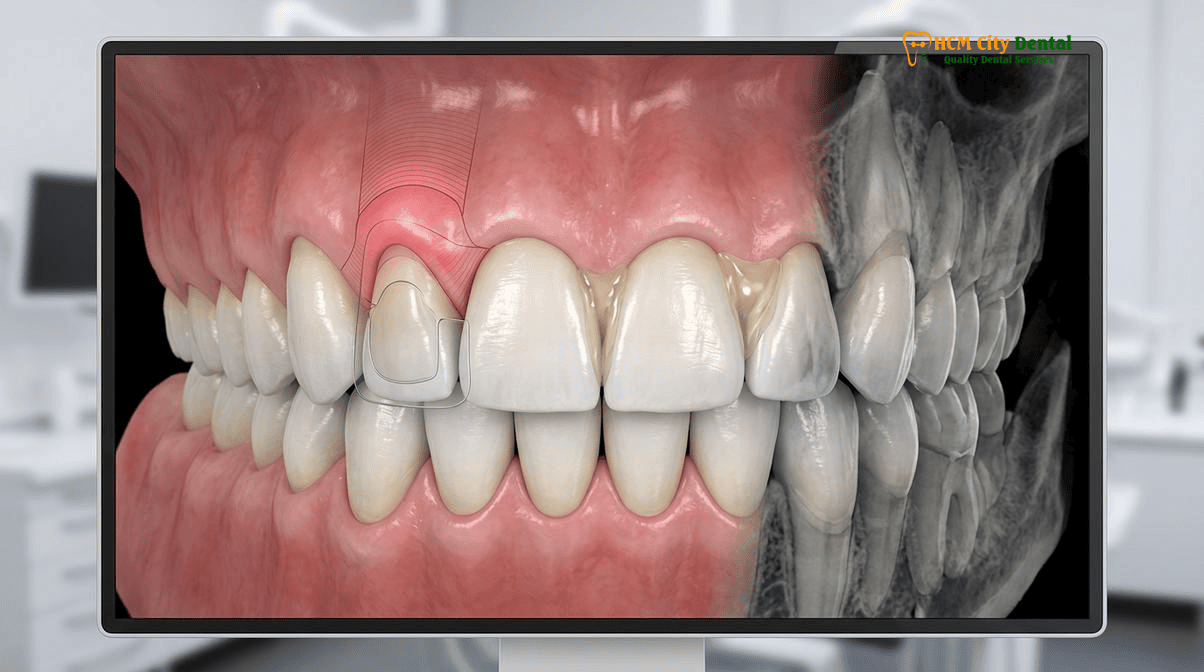
Tarnow’s Classic 5mm Rule & Nordland-Tarnow Classification (Class I–III): Why the Distance from Interproximal Bone Crest to Contact Point Dictates Papilla Fill
To successfully execute an interdental papilla reconstruction dental filler Vietnam protocol, the clinician must first understand the anatomical and biological constraints of the interproximal space. The interdental papilla is not a standalone structure; it is entirely dependent on the underlying architecture of the interproximal alveolar bone and the spatial relationship of the adjacent teeth. The most critical diagnostic metric in predicting whether a black triangle can be closed—either naturally or via intervention—is the distance from the crest of the interproximal bone to the apical base of the contact point between the two teeth.
This relationship was definitively quantified in a landmark 1992 study by Dr. Dennis Tarnow. Tarnow’s classic rule states that when the distance from the bone crest to the contact point is 5 millimeters or less, the interdental papilla will be present and completely fill the embrasure space 98% of the time. However, as this distance increases, the predictability of complete papilla fill plummets dramatically. At a distance of 6 millimeters, the papilla is present only 56% of the time, and at 7 millimeters, the presence drops to a mere 27%[1]. This biological limitation explains why patients frequently develop black triangles after orthodontic alignment (which can move teeth away from the bone crest) or after the resolution of periodontal disease (which results in bone loss and subsequent tissue shrinkage).
“The predictability of black triangle closure is entirely governed by the underlying osseous topography. We cannot force soft tissue to exist in a void without vascular support. If Tarnow’s distance exceeds 5 millimeters, we must either build the bone, graft the tissue, or restoratively lower the contact point to respect the biological width.”
— Dr. Nguyen Van Cuong, DDS (Clinical Director, HCMC Dental Clinic)
To further categorize these defects, the Nordland-Tarnow Classification system is utilized globally to grade the severity of papilla loss:
- Normal: The interdental papilla completely fills the embrasure space to the apical extent of the interdental contact point.
- Class I: The tip of the interdental papilla lies between the interdental contact point and the most coronal extent of the cementoenamel junction (CEJ). This is a mild black triangle, highly responsive to black triangle teeth hyaluronic acid papilla injection.
- Class II: The tip of the papilla lies at or apical to the interproximal CEJ but coronal to the apical extent of the facial CEJ. This represents moderate loss, often requiring a combination of soft-tissue and restorative therapies.
- Class III: The tip of the papilla lies level with or apical to the facial CEJ. This is severe papilla loss, typically requiring advanced microsurgical grafting or extensive prosthetic rehabilitation.
For patients researching Gum Disease Treatment Cost Vietnam: Clinical Guide | HCMC Dental, understanding this classification is vital, as the severity of the defect directly dictates the required clinical intervention and associated costs.
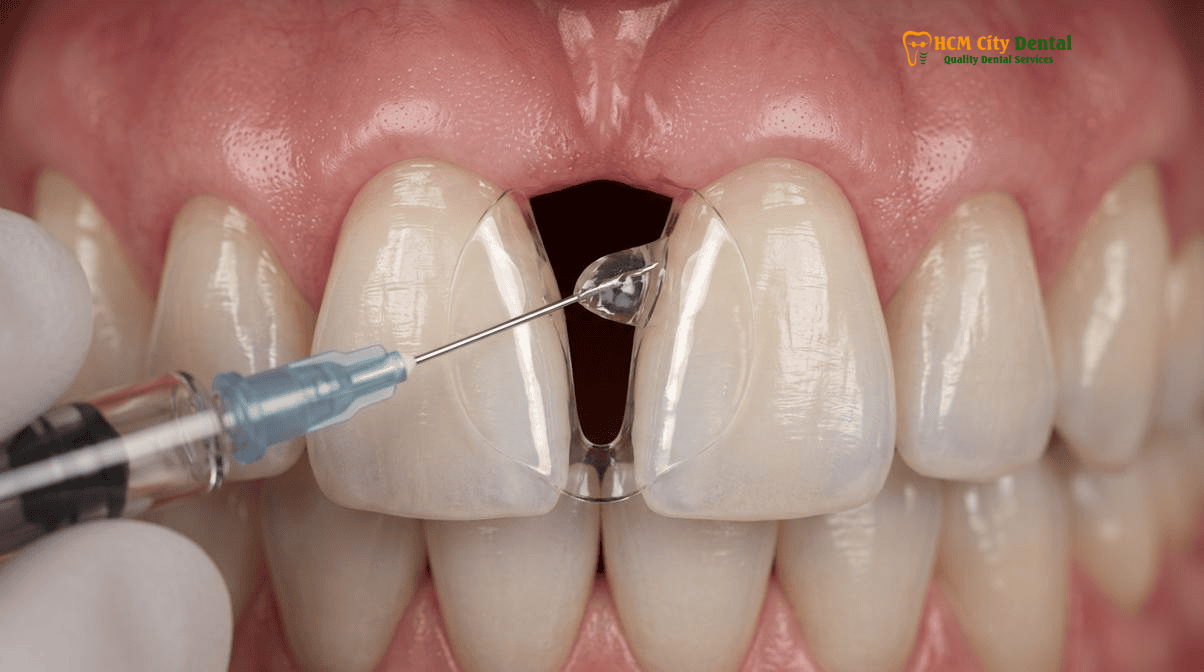
Injectable Cross-Linked Dental Hyaluronic Acid (HA 16–20 mg/mL): Stimulating Fibroblast Proliferation, Collagen Synthesis, and Hydrophilic Papilla Plumping
For decades, the only solutions for black triangles were highly invasive surgical grafts or aggressive restorative treatments that required shaving down healthy tooth structure. The introduction of injectable cross-linked dental Hyaluronic Acid (HA) has provided a revolutionary, minimally invasive alternative for managing Class I and mild Class II papilla deficiencies. Hyaluronic acid is a naturally occurring, non-sulfated glycosaminoglycan found abundantly in the extracellular matrix of human connective tissues, including the gingiva.
In its natural state, HA has a very rapid turnover rate and is degraded by hyaluronidase enzymes within days. Therefore, for dental applications, the HA must be chemically cross-linked (typically using 1,4-butanediol diglycidyl ether, or BDDE) to form a stable, viscoelastic gel with a concentration of 16 to 20 mg/mL. This cross-linking significantly extends the half-life of the material in the tissue, allowing it to persist for 6 to 12 months before being naturally metabolized by the body.
The clinical efficacy of hyaluronic acid gel vs Bioclear matrix black triangle closure relies on two distinct mechanisms of action when injected into the deficient papilla:
- Hydrophilic Volumization (Mechanical Plumping): HA is highly hygroscopic, meaning it has an extraordinary ability to bind and retain water molecules—up to 1,000 times its own weight. When injected into the interdental col, the gel immediately acts as a volumetric scaffold, mechanically expanding the tissue and physically pushing the papilla coronally to fill the black triangle.
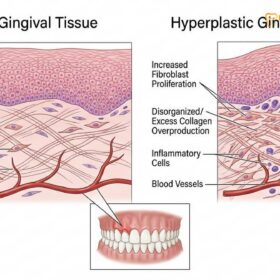
- Biological Biostimulation: Beyond mere mechanical filling, HA exerts profound biological effects on the periodontium. It facilitates the migration and proliferation of gingival fibroblasts, the primary cells responsible for synthesizing new collagen and extracellular matrix components. Furthermore, HA promotes localized neo-angiogenesis (the formation of new blood vessels), which improves the microcirculation of the fragile interdental tissue, enhancing its resilience and long-term stability[2].
Because HA is highly biocompatible and non-immunogenic, adverse reactions are exceedingly rare, making it an ideal treatment for patients seeking a fast, non-surgical aesthetic enhancement.
Clinical Case Study: Post-Invisalign Black Triangle Closure in District 1
Patient Profile: A 34-year-old Australian expat presented to HCMC Dental Clinic complaining of noticeable dark spaces between her lower incisors following a successful 18-month course of clear aligner therapy. The alignment of her previously crowded teeth had unmasked mild interproximal bone loss, resulting in Class I open gingival embrasures.
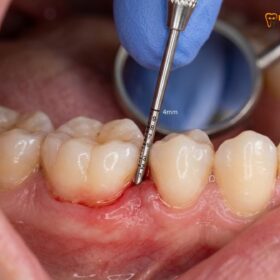
Clinical Assessment: Probing revealed a bone-crest-to-contact-point distance of 5.5mm. The gingival biotype was thick-flat, and there was no active periodontal inflammation.
Treatment Protocol: Dr. Nguyen Van Cuong, DDS, recommended a non-surgical approach using cross-linked dental Hyaluronic Acid. Over a period of 6 weeks, the patient received three micro-injection booster sessions (0.1 mL per site) using a 30-gauge needle. The hydrophilic expansion of the HA, combined with fibroblast stimulation, resulted in 100% closure of the black triangles by the final follow-up.
Outcome: The patient achieved a flawless aesthetic result without the need for composite bonding or veneers, preserving her natural tooth structure while eliminating the phonetic and aesthetic concerns.
The 3-Step Micro-Injection Protocol: 30-Gauge Needle Angulation 2mm–3mm Apical to the Papilla Tip with 2-to-3 Booster Sessions for Class I & II Deficiencies
The administration of dental Hyaluronic Acid for papilla reconstruction is a highly technique-sensitive procedure that requires a deep understanding of periodontal micro-anatomy. The interdental papilla is a small, confined space with delicate vascularity; improper injection techniques can lead to tissue necrosis or rapid extrusion of the material. At HCMC Dental Clinic, we utilize a strict, evidence-based 3-step micro-injection protocol to ensure maximum safety and predictability.
Step 1: Site Preparation and Anesthesia
Prior to injection, the interproximal area is thoroughly debrided to remove any biofilm or calculus, ensuring a pristine environment. Because the injection of a viscous gel into a tight space can cause pressure-related discomfort, profound local anesthesia is achieved using a localized infiltration of Articaine 4% with Epinephrine 1:100,000. The vasoconstrictive properties of the epinephrine also help to minimize bleeding, providing a clear visual field for the micro-injection.
Step 2: The Micro-Injection Technique
Using a specialized 30-gauge, short-bevel needle, the clinician approaches the papilla at a 45-degree angle. The needle is inserted approximately 2 to 3 millimeters apical to the tip of the deficient papilla, directly into the attached gingiva. This apical positioning is crucial; injecting too close to the tip can cause the fragile tissue to tear or the gel to leak out of the sulcus. The HA gel is injected slowly and with minimal pressure, depositing a micro-bolus of 0.05 to 0.1 mL per site. The clinician observes for a slight blanching (whitening) of the tissue, which indicates that the gel is successfully expanding the extracellular matrix and pushing the papilla coronally[3]. Following the injection, gentle digital massage is applied to evenly distribute the gel and mold the papilla into the embrasure space.
Step 3: The Booster Session Timeline
A single injection is rarely sufficient to achieve complete and lasting closure of a black triangle. The tissue requires time to accommodate the new volume, and the biological stimulation of fibroblasts occurs gradually. Therefore, a standard protocol involves 2 to 3 booster sessions, spaced approximately 3 to 4 weeks apart. This staged approach allows for incremental tissue expansion without compromising the micro-vascular blood supply. Patients are advised that while the initial mechanical plumping is visible immediately, the final, stable result is achieved after the completion of the booster series.
Clinical Precaution: Contraindications for HA Papilla Injections
Hyaluronic Acid injections are highly effective for Class I and mild Class II defects, but they are strictly contraindicated in the presence of active periodontal disease, untreated gingivitis, or severe Class III papilla loss (where the bone-to-contact distance exceeds 7mm). Injecting HA into inflamed tissue will exacerbate the condition and lead to rapid degradation of the filler. Patients must undergo a comprehensive periodontal evaluation and achieve optimal oral hygiene before initiating soft-tissue volumization. If you are experiencing bleeding gums or severe recession, contact Dr. Nguyen Van Cuong, DDS, for a definitive 3D CBCT diagnostic workup.
When Hyaluronic Acid Alone Is Not Enough: Lowering the Interproximal Contact Point via Bioclear Injection Molding or Ultra-Thin IPS E.max Veneers
While how to close black triangles after Invisalign or gum disease is often answered with HA injections, there are distinct anatomical limits to what soft tissue can achieve. If Tarnow’s distance from the bone crest to the contact point exceeds 5 to 6 millimeters, the lack of underlying osseous support means that the papilla simply cannot be coaxed coronally enough to fill the void, regardless of how much Hyaluronic Acid is injected. In these Class II and Class III scenarios, the clinical strategy must shift from raising the tissue to lowering the contact point.
By restoratively altering the shape of the adjacent teeth, the clinician can move the interproximal contact point apically (closer to the gum line) and widen the contact area. This physically reduces the size of the gingival embrasure, bringing the distance back within the 5mm threshold and allowing the existing papilla to naturally fill the remaining space. There are two primary modalities for achieving this at HCMC Dental Clinic:
Heated Bioclear Injection Molding
The Bioclear Method is a state-of-the-art, minimally invasive restorative technique specifically designed for black triangle closure. Unlike traditional composite bonding, which is layered by hand and often leaves microscopic ledges that trap plaque, Bioclear utilizes anatomically shaped, clear mylar matrices that are slipped below the gum line. The tooth is meticulously cleaned using an EMS AirFlow device to remove the biofilm pellicle, and the enamel is conditioned. A heated, highly filled flowable composite resin is then injection-molded into the matrices. The heat reduces the viscosity of the composite, allowing it to flow seamlessly around the curvature of the tooth, creating a monolithic, glass-smooth restoration that perfectly closes the embrasure space without any overhangs[4]. This technique is highly conservative, requiring zero removal of natural tooth structure.
Ultra-Thin IPS E.max Porcelain Veneers
For patients who desire not only the closure of black triangles but also a comprehensive enhancement of their smile’s color, shape, and alignment, ultra-thin porcelain veneers are the gold standard. Using digital smile design and 3D CAD/CAM technology, custom IPS E.max lithium disilicate veneers are fabricated to precisely alter the emergence profile of the teeth. The veneers are designed with longer, broader interproximal contact areas that extend apically, effectively squeezing out the black triangles. Because IPS E.max is highly biocompatible, the gingival tissues respond exceptionally well to the polished ceramic margins. For a deeper dive into this transformative procedure, patients can review our comprehensive guide on Porcelain Veneers & Digital Smile Design in Ho Chi Minh City.
“When the biological width is compromised by severe bone loss, we cannot rely on soft tissue alone. By utilizing Bioclear matrices or precision-milled IPS E.max veneers, we can architecturally redesign the contact point, effectively tricking the biology into supporting a healthy, tight papilla once again.”
— Dr. Nguyen Van Cuong, DDS (Clinical Director, HCMC Dental Clinic)
Microsurgical Subepithelial Connective Tissue Grafting (Tunnelling Technique) for Severe Class III Papilla Loss and Peri-Implant Esthetic Zones
In the most severe cases of interdental papilla loss (Nordland-Tarnow Class III), or in the highly complex arena of peri-implant papilla regeneration Ho Chi Minh City, neither Hyaluronic Acid nor restorative reshaping may be sufficient. The loss of the interproximal bone peak between two implants, or between a tooth and an implant, presents a unique biological challenge. Unlike natural teeth, dental implants lack a periodontal ligament (PDL), which means they do not have the robust supraperiosteal blood supply necessary to support a tall interdental papilla. In these challenging scenarios, advanced periodontal plastic surgery is required.
The gold standard for augmenting severe soft-tissue deficiencies is the Subepithelial Connective Tissue Graft (SCTG), often harvested from the patient’s palate or maxillary tuberosity. To reconstruct a papilla, the clinician must increase the volumetric thickness of the gingival biotype, providing a stable, vascularized base for the tissue to creep coronally.
At HCMC Dental Clinic, Dr. Nguyen Van Cuong, DDS, utilizes advanced microsurgical tunnelling techniques (such as the VISTA technique—Vestibular Incision Subperiosteal Tunnel Access) to perform these grafts. Instead of making large, scarring incisions that sever the delicate blood supply of the papilla, a small access incision is made high in the vestibule. Specialized microsurgical instruments are used to gently elevate the tissue, creating a subperiosteal tunnel. The connective tissue graft is then threaded into this tunnel and positioned directly beneath the deficient papilla, where it is stabilized with micro-sutures[5]. This minimally invasive approach preserves the existing collateral circulation, dramatically improving the survival rate of the graft and the predictability of the aesthetic outcome.
For international patients requiring comprehensive soft-tissue rehabilitation prior to implant placement, detailed clinical protocols and cost structures can be found in our guide to Microsurgical Connective Tissue Graft (CTG) & Tunneling Technique for Gum Recession & Dental Implants in Vietnam.
Objective Clinical Comparison: Evaluating the 4 Dental Clinic Models in Ho Chi Minh City (2026)
For expats and dental tourists seeking advanced procedures like papilla reconstruction, navigating the dental landscape in Vietnam requires an understanding of the different operational models. To ensure optimal E-E-A-T (Experience, Expertise, Authoritativeness, and Trustworthiness), we provide a 100% objective, medically ethical comparison of the four distinct clinic models operating in Ho Chi Minh City:
- Model 1: The 1-on-1 Doctor-Direct Specialist Boutique (HCMC Dental Clinic, District 1): Led personally by Dr. Nguyen Van Cuong, DDS (Vietnam MOH License 0003265/BL-CCHN), this model guarantees 100% surgeon continuity. From the initial 3D CBCT diagnosis to the final micro-injection or veneer placement, the patient is treated exclusively by the Clinical Director. Operating with lower corporate overhead and zero agency commissions, this model allows for highly competitive -40% direct online pre-booking savings, making it ideal for patients prioritizing personalized, high-level specialist care. Learn more about the Clinical Director at Dr. Nguyen Van Cuong, DDS (Clinical Director — MOH License 0003265/BL-CCHN).
- Model 2: Multi-Doctor Expat Clinics & Private Dental Hospitals: Facilities such as Westcoast International Dental Clinic, Starlight Dental Clinic, Picasso Dental Clinic, Worldwide Dental & Cosmetic Surgery Hospital, Elite Dental, The East Rose Dental Clinic, Platinum Dental Group, and Australian Dental Clinic often feature luxurious amenities and cater heavily to the expat communities in Thao Dien (District 2) and District 1. While they offer excellent multidisciplinary care, patients may experience doctor hand-offs between different specialists, and their premium pricing structures reflect higher administrative and marketing overheads.
- Model 3: High-Volume Domestic Dental Chains & Multi-Domain Groups: Brands like Peace Dentistry, Kim Dental, Premier Dental, I-DENT Dental Implant Center, Nhan Tam Dental Clinic, Cam Tu Dental, Jet Dentist, Sakura Dental Clinic, Lan Anh Dental, Nha Khoa 2000, and multi-domain groups (Saigon Center Dental / Saigon Implant Center) operate numerous branches across the city. These clinics handle a massive volume of domestic patients. While highly accessible, the high turnover rate can sometimes limit the amount of 1-on-1 time a patient spends with a senior specialist for complex, technique-sensitive procedures like papilla reconstruction.
- Model 4: Third-Party Medical Tourism Booking Agencies: Platforms such as VN Dental Travel, Dental Departures, and WhatClinic are not medical facilities; they are referral brokers. They charge clinics a 15% to 25% commission for patient leads. Booking directly with a MOH-licensed clinic like HCMC Dental Clinic eliminates these middleman fees and ensures direct clinical accountability and warranty protection.
For a comprehensive breakdown of these models, patients are encouraged to review our Best Dentist & Dental Clinics in Ho Chi Minh City (2026 Comparison Guide).
2026 Black Triangle Closure (Dental Hyaluronic Acid Papilla Regeneration, Bioclear & Microsurgical Grafting) Fee Schedule at HCMC Dental Clinic (District 1)
HCMC Dental Clinic is committed to absolute financial transparency. By utilizing our direct online booking system, international patients bypass third-party agency commissions, unlocking savings of up to 40% compared to standard walk-in rates. Below is the official 2026 fee schedule for procedures related to black triangle closure and comprehensive aesthetic rehabilitation.
| Clinical Procedure / Biomaterial | 2026 Online Booking Fee (USD) | 2026 Online Booking Fee (VND) | Standard Walk-In / Agency Price (USD) |
|---|---|---|---|
| Heated Bioclear Black Triangle Injection Molding | $69 – $115 / tooth | 1,794,000 – 2,990,000 VND | $115 – $192 |
| IPS E.max Porcelain Veneer (Ultra-Thin) | $185 / tooth | 4,800,000 VND | $308 |
| Composite Veneer / Dental Bonding | $35 – $46 / tooth | 900,000 – 1,200,000 VND | $58 – $77 |
| Invisalign Comprehensive (Unlimited aligners) | $2,538 | 66,000,000 VND | $4,231 |
| Invisalign Go / Lite / Express (up to 14–20 aligners) | $1,615 | 42,000,000 VND | $2,692 |
| Swiss EMS AirFlow Stain Removal (Erythritol GBT) | $58 | 1,500,000 VND | $96 |
| 3D CBCT Scan (Diagnostic Workup) | $18 | 480,000 VND | $30 |
Note: Specific fees for Hyaluronic Acid micro-injections and Subepithelial Connective Tissue Grafts vary based on the volume of material required and the anatomical complexity of the defect. A definitive quote is provided following a comprehensive 3D CBCT evaluation. For the complete list of our restorative and surgical fees, please visit our Official 2026 Dental Fee Schedule (-40% Online Booking Pricing).
Frequently Asked Questions
Why do dark ‘black triangles’ often appear between front teeth after adult braces, Invisalign, or periodontal deep cleaning?
Black triangles, clinically known as open gingival embrasures, frequently appear after adult orthodontic treatment (like Invisalign) because overlapping teeth are aligned, revealing pre-existing deficiencies in the interproximal bone that no longer support the interdental papilla. Similarly, after periodontal deep cleaning, the resolution of gingival inflammation and edema causes the swollen gums to shrink back to their healthy, tight position, exposing the underlying bone loss and creating visible gaps between the teeth.
How many millimeters of bone-crest-to-contact-point distance allow 100% predictable papilla fill according to Tarnow’s clinical rule?
According to Dr. Dennis Tarnow’s landmark 1992 clinical study, if the distance from the crest of the interproximal alveolar bone to the base of the interproximal contact point is 5 millimeters or less, the interdental papilla will predictably fill the embrasure space almost 100% of the time (specifically 98%). When this distance increases to 6 millimeters, the predictability drops to 56%, and at 7 millimeters, it falls to just 27%.
How many dental Hyaluronic Acid micro-injection sessions are needed, and how long does the regenerated interdental papilla last?
A standard clinical protocol for interdental papilla reconstruction using cross-linked dental Hyaluronic Acid typically requires 2 to 3 micro-injection booster sessions, spaced approximately 3 to 4 weeks apart. Because Hyaluronic Acid is a biodegradable glycosaminoglycan, the volumetric plumping and fibroblast stimulation are not permanent. Patients can expect the aesthetic results to last between 6 to 12 months, after which maintenance injections are required to sustain the closure of the black triangle.
When is reshaping the contact point with Bioclear or E.max veneers more predictable than soft-tissue injection alone?
Reshaping the contact point via Bioclear injection molding or ultra-thin IPS E.max veneers becomes the most predictable treatment when the bone-crest-to-contact-point distance exceeds 5 to 6 millimeters (Nordland-Tarnow Class II or III). In these cases, soft-tissue injections alone cannot overcome the lack of underlying bone support. Restorative techniques physically lower and lengthen the interproximal contact point apically, reducing the embrasure space to within the 5mm threshold, allowing the papilla to naturally fill the remaining gap.
How much does Hyaluronic Acid interdental papilla reconstruction cost per papilla at HCMC Dental Clinic in District 1?
At HCMC Dental Clinic in District 1, Ho Chi Minh City, advanced minimally invasive procedures for black triangle closure are highly cost-effective. While specific Hyaluronic Acid injection fees depend on the volume required, heated Bioclear black triangle injection molding is priced at just $69 to $115 USD per tooth online. Patients can consult directly with Dr. Nguyen Van Cuong, DDS, to determine the exact combination of soft-tissue and restorative therapies needed for their specific case.
References
- Tarnow, D. P., Magner, A. W., & Fletcher, P. (1992). The effect of the distance from the contact point to the crest of bone on the presence or absence of the interproximal dental papilla. Journal of Periodontology, 63(12), 995-996.
- Becker, W., Gabitov, I., Stepanov, M., Kois, J., Smidt, A., & Becker, B. E. (2010). Minimally invasive treatment for papillae deficiencies in the esthetic zone: a pilot study. Clinical Implant Dentistry and Related Research, 12(1), 1-8.
- Abdelraouf, S. A., Dahab, O. A., Elbarbary, A., El-Din, A. M., & Mostafa, B. (2019). Assessment of hyaluronic acid gel injection in the reconstruction of interdental papilla: a randomized clinical trial. Open Access Macedonian Journal of Medical Sciences, 7(11), 1834-1840.
- Clark, D. J. (2017). The Bioclear Method for black triangle closure: A modern approach to injection molding composite dentistry. Journal of Cosmetic Dentistry, 33(2), 44-52.
- Zucchelli, G., & Mounssif, I. (2015). Periodontal plastic surgery. Periodontology 2000, 68(1), 333-368.