Choosing the right Opalescence gel concentration depends entirely on your baseline enamel sensitivity, lifestyle, and desired speed of results. The 10% formula is widely considered the clinical standard for overnight wear and sensitive teeth, while the 15% and 22% concentrations offer accelerated daytime brightening. Always pair these professional-grade gels with custom-fabricated trays for safe, predictable, and uniform enamel whitening.
Clinical Summary:
Opalescence take-home whitening utilizes a sustained-release carbamide peroxide formula to safely oxidize intrinsic tooth stains. Selecting the correct concentration—ranging from 10% to 22%—must carefully balance the patient’s aesthetic goals with their baseline nerve sensitivity. The proprietary PF formula, integrating potassium nitrate and fluoride, actively mitigates transient pulpitis and supports enamel micro-hardness, ensuring a highly comfortable and effective bleaching experience when monitored under professional dental supervision.
Key Takeaways:
- 10% carbamide peroxide is the optimal concentration for overnight whitening and sensitive teeth.
- 15% and 22% concentrations are formulated for shorter, daytime wear ranging from 45 minutes to 6 hours.
- Custom dental trays are necessary to ensure even gel distribution and protect gingival tissues from chemical irritation.
- The integrated PF formula helps support enamel strength and manages post-treatment thermal sensitivity.
- A strict 48-hour “White Diet” is clinically advised post-treatment while the protective enamel pellicle reforms.
Why Opalescence Is the Gold Standard for Home Trays
Opalescence remains an industry benchmark due to its sustained-release carbamide peroxide formula, high water content, and sticky, viscous texture that prevents gel migration.
In the realm of professional cosmetic dentistry, not all bleaching agents are created equal. For decades, Opalescence has maintained its position as a premier choice for at-home teeth whitening. The fundamental difference between over-the-counter (OTC) whitening strips and a professional take-home system lies in the biochemistry of the gel and the precision of the delivery mechanism. OTC products often utilize low-concentration hydrogen peroxide that dissipates rapidly in the oral cavity, leading to uneven results and significant saliva washout.
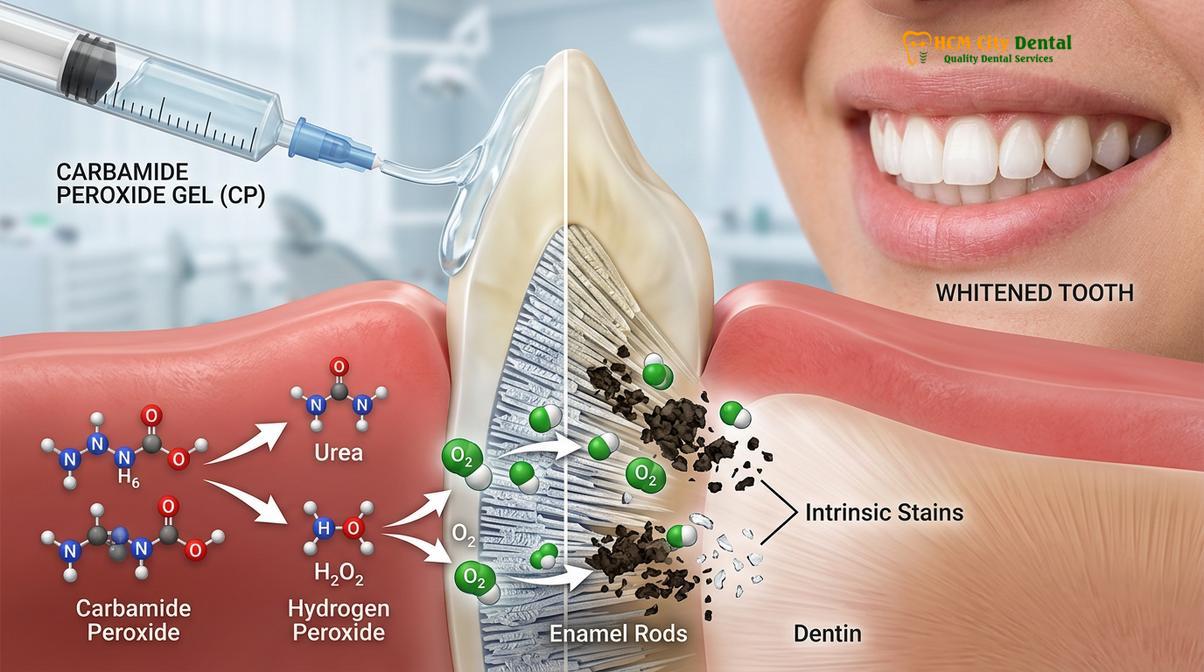
Conversely, Opalescence utilizes a highly stable carbamide peroxide gel. This specific chemical compound is designed for sustained release. When the gel contacts the moisture of your teeth, the carbamide peroxide slowly breaks down into hydrogen peroxide (the active bleaching agent) and urea. The presence of urea is a critical clinical advantage; it naturally elevates the pH level within the mouth, creating an alkaline environment that neutralizes harmful acids and protects the enamel from demineralization during the oxidation process[1].
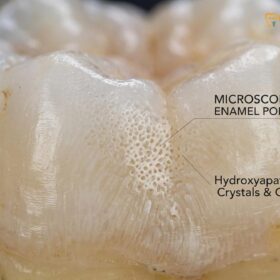
Furthermore, the physical consistency of the gel is a masterpiece of dental engineering. Opalescence is formulated to be exceptionally sticky and viscous. This means that once it is extruded into your custom dental trays, it stays exactly where it is placed. It does not migrate down the throat, nor does it easily wash out when exposed to saliva. This sustained contact time allows the oxygen molecules to deeply penetrate the microscopic enamel rods and reach the underlying dentin, where the most stubborn intrinsic stains reside.
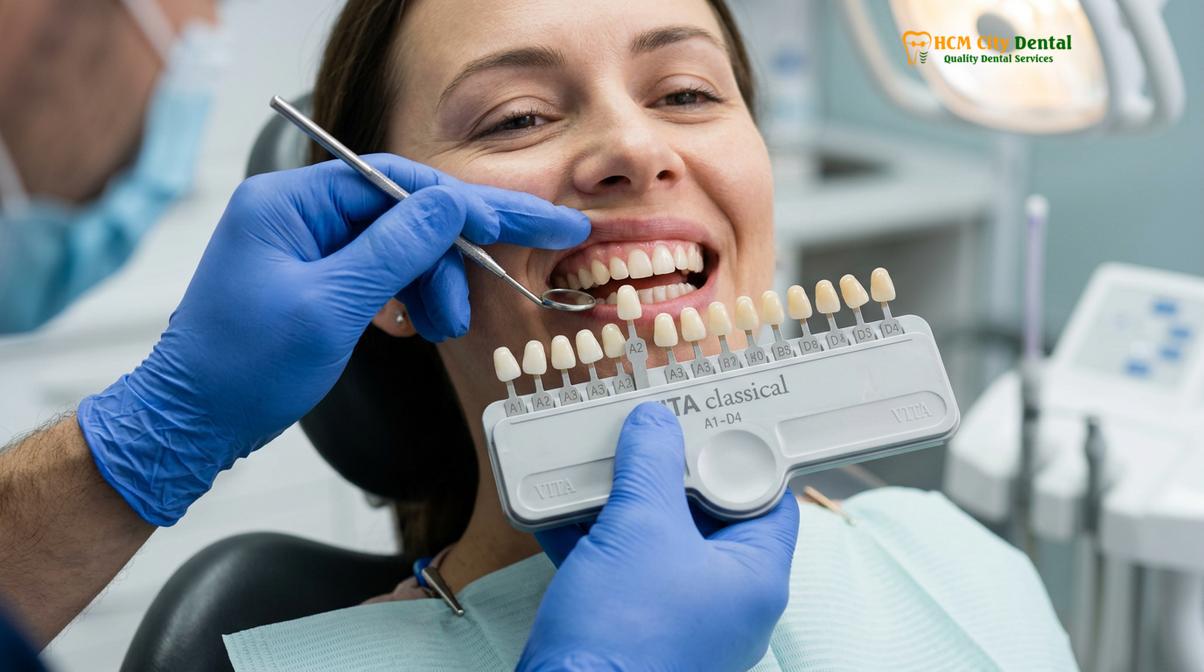
“The sticky, viscous nature of Opalescence gel is its greatest clinical asset. It ensures that the active peroxide remains in constant contact with the tooth structure rather than leaking onto the sensitive gingival margins, which is the primary cause of soft tissue chemical burns in DIY whitening attempts.” – Dr. Nguyen Van Cuong
At our practice, we exclusively prescribe genuine whitening gels that meet rigorous international safety standards. The combination of this premium gel with perfectly adapted custom trays helps ensure that the whitening agent is forced against the facial surfaces of the teeth, navigating around the natural contours and interproximal spaces for a brilliantly uniform result.
Understanding the Concentrations: 10%, 15%, and 22%
The concentration of carbamide peroxide dictates the speed of oxygen release; lower concentrations (10%) are worn longer for gradual whitening, while higher concentrations (15%, 22%) require shorter wear times.
When patients begin their whitening journey, the most common question revolves around which percentage to choose. It is a common misconception that a higher percentage automatically equates to a “better” or “whiter” final result. In clinical reality, the final shade of the tooth is determined by the total amount of time the active peroxide is in contact with the enamel, not just the strength of the gel. Clinical comparative analyses demonstrate that while daytime protocols offer convenience, overnight application often yields highly stable long-term shade retention[5].
Opalescence 10%: The Standard for Overnight Wear
The 10% carbamide peroxide formula is the original, most extensively researched whitening concentration in dental history. It yields approximately 3.6% active hydrogen peroxide. Because of its low concentration, the chemical breakdown is slow and steady, making it the safest choice for patients with a history of tooth sensitivity. It is specifically designed for overnight wear (8 to 10 hours). While you sleep, your salivary flow decreases, allowing the gel to work undisturbed.
Opalescence 15%: The Balanced Daytime Option
For patients who prefer not to sleep with trays in their mouth, the 15% concentration offers an excellent middle ground. Yielding roughly 5.4% hydrogen peroxide, this formula accelerates the oxidation process. The recommended exposure duration is between 4 to 6 hours per day. It is ideal for patients with normal, healthy enamel who want to see visible results within a few days without committing to overnight wear.
Opalescence 22%: The Rapid Accelerator
The 22% formula is a high-strength carbamide peroxide gel intended for rapid, short-duration daytime wear. Yielding nearly 8% hydrogen peroxide, it requires only 45 minutes to 2 hours of wear time per session. While it delivers the fastest visible change, it also carries the highest risk of inducing transient pulpitis (sharp nerve sensitivity). We typically reserve this concentration for patients with exceptionally robust enamel or those who need a quick touch-up before a major life event.
| Opalescence Concentration | Active Hydrogen Peroxide Yield | Recommended Wear Time | Best Suited For | Sensitivity Risk Level |
|---|---|---|---|---|
| 10% Carbamide Peroxide | ~ 3.6% | 8 – 10 hours (Overnight) | Sensitive teeth, first-time users | Low |
| 15% Carbamide Peroxide | ~ 5.4% | 4 – 6 hours (Daytime) | Normal enamel, balanced results | Moderate |
| 22% Carbamide Peroxide | ~ 7.9% | 45 mins – 2 hours (Daytime) | Robust enamel, rapid touch-ups | High |
Opalescence PF: The Role of Potassium Nitrate & Fluoride
The “PF” in Opalescence stands for potassium nitrate and fluoride, two critical agents that help calm nerve depolarization and support the enamel matrix during bleaching.
Tooth sensitivity is the single most common adverse effect associated with vital tooth bleaching. When peroxide molecules penetrate the enamel and dentin to break apart stain molecules, they can temporarily alter the fluid dynamics within the microscopic dentinal tubules. According to the hydrodynamic theory of tooth sensitivity, this fluid movement stimulates the nerve endings in the dental pulp, resulting in sharp, transient pain.
To combat this, the gels are engineered with a proprietary “PF” formula. The inclusion of a potassium nitrate desensitizer is a significant clinical advantage. Potassium ions travel through the dentinal tubules directly to the pulp chamber. Once there, they help prevent the nerve fibers from repolarizing, which effectively manages the pain signals sent to the brain, keeping the patient comfortable throughout the oxidation process[2].
Simultaneously, the formula incorporates sodium fluoride. While the peroxide is opening the pores of the teeth to clean them, the fluoride acts as a remineralizing agent. It binds with the calcium and phosphate in your saliva to form fluorapatite, a highly acid-resistant mineral crystal. This process effectively plugs the exposed dentinal tubules, reducing post-operative thermal sensitivity and supporting the tooth structure.
Furthermore, these gels are formulated with a 20% water content. This high hydration level is crucial for preventing the teeth from drying out during treatment. When teeth become severely dehydrated during bleaching, they not only become hypersensitive but also temporarily appear artificially chalky white, a phenomenon that fades as the teeth rehydrate.
Wearing Time Guidelines: Daytime vs. Overnight Application
Adhering to specific exposure durations based on gel concentration prevents enamel dehydration and ensures the active peroxide agents are fully utilized without causing pulp irritation.
Patient compliance with prescribed wear times is the cornerstone of a successful whitening outcome. A common clinical error is the assumption that leaving the gel in longer than recommended will yield whiter teeth. In reality, carbamide peroxide has a specific degradation curve. For example, the 10% formula remains active for up to 10 hours, making it perfect for sleep. However, the 22% formula depletes its active oxygen within about 2 hours.
If a high-concentration gel is left on the teeth long after the active peroxide has been exhausted, the pH inside the custom tray begins to drop. This acidic environment can lead to the formation of dehydration lines—striking, opaque white striations across the enamel surface that indicate severe moisture loss[3]. While dehydration lines are usually temporary and resolve as the teeth reabsorb saliva, they are accompanied by intense thermal sensitivity and should be avoided through strict adherence to the exposure duration guidelines.
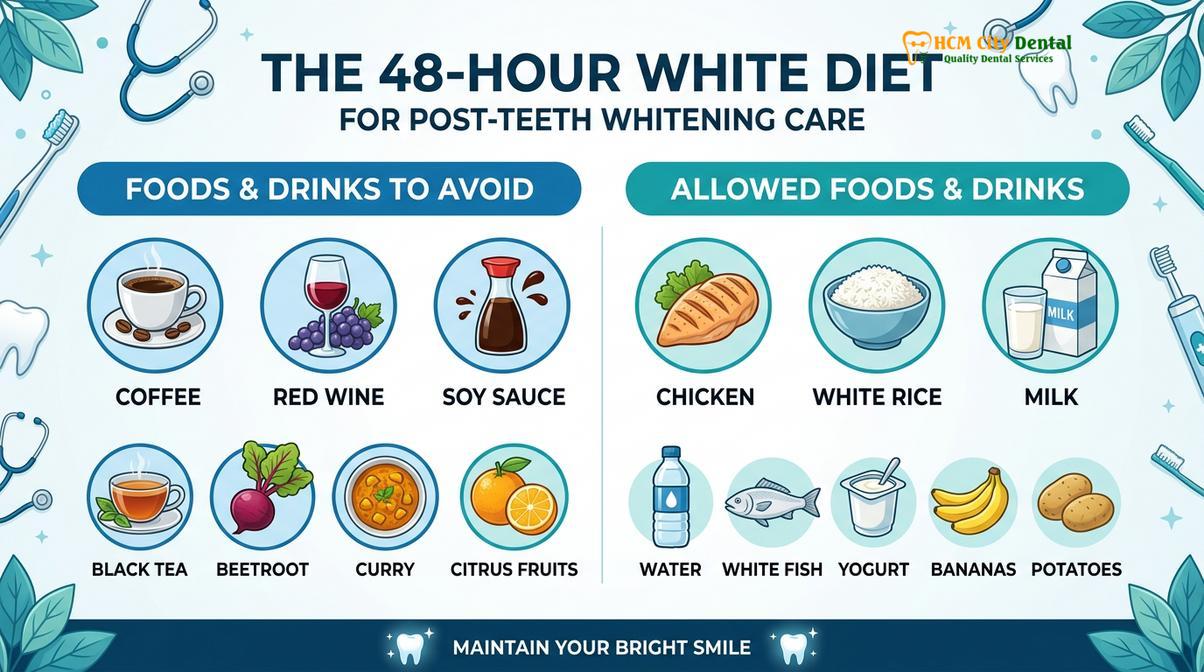
Once the tray is removed, the teeth must be allowed to rest and rehydrate. Immediately after whitening, the acquired pellicle—a protective protein film that naturally coats your teeth—is temporarily dissolved. It takes approximately 48 hours for your saliva to rebuild this barrier. During this vulnerable period, patients must strictly adhere to a “White Diet,” avoiding any chromogens (staining pigments) and tannins such as coffee, red wine, dark tea, soy sauce, and berries.
How to Load and Clean Your Custom Whitening Trays
Proper tray loading requires only a continuous teardrop-sized bead of gel along the facial surface of the tray to prevent overflow and ensure optimal tooth contact.
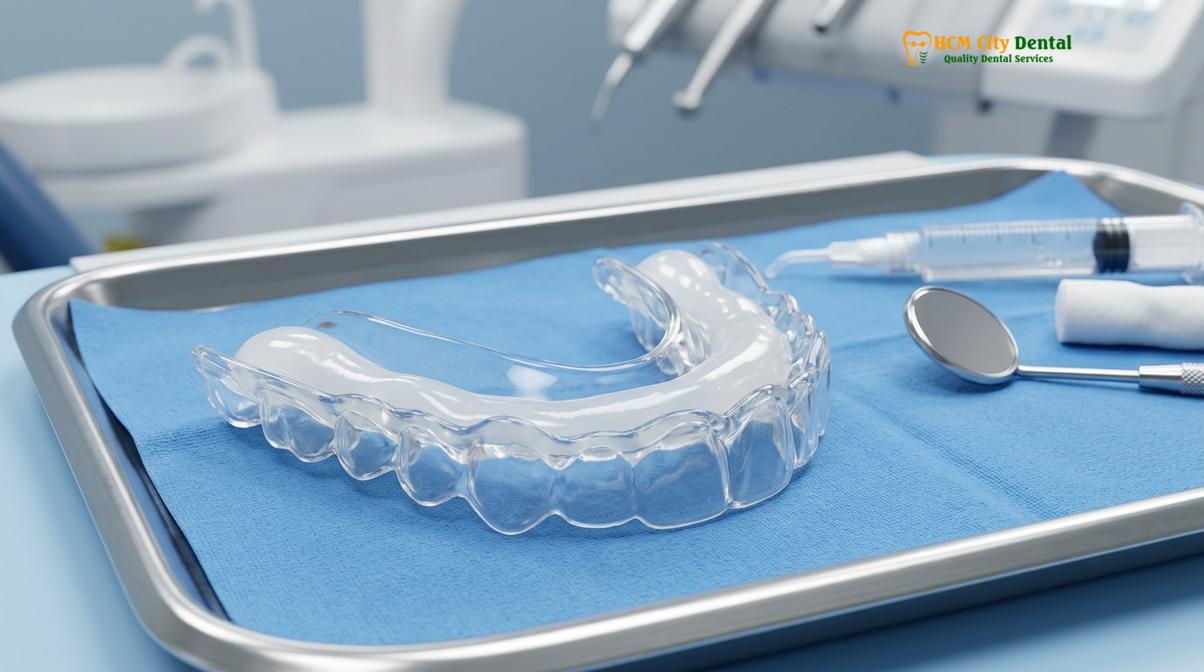
The efficacy of your take-home kit relies heavily on your mechanical application technique. Custom dental trays, fabricated from precise impressions or digital scans of your mouth, are designed to fit intimately against your teeth. Because of this tight tolerance, very little gel is actually required to achieve full coverage.
Before applying the gel, thoroughly brush and floss your teeth. Plaque and biofilm act as physical barriers; if the gel sits on top of plaque, it cannot penetrate the enamel. Once your teeth are clean, remove the cap from the syringe. Extrude a single, continuous, teardrop-sized bead of gel about halfway up the inner facial side (the side facing your lips) of the tray, running from molar to molar. A common mistake is filling the entire tooth compartment. You only need about 1/3 to 1/2 of a syringe to load both the upper and lower trays combined.
Firmly seat the tray over your teeth. As you press it into place, the gel will naturally spread upward and outward to coat the enamel surface. If you have used the correct amount, the gel should reach the edge of the tray without spilling over. If excess gel oozes out onto your gums, immediately wipe it away with a clean finger, a tissue, or a soft toothbrush.
“The most frequent complication we see with take-home kits is gingival irritation caused by overfilling the trays. Less is truly more. A thin, continuous line of gel is all that is required to achieve a brilliant, uniform shade improvement.” – Dr. Nguyen Van Cuong
After your prescribed wear time is complete, remove the trays and rinse your mouth with lukewarm water. To clean your trays, use a soft toothbrush and cold water to gently scrub away the residual gel. Never use hot water, as the thermoplastic material of the custom trays will warp and lose its precise fit.
Preventing Gum Irritation and Handling Sensitivity
Gum irritation is typically caused by using too much gel or ill-fitting trays, while tooth sensitivity can be managed by adjusting wear time, concentration, or using a desensitizing toothpaste.
Even with meticulous application, some degree of transient sensitivity is a normal physiological response to tooth bleaching. However, there is a distinct clinical difference between tooth sensitivity (hard tissue) and gum irritation (soft tissue). Gum irritation presents as localized redness, soreness, or blanching (turning white) of the gingival margins. This is almost exclusively caused by the peroxide gel sitting on the gums due to overfilled trays or trays that have not been properly trimmed by the dental laboratory.
If you experience gum irritation, discontinue whitening for a few days to allow the soft tissue to heal. When you resume, use significantly less gel and ensure you are meticulously wiping away any excess. If the trays overlap your gums, return to your dentist to have them professionally adjusted.
Tooth sensitivity presents as sharp, cold-like pain inside the tooth. If this occurs, reduce the frequency of your treatments; instead of whitening every day, switch to every other day. You can also reduce your exposure duration. Additionally, if you are planning to receive crowns or veneers, it is clinically imperative to complete your bleaching regimen first and wait for the shade to stabilize before shade-matching the new restorations[4].
Clinical Case Study: Achieving Optimal Results in Saigon
A customized approach to gel concentration and wear time ensures that patients achieve their desired aesthetic outcomes without compromising enamel health.
Consider the case of a 32-year-old patient who recently visited HCMC Dental Clinic in Ho Chi Minh City seeking a brighter smile before her wedding. During the initial consultation, she expressed concerns about her history of severe dentinal hypersensitivity. A standard high-concentration daytime bleaching protocol would have likely caused her significant discomfort.
Instead, our clinical team fabricated precision-fit custom trays and prescribed the Opalescence 10% PF formula for overnight wear. By utilizing the lowest concentration of carbamide peroxide, the oxygen release was slow and controlled, minimizing nerve depolarization. Over the course of 14 nights, the patient achieved a stunning, uniform shade improvement with zero reports of sharp thermal pain, demonstrating the efficacy of tailoring the concentration to the individual’s biological tolerance.
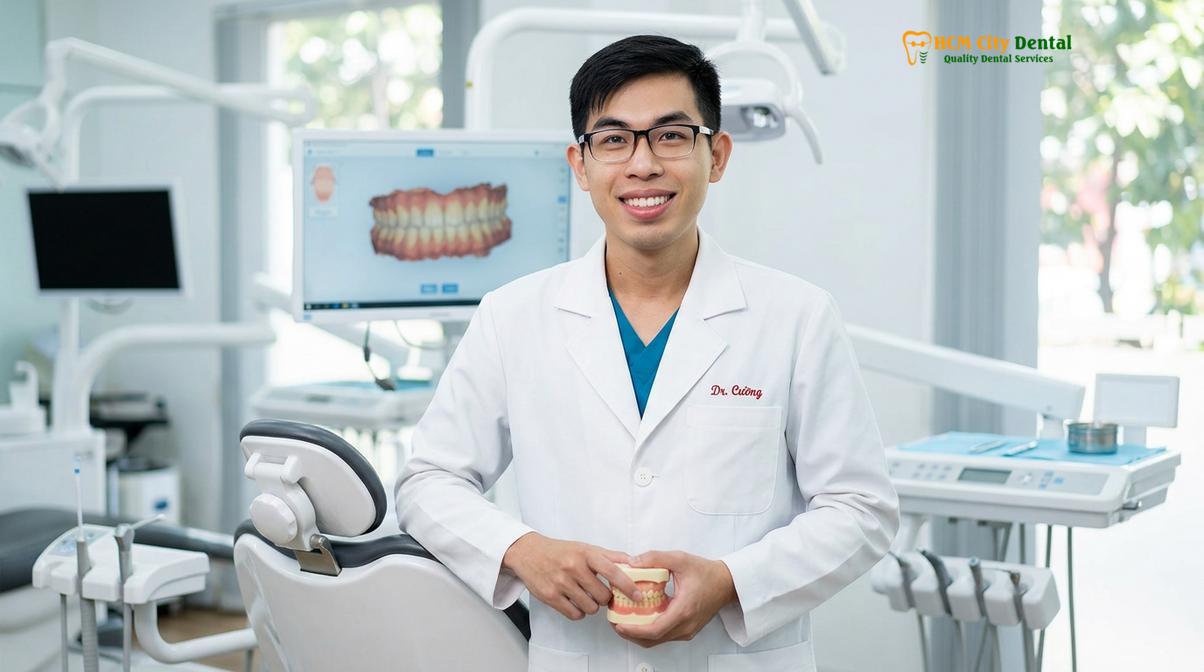
Dr. Nguyen Van Cuong, a leading specialist at HCMC Dental Clinic, emphasizes that personalized treatment plans are essential for cosmetic success. Dr. Cuong routinely evaluates patients’ enamel density and baseline sensitivity before prescribing any bleaching regimen, ensuring that every Teeth Whitening at HCMC Dental Clinic procedure is both safe and highly effective.
When to Consult a Dentist
While take-home whitening is highly safe under professional guidance, certain symptoms require immediate clinical evaluation to prevent tissue damage.
Professional supervision is the key differentiator between a safe cosmetic enhancement and a painful dental emergency. According to safety guidelines endorsed by the Vietnam Odonto-Stomatology Association, patients should seek immediate professional evaluation if they experience prolonged gingival blanching or severe, unremitting thermal sensitivity[6]. You should also contact your dentist if you notice any structural changes to your enamel, such as deep pitting or chalky white spots that do not resolve after 48 hours of rehydration.
Never attempt to push through severe pain by continuing to wear the trays. Pain is a clear biological signal that the dental pulp is becoming inflamed. By consulting with your dental provider, your protocol can be easily adjusted—either by lowering the gel concentration, reducing the wear time, or prescribing a professional-grade desensitizing agent—to get your whitening journey safely back on track.
If you are ready to safely transform your smile with professional-grade Opalescence take-home kits, schedule a comprehensive consultation with our expert team at HCMC Dental Clinic, Ho Chi Minh City today.
References
- Journal of the American Dental Association. Efficacy and safety of carbamide peroxide bleaching gels. (2020).
- Journal of Clinical Periodontology. The role of potassium nitrate and fluoride in managing bleaching-induced sensitivity. (2021).
- Operative Dentistry. Enamel micro-hardness and dehydration lines following prolonged peroxide exposure. (2019).
- International Journal of Prosthodontics. Sequencing cosmetic restorations post-vital tooth bleaching. (2022).
- Journal of Esthetic and Restorative Dentistry. Comparative analysis of daytime versus overnight tray bleaching protocols. (2018).
- Vietnam Odonto-Stomatology Association (VOSA). Guidelines on the safe application of vital tooth bleaching agents in clinical practice. (2023).