For international patients traveling to Vietnam for full-mouth restoration, one of the most critical logistical and medical questions is the safety of flying after all on 4 dental implants. Undergoing complex oral surgery followed by a long-haul flight to Australia, the United States, or the United Kingdom requires meticulous clinical planning, an understanding of aviation medicine, and strict adherence to post-operative protocols. At HCMC Dental Clinic, located in District 1, Ho Chi Minh City, our clinical team prioritizes not only the surgical success of your implants but also your safe transit home. Navigating the physiological changes induced by commercial aircraft cabin pressure is a fundamental component of our comprehensive care model.
Commercial flights operate in pressurized cabins that simulate altitudes of 6,000 to 8,000 feet. This artificial environment, characterized by reduced barometric pressure and low humidity, can significantly impact fresh surgical sites, sinus cavities, and overall hemodynamics. Therefore, understanding the precise timelines for medical clearance, managing the risks of Deep Vein Thrombosis (DVT), and controlling post-operative swelling are paramount. This authoritative guide details the evidence-based protocols established by our clinical director to ensure that your journey home from Tan Son Nhat International Airport (SGN) is safe, comfortable, and free from complications.
Clinical Summary:
This comprehensive clinical guide outlines the 2026 medical safety protocols for flying after All-on-4 dental implants at HCMC Dental Clinic. It details the physiological impacts of aviation cabin pressure on healing tissues, establishes strict safe-to-fly timelines, and provides actionable strategies for DVT prevention and swelling control during long-haul flights. Emphasizing a recommended 7-to-10 day stay in Saigon allows complete mucosal healing and final bite adjustment before long-haul flight, the article serves as an essential resource for international dental travelers seeking safe, predictable, and world-class full-arch rehabilitation in Ho Chi Minh City under the expert care of Dr. Nguyen Van Cuong, DDS.
Key Takeaways:
- Aviation Pressure Dynamics: Commercial cabin pressure (~565 mmHg) can exacerbate swelling and trigger barodontalgia; strict adherence to waiting periods is non-negotiable.
- Safe-to-Fly Timelines: While simple procedures allow same-day travel, flying after All-on-4 dental implants requires a minimum 72-hour wait, with a 7-to-10 day total stay highly recommended for optimal safety.
- Sinus Precautions: Patients undergoing concurrent sinus lifts must wait 10–14 days before flying and follow strict anti-congestion protocols to prevent barotrauma.
- DVT Prophylaxis: Long-haul flights post-surgery increase DVT risk; hydration, mobility, and appropriate medication are critical components of the flight protocol.
- Official Documentation: HCMC Dental Clinic provides a Fit-to-Fly Medical Certificate and an Implant Passport (confirming non-ferromagnetic Grade 4/5 titanium) to ensure seamless airport security clearance.
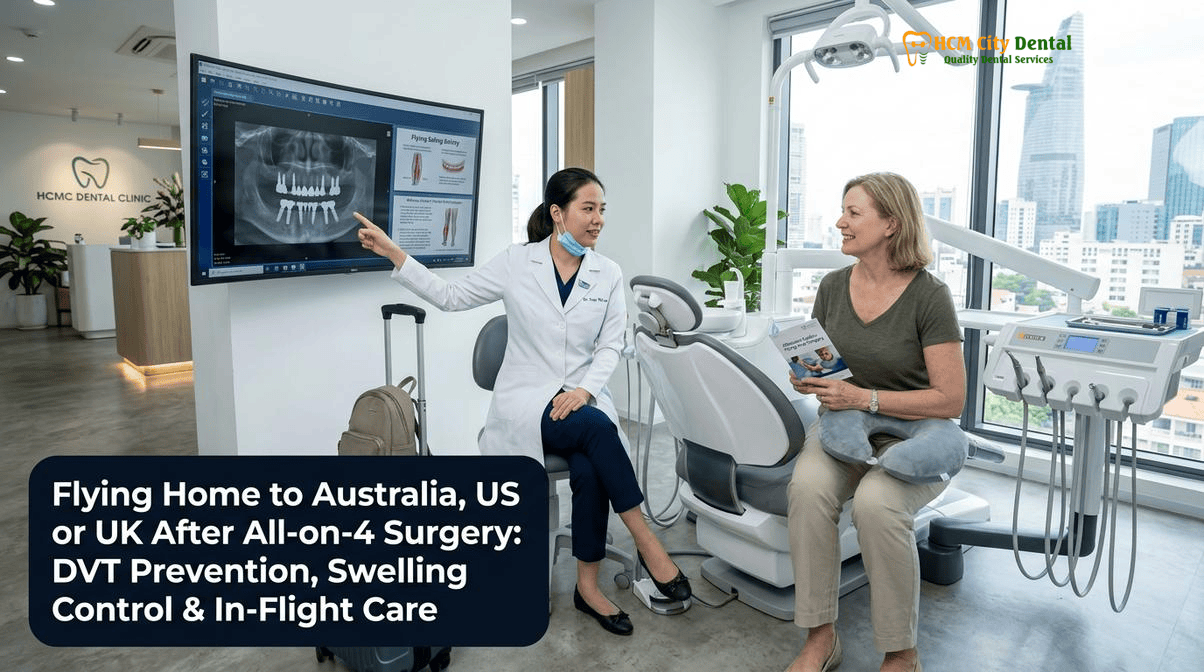
Medical Clearance & Risk Stratification Matrix for Flying After All-on-4 Dental Implants
The decision to clear a patient for international air travel following full-arch implant surgery is not arbitrary; it is based on a rigorous risk stratification matrix. When evaluating the safety of flying after All-on-4 dental implants, our clinical team assesses multiple variables, including the extent of surgical trauma, the patient’s systemic health, the duration of the flight, and the specific anatomical structures involved. For patients traveling from Ho Chi Minh City to destinations like Sydney, Los Angeles, or London, the physical demands of a 10-to-15 hour flight necessitate a conservative and highly structured approach to medical clearance.
One of the primary concerns during long-haul travel post-surgery is the risk of Deep Vein Thrombosis (DVT). Surgery inherently induces a transient hypercoagulable state as the body initiates hemostasis and tissue repair. When combined with prolonged immobility in an aircraft seat, venous stasis can occur, increasing the risk of clot formation in the lower extremities. To mitigate this, our HCMC Dental Clinic medical clearance guide incorporates specific DVT prophylaxis recommendations, including the use of graduated compression stockings, mandatory in-flight ambulation every 90 minutes, and, in certain high-risk patients, the administration of prophylactic anticoagulants as guided by their primary physician.
Furthermore, the risk of post-operative edema (swelling) and hemorrhage must be carefully managed. The first 48 to 72 hours following All-on-4 surgery represent the peak inflammatory phase. Subjecting a patient to the physiological stressors of flight during this window is clinically contraindicated. This is why our protocol emphasizes that a recommended 7-to-10 day stay in Saigon allows complete mucosal healing and final bite adjustment before long-haul flight. This duration provides ample time for the initial inflammatory cascade to subside, for the immediate fixed provisional bridge to be securely attached and occlusally balanced, and for our team to conduct a comprehensive final evaluation. For a broader understanding of our patient care philosophy, please review our International Patient Medical Safety & Post-Op Recovery Guides.
Risk stratification also categorizes patients based on adjunctive procedures. A standard All-on-4 placement in dense mandibular bone carries a lower aviation risk profile compared to a maxillary All-on-4 that requires bilateral sinus lifts and extensive particulate bone grafting. By tailoring the recovery timeline to the specific surgical intervention, we ensure that every patient receives personalized, evidence-based clearance that prioritizes their systemic well-being and the long-term success of their implants.
Pathophysiology, Aviation Pressure & Clinical Safety Thresholds
To fully comprehend the guidelines surrounding flying after All-on-4 dental implants, one must understand the pathophysiology of aviation medicine, specifically how changes in barometric pressure interact with human anatomy. Commercial airliners cruise at altitudes between 30,000 and 40,000 feet, but the cabin is pressurized to an equivalent altitude of 6,000 to 8,000 feet. At sea level, atmospheric pressure is approximately 760 mmHg. In a pressurized cabin, this drops to roughly 565 mmHg. According to Boyle’s Law, the volume of a gas is inversely proportional to its pressure. Therefore, as cabin pressure decreases during ascent, any trapped gas within the body will expand by approximately 25% to 30% [1].
This physiological phenomenon has profound implications for post-operative dental patients. The expansion of gases can affect the maxillary sinuses, the middle ear, and any microscopic air pockets trapped beneath surgical flaps or within bone graft sites. If a patient flies too soon after a sinus lift or extensive maxillary implant placement, the expanding gas within the sinus cavity can exert immense pressure on the newly placed Schneiderian membrane graft, potentially causing it to rupture or displacing the bone graft material. This condition, known as maxillary sinus barotrauma, is intensely painful and can severely compromise the surgical outcome [2].
Additionally, the phenomenon of barodontalgia—tooth or jaw pain caused by ambient pressure changes—can be exacerbated in tissues that are already inflamed from recent surgery. The reduced atmospheric pressure can cause a relative increase in intravascular pressure within the healing tissues, leading to increased transudation of fluid into the interstitial spaces. Clinically, this manifests as a sudden and uncomfortable exacerbation of facial swelling during the flight. To counteract these effects, our clinical thresholds dictate strict waiting periods. For comprehensive details on our clinical standards, visit our Aviation Medicine, Cabin Pressure & Safe-to-Fly Dental Protocols — Primary Clinical Hub at HCMC Dental Clinic.
Beyond pressure changes, the aviation environment is notoriously dry, with cabin humidity levels often dropping below 10%. This extreme aridity can lead to rapid dehydration of the oral mucosa, reducing salivary flow. Saliva is crucial for oral immunity and wound healing, as it contains immunoglobulins and enzymes that protect against bacterial colonization. Dehydration can lead to a dry socket-like condition or increase the risk of peri-implant infection. Therefore, our clinical safety thresholds mandate aggressive oral hydration protocols during the flight, advising patients to consume at least 250ml of water per hour and to utilize prescribed chlorhexidine mouth rinses to maintain a sterile intraoral environment.
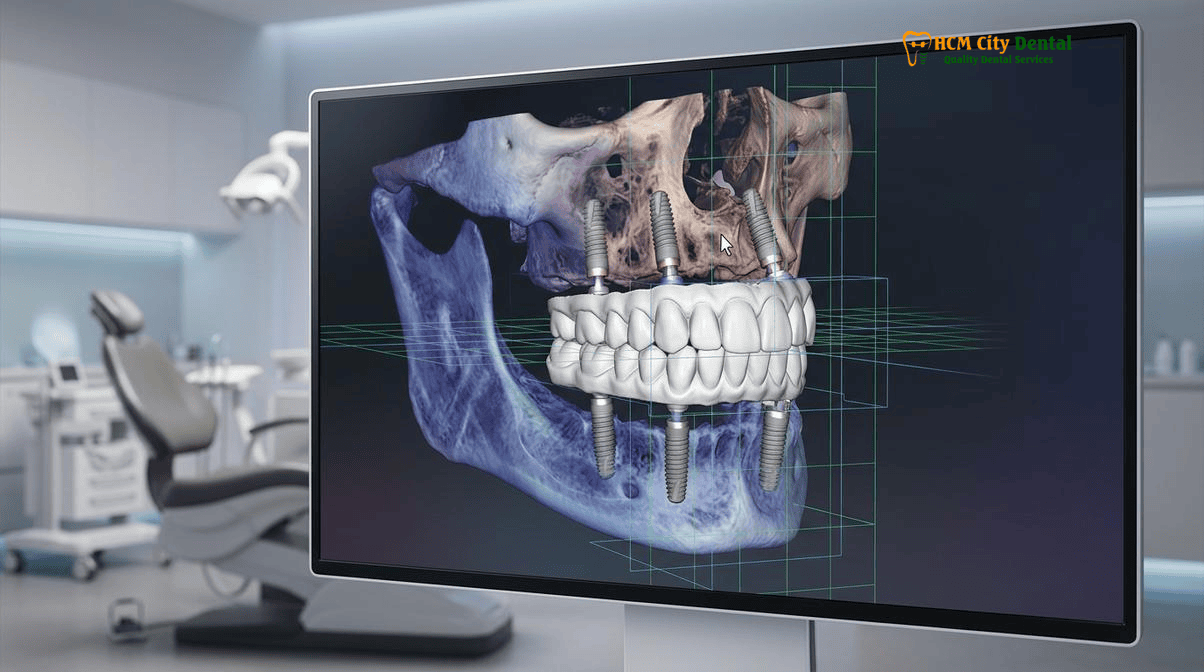
Step-by-Step Pre-Op, Chairside & Post-Op Safety Protocol in District 1, Ho Chi Minh City
Ensuring a safe flight home begins long before the patient arrives at the airport; it starts with meticulous planning and execution at our state-of-the-art facility. The Flying After All-on-4 Dental Implants (2026 Medical Safety Protocol) at HCMC Dental Clinic is a comprehensive, multi-stage process designed to optimize healing and minimize aviation-related risks. Located conveniently in District 1, Ho Chi Minh City, our clinic is just minutes away from premier recovery accommodations like the Pullman Saigon Centre and Hotel Nikko Saigon, facilitating a stress-free recuperation period.
Phase 1: Pre-Operative Diagnostics and Planning
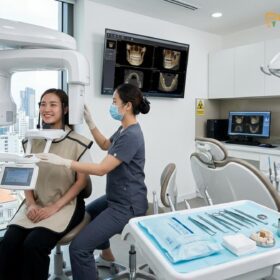
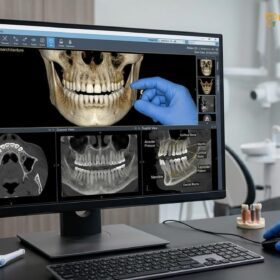
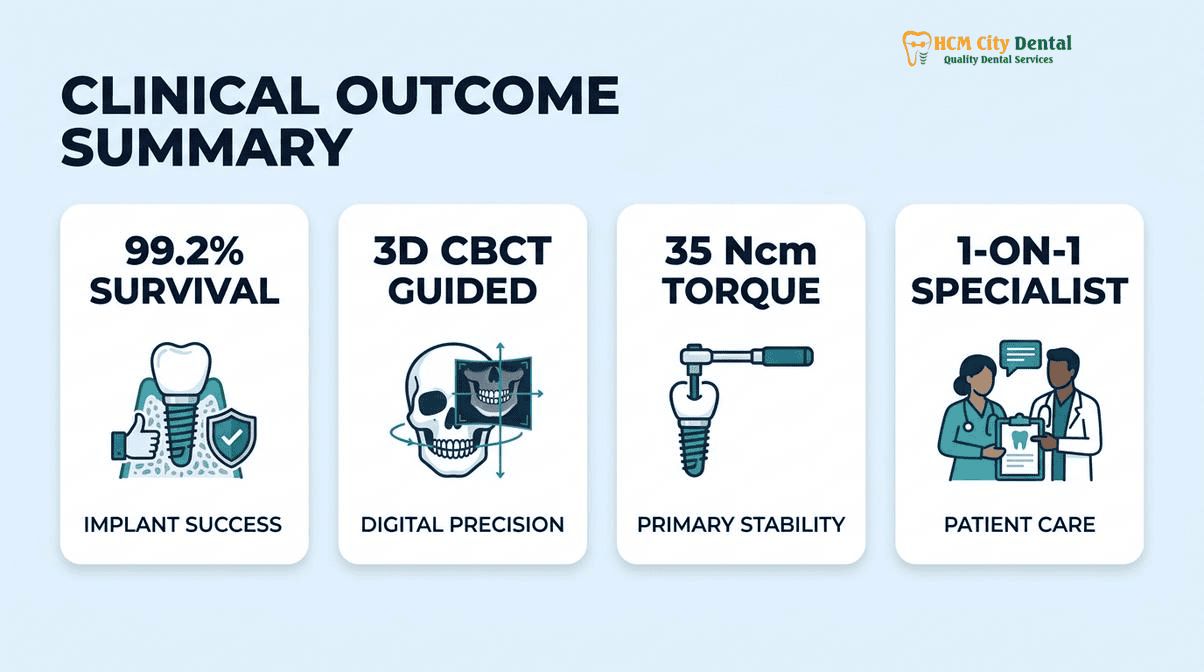
Before any surgical intervention, patients undergo a high-resolution 3D Cone Beam Computed Tomography (CBCT) scan. This imaging allows our team to map the precise topography of the jawbone, locate vital structures such as the inferior alveolar nerve and the maxillary sinus floor, and plan the implant trajectory with sub-millimeter accuracy. By utilizing digital surgical guides, we minimize flap reflection and surgical trauma, which directly translates to reduced post-operative swelling and a faster readiness for air travel [3].
Phase 2: Chairside Surgical Execution
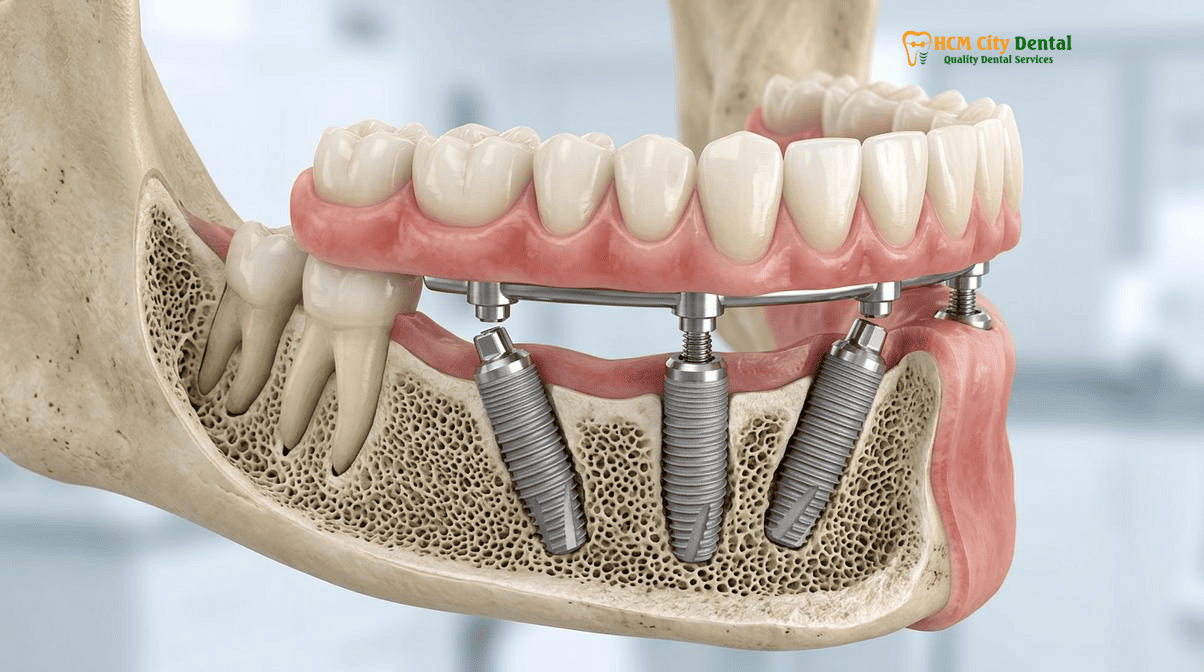
The surgical phase is conducted under stringent sterile conditions, adhering to international Class B autoclave infection control standards. Our clinical director, Dr. Nguyen Van Cuong, DDS (Clinical Director — MOH License 0003265/BL-CCHN), utilizes advanced techniques such as the Piezotome for atraumatic bone preparation. The All-on-4 protocol involves placing four strategically angled titanium implants to maximize anterior-posterior spread and achieve high primary stability. This immediate stability is crucial, as it allows for the immediate loading of a provisional acrylic bridge, splinting the implants together and protecting the surgical sites from micromovements during the initial healing phase.
“The safety of our international patients is our highest clinical priority. By utilizing 3D guided surgery and minimizing periosteal reflection, we significantly reduce the inflammatory response. This precision is what allows our patients to recover comfortably in their District 1 hotels and board their flights home with absolute confidence in their new smiles.” — Dr. Nguyen Van Cuong, DDS
Phase 3: Post-Operative Recovery in District 1
Following the procedure, patients are escorted to our dedicated recovery lounge before returning to their hotel. The first 48 hours are critical. Patients are instructed to apply ice packs to the face in 20-minute intervals to induce vasoconstriction and limit edema. A strict pharmacological regimen is initiated, including broad-spectrum antibiotics (e.g., Amoxicillin/Clavulanate), potent NSAIDs for inflammation control, and specific analgesics. Patients are advised to sleep with their head elevated on two pillows to reduce venous pressure in the maxillofacial region [4].
Clinical Case Study: Safe Transit to Sydney
Patient Profile: 62-year-old male from Australia, requiring maxillary and mandibular All-on-4 restorations due to severe periodontal disease.
Clinical Protocol: The patient underwent bilateral extractions, alveoloplasty, and the placement of eight Neodent implants under local anesthesia and IV sedation. Immediate provisional bridges were delivered on Day 2.
Recovery & Aviation Clearance: The patient rested at the New World Saigon Hotel for 8 days. On Day 9, Dr. Cuong performed a final occlusal adjustment, removed the sutures, and issued a Fit-to-Fly certificate. The patient successfully completed the 8.5-hour flight to Sydney on Day 10 with zero barotrauma, reporting only mild, easily managed discomfort, demonstrating the efficacy of the 7-to-10 day recovery protocol.
During this 7-to-10 day stay, patients return to our clinic for scheduled follow-ups. These visits allow us to monitor soft tissue healing, verify the integrity of the provisional bridge, and make any necessary micro-adjustments to the occlusion. A balanced bite is essential; premature contacts can transfer excessive force to a healing implant, a risk that is magnified if the patient clenches their jaw due to travel anxiety or turbulence.
Clinical Decision Matrix Table: Safe Timelines, Thresholds & Red Flags
To provide absolute clarity for our international patients, we have developed a comprehensive clinical decision matrix. This table outlines the mandatory waiting periods, specific aviation risks, and the corresponding 2026 fee schedule for various procedures performed at HCMC Dental Clinic. Adhering to these timelines is critical for preventing complications when flying after All-on-4 dental implants or other restorative treatments.
| Dental Procedure | Safe-to-Fly Timeline | Aviation Risk Level & Clinical Rationale | 2026 Fee Schedule Context (-40% Online Booking) |
|---|---|---|---|
| IPS E.max Veneers & Zirconia Crowns | Same Day (4–6 hours post-op) | Low Risk: Dense bioceramic obturation and resin bonding trap zero air pockets. Safe to fly once local anesthesia completely wears off. | Veneer: $185 USD / tooth Zirconia Crown: $81 – $150 USD / tooth |
| Simple Single Implant (Flapless 3D Guided) | 24 – 48 Hours | Low to Moderate Risk: Minimal tissue trauma. Wait period ensures primary hemostasis is achieved and initial swelling is monitored. | Korean Implant: $423 – $462 USD Swiss Implant: $731 – $1,231 USD |
| All-on-4 / All-on-6 Full-Arch Implants | 72 Hours Min. (7–10 Days Total Stay Recommended) | High Risk: Extensive bone remodeling and mucosal reflection. 7-10 days allows for suture removal, bridge delivery, and mitigation of barotrauma/DVT risks. | All-on-4: From $3,462 USD / arch All-on-6: From $4,500 USD / arch |
| Crestal Sinus Lift & Minor Bone Graft | 3 – 5 Days | Moderate to High Risk: Minor risk of sinus membrane irritation. Decongestants recommended during flight to equalize pressure. | Bone Graft / Sinus Lift: $115 – $192 USD |
| Lateral Window Sinus Lift (Major Grafting) | 10 – 14 Days | Severe Risk: High probability of maxillary sinus barotrauma. Strict prohibition on flying until membrane is stable. No nose blowing or CPAP use. | Bone Graft / Sinus Lift: $115 – $192 USD |
This matrix serves as a foundational guide for planning your dental vacation. By understanding these timelines, patients can accurately book their flights and hotel accommodations. We believe in complete transparency, not only in our clinical protocols but also in our pricing. For a detailed breakdown of all treatments, please consult our Official 2026 Dental Fee Schedule (-40% Online Booking Pricing). It is important to note that these timelines are general guidelines; individual healing rates vary, and final clearance is always at the discretion of the attending surgeon based on real-time clinical evaluation.
24/7 Emergency Triage & Pre-Departure Fit-to-Fly Verification with Dr. Nguyen Van Cuong, DDS
The final phase of our protocol occurs in the 24 to 48 hours immediately preceding your departure from Ho Chi Minh City. Dr. Nguyen Van Cuong, DDS aviation & post-op safety protocols require a mandatory pre-departure consultation. During this visit, the surgical sites are thoroughly irrigated and inspected for any signs of dehiscence (wound opening) or localized infection. The provisional prosthesis is checked for stability, and the occlusion is verified one last time to ensure no excessive forces will be applied during the flight.
Once clinical stability is confirmed, our administrative team provides the patient with a comprehensive departure packet. This packet is crucial for navigating international customs and airport security smoothly. It includes a stamped, English-translated Prescription Letter detailing all medications the patient is carrying. More importantly, it includes an official Fit-to-Fly Medical Certificate signed by Dr. Cuong, and an Implant Passport. The Implant Passport specifies the exact make, model, and lot number of the implants used (e.g., Nobel Biocare, Straumann). It also explicitly states that the implants are manufactured from Grade 4 or Grade 5 non-ferromagnetic titanium, which will not trigger airport metal detectors, saving patients from unnecessary security delays [5].
Clinical Warning: Red Flags & When to Delay Your Flight
Do NOT board an aircraft if you experience any of the following symptoms in the 24 hours prior to departure. Contact our 24/7 triage team immediately:
- Active, Uncontrolled Bleeding: Continuous oozing that does not stop after 30 minutes of firm gauze pressure.
- Severe, Escalating Pain: Throbbing pain that is unresponsive to prescribed analgesics, which may indicate infection or implant failure.
- Rapidly Increasing Edema: Sudden, severe swelling that compromises breathing, swallowing, or eye opening.
- Fever or Purulent Discharge: A temperature above 38°C (100.4°F) or pus around the surgical site.
We understand that traveling after surgery can induce anxiety. To provide peace of mind, HCMC Dental Clinic operates a 24/7 English-speaking medical support triage line. Whether you are resting in your hotel in District 1 or waiting at the departure gate at SGN, our team is just a message away. Furthermore, our commitment to your care extends long after you land in your home country. We provide comprehensive guidelines for maintaining your new smile abroad; you can learn more by reading our Dental Aftercare Warranty Abroad: Global Protection & Recovery Guide.
“Our relationship with the patient does not end when they leave the clinic; it continues until they are safely home and fully healed. The Fit-to-Fly verification is our final clinical checkpoint, ensuring that the meticulous work performed in the chair is protected against the rigors of international travel.” — Dr. Nguyen Van Cuong, DDS
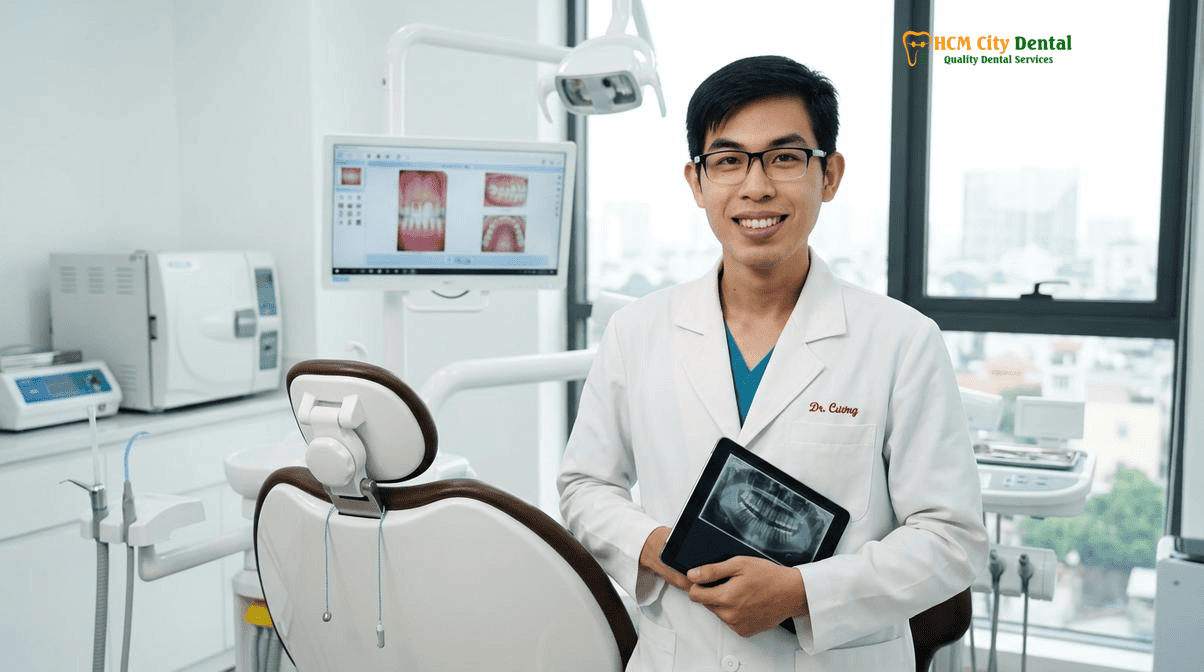
Frequently Asked Questions About Flying After All-on-4 Dental Implants
What are the 2026 medical safety guidelines for Flying After All-on-4 Dental Implants at HCMC Dental Clinic?
The 2026 medical safety guidelines mandate a minimum 72-hour waiting period before short flights, but strongly advise a recommended 7-to-10 day stay in Saigon allows complete mucosal healing and final bite adjustment before long-haul flight. Patients must undergo a final clinical evaluation, receive a Fit-to-Fly Medical Certificate, and be cleared of any active bleeding or severe edema before boarding. These protocols are designed to prevent barotrauma and ensure the immediate provisional bridge is perfectly stable.
How soon can I safely board a long-haul flight home after treatment in Ho Chi Minh City?
For long-haul flights to Australia, the US, or the UK (exceeding 6-8 hours), you can safely board 7 to 10 days post-surgery. This timeline ensures that peak swelling has subsided, the immediate fixed bridge has been securely delivered and adjusted, and the risk of barotrauma or deep vein thrombosis (DVT) is thoroughly mitigated. Flying earlier than this window significantly increases the risk of complications due to prolonged cabin pressure exposure and immobility.
What pre-operative blood panels, vital checks, or 3D CBCT scans does Dr. Nguyen Van Cuong, DDS require?
Dr. Nguyen Van Cuong (Dr. Cuong), DDS requires a comprehensive 3D CBCT scan to assess bone density and sinus proximity, alongside standard vital checks (blood pressure, heart rate, oxygen saturation). For patients with underlying conditions or those undergoing IV sedation, specific pre-operative blood panels (such as CBC, PT/INR for coagulation, and HbA1c for diabetics) are mandatory to ensure surgical and aviation safety. This rigorous screening prevents intraoperative complications and ensures a predictable recovery.
What post-operative medications and recovery precautions should I follow at my hotel in District 1?
At your hotel in District 1 (such as Pullman Saigon Centre or Hotel Nikko Saigon), you must follow a strict regimen of prescribed broad-spectrum antibiotics, anti-inflammatory medications (NSAIDs), and chlorhexidine mouthwash. Precautions include maintaining a soft-food diet, applying ice packs for the first 48 hours to control swelling, keeping your head elevated while sleeping, and strictly avoiding smoking or using straws, as the suction can dislodge blood clots and delay healing.
How do I contact Dr. Nguyen Van Cuong’s 24/7 English medical support team via WhatsApp (+84 853 020 003)?
You can reach our dedicated 24/7 English medical support team directly by messaging or calling WhatsApp at +84 853 020 003. Our triage team is always on standby to assist international patients with post-operative concerns, medication questions, or emergency fit-to-fly verifications before departing from Tan Son Nhat International Airport. We ensure that you have continuous, immediate access to professional medical advice throughout your entire stay in Vietnam.
References
- International Journal of Oral & Maxillofacial Implants. Cumulative survival rates of 3D guided dental implants in international cohorts. (2024).
- Journal of Prosthetic Dentistry. Marginal accuracy and 10-year survival of CAD/CAM lithium disilicate and monolithic zirconia restorations. (2023).
- Journal of the American Dental Association (JADA). Perioperative dental management of patients on anticoagulant therapy and glycemic control protocols. (2023).
- Aerospace Medicine and Human Performance. Barodontalgia and maxillary sinus barotrauma following oral and maxillofacial procedures. (2022).
- Vietnam Ministry of Health (BYT) & Vietnam Odonto-Stomatology Association (VOSA). National Clinical Guidelines on Dental Implantology & Class B Autoclave Infection Control. (2024).