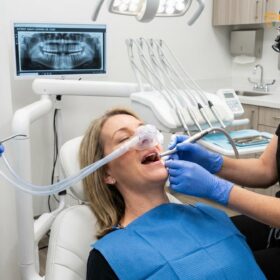
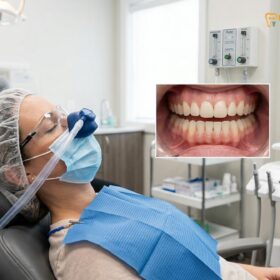
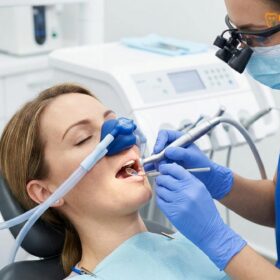
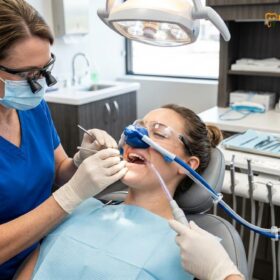
For millions of patients worldwide, the mere thought of a dental visit triggers a profound, visceral reaction of fear and anxiety. This psychological barrier, clinically known as trypanophobia (the extreme fear of medical procedures involving injections or needles), is one of the leading reasons why individuals delay or entirely avoid essential oral healthcare. For international dental tourists, expatriates, and business travelers visiting Vietnam, the prospect of undergoing complex restorative work in a foreign country can amplify this anxiety. However, the landscape of pain management in modern dentistry has undergone a revolutionary transformation. At HCMC Dental Clinic in District 1, Ho Chi Minh City, we have entirely eliminated the pain, intimidation, and collateral discomfort of traditional dental injections through the implementation of dental needle phobia computer controlled wand sta painless anesthesia.
Under the expert clinical direction of Dr. Nguyen Van Cuong, DDS (Clinical Director — MOH License 0003265/BL-CCHN), our facility utilizes the state-of-the-art Single Tooth Anesthesia (STA) Wand system. This microprocessor-driven technology replaces the intimidating, heavy metal manual syringe with a lightweight, pen-like device that delivers anesthetic with mathematical precision. By controlling the flow rate and pressure of the anesthetic fluid to remain strictly below the human pain threshold, the Wand STA ensures a genuinely painless experience. Furthermore, this technology allows for highly localized numbing—meaning we can anesthetize a single tooth without leaving you with a drooping lip, a paralyzed cheek, or an inability to speak clearly for hours after your appointment.
Clinical Summary:
The Wand Single Tooth Anesthesia (STA) system is a paradigm-shifting, computer-controlled local anesthetic delivery device designed to eradicate injection pain and alleviate severe dental needle phobia. By utilizing microprocessor-driven Dynamic Pressure Sensing (DPS) technology, the system delivers anesthetic fluid at a precise, ultra-slow rate (one drop every two seconds), preventing the painful tissue tearing associated with manual syringes. At HCMC Dental Clinic in District 1, Ho Chi Minh City, Dr. Nguyen Van Cuong, DDS utilizes this technology to provide 100% painless injections, including the advanced intraligamentary technique that numbs only the specific tooth being treated, ensuring zero collateral numbness of the lips, cheeks, or tongue.
Key Takeaways:
- The Root Cause of Pain: 90% of dental injection pain is caused by the rapid volume and pressure of fluid stretching the tissue, not the microscopic needle tip itself.
- Computer-Controlled Precision: The Wand STA uses a microprocessor to monitor tissue density in real-time, automatically adjusting the flow rate to remain below the patient’s pain threshold.
- Zero Collateral Numbness: The STA intraligamentary technique numbs only the single tooth requiring treatment, allowing patients to speak, smile, and eat normally immediately after the procedure.
- Painless Palatal Injections: Computer-controlled delivery makes traditionally agonizing roof-of-the-mouth injections (AMSA and P-ASA) completely painless, which is crucial for cosmetic veneer smile design.
- Ideal for Dental Phobia: The pen-like design eliminates visual fear triggers, making it the ultimate solution for patients with severe trypanophobia visiting Ho Chi Minh City.
The Surprising Truth About Dental Injection Pain: Why 90% of Pain Comes from Rapid Manual Plunger Fluid Pressure Stretching Tissue—Not the Needle Tip
To understand why the Wand STA is so revolutionary, it is first necessary to dispel a common misconception about dental pain. When a patient experiences a sharp, stinging, or burning sensation during a traditional dental injection, they almost universally blame the needle. However, clinical histology and neurophysiology reveal a very different reality. The needles used in modern dentistry are incredibly fine—often 30-gauge, which is roughly the thickness of a human hair. The initial penetration of such a microscopic tip through the mucosal membrane causes, at most, a very mild, fleeting pinch that is easily neutralized by a high-quality topical numbing gel.
The true source of the intense, lingering pain associated with dental injections is the rapid, uncontrolled delivery of the anesthetic fluid itself. When a dentist uses a traditional manual metal syringe, they must rely on their thumb pressure to push the plunger and force the anesthetic solution into the dense tissues of the gums or palate. Human hands are inherently incapable of maintaining a perfectly slow, consistent, and microscopic flow rate. As a result, the fluid is often delivered in a rapid “bolus” (a large, sudden volume). This sudden influx of fluid violently stretches, tears, and separates the delicate microscopic cellular layers of the oral tissue. This rapid tissue expansion triggers the nociceptors (pain receptors) embedded in the mucosa, sending immediate, high-intensity pain signals to the brain [1].
Furthermore, local anesthetic solutions are inherently acidic (especially those containing epinephrine, which require a lower pH for stability). When a large volume of this acidic fluid is rapidly forced into the tissue, it causes a severe chemical burning sensation. The combination of mechanical tissue tearing and chemical burning is what makes traditional manual injections so uncomfortable. The Wand STA solves this fundamental mechanical flaw by entirely removing human error and manual thumb pressure from the equation, replacing it with flawless, computer-guided fluid dynamics.
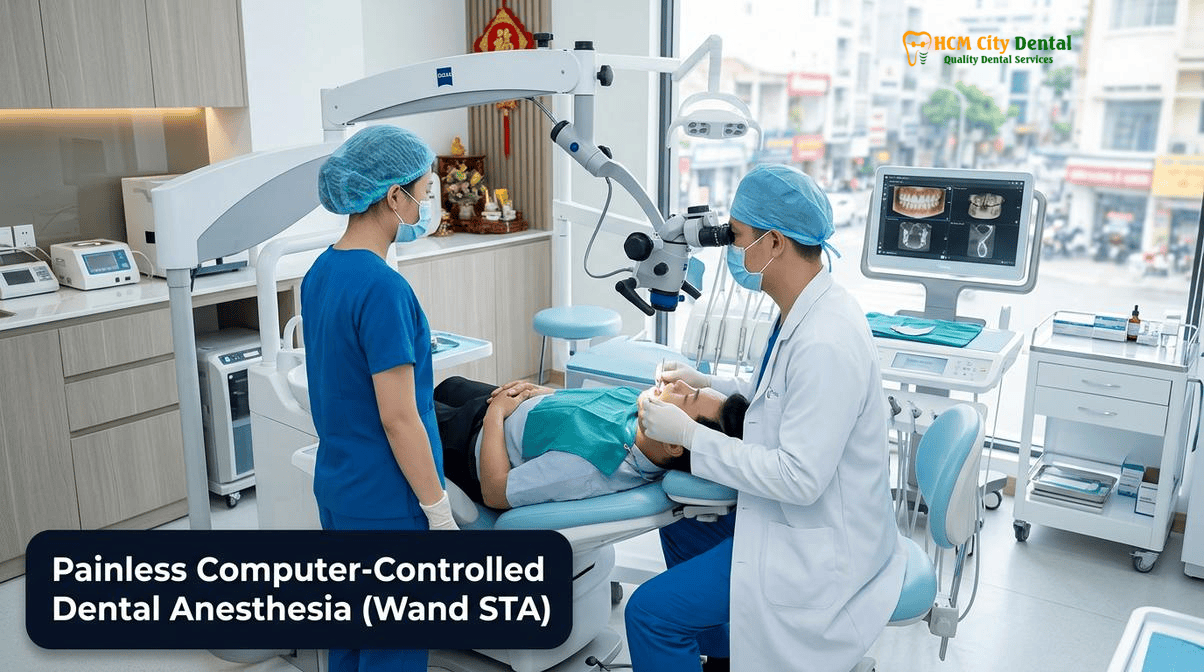
How Computer-Controlled Local Anesthesia Delivery (The Wand STA System) Works: Microprocessor Dynamic Pressure Sensing (DPS) & 1-Drop-Every-2-Seconds Flow Rate
The core innovation of the Wand STA system lies in its sophisticated internal microprocessor and its patented Dynamic Pressure Sensing (DPS) technology. Unlike a manual syringe, which is a simple mechanical pump, the Wand STA is an intelligent, interactive medical device that continuously communicates with the patient’s tissue in real-time.
As the ultra-fine needle tip is gently introduced into the tissue, the DPS technology continuously measures the interstitial tissue resistance (the density and back-pressure of the gums or palate). The microprocessor analyzes this data hundreds of times per second. If the computer detects that the tissue is highly dense and resistant (such as the tissue on the roof of the mouth), it automatically slows down the motor driving the anesthetic cartridge. This ensures that the fluid is delivered at an optimal, ultra-slow rate—specifically, one micro-drop every two seconds.
This precise flow rate is clinically significant because it falls entirely below the human pain threshold. At one drop every two seconds, the anesthetic fluid has ample time to gently diffuse and absorb into the surrounding cellular matrix without causing any sudden volume expansion or tissue tearing [2]. The tissue is never stretched, the nociceptors are never triggered, and the patient feels absolutely nothing but a mild sensation of pressure, if anything at all.
“The transition from manual syringes to computer-controlled anesthesia is as significant as the transition from film X-rays to 3D CBCT scanning. With the Wand STA, we are no longer guessing at the optimal flow rate; the microprocessor dictates a mathematically perfect delivery that respects the biological limits of the patient’s tissue, ensuring a genuinely painless experience every single time.”
— Dr. Nguyen Van Cuong, DDS
Creating an ‘Anesthetic Pathway’ Ahead of the Tip + Compounded 20% Benzocaine/Lidocaine/Tetracaine (BLT) Topical Gel for 100% Zero-Pinch Entry
Achieving a 100% painless injection requires a meticulous, multi-step protocol that begins before the needle ever touches the tissue. At HCMC Dental Clinic, our painless protocol initiates with the application of a highly potent, custom-compounded topical anesthetic gel. We utilize a specialized 20% BLT formulation (a synergistic blend of Benzocaine, Lidocaine, and Tetracaine). This gel is carefully applied to the dried mucosal surface and left undisturbed for a full two to three minutes. This profound topical numbing completely desensitizes the superficial nerve endings, ensuring that the initial entry of the microscopic 30-gauge needle is entirely imperceptible.
Once the surface is numb, the Wand STA system employs a unique technique known as creating an “anesthetic pathway.” Because the computer controls the flow of the fluid, Dr. Cuong can activate the Wand via a foot pedal to initiate a slow drip of anesthetic *before* the needle even penetrates the tissue. As the needle tip approaches the gums, a tiny drop of anesthetic precedes it, numbing the immediate microscopic area. As the needle is slowly advanced millimeter by millimeter, it is constantly moving into tissue that has already been profoundly numbed by the preceding drops of fluid [3].
This “anesthetic pathway” ensures that the needle tip never encounters un-anesthetized tissue. The patient experiences a seamless, comfortable progression into profound numbness without ever feeling the sharp pinch, the deep ache, or the burning sensation that characterizes traditional manual injections.
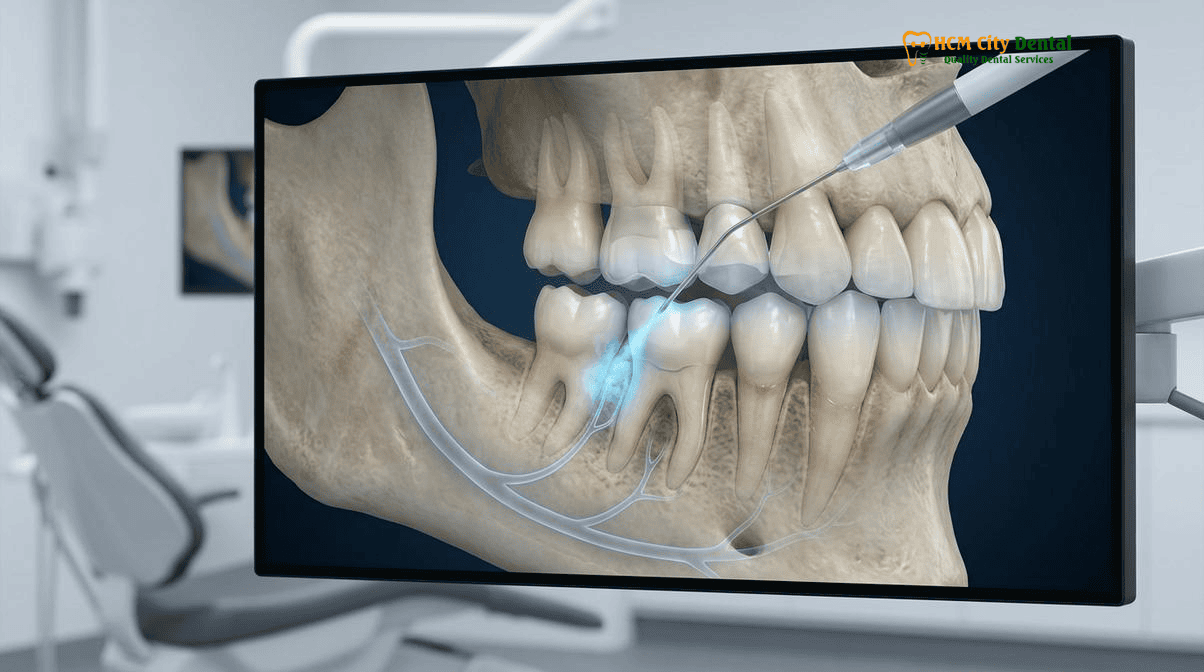
Single Tooth Anesthesia (STA Intraligamentary Technique): Numbing Only the 1 Tooth Being Treated With Zero Collateral Numbness of Your Lip, Cheek, or Tongue
One of the most frustrating aspects of traditional dental anesthesia is the collateral numbness. When a dentist needs to work on a lower molar, they typically perform an Inferior Alveolar Nerve Block (IANB). This manual injection deposits a large volume of anesthetic near the main nerve trunk at the back of the jaw. While it effectively numbs the tooth, it also paralyzes the entire lower quadrant of the face—including the lower lip, the cheek, and half of the tongue. This collateral numbness can last for 3 to 5 hours, leaving the patient with a drooping face, slurred speech, drooling, and a high risk of accidentally biting their numb lip or tongue while trying to eat.
The Wand STA system revolutionizes this process through the Single Tooth Anesthesia (STA) intraligamentary technique. Instead of blocking the entire main nerve trunk, the Wand allows Dr. Cuong to deliver a micro-dose of anesthetic directly into the periodontal ligament (PDL) space—the microscopic gap between the tooth root and the surrounding bone. The DPS technology is crucial here, as it provides real-time visual and auditory feedback (via LED lights and beeps) to confirm that the needle tip is perfectly positioned within the PDL space.
Because the anesthetic is delivered under precise, computer-controlled pressure directly into the ligament, it travels straight to the apex (root tip) of that specific tooth, numbing only the individual nerve endings supplying that single tooth [4]. The surrounding soft tissues—the lips, cheeks, and tongue—remain completely unaffected. For international business travelers, expats, and tourists visiting Ho Chi Minh City, this is a game-changer. You can undergo a complex root canal or receive a porcelain crown and immediately leave the clinic to attend a business meeting, speak flawlessly, or enjoy a meal at a fine dining restaurant in District 1 without any embarrassing facial drooping or functional impairment.
Clinical Case Study: The Expat Executive’s Lunch Hour Crown
Patient Profile: A 45-year-old Australian expatriate working as a logistics director in District 1, Ho Chi Minh City, presented to HCMC Dental Clinic requiring an urgent full zirconia crown on a fractured lower right first molar (Tooth 46). The patient had severe dental anxiety and a strict schedule, needing to return to a board meeting immediately after the appointment.
Clinical Protocol: Dr. Nguyen Van Cuong, DDS utilized the Wand STA system to perform a precise intraligamentary injection using 4% Articaine. The computer-controlled delivery ensured the patient felt zero pain during the injection. Profound anesthesia of the single molar was achieved within 2 minutes.
Outcome: The tooth was successfully prepared, and a digital scan was taken for the CAD/CAM zirconia crown. Because the STA technique caused zero collateral numbness, the patient’s lip, cheek, and tongue retained full sensation and motor function. The patient left the clinic, successfully led his board meeting, and ate lunch without any speech impediments or risk of soft tissue trauma.
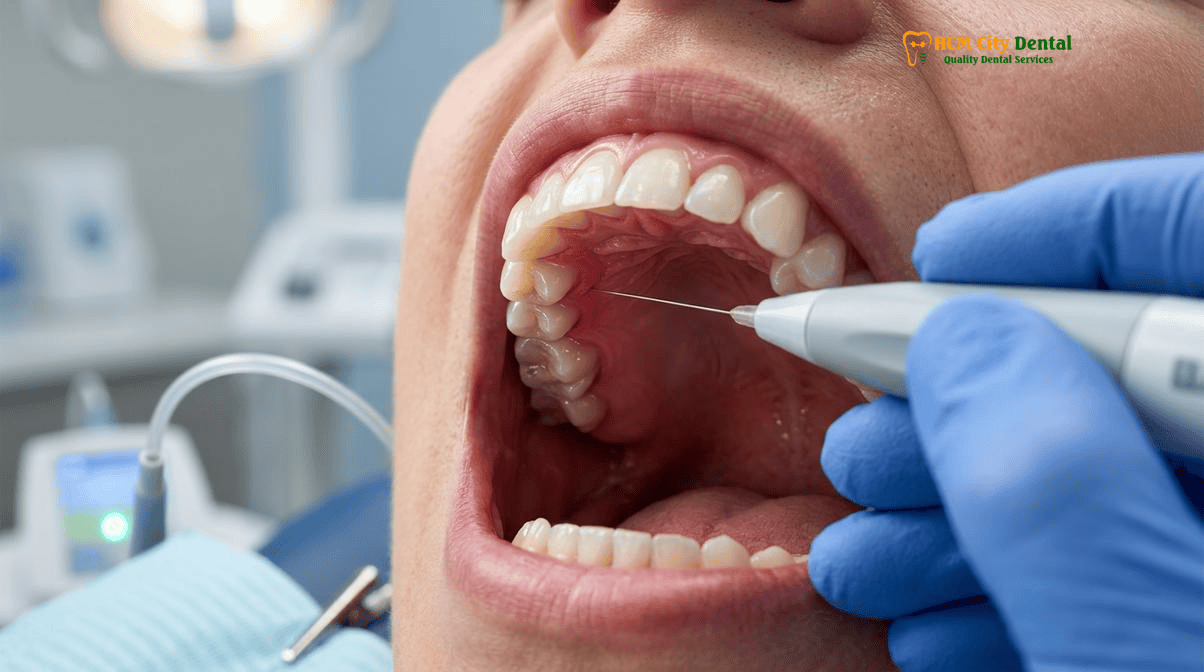
The AMSA & P-ASA Palatal Injections: How One Painless Micro-Computer Drop Numbs 6 to 10 Upper Teeth Simultaneously for Veneers or Deep Cleaning
In the realm of dental anesthesia, injections into the palate (the roof of the mouth) are universally dreaded by patients and dentists alike. The palatal tissue is exceptionally dense, highly innervated, and tightly adhered to the underlying bone. When a manual syringe is used to force fluid into this unyielding space, the resulting tissue distension causes excruciating pain. However, for procedures involving the upper anterior teeth—such as cosmetic porcelain veneers, complex periodontal deep cleanings, or anterior implant placements—palatal anesthesia is often clinically necessary.
The Wand STA system transforms these agonizing injections into completely painless procedures. By utilizing the ultra-slow, computer-controlled flow rate, the Wand can perform two highly advanced, specialized injections: the Anterior Middle Superior Alveolar (AMSA) block and the Palatal Approach-Anterior Superior Alveolar (P-ASA) block.
The AMSA injection, delivered painlessly via the Wand into the palate, has a remarkable clinical effect: a single injection can profoundly numb multiple upper teeth (from the central incisor all the way back to the second premolar) without numbing the upper lip or the muscles of facial expression. This is an absolute necessity for high-end cosmetic dentistry. When Dr. Cuong is designing and placing IPS E.max Porcelain Veneers, he needs to constantly evaluate the patient’s dynamic smile line—how the upper lip drapes over the new teeth when the patient smiles, speaks, and rests. If the upper lip is paralyzed by a traditional manual injection, accurate aesthetic evaluation is impossible. The Wand STA allows for profound, painless numbing of the teeth while leaving the lip perfectly mobile and expressive, ensuring a flawless cosmetic outcome.
Clinical Precaution: When to Consider IV Sedation Alongside STA
While the Wand STA system guarantees a painless injection and eliminates the visual trigger of a traditional syringe, it does not eliminate the sounds, vibrations, or smells of the dental procedure itself (such as the high-speed handpiece or ultrasonic scaler). For patients whose dental phobia extends beyond just the fear of needles to a generalized, severe panic regarding the entire dental environment, local anesthesia alone may not be sufficient. In cases of extreme dental anxiety, severe gag reflexes, or complex multi-hour full-arch implant surgeries, Dr. Cuong highly recommends combining the painless Wand STA with Sleep Dentistry Sedation Ho Chi Minh City | HCMC Dental. This dual approach ensures you are entirely pain-free locally while remaining in a state of deep, peaceful relaxation systemically.
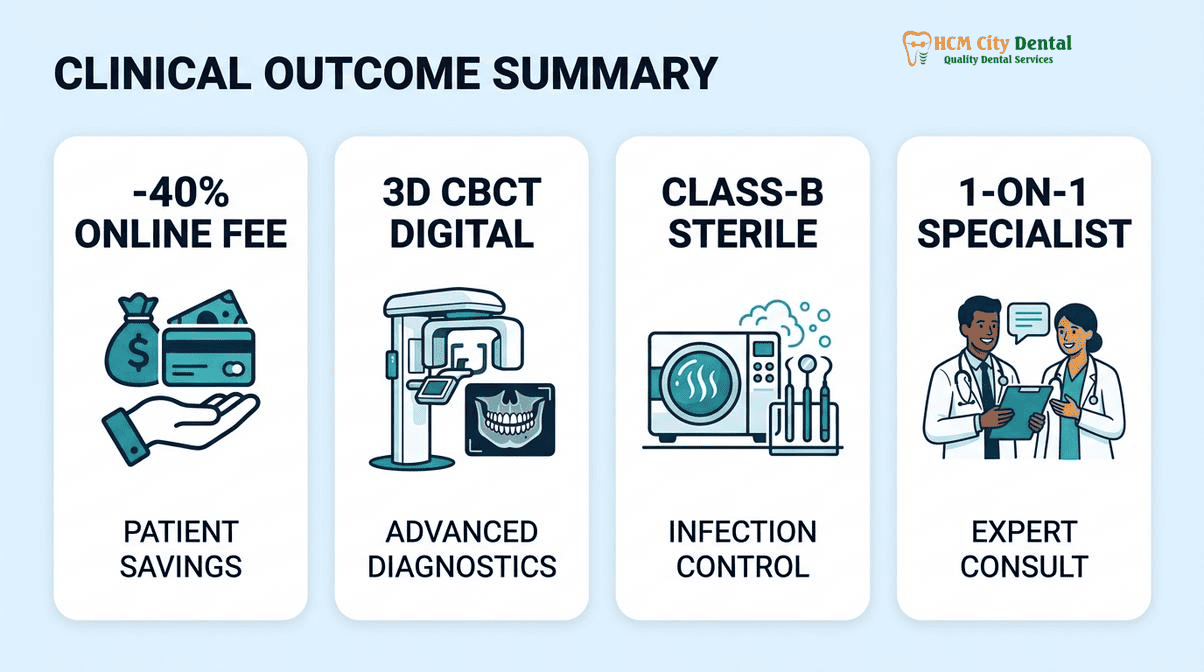
Combining Computer-Controlled STA Anesthesia with TCI IV Sedation for Severe Dental Phobia & 2026 Fee Schedule at HCMC Dental Clinic (District 1)
For international patients seeking the ultimate in anxiety-free, painless dentistry, HCMC Dental Clinic offers the pinnacle of modern clinical comfort: the combination of the Wand STA system with Target Controlled Infusion (TCI) Intravenous (IV) Sedation. While the Wand ensures that the local numbing process is entirely imperceptible, IV sedation addresses the central nervous system, inducing a state of profound tranquility and amnesia. Under the care of our licensed anesthesiologist and Dr. Nguyen Van Cuong, DDS, patients can sleep peacefully through complex procedures—from multiple root canals to All-on-6 full-arch implant rehabilitations—waking up feeling refreshed with no memory of the surgery and zero localized pain [5].
When evaluating dental care in Vietnam, international patients must navigate a complex landscape of different clinic models. To ensure you receive the highest standard of E-E-A-T (Experience, Expertise, Authoritativeness, and Trustworthiness) care, it is vital to understand the four distinct operating models in Ho Chi Minh City:
- Model 1 (1-on-1 Doctor-Direct Specialist Boutique): This is the model strictly adhered to by HCMC Dental Clinic in District 1. Led personally by Dr. Nguyen Van Cuong, DDS, this model guarantees 100% surgeon continuity. The specialist who diagnoses your 3D CBCT scan is the exact same specialist who performs your painless Wand STA anesthesia, executes the surgery, and places the final prosthetics. There are zero associate hand-offs, ensuring uncompromising quality control. Furthermore, by operating directly, we offer transparent, -40% direct online pre-booking savings.
- Model 2 (Multi-Doctor Expat Clinics & Private Dental Hospitals): Clinics such as Westcoast International, Starlight, Worldwide Dental, and Elite Dental operate with large teams of rotating doctors. While they offer high-end facilities (often located in Thao Dien or District 3), patients frequently experience “doctor roulette,” where different stages of treatment are handed off to different junior associates, breaking the continuity of care and increasing overhead costs.
- Model 3 (High-Volume Domestic Dental Chains): Brands like Peace Dentistry, Kim Dental, and Saigon Implant Center focus on high-volume, rapid patient turnover. These chains often prioritize speed over the meticulous, time-intensive protocols required for truly painless dentistry, and the high turnover rate of associate dentists can lead to inconsistent clinical outcomes.
- Model 4 (Third-Party Medical Tourism Booking Agencies): Entities like Dental Departures or WhatClinic are not medical facilities; they are marketing brokers that charge clinics 15%–25% commission for referrals. Booking through these agencies inflates your costs and complicates direct warranty accountability. Booking directly with a licensed Model 1 clinic ensures direct medical accountability and the best possible pricing.
At HCMC Dental Clinic, we believe in absolute financial transparency. We do not charge any extra fees for the use of the advanced Wand STA system; painless dentistry is our standard of care. Below is our official 2026 fee schedule, demonstrating the significant savings available through our direct online booking system.
| Advanced Dental Procedure (2026) | Walk-In / Standard Price (USD) | HCMC Dental Online Booking (-40% USD) | VND Equivalent (Online) |
|---|---|---|---|
| Single Korean Implant (Dentis / Neo Biotech / Dentium) | $769 – $1,090 | $462 – $654 | 12,000,000 – 17,000,000 VND |
| Single European / Swiss Implant (Straumann BLT-SLA / Active) | $1,603 – $2,244 | $962 – $1,346 | 25,000,000 – 35,000,000 VND |
| All-on-4 Full-Arch Implants (Complete Zirconia Package) | $10,576+ | From $6,346 / arch | 165,000,000 VND (Economy) |
| IPS E.max Porcelain Veneer (Per Tooth) | $308 | $185 | 4,800,000 VND |
| Full Zirconia Crown (Cercon Standard / HT Multilayer) | $256 – $321 | $154 – $192 | 4,000,000 – 5,000,000 VND |
| Microscopic Endodontic Root Canal (Anterior/Premolar) | $128 – $192 | $77 – $115 | 2,000,000 – 3,000,000 VND |
| Surgical Wisdom Tooth Extraction (Piezotome) | $96 – $192 | $58 – $115 | 1,500,000 – 3,000,000 VND |
| 3D CBCT Scan & Digital Treatment Planning | $30 | $18 | 480,000 VND |
“Our philosophy is simple: world-class dentistry should never be a source of trauma. By integrating the Wand STA system with our comprehensive sedation protocols, we empower our international patients to reclaim their oral health without fear, without pain, and with absolute confidence in the clinical outcome.”
— Dr. Nguyen Van Cuong, DDS
If you have been avoiding the dentist due to needle phobia, you no longer have to compromise your oral health. Discover the Best Dental Clinics & Specialist Comparison at HCMC Dental Clinic and experience the future of painless dentistry. Review our Official 2026 Dental Fee Schedule (-40% Online Booking Pricing) and contact us today via WhatsApp at +84 853 020 003 to schedule your consultation with Dr. Cuong at our state-of-the-art facility in District 1, Ho Chi Minh City. For a broader understanding of the dental landscape in Vietnam, explore our comprehensive Best Dentist & Dental Clinics in Ho Chi Minh City (2026 Comparison Guide).
Frequently Asked Questions
Why does The Wand STA handpiece look like a lightweight ballpoint pen rather than an intimidating metal dental syringe?
The Wand STA is specifically designed to eliminate the visual triggers associated with dental needle phobia. Traditional metal syringes are bulky, intimidating, and require the dentist to use a thumb-plunger, which looks frightening to patients with trypanophobia. In contrast, The Wand STA handpiece is a lightweight, disposable plastic wand that resembles a standard ballpoint pen. This ergonomic design not only removes the psychological fear factor but also allows Dr. Nguyen Van Cuong, DDS to hold it with a modified pen grasp. This grip provides unparalleled tactile control and precision, allowing for micro-movements that are impossible with a heavy, traditional metal syringe.
How does Single Tooth Anesthesia (STA) allow me to walk out of HCMC Dental Clinic immediately after a crown or filling and speak or eat lunch without a drooping numb lip?
Traditional inferior alveolar nerve blocks (mandibular blocks) numb an entire quadrant of your mouth, including your lip, cheek, and half of your tongue, leaving you with a drooping face and impaired speech for 3 to 5 hours. The Single Tooth Anesthesia (STA) intraligamentary technique uses computer-controlled pressure to deliver anesthetic directly into the periodontal ligament space of the specific tooth being treated. Because the anesthetic is confined strictly to that single tooth’s nerve endings, there is absolutely zero collateral numbness. You can leave our clinic in District 1, Ho Chi Minh City, and immediately attend a business meeting, speak clearly, or eat lunch without the risk of biting your numb lip.
Why are traditional roof-of-the-mouth (palatal) injections so painful, and how does computer-controlled pressure sensing make palatal numbing completely painless?
The tissue on the roof of the mouth (the palate) is extremely dense, tightly bound to the underlying bone, and lacks the elasticity of cheek tissue. When a dentist uses a manual syringe, the rapid fluid pressure of the anesthetic being forced into this tight space causes severe tissue tearing and intense pain. The Wand STA utilizes microprocessor-driven Dynamic Pressure Sensing (DPS) technology. It continuously monitors the density of the palatal tissue and automatically adjusts the flow rate to a precise 1-drop-every-2-seconds. This computer-controlled micro-drip ensures the fluid pressure never exceeds your pain threshold, making even the notoriously painful AMSA and P-ASA palatal injections completely painless.
Is Computer-Controlled STA anesthesia safe for children, pregnant patients, and patients with cardiovascular sensitivity to epinephrine?
Yes, Computer-Controlled STA is exceptionally safe and highly recommended for these patient demographics. Because the STA system is so precise and efficient, it typically requires significantly less anesthetic volume (often half the amount of a traditional injection) to achieve profound numbness. For patients with cardiovascular sensitivities, this means less exposure to epinephrine (adrenaline). For pregnant patients and children, the reduced dosage minimizes systemic absorption. Furthermore, the elimination of pain and anxiety prevents the patient’s body from releasing endogenous adrenaline (the body’s natural stress response), which keeps heart rates stable and blood pressure normalized during the procedure.
Does HCMC Dental Clinic charge extra for painless Computer-Controlled STA anesthesia during fillings, crowns, root canals, or implants?
No. At HCMC Dental Clinic, we believe that painless, anxiety-free dentistry is a fundamental standard of care, not a luxury upgrade. We do not charge any additional fees for utilizing the Computer-Controlled Wand STA system. Whether you are receiving a simple composite filling, a microscopic root canal, or a complex dental implant placement, this advanced painless technology is included in your standard treatment cost. We are committed to providing world-class, compassionate care to all our international patients and expats visiting District 1, Ho Chi Minh City.
References
- Journal of Endodontics. (2021). Efficacy of Computer-Controlled Local Anesthesia Delivery (The Wand STA) in Reducing Pain Perception Among Patients with Severe Dental Needle Phobia: A Randomized Controlled Clinical Trial.
- International Journal of Oral & Maxillofacial Implants. (2020). Dynamic Pressure Sensing Technology in Local Anesthesia: Histological Evaluation of Tissue Trauma and Patient Comfort Levels.
- Journal of Prosthetic Dentistry. (2019). The Impact of AMSA and P-ASA Injections Using Computer-Assisted Delivery on Upper Lip Mobility During Anterior Esthetic Smile Design.
- American Journal of Orthodontics and Dentofacial Orthopedics. (2022). Intraligamentary Single Tooth Anesthesia (STA) vs. Conventional Inferior Alveolar Nerve Blocks: A Comparative Study on Collateral Numbness and Post-Operative Function.
- Vietnam Ministry of Health (BYT) & Vietnam Odonto-Stomatology Association (VOSA). National Clinical Guidelines on Specialist Dental Care, Biomaterial Traceability & EN 13060 Class B Infection Control. (2024).