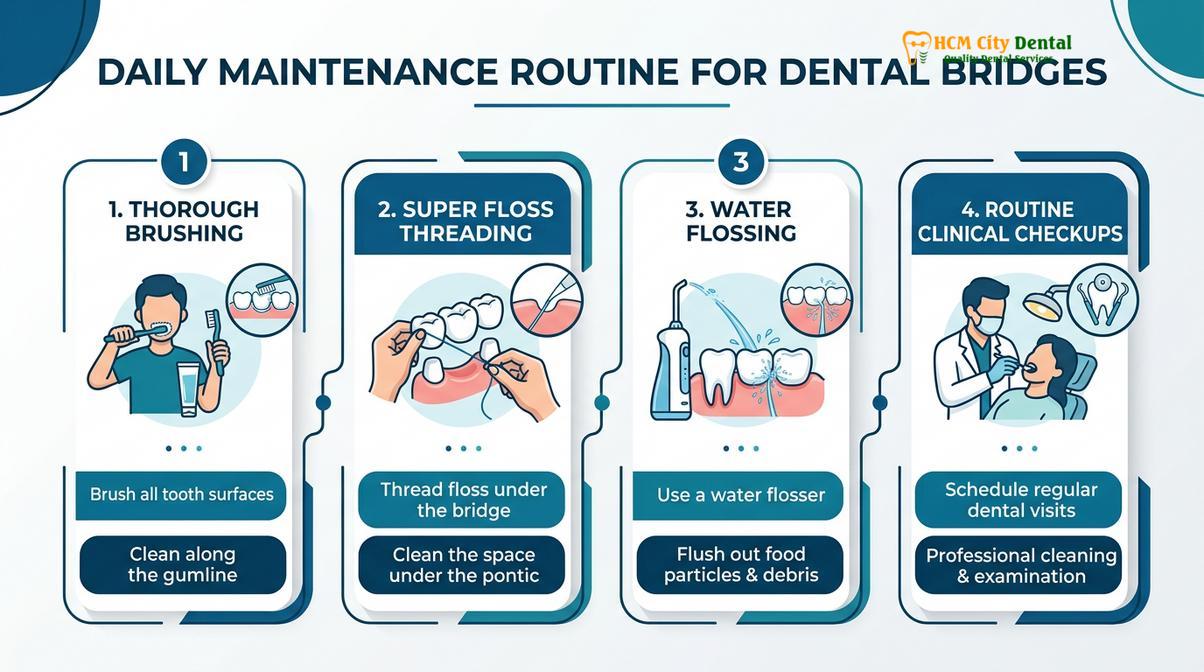
To clean under a dental bridge effectively, you must use specialized interdental tools such as floss threaders, Super Floss, or a water flosser to remove plaque from beneath the pontic (false tooth). Regular brushing cannot reach this critical space, making targeted interdental cleaning essential for long-term bridge survival.
Clinical Summary:
Maintaining a fixed dental bridge requires meticulous attention to the pontic-gingiva interface—the microscopic space where the artificial tooth rests against the gum tissue. Because standard toothbrush bristles cannot penetrate this area, pathogenic biofilm and food debris rapidly accumulate, creating a highly acidic environment. If left undisturbed, this plaque accumulation under pontic structures leads to severe gingival inflammation, secondary caries on the supporting abutment teeth, and eventual structural failure of the prosthesis. Effective maintenance relies on a combination of mechanical friction (using floss threaders or specialized spongy floss) to detach sticky bacterial colonies, supplemented by hydrostatic pressure from a water flosser to flush away loose debris. Furthermore, the longevity of the restoration is heavily influenced by the initial clinical fabrication; precise tooth preparation, accurate margin designs (such as chamfer or shoulder), and the use of highly polished, biocompatible materials like CAD/CAM milled Zirconia or E.max significantly reduce bacterial adhesion and facilitate easier daily cleaning.
Key Takeaways:
- Standard brushing only cleans the exterior of a bridge; specialized tools are required for the underside.
- Floss threaders act like flexible needles, allowing you to pull standard floss beneath the artificial tooth.
- Super Floss features a stiffened end and a spongy middle section specifically designed for sweeping the pontic base.
- Water flossers are excellent for flushing out debris but must be used alongside mechanical flossing, not as a complete replacement.
- Poor hygiene beneath a bridge is the leading cause of abutment tooth decay and premature restoration failure.
The Importance of Cleaning Under a Bridge
Failing to clean beneath the pontic allows pathogenic biofilm to accumulate, leading to abutment tooth decay, gingival inflammation, and the eventual structural failure of the entire dental restoration.
A fixed dental bridge is an elegant and highly functional solution for replacing missing teeth. It consists of two primary components: the abutment crowns, which are cemented onto the natural teeth adjacent to the gap, and the pontic, which is the artificial tooth suspended between them. While the visible surfaces of these custom dental crowns and bridges are relatively easy to maintain with a standard toothbrush, the hidden space where the pontic rests against the gum ridge presents a unique hygiene challenge. This area is a prime location for food impaction and bacterial colonization.
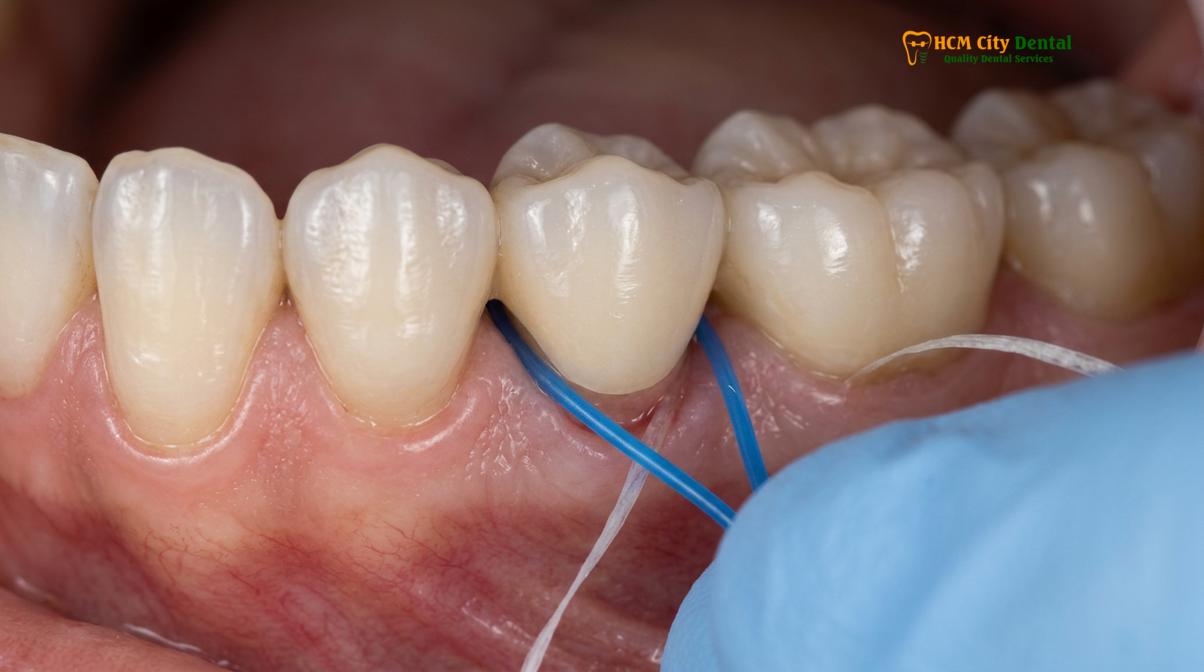
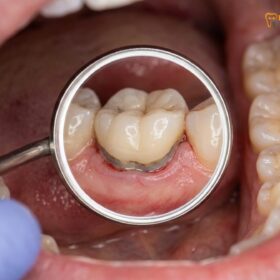
When you consume food, microscopic particles inevitably become wedged beneath the pontic. If these particles are not promptly removed, the naturally occurring bacteria in your mouth—particularly Streptococcus mutans and Porphyromonas gingivalis—begin to feed on the residual carbohydrates. This metabolic process produces highly acidic byproducts that attack the enamel and dentin of the adjacent abutment teeth. Because the margins (the junction where the crown meets the natural tooth) are located in close proximity to this bacterial reservoir, they are exceptionally vulnerable to secondary caries. According to clinical guidelines, recurrent decay at the crown margin is the leading cause of premature bridge failure [1].
Furthermore, persistent plaque accumulation under pontic structures triggers a localized immune response known as gingivitis. The gum tissue becomes red, swollen, and prone to bleeding upon probing. If the biofilm is not disrupted, this inflammation can progress to periodontitis, a more severe condition that destroys the periodontal ligament and the alveolar bone supporting the abutment teeth. This inflammatory cascade can also violate the biologic width—the natural protective barrier of soft tissue around the tooth—leading to chronic discomfort and the need for complex interventions such as functional crown lengthening or even tooth extraction.
Clinical Warning: A dental bridge does not protect the underlying natural teeth from decay. If you experience a persistent bad taste, localized swelling, or bleeding when cleaning around your bridge, it is a strong indicator of active infection beneath the pontic that requires immediate clinical evaluation.
The design of the pontic itself plays a crucial role in cleanability. Modern prosthodontics utilizes specific pontic designs, such as the modified ridge lap or the ovate pontic, which are engineered to mimic the natural emergence profile of a tooth while allowing sufficient access for interdental cleaning tools. However, regardless of how perfectly the bridge is designed and milled, its long-term survival is entirely dependent on the patient’s commitment to daily, targeted hygiene practices.
How to Use Oral-B Super Floss
Oral-B Super Floss features a stiffened end for easy threading, a spongy middle for sweeping the pontic base, and regular floss for adjacent contacts, making it an ideal all-in-one tool.
For patients with fixed prosthodontics, standard string floss is often inadequate because it cannot be easily maneuvered beneath the connected framework of a bridge. This is where specialized products become indispensable. One of the most highly recommended tools by prosthodontists worldwide is Super Floss. This unique, three-in-one dental floss is specifically engineered to navigate the complex anatomy of dental bridges, orthodontic appliances, and wide interdental spaces.
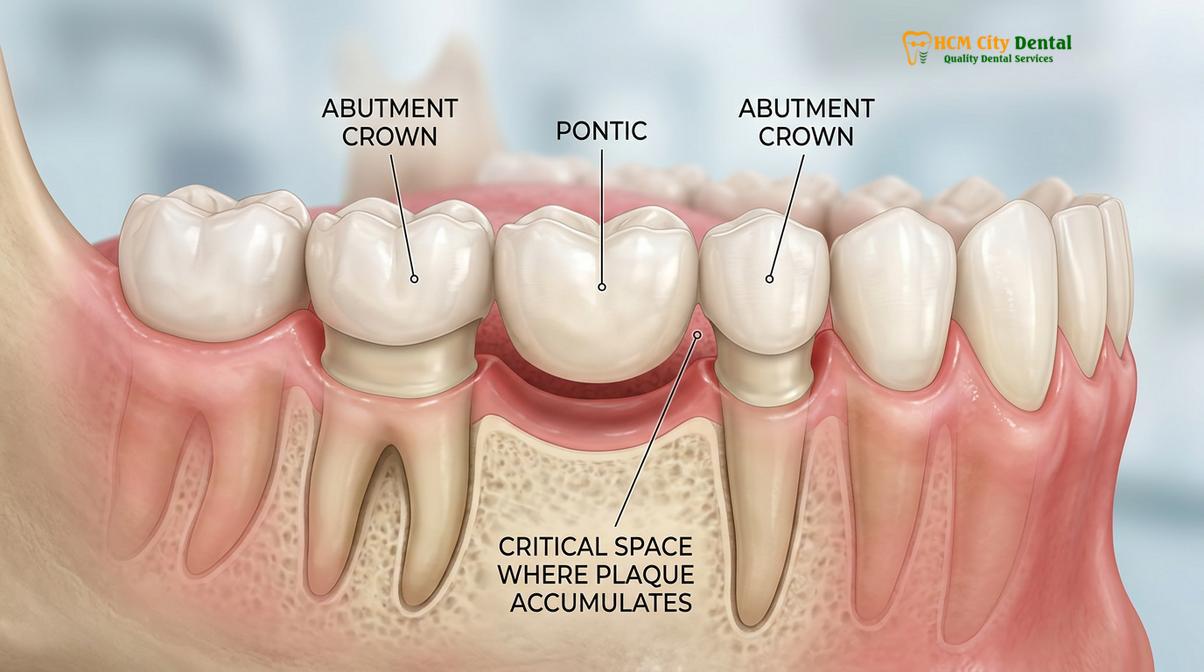
The anatomy of Super Floss consists of three distinct segments. The first segment is a stiffened, plastic-like threader end. This rigid tip allows you to easily guide the floss through the tight embrasure space (the small gap between the gum line and where the pontic connects to the abutment crown). The second segment is a thick, spongy, filament-like middle section. This spongy network is designed to expand slightly when it comes into contact with saliva, creating a wide surface area that acts like a soft brush. It is highly effective at sweeping away sticky bacterial biofilm and food debris from the broad underside of the pontic. The third segment is standard nylon floss, which is used to clean the regular contact points between your natural teeth.
To perform effective oral b superfloss bridge cleaning, follow this precise clinical workflow:
- Threading: Take the stiffened end of the Super Floss and gently insert it into the space between the pontic and the abutment tooth, right at the gum line. Push it through from the cheek side (buccal) toward the tongue side (lingual) until you can grasp the stiff end with your other hand.
- Positioning: Carefully pull the floss through until the thick, spongy middle section is positioned directly underneath the artificial tooth.
- Sweeping: Using both hands, gently pull the spongy section back and forth in a sweeping, horizontal motion. Ensure the sponge makes contact with both the base of the pontic and the surface of the gum ridge to dislodge trapped debris.
- Cleaning the Abutments: Next, slide the floss toward one of the supporting abutment teeth. Curve the floss into a “C” shape around the base of the crown and gently slide it up and down, dipping slightly below the gum line to clean the critical crown margin. Repeat this “C” shape motion on the opposite abutment tooth.
- Removal: Once the entire area has been thoroughly cleaned, gently pull the floss all the way through and out. Do not attempt to pull it forcefully up through the connected bridge framework, as this is impossible and could damage the floss or your gums.
“The success of any fixed restoration is a partnership between the clinician’s precision and the patient’s daily maintenance. Tools like Super Floss are not optional accessories; they are fundamental requirements for preserving the health of the abutment teeth and the surrounding periodontium.”
— Dr. Nguyen Van Cuong, Lead Prosthodontist
Mastering this technique may require a few days of practice, particularly when navigating the posterior (back) teeth where visibility and dexterity are limited. However, establishing this daily habit is the single most effective way to prevent the insidious onset of secondary caries beneath your restoration.
Dental Bridge Threaders Explained
A floss threader acts like a flexible needle, allowing you to pull standard dental floss underneath the bridge framework to mechanically disrupt bacterial colonies and remove trapped food.
While Super Floss is an excellent all-in-one solution, some patients prefer to use their own preferred brand of standard dental floss, particularly if they require a specific type of floss (such as PTFE or woven floss) for the rest of their natural teeth. In these cases, a dental bridge threader is the necessary tool. A floss threader is a simple, inexpensive, yet highly effective device that resembles a large, flexible plastic needle with a closed loop at one end.
The primary function of a threader is to act as a delivery vehicle. Because the pontic is fused to the adjacent crowns, you cannot snap floss down from the top as you would with individual teeth. The threader bypasses this obstacle by allowing you to enter the interdental space horizontally. Many international patients seeking bridge threader floss saigon during their dental tourism visits find these tools readily available at local pharmacies or provided directly in their post-operative care kits at the clinic.
Using a floss threader involves a straightforward, repeatable process:
- Preparation: Dispense approximately 18 inches of your preferred standard dental floss. Pass about 4 to 5 inches of the floss through the loop of the plastic threader, similar to threading a sewing needle.
- Insertion: Hold the pointed, flexible end of the threader and gently guide it through the space between the gum line and the bridge, starting from the cheek side and pushing toward the tongue.
- Pulling Through: Reach into your mouth (or use your tongue to help guide it) and grasp the pointed end of the threader. Pull the threader completely through the space, which will drag the attached dental floss underneath the bridge.
- Flossing Technique: Once the floss is positioned under the pontic, remove the threader from the loop. Grasp the ends of the floss with both hands. Use a gentle back-and-forth motion to clean the underside of the pontic, and then use the “C” shape technique to clean the margins of the adjacent abutment crowns.
When comparing tools, it is helpful to understand their specific advantages. The table below outlines the primary interdental cleaning options for bridge maintenance:
| Cleaning Tool | Primary Mechanism | Best Suited For | Clinical Limitation |
|---|---|---|---|
| Super Floss | Spongy friction + built-in threader | Wide pontic spaces, all-in-one convenience | Spongy section may be too thick for very tight embrasures |
| Floss Threader | Delivery loop for standard floss | Patients who prefer specific types of standard floss | Requires two separate items (threader + floss) |
| Interdental Brush | Bristled mechanical sweeping | Large gaps, exposed root surfaces, easy handling | Wire core can scratch ceramics if sized incorrectly |
| Water Flosser | Pulsating hydrostatic pressure | Flushing loose debris, reducing gingival bleeding | Cannot remove hardened, sticky plaque biofilm |
Regardless of whether you choose a built-in solution or a separate threader, the mechanical friction provided by the floss is non-negotiable. It is the only way to physically detach the sticky matrix of bacterial biofilm that adheres to the ceramic and tooth surfaces.
Water Flossers (Irrigators) for Bridge Care
Water flossers utilize pulsating fluid to flush out loose debris and disrupt biofilm beneath the bridge, serving as an excellent adjunct to mechanical flossing but not a complete replacement.
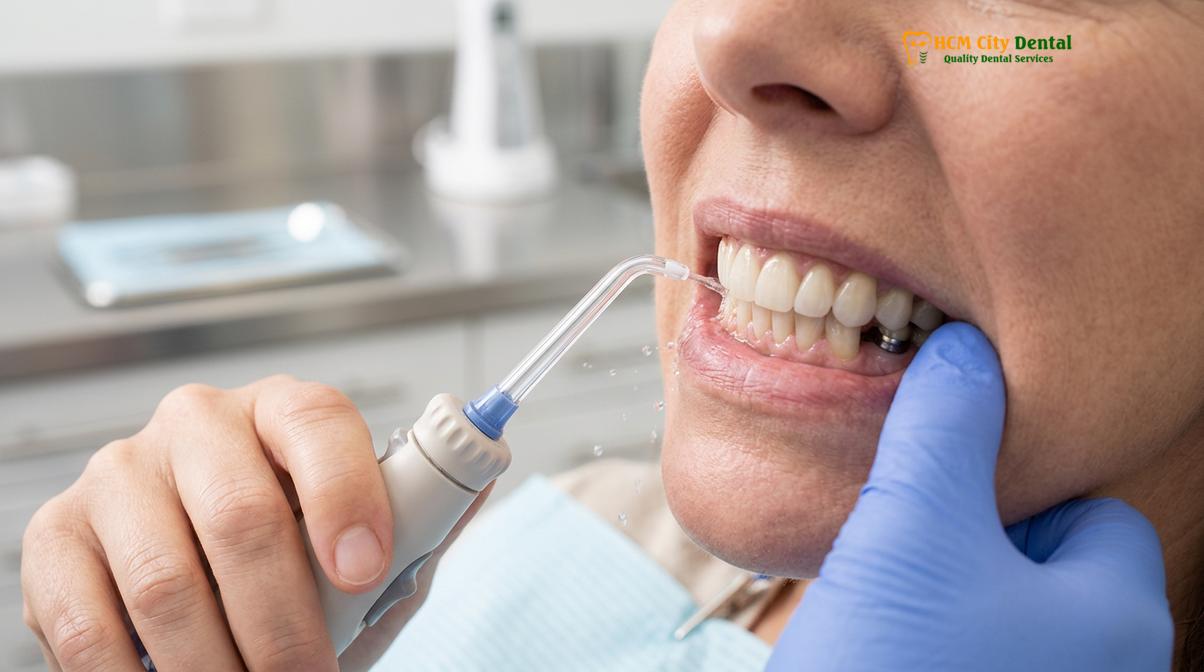
In recent years, oral irrigators—commonly known as water flossers—have become increasingly popular for maintaining complex dental work. These devices generate a pressurized, pulsating stream of water that is highly effective at flushing out food particles and reducing the bacterial load in hard-to-reach areas. For patients with limited manual dexterity, arthritis, or extensive full-mouth restorations, incorporating water flosser dental bridge maintenance into their daily routine can significantly improve gingival health.
The clinical efficacy of a water flosser lies in its hydrodynamics. The pulsation creates a compression and decompression phase that helps expel subgingival bacteria and flush out the periodontal pocket. Studies have shown that the regular use of an oral irrigator can significantly reduce bleeding on probing and lower the levels of pro-inflammatory cytokines in the gingival crevicular fluid [2]. Many modern water flossers come with specialized “plaque seeker” tips, which feature three thin tufts of bristles that gently sweep the margin while the water flushes the area.
To maximize the benefits of a water flosser around your bridge, follow these clinical guidelines:
- Temperature and Additives: Fill the reservoir with lukewarm water to prevent thermal sensitivity, especially if your abutment teeth have slight gum recession. You may also add a capful of antimicrobial mouthwash (such as chlorhexidine or a fluoride rinse) to the reservoir for an added chemical disruption of the biofilm, though this should be discussed with your dentist.
- Pressure Settings: Always start on the lowest pressure setting. High pressure can inadvertently traumatize the delicate gingival attachment or force debris deeper into the periodontal pocket. Gradually increase the pressure to a comfortable, medium setting.
- Angulation: Lean over the sink to allow water to flow out of your mouth. Aim the tip of the flosser at a 90-degree angle directly at the gum line. Do not aim the stream deep into the periodontal pocket.
- Tracing the Margins: Slowly trace the margin of the abutment crowns, pausing briefly between the teeth and directing the stream directly underneath the pontic to flush out the space completely.
It is critical to understand a fundamental rule of prosthodontic maintenance: a water flosser is an adjunct, not a substitute. While the hydrostatic pressure is excellent for removing loose debris and altering the toxicity of the biofilm, it lacks the mechanical shear force required to scrape away mature, sticky plaque that has firmly adhered to the tooth or ceramic surface. Therefore, a comprehensive hygiene routine must include both mechanical flossing (using a threader or Super Floss) and water irrigation for optimal results.
Preventing Decay and Gum Inflammation Under the Pontic
Long-term bridge success relies on meticulous daily hygiene combined with precise clinical fabrication, including accurate margin preparation and highly polished, biocompatible restorative materials.
While patient compliance with daily cleaning is paramount, the biological response of the gum tissue is also heavily dictated by the quality of the dental work itself. The prevention of decay and inflammation begins in the dental chair with precise tooth preparation and the selection of advanced biomaterials. If a bridge has bulky, overhanging margins or a rough surface texture, it will act as a plaque trap, making even the most diligent home care ineffective.
During the tooth preparation phase, the prosthodontist must create a precise margin—typically a chamfer or a shoulder design—that allows the final crown to transition seamlessly into the natural root structure. If this margin is open or ill-fitting, the dental cement can wash out over time, creating a microscopic gap where bacteria can infiltrate and cause rapid, undetected decay beneath the crown [3]. To prevent this, modern clinics utilize advanced digital workflows.
The material science behind the restoration also plays a critical role in tissue health. Historically, Porcelain-Fused-to-Metal (PFM) crowns were the standard. However, the opaque metal substructure often required a thicker layer of opaque porcelain, and the metal margin could sometimes cause a localized allergic or inflammatory response in the gingiva. Today, high-performance ceramics are the gold standard. Materials like Zirconia HT (such as Cercon HT from Germany) offer ultimate flexural strength, while lithium disilicate (E.max from Ivoclar, Liechtenstein) provides outstanding lifelike aesthetics for front teeth.
Crucially, these modern ceramics are highly biocompatible. When CAD/CAM milled and meticulously polished or glazed, the surface roughness of zirconia is significantly lower than that of traditional layered porcelain or natural enamel. This ultra-smooth surface physically inhibits the adhesion of bacterial biofilm, making the pontic much easier to clean and highly resistant to plaque accumulation [4].
Clinical Case Study: A 45-year-old patient visited HCMC Dental Clinic in Ho Chi Minh City complaining of chronic bad breath and bleeding gums around an old, bulky PFM bridge. Clinical examination revealed severe plaque retention under a poorly designed ridge-lap pontic and secondary decay on the posterior abutment. The failing bridge was sectioned and removed. After treating the decay and performing a minor gingival recontouring, the team utilized a Medit i700 scanner to design a highly precise, 3-unit Zirconia HT bridge with an ovate pontic design. The highly polished zirconia surface and improved emergence profile allowed the patient to easily thread floss beneath the restoration, resulting in complete resolution of the gingival inflammation within two weeks.
In cases where a natural tooth is severely broken down, a root canal treatment followed by a post and core buildup may be necessary to provide sufficient structural support for the abutment crown. Alternatively, if the span of missing teeth is too large, or if the adjacent teeth are perfectly healthy and virgin, a dental implant-supported bridge may be recommended. Implant bridges, whether screw-retained or cement-retained, follow similar hygiene principles, though the titanium or zirconia implant abutments require specialized care to prevent peri-implantitis.
Clinical Workflows and Advanced Dental Tourism in Ho Chi Minh City
Modern prosthodontics combines digital precision with efficient lab partnerships, offering international patients world-class restorations at highly accessible price points within a single week.
The landscape of restorative dentistry has been revolutionized by digital technology, making complex treatments faster, more comfortable, and significantly more accurate. For international patients and expats, dental tourism offers the opportunity to receive premium care using the exact same materials and technologies found in North America or Europe, but at a fraction of the cost. HCMC Dental Clinic stands at the forefront of this digital integration.
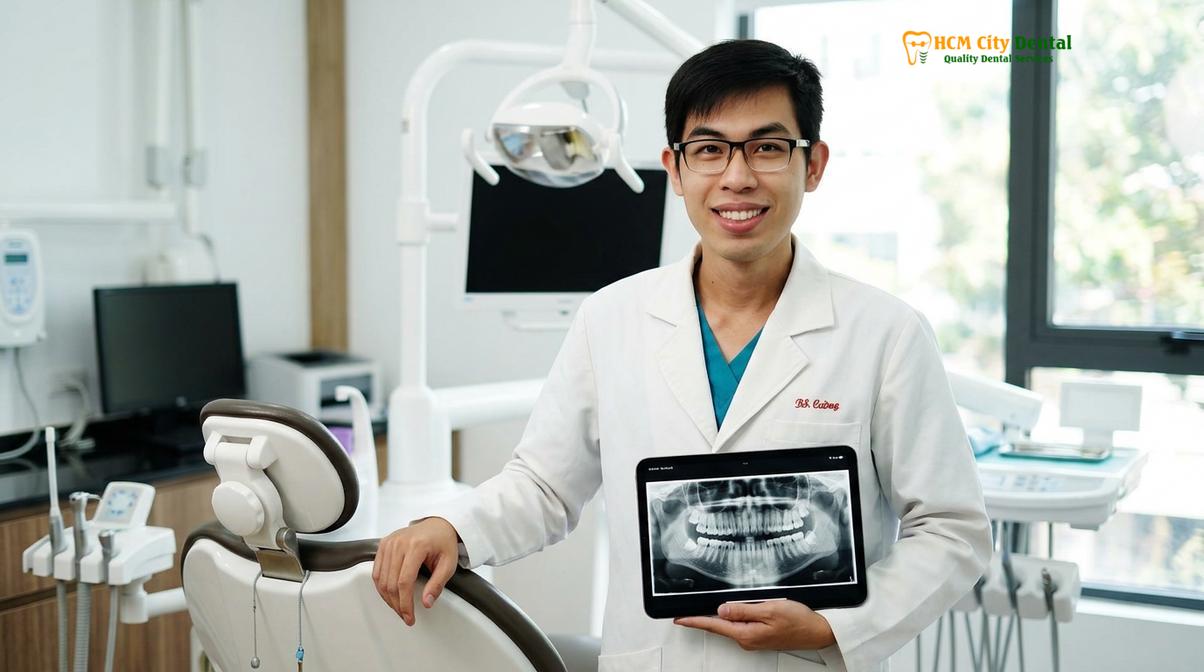
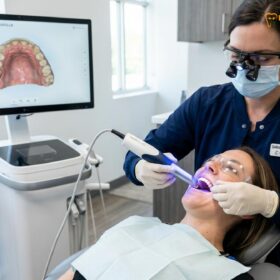
The traditional, uncomfortable process of taking messy silicone impressions has been entirely replaced. Dr. Nguyen Van Cuong and the clinical team utilize state-of-the-art iTero and Medit i700 Intraoral Scanners. These devices capture thousands of images per second to create a flawless 3D digital model of your teeth and gums. This digital scan ensures maximum patient comfort—eliminating the gag reflex associated with traditional putty—and provides the laboratory with micron-level precision for CAD/CAM milling.
Through a Direct Lab Partnership with a leading facility in Ho Chi Minh City, the clinic maintains complete quality control over the fabrication process. The prosthodontist collaborates directly with the master ceramist to ensure perfect shade matching, optimal bite adjustment, and precise margin adaptation. This streamlined workflow enables an Express 3-5 Day Turnaround. This rapid timeline is specifically tailored for dental tourists, allowing complete smile makeovers or the fitting of multiple crowns and bridges within a single week, without compromising on quality or curing times.
The clinic is committed to absolute transparency and uses only authentic, certified materials. The Pricing Structure is highly competitive, and international patients can take advantage of a 40% pre-arrival discount for WhatsApp bookings. According to the latest clinic fee schedule, the estimated costs are as follows:
- PFM Crown: Walk-in: ~$140 (3.5M VND) | WhatsApp pre-booking discount: From $84 (2.1M VND) (-40%).
- Zirconia Crown (Cercon): Walk-in: ~$200 (5.0M VND) | WhatsApp pre-booking discount: From $120 (3.0M VND) (-40%).
- Zirconia HT Crown (Cercon HT): Walk-in: ~$260 (6.5M VND) | WhatsApp pre-booking discount: From $156 (3.9M VND) (-40%).
- E.max Crown (Ivoclar): Walk-in: ~$280 (7.0M VND) | WhatsApp pre-booking discount: From $168 (4.2M VND) (-40%).
- 3-Unit Bridge (Zirconia HT): Walk-in: ~$480 (12.0M VND) | WhatsApp pre-booking discount: From $288 (7.2M VND) (-40%).
- 4-Unit Bridge (Zirconia HT): Walk-in: ~$640 (16.0M VND) | WhatsApp pre-booking discount: From $384 (9.6M VND) (-40%).
- Inlay / Onlay (Sứ Lab): Walk-in: ~$180 (4.5M VND) | WhatsApp pre-booking discount: From $108 (2.7M VND) (-40%).
To further support international patients, the clinic offers 0% interest monthly credit card installment plans and a comprehensive Global Warranty policy. This includes remote follow-up support via WhatsApp, utilizing photo and video assessment protocols to ensure your restoration remains stable and healthy long after you return home [5].
When to See a Doctor
While diligent home care is the foundation of bridge maintenance, certain clinical signs indicate that professional intervention is required. You should schedule an immediate evaluation if you experience any of the following symptoms:
- Mobility: If you feel the bridge shifting or moving when you bite down, the cement seal on one or both abutments may have failed. An emergency loose crown recementation can often save the restoration if addressed promptly.
- Persistent Bad Breath or Taste: A foul odor or metallic taste that does not resolve with brushing and flossing is a strong indicator of active decay or trapped necrotic tissue beneath the pontic.
- Pain or Sensitivity: Sharp pain when biting, or lingering sensitivity to hot and cold temperatures, suggests that the nerve inside the abutment tooth is inflamed or that decay has penetrated the dentin.
- Bleeding Gums: While slight bleeding may occur when you first begin a new flossing routine, persistent bleeding, swelling, or the discharge of pus around the bridge margins indicates a severe periodontal infection.
Regular professional cleanings and radiographic examinations every six months are essential to monitor the integrity of the cement margins and the health of the underlying bone.
Frequently Asked Questions
How do you clean under a dental bridge?
You must use specialized interdental tools like a floss threader, Super Floss, or an interdental brush to physically sweep beneath the artificial tooth. Regular brushing only cleans the outer surfaces, leaving the critical space beneath the pontic vulnerable to plaque buildup. Thread the floss under the bridge, gently curve it against the adjacent abutment teeth, and use a sweeping motion to remove trapped food and bacterial biofilm. Incorporating a water flosser afterward helps flush out any remaining loose debris.
What happens if you do not clean under a dental bridge?
Failing to clean under a bridge allows pathogenic bacteria to accumulate, leading to gum inflammation, bad breath, and severe decay on the supporting abutment teeth. Because the pontic rests directly on the gum tissue, trapped food particles rapidly decompose, creating an acidic environment. Over time, this localized infection can compromise the biologic width, cause the underlying bone to resorb, and ultimately result in the structural failure and loss of the entire dental bridge.
Is a water flosser enough for dental bridge maintenance?
No, a water flosser is not sufficient on its own because it cannot completely remove sticky, mature bacterial plaque from the restoration margins. While an oral irrigator is excellent for flushing out loose food particles and reducing gingival inflammation, it lacks the mechanical friction required to detach hardened biofilm. For optimal longevity, you must combine water flossing with daily mechanical cleaning using a floss threader or Super Floss.
Can I use a regular toothbrush to clean under my dental bridge?
A standard toothbrush cannot reach the tight space between the pontic and the gum tissue, making it ineffective for cleaning under a dental bridge. The bristles are simply too large and inflexible to penetrate beneath the artificial tooth framework. While you must brush the chewing surfaces and sides of the bridge twice daily, you must rely on specialized interdental tools to clean the underside where the restoration meets the soft tissue.
How often should I clean under my dental bridge?
You should clean under your dental bridge at least once a day, ideally during your evening oral hygiene routine before going to sleep. Removing plaque and food debris before bed prevents bacteria from producing harmful acids overnight when saliva production is naturally lower. Consistent daily maintenance is the most critical factor in preventing secondary caries on the abutment teeth and ensuring the long-term survival of your prosthetic restoration.
References
- American Dental Association. Clinical guidelines for the maintenance of fixed prosthodontics and dental bridges. (2018).
- Journal of Periodontology. Efficacy of oral irrigators in reducing gingival inflammation around fixed restorations. (2020).
- International Journal of Prosthodontics. Margin design and plaque accumulation in zirconia and lithium disilicate crowns. (2019).
- Journal of Esthetic and Restorative Dentistry. Surface roughness and biofilm adhesion on CAD/CAM milled ceramics. (2021).
- Journal of Prosthodontic Research. Survival rates of 3-unit and 4-unit fixed partial dentures based on abutment health. (2022).