While titanium is widely considered biocompatible, a small percentage of patients can develop an allergic reaction to titanium dental implants. This type IV hypersensitivity triggers an immune response, leading to localized inflammation, bone loss, or systemic symptoms that require specialized clinical intervention and alternative metal-free solutions.
Clinical Summary:
Titanium allergy in dental implants is a rare but significant immunological condition where the body’s macrophages react to titanium ions or trace metals like nickel and vanadium. Unlike immediate allergic reactions, this is typically a delayed type IV hypersensitivity. Patients may experience unexplained implant failure, chronic gingival inflammation, or systemic autoimmune-like symptoms. Diagnosis relies on specialized blood tests like the MELISA test rather than standard skin patch testing. For sensitive individuals, biological dentistry protocols recommend removing the offending metal and utilizing biocompatible zirconia (ceramic) implants to restore oral function safely.
Key Takeaways:
- Titanium implant allergies affect an estimated 0.6% of patients, presenting as a delayed type IV hypersensitivity.
- Symptoms often mimic peri-implantitis, including chronic gum inflammation, bone loss, and unexplained implant failure.
- Trace metals within titanium alloys, such as nickel or vanadium, are frequently the true triggers for metal hypersensitivity implants.
- The MELISA test is the clinical gold standard for diagnosing delayed immune reactions to dental metals.
- Zirconia (ceramic) implants offer a highly biocompatible, metal-free alternative for patients with known sensitivities.
What is Titanium Allergy and Implant Hypersensitivity?
Titanium allergy is an immune system overreaction to titanium particles or trace metals within the implant alloy, manifesting as a delayed type IV hypersensitivity that can compromise implant integration and overall oral health.
For decades, titanium has been the gold standard in implantology due to its remarkable ability to fuse with human bone—a process known as osseointegration. The secret to titanium’s success lies in its passivation layer; upon exposure to oxygen, titanium instantly forms a microscopic layer of titanium dioxide (TiO2), which shields the underlying metal from corrosion and makes it highly acceptable to the human body. However, clinical evidence has increasingly shown that this material is not universally inert. A subset of the population possesses a genetic or acquired predisposition to react negatively to these metallic structures, resulting in a condition broadly categorized as titanium allergy dental implants.
To understand how this allergy develops, it is crucial to differentiate it from common allergies, such as a reaction to pollen or peanuts. Those are Type I hypersensitivity reactions, mediated by IgE antibodies, which occur immediately and can lead to anaphylaxis. In contrast, a reaction to a dental implant is almost exclusively a Type IV delayed hypersensitivity reaction. This is a cell-mediated response driven by T-lymphocytes and macrophages rather than antibodies. Because it is delayed, symptoms may not appear until months or even years after the surgical placement of the implant.
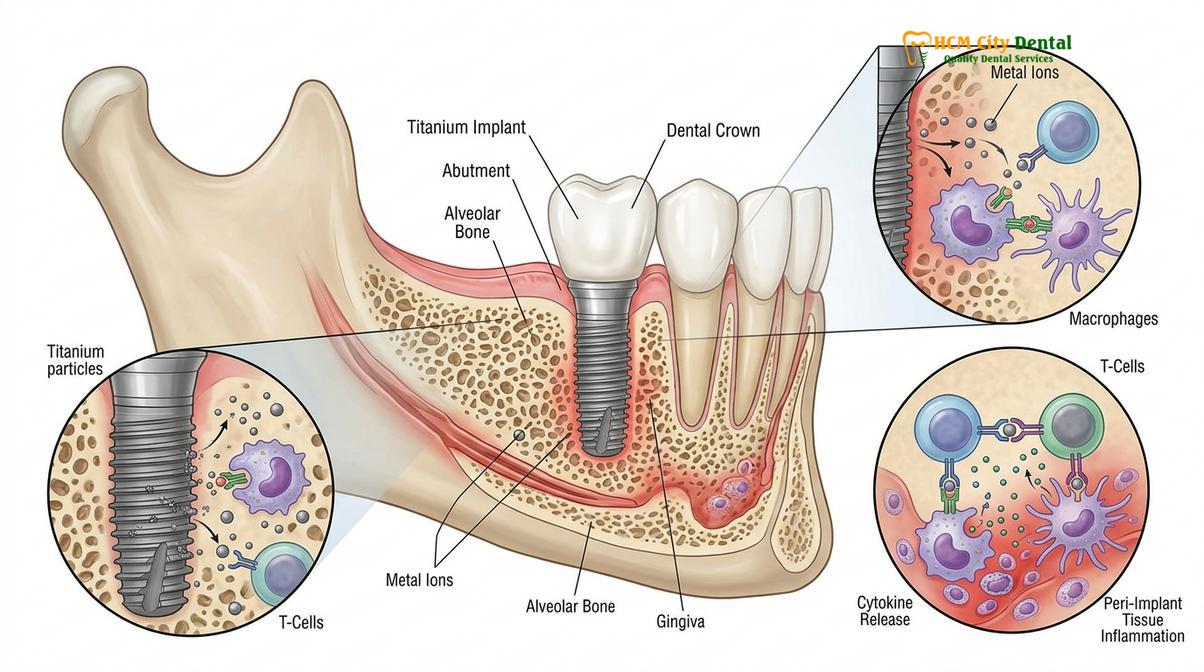
The pathophysiological mechanism begins with biocorrosion. Despite the protective titanium dioxide layer, the harsh environment of the oral cavity—characterized by fluctuating pH levels, mechanical friction during chewing, and exposure to dietary acids and fluorides—can cause the implant surface to degrade microscopically. As the surface wears, it releases microscopic titanium ions and nanoparticles into the surrounding soft tissue and alveolar bone. When these ions bind with native proteins in the body, they form complexes known as haptens. The immune system’s antigen-presenting cells (macrophages) mistakenly identify these haptens as dangerous foreign invaders. They engulf the particles and present them to T-cells, triggering a cascade of pro-inflammatory cytokines, including Tumor Necrosis Factor-alpha (TNF-α) and Interleukin-1 beta (IL-1β) [1].
“Type IV metal hypersensitivity is an insidious process; it does not present with immediate anaphylaxis but rather as a chronic, low-grade inflammatory cascade that slowly degrades the surrounding osseous architecture, often leading to aseptic implant failure.”
Furthermore, it is essential to recognize that most dental implants are not made of 100% pure titanium. While Grade 4 commercially pure titanium is common, many implants utilize Grade 5 titanium alloy (Ti-6Al-4V), which contains 6% aluminum and 4% vanadium to increase tensile strength. Additionally, manufacturing processes can introduce trace impurities such as nickel, beryllium, or iron. In many cases of dental implant procedures failing due to allergy, the patient’s immune system is actually reacting to these trace metals rather than the titanium itself. Nickel, in particular, is one of the most common contact allergens worldwide, and even microscopic amounts leaching from an implant can trigger profound metal hypersensitivity implants in susceptible individuals.
Common Symptoms of Dental Metal Reactivity
Symptoms of titanium allergy range from localized oral inflammation and unexplained implant failure to broader systemic issues like chronic fatigue and skin rashes, often mimicking standard post-surgical infections.
Identifying an allergic reaction to a titanium implant is a significant diagnostic challenge because the clinical presentation closely mirrors peri-implantitis—a common bacterial infection that causes inflammation and bone loss around an implant. However, while peri-implantitis is driven by plaque accumulation and poor oral hygiene, an allergic reaction is a sterile, immune-driven inflammation. Recognizing the nuanced differences in symptoms is critical for proper intervention.
The symptoms of titanium allergy can be broadly categorized into localized oral manifestations and systemic manifestations. Localized symptoms occur directly at the site of the implant. Patients frequently report chronic, persistent erythema (redness) and swelling of the gingival tissues surrounding the implant crown. Unlike plaque-induced gingivitis, this inflammation does not resolve with improved brushing, flossing, or professional cleanings. Patients may also experience a burning sensation in the gums, a persistent metallic taste in the mouth, or deep, aching pain in the jawbone that cannot be attributed to occlusal trauma or infection.
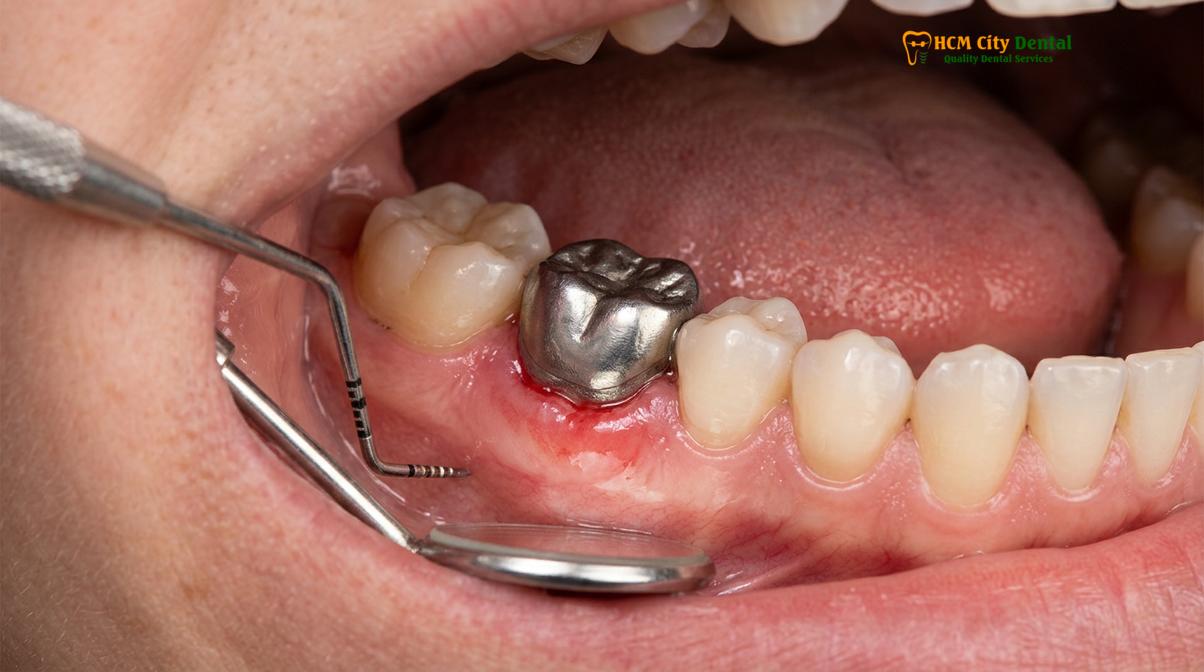
As the localized immune response intensifies, the pro-inflammatory cytokines activate osteoclasts—the cells responsible for breaking down bone. This leads to aseptic osteolysis, or bone loss around the implant, without the presence of a bacterial biofilm. Clinically, this presents as a widening of the periodontal ligament space on a radiograph and eventual loosening of the implant. If left untreated, the body will actively attempt to expel the foreign body, resulting in complete implant failure [2].
Beyond the oral cavity, the systemic symptoms of titanium allergy are often overlooked or misdiagnosed by medical professionals who may not connect a patient’s declining health to their dental work. Because the immune system is in a state of chronic hyper-arousal, patients may develop systemic autoimmune-like symptoms. These can include chronic fatigue syndrome, fibromyalgia-like joint and muscle pain, cognitive brain fog, and gastrointestinal disturbances. Dermatological manifestations are also common, with patients developing unexplained eczema, facial erythema, or hives that flare up seemingly without cause.
| Clinical Feature | Bacterial Peri-implantitis | Titanium Hypersensitivity |
|---|---|---|
| Primary Cause | Plaque biofilm and bacterial colonization | Immune system reaction to metal ions |
| Tissue Appearance | Red, swollen, bleeds easily on probing | Hyperplastic, chronic redness, often bleeds less |
| Response to Antibiotics | Often improves temporarily | No improvement; symptoms persist |
| Bone Loss Pattern | Crater-like defect around the implant neck | Rapid, generalized aseptic osteolysis |
| Systemic Symptoms | Rare, usually confined to the oral cavity | Common (fatigue, rashes, joint pain) |
When evaluating a failing implant, clinicians must maintain a high index of suspicion for metal allergy, especially in patients with a known history of jewelry allergies, autoimmune disorders, or multiple unexplained dental failures. A thorough medical history and precise diagnostic testing are paramount to differentiating between a standard infection and a true immunological rejection.
Oral Galvanism: How Mixed Metals Create Electrical Currents
Oral galvanism occurs when different dental metals interact in the saliva, creating a measurable electrical current that accelerates metal corrosion and exacerbates hypersensitivity reactions.
A frequently overlooked factor in the development of metal allergies is the phenomenon of oral galvanism. The human mouth is a highly dynamic environment, and when multiple dissimilar metals are present, it can inadvertently become a functioning battery. This electrochemical process not only causes physical discomfort but also significantly accelerates the degradation of dental implants, increasing the risk of an allergic response.
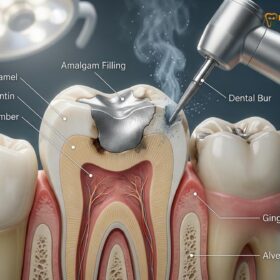
To understand oral galvanism, one must look at basic electrochemistry. A battery requires an anode, a cathode, and an electrolyte solution to conduct electricity. In the oral cavity, saliva—which is rich in minerals and salts—acts as the perfect electrolyte. If a patient has a titanium dental implant (acting as one electrode) and a different metal restoration nearby, such as a silver amalgam filling, a gold crown, or a cobalt-chromium partial denture (acting as the other electrode), an electrical potential difference is established. When the upper and lower teeth meet, or even through the conductive medium of saliva, a galvanic circuit is completed.
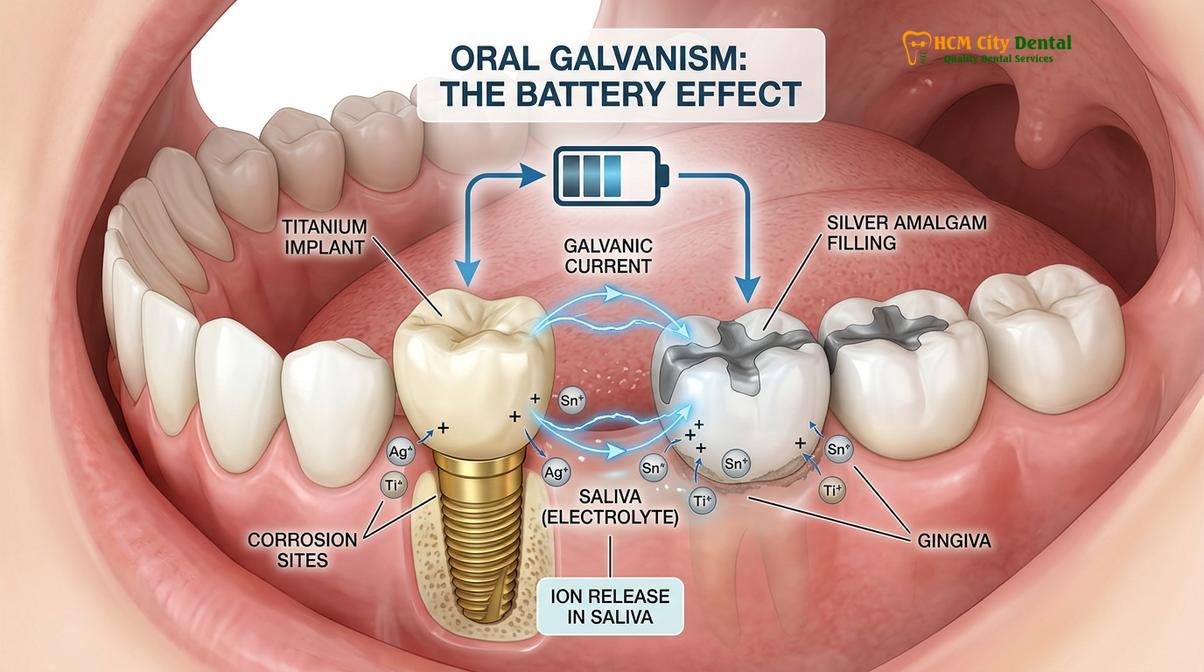
This continuous flow of micro-currents can lead to a variety of uncomfortable implant galvanism symptoms. Patients often report a sharp, shocking sensation when biting down, a persistent metallic or salty taste, increased salivary flow, and a burning sensation in the tongue or oral mucosa. In severe cases, these electrical currents can irritate the trigeminal nerve, triggering facial pain or headaches that mimic neurological disorders.
More concerning than the sensory discomfort is the effect galvanism has on the metals themselves. The electrical current accelerates the biocorrosion of the less noble metal in the circuit. If the titanium implant acts as the anode, its protective oxide layer breaks down at an accelerated rate, releasing a higher volume of titanium ions and trace metals into the surrounding tissues [3]. This massive influx of metallic debris overwhelms the local macrophages, drastically increasing the likelihood of triggering a type IV hypersensitivity reaction. Therefore, when planning tooth replacement options, holistic practitioners strongly advocate for material compatibility, avoiding the mixing of metals to prevent galvanic toxicity and preserve the integrity of the implant.
Diagnosing Titanium Sensitivity: The MELISA Test
The MELISA test is an advanced blood analysis that measures memory lymphocyte reactivity to specific metals, providing a definitive diagnosis for delayed titanium hypersensitivity when standard patch tests fail.
Diagnosing a titanium allergy requires specialized clinical tools, as traditional allergy testing methods are often inadequate for dental materials. The most common method for allergy testing is the epicutaneous patch test, where suspected allergens are taped to the patient’s back for 48 to 72 hours to observe for a skin reaction. While patch testing is highly effective for diagnosing contact dermatitis caused by topical exposure (such as a nickel watch strap), it is notoriously unreliable for diagnosing allergies to surgically implanted materials.
The unreliability of patch testing stems from the fact that the immune environment of the skin (epidermis) is vastly different from the immune environment of the alveolar bone and deep connective tissues. A patient may test negative for titanium on a skin patch test but still mount a severe, localized type IV hypersensitivity reaction in the jawbone. Furthermore, applying metal salts to the skin can sometimes inadvertently sensitize a patient to a metal they were previously not allergic to. Because of these limitations, modern biological dentistry relies on advanced in vitro blood testing to accurately diagnose an autoimmune reaction dental metal.
Clinical Warning: Relying solely on traditional skin patch testing can result in false negatives for deep-tissue implant allergies. Patients with suspected metal hypersensitivity should request specific blood-based lymphocyte proliferation assays before proceeding with extensive implant surgeries.
The gold standard for diagnosing delayed metal hypersensitivity is the MELISA (Memory Lymphocyte Immunostimulation Assay) test. Developed in the 1990s, the MELISA test is a highly sensitive blood test that measures the reactivity of the patient’s memory T-cells to specific metal ions. The process begins with a standard blood draw. In the laboratory, the patient’s white blood cells (lymphocytes) are isolated and cultured. These cells are then exposed to various concentrations of titanium, nickel, vanadium, aluminum, and other dental metals.
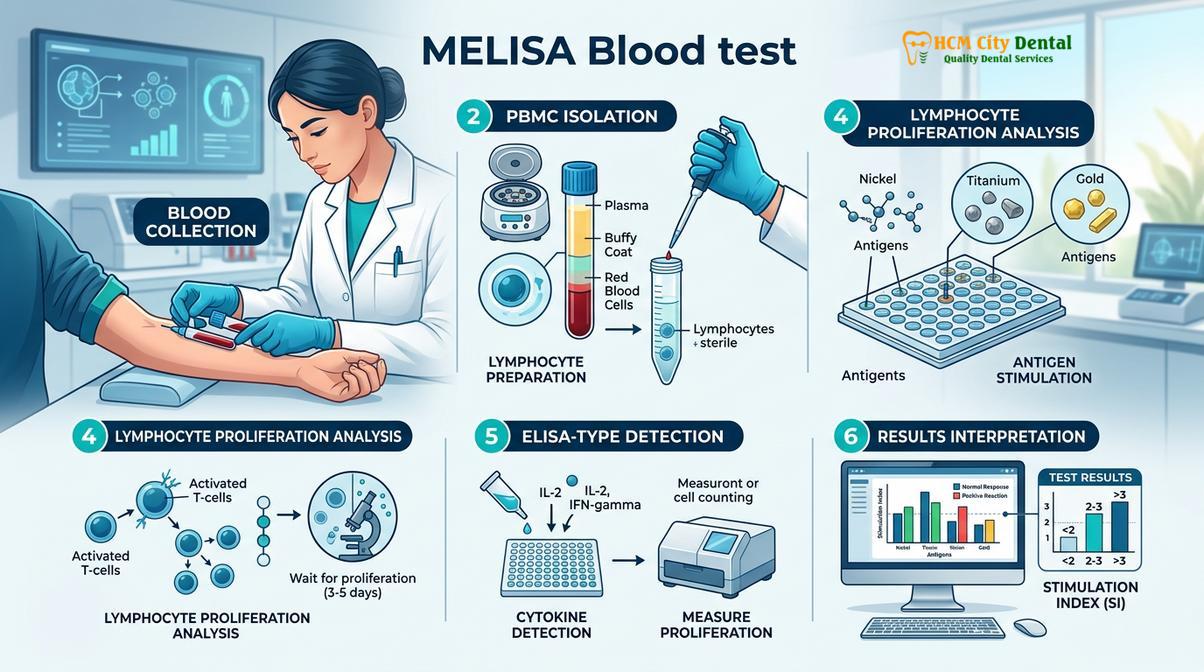
If the patient has a pre-existing allergy to a specific metal, their memory T-cells will recognize the metal as an antigen and begin to rapidly divide and proliferate. The laboratory measures this proliferation by tracking the uptake of a radioactive isotope (thymidine) into the newly forming DNA of the dividing cells. A high proliferation index indicates a strong allergic response. The MELISA test is invaluable because it not only confirms whether an allergy exists but also identifies the exact trace metals causing the reaction, allowing the clinician to make evidence-based decisions regarding material selection or explantation [4].
What to Do If You Have an Existing Titanium Implant Reaction
Managing an active titanium implant reaction requires a precise clinical protocol to safely remove the offending metal, detoxify the surrounding bone, and plan for a biocompatible replacement.
If a patient is diagnosed with an active allergy to an existing titanium implant, conservative management with antibiotics or topical steroids will be ineffective. The only definitive treatment is the surgical removal of the offending antigen—the implant itself. However, explanting a titanium implant, especially one that has partially osseointegrated, is a delicate surgical procedure that requires advanced techniques to minimize trauma to the surrounding jawbone.
The explantation workflow begins with advanced 3D imaging (CBCT) to assess the exact position of the implant and the extent of the surrounding bone loss. During the surgical removal, specialized tools such as reverse torque devices or ultra-thin trephine burs are utilized to gently detach the implant from the bone. In modern biological practices, piezosurgery (ultrasonic bone surgery) is frequently employed. Piezosurgery uses micro-vibrations to cut bone with extreme precision while preserving the delicate soft tissues, nerves, and blood vessels, ensuring a less traumatic extraction.
Once the titanium implant is removed, the socket must be meticulously debrided. The surgeon must remove the entire fibrous capsule that formed around the implant, as this tissue is saturated with titanium nanoparticles and inflammatory macrophages. Leaving any of this contaminated tissue behind can perpetuate the immune response even after the metal is gone. Following debridement, the surgical site is often disinfected using medical ozone gas or ozonated water, which eliminates residual pathogens and stimulates local blood flow.
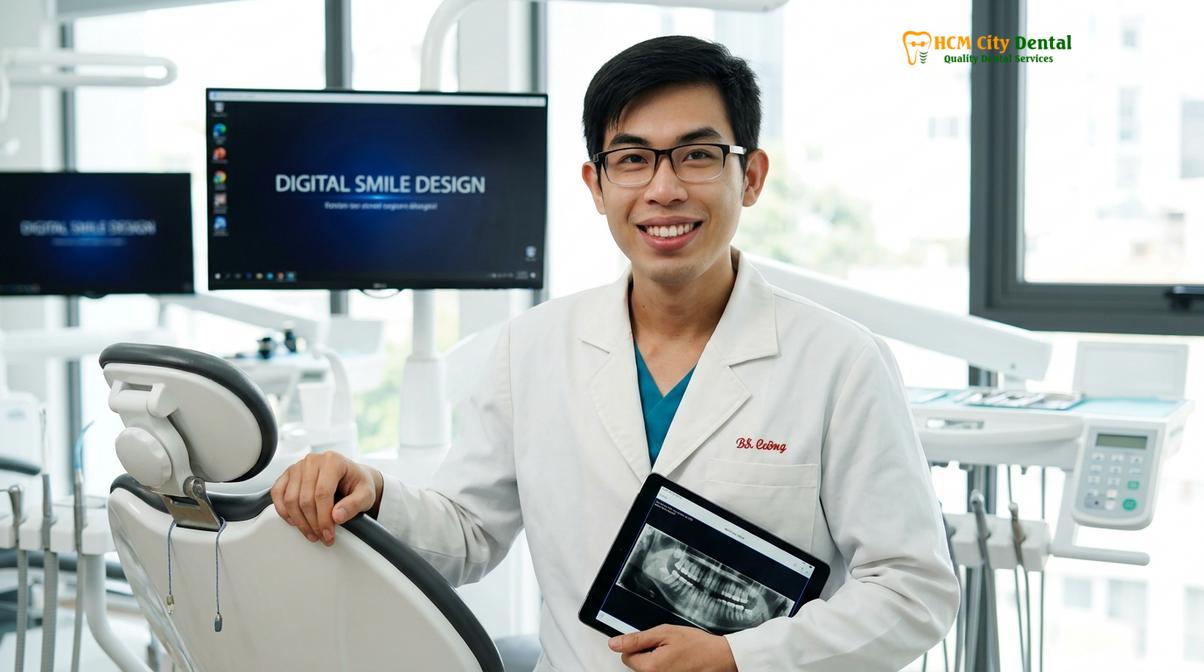
Clinical Case Review: A 45-year-old female patient presented to HCMC Dental Clinic in Ho Chi Minh City with chronic fatigue, facial eczema, and persistent pain around a two-year-old titanium implant. After a positive MELISA test confirmed a severe titanium and vanadium hypersensitivity, Dr. Nguyen Van Cuong performed a minimally invasive explantation. The site was grafted using L-PRF, and after a four-month healing period, a biocompatible zirconia implant was successfully placed. The patient reported complete resolution of her systemic symptoms and stable oral function.
To promote rapid and healthy bone regeneration, the empty socket is typically grafted. Biological dentists frequently utilize L-PRF (Leukocyte-Platelet Rich Fibrin), a natural biomaterial created by spinning a small sample of the patient’s own blood in a centrifuge. The resulting fibrin clot is rich in growth factors and stem cells, which accelerate tissue healing and reduce post-operative pain. Depending on the extent of the bone defect, additional bone grafting techniques may be employed to rebuild the alveolar ridge, preparing the site for a future, metal-free replacement.
Zirconia: The Ultimate Safe Alternative for Sensitive Patients
Zirconia dental implants provide a completely metal-free, hypoallergenic solution that integrates seamlessly with the jawbone, making them the premier choice for patients with metal sensitivities.
For patients who have experienced a titanium allergy, or those who wish to proactively avoid metals in their bodies, tooth replacement is still highly achievable. The premier alternative in modern dentistry is the zirconia dental implant. Zirconia, specifically Yttria-stabilized tetragonal zirconia polycrystal (Y-TZP), is a high-performance technical ceramic. While it is derived from the transitional metal zirconium, the oxidation process transforms it into a ceramic material that contains no free metal ions, rendering it completely non-conductive, non-corrosive, and hypoallergenic.
Zirconia implants offer several profound clinical advantages over traditional titanium. First and foremost is their absolute biocompatibility. Because zirconia does not corrode or release ions into the surrounding tissue, it does not trigger the macrophage response or the type IV hypersensitivity cascade. Patients with severe metal allergies can receive zirconia implants with confidence, knowing the material is biologically inert.
“The soft tissue response to zirconia is clinically superior to titanium. The gingival fibroblasts form a tight hemidesmosomal attachment to the ceramic surface, creating a robust biological seal that prevents bacterial infiltration and preserves crestal bone.”
Furthermore, zirconia is highly resistant to plaque accumulation. The ultra-smooth ceramic surface makes it difficult for bacterial biofilms to adhere, significantly reducing the risk of peri-implantitis. Aesthetically, zirconia is unmatched. Because the material is naturally white and opaque, it closely mimics the appearance of a natural tooth root. In patients with thin gingival biotypes, titanium implants can sometimes cause a grayish discoloration at the gum line. Zirconia eliminates this aesthetic concern, ensuring a natural, vibrant smile.
The integration of zirconia implants aligns perfectly with holistic biological dentistry approaches, which prioritize materials that work in harmony with the body’s natural systems. While zirconia implants require precise surgical technique and careful case selection—as they are typically manufactured as a one-piece design that requires immediate stabilization—their long-term success rates are now comparable to titanium [5]. For patients navigating the complexities of metal hypersensitivity, zirconia represents the pinnacle of safe, functional, and aesthetic dental restoration.
When to See a Doctor
If you have a titanium dental implant and are experiencing persistent symptoms, it is crucial not to ignore them. You should schedule a clinical evaluation if you notice chronic redness, swelling, or bleeding around the implant site that does not improve with standard oral hygiene. Additionally, if you experience a persistent metallic taste, a burning sensation in your gums, or if the implant feels slightly loose when chewing, immediate professional assessment is required.
Systemic red flags should also prompt a visit to a specialist. If you develop unexplained skin rashes, chronic fatigue, or joint pain following an implant surgery, these could be signs of a broader immunological reaction. Standard dental clinics may misdiagnose these symptoms as a routine infection. Therefore, it is highly recommended to seek out a practitioner experienced in biological dentistry and metal hypersensitivities. For patients in Vietnam, scheduling a consultation in Ho Chi Minh City with experts like Dr. Nguyen Cuong ensures access to advanced diagnostic tools like the MELISA test and safe, metal-free treatment alternatives tailored to your unique biological needs.
Frequently Asked Questions
Can you be allergic to titanium dental implants?
Yes, while rare, you can be allergic to titanium dental implants. This occurs as a delayed type IV hypersensitivity reaction where the immune system attacks titanium particles or trace metals within the implant alloy. Symptoms may take months or years to fully manifest after the initial surgical placement. If an allergy is confirmed, the implant usually needs to be removed and replaced with a biocompatible alternative.
What are the symptoms of titanium implant rejection?
Symptoms of titanium implant rejection include chronic gum inflammation, unexplained bone loss around the implant, metallic taste, and persistent discomfort. Unlike standard infections, these symptoms do not respond to antibiotics and may be accompanied by systemic issues like chronic fatigue or skin rashes. The inflammation is sterile and driven entirely by the immune system’s reaction to the metal.
What is the MELISA test for dental metals?
The MELISA test is an advanced blood analysis used to diagnose delayed hypersensitivity to dental metals. It measures the proliferation of memory T-lymphocytes when exposed to specific metal ions, providing a highly accurate diagnosis for titanium or trace metal allergies compared to traditional skin patch testing. This test helps clinicians identify the exact metals causing the immune reaction.
Does titanium corrode in the mouth?
Yes, titanium can undergo biocorrosion in the oral environment. Factors such as acidic saliva, fluoride exposure, and the presence of other dissimilar dental metals can degrade the protective titanium dioxide layer, releasing metal ions into the surrounding tissues and potentially triggering an allergic response. This process is often accelerated by oral galvanism.
Can I replace a titanium implant with a ceramic one?
Yes, a reactive titanium implant can be surgically removed and replaced with a biocompatible ceramic (zirconia) implant. This process requires careful explantation, thorough detoxification of the bone site, and a healing period before placing the metal-free alternative to ensure optimal osseointegration. Zirconia provides a safe, hypoallergenic solution for sensitive patients.
References
- Clinical Oral Implants Research. Titanium allergy in dental implant patients: a clinical study on 1500 consecutive patients. (2008).
- Journal of Periodontology. Bone loss around implants – is it metallosis? (2021).
- Contact Dermatitis. Titanium: a review on exposure, release, penetration, allergy, epidemiology, and clinical reactivity. (2016).
- Dental Materials. Impurities in commercial titanium dental implants – A mass and optical emission spectrometry elemental analysis. (2022).
- Journal of Oral and Maxillofacial Surgery. Biocompatibility of zirconium dioxide dental implants: A systematic review. (2021).