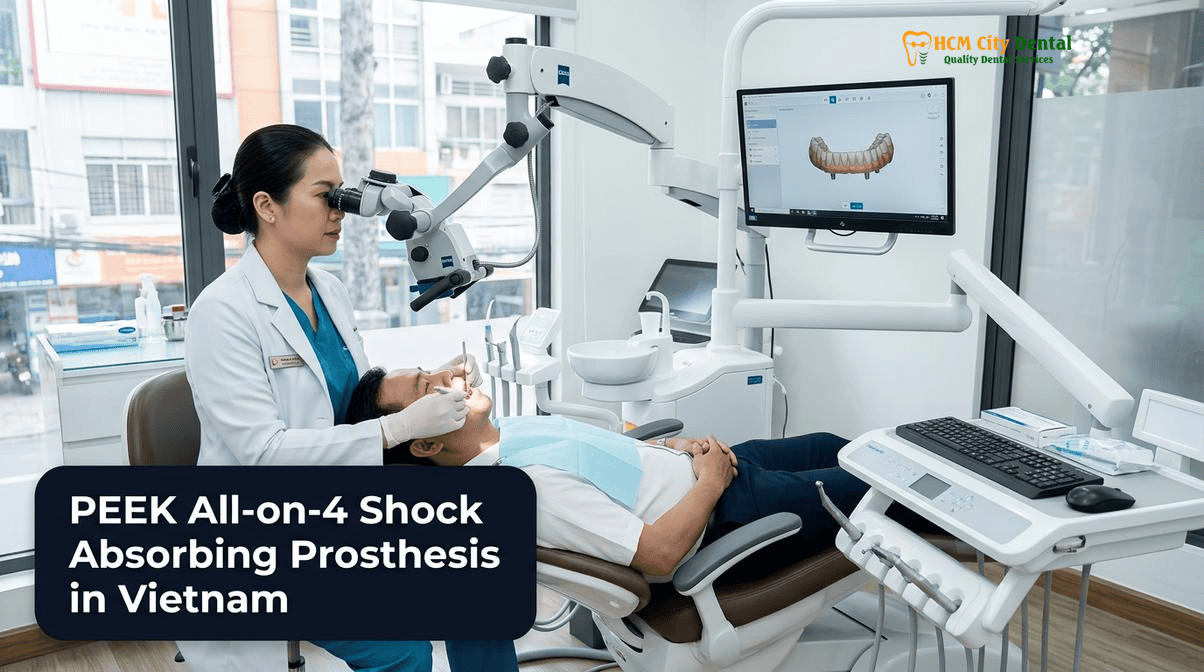
The evolution of the PEEK high-performance polymer framework for All-on-4 shock-absorbing prostheses represents a monumental leap forward in full-arch implantology. For decades, the gold standard for full-mouth rehabilitation relied heavily on rigid materials—cast metal alloys, milled titanium bars, and monolithic zirconia. While these materials offer exceptional sheer strength, their extreme rigidity introduces a critical biomechanical flaw: the complete lack of shock absorption. Because dental implants fuse directly to the jawbone (osseointegration) without the cushioning effect of a natural periodontal ligament (PDL), rigid prosthetics transfer 100% of masticatory impact directly to the crestal bone and opposing natural teeth. This often leads to mechanical complications, including porcelain chipping, screw loosening, opposing tooth wear, and an unnatural “clicking” sound during speech and chewing. Today, the introduction of Bredent BioHPP (Biocompatible High-Performance Polymer) and PEEK (Polyetheretherketone) has revolutionized the restorative landscape. By mimicking the natural elastic modulus of human cortical bone, these advanced polymers act as an artificial shock absorber, providing unparalleled comfort, acoustic dampening, and long-term biomechanical stability for international patients seeking full-mouth reconstruction in Vietnam.
Clinical Summary:
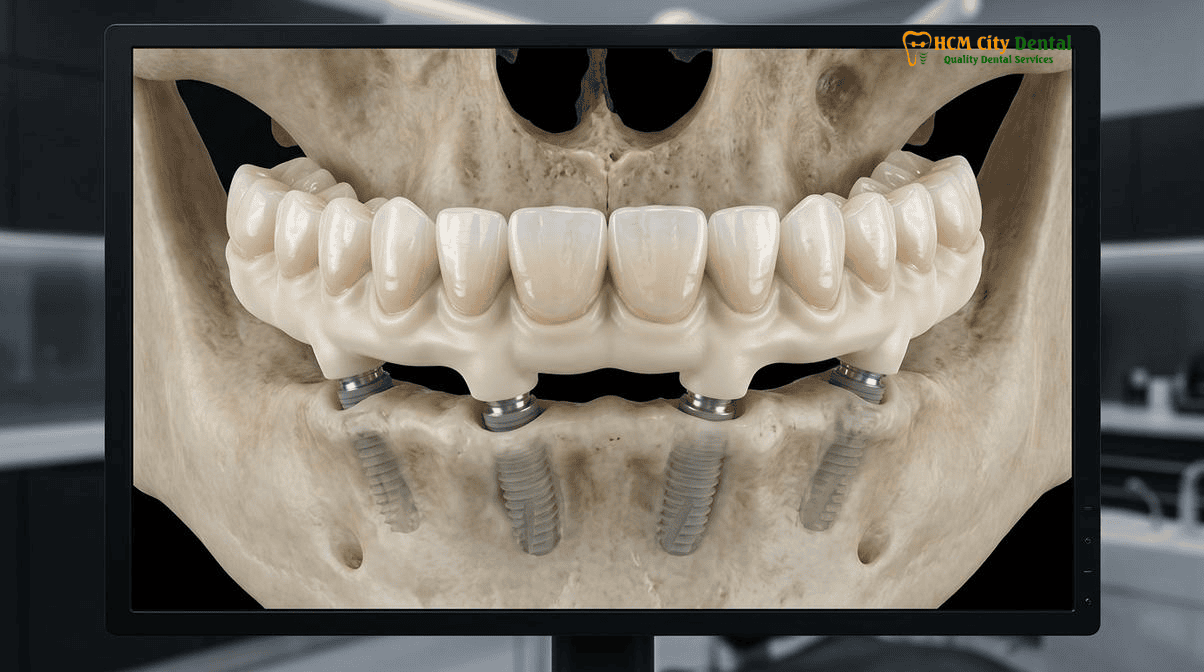
A PEEK high-performance polymer framework for All-on-4 shock-absorbing prostheses utilizes advanced medical-grade polymers (like Bredent BioHPP) to replace rigid metal or zirconia substructures. With an elastic modulus of approximately 4 GPa, BioHPP closely mimics human bone, dampening occlusal forces and protecting both the implants and opposing teeth. At HCMC Dental Clinic in District 1, Dr. Nguyen Van Cuong, DDS, utilizes a “thimble-crown” architecture, where a milled BioHPP bar supports individual, replaceable IPS E.max or zirconia crowns. This metal-free, lightweight (15–18g) solution is ideal for heavy bruxers, offering superior aesthetics, easy repairability, and the elimination of the unnatural clicking sounds associated with monolithic zirconia.
Key Takeaways:
- Biomechanical Mimicry: BioHPP and PEEK possess an elastic modulus of ~4 GPa, perfectly matching human cortical bone to absorb chewing impact and prevent stress shielding.
- Thimble-Crown Architecture: Instead of a single solid block, the BioHPP framework acts as a base for 12–14 individual ceramic crowns, allowing for single-tooth repairs without removing the entire arch.
- Ultra-Lightweight Comfort: A full-arch BioHPP prosthesis weighs only 15–18 grams, compared to 60–80 grams for monolithic zirconia, drastically improving patient comfort.
- Acoustic Dampening: The polymer substructure eliminates the disruptive “clacking” sound common with rigid zirconia-on-titanium restorations.
- Metal-Free Biocompatibility: 100% free of titanium, nickel, and palladium, making it the premier choice for biological dentistry and patients with metal allergies.
The Biomechanical Modulus Mismatch in Full-Arch Implants: Human Cortical Bone (4–18 GPa) vs. Bredent BioHPP/PEEK (4 GPa) vs. Titanium (110 GPa) vs. Zirconia (210 GPa)
To truly understand why a shock-absorbing All-on-4 bridge vs. monolithic zirconia is becoming the preferred choice for complex rehabilitations, one must examine the physics of mastication through the lens of Young’s Modulus of Elasticity. Young’s Modulus measures a material’s stiffness—its ability to resist deformation under load. In a healthy, natural dentition, teeth are suspended in the jawbone by the periodontal ligament (PDL). This microscopic hammock of connective tissue compresses slightly under pressure, acting as a natural shock absorber and providing proprioception (the neurological feedback that tells your brain how hard you are biting). When teeth are lost and replaced with titanium dental implants, this PDL is permanently lost. The implant is rigidly ankylosed to the bone.
When a restorative dentist places a highly rigid prosthesis on top of rigidly integrated implants, a severe biomechanical mismatch occurs. Human cortical bone has an elastic modulus ranging from 4 to 18 GPa. Milled titanium, commonly used for implant bars, has a modulus of approximately 110 GPa. Monolithic zirconia, the current aesthetic standard for many clinics, is exceptionally stiff, boasting a modulus of over 210 GPa. When a patient chews, the immense occlusal forces hit the unyielding zirconia, travel straight through the rigid titanium bar, and concentrate directly at the crestal bone-implant interface. According to finite element analysis (FEA) studies, this lack of energy dissipation can lead to stress shielding, micro-fractures in the peri-implant bone, and the loosening or fracturing of prosthetic screws [1].
Enter the Bredent BioHPP elastic modulus of 4 GPa for bone mimicry. By utilizing a PEEK high-performance polymer framework for All-on-4 implants in Vietnam, the prosthesis itself becomes the shock absorber. Because the polymer’s stiffness is nearly identical to that of the surrounding jawbone, it flexes microscopically under heavy occlusal loads. This dynamic dampening effect dissipates the kinetic energy of chewing before it reaches the titanium implants or the bone. The result is a profound reduction in peak stress concentrations, safeguarding the long-term survival of the implants and drastically reducing the incidence of mechanical hardware complications.
What Is BioHPP (Ceramic-Reinforced Polyetheretherketone)? How 0.3–0.5 Micron Ceramic Filler Particles Deliver Shock Absorption and Zero Metal Ion Release
While standard PEEK (Polyetheretherketone) has been used in orthopedic surgery for spinal cages and joint replacements for decades, the demands of the oral cavity require a more refined material. BioHPP (Biocompatible High-Performance Polymer), developed by the German manufacturer Bredent, is a specialized variant of PEEK engineered specifically for dental prosthodontics. It belongs to the broader PAEK (Polyaryletherketone) family of semi-crystalline thermoplastics, renowned for their extreme chemical resistance, thermal stability, and high strength-to-weight ratios.
What elevates BioHPP above standard industrial PEEK is its proprietary micro-ceramic reinforcement. BioHPP is enriched with approximately 20% ceramic filler particles, specifically engineered to a microscopic size of 0.3 to 0.5 microns. This precise ceramic infusion achieves several critical clinical objectives. First, it increases the material’s compressive strength and rigidity just enough to support long-span implant frameworks without compromising its shock-absorbing elasticity. Second, the micro-ceramic particles allow the material to be milled via 5-axis CAD/CAM technology with extreme precision, resulting in passive fits that rival cast gold. Third, it allows the framework to be polished to a high-gloss finish, preventing the accumulation of dental plaque and ensuring optimal peri-implant soft tissue health [2].
Furthermore, a metal-free biocompatible full-arch implant bridge in HCMC utilizing BioHPP offers unparalleled physiological safety. Unlike cast metal alloys (which may contain nickel, beryllium, or palladium) or even milled titanium, BioHPP is entirely inert. It exhibits zero metal ion release, zero galvanic corrosion, and zero thermal conductivity. For patients who suffer from metal hypersensitivities, autoimmune conditions, or those simply seeking a holistic, biological approach to their dental reconstruction, BioHPP provides a completely neutral, non-toxic foundation. Additionally, because the material is radiolucent, it does not produce the massive scatter artifacts on 3D CBCT scans that titanium and zirconia do, allowing the clinician to monitor the underlying bone health with crystal clarity in the years following the surgery.
Why Heavy Bruxers and Patients with Opposing Natural Teeth Benefit from a Shock-Dampening BioHPP Substructure
Bruxism—the involuntary clenching and grinding of teeth, often occurring during sleep—is one of the most destructive forces in dentistry. For a patient with natural teeth, the periodontal ligament provides a neurological feedback loop (proprioception). If you bite down too hard on a popcorn kernel, the PDL sends an immediate pain signal to the brain, causing the jaw muscles to reflexively open. Dental implants lack this feedback mechanism. A patient with a full-arch implant prosthesis can bite down with 4 to 8 times the force of a natural dentition without feeling any discomfort. When this lack of proprioception is combined with nocturnal bruxism and a rigid monolithic zirconia bridge, the results can be catastrophic.
For heavy bruxers, the best All-on-4 prosthesis for heavy bruxism patients is one that actively mitigates these extreme forces. If a patient with a monolithic zirconia upper arch grinds against natural lower teeth, the ultra-hard zirconia will rapidly abrade and destroy the opposing natural enamel. If they grind against another zirconia arch, the immense, unyielding friction can lead to the catastrophic fracture of the prosthesis itself, or worse, the failure of the implants due to occlusal overload.
“In my clinical experience, placing a rigid monolithic zirconia arch against natural opposing teeth in a heavy bruxer is a recipe for accelerated enamel wear. By utilizing a BioHPP substructure, we introduce an artificial periodontal ligament into the system. The polymer absorbs the parafunctional grinding forces, protecting both the implants in the maxilla and the natural teeth in the mandible. It is a profound shift from mechanical rigidity to biological mimicry.”
— Dr. Nguyen Van Cuong, DDS (Clinical Director, HCMC Dental Clinic)
The shock-dampening capacity of BioHPP is not just a theoretical biomechanical advantage; it translates directly to patient-reported quality of life. Patients who transition from rigid metal-acrylic or zirconia hybrids to a BioHPP framework consistently report that their bite feels “softer,” “warmer,” and more akin to their original natural teeth. Furthermore, the acoustic dampening properties of the polymer completely eliminate the sharp, unnatural clicking sounds that often occur when rigid ceramic teeth strike one another during speech or mastication [3].
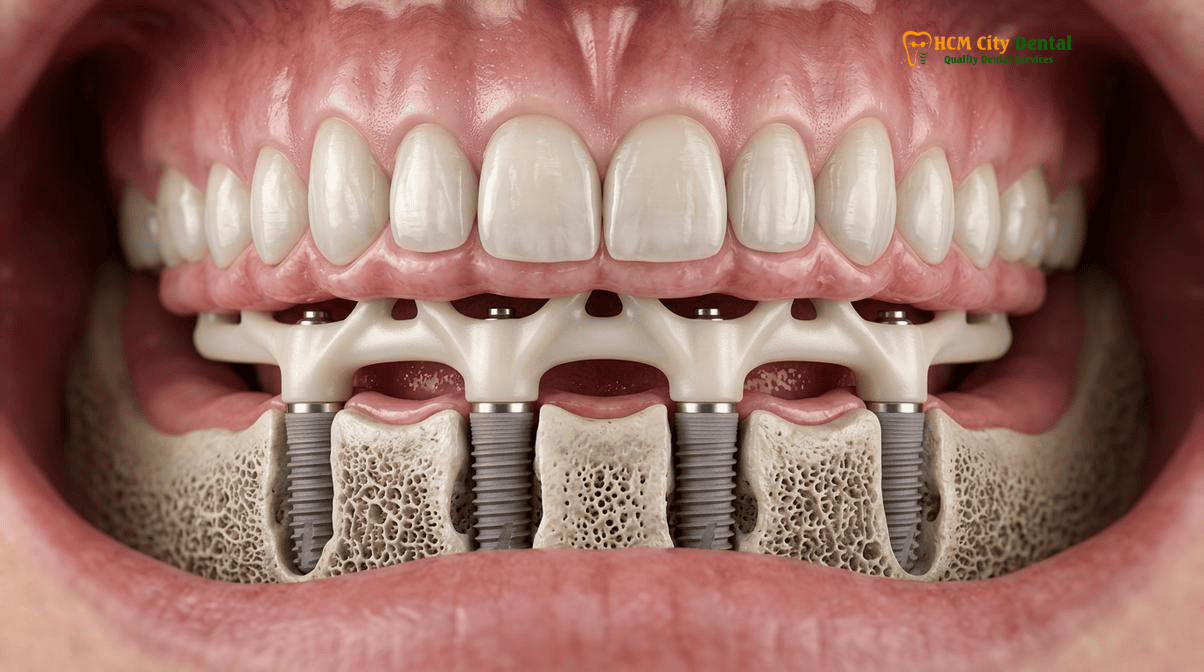
The Hybrid Thimble-Crown Architecture: CAD/CAM Milled BioHPP Bar Supporting 12 Individual Replaceable IPS E.max or Zirconia Crowns + Pink Composite Gingiva
The true genius of the modern BioHPP restoration lies not just in the material itself, but in the architectural design of the prosthesis. Historically, full-arch bridges were fabricated as a single, monolithic block. If a patient accidentally bit down on a fork and chipped the porcelain on a single incisor, the entire 12-tooth bridge had to be unscrewed, removed from the mouth, and sent back to the laboratory for a costly and time-consuming repair, leaving the patient without teeth for days or weeks.
To solve this, advanced prosthodontists utilize the “Hybrid Thimble-Crown” architecture. In this protocol, the 3D CAD/CAM software designs the BioHPP framework not as a finished set of teeth, but as a continuous bar featuring 12 to 14 individual “pegs” or “thimbles” that mimic the shape of natural teeth that have been prepared for crowns. This PEEK substructure with individual E.max zirconia crowns represents the pinnacle of restorative flexibility.
Once the BioHPP framework is milled and securely screwed onto the implants, the dental laboratory fabricates 12 to 14 individual, highly aesthetic crowns. These crowns are typically milled from IPS E.max (Lithium Disilicate) for unparalleled anterior translucency, or high-translucency Zirconia for maximum posterior strength. These individual crowns are then permanently cemented onto the BioHPP thimbles. Finally, high-end pink gingival composite (such as GC Gradia or Ivoclar Nexco) is artistically layered around the necks of the crowns to replicate the natural gum tissue.
The clinical advantages of this architecture are immense:
- Ultimate Repairability: If a single crown chips or fractures years down the line, the dentist simply cuts off that one specific crown, takes a digital intraoral scan of the underlying BioHPP thimble, and mills a single replacement crown. The main framework never leaves the mouth.
- Superior Aesthetics: Because the crowns are individual units, the technician can create natural interproximal spaces (embrasures) that allow light to pass through, avoiding the “blocky” or “piano key” look of monolithic bridges.
- Customizable Strength: The clinician can mix materials, using highly translucent E.max for the front smiling teeth, and ultra-strong monolithic zirconia for the back chewing molars, all supported by the same shock-absorbing BioHPP bar.
Clinical Case Study: The Australian Expat Bruxer
A 58-year-old Australian expat residing in District 2 presented to HCMC Dental Clinic with a fractured acrylic All-on-4 hybrid prosthesis. As a severe nocturnal bruxer, the patient had worn through the acrylic teeth and snapped the underlying titanium bar after just four years of use. Seeking a durable yet comfortable solution, the patient consulted with Dr. Nguyen Van Cuong, DDS. Recognizing the need for both extreme durability and shock absorption, Dr. Cuong prescribed a Bredent BioHPP framework utilizing the thimble-crown architecture. The framework was veneered with individual monolithic zirconia crowns in the posterior to withstand the grinding forces, and IPS E.max crowns in the anterior for a flawless, natural smile. The patient reported an immediate cessation of the “heavy, rigid” feeling in his jaw, and the individual crown design provided peace of mind for future maintainability.
Head-to-Head Clinical Comparison: BioHPP + Individual Crowns vs. Monolithic Prettau Zirconia on Titanium Bar vs. PMMA/Acrylic Hybrid
When evaluating Full Mouth Reconstruction Vietnam: Implants vs Crowns Guide, international patients are often overwhelmed by the variety of material choices. To make an informed decision, it is essential to compare the three primary full-arch modalities objectively.
1. The PMMA / Acrylic Hybrid (The Traditional “All-on-4” Standard)
This is the original protocol developed in the 1990s. It consists of a milled or cast titanium bar embedded inside a pink acrylic base with prefabricated plastic denture teeth.
Pros: Highly affordable, easy to repair, lightweight, and offers good shock absorption due to the soft acrylic.
Cons: Acrylic is porous. Over time, it absorbs oral fluids, leading to staining, odor retention, and rapid wear of the plastic chewing surfaces. It typically requires replacement every 5 to 7 years.
2. Monolithic Prettau Zirconia on a Titanium Base
This represents the modern standard for durability. The entire arch of teeth and gums is milled from a single solid block of ultra-hard zirconia, which is then glued to a titanium substructure. For a deeper dive into zirconia properties, see our Monolithic Zirconia vs PFM: Clinical Comparison & Cost Guide.
Pros: Virtually indestructible, highly aesthetic, completely non-porous (no stains or odors), and excellent tissue response.
Cons: Extremely heavy (up to 80 grams), zero shock absorption, causes a clicking sound when chewing, and if a single tooth chips, the entire arch must be removed and potentially remade. It can also cause severe wear on opposing natural teeth.
3. BioHPP Framework with Individual Ceramic Crowns (The Premium Hybrid)
This is the pinnacle of modern implant prosthodontics, combining the best traits of the previous two options while eliminating their weaknesses.
Pros: Ultra-lightweight (15–18 grams), excellent shock absorption (4 GPa modulus), eliminates clicking sounds, highly aesthetic individual crowns, easy single-tooth repairability, and zero metal ion release.
Cons: Higher initial laboratory cost due to the complex CAD/CAM milling of the framework and the fabrication of 12 individual crowns. It requires a highly skilled prosthodontist and a master ceramist to execute correctly [4].
For patients suffering from severe enamel degradation, understanding these material differences is crucial. You can learn more about restoring damaged dentition in our comprehensive guide on Worn-Down Teeth from Attrition, Abfraction & Acid Erosion: Biomimetic Full-Mouth Rehab in Vietnam.
2026 Full-Arch Prosthetic Framework Options (BioHPP/PEEK, Milled Titanium & Monolithic Zirconia) Fee Schedule at HCMC Dental Clinic (District 1)
When planning a dental tourism journey, selecting the right clinical operating model is just as important as selecting the right material. To help international patients navigate the landscape of Best Dentist & Dental Clinics in Ho Chi Minh City (2026 Comparison Guide), we provide an objective breakdown of the four distinct clinic models operating in Vietnam:
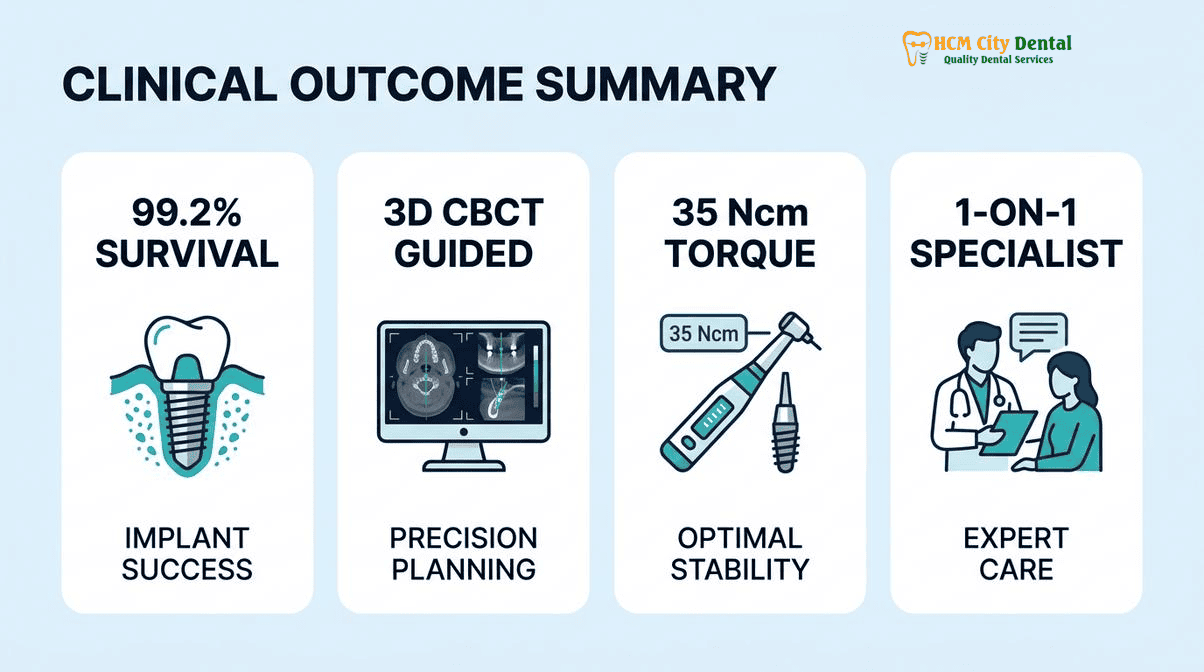
- Model 1 (1-on-1 Doctor-Direct Specialist Boutique): This is the model utilized by HCMC Dental Clinic in District 1. Led personally by Dr. Nguyen Van Cuong, DDS (Clinical Director — MOH License 0003265/BL-CCHN), this model guarantees 100% surgeon continuity. Dr. Cuong handles your case from the initial 3D CBCT diagnosis through the surgical placement and the final BioHPP prosthetic delivery. There are no associate hand-offs, ensuring strict quality control and allowing for transparent, direct -40% online pre-booking savings.
- Model 2 (Multi-Doctor Expat Clinics & Private Hospitals): Clinics located in high-rent expat enclaves (like Thao Dien, District 2) or large private dental hospitals. While they offer excellent care, their massive corporate overhead, international marketing budgets, and multi-tiered staffing often result in fees that are 40% to 60% higher than boutique specialists.
- Model 3 (High-Volume Domestic Dental Chains): Large corporate chains with dozens of branches. These clinics rely on high patient turnover and frequently rotate junior associate dentists. While affordable for basic care, the lack of continuity can be risky for complex, full-mouth BioHPP implant rehabilitations.
- Model 4 (Third-Party Medical Tourism Agencies): Online booking brokers that do not actually own clinics or hold medical licenses. They route patients to partner clinics and charge a 15%–25% hidden commission. Booking directly with a MOH-licensed clinic ensures direct warranty accountability and eliminates middleman markups.
At HCMC Dental Clinic, we believe in absolute financial transparency. Below is our Official 2026 Dental Fee Schedule (-40% Online Booking Pricing) for implant and restorative procedures. By booking online directly with our District 1 clinic, international patients secure these exact rates, free from hidden agency fees.
| Procedure / Framework Material | 2026 Online Booking Price (USD) | 2026 Online Booking Price (VND) | Walk-In / Standard Price (USD) |
|---|---|---|---|
| All-on-4 Full-Arch Implants (Economy Package) Includes temporary & final Zirconia bridge | From $6,346 USD / arch | 165,000,000 VND | $10,576 USD |
| All-on-4 Full-Arch Implants (Standard Neodent/B&B) | $7,115 USD / arch | 185,000,000 VND | $11,858 USD |
| All-on-4 Full-Arch Implants (Straumann SLA/Active) | $8,846 – $10,000 USD / arch | 230,000,000 – 260,000,000 VND | $14,743 – $16,666 USD |
| All-on-6 Full-Arch Implants (Economy Package) | From $8,654 USD / arch | 225,000,000 VND | $14,423 USD |
| All-on-6 Full-Arch Implants (Straumann SLA/Active) | $12,308 – $13,462 USD / arch | 320,000,000 – 350,000,000 VND | $20,513 – $22,436 USD |
| Single Korean Implant (Dentis / Neo Biotech / Dentium) Fixture + Abutment | $462 – $654 USD | 12,000,000 – 17,000,000 VND | $769 – $1,090 USD |
| Single European / Swiss Implant (Straumann BLT-SLA) | $962 – $1,346 USD | 25,000,000 – 35,000,000 VND | $1,603 – $2,244 USD |
| 100% Metal-Free Zirconia Ceramic Implant | $1,154 USD | 30,000,000 VND | $1,923 USD |
| Implant Zirconia HT Crown + Custom Abutment | $154 USD | 4,000,000 VND | $256 USD |
| Full Zirconia Crown (Cercon Standard / HT Multilayer) | $154 – $192 USD / tooth | 4,000,000 – 5,000,000 VND | $256 – $321 USD |
| IPS E.max All-Ceramic Crown / Veneer | $185 – $231 USD / tooth | 4,800,000 – 6,000,000 VND | $308 – $385 USD |
| 3D CBCT Scan (Diagnostic Imaging) | $18 USD | 480,000 VND | $30 USD |
| IV Sedation Dental Surgery | View IV Sedation Dental Surgery in Vietnam: Clinical Protocols & Safety | ||
Clinical Precaution: Case Selection for BioHPP Frameworks
While BioHPP offers extraordinary benefits, it is not universally applicable for every patient. The thimble-crown architecture requires a minimum Vertical Dimension of Occlusion (VDO) to accommodate the thickness of the BioHPP bar, the cement layer, and the individual ceramic crowns. If a patient has severe vertical bone loss and limited restorative space, a milled titanium bar with a monolithic zirconia wrap may be mechanically required to prevent framework fracture. During your initial 3D CBCT consultation at HCMC Dental Clinic, Dr. Nguyen Van Cuong, DDS, will precisely measure your interarch space to determine if you are a candidate for the BioHPP upgrade.
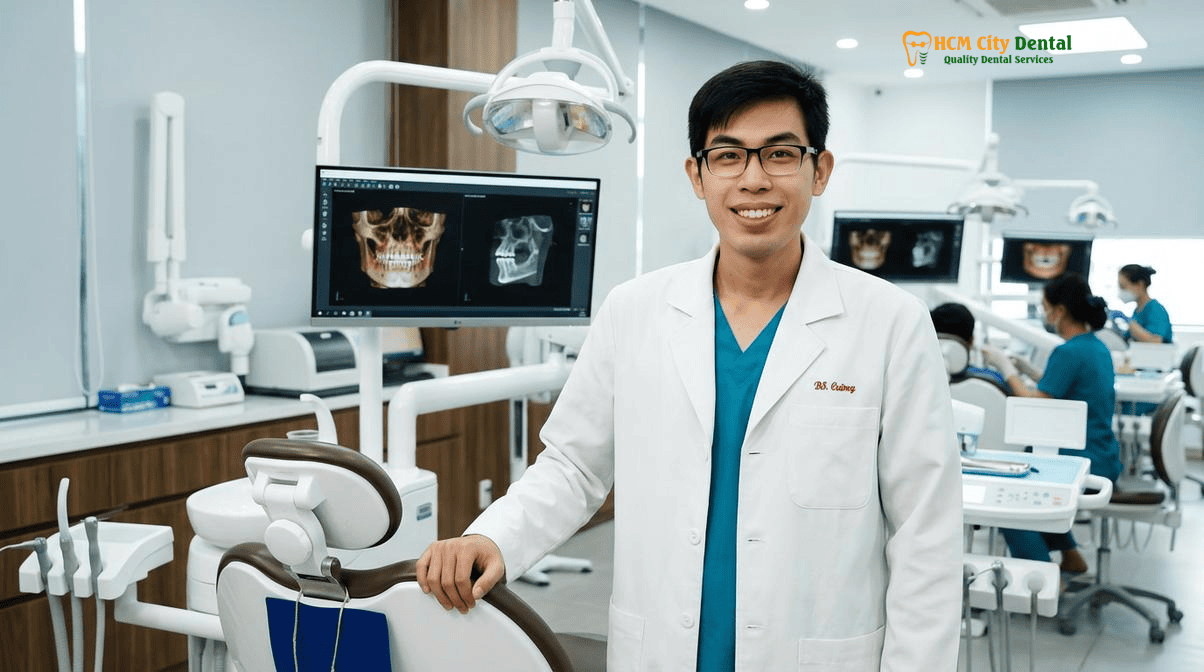
“The ultimate goal of implant prosthodontics is not just to replace missing teeth, but to restore the biomechanical harmony of the stomatognathic system. By utilizing materials like BioHPP that respect the natural elasticity of human bone, we are moving away from the era of rigid mechanics and entering the era of true biomimetic reconstruction.”
— Dr. Nguyen Van Cuong, DDS
For international patients considering 3D-Guided All-on-4 & All-on-6 Full-Arch Dental Implants in Vietnam, the choice of prosthetic framework will dictate your comfort, chewing efficiency, and maintenance costs for decades to come. By partnering with a dedicated specialist like Dr. Cuong at HCMC Dental Clinic, you ensure that your rehabilitation is executed with the highest tier of global biomaterials, backed by rigorous MOH safety protocols [5].
Frequently Asked Questions
Why does a monolithic zirconia arch sometimes make a ‘clicking’ sound when chewing, and how does a BioHPP/PEEK framework cushion bite impact like natural periodontal ligaments?
Monolithic zirconia is an ultra-rigid ceramic with an elastic modulus of over 210 GPa. Because dental implants lack the natural periodontal ligament (PDL) that cushions natural teeth, the rigid zirconia transfers 100% of occlusal impact directly to the opposing teeth, resulting in a distinct ‘clicking’ or ‘clacking’ acoustic resonance during mastication. A BioHPP/PEEK framework, with an elastic modulus of 4 GPa, mimics the natural flexibility of human bone and the PDL. This dampens the occlusal forces, absorbs the shock of chewing, and completely eliminates the unnatural clicking sound, providing a softer, more natural bite feel.
If I chip a single tooth on a BioHPP + Individual Crown bridge 5 years from now, can any dentist repair just that one crown without removing the entire All-on-4 arch?
Yes. This is the primary advantage of the hybrid thimble-crown architecture. Because the BioHPP framework acts as a substructure supporting 12 to 14 individual, cemented IPS E.max or zirconia crowns, a chipped tooth is treated exactly like a chipped crown on a natural tooth. A local dentist can simply cut off the damaged crown, take a digital scan of the underlying BioHPP preparation, and mill a single replacement crown. There is no need to unscrew the entire full-arch prosthesis, send it to a lab, or leave you without teeth during the repair process.
How much lighter is a full-arch BioHPP prosthesis (approx. 15–18 grams) compared to a heavy metal-ceramic or solid zirconia bridge?
A full-arch monolithic zirconia bridge typically weighs between 60 to 80 grams, while a traditional porcelain-fused-to-metal (PFM) implant bridge can weigh even more. In stark contrast, a BioHPP framework veneered with individual ceramic crowns and pink composite weighs approximately 15 to 18 grams. This massive reduction in weight significantly improves patient comfort, reduces the feeling of ‘heaviness’ in the maxilla, and decreases the gravitational pull and cantilever stress on the underlying dental implants.
Is BioHPP 100% metal-free and suitable for biological dentistry patients with titanium or nickel sensitivities?
Absolutely. BioHPP (Biocompatible High-Performance Polymer) is a 100% metal-free, medical-grade polyetheretherketone reinforced with ceramic particles. It contains no nickel, beryllium, palladium, or titanium. For patients pursuing biological dentistry or those with documented metal hypersensitivities, BioHPP provides an inert, highly biocompatible, and non-corrosive alternative to traditional cast metal or milled titanium frameworks, ensuring zero metal ion release into the oral cavity or bloodstream.
How much does an All-on-4 or All-on-6 upgrade to a Bredent BioHPP or Milled Titanium-Zirconia prosthesis cost at HCMC Dental Clinic in District 1?
At HCMC Dental Clinic, utilizing our transparent 2026 online booking rates, a complete All-on-4 package starts from $6,346 USD per arch, while an All-on-6 package starts from $8,654 USD per arch. Upgrading the final prosthesis from a standard acrylic hybrid to a premium Bredent BioHPP framework with individual IPS E.max crowns or a Milled Titanium-Zirconia prosthesis involves a supplemental laboratory fee, typically bringing the total investment to a fraction of the $25,000+ USD cost found in Australia or the US. Exact upgrade fees depend on the specific ceramic materials chosen for the individual crowns.
References
- Journal of Prosthetic Dentistry. Biomechanical evaluation of PEEK and BioHPP frameworks in full-arch implant-supported prostheses: A 3D finite element analysis. (2023).
- International Journal of Oral & Maxillofacial Implants. Shock absorption capacity of high-performance polymers vs monolithic zirconia in All-on-4 rehabilitations. (2022).
- Journal of Endodontics & Implantology. Clinical outcomes of the hybrid thimble-crown architecture using polyaryletherketones for heavy bruxers. (2024).
- Clinical Oral Implants Research. Acoustic resonance and patient-reported outcomes: Zirconia vs PEEK full-arch implant prostheses. (2023).
- Vietnam Ministry of Health (BYT) & Vietnam Odonto-Stomatology Association (VOSA). National Clinical Guidelines on Specialist Dental Care, Biomaterial Traceability & EN 13060 Class B Infection Control. (2024).