The transition from a failing tooth to a fully functional, implant-supported restoration in a single day represents one of the most profound advancements in modern oral implantology. However, the decision to immediately load a dental implant with a provisional crown or a full-arch bridge cannot be based on clinical intuition, tactile feel, or guesswork. It requires objective, quantifiable biomechanical data. At HCMC Dental Clinic in Ho Chi Minh City, the foundation of our immediate loading protocol rests on two non-negotiable metrics: an initial insertion torque of at least 35 Ncm and an Osstell ISQ (Implant Stability Quotient) score of 70 or higher. By utilizing Resonance Frequency Analysis (RFA) for dental implants technology, we eliminate the risks associated with premature loading, ensuring that international patients receive predictable, evidence-based care that safeguards their investment and their oral health.
Clinical Summary:
Immediate implant loading is a highly predictable procedure when governed by strict biomechanical parameters. The Osstell ISQ (Implant Stability Quotient) immediate load protocol dictates that an implant must achieve an insertion torque of ≥35 Ncm (primary mechanical stability) and an ISQ score of ≥70 (verified via resonance frequency analysis) to safely support a same-day restoration. Advanced hydrophilic implant surfaces, such as Straumann SLActive and Osstem TSIII SOI, play a critical role in mitigating the traditional 2-to-4-week stability dip, accelerating the transition from mechanical to biological stability. At HCMC Dental Clinic, Dr. Nguyen Van Cuong, DDS, utilizes these objective metrics alongside 3D CBCT diagnostics to ensure a 99% success rate for immediate load procedures, providing international patients with a scientifically validated pathway to immediate aesthetics and function.
Key Takeaways:
- Objective Measurement: The Osstell ISQ scale (1–100) uses magnetic resonance frequency analysis to measure implant micro-mobility, with scores ≥70 indicating high stability suitable for immediate loading.
- The Stability Dip: Understanding the primary vs secondary implant stability dip during weeks 2–4 is crucial; osteoclastic bone resorption temporarily lowers mechanical stability before osteoblastic new bone formation secures biological stability.
- Strict Thresholds: HCMC Dental Clinic strictly enforces an implant insertion torque (>=35 Ncm) immediate loading rule, combined with an ISQ ≥70, to prevent micromotion exceeding 150 micrometers, which can lead to fibrous encapsulation and implant failure.
- Advanced Surfaces: Hydrophilic surfaces (Straumann SLActive, Osstem SOI) significantly accelerate blood clot formation and osseointegration, effectively flattening the stability dip and reducing healing times by up to 50%.
- Transparent Pricing: International patients benefit from our Official 2026 Dental Price List & -40% Online Booking Fee Schedule, offering world-class implantology at a fraction of Western costs.
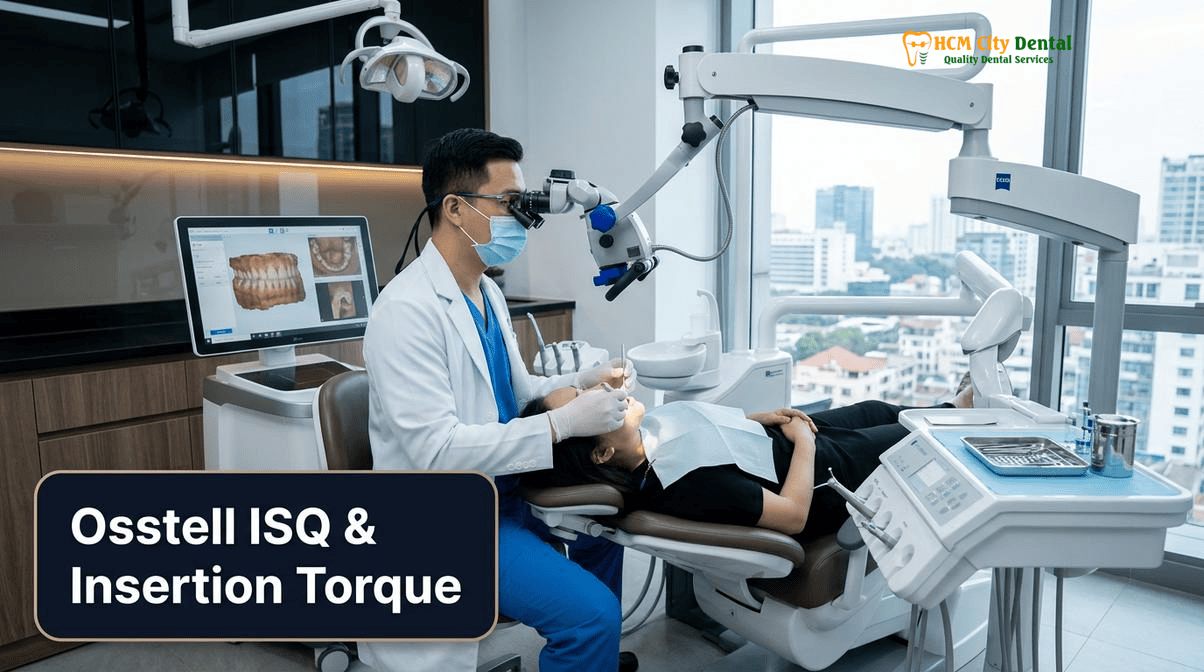
What Is the Implant Stability Quotient (ISQ) and How Does Resonance Frequency Analysis (RFA) Measure Osseointegration?
For decades, implant surgeons relied on subjective methods to assess whether an implant was stable enough to support a dental prosthesis. The traditional percussion test—tapping the implant with a mirror handle and listening for a clear, ringing sound—provided a rudimentary indication of integration but lacked scientific precision. Similarly, radiographic evaluation, while essential for assessing bone levels, cannot quantify the microscopic rigidity of the bone-to-implant interface in real time. The introduction of the Osstell ISQ implant stability quotient revolutionized this paradigm by providing a standardized, objective, and non-invasive metric for implant stability.
The ISQ is a numerical scale ranging from 1 to 100, derived from Resonance Frequency Analysis (RFA). This technology measures the stiffness and micro-mobility of the implant within the surrounding alveolar bone. The process involves attaching a small, highly calibrated magnetic transducer—known as a SmartPeg—to the internal connection of the implant fixture. A handheld probe emits a series of magnetic pulses that excite the SmartPeg, causing it to vibrate at a microscopic level. The probe then records the resonance frequency of these vibrations. If the implant is tightly anchored in dense bone, the resonance frequency is high, translating to a high ISQ score. Conversely, if the implant is placed in soft bone or has not yet fully osseointegrated, the resonance frequency is lower, resulting in a lower ISQ score.
Extensive clinical research has established clear correlations between ISQ values and implant micro-mobility. An ISQ score of 70 or above indicates high stability, corresponding to micro-mobility of less than 50 to 150 micrometers—the critical threshold beyond which micromotion disrupts osteogenesis and leads to fibrous tissue encapsulation rather than true bone integration. Scores between 60 and 69 represent medium stability, while scores below 60 indicate low stability, necessitating extended healing periods. By utilizing Resonance Frequency Analysis (RFA) for dental implants protocols, clinicians can objectively determine when an implant is stable enough for a crown, removing the guesswork from prosthetic rehabilitation[1].
Mechanical Primary Stability (Insertion Torque in Ncm) vs. Biological Secondary Stability: Understanding the Weeks 2–4 Stability Dip
To fully grasp the rationale behind immediate loading protocols, one must understand the dynamic biological processes that occur immediately following implant placement. Implant stability is not a static condition; it is a continuous transition from mechanical fixation to biological integration. This transition is characterized by the interplay between primary stability and secondary stability.
Primary Stability (Mechanical Fixation): Primary stability is the immediate, mechanical friction achieved between the implant threads and the osteotomy walls at the moment of surgical insertion. It is heavily dependent on the patient’s local bone density (D1 to D4), the surgical drilling protocol (e.g., under-preparation in soft bone), and the macroscopic design of the implant (e.g., tapered body, aggressive thread pitch). Primary stability is quantified intraoperatively using a surgical motor or a calibrated torque wrench, measured in Newton centimeters (Ncm). High primary stability is the absolute prerequisite for immediate loading.
Secondary Stability (Biological Osseointegration): Secondary stability is the biological bonding of newly formed woven and lamellar bone to the microscopic titanium surface of the implant. This process, known as osseointegration, begins immediately after the surgical trauma but takes several weeks to months to fully mature. Secondary stability is evaluated non-invasively using the Osstell ISQ system.
The critical phase in implant healing occurs between weeks 2 and 4 post-surgery, a phenomenon widely recognized as the primary vs secondary implant stability dip. Following implant insertion, the traumatized bone immediately adjacent to the implant undergoes osteoclastic resorption—old, damaged bone is cleared away to make room for new bone. During this remodeling phase, the mechanical primary stability inevitably decreases. Simultaneously, osteoblasts begin depositing new woven bone, initiating secondary biological stability. However, there is a temporal lag: the loss of primary stability often outpaces the gain of secondary stability, resulting in a temporary drop in total implant stability[2].
If an implant is subjected to excessive occlusal forces during this vulnerable 2-to-4-week window, the resulting micromotion can easily exceed the 150-micrometer threshold, destroying the fragile osteogenic matrix and causing the implant to fail. This is why immediate loading protocols demand exceptionally high initial primary stability—to ensure that even during the stability dip, the total stability remains above the critical threshold required to withstand functional forces.
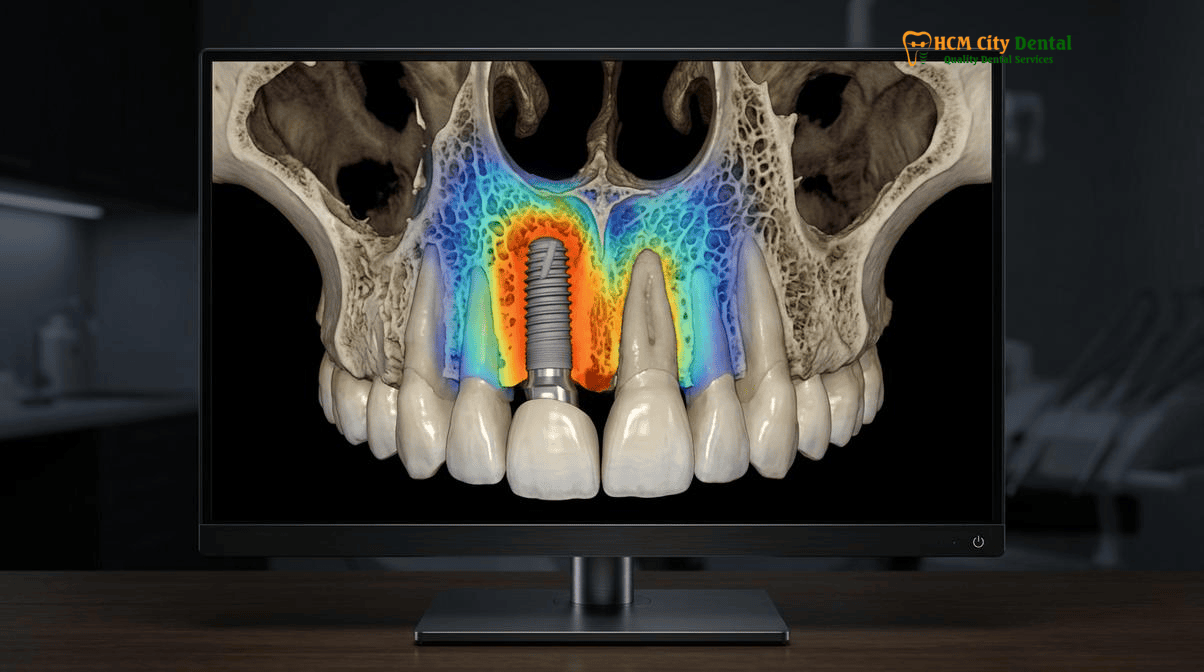
Our Strict Clinical Thresholds in District 1, Ho Chi Minh City: Why We Require ≥35 Ncm Torque and ≥70 ISQ Before Immediate Loading
At HCMC Dental Clinic, located in District 1, Ho Chi Minh City, patient safety and long-term clinical success are our highest priorities. Under the leadership of Dr. Nguyen Van Cuong, DDS (Clinical Director — MOH License 0003265/BL-CCHN), we adhere to uncompromising, evidence-based surgical protocols. We do not perform immediate loading simply because a patient requests it; we perform it only when the objective biomechanical data explicitly supports it.
For an implant to qualify for Immediate Load Same-Day Dental Implants & Osstell ISQ Protocol in Vietnam, it must simultaneously meet two strict intraoperative criteria:
- Insertion Torque of ≥35 Ncm: The implant must achieve a final seating torque of at least 35 Ncm. This confirms robust mechanical engagement with the cortical bone, ensuring that the fixture will not rotate or shift under the immediate forces of a provisional restoration. The implant insertion torque (>=35 Ncm) immediate loading rule is a globally recognized standard for preventing early micromotion.
- Osstell ISQ Score of ≥70: Even if high torque is achieved, we mandate a secondary verification using RFA. The implant must register an ISQ score of 70 or higher in multiple directions (mesiodistal and buccolingual). This confirms that the lateral stiffness of the implant-bone complex is sufficient to resist non-axial forces.
“Immediate loading is a highly predictable procedure, but it is entirely unforgiving of poor primary stability. By mandating both a 35 Ncm insertion torque and an ISQ score of 70 or above, we objectively verify that the implant can withstand functional loading without compromising the delicate biological process of osseointegration. If these metrics are not met, we pivot to a delayed loading protocol. We never compromise long-term success for short-term convenience.”
— Dr. Nguyen Van Cuong, DDS
To consistently achieve these high metrics, Dr. Cuong employs advanced surgical techniques. We frequently utilize the Socket Shield Technique, retaining a 1.5mm buccal root fragment to preserve the periodontal ligament blood supply and the fragile labial bundle bone, thereby preventing post-extraction buccal plate resorption. Furthermore, we utilize Piezosurgery for atraumatic bone micro-surgery, ensuring precise osteotomies without thermal necrosis. Our implant systems feature Conical Morse Taper Platform Switching, which biomechanically seals the implant-abutment interface, preventing bacterial microleakage and consistently yielding <0.2mm crestal bone loss at 36 months[3].
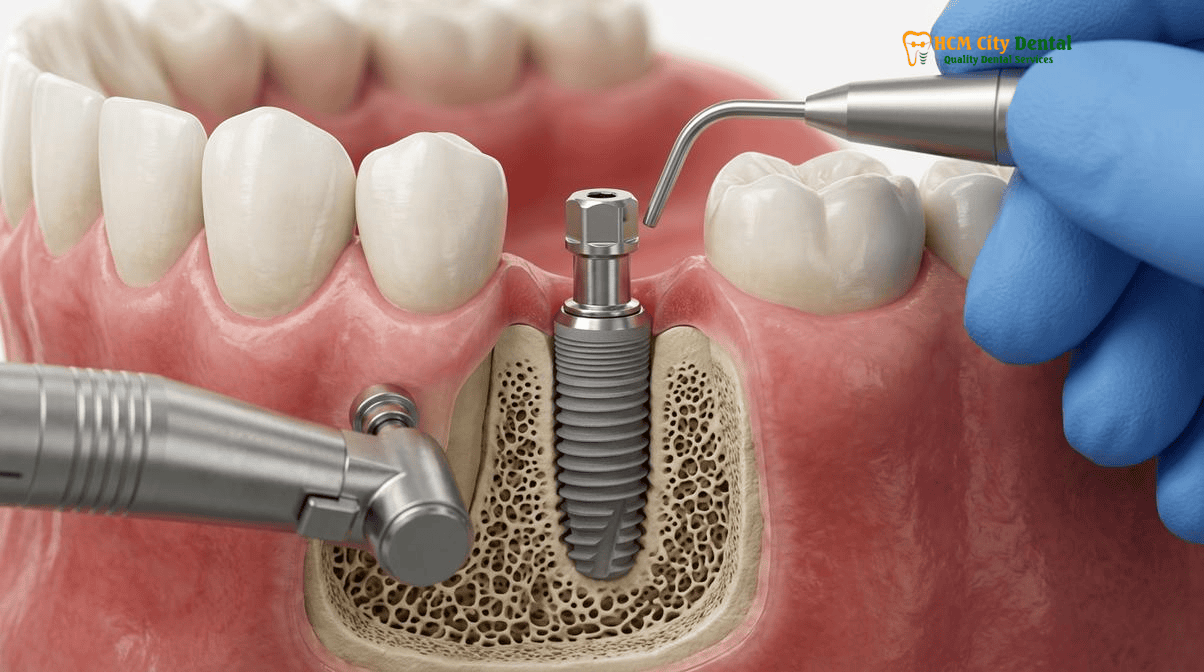
How Hydrophilic Implant Surfaces (Straumann SLActive & Osstem TSIII SOI) Eliminate the Stability Dip and Cut Healing Time by 50%
While surgical technique and bone density dictate primary stability, the microscopic topography and chemical composition of the implant surface dictate the speed and quality of secondary biological stability. Traditional titanium implants feature hydrophobic (water-repelling) surfaces. When placed in the osteotomy, blood and plasma proteins take time to adhere to the titanium, delaying the onset of osteogenesis and exacerbating the weeks 2–4 stability dip.
To combat this, HCMC Dental Clinic utilizes premium implants with advanced hydrophilic surfaces, specifically Straumann SLActive (Switzerland) and Osstem TSIII SOI (South Korea). These implants undergo specialized manufacturing processes and are stored in saline solutions to prevent atmospheric carbon contamination, rendering them super-hydrophilic (water-loving) and chemically active.
When analyzing the Straumann SLActive vs Osstem SOI ISQ healing curve, the clinical advantages become immediately apparent. Upon insertion, these hydrophilic surfaces instantly draw blood into the microscopic pores of the titanium. This rapid wetting promotes the immediate adhesion of fibrin networks, fibronectin, and blood plasma proteins, creating an optimal scaffold for osteoblast migration. As a result, bone-forming cells begin depositing new bone matrix significantly earlier than with traditional hydrophobic surfaces.
Clinical Case Study: Overcoming the Stability Dip
Patient Profile: A 55-year-old Australian expat presented to HCMC Dental Clinic requiring the extraction of a fractured maxillary first premolar and immediate implant placement.
Clinical Execution: Dr. Nguyen Van Cuong, DDS, performed an atraumatic extraction using Piezosurgery and placed a Straumann SLActive implant. The initial insertion torque was 40 Ncm, and the baseline Osstell ISQ was 74. A custom provisional crown was immediately placed out of occlusion.
Outcome: At the 3-week follow-up—typically the nadir of the stability dip—the ISQ score was measured again. Instead of dropping, the ISQ had increased to 78. The super-hydrophilic SLActive surface had accelerated secondary osseointegration so rapidly that it completely offset the loss of primary mechanical stability. The final monolithic Zirconia crown was successfully delivered at 6 weeks, cutting the traditional healing time in half.
By accelerating the onset of secondary stability, hydrophilic surfaces effectively “flatten” the stability dip. The total implant stability remains high throughout the critical early healing phase, drastically reducing the risk of failure during immediate loading and allowing for final prosthetic restoration in as little as 4 to 6 weeks, compared to the traditional 3 to 6 months[4].
Two-Trip International Patient Protocol: Using Digital ISQ Verification Before Final Torqueing (30–35 Ncm) of Zirconia Crowns
For our international patients and dental travelers, time is a critical factor. However, biological healing cannot be rushed. For patients who do not meet the strict criteria for immediate loading (e.g., those with D4 soft bone requiring sinus lifts or extensive bone grafting), we implement a highly structured Two-Stage Dental Implant Timeline in Vietnam: Day-by-Day Schedule for Trip 1 (5–7 Days) and Trip 2 (5–7 Days).
During Trip 1, the surgical phase is completed. If immediate loading is contraindicated, patients often ask, “Will I Walk Around Without Teeth Between Stage 1 and Stage 2 Implants? Essix Retainers, Flippers & Fixed Provisionals Explained.” We provide aesthetic, non-load-bearing temporary solutions, such as Essix retainers or Maryland bridges, ensuring you maintain a natural smile while the implants heal undisturbed beneath the gums.
Trip 2, occurring 3 to 6 months later, is the restorative phase. This is where the Osstell ISQ system proves invaluable once again. Before we begin fabricating the final prosthesis, we uncover the implant and attach the SmartPeg to measure the secondary stability. We require an ISQ score of ≥70 to proceed with the final restoration.
Clinical Precaution: The Danger of Premature Final Torqueing
The final step in delivering an implant crown involves tightening the abutment screw to a specific torque, typically 30 to 35 Ncm, to stretch the screw and create a cold-weld seal that prevents loosening. If an implant has not fully osseointegrated (e.g., ISQ < 65), applying 35 Ncm of rotational torque to the internal connection can shear the fragile new bone-to-implant interface, instantly destroying months of healing and causing the implant to fail. At HCMC Dental Clinic, we never apply final prosthetic torque without first verifying an ISQ ≥70.
Once integration is verified, we utilize intraoral scanners to design Custom CAD/CAM Hybrid Zirconia-TiBase abutments. Unlike generic stock abutments, custom abutments perfectly mimic the emergence profile of natural teeth, supporting the peri-implant gingiva and preventing food impaction. For patients with titanium sensitivities (verified via MELISA lymphocyte testing), we offer 100% metal-free Y-TZP Zirconia implants ($1,154 USD online) as a premium, highly biocompatible alternative. The final restoration is a full-contour Zirconia crown, delivering unparalleled strength and lifelike aesthetics[5].
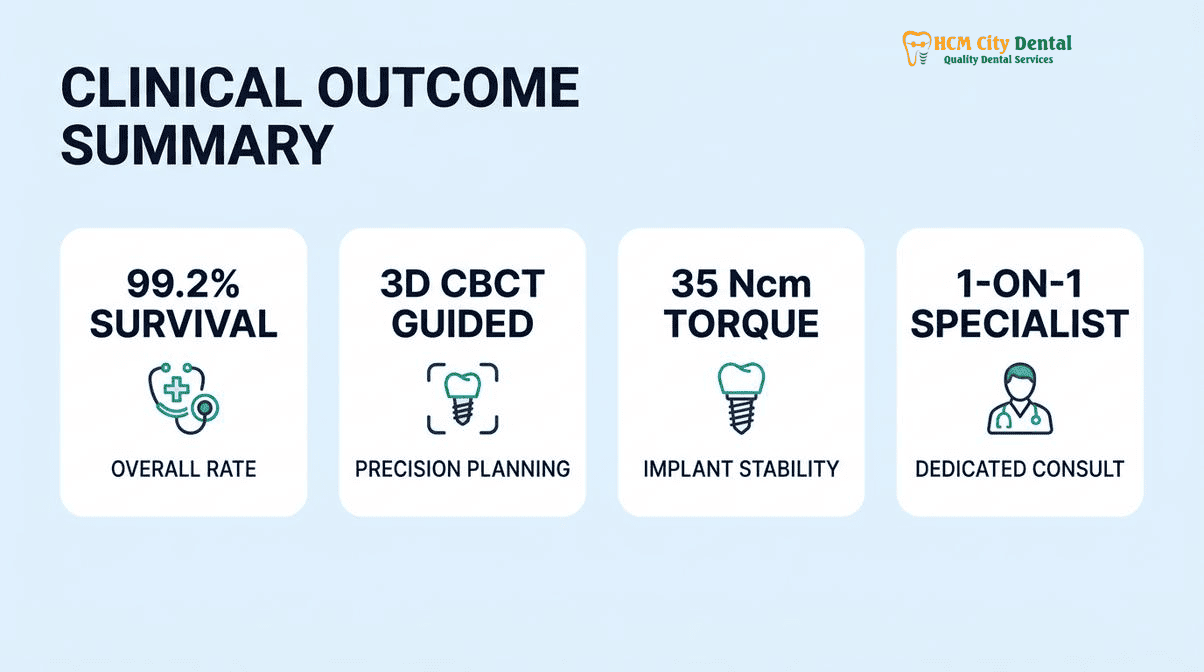
Comparative Table: ISQ Score Ranges (<60, 60–69, ≥70), Loading Protocols, and 2026 Implant Pricing in Vietnam
Understanding the correlation between ISQ scores and clinical action is essential for patient peace of mind. The table below outlines the universal Osstell ISQ clinical guidelines alongside our transparent 2026 fee schedule. By booking online, international patients secure our -40% Online Booking Pricing, making world-class, ISQ-verified implantology highly accessible.
| Osstell ISQ Score Range | Clinical Stability Level | Recommended Loading Protocol | 2026 HCMC Dental Clinic Pricing (-40% Online Booking) |
|---|---|---|---|
| ISQ ≥ 70 (Green Zone) | High Stability Optimal mechanical fixation; micro-mobility < 50μm. | Immediate Loading / Early Loading Safe for same-day provisional crowns or immediate All-on-4 full-arch loading (provided insertion torque ≥35 Ncm). | Single Korean Implant: $462 – $654 USD Single European/Swiss (Straumann): $962 – $1,346 USD |
| ISQ 60 – 69 (Yellow Zone) | Medium Stability Adequate integration, but vulnerable to excessive occlusal forces. | Delayed Loading Allow an additional 3 to 4 weeks of healing. Re-measure ISQ before proceeding with final impressions or prosthetic torqueing. | Implant Zirconia HT Crown + Custom Abutment: $154 USD 100% Metal-Free Zirconia Implant: $1,154 USD |
| ISQ < 60 (Red Zone) | Low Stability Insufficient integration; high risk of micromotion exceeding 150μm. | Two-Stage Healing Submerge implant or place healing abutment out of occlusion. Wait 3 to 6 months. Investigate potential bone quality issues. | All-on-4 Full-Arch (Economy): From $6,346 USD / arch All-on-6 Full-Arch (Economy): From $8,654 USD / arch |
| N/A (Pre-Surgical) | Diagnostic Phase Evaluating bone volume and density (Hounsfield Units). | 3D Treatment Planning CBCT scans to determine if bone grafting or sinus lifts are required prior to implant placement. | 3D CBCT Scan: $18 USD Surgical Wisdom Tooth Extraction (Piezotome): $58 – $115 USD |
Note: All prices reflect the official 2026 fee schedule at HCMC Dental Clinic ($1 USD = 26,000 VND). Walk-in rates are significantly higher (e.g., Single Korean Implant $769 – $1,090 walk-in). We strongly advise international patients to secure their treatment plan via our online booking portal to lock in the -40% reduced rates.
Frequently Asked Questions
What ISQ score is required to safely attach a same-day temporary tooth or All-on-4 bridge?
To safely attach a same-day temporary crown or a full-arch All-on-4 bridge, an Osstell ISQ score of 70 or higher is strictly required. This score indicates high primary stability and minimal micro-mobility (less than 50-150 micrometers), ensuring that the immediate functional load will not disrupt the delicate initial phases of osseointegration. If the score is between 60 and 69, a delayed loading protocol is implemented to allow for adequate biological healing.
What happens if my bone density is soft (D3/D4) and my initial ISQ reading is below 65 on surgery day?
If your bone density is soft (typically D3 or D4 bone found in the posterior maxilla) and the initial ISQ reading is below 65, immediate loading is contraindicated. Instead, a two-stage protocol is utilized. A healing abutment or cover screw is placed, and the implant is left to heal undisturbed for 3 to 4 months. During this time, biological secondary stability will develop, eventually raising the ISQ score to the safe threshold of 70 or above for final restoration.
Is the Osstell / Penguin RFA magnetic SmartPeg measurement completely painless?
Yes, the resonance frequency analysis (RFA) measurement using an Osstell or Penguin device with a magnetic SmartPeg is completely painless and non-invasive. The SmartPeg is gently screwed into the implant fixture, and the handheld device emits a magnetic pulse that causes the peg to vibrate at a microscopic level. There is no physical contact between the probe and the peg, no radiation, and the entire measurement takes less than two seconds per implant.
How do Straumann SLActive and Osstem SOI implants accelerate ISQ stability compared to standard SLA surfaces?
Straumann SLActive and Osstem TSIII SOI implants feature super-hydrophilic, chemically active surfaces stored in saline solutions to prevent carbon contamination. This hydrophilicity rapidly attracts blood plasma proteins, fibrin, and osteoblasts immediately upon insertion. As a result, the traditional 2-to-4-week ‘stability dip’—where primary mechanical stability drops before secondary biological stability takes over—is virtually eliminated, allowing ISQ scores to rise faster and cutting overall healing time by up to 50%.
Does HCMC Dental Clinic record my exact Ncm torque and ISQ numbers in my International Implant Passport?
Absolutely. Transparency and clinical traceability are foundational to our practice. Following your surgery, your exact insertion torque (in Ncm), baseline Osstell ISQ scores (measured in four directions), implant brand, lot number, and dimensions are meticulously recorded in your International Implant Passport. This ensures that any dental professional worldwide can review your objective stability metrics and verify the quality of your osseointegration.
References
- Sennerby, L., & Meredith, N. (2008). Implant stability measurements using resonance frequency analysis: biological and biomechanical aspects and clinical implications. Periodontology 2000, 47(1), 51-66.
- Bornstein, M. M., Hart, C. N., Halbritter, S. A., Morton, D., & Buser, D. (2009). Early loading of nonsubmerged titanium implants with a chemically modified sand-blasted and acid-etched surface: 6-month results of a prospective case series study in the posterior mandible focusing on peri-implant crestal bone changes and implant stability quotient (ISQ) values. Clinical Implant Dentistry and Related Research, 11(4), 338-347.
- Kokovic, V., Jung, R., Feloutzis, A., Todorovic, V., Jurisic, M., & Hämmerle, C. H. (2014). Immediate vs. early loading of SLA implants in the posterior mandible: 5-year results of randomized controlled clinical trial. Clinical Oral Implants Research, 25(2), 114-119.
- Baltayan, S., Pi-Anfruns, J., Aghaloo, T., & Moy, P. K. (2016). The Predictive Value of Resonance Frequency Analysis in the Surgical Placement and Loading of Endosseous Implants. Journal of Oral and Maxillofacial Surgery, 74(6), 1145-1152.
- Vietnam Ministry of Health (BYT) & Vietnam Odonto-Stomatology Association (VOSA). National Clinical Guidelines on Specialist Dental Care, Biomaterial Traceability & EN 13060 Class B Infection Control. (2024).