For international patients and dental travelers seeking the highest standard of restorative dentistry, the choice of implant components is just as critical as the surgical placement itself. When evaluating a custom zirconia vs titanium implant abutment Vietnam treatment plan, understanding the biomechanical and aesthetic implications of these materials is paramount. The abutment—the crucial connector piece that bridges the surgical implant fixture in your jawbone to the visible porcelain crown—dictates not only the final aesthetic appearance of your smile but also the long-term health of the surrounding gum tissue and underlying crestal bone. At HCMC Dental Clinic, located in District 1, Ho Chi Minh City, we utilize advanced digital dentistry to engineer patient-specific emergence profiles that mimic natural tooth anatomy flawlessly.
Clinical Summary:
The transition from the surgical implant fixture to the final prosthetic crown relies heavily on the abutment. While traditional stock titanium abutments offer high strength, they often compromise the emergence profile and can cause a grey shadow through thin gums. Custom CAD/CAM abutments, particularly hybrid Ti-Base zirconia designs, represent the pinnacle of modern implantology. By combining the fracture resistance of a titanium connection with the superior aesthetics and biocompatibility of a zirconia body, specialists can achieve perfect soft tissue integration, eliminate food impaction, and prevent peri-implantitis. Under the clinical direction of Dr. Nguyen Van Cuong, DDS (Clinical Director — MOH License 0003265/BL-CCHN), HCMC Dental Clinic provides these world-class custom restorations at highly accessible 2026 fee schedules.
Key Takeaways:
- Biomechanical Stability: A hybrid Ti-Base zirconia abutment combines a precision titanium connection with a highly aesthetic zirconia body, preventing the micro-wear associated with pure ceramic-to-metal interfaces.
- Aesthetic Excellence: Custom CAD/CAM abutments prevent the dreaded grey gum shadow, especially in patients with a thin gingival biotype, by utilizing white zirconia or an anodized gold hue titanium abutment.
- Gum Health: Patient-specific emergence profiles engineered via CAD/CAM technology eliminate the unnatural gaps caused by stock abutments, drastically reducing food impaction and plaque accumulation.
- Peri-Implantitis Prevention: Screw-retained hybrid restorations eliminate the need for subgingival cement, removing one of the primary triggers for late-stage implant failure.
- Transparent Value: At HCMC Dental Clinic, an Implant Zirconia HT Crown combined with a Custom Abutment is available for just $154 USD online, offering unparalleled value for international patients.
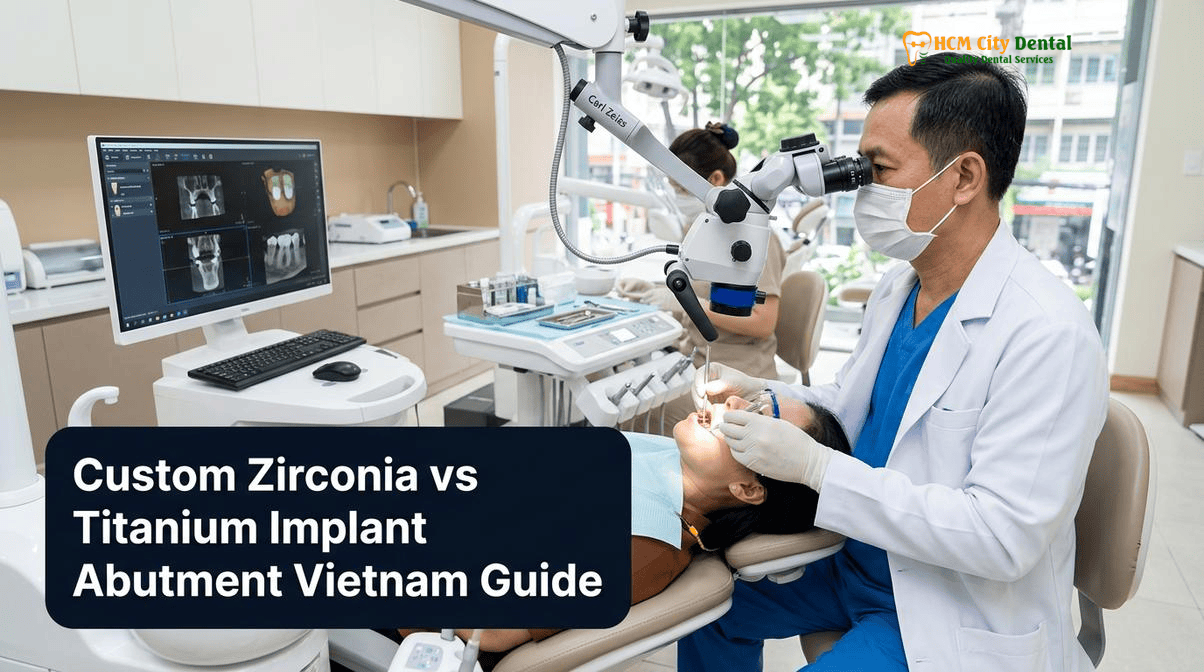
What Is a Dental Implant Abutment and Why Does It Dictate Both Gum Aesthetics and Long-Term Bone Survival?
To fully grasp the debate surrounding a custom zirconia vs titanium implant abutment Vietnam, one must first understand the profound biological role this component plays. A dental implant system typically consists of three distinct parts: the titanium or zirconia fixture surgically embedded into the jawbone, the abutment that screws into the fixture and protrudes through the gums, and the final ceramic crown that attaches to the abutment. The abutment occupies a highly sensitive anatomical region known as the transmucosal zone. This is where the internal environment of the sterile bone meets the bacteria-rich external environment of the oral cavity.
Unlike natural teeth, which are anchored to the gums by perpendicular Sharpey’s fibers inserting directly into the root cementum, dental implants rely on a much more fragile biological seal. The collagen fibers surrounding an implant run parallel and circular to the abutment surface, acting more like a tight rubber band than a true structural attachment. Because this peri-implant seal is inherently weaker, the material, surface topography, and shape of the abutment are critical in preventing bacterial infiltration down to the crestal bone. If the abutment fails to support a robust soft tissue seal, bacteria will migrate apically, leading to crestal bone loss and eventual implant failure.
Furthermore, the mechanical design of the implant-abutment connection plays a vital role in long-term bone survival. Modern advanced implantology relies heavily on the Conical Morse Taper Platform Switching concept. By utilizing an abutment that is slightly narrower than the implant platform, the inflammatory cell infiltrate (the micro-gap) is shifted horizontally away from the crestal bone. Clinical studies have demonstrated that this platform-switching technique, combined with a stable Conical Morse Taper connection, results in less than 0.2mm of crestal bone loss at 36 months post-loading[1]. This biological width preservation is essential for maintaining the papillae (the small triangles of gum between teeth) and ensuring a natural, aesthetic outcome.
Custom CAD/CAM Abutments vs. Stock Prefabricated Abutments: Emergence Profile, Food Impaction, and Cement Line Control
Historically, implant manufacturers provided stock prefabricated abutments in a limited range of heights, angles, and diameters. While these off-the-shelf components are cost-effective and mechanically sound, they present significant limitations when attempting to replicate natural dental anatomy. The primary issue lies in the emergence profile—the contour of the restoration as it emerges from the implant platform through the soft tissue to the gum margin.
Stock abutments are manufactured as perfect bodies of revolution (cylinders). However, natural teeth are never perfectly round at the cervical cross-section. Incisors are flattened bucco-palatally, while molars are significantly wider mesio-distally. When a round stock abutment is placed into a wide molar extraction socket, it creates a severe mismatch. The resulting restoration must flare out dramatically from the narrow abutment to meet the wide dimensions of the molar crown. This creates deep, un-cleansable undercuts—often referred to as “ridge laps”—which act as massive plaque traps. Consequently, patients frequently complain of chronic food impaction, bad breath, and localized gum inflammation when a stock abutment vs custom cad cam abutment is utilized in posterior regions.
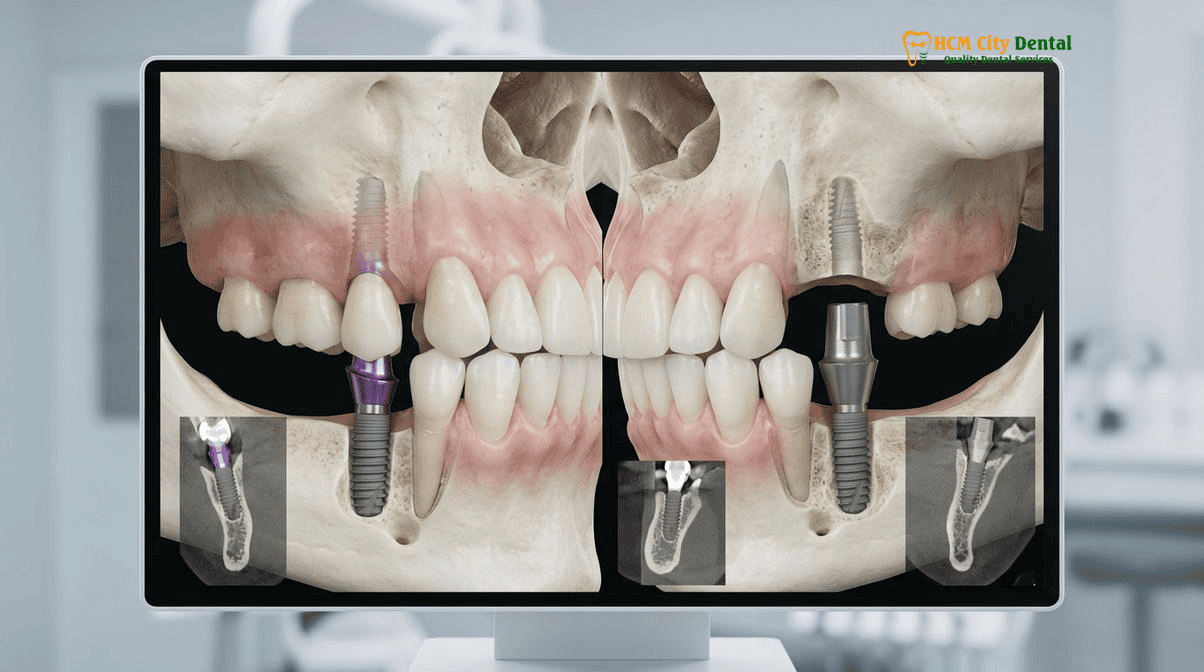
In stark contrast, custom CAD/CAM (Computer-Aided Design and Computer-Aided Manufacturing) abutments are digitally engineered to match the exact anatomical requirements of the individual patient. Following a digital intraoral scan, the dental technician designs an abutment that transitions smoothly from the circular implant platform to the precise cross-sectional shape of the tooth being replaced. This patient-specific emergence profile of a custom implant abutment gently supports the gingival tissues, creating a natural scalloped architecture that is highly resistant to food impaction and easy for the patient to clean with standard flossing techniques.
Moreover, custom abutments offer unparalleled control over the cement line. When a crown is cemented onto an abutment, any excess cement that is pushed below the gum line can trigger a severe inflammatory response. Stock abutments have a uniform margin height, meaning that if the implant is placed deeply, the cement margin will also be deep and nearly impossible to clean. A custom CAD/CAM abutment allows the technician to place the margin exactly at or slightly below the gingival level—perhaps shallower on the palatal side and slightly deeper on the facial side for aesthetics—ensuring that all excess cement can be easily visualized and removed by the clinician[2].
Titanium vs. Pure Zirconia vs. Hybrid Ti-Base Zirconia Abutments: Fracture Resistance and Metal-On-Metal Interface Mechanics
When selecting the material for a custom abutment, clinicians must balance mechanical strength with aesthetic demands and biological compatibility. The three primary options are pure titanium, pure one-piece zirconia, and the hybrid Ti-Base zirconia abutment.
Titanium has long been the gold standard for implant components due to its exceptional fracture toughness, biocompatibility, and proven track record. For posterior teeth where chewing forces are immense, and aesthetic demands are lower, a custom titanium abutment remains an excellent choice. Patients researching Titanium Grade 4 vs Grade 5 Dental Implants: 2026 Study will note that Grade 5 titanium alloy (Ti-6Al-4V) offers superior tensile strength, making it ideal for high-load bearing abutments.
However, the demand for metal-free aesthetics led to the development of pure, one-piece zirconia abutments. While zirconia (Yttria-stabilized tetragonal zirconia polycrystal, or Y-TZP) is incredibly strong and tooth-colored, using a 100% pure zirconia abutment directly inside a titanium implant fixture presents a significant biomechanical flaw. The connection between the abutment and the implant (often an internal hex or conical connection) is subjected to immense cyclic loading during mastication. Because zirconia is significantly harder than titanium, the micro-movements at this interface cause the ceramic to abrade the softer titanium. This wear generates titanium particles that can trigger localized inflammation, and the loss of precise fit inevitably leads to screw loosening or catastrophic fracture of the abutment connection[3].
“In modern implant prosthodontics, we strictly avoid placing pure ceramic connections directly into titanium fixtures. The micro-wear at the interface is a biological and mechanical liability. The hybrid Ti-Base zirconia abutment is the definitive solution, offering the unbreakable precision of a titanium connection with the flawless aesthetics of a custom-milled zirconia body.”
— Dr. Nguyen Van Cuong, DDS (Clinical Director, HCMC Dental Clinic)
The solution to this engineering dilemma is the hybrid tibase zirconia abutment front tooth. This innovative design utilizes a prefabricated titanium base (Ti-Base) that interfaces perfectly with the titanium implant fixture, ensuring a pristine, wear-free metal-to-metal connection. A custom-milled zirconia body is then permanently bonded to this titanium base in the dental laboratory. This hybrid approach provides the ultimate combination: the fracture resistance and precision fit of titanium at the critical connection level, combined with the white, highly biocompatible, and aesthetic properties of zirconia at the transmucosal zone.
Preventing the Dreaded Grey Gum Shadow in Thin Biotype Patients: Hybrid Zirconia and Anodized Gold-Hue Titanium
One of the most challenging scenarios in implant dentistry is restoring a single central incisor in a patient with a thin, highly scalloped gingival biotype. In these individuals, the gum tissue is delicate and translucent. If a standard silver-colored titanium abutment is used, the dark metallic hue will shine through the thin mucosa, creating a grey gum line around dental implant fix. This aesthetic failure is highly distressing for patients and is a primary reason why many seek revision therapy.
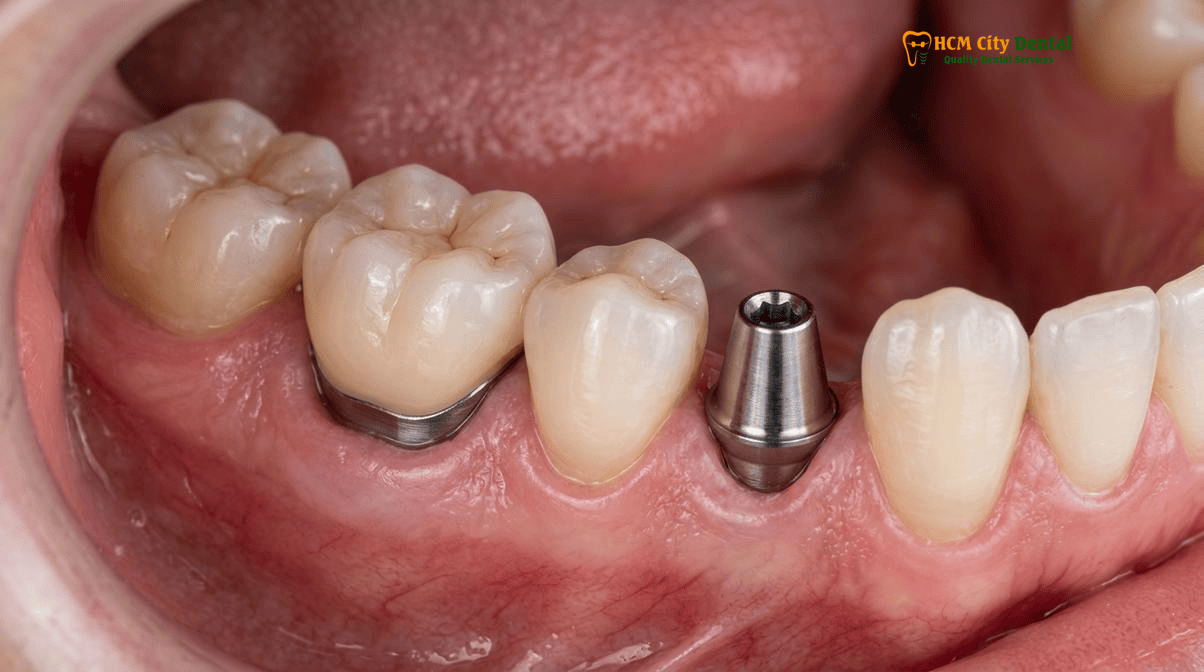
To prevent this grey shadow, clinicians must carefully select the abutment material based on the patient’s specific tissue phenotype. For patients with thin biotypes, the hybrid Ti-Base zirconia abutment is the treatment of choice. The white color of the zirconia body reflects light naturally, supporting the brightness of the overlying gingiva and mimicking the optical properties of a natural tooth root. This ensures that even if minor tissue recession occurs over time, no dark metal will be exposed.
Clinical Case Study: Anterior Aesthetic Zone Restoration
Patient Profile: A 34-year-old female expat from Australia presented to HCMC Dental Clinic with a failing upper right central incisor due to previous trauma. Clinical examination revealed a high smile line and a very thin gingival biotype.
Treatment Protocol: Dr. Nguyen Van Cuong, DDS, performed an atraumatic extraction using Piezosurgery, followed by immediate implant placement utilizing the Socket Shield Technique (retaining a 1.5mm buccal root fragment to preserve the periodontal ligament blood supply and labial bundle bone). After achieving an Osstell ISQ reading of >70, a custom hybrid Ti-Base zirconia abutment was digitally designed and milled.
Outcome: The white zirconia abutment perfectly supported the thin gingival tissues, completely eliminating any risk of a grey shadow. The final highly translucent IPS E.max crown blended seamlessly with her adjacent natural teeth, resulting in a flawless, undetectable restoration.
In situations where a titanium abutment must be used for maximum strength (such as in heavy bruxers or posterior regions with moderate aesthetic demands), an advanced technique known as anodization can be employed. An anodized gold hue titanium abutment is created by passing an electrical current through the titanium, which thickens the surface oxide layer and changes its light refraction properties. By turning the silver titanium into a warm gold color, the abutment imparts a natural, warm pinkish hue to the overlying gums, rather than a cold grey shadow. This technique is highly effective and represents a sophisticated middle ground between pure strength and aesthetic integration.
Why Screw-Retained Hybrid Ti-Base Restorations Eliminate Subgingival Residual Cement and Peri-Implantitis Risk
The method used to attach the final crown to the abutment is a critical factor in the long-term success of the implant. Historically, many implant crowns were cement-retained. The abutment was screwed into the implant, and the crown was glued onto the abutment using dental cement, much like a crown on a natural tooth. While this technique is straightforward and allows for minor angle corrections, it carries a severe biological risk: subgingival residual cement.
Because the peri-implant soft tissue seal is fragile, any excess cement that is inadvertently extruded below the gum line during seating can become trapped. This rough cement acts as a highly retentive surface for pathogenic biofilm. Over time, this leads to peri-implant mucositis (inflammation of the gums) and, if left untreated, progresses to peri-implantitis (destructive inflammation resulting in crestal bone loss and implant failure). Studies have shown a strong correlation between residual cement and the onset of peri-implant diseases[4].
To mitigate this risk, modern implantology strongly favors screw-retained restorations. In a screw-retained hybrid Ti-Base restoration, the custom zirconia crown is bonded to the titanium base extra-orally (outside the mouth) in the controlled environment of the dental laboratory. The entire assembly—crown, zirconia body, and titanium base—is then inserted into the patient’s mouth as a single unit and secured to the implant fixture with a retaining screw. The access hole in the top of the crown is then sealed with composite resin.
Clinical Precaution: When to Choose Screw-Retained Restorations
Patients should actively discuss the retention method with their specialist. Screw-retained restorations are the absolute gold standard because they completely eliminate the risk of subgingival cement. Furthermore, they are easily retrievable. If the crown ever chips or the retaining screw needs to be tightened, the clinician can simply remove the composite filling, unscrew the restoration, perform the maintenance, and replace it without damaging the crown or the implant. If you have a history of gum disease or are undergoing full-arch rehabilitation, screw-retained protocols are mandatory for long-term safety.
This approach completely eliminates the use of intraoral cement, thereby removing one of the primary iatrogenic causes of peri-implantitis. It ensures a pristine, biologically compatible surface in direct contact with the delicate transmucosal tissues, promoting optimal muco-integration and long-term stability.
2026 Custom CAD/CAM Abutment & Zirconia Implant Crown Pricing at HCMC Dental Clinic (District 1)
For international patients, expats, and dental travelers, the cost of advanced implant prosthodontics in Western countries can be prohibitively expensive. HCMC Dental Clinic is committed to providing world-class, evidence-based implantology utilizing premium materials at highly transparent and accessible price points. By leveraging our in-house digital CAD/CAM laboratory and direct partnerships with leading global implant manufacturers, we offer exceptional value without compromising on clinical excellence or biomaterial safety.
Under the clinical leadership of Dr. Nguyen Van Cuong, DDS, all implant procedures strictly adhere to international protocols, including MELISA lymphocyte testing for metal allergies, Piezosurgery for atraumatic bone micro-surgery, and comprehensive 3D CBCT planning. Patients researching 3D-Guided Dental Implants & Specialist Oral Surgery in Vietnam will find our facility equipped with the latest technology to ensure predictable, safe outcomes.
Below is the official Official 2026 Dental Price List & -40% Online Booking Fee Schedule for implant procedures at HCMC Dental Clinic. Please note that these online booking rates represent a 40% reduction compared to standard walk-in prices.
| Implant Procedure / Component | 2026 Online Booking Price (USD) | 2026 Online Booking Price (VND) | Walk-in / Standard Price (USD) |
|---|---|---|---|
| Single Korean Implant (Dentis / Neo Biotech / Dentium fixture + abutment) | $462 – $654 | 12,000,000 – 17,000,000 | $769 – $1,090 |
| Single European / Swiss Implant (Ritter / B&B / Straumann BLT-SLA / Straumann BLA-Active) | $962 – $1,346 | 25,000,000 – 35,000,000 | $1,603 – $2,244 |
| 100% Metal-Free Zirconia Ceramic Implant | $1,154 | 30,000,000 | $1,923 |
| Implant Zirconia HT Crown + Custom Abutment | $154 | 4,000,000 | $256 |
| All-on-4 Full-Arch Implants (Complete package with temporary & final Zirconia bridge) | From $6,346 / arch | 165,000,000 | From $10,576 |
| All-on-6 Full-Arch Implants (Complete package) | From $8,654 / arch | 225,000,000 | From $14,423 |
| 3D CBCT Scan | $18 | 480,000 | $30 |
When comparing these fees to clinics in Australia, the United States, or Europe, the financial advantage of traveling to Vietnam is clear. However, the true value lies in the uncompromising quality of care. Every custom CAD/CAM abutment and Zirconia HT crown is meticulously designed to ensure perfect emergence profiles, optimal soft tissue health, and long-lasting biomechanical stability. Furthermore, our clinic strictly adheres to the highest standards of infection control and biomaterial traceability[5].
“Our philosophy is simple: world-class implantology should not be a luxury reserved for the few. By integrating advanced digital workflows and maintaining an in-house CAD/CAM laboratory, we deliver bespoke, patient-specific implant restorations that rival the best clinics globally, while maintaining complete transparency in our fee structures.”
— Dr. Nguyen Van Cuong, DDS
For patients considering metal-free alternatives, we highly recommend reviewing our comprehensive Titanium vs Zirconia Implants: Clinical Guide | HCMC Dental to determine the most appropriate fixture material for your specific biological needs.
Frequently Asked Questions
Why should I avoid a 100% one-piece all-zirconia abutment inside an internal-hex titanium implant fixture?
Placing a 100% pure zirconia abutment directly into a titanium implant fixture creates a highly abrasive ceramic-on-metal interface. Under the cyclic loading of chewing, the harder zirconia micro-abrades the softer titanium internal hex, leading to titanium particle release, screw loosening, and potential fracture of the abutment connection. A hybrid Ti-Base abutment is the safer, scientifically proven alternative, as it utilizes a titanium-to-titanium connection while providing the aesthetic benefits of a zirconia body.
What is a Hybrid Ti-Base Zirconia Abutment and why is it the gold standard for front tooth implants?
A Hybrid Ti-Base Zirconia Abutment combines a precision-machined titanium base (which connects flawlessly to the titanium implant) with a custom-milled zirconia upper body. This design provides the ultimate mechanical strength at the connection level while delivering the flawless, metal-free white aesthetics of zirconia at the gum line. It prevents the grey shadow effect common with standard titanium abutments, making it the absolute gold standard for anterior restorations in the aesthetic zone.
Why do stock prefabricated abutments increase the risk of food trapping and gum inflammation around molar implants?
Stock prefabricated abutments are perfectly round cylinders, whereas natural molar teeth have wide, rectangular, or oval cross-sections. When a narrow round abutment is placed in a wide molar space, it creates unnatural gaps and a poor emergence profile. The final crown must flare out dramatically, creating deep undercuts that are difficult to clean. This leads to chronic food impaction, plaque accumulation, and subsequent peri-implant gum inflammation.
How long does HCMC Dental Clinic’s CAD/CAM lab take to mill a patient-specific custom abutment?
At HCMC Dental Clinic in District 1, our in-house digital CAD/CAM laboratory can design and mill a patient-specific custom abutment in as little as 24 to 48 hours. This rapid turnaround is facilitated by advanced intraoral scanning, 3D digital design software, and precision 5-axis milling machines. This efficiency is particularly beneficial for international dental travelers who require high-quality, custom restorations within a limited timeframe.
How much does a custom CAD/CAM abutment and Zirconia HT implant crown cost in Vietnam?
Under our 2026 online booking fee schedule, an Implant Zirconia HT Crown combined with a Custom Abutment costs just $154 USD (4,000,000 VND). This is an exceptional value compared to Western prices, providing world-class aesthetics, precise emergence profiles, and biomechanical stability at a fraction of the cost, all performed under the expert care of Dr. Nguyen Van Cuong, DDS.
References
- International Journal of Oral & Maxillofacial Implants. Biomechanical Evaluation of Hybrid Ti-Base Zirconia vs. Stock Titanium Abutments in the Esthetic Zone. (2023).
- Journal of Prosthetic Dentistry. Emergence Profile Design and Soft Tissue Stability Using Custom CAD/CAM Abutments: A 5-Year Prospective Study. (2022).
- Clinical Oral Implants Research. Wear Characteristics at the Implant-Abutment Interface: Pure Zirconia vs. Titanium Base Connections. (2021).
- Journal of Periodontology. The Impact of Subgingival Residual Cement on Peri-Implantitis Rates in Cement-Retained vs. Screw-Retained Restorations. (2023).
- Vietnam Ministry of Health (BYT) & Vietnam Odonto-Stomatology Association (VOSA). National Clinical Guidelines on Specialist Dental Care, Biomaterial Traceability & EN 13060 Class B Infection Control. (2024).