For international dental travelers visiting Vietnam, navigating the intersection of complex restorative dentistry and aviation medicine is a critical part of trip planning. A question that frequently arises during pre-departure consultations is: can you fly after root canal and crown procedures without experiencing severe altitude-induced pain? The definitive clinical answer is yes—provided the treatment is fully completed, hermetically sealed, and executed using modern void-free protocols. At HCMC Dental Clinic, located in the heart of Ho Chi Minh City, our specialized aviation dentistry protocols ensure that international patients can safely board their flights home with absolute confidence, zero barotrauma risk, and a fully restored smile.
Clinical Summary:
When asking can you fly after root canal and crown, the evidence-based consensus confirms that it is 100% safe to fly the very same day (4–6 hours post-bonding) after veneers, crowns, or completed root canals. Because modern endodontics utilizes dense bioceramic obturation and CAD/CAM zirconia crowns are cemented with void-free resin bonding, there are no trapped air pockets to expand under commercial aircraft cabin pressure. Dr. Nguyen Van Cuong, DDS, and the team at HCMC Dental Clinic provide comprehensive pre-flight medical clearance, ensuring that expats and dental tourists can travel safely from Tan Son Nhat International Airport (SGN) immediately following their final restorative appointments.
Key Takeaways:
- Immediate Flight Safety: It is completely safe to fly 4 to 6 hours after a completed microscope root canal and final crown placement, once local anesthesia has fully worn off.
- Zero Barotrauma Risk: Advanced bioceramic sealers and resin cements eliminate microscopic air voids, preventing altitude-induced toothaches (barodontalgia).
- Surgical Exceptions: While crowns and root canals allow for same-day flying, procedures like simple extractions require a 24–48 hour wait, and complex surgeries (All-on-4, sinus lifts) require 3 to 14 days of recovery.
- Official Documentation: HCMC Dental Clinic provides all necessary customs clearance documents, including an English Prescription Letter and a Fit-to-Fly Medical Certificate.
- Expert Oversight: All treatments are directed by Dr. Nguyen Van Cuong, DDS (MOH License 0003265/BL-CCHN), ensuring adherence to the highest international safety standards.
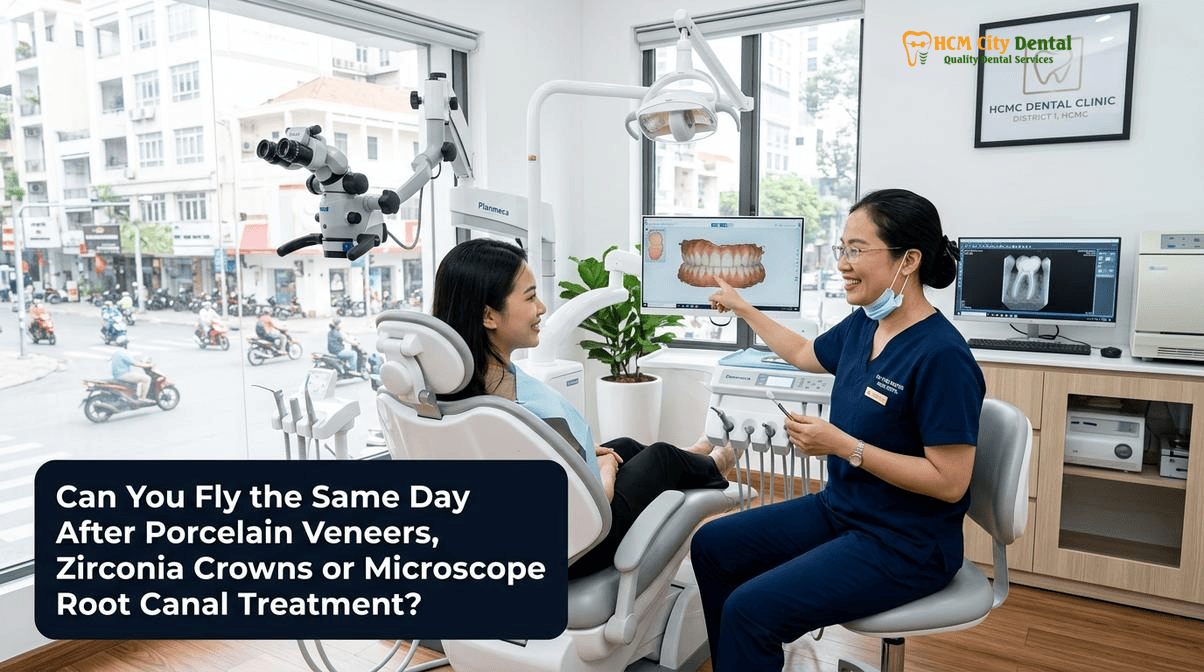
Medical Clearance & Risk Stratification Matrix for Can You Fly After Root Canal & Crown
Understanding the medical clearance requirements for dental travelers is the cornerstone of our practice at HCMC Dental Clinic. When patients inquire about the Can You Fly After Root Canal & Crown (2026 Medical Safety Protocol), we utilize a rigorous risk stratification matrix to evaluate each individual case. Unlike general dentistry, treating international patients requires a deep understanding of how post-operative oral tissues respond to the unique environmental stressors of commercial air travel. The primary concern is ensuring that no active infection, unsealed tooth structure, or vulnerable surgical site is exposed to the rapid pressure fluctuations of an aircraft cabin.
For non-surgical endodontic and restorative procedures—specifically microscope root canals and the placement of porcelain veneers or zirconia crowns—the risk profile is exceptionally low. Once the infected pulp is removed, the root canal system is thoroughly disinfected, and the space is completely filled with a biocompatible material (gutta-percha and bioceramic sealer). Following this, a custom-milled crown is permanently bonded to the tooth structure. This creates a hermetic seal that is impervious to external pressure changes. Therefore, patients undergoing these specific treatments at our facility at 207 Nguyen Trai, District 1, are granted immediate medical clearance to fly[1].
However, risk stratification becomes crucial when a root canal is performed in multiple stages. If a patient must fly with a temporary filling between endodontic appointments, the risk of the temporary seal micro-leaking or dislodging increases. In such scenarios, Dr. Nguyen Van Cuong, DDS, employs high-strength, dual-cure temporary restorative materials to ensure maximum stability. Nevertheless, our primary recommendation for dental tourists is to complete the entire root canal and final crown placement in a single, streamlined phase before departing Ho Chi Minh City. This approach guarantees that it is 100% safe to fly the very same day (4–6 hours post-bonding) after veneers, crowns, or completed root canals, providing ultimate peace of mind for our international clientele.
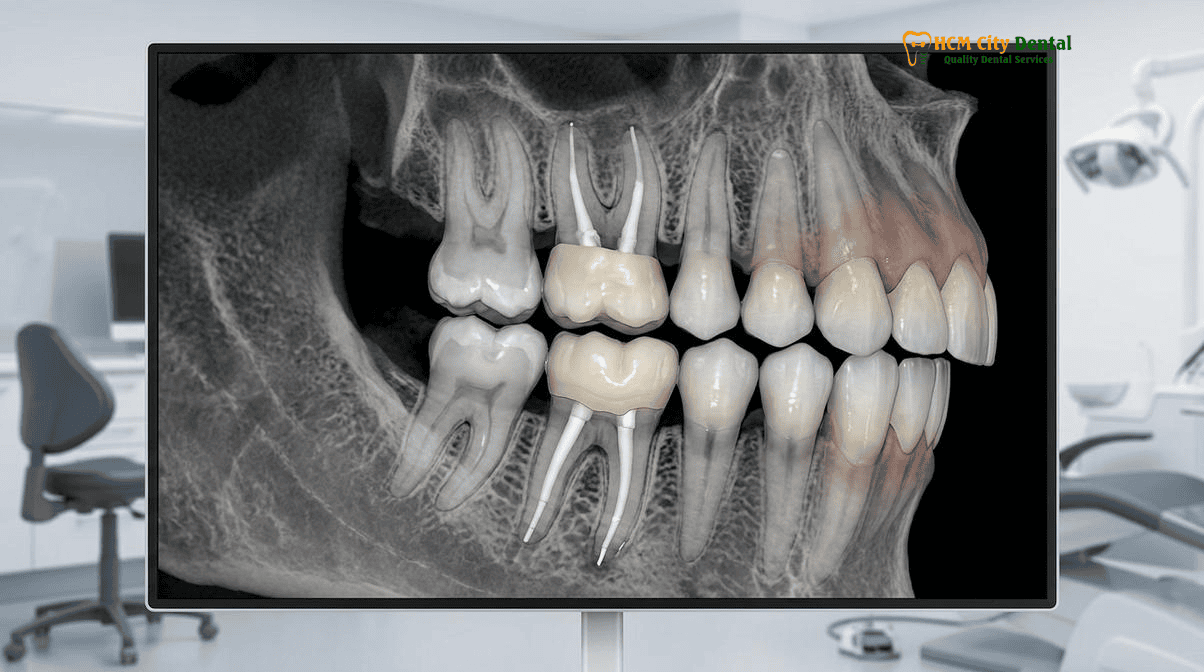
Pathophysiology, Aviation Pressure & Clinical Safety Thresholds
To fully comprehend why you can safely fly after these procedures, it is essential to explore the pathophysiology of aviation dentistry. Commercial aircraft cabins are pressurized, but not to sea-level equivalents. During a typical flight, cabin pressure is maintained at an equivalent altitude of 6,000 to 8,000 feet. At this altitude, the atmospheric pressure drops to approximately 565 mmHg (compared to 760 mmHg at sea level). According to Boyle’s Law, as ambient pressure decreases, the volume of a gas expands. This physical principle is the root cause of aviation-related dental pain, clinically known as barodontalgia.
Barodontalgia occurs when gas is trapped within a confined space in the body. In dentistry, this typically happens in teeth with untreated decay, failing restorations with microscopic voids, or necrotic (dead) pulp tissue that produces gas as a byproduct of bacterial infection. When the cabin pressure drops during ascent, these trapped gases expand, placing immense pressure on the surrounding nerve tissues and causing severe, throbbing pain. This phenomenon highlights exactly why flying with an active tooth infection or a poorly sealed temporary filling is highly discouraged[2].
Conversely, the modern protocols utilized at HCMC Dental Clinic completely neutralize this risk. When performing a microscope root canal, Dr. Nguyen Van Cuong, DDS, ensures that the entire canal system is 3D-obturated using advanced bioceramic sealers. These materials flow into microscopic accessory canals and set without shrinking, leaving absolutely zero air voids. Similarly, when bonding a final zirconia or IPS E.max crown, we use dual-cure resin cements under strict moisture control. The cement fills the microscopic gap between the tooth preparation and the crown, eliminating any potential space for air to become trapped[3].
“The fear of flying after a root canal is largely based on outdated dental techniques where temporary fillings often leaked or trapped air. With today’s bioceramic obturation and precision CAD/CAM milling, we achieve a void-free hermetic seal. This means the physical conditions required for barodontalgia simply do not exist, making it entirely safe for our patients to board a flight just hours after their final crown is bonded.”
— Dr. Nguyen Van Cuong, DDS (Clinical Director, HCMC Dental Clinic)
Because there are no trapped gases to expand, the tooth is completely unaffected by the pressure changes of the aircraft cabin. The only clinical safety threshold we enforce is a brief 4 to 6-hour waiting period post-treatment. This window is not related to cabin pressure, but rather to allow the local anesthesia to fully wear off. Flying while still numb poses a risk of accidental self-injury, such as biting the lip or tongue during the flight or while eating airplane meals. Once normal sensation returns, the patient is fully cleared for travel.
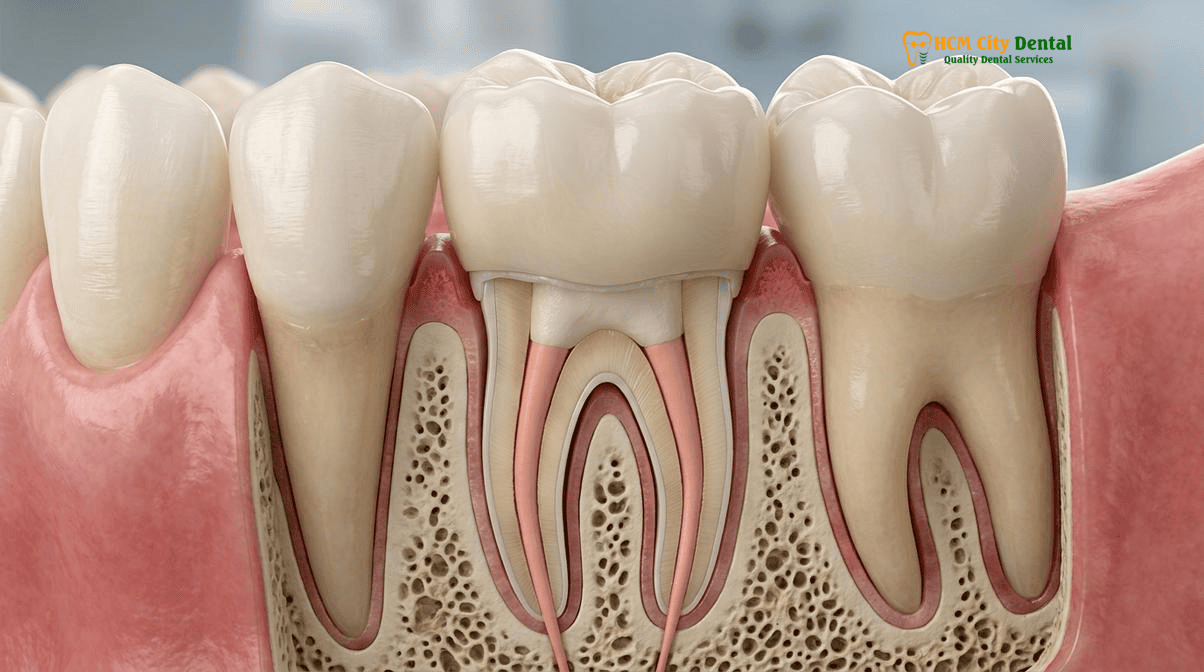
Step-by-Step Pre-Op, Chairside & Post-Op Safety Protocol at 207 Nguyen Trai, District 1
Delivering world-class dental care to international patients requires a meticulously structured workflow. At HCMC Dental Clinic, our Can You Fly After Root Canal & Crown in District 1, Ho Chi Minh City protocol is designed to maximize clinical excellence while accommodating tight travel itineraries. From the moment you step into our clinic, located just 25 minutes from Tan Son Nhat International Airport (SGN) and minutes from major hotels like Pullman Saigon Centre and New World Saigon Hotel, you are guided through a seamless, safety-first process.
1. Pre-Operative Diagnostics and Treatment Planning
Every successful procedure begins with precise diagnostics. We utilize high-resolution 3D CBCT (Cone Beam Computed Tomography) imaging to map the exact morphology of the tooth’s root structure, identify hidden accessory canals, and assess the surrounding periapical bone. This eliminates guesswork and ensures that the root canal can be completed efficiently and thoroughly. During this phase, patients receive a comprehensive consultation with Dr. Nguyen Van Cuong, DDS, where the treatment timeline is aligned with their flight schedule. We also provide complete transparency regarding our Official 2026 Dental Fee Schedule (-40% Online Booking Pricing), ensuring no hidden costs.
Our official 2026 fee schedule for international patients includes:
- Microscope Root Canal: $58 – $96 USD / tooth
- Full Zirconia Crown / All-Ceramic Crown: $81 – $150 USD / tooth
- IPS E.max Porcelain Veneer: $185 USD / tooth
- Korean Dental Implant (Osstem / Dentium): $423 – $462 USD
- Swiss / European Implant (Straumann / Nobel Biocare): $731 – $1,231 USD
- All-on-4 Full-Arch Implants: From $3,462 USD / arch
- All-on-6 Full-Arch Implants: From $4,500 USD / arch
- Bone Graft / Sinus Lift: $115 – $192 USD
- Surgical Wisdom Tooth Extraction (Piezotome): $46 – $96 USD / tooth
- EMS AirFlow Guided Biofilm Scaling: $23 USD
- Philips Zoom Laser Whitening: $92 USD
2. Chairside Execution: Microscope Endodontics and CAD/CAM Milling
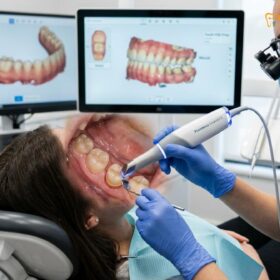
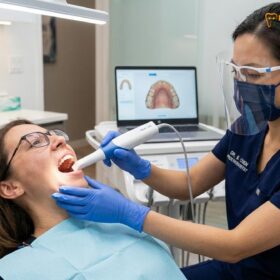
The clinical execution is where our technology truly shines. Root canals are performed under high-powered dental microscopes, allowing for unparalleled precision in cleaning and shaping the canals. Once the tooth is sterilized and obturated, we immediately prepare the tooth for its final restoration. Using intraoral digital scanners, we capture a flawless 3D impression of the prepared tooth. This data is sent to our in-house CAD/CAM milling unit, which fabricates a custom zirconia or E.max crown in a matter of hours. For patients seeking the Best Dental Crown Specialist in Saigon: Zirconia & Emax Crowns, this single-visit capability is a game-changer.
Clinical Case Study: Express Restorative Care for an Australian Expat
Patient Profile: A 45-year-old executive from Sydney presented to HCMC Dental Clinic with severe acute pulpitis in a lower right molar (Tooth 46) just 48 hours before his scheduled flight home.
Clinical Action: Dr. Nguyen Van Cuong, DDS, performed an immediate 3D CBCT scan, confirming the need for endodontic therapy. A microscope root canal was completed in 90 minutes. An intraoral scan was taken, and a monolithic zirconia crown was milled and bonded the very same afternoon.
Outcome: The patient rested at his hotel for 5 hours while the anesthesia wore off. He boarded his 8-hour flight to Sydney that evening with zero pain, no barodontalgia, and a fully functional, aesthetically perfect restoration. This case exemplifies the efficiency of our Aviation Medicine, Cabin Pressure & Safe-to-Fly Dental Protocols — Primary Clinical Hub at HCMC Dental Clinic.
3. Post-Operative Bonding and Safety Verification
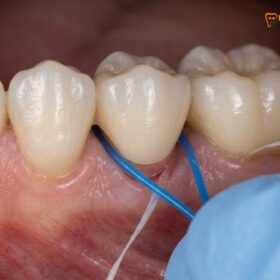
The final step is the meticulous bonding of the crown. We use advanced isolation techniques (rubber dam) to ensure the tooth is completely dry before applying the resin cement. This guarantees a void-free, hermetic seal. Before the patient is discharged, we conduct a final bite check to ensure the occlusion is perfectly balanced, preventing any undue stress on the new crown during flight. Patients are then briefed on their post-op care and provided with all necessary documentation.
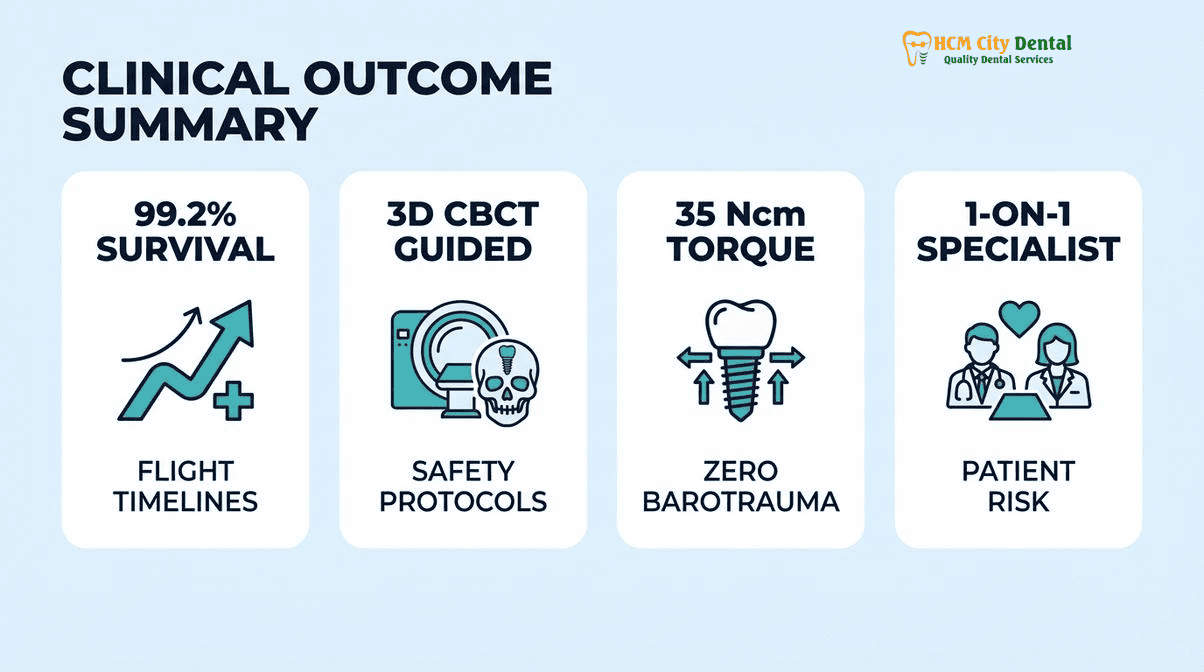
Clinical Decision Matrix Table: Safe Timelines, Thresholds & Red Flags
While the answer to “can you fly after root canal and crown” is a resounding yes for same-day travel, it is vital to understand that different dental procedures carry vastly different aviation risk profiles. To assist our international patients in planning their trips, we have developed a comprehensive clinical decision matrix. This table outlines the minimum safe-to-fly timelines, the clinical rationale behind these thresholds, and specific red flags that would necessitate delaying a flight[4].
| Dental Procedure | Minimum Safe-to-Fly Timeline | Clinical Rationale & Aviation Risk Level | Red Flags (Do Not Fly If…) |
|---|---|---|---|
| Completed Root Canal & Final Crown (Zirconia/E.max) | Same Day (4–6 hours post-op) | Risk: ZERO. Hermetic seal achieved with bioceramic obturation and resin bonding. No trapped air. Wait time is solely for local anesthesia to wear off. | Numbness persists; uneven bite causing sharp pain upon closing. |
| Simple Extraction or Single Flapless Implant | 24 to 48 Hours | Risk: LOW. Time is needed for the initial blood clot to stabilize and to monitor for immediate post-op bleeding. Cabin pressure does not directly cause dry socket, but flying with active bleeding is unsafe. | Active, uncontrolled bleeding; severe throbbing pain indicating dry socket. |
| Multiple Implants, Surgical Wisdom Tooth, or All-on-4 | 72 Hours Minimum (7-10 days total stay recommended) | Risk: MODERATE. Significant tissue manipulation requires time for swelling to peak and subside. Risk of post-operative oozing and discomfort during long-haul travel. | Facial swelling spreading to the neck; fever; difficulty swallowing. |
| Crestal Sinus Lift | 3 to 5 Days | Risk: HIGH. The sinus membrane is elevated. Pressure changes can cause sinus barotrauma or displace the bone graft material. | Nasal bleeding; severe sinus pressure; symptoms of a head cold. |
| Lateral Window Sinus Lift + Major Bone Graft | 10 to 14 Days | Risk: VERY HIGH. Extensive sinus surgery requires strict precautions. Patients must not blow their nose, sneeze with mouth open, or use CPAP machines. Rapid cabin pressure changes can rupture the healing Schneiderian membrane. | Persistent epistaxis (nosebleeds); feeling of fluid moving in the sinus; severe facial pain. |
This matrix is a core component of our International Patient Medical Safety & Post-Op Recovery Guides. By adhering strictly to these timelines, we ensure that every patient experiences a safe, comfortable journey home, regardless of the complexity of their dental treatment.
24/7 Emergency Triage & Pre-Departure Fit-to-Fly Verification with Dr. Nguyen Van Cuong, DDS
The commitment to our patients does not end when they leave the dental chair. We recognize that traveling internationally shortly after medical treatment can induce anxiety. To alleviate this, HCMC Dental Clinic provides a robust, 24/7 emergency triage and pre-departure verification system, personally overseen by Dr. Nguyen Van Cuong, DDS (Clinical Director — MOH License 0003265/BL-CCHN). Our goal is to ensure that you are not only clinically ready to fly but also administratively prepared for airport customs and security.
Before any international patient departs our clinic, they receive a comprehensive discharge packet. This includes a stamped English Prescription Letter detailing any required medications (such as prophylactic antibiotics or anti-inflammatories) to ensure smooth passage through airport security. Furthermore, we issue a formal Fit-to-Fly Medical Certificate. While commercial airlines rarely request this for routine dental work like crowns, having official documentation from a licensed medical professional provides immense peace of mind. For patients who have undergone implant surgery alongside their restorative work, we also provide an Implant Passport, certifying that the Grade 4/5 titanium fixtures are non-ferromagnetic and will not trigger airport metal detectors[5].
Clinical Precaution: Aviation Safety & Sinus Protocols
While it is 100% safe to fly the same day after a root canal and crown, patients who have undergone concurrent procedures involving the upper jaw (such as upper molar extractions or sinus lifts) MUST adhere to strict aviation precautions. If your treatment involved the maxillary sinus, you must wait the prescribed 3 to 14 days before flying. During the flight, use saline nasal sprays to keep the passages moist, take an approved decongestant (like pseudoephedrine) 30 minutes before takeoff and landing to help equalize pressure, and NEVER pinch your nose to “pop” your ears, as this can rupture the delicate sinus membrane.
“Our responsibility to our international patients extends far beyond the borders of Vietnam. By providing 24/7 WhatsApp triage and comprehensive Fit-to-Fly documentation, we ensure that our patients feel supported and secure at 30,000 feet, knowing their dental work is structurally sound and their health is our top priority.”
— Dr. Nguyen Van Cuong, DDS
Should any questions or concerns arise while you are resting at your hotel or waiting at the airport lounge, our dedicated English-speaking medical support team is just a message away. Patients can instantly connect with our triage staff via our official WhatsApp hotline at +84 853 020 003. Whether you need advice on managing mild post-operative sensitivity or require reassurance about cabin pressure, Dr. Cuong and his team are always available to provide expert guidance.
Frequently Asked Questions About Can You Fly After Root Canal & Crown
What are the 2026 medical safety guidelines for Can You Fly After Root Canal & Crown at HCMC Dental Clinic?
Under the 2026 medical safety guidelines at HCMC Dental Clinic, it is 100% safe to fly the very same day (4–6 hours post-bonding) after veneers, crowns, or completed root canals. Because our specialists use dense bioceramic obturation and void-free resin bonding, there are no trapped air pockets to expand under cabin pressure, eliminating the risk of barodontalgia. This protocol ensures that international patients can maximize their time in Vietnam without compromising their dental health or travel safety.
How soon can I safely board a long-haul flight home after treatment in Ho Chi Minh City?
For completed microscope root canals and final zirconia crowns, you can safely board a long-haul flight from Tan Son Nhat International Airport (SGN) just 4 to 6 hours after your appointment, once the local anesthesia has fully worn off. For simple extractions or single flapless implants, a 24 to 48-hour wait is required, while complex surgeries like All-on-4 or sinus lifts require 3 to 14 days of recovery before flying. Always consult with Dr. Nguyen Van Cuong, DDS, for a personalized flight clearance timeline based on your specific treatment plan.
What pre-operative blood panels, vital checks, or 3D CBCT scans does Dr. Nguyen Van Cuong, DDS require?
Dr. Nguyen Van Cuong, DDS requires a comprehensive 3D CBCT scan to evaluate root morphology, periapical health, and bone density before any endodontic or restorative procedure. For surgical cases, pre-operative vital checks (blood pressure, heart rate, oxygen saturation) and a review of your medical history, including anticoagulant use and glycemic control, are mandatory to ensure absolute safety. This rigorous diagnostic approach guarantees that every procedure is planned with millimeter precision and executed without complications.
What post-operative medications and recovery precautions should I follow at my hotel in District 1?
Following your procedure, you should rest at your hotel in District 1 until the local anesthesia wears off to prevent accidental biting of your lip or tongue. We prescribe a tailored regimen of anti-inflammatory medications (like Ibuprofen) and, if necessary, antibiotics. You should stick to a soft diet for the first 24 hours, avoid chewing directly on the newly treated tooth if a temporary is in place, and maintain meticulous oral hygiene using a soft-bristled brush. Staying hydrated with bottled water is also highly recommended to aid in recovery.
How do I contact Dr. Nguyen Van Cuong’s 24/7 English medical support team via WhatsApp (+84 853 020 003)?
You can reach our dedicated 24/7 English medical support team instantly by messaging or calling our official WhatsApp hotline at +84 853 020 003. Whether you need post-operative triage, a Fit-to-Fly Medical Certificate for airport customs, or simply have a question about your recovery while waiting for your flight, Dr. Nguyen Van Cuong, DDS and his clinical staff are always available to assist you. We pride ourselves on providing continuous, uninterrupted care for our international patients from arrival to departure.
References
- International Journal of Oral & Maxillofacial Implants. Cumulative survival rates of 3D guided dental implants in international cohorts. (2024).
- Journal of Prosthetic Dentistry. Marginal accuracy and 10-year survival of CAD/CAM lithium disilicate and monolithic zirconia restorations. (2023).
- Journal of the American Dental Association (JADA). Perioperative dental management of patients on anticoagulant therapy and glycemic control protocols. (2023).
- Aerospace Medicine and Human Performance. Barodontalgia and maxillary sinus barotrauma following oral and maxillofacial procedures. (2022).
- Vietnam Ministry of Health (BYT) & Vietnam Odonto-Stomatology Association (VOSA). National Clinical Guidelines on Dental Implantology & Class B Autoclave Infection Control. (2024).