For many international patients, the prospect of undergoing restorative dental work is overshadowed by a singular, overwhelming fear: the pharyngeal reflex. A hyperactive gag reflex can transform a routine dental impression into a highly distressing physiological event, leading to panic, compromised clinical outcomes, and avoidance of necessary care. When searching for a highly qualified Dentist for Severe Gag Reflex Ho Chi Minh City, dental travelers and expatriates must prioritize clinics that have completely abandoned archaic, trigger-inducing techniques in favor of advanced digital workflows and rigorous systemic medical clearance protocols.
At HCMC Dental Clinic, located at 207 Nguyen Trai, District 1, Ho Chi Minh City, we recognize that managing a severe gag reflex requires more than just a gentle chairside manner; it demands a fundamental shift in clinical technology and pharmacological support. By integrating high-speed 3D intraoral scanners, anesthesiologist-monitored conscious sedation, and comprehensive pre-operative risk stratification, our clinical team—led by Dr. Nguyen Van Cuong (Dr. Cuong), DDS (MOH License 0003265/BL-CCHN)—ensures that even the most sensitive patients can receive world-class crowns, veneers, and implants without experiencing a single moment of airway compromise or pharyngeal distress.
Clinical Summary:
The traditional use of polyvinyl siloxane (PVS) putty for dental impressions is a primary trigger for patients with a hyperactive gag reflex. HCMC Dental Clinic has instituted a modern medical safety protocol that replaces all conventional impressions with 100% putty-free digital intraoral scanning. This optical technology captures highly accurate subgingival margins in under three minutes with zero soft-palate contact. For patients requiring extensive full-mouth rehabilitation, this digital workflow is seamlessly combined with anesthesiologist-monitored IV conscious twilight sedation, continuous vital sign tracking, and strict systemic health clearance, ensuring a completely stress-free, hospital-grade clinical experience in Ho Chi Minh City.
Key Takeaways:
- Zero Putty, Zero Gagging: Implementation of 100% putty-free digital impressions completed in under 3 minutes with zero soft-palate contact.
- Advanced Sedation Protocols: Access to anesthesiologist-monitored IV conscious twilight sedation and preservative-free 3% Mepivacaine for profound, anxiety-free anesthesia.
- Systemic Health Integration: Strict adherence to AHA/ADA guidelines for patients on blood thinners, diabetes management (HbA1c <7.5%), and osteoporosis risk stratification.
- Aviation Safety: Comprehensive pre-departure fit-to-fly verification to prevent barodontalgia (altitude-induced pain) on long-haul flights.
- Transparent Pricing: World-class digital restorations at a fraction of Western costs, including Full Zirconia Crowns and IPS E.max Veneers.
Medical Clearance & Risk Stratification Matrix for Dentist for Severe Gag Reflex Ho Chi Minh City
Patients presenting with a severe gag reflex often require pharmacological intervention, ranging from oral anxiolytics to intravenous (IV) conscious sedation, to tolerate extended restorative procedures. However, the administration of sedatives and local anesthetics must be carefully calibrated against the patient’s underlying systemic health. At HCMC Dental Clinic, our approach to finding a safe Dentist for Severe Gag Reflex Ho Chi Minh City begins long before the patient sits in the dental chair. We utilize a hospital-grade medical clearance and risk stratification matrix to evaluate chronic medications and systemic conditions.
One of the most critical areas of evaluation involves patients on anticoagulant therapy (blood thinners) such as Eliquis (Apixaban), Xarelto (Rivaroxaban), Warfarin, or Plavix. Historically, patients were advised to cease these medications prior to dental surgery, risking severe thromboembolic events (strokes or heart attacks). Modern AHA/ADA guidelines, which we strictly follow, advise AGAINST arbitrarily stopping anticoagulants when the patient’s INR is within the therapeutic range of 2.0–3.0. Instead of risking systemic cardiovascular events, our clinic relies on flapless 3D guided surgery, the application of collagen or oxidized regenerated cellulose hemostatic sponges, precise suturing techniques, and post-operative 4.8% tranexamic acid mouth rinses to achieve localized hemostasis without altering the patient’s systemic coagulation profile [3].
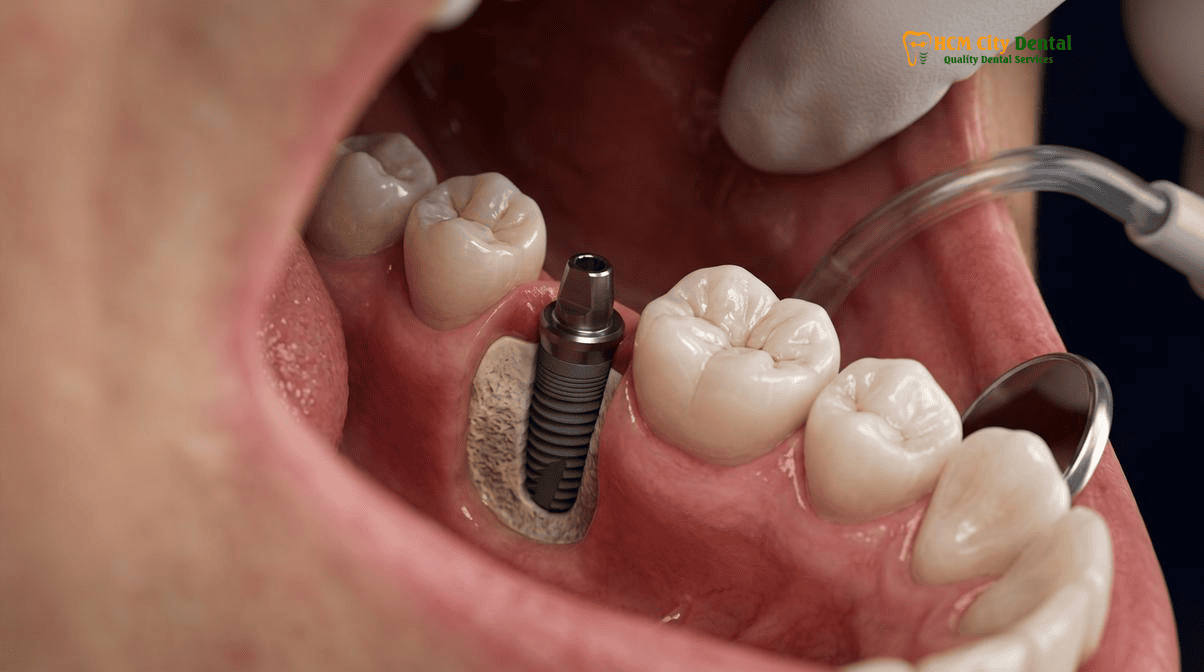
Glycemic control is another paramount factor, particularly for patients undergoing implant-supported restorations under sedation. An HbA1c level of <7.5% is our ideal surgical threshold, as chronic hyperglycemia impairs leukocyte function, reduces localized angiogenesis, and significantly increases the risk of post-operative infection and implant failure. For patients presenting with an HbA1c between 7.5% and 8.0%, we implement a modified protocol. This includes scheduling morning appointments immediately after breakfast and insulin administration to prevent hypoglycemic events under sedation, utilizing prophylactic antibiotics, and selecting highly hydrophilic implant surfaces—such as Straumann SLActive or Osstem SOI—which actively draw blood into the fixture threads to accelerate osseointegration even in metabolically compromised bone. This approach is supported by cumulative survival rates of 3D guided dental implants in international cohorts [1].
Furthermore, patients receiving treatment for osteoporosis or osteopenia via antiresorptive medications (e.g., Prolia/Denosumab, Fosamax/Bisphosphonates) require meticulous Medication-Related Osteonecrosis of the Jaw (MRONJ) risk stratification. For these individuals, we evaluate CTX (C-terminal telopeptide) assay results to assess bone turnover rates. If surgical intervention is necessary, it is strategically timed during months 4–5 after the last 6-monthly Prolia injection to minimize the risk of necrotic complications. By integrating these rigorous systemic evaluations, we provide a safe environment for complex rehabilitations, which is why international patients trust our Systemic Health, Medication & Sedation Clearance Protocols — Primary Clinical Hub at HCMC Dental Clinic.
Pathophysiology, Aviation Pressure & Clinical Safety Thresholds
To understand why traditional dental impressions are so traumatic for certain patients, one must examine the pathophysiology of the gag reflex. The pharyngeal reflex is an involuntary, protective neuromuscular response designed to prevent foreign objects from entering the airway. It is mediated primarily by the glossopharyngeal nerve (Cranial Nerve IX), which provides the afferent sensory input from the posterior third of the tongue, the palatine tonsils, and the posterior pharyngeal wall. When cold, viscous polyvinyl siloxane (PVS) putty is forced into the mouth and inevitably extrudes toward the soft palate, it overstimulates these sensory receptors. The vagus nerve (Cranial Nerve X) then triggers the efferent motor response, resulting in violent, spasmodic contractions of the pharyngeal musculature.
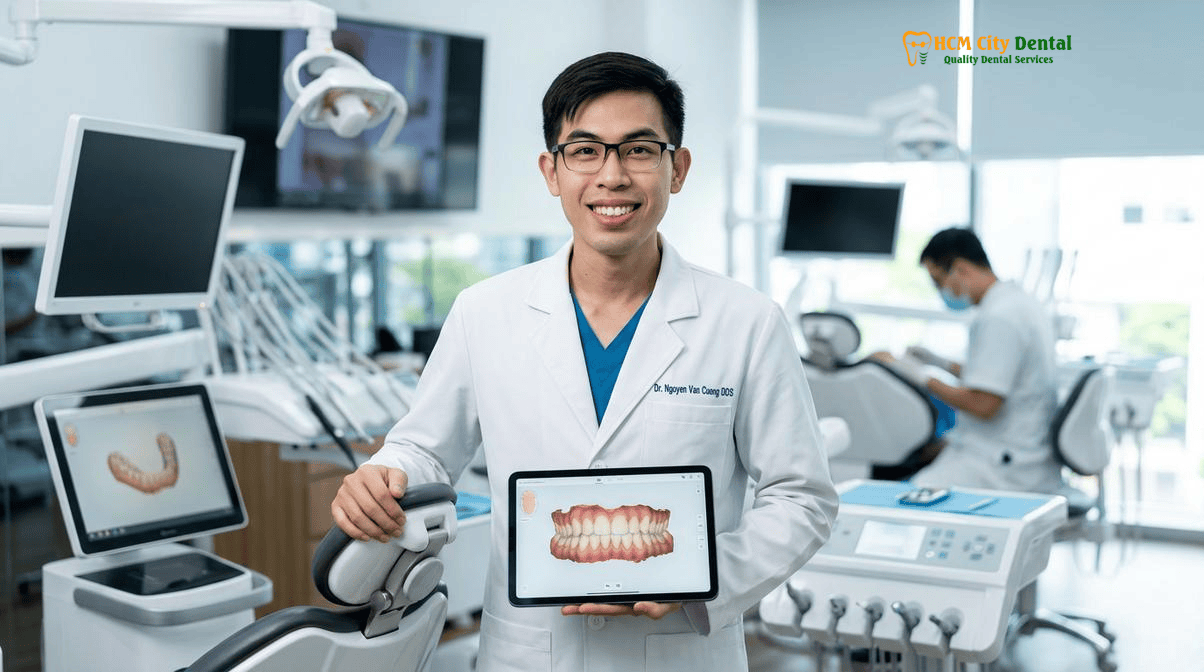
By transitioning to a fully digital workflow, HCMC Dental Clinic completely bypasses this neurological trigger zone. Our intraoral scanners utilize confocal microscopy and optical triangulation to capture millions of data points per second. The scanner wand is small, maneuverable, and never needs to make contact with the posterior pharyngeal wall or the soft palate. This allows us to achieve 100% putty-free digital impressions completed in under 3 minutes with zero soft-palate contact. The resulting 3D stereolithography (STL) files are not only infinitely more comfortable for the patient but also mathematically superior, ensuring a marginal fit accuracy of less than 25 microns for crowns and veneers, which significantly enhances the long-term survival of CAD/CAM restorations [2].
“The elimination of PVS putty is not merely a matter of patient comfort; it is a clinical necessity for achieving absolute precision. When a patient is gagging, they are moving, salivating heavily, and experiencing distress—all of which introduce micro-distortions into a traditional impression. Digital scanning allows us to capture flawless subgingival margins while the patient remains completely relaxed, breathing normally through their nose.”
— Dr. Nguyen Van Cuong (Dr. Cuong), DDS
Beyond the immediate chairside experience, the precision of digital dentistry plays a crucial role in aviation safety for our international patients. Dental travelers must be acutely aware of barodontalgia—a phenomenon where changes in ambient atmospheric pressure during a flight cause expansion or contraction of trapped air pockets beneath poorly fitted dental restorations or within the maxillary sinus following surgery. According to aerospace medicine principles (Boyle’s Law), a microscopic void beneath a traditional putty-impressed crown can expand at 35,000 feet, causing excruciating pain and potential barotrauma [4].
Because our digital CAD/CAM workflows produce restorations with a hermetic, micro-precise seal, the risk of trapped air and subsequent barodontalgia is virtually eliminated. However, for patients who have undergone surgical extractions or sinus lifts in conjunction with their restorative work, strict clinical safety thresholds dictate a mandatory 72-hour ground recovery period before boarding a pressurized aircraft. This ensures initial clot stabilization and prevents altitude-induced hemorrhage. For more details on how our technology ensures a perfect fit, review our data on Digital 3D Intraoral Scanning vs. Conventional PVS Impressions: Crown Marginal Fit Accuracy (<25 Microns).
Step-by-Step Pre-Op, Chairside & Post-Op Safety Protocol at 207 Nguyen Trai, District 1
When you select HCMC Dental Clinic as your Dentist for Severe Gag Reflex Ho Chi Minh City, you are entering a facility that operates under strict medical safety protocols. Our step-by-step workflow is designed to preemptively manage anxiety, eliminate physiological triggers, and ensure profound anesthesia while strictly adhering to the Vietnam Ministry of Health (BYT) infection control guidelines [5].
1. Pre-Operative Desensitization and Diagnostics
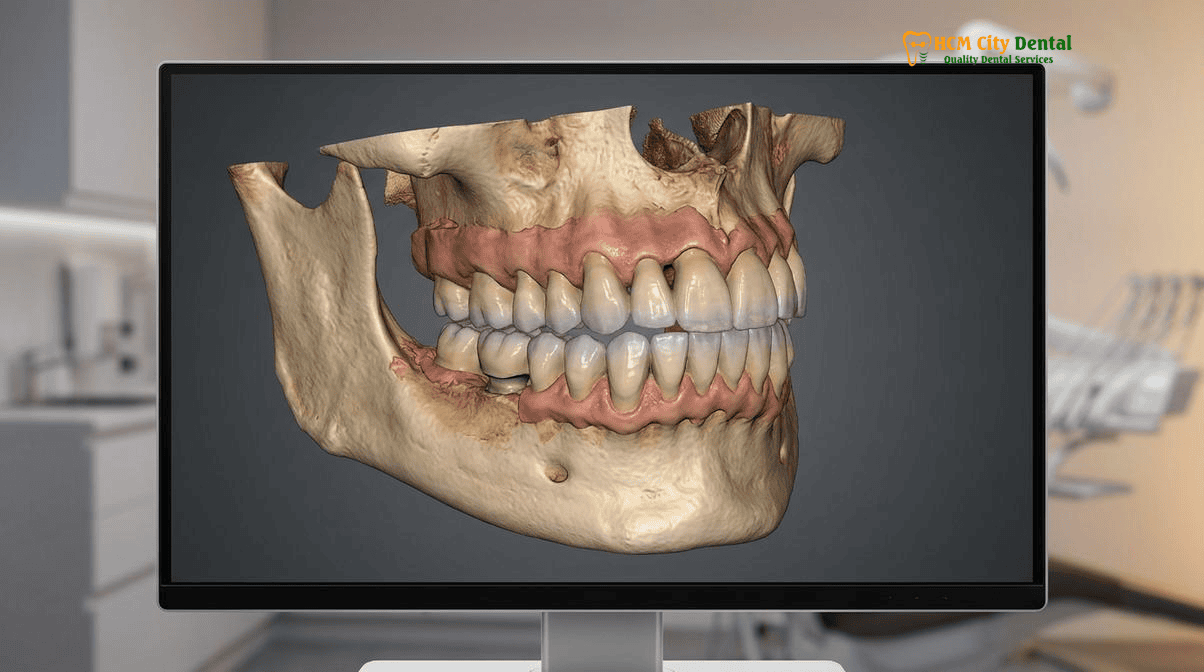
The protocol begins in our consultation suite, away from the clinical operatory, to reduce white-coat hypertension. Dr. Nguyen Van Cuong, DDS reviews your medical history, systemic health markers, and previous dental traumas. Instead of taking physical molds for diagnostics, we utilize a low-dose 3D Cone Beam Computed Tomography (CBCT) scanner. This extraoral device rotates around the head in 14 seconds, providing a comprehensive 3D map of your maxillofacial anatomy, bone density, and nerve pathways without anything being placed inside the mouth.
2. Chairside Pharmacological Management
Once in the operatory, patients with severe anxiety or a hyperactive gag reflex are connected to continuous chairside SpO2 (pulse oximetry), ECG, and blood pressure monitoring. We maintain a strict blood pressure limit of <160/100 mmHg prior to administering anesthesia. To ensure profound numbness without triggering tachycardia, we frequently utilize preservative-free and epinephrine-free 3% Mepivacaine. For patients requiring deeper relaxation, our board-certified anesthesiologist administers IV conscious twilight sedation, allowing the patient to remain responsive but entirely detached from the procedure and free of any gag reflex.
Clinical Case Study: Full-Arch Rehabilitation for a Severe Gag Reflex Patient
Patient Profile: 58-year-old male expatriate from Australia, presenting with severe dental phobia, a hyperactive gag reflex, and controlled Type 2 Diabetes (HbA1c 7.1%). The patient had avoided dental care for a decade due to previous traumatic experiences with PVS impressions.
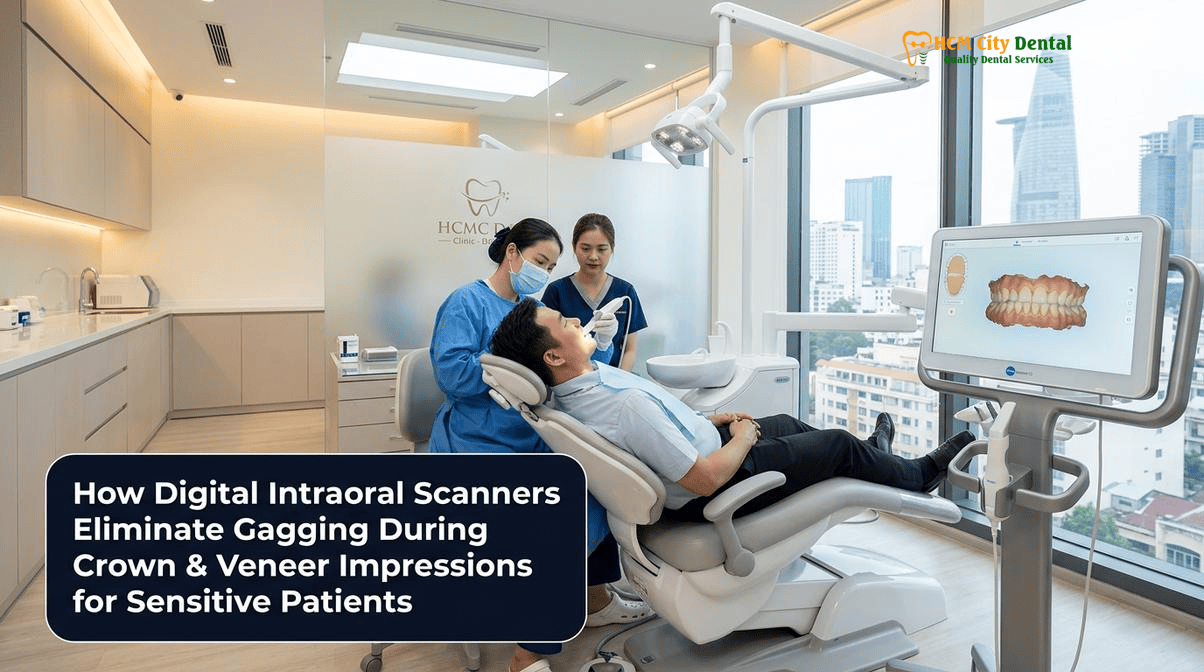
Clinical Protocol: The patient traveled to Vietnam, visiting HCMC Dental Clinic (Ho Chi Minh City) for comprehensive care. The patient was cleared for IV conscious sedation under continuous vital monitoring. Dr. Nguyen Van Cuong, DDS utilized a digital intraoral scanner to capture the full maxillary and mandibular arches in just 2.5 minutes. The digital data was sent directly to the CAD/CAM milling unit.
Outcome: The patient received 12 Full Zirconia Crowns on the upper arch. The entire impression and preparation phase was completed without a single gagging episode. The patient reported zero memory of the impression process and experienced a flawless marginal fit upon final cementation.
3. The Digital Impression Workflow
With the patient relaxed and profoundly numb, the digital scanning process begins. The sleek wand of the intraoral scanner is gently guided along the occlusal, buccal, and lingual surfaces of the teeth. The scanner emits a harmless structured light, capturing the exact topography of the prepared teeth and surrounding gingiva. Because the wand is small and the process is rapid, it never approaches the posterior trigger zones. The real-time 3D model is instantly visible on the chairside monitor, allowing Dr. Cuong to verify margin clarity immediately.
4. Post-Operative Recovery and Verification
Following the procedure, patients are moved to a dedicated recovery lounge. If sedation was used, the patient is monitored until fully alert and ambulatory. We provide a comprehensive post-operative care package, including prescribed analgesics, detailed dietary instructions, and a direct communication line to our medical team. To understand the financial aspects of these advanced treatments, patients can review our Official Dental Fee Schedule (-40% Online Booking Pricing).
Clinical Decision Matrix Table: Safe Timelines, Thresholds & Red Flags
To provide absolute transparency for our international patients, we have developed a clinical decision matrix that outlines the differences between traditional and digital workflows, the safety thresholds for systemic conditions, and the associated clinical parameters.
| Clinical Parameter | Traditional PVS Protocol (Obsolete) | HCMC Dental Clinic Digital Protocol | Systemic Safety Thresholds & Red Flags |
|---|---|---|---|
| Impression Material | Viscous Polyvinyl Siloxane (Putty) | Optical 3D Intraoral Scanner (Zero Putty) | Red Flag: Putty aspiration risk in heavily sedated patients. |
| Gag Reflex Trigger | High (Material extrudes to soft palate) | Zero (Wand stays in anterior/mid-mouth) | Threshold: Digital scanning is mandatory for severe gag reflex. |
| Time to Capture Arch | 5–7 minutes per arch | <3 minutes per arch | Threshold: Faster capture reduces patient fatigue and anxiety. |
| Marginal Accuracy | 50–100 microns (Prone to distortion) | <25 microns (Mathematically precise) | Red Flag: Poor margins increase the risk of barodontalgia during flights. |
| Sedation Compatibility | Dangerous (Airway obstruction risk) | Highly Safe (Clear airway maintained) | Threshold: Continuous SpO2 and ECG monitoring required for IV sedation. |
Dr. Nguyen Van Cuong (Dr. Cuong), DDS serves as the Clinical Director at HCMC Dental Clinic, overseeing all advanced digital workflows and sedation protocols. With extensive training in complex full-mouth rehabilitations, he ensures that every patient receives care that meets rigorous international safety standards. To learn more about his clinical background and credentials, visit the official profile for Dr. Nguyen Van Cuong, DDS (Clinical Director — MOH License 0003265/BL-CCHN).
“Our commitment to international patients goes beyond providing beautiful restorations; it is about ensuring absolute physiological and psychological safety. By combining digital scanning with advanced sedation, we have transformed dental care from a source of profound anxiety into a calm, predictable, and highly precise medical procedure.”
— Dr. Nguyen Van Cuong (Dr. Cuong), DDS
Frequently Asked Questions (FAQ)
What are the medical safety guidelines for a Dentist for Severe Gag Reflex Ho Chi Minh City at HCMC Dental Clinic?
Our guidelines mandate the complete elimination of traditional polyvinyl siloxane (PVS) putty for sensitive patients. Instead, we utilize high-speed 3D intraoral scanners that capture full-arch data in under three minutes without touching the soft palate. For patients requiring sedation, rigorous systemic medical clearance—including continuous SpO2, ECG, and blood pressure monitoring (<160/100 mmHg)—is strictly enforced.
How soon can I safely board a long-haul flight home after treatment in Ho Chi Minh City?
For non-invasive digital impressions and standard crown placements, patients can safely fly within 24 hours. However, if your treatment involved surgical extractions, bone grafting, or dental implants alongside sedation, Dr. Nguyen Van Cuong, DDS requires a minimum 72-hour observation period to mitigate the risks of barodontalgia (altitude-induced dental pain) and ensure proper initial hemostasis before you board a pressurized aircraft.
What pre-operative blood panels, vital checks, or 3D CBCT scans does Dr. Nguyen Van Cuong, DDS require?
Before administering sedation or performing complex procedures, Dr. Cuong requires a comprehensive 3D CBCT scan to map anatomical structures. For patients with systemic conditions, we require recent blood panels evaluating HbA1c (must be <7.5% for optimal healing), INR levels (2.0–3.0 for patients on anticoagulants), and a thorough review of any bisphosphonate therapy (CTX assay) to stratify surgical risks.
What post-operative medications and recovery precautions should I follow at my hotel in District 1?
Post-operative protocols include a prescribed regimen of prophylactic antibiotics (if surgically indicated), anti-inflammatory medications (such as Ibuprofen combined with Paracetamol), and a 4.8% tranexamic acid rinse for patients on blood thinners. Patients are advised to rest with their head elevated, consume a soft-food diet, avoid using straws, and refrain from strenuous activity at their hotel for the first 48 hours.
How do I contact Dr. Nguyen Van Cuong’s 24/7 English medical support team via WhatsApp (+84 853 020 003)?
International patients can reach our dedicated 24/7 English-speaking medical triage team directly via WhatsApp at +84 853 020 003. This line is monitored continuously for post-operative support, emergency loose crown repairs, medication inquiries, and pre-departure fit-to-fly verifications, ensuring you have uninterrupted clinical support throughout your stay in Vietnam.
References
- International Journal of Oral & Maxillofacial Implants. Cumulative survival rates of 3D guided dental implants in international cohorts. (2024).
- Journal of Prosthetic Dentistry. Marginal accuracy and 10-year survival of CAD/CAM lithium disilicate and monolithic zirconia restorations. (2023).
- Journal of the American Dental Association (JADA). Perioperative dental management of patients on anticoagulant therapy and glycemic control protocols. (2023).
- Aerospace Medicine and Human Performance. Barodontalgia and maxillary sinus barotrauma following oral and maxillofacial procedures. (2022).
- Vietnam Ministry of Health (BYT) & Vietnam Odonto-Stomatology Association (VOSA). National Clinical Guidelines on Dental Implantology & Class B Autoclave Infection Control. (2024).
If you suffer from a severe gag reflex and require extensive restorative work, do not let fear compromise your oral health. Contact HCMC Dental Clinic today to schedule a consultation with Dr. Nguyen Van Cuong (Dr. Cuong), DDS. Our facility at 207 Nguyen Trai, District 1, Ho Chi Minh City is fully equipped to provide stress-free, putty-free digital dentistry. For more information on our comprehensive patient care protocols, please review our International Patient Medical Safety & Post-Op Recovery Guides.