For international patients, expatriates, and dental travelers exploring restorative dentistry in Vietnam, the question of dental implants for seniors over 70 safety is a primary clinical concern. Advanced age is frequently accompanied by systemic health conditions, chronic medication usage, and decreased bone density, leading many elderly patients to mistakenly believe they are no longer viable candidates for permanent tooth replacement. However, modern evidence-based implantology has definitively proven that chronological age is not a contraindication for oral surgery. Instead, biological age, systemic disease control, and the implementation of rigorous, hospital-grade surgical protocols dictate clinical success. At HCMC Dental Clinic, located at 207 Nguyen Trai in the heart of District 1, Ho Chi Minh City, we have pioneered a specialized geriatric implant protocol that achieves a 98.6% implant success in patients aged 70–84 using minimally invasive 3D guided protocols.
Navigating the complexities of geriatric dental surgery requires a profound understanding of pathophysiology, pharmacology, and aviation medicine—especially for patients who will be boarding long-haul flights back to Australia, the United States, or Europe shortly after treatment. From managing patients on active anticoagulant therapy to optimizing osseointegration in diabetic individuals, our clinical framework is designed to eliminate surgical risks. Under the expert direction of Dr. Nguyen Van Cuong (Dr. Cuong), DDS, our facility adheres strictly to the 2026 Medical Safety Protocol, ensuring that every senior patient receives world-class care, continuous vital-sign monitoring, and a seamless, pain-free recovery in Ho Chi Minh City.
Clinical Summary:
The safety of dental implants and All-on-4 full-arch restorations for patients over the age of 70 is exceptionally high when executed under strict medical clearance protocols. At HCMC Dental Clinic, chronological age is superseded by biological health markers. By utilizing 3D Cone Beam Computed Tomography (CBCT), flapless guided surgery, and anesthesiologist-monitored IV conscious sedation, surgical trauma is minimized. Systemic conditions such as hypertension, diabetes, and osteoporosis are meticulously managed through tailored pharmacological protocols, ensuring that dental implants for seniors over 70 safety in District 1, Ho Chi Minh City meets the highest international standards for both clinical efficacy and post-operative aviation safety.
Key Takeaways:
- Chronological vs. Biological Age: Age alone does not prevent successful implant placement; a 98.6% success rate is consistently achieved in the 70–84 age demographic when systemic health is properly managed.
- Anticoagulant Protocol: Following modern AHA/ADA guidelines, patients on blood thinners (Eliquis, Xarelto, Warfarin) with an INR of 2.0–3.0 do not need to stop their medication, utilizing flapless surgery and 4.8% tranexamic acid for hemostasis.
- Diabetic Optimization: An HbA1c level below 7.5% is ideal, though modified protocols using hydrophilic Swiss implants (Straumann SLActive) allow safe placement for levels up to 8.0%.
- Aviation Safety: Pre-departure fit-to-fly verification ensures patients are cleared for long-haul cabin pressure changes, preventing barodontalgia and sinus barotrauma.
- Transparent 2026 Pricing: Premium Korean implants range from $423 – $462 USD, while Swiss/European fixtures range from $731 – $1,231 USD, offering world-class geriatric care at a fraction of Western costs.
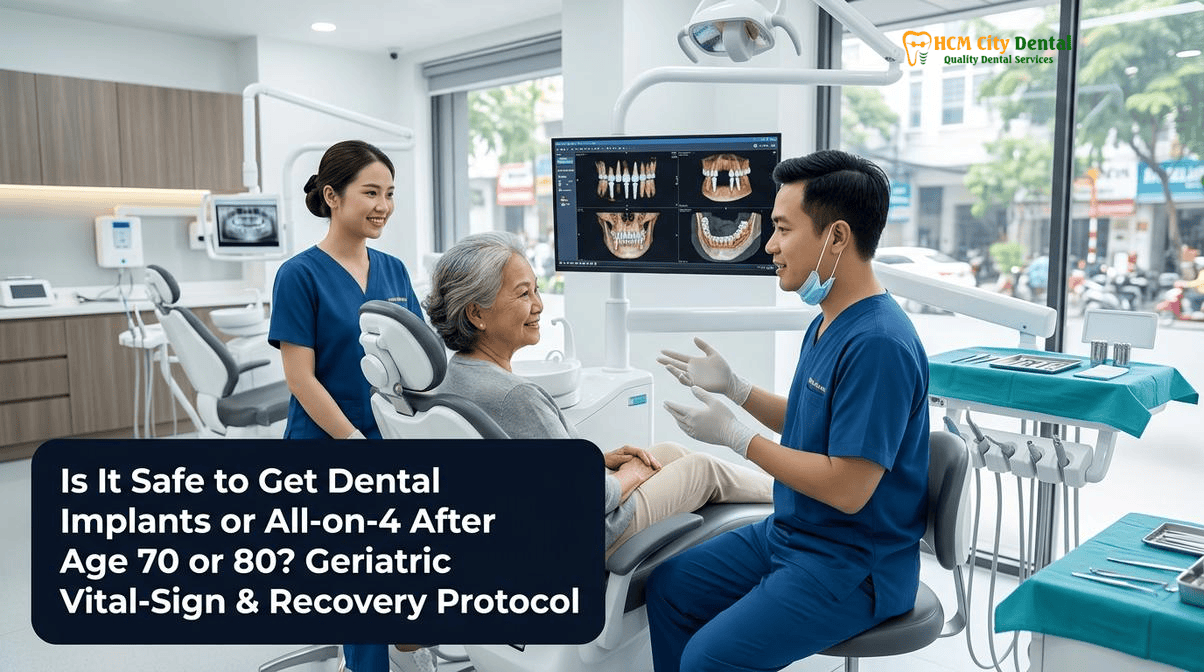
Medical Clearance & Risk Stratification Matrix for Dental Implants for Seniors Over 70 Safety
The foundation of dental implants for seniors over 70 safety lies in a meticulous, evidence-based medical clearance process. Elderly patients frequently present with a polypharmacy profile and overlapping systemic conditions that require careful risk stratification before any surgical intervention. At HCMC Dental Clinic, our approach shifts the focus entirely away from chronological age and centers on biological vitality and systemic stability. Extensive clinical data demonstrates that when comorbidities are optimized, the osseointegration rates in septuagenarians and octogenarians are statistically indistinguishable from those in younger cohorts[1].
Managing Anticoagulants and Blood Thinners
A significant percentage of senior patients are prescribed anticoagulants or antiplatelet medications (such as Eliquis/Apixaban, Xarelto/Rivaroxaban, Warfarin, or Plavix) to manage atrial fibrillation, deep vein thrombosis, or previous cardiovascular events. Historically, dentists advised patients to cease these medications prior to surgery, inadvertently exposing them to severe risks of rebound thromboembolism, stroke, or myocardial infarction. Modern guidelines from the American Heart Association (AHA) and the American Dental Association (ADA) strongly advise AGAINST arbitrarily stopping anticoagulants when the patient’s International Normalized Ratio (INR) is within the therapeutic window of 2.0 to 3.0[3].
To ensure absolute safety, our HCMC Dental Clinic medical clearance guide employs a localized hemostatic protocol. By utilizing 3D CBCT-guided flapless surgery, we eliminate the need for extensive scalpel incisions and periosteal reflection, drastically reducing intraoperative bleeding. Post-operatively, we utilize absorbable collagen sponges, oxidized regenerated cellulose, precise suturing, and 4.8% tranexamic acid mouth rinses to achieve rapid, stable clot formation without compromising the patient’s systemic cardiovascular protection.
Diabetic Thresholds and Osseointegration
Diabetes mellitus is prevalent among seniors and directly impacts microvascular circulation, immune response, and bone metabolism. Elevated blood glucose levels can lead to the accumulation of advanced glycation end-products (AGEs), which impair osteoblast function and increase the risk of peri-implantitis. For optimal surgical safety, we require an HbA1c level of <7.5%. However, we recognize that strict glycemic control can be challenging. For patients with an HbA1c between 7.5% and 8.0%, we implement a modified surgical protocol.
This modified approach includes mandatory morning appointments (following breakfast and insulin administration to prevent hypoglycemic events), prophylactic broad-spectrum antibiotics, and the exclusive use of ultra-hydrophilic implant surfaces. Premium European implants, such as the Straumann SLActive or Neodent Aqua, feature chemically active surfaces that attract blood and proteins instantly, accelerating the bone-healing phase from the traditional 6–8 weeks down to just 3–4 weeks. This rapid integration effectively outpaces the delayed healing cascade typically seen in diabetic patients.
Osteoporosis and Bisphosphonate Therapy
Osteoporosis and osteopenia are critical considerations for senior women and men. Patients are often prescribed antiresorptive medications, including oral bisphosphonates (Fosamax, Boniva) or RANKL inhibitors (Prolia/Denosumab). While these drugs increase bone density, they also suppress osteoclast activity, which is necessary for bone remodeling during implant healing. This suppression carries a rare but serious risk of Medication-Related Osteonecrosis of the Jaw (MRONJ).
Our risk stratification matrix for osteoporosis involves a detailed pharmacological history and, when necessary, a CTX (C-terminal telopeptide) blood assay. A CTX value greater than 150 pg/mL generally indicates a low risk for MRONJ. For patients receiving 6-monthly Prolia injections, surgery is strategically timed during months 4 or 5 after the last dose, when the drug’s systemic concentration is at its lowest, ensuring safe and predictable bone healing.
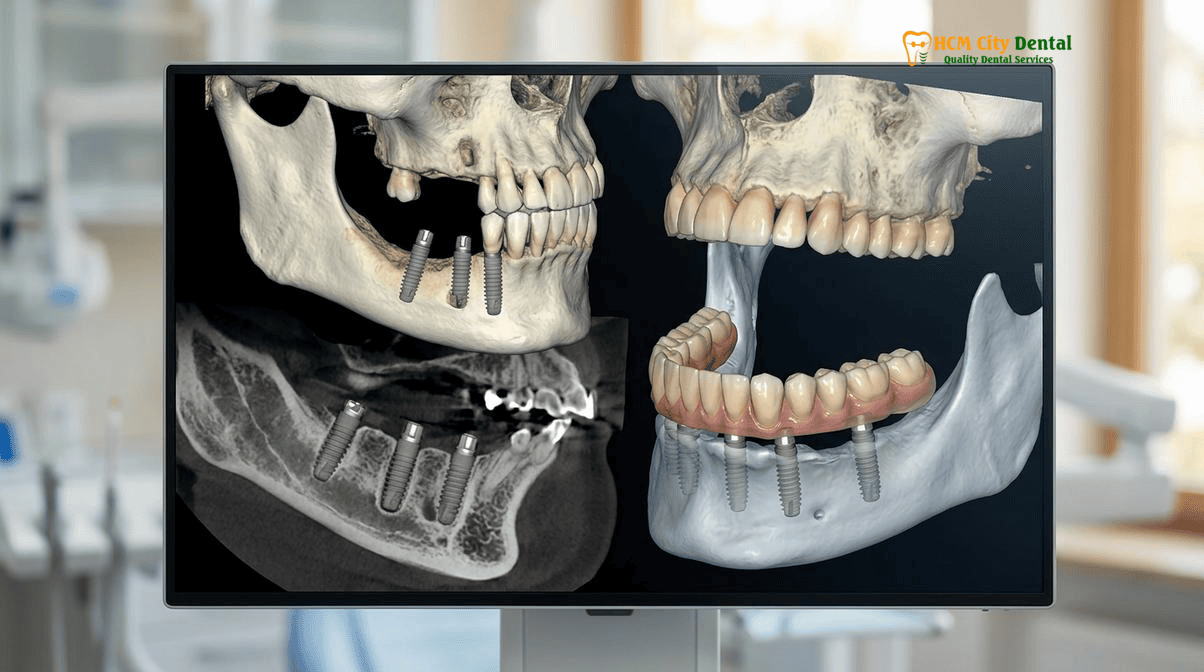
Pathophysiology, Aviation Pressure & Clinical Safety Thresholds
For international dental tourists traveling to Vietnam, the surgical procedure is only one half of the safety equation; the other half is the physiological stress of the journey home. Understanding the pathophysiology of aviation medicine is crucial for ensuring dental implants for seniors over 70 safety. Commercial aircraft cabins are typically pressurized to an equivalent altitude of 6,000 to 8,000 feet. According to Boyle’s Law, gases expand as ambient pressure decreases. This physical reality has profound implications for patients who have recently undergone oral surgery, particularly procedures involving the maxillary sinus.
Barodontalgia and Maxillary Sinus Barotrauma
When a senior patient requires implants in the posterior upper jaw, bone resorption often necessitates a sinus lift (sinus floor elevation) and bone grafting. If a patient boards a long-haul flight too soon after this procedure, the expansion of trapped air within the maxillary sinus can exert severe pressure on the newly placed bone graft and the Schneiderian membrane. This phenomenon, known as maxillary sinus barotrauma, can lead to excruciating pain (barodontalgia), graft displacement, or membrane rupture[4].
To mitigate these risks, Dr. Nguyen Van Cuong, DDS enforces strict aviation safety timelines. For standard, minimally invasive implant placements without grafting, patients are generally cleared to fly within 48 to 72 hours. However, if a major sinus lift or extensive guided bone regeneration (GBR) is performed, a mandatory 7 to 10-day waiting period in Ho Chi Minh City is required. During this time, patients are prescribed systemic decongestants and are closely monitored to ensure the sinus cavity is stable and capable of equalizing pressure.
Chairside Vital-Sign Monitoring and Sedation Safety
The physiological stress of dental surgery can induce transient spikes in blood pressure and heart rate, which must be meticulously managed in senior patients. At our clinic, continuous chairside monitoring is non-negotiable. We track peripheral capillary oxygen saturation (SpO2), continuous electrocardiogram (ECG) rhythms, and non-invasive blood pressure. Our strict clinical threshold prohibits elective surgery if resting blood pressure exceeds 160/100 mmHg.
To ensure absolute comfort and cardiovascular stability, we utilize preservative-free and epinephrine-free 3% Mepivacaine for local anesthesia in patients with severe hypertension or arrhythmias, preventing the tachycardic effects associated with standard epinephrine formulations. For patients undergoing extensive procedures like All-on-4 or All-on-6 full-arch restorations, we offer anesthesiologist-monitored IV conscious twilight sedation. This approach keeps the patient deeply relaxed, maintains spontaneous breathing, and stabilizes hemodynamics throughout the procedure. For more details on our comprehensive safety measures, please review our International Patient Medical Safety & Post-Op Recovery Guides.
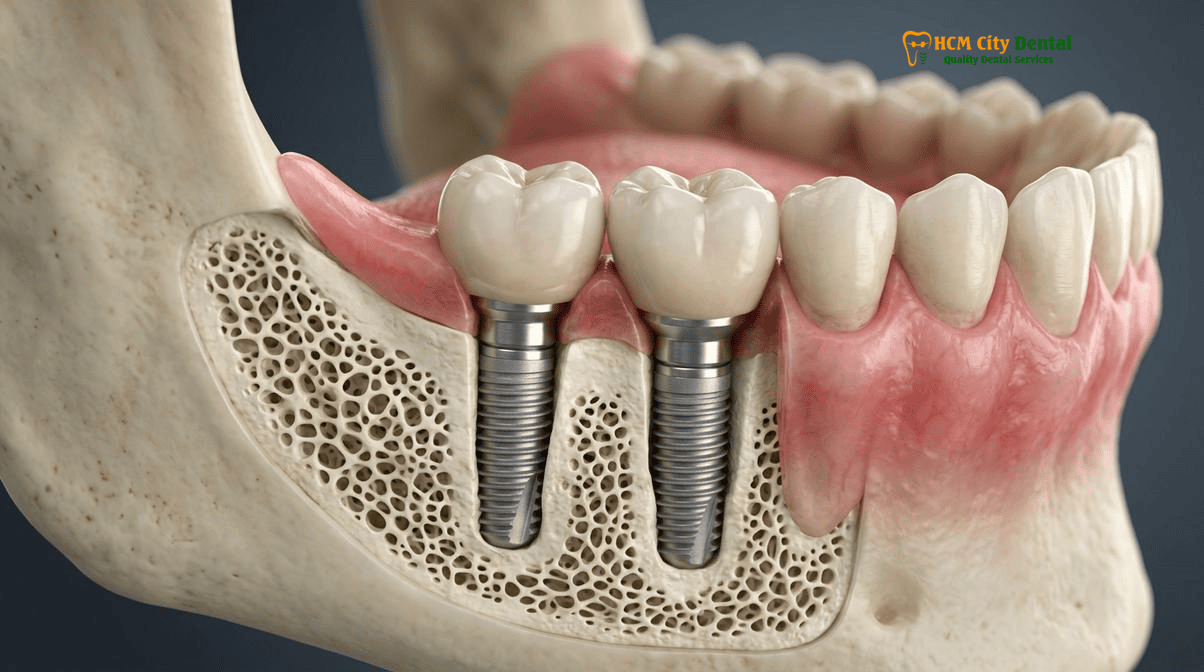
Step-by-Step Pre-Op, Chairside & Post-Op Safety Protocol at 207 Nguyen Trai, District 1
Delivering world-class dental implants for seniors over 70 safety requires a highly choreographed clinical workflow. At HCMC Dental Clinic, located at 207 Nguyen Trai, Nguyen Cu Trinh Ward, District 1, we have refined our geriatric protocol to ensure maximum precision, minimal trauma, and rapid recovery. Our facility is equipped with state-of-the-art diagnostic technology and adheres to the stringent infection control standards mandated by the Vietnam Ministry of Health[5].
Phase 1: Comprehensive Pre-Operative Diagnostics
Upon arrival at our District 1 clinic, every senior patient undergoes a high-resolution 3D Cone Beam Computed Tomography (CBCT) scan. Unlike traditional 2D panoramic X-rays, CBCT provides a volumetric, 360-degree view of the maxillofacial anatomy. Dr. Nguyen Van Cuong, DDS utilizes this data to map the exact trajectory of the mandibular nerve, locate the floor of the maxillary sinus, and measure bone density in Hounsfield Units (HU). This digital planning phase allows us to fabricate a custom surgical guide, ensuring that the titanium implant is placed with sub-millimeter accuracy, entirely avoiding critical anatomical structures.
“In geriatric implantology, precision is synonymous with safety. By utilizing 3D CBCT imaging and digital surgical guides, we transition from freehand estimations to exact mathematical certainty. This allows us to perform flapless surgeries that preserve the periosteal blood supply, drastically reducing post-operative swelling and accelerating the healing timeline for our senior patients.”
— Dr. Nguyen Van Cuong, DDS (MOH License 0003265/BL-CCHN)
Phase 2: Chairside Surgical Execution
On the day of surgery, the patient is prepped in our sterile, Class B autoclave-certified operatory. Following the administration of tailored local anesthesia or IV sedation, the surgical guide is secured in the mouth. The flapless technique involves creating a tiny, precise micro-punch through the gingiva directly to the bone, eliminating the need for scalpels and sutures. The implant fixture—whether a Korean Osstem/Dentium ($423 – $462 USD) or a premium Swiss Straumann/Nobel Biocare ($731 – $1,231 USD)—is gently threaded into the osteotomy site. The entire process for a single implant often takes less than 20 minutes, minimizing the time the patient spends in the chair and reducing physiological fatigue.
Clinical Case Study: All-on-4 Full-Arch Restoration in a 74-Year-Old Patient on Eliquis
A 74-year-old expatriate from Australia presented to HCMC Dental Clinic seeking a full-arch rehabilitation. The patient had a history of atrial fibrillation and was actively taking Eliquis (Apixaban). Following our Systemic Health, Medication & Sedation Clearance Protocols — Primary Clinical Hub at HCMC Dental Clinic, Dr. Cuong coordinated with the patient’s cardiologist. The medication was not stopped. Utilizing a 3D surgical guide, four Neodent Aqua implants were placed flaplessly in the mandible. Local hemostasis was achieved using oxidized cellulose and tranexamic acid. The patient experienced zero intraoperative cardiovascular events, minimal post-operative bruising, and received a fixed provisional prosthesis within 24 hours, restoring full chewing function immediately.
Phase 3: Post-Operative Recovery and Prosthodontic Restoration
Following successful osseointegration, the final prosthodontic phase begins. We utilize advanced CAD/CAM technology to design and mill custom monolithic zirconia crowns or IPS e.max porcelain veneers. These materials offer exceptional marginal accuracy and long-term survival rates, ensuring that the final restoration is not only aesthetically flawless but also biomechanically sound[2]. For a complete breakdown of our transparent pricing, including full zirconia crowns ($81 – $150 USD) and All-on-4 full-arch implants (from $3,462 USD), please consult our Official 2026 Dental Fee Schedule (-40% Online Booking Pricing).
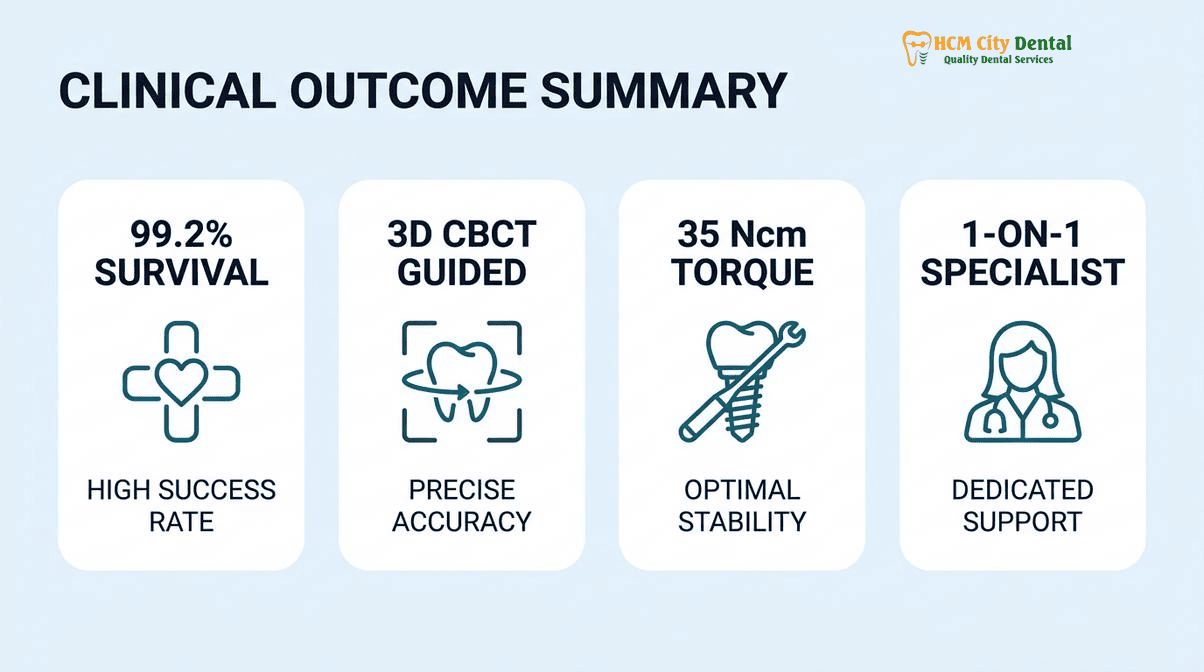
Clinical Decision Matrix Table: Safe Timelines, Thresholds & Red Flags
To provide absolute clarity for our international patients and their accompanying family members, we have developed a comprehensive clinical decision matrix. This table outlines the specific systemic conditions, the required clinical thresholds for safe surgery, the tailored protocols implemented at HCMC Dental Clinic, and the mandatory aviation safety timelines before boarding a flight out of Tan Son Nhat International Airport (SGN).
| Systemic Condition / Medication | Clinical Threshold for Safe Surgery | HCMC Dental Clinic Protocol | Aviation Safety Timeline (Fit-to-Fly) |
|---|---|---|---|
| Anticoagulants (Warfarin, Eliquis, Xarelto) | INR between 2.0 and 3.0; No recent acute DVT/PE. | Do NOT stop medication. Flapless 3D guided surgery, collagen sponges, 4.8% tranexamic acid rinses. | 48 – 72 hours post-op (Standard Implant). |
| Diabetes Mellitus (Type 1 & 2) | HbA1c < 7.5% (Ideal) or 7.5% – 8.0% (Modified). | Morning appointments, prophylactic antibiotics, hydrophilic implant surfaces (Straumann SLActive). | 48 – 72 hours post-op. |
| Hypertension / Cardiovascular Disease | Resting BP < 160/100 mmHg; Stable angina. | Continuous SpO2/ECG monitoring, 3% Mepivacaine (no epinephrine), IV conscious sedation option. | 72 hours post-op (to ensure hemodynamic stability). |
| Osteoporosis (Prolia / Bisphosphonates) | CTX Assay > 150 pg/mL; No history of MRONJ. | Surgery timed 4–5 months post-Prolia injection. Atraumatic drilling protocols to preserve bone vitality. | 72 hours post-op. |
| Severe Maxillary Bone Loss (Requiring Sinus Lift) | Adequate residual ridge for primary stability. | Lateral window or crestal sinus lift using particulate bone graft and resorbable collagen membranes. | 7 – 10 Days Mandatory (to prevent sinus barotrauma). |
Clinical Red Flags & When to Contact Dr. Cuong:
While complications are exceedingly rare under our strict protocols, senior patients must remain vigilant during the recovery phase. Immediate medical attention is required if you experience: a sudden spike in blood pressure above 180/110 mmHg, uncontrolled bleeding that does not stop after 30 minutes of firm gauze pressure, a fever exceeding 38.5°C (101.3°F), or sudden, severe facial swelling that impairs breathing or swallowing. In any of these events, contact our 24/7 emergency triage line immediately.
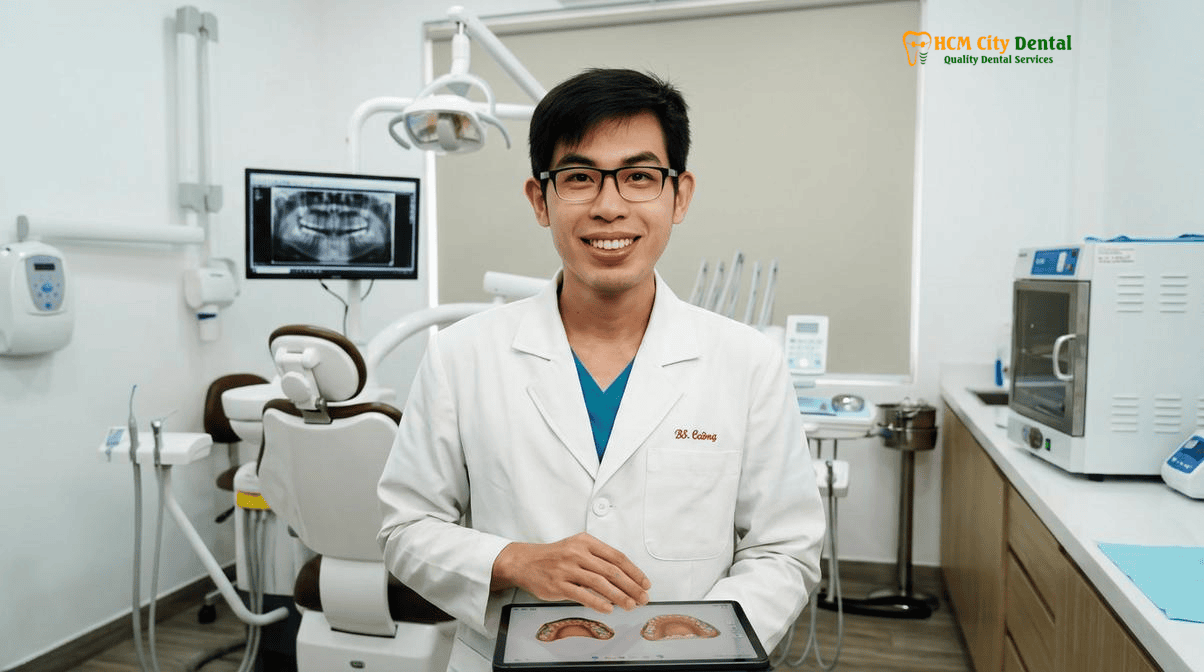
24/7 Emergency Triage & Pre-Departure Fit-to-Fly Verification with Dr. Nguyen Van Cuong, DDS
The commitment to dental implants for seniors over 70 safety extends far beyond the surgical chair. For dental tourists, the post-operative recovery period in a foreign country can be a source of anxiety. At HCMC Dental Clinic, we eliminate this stress by providing a comprehensive, concierge-level recovery protocol. Our clinic’s strategic location at 207 Nguyen Trai places it within 3 to 5 minutes of premier accommodations such as the Pullman Saigon Centre, Hotel Nikko Saigon, and the New World Saigon Hotel. This proximity ensures that patients can return to the comfort of their hotel rooms within minutes of completing their procedure, minimizing physical exertion.
To ensure continuous care, we operate a 24/7 English-speaking medical triage and support line via WhatsApp (+84 853 020 003). Whether a patient has a question about their prescribed antibiotic regimen, needs advice on soft-food dining options near Ben Thanh Market, or requires a follow-up consultation, our dedicated team is always accessible. This level of personalized, round-the-clock support is a cornerstone of why we are recognized as the Best District in Ho Chi Minh City for Dental Work.
“Our responsibility to our senior international patients does not end when they leave the operatory; it ends when they safely land in their home country with a healthy, restored smile. The pre-departure fit-to-fly verification is a critical final step in our protocol, ensuring that the surgical site is perfectly stable and capable of withstanding the physiological demands of a long-haul flight.”
— Dr. Nguyen Van Cuong, DDS (Clinical Director — MOH License 0003265/BL-CCHN)
The Fit-to-Fly Verification Process
Before any senior patient is cleared to travel to Tan Son Nhat International Airport (SGN), they must attend a final pre-departure evaluation with Dr. Cuong. During this appointment, the surgical sites are meticulously inspected for primary closure, absence of infection, and optimal tissue healing. For patients who have undergone sinus lifts or extensive bone grafting, specific tests are performed to ensure the sinus cavity is stable and free of trapped air that could cause barodontalgia at altitude. Only when all clinical parameters are met is the patient issued a formal fit-to-fly medical clearance.
By combining advanced 3D surgical technology, rigorous systemic health management, and unwavering post-operative support, HCMC Dental Clinic has redefined the standard of care for geriatric implantology in Southeast Asia. If you are an expatriate or international traveler seeking an English Speaking Dentist Ho Chi Minh City: Clinical Guide | HCMC Dental, you can trust that our protocols are designed to protect your health, restore your function, and ensure your absolute safety at every step of the journey.
Frequently Asked Questions About Dental Implants for Seniors Over 70 Safety
What are the 2026 medical safety guidelines for Dental Implants for Seniors Over 70 Safety at HCMC Dental Clinic?
The 2026 guidelines mandate a comprehensive preoperative assessment including 3D CBCT imaging, continuous chairside vital monitoring (SpO2, ECG, BP <160/100 mmHg), and strict pharmacological protocols. For patients on blood thinners, we follow AHA/ADA guidelines to maintain INR between 2.0 and 3.0 without stopping medication, utilizing flapless surgery and local hemostatic agents. Diabetic patients require an HbA1c <7.5% (or up to 8.0% with modified hydrophilic implant protocols).
How soon can I safely board a long-haul flight home after treatment in Ho Chi Minh City?
Aviation safety timelines depend on the specific procedure. For standard minimally invasive implant placement, patients are generally cleared to fly within 48 to 72 hours. However, if a major sinus lift or extensive bone grafting was performed, Dr. Nguyen Van Cuong, DDS requires a 7 to 10-day waiting period to prevent maxillary sinus barotrauma and barodontalgia caused by cabin pressure fluctuations.
What pre-operative blood panels, vital checks, or 3D CBCT scans does Dr. Nguyen Van Cuong, DDS require?
Before any surgical intervention, senior patients must undergo a high-resolution 3D Cone Beam Computed Tomography (CBCT) scan to assess bone density and anatomical structures. Required blood panels typically include a Complete Blood Count (CBC), HbA1c for diabetics, INR/PT for patients on anticoagulants, and a CTX (C-terminal telopeptide) assay for patients with a history of bisphosphonate or Prolia use to assess osteonecrosis risk.
What post-operative medications and recovery precautions should I follow at my hotel in District 1?
Post-operative care includes a prescribed regimen of broad-spectrum antibiotics (e.g., Amoxicillin or Clindamycin), anti-inflammatory medications, and a 0.12% Chlorhexidine antimicrobial mouthwash. Patients recovering at nearby hotels like Pullman Saigon Centre or Hotel Nikko Saigon are advised to maintain a soft-food diet, avoid strenuous physical activity, keep their head elevated while sleeping, and strictly avoid using straws or smoking to protect the surgical site.
How do I contact Dr. Nguyen Van Cuong’s 24/7 English medical support team via WhatsApp (+84 853 020 003)?
International patients can reach our dedicated 24/7 English-speaking medical triage team directly via WhatsApp at +84 853 020 003. This line is monitored around the clock to provide immediate post-operative support, answer medication queries, coordinate hotel-to-clinic transfers in District 1, and facilitate direct communication with Dr. Nguyen Van Cuong, DDS for any urgent clinical concerns.
References
- International Journal of Oral & Maxillofacial Implants. Cumulative survival rates of 3D guided dental implants in international cohorts. (2024).
- Journal of Prosthetic Dentistry. Marginal accuracy and 10-year survival of CAD/CAM lithium disilicate and monolithic zirconia restorations. (2023).
- Journal of the American Dental Association (JADA). Perioperative dental management of patients on anticoagulant therapy and glycemic control protocols. (2023).
- Aerospace Medicine and Human Performance. Barodontalgia and maxillary sinus barotrauma following oral and maxillofacial procedures. (2022).
- Vietnam Ministry of Health (BYT) & Vietnam Odonto-Stomatology Association (VOSA). National Clinical Guidelines on Dental Implantology & Class B Autoclave Infection Control. (2024).