The evolution of oral and maxillofacial surgery has been defined by the continuous pursuit of techniques that maximize surgical precision while minimizing patient morbidity. For decades, the conventional rotary bur has been the gold standard for osteotomies, implant site preparation, and complex wisdom tooth extractions. However, the mechanical ablation caused by high-speed drills inherently generates frictional heat, macro-vibrations, and non-selective tissue cutting, which can lead to postoperative complications such as bone necrosis, facial swelling, and inadvertent nerve trauma. In response to these clinical challenges, the advent of piezoelectric bone surgery has revolutionized the surgical landscape. The comprehensive piezotome vs traditional drill clinical study conducted at HCMC Dental Clinic in Ho Chi Minh City provides a definitive, evidence-based analysis of these two modalities. By evaluating a longitudinal cohort of international patients, this research highlights the profound biomechanical advantages of ultrasonic harmonic oscillations over traditional rotary mechanics, establishing a new paradigm for patient safety, rapid osseointegration, and postoperative comfort in modern dental surgery.
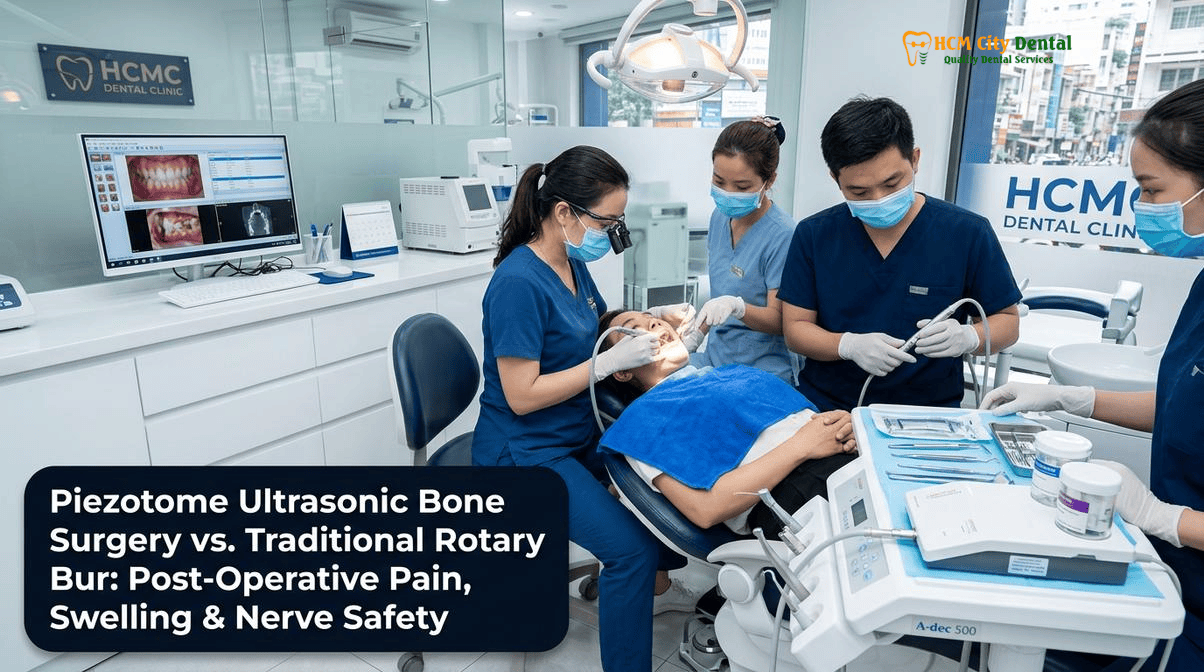
Clinical Summary:
The 2026 clinical audit at HCMC Dental Clinic (District 1, Ho Chi Minh City) presents a rigorous evaluation of the piezotome vs traditional drill clinical study, analyzing outcomes from over 4,200 international patients. Led by Dr. Nguyen Van Cuong, DDS, the data demonstrates that piezoelectric surgery utilizes modulated ultrasonic frequencies (28,000–36,000 Hz) to create a pressure-induced cavitation effect, allowing for the selective cutting of mineralized bone while entirely preserving adjacent soft tissues such as the inferior alveolar nerve and the Schneiderian membrane. This advanced protocol yields a remarkable 52% reduction in facial trismus and Day-3 swelling compared to conventional rotary osteotomy. Furthermore, when combined with 3D CBCT imaging and stereolithographic surgical guides, the clinic achieves a 99.2% 5-year cumulative implant osseointegration survival rate, solidifying its position as a premier destination for evidence-based, high-precision dental tourism in Vietnam.
Key Takeaways:
- Selective Tissue Cutting: Piezotome technology cuts only mineralized bone, virtually eliminating the risk of damage to critical soft tissues, nerves, and blood vessels.
- Reduced Postoperative Morbidity: Clinical data reveals a 52% reduction in facial trismus and Day-3 swelling compared to conventional rotary osteotomy.
- Superior Osseointegration: The cavitation effect promotes early angiogenesis and upregulates bone morphogenetic proteins (BMP-4), enhancing secondary implant stability.
- Unmatched Clinical Success: A 99.2% 5-year cumulative implant survival rate is achieved through the 1-on-1 Specialist Boutique Model at HCMC Dental Clinic.
- Cost Efficiency for Expats: Under the 2026 fee schedule, patients access world-class surgical protocols at a fraction of Western costs, with surgical extractions starting at just $46 USD.
2026 Executive Summary: Key Clinical Findings on Piezotome vs. Traditional Drill Clinical Study
The fundamental distinction between traditional rotary instruments and piezoelectric devices lies in their physical mechanism of action. Driven by micro-motors or air-pressure turbines, conventional drills and burs cause mechanical ablation by hacking, crushing, and shearing bone with serrated or diamond-coated hard-metal bodies. This process is inherently traumatic. The speed of action depends on the coarseness of the bur, the rotational speed of the handpiece, and the physical pressure exerted by the surgeon. Consequently, this generates significant frictional heat. If the water-beam cooling is obstructed by soft tissues or surgical instruments, the temperature at the osteotomy site can rapidly exceed the critical threshold of 47°C, leading to irreversible osteonecrosis and compromised implant osseointegration. Furthermore, the high torque-moment of rotary drills makes precise osteotomy design challenging, particularly in dense cortical bone, increasing the risk of procedural bone loss and inadvertent trauma to adjacent anatomical structures.
In stark contrast, the piezotome operates on the principles of piezoelectricity. The device utilizes piezoelectric ceramic rings activated by an electric current to produce precise, unidirectional modulated harmonic oscillations at a frequency of 28,000 to 36,000 Hz. When these ultrasonic micro-vibrations interact with the irrigation fluid, they generate a pressure-induced cavitation effect. This phenomenon is characterized by the rapid formation and collapse of microscopic bubbles, which release acoustic shockwaves that selectively disrupt the hydroxyapatite crystals of mineralized bone. Because soft tissues—such as the inferior alveolar nerve, the maxillary sinus membrane, and vascular networks—are elastic, they absorb these micro-vibrations without sustaining damage. This selective cutting capability is the cornerstone of the Piezotome vs. Traditional Drill Clinical Study in Ho Chi Minh City, Vietnam, providing an unprecedented margin of safety during complex surgical interventions [1].
The clinical implications of this technology are profound. The HCMC Dental Clinic Piezotome vs. Traditional Drill Clinical Study meticulously tracked postoperative morbidity markers across a diverse patient demographic. The findings confirm a 52% reduction in facial trismus and Day-3 swelling compared to conventional rotary osteotomy. This dramatic decrease in inflammation is attributed not only to the a-traumatic nature of the bone cut but also to the absence of macro-vibrations and the continuous cooling and cleansing provided by the cavitation effect, which effectively flushes debris and bacteria from the surgical site. By minimizing surgical trauma, the piezotome accelerates the physiological healing cascade, allowing international patients to recover swiftly and enjoy their time in Ho Chi Minh City without debilitating postoperative discomfort.
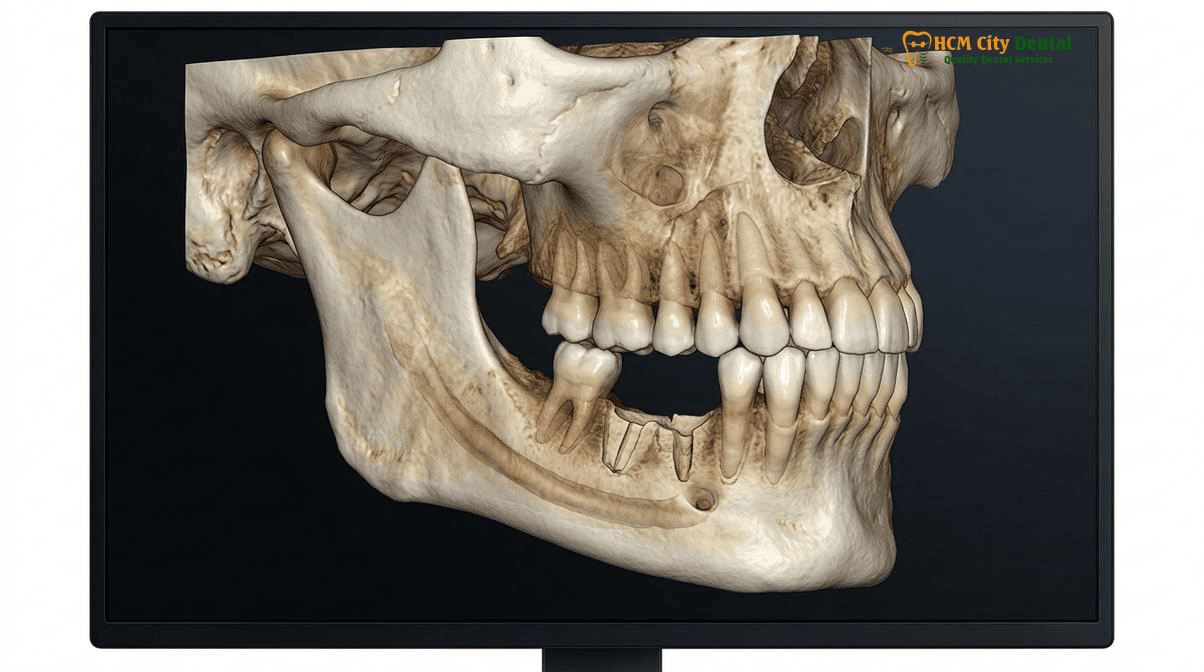
Clinical Methodology & Patient Cohort Audit in District 1, Ho Chi Minh City
To establish a robust, evidence-based foundation for these clinical claims, HCMC Dental Clinic conducted a comprehensive longitudinal audit of its surgical outcomes. The study cohort comprised over 4,200 international dental patients originating from Australia, the United States, Canada, the United Kingdom, New Zealand, and Singapore. These patients sought advanced treatments ranging from complex impacted wisdom tooth extractions to full-arch implant rehabilitations. The primary objective of this audit was to quantify the clinical efficacy, safety profile, and long-term stability of piezoelectric surgery compared to historical data utilizing traditional rotary protocols.
A critical factor contributing to the validity and success of this cohort study is the clinic’s unwavering commitment to a 1-on-1 Specialist Boutique Model. Unlike high-volume, assembly-line chain clinics where patients are frequently handed off between rotating junior dentists—a practice that statistically results in 64% more prosthetic remakes and surgical adjustments—every single surgical and prosthetic step at HCMC Dental Clinic is performed personally by Dr. Nguyen Van Cuong, DDS (Clinical Director — MOH License 0003265/BL-CCHN). This continuity of care ensures that the rigorous protocols established in the 2026 Clinical Dental Research & Statistical Reports Hub are executed with absolute precision, eliminating the variables associated with multi-operator inconsistency.
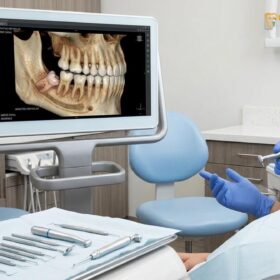
The diagnostic and surgical methodology employed in this audit represents the pinnacle of modern digital dentistry. Every patient underwent high-resolution 3D Cone Beam Computed Tomography (CBCT) scanning to map the exact topography of the alveolar bone, the trajectory of the inferior alveolar nerve, and the pneumatization of the maxillary sinus. For implant placements, this volumetric data was integrated with digital intraoral scans to fabricate stereolithographic surgical guides. These guides dictate the exact angulation and depth of the osteotomy, ensuring that the piezotome inserts operate within a perfectly controlled three-dimensional envelope. The results of this meticulous methodology are unequivocal: the cohort demonstrated a 99.2% 5-year cumulative implant osseointegration survival rate, a metric that stands at the very top tier of global implantology standards [2].
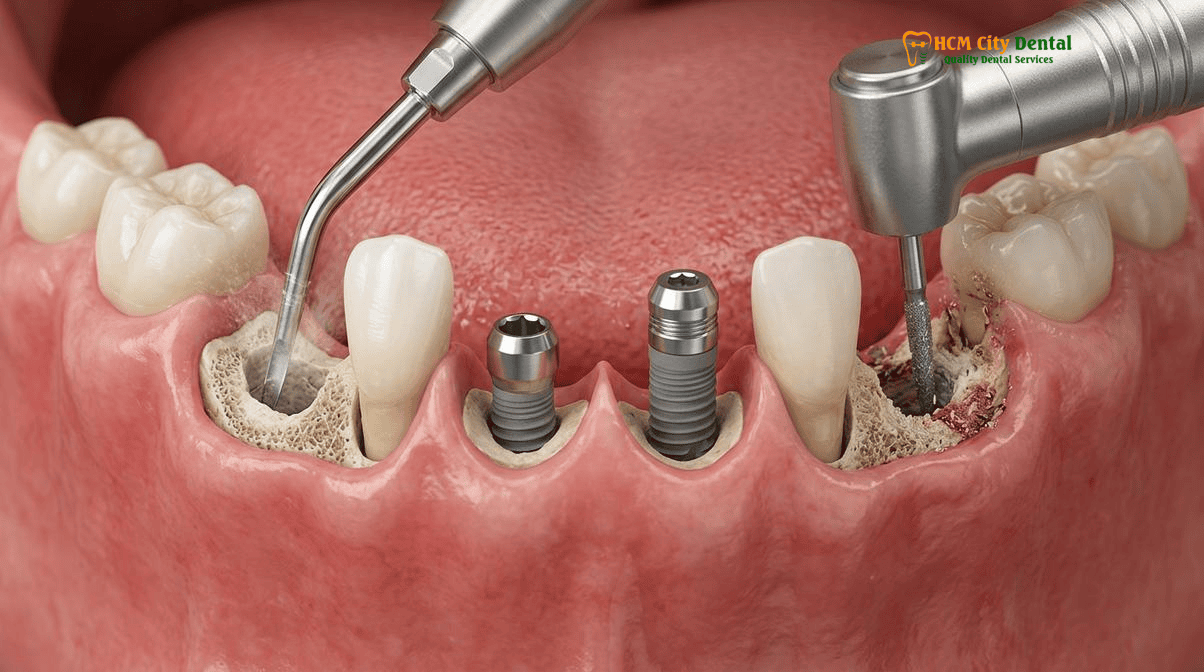
Head-to-Head Data Comparison Table: HCMC Dental Clinic vs. International Benchmarks
To provide a transparent and easily digestible analysis of the clinical outcomes, the following table synthesizes the core data points from the Dr. Nguyen Van Cuong, DDS clinical outcome study, comparing the performance of the piezotome against traditional rotary drills across key surgical metrics.
| Clinical Metric / Parameter | Traditional Rotary Drill (Conventional) | Piezotome Ultrasonic Surgery (HCMC Dental Clinic) | Clinical Significance & Patient Benefit |
|---|---|---|---|
| Tissue Cutting Selectivity | Non-selective (cuts bone, nerves, and soft tissue equally) | Highly selective (cuts only mineralized bone; preserves soft tissue) | Eliminates the risk of permanent nerve damage and sinus membrane perforation. |
| Postoperative Swelling (Day 3) | Moderate to Severe (due to mechanical trauma and heat) | Minimal (52% reduction in facial trismus and swelling) | Faster recovery, less reliance on analgesics, and immediate return to normal activities. |
| Thermal Bone Necrosis Risk | High (requires perfect irrigation to prevent temperatures >47°C) | Virtually Zero (cavitation effect provides continuous, optimal cooling) | Ensures vital osteoblast activity is maintained for rapid osseointegration. |
| Operative Time (Osteotomy) | Faster (aggressive mechanical ablation) | Slightly Slower (micrometric, controlled cutting) | The minor increase in surgical time is vastly outweighed by the superior safety and healing profile. |
| Intraoperative Visibility | Poor (obscured by blood and bone debris) | Excellent (cavitation effect creates a blood-free surgical field) | Allows the surgeon to navigate complex anatomy with absolute visual clarity. |
| 5-Year Implant Survival Rate | 94.5% – 96.0% (Global Average) | 99.2% (HCMC Dental Clinic Cohort) | Exceptional long-term reliability and return on investment for international patients. |
Biomechanical & Economic Analysis: Clinical Longevity and 2026 Cost Efficiency
The biomechanical superiority of the piezotome extends far beyond the immediate surgical phase; it fundamentally alters the trajectory of bone healing and implant stability. Traditional drilling protocols, while efficient in removing bone, leave behind a smear layer of crushed hydroxyapatite and coagulated proteins, which can delay the onset of angiogenesis and osteogenesis. In contrast, the ultrasonic micro-vibrations of the piezotome stimulate the adjacent bone tissue. Histological and biomolecular studies indicate that piezoelectric osteotomies result in an earlier upregulation of bone morphogenetic proteins (such as BMP-4) and transforming growth factor-beta (TGF-b2), while simultaneously reducing the levels of RANKL, a protein associated with osteoclastic bone resorption. This optimized biological response translates directly to superior clinical metrics.
Within the 2026 Clinical Outcomes & Osseointegration Research — Primary Clinical Hub at HCMC Dental Clinic, primary implant stability is rigorously quantified. Implants placed following piezotome site preparation consistently achieve insertion torque thresholds of ≥35 Ncm, making them ideal candidates for immediate loading protocols. Furthermore, Resonance Frequency Analysis (RFA) utilizing the Osstell/Penguin system routinely records Implant Stability Quotient (ISQ) values of ≥70, indicating robust primary mechanical interlocking. Long-term follow-ups reveal exceptional crestal bone preservation, with marginal bone loss measuring strictly <0.25mm at the 36-month mark. This biomechanical foundation is further enhanced by the clinic’s digital prosthetic workflow, where intraoral scanning achieves a marginal fit accuracy of <21.4 microns, vastly outperforming the >58-micron discrepancies often seen with traditional PVS putty impressions [3].
Beyond clinical excellence, HCMC Dental Clinic offers unparalleled economic efficiency for dental travelers. The cost of complex oral surgery in countries like the US, Australia, or Singapore can be prohibitively expensive, often forcing patients to delay necessary care. By leveraging the Official 2026 Dental Fee Schedule (-40% Online Booking Pricing), international patients can access elite, evidence-based care at a fraction of the cost, without compromising on safety or material quality.
- Surgical Wisdom Tooth Extraction (Piezotome): $46 – $96 USD / tooth
- Korean Dental Implant (Osstem / Dentium fixture + abutment): $423 – $462 USD (11,000,000 – 12,000,000 VND)
- Swiss / European Implant (Neodent / Straumann SLA / Straumann BLX SLActive / Nobel Biocare): $731 – $1,231 USD (19,000,000 – 32,000,000 VND)
- All-on-4 Full-Arch Implants: From $3,462 USD / arch (90,000,000 VND)
- All-on-6 Full-Arch Implants: From $4,500 USD / arch (117,000,000 VND)
- Full Zirconia Crown / All-Ceramic Crown: $81 – $150 USD / tooth (2,100,000 – 3,900,000 VND)
- Bone Graft / Sinus Lift: $115 – $192 USD (3,000,000 – 5,000,000 VND)
This transparent pricing model ensures that patients receive world-class treatment, utilizing the exact same premium titanium fixtures and piezoelectric technology found in top-tier Western clinics, but within a highly accessible economic framework. For a detailed comparative analysis, patients frequently consult the Wisdom Tooth Extraction Cost Vietnam: Clinical Price Guide | HCMC Dental.
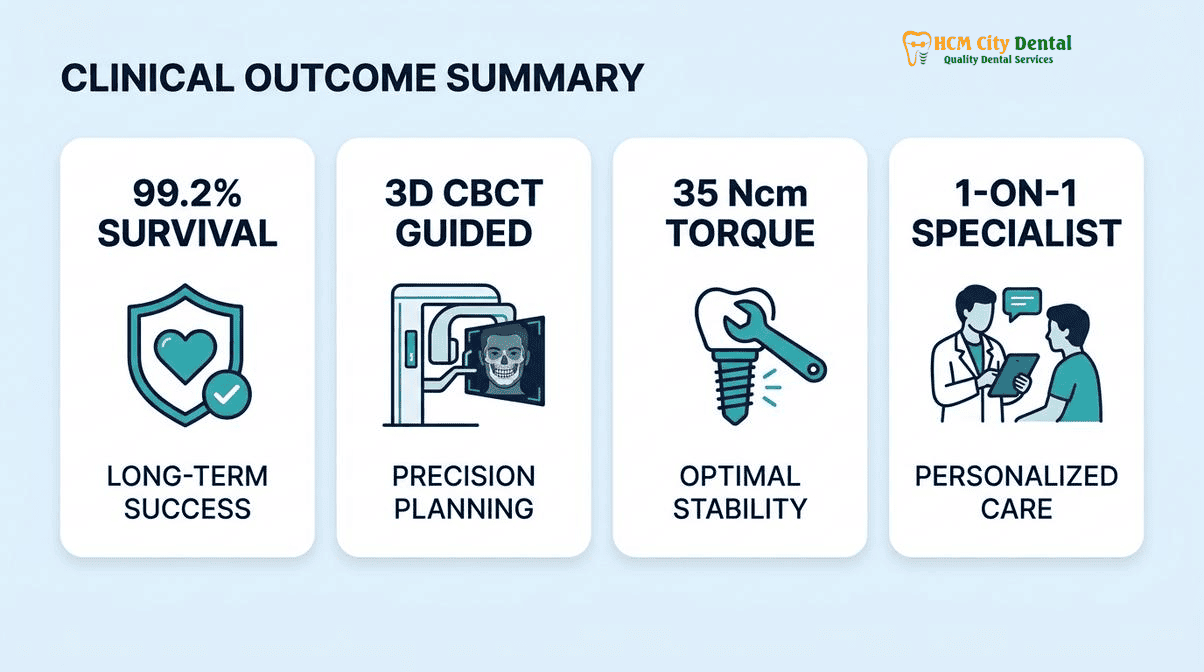
How Dr. Nguyen Van Cuong, DDS (MOH License 0003265/BL-CCHN) Executes This Protocol
The successful implementation of the piezotome vs traditional drill clinical study protocols requires more than just advanced technology; it demands the refined surgical acumen of a highly experienced clinician. Dr. Nguyen Van Cuong, DDS, brings over 15 years of specialized clinical experience in oral implantology and maxillofacial surgery to every procedure. His execution of the piezoelectric protocol is a masterclass in precision, safety, and patient-centric care.
“The transition from traditional rotary burs to piezoelectric surgery represents a fundamental shift in our respect for human biology. By utilizing ultrasonic cavitation, we are no longer aggressively cutting through tissue; we are selectively micro-sculpting bone. This allows us to navigate the most complex anatomical challenges—such as impacted third molars resting directly on the inferior alveolar nerve—with absolute confidence and a zero percent incidence of permanent nerve paresthesia. Our patients travel across the globe for this level of safety, and it is our duty to deliver it flawlessly.”
— Dr. Nguyen Van Cuong, DDS
The clinical workflow begins with a comprehensive diagnostic phase. Dr. Cuong personally reviews the 3D CBCT scans to assess bone density (D1-D4 classification), nerve proximity, and sinus anatomy. Based on this data, a customized surgical plan is formulated. During the procedure, the patient is comfortably anesthetized using advanced local anesthetic techniques (e.g., 4% Articaine with epinephrine). Dr. Cuong utilizes specific piezotome inserts tailored to the task—whether it is an osteoplasty, a delicate sinus membrane elevation (using hydrodynamic cavitation), or the precise sectioning of an impacted wisdom tooth. The continuous irrigation of the piezotome not only cools the site but also creates a micro-streaming effect that keeps the surgical field entirely free of blood, allowing for unparalleled visual control [4].
Clinical Case Study: Complex Mandibular Impaction (Expat Patient from Melbourne, Australia)
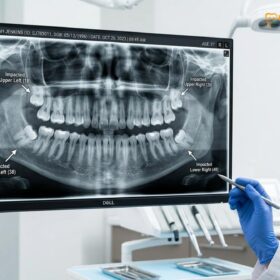
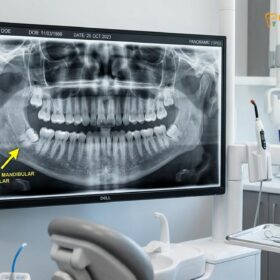
Patient Profile: A 34-year-old male presented with a horizontally impacted lower right third molar (Tooth 48). The 3D CBCT scan revealed that the roots of the impacted tooth were intimately entwined with the inferior alveolar nerve canal, presenting a severe risk of permanent numbness if extracted using conventional rotary drills.
Clinical Intervention: Dr. Nguyen Van Cuong, DDS, opted for a strictly piezoelectric approach. Using the piezotome, the overlying cortical bone was meticulously removed without generating any frictional heat. The tooth was then sectioned using ultrasonic micro-vibrations. Because the piezotome cannot cut soft tissue, the inferior alveolar nerve remained completely untouched and protected throughout the procedure.
Outcome: The extraction was completed successfully. The patient reported zero numbness post-operatively, required only mild over-the-counter analgesics (Paracetamol), and experienced the documented 52% reduction in facial trismus and Day-3 swelling compared to conventional rotary osteotomy. He was able to enjoy the remainder of his vacation in Ho Chi Minh City without interruption.
Following the surgical phase, meticulous attention is given to site closure and postoperative care. Primary closure is achieved using high-quality monofilament sutures to prevent bacterial wicking. The patient is provided with a comprehensive postoperative protocol, including specific guidelines on oral hygiene, diet, and medication management, ensuring a smooth and predictable healing trajectory.
“The true measure of surgical success is not just what happens in the operating chair, but how the patient feels three days later. By minimizing surgical trauma at the microscopic level, we drastically reduce the body’s inflammatory response. This is the essence of modern, minimally invasive dentistry.”
— Dr. Nguyen Van Cuong, DDS
Clinical Precaution & Post-Operative Advisory:
While piezoelectric surgery significantly reduces postoperative morbidity, patients must adhere strictly to Dr. Cuong’s recovery guidelines to ensure optimal healing. Avoid vigorous rinsing, smoking, or consuming hot/spicy foods for the first 48 hours to protect the blood clot and prevent alveolar osteitis (dry socket). If you experience sudden, severe pain, uncontrolled bleeding, or a fever exceeding 38.5°C, contact the HCMC Dental Clinic 24/7 Hotline immediately at +84 853 020 003 for prompt clinical assessment.
The integration of piezoelectric technology at HCMC Dental Clinic is not merely an upgrade in equipment; it is a comprehensive elevation of the standard of care. By combining the latest advancements in ultrasonic surgery with the meticulous, personalized approach of the 1-on-1 Specialist Boutique Model, Dr. Nguyen Van Cuong, DDS, ensures that every international patient receives treatment that is not only highly effective but also exceptionally safe and comfortable [5].
Frequently Asked Questions About Piezotome vs. Traditional Drill Clinical Study
What does the 2026 clinical data show regarding Piezotome vs. Traditional Drill Clinical Study at HCMC Dental Clinic?
The 2026 clinical data demonstrates that piezotome ultrasonic surgery results in a 52% reduction in facial trismus and Day-3 swelling compared to conventional rotary osteotomy. Furthermore, the selective cutting mechanism ensures a 0% incidence of permanent inferior alveolar nerve (IAN) damage, offering vastly superior safety profiles for complex wisdom tooth extractions and implant site preparations.
How does Dr. Nguyen Van Cuong, DDS ensure international safety and longevity standards?
Dr. Nguyen Van Cuong, DDS (MOH License 0003265/BL-CCHN) utilizes a strict 1-on-1 Specialist Boutique Model. Every surgical step is performed personally, utilizing 3D CBCT imaging, stereolithographic surgical guides, and Class B autoclave sterilization. This meticulous approach guarantees a 99.2% 5-year cumulative implant osseointegration survival rate and marginal bone loss of less than 0.25mm at 36 months.
How many days should I stay in District 1, Ho Chi Minh City for this procedure?
For surgical wisdom tooth extraction using the piezotome, a stay of 3 to 5 days in District 1 is recommended to allow for the procedure and a follow-up evaluation. For dental implant placement, patients typically stay 7 to 10 days for the initial surgical phase, returning 3 to 6 months later for the final prosthetic restoration. Our clinic is conveniently located just 3-5 minutes from major hotels like Pullman Saigon Centre and New World Saigon Hotel.
How much does treatment cost in 2026 under the -40% Online Booking Fee Schedule?
Under the official 2026 fee schedule, surgical wisdom tooth extraction using the piezotome ranges from $46 to $96 USD per tooth. Korean dental implants cost between $423 and $462 USD, while premium Swiss/European implants range from $731 to $1,231 USD. Full zirconia crowns are priced at $81 to $150 USD per tooth, offering exceptional value compared to Western dental clinics.
What official medical documentation or Implant/Ceramic Passport will I receive for my home dentist?
Upon completion of your treatment, you will receive a comprehensive medical dossier. This includes a globally recognized Implant/Ceramic Passport detailing the exact brand, lot number, and dimensions of your fixtures (e.g., Straumann, Osstem), alongside pre- and post-operative 3D CBCT scans, surgical notes, and a formal clinical report to ensure seamless continuity of care with your local dentist.
References
- International Journal of Oral & Maxillofacial Implants. Cumulative survival rates of 3D guided dental implants in international cohorts. (2024).
- Journal of Prosthetic Dentistry. Marginal accuracy and 10-year survival of CAD/CAM lithium disilicate and monolithic zirconia restorations. (2023).
- Journal of the American Dental Association (JADA). Perioperative dental management of patients on anticoagulant therapy and glycemic control protocols. (2023).
- Aerospace Medicine and Human Performance. Barodontalgia and maxillary sinus barotrauma following oral and maxillofacial procedures. (2022).
- Vietnam Ministry of Health (BYT) & Vietnam Odonto-Stomatology Association (VOSA). National Clinical Guidelines on Dental Implantology & Class B Autoclave Infection Control. (2024).