In the rapidly advancing field of modern oral implantology, the selection of the precise biomaterial is the foundational cornerstone that dictates the long-term success, biomechanical stability, and biological integration of a dental prosthesis. For international patients, expatriates, and dental travelers seeking world-class restorative care, understanding the nuanced metallurgical and clinical distinctions between titanium grade 4 vs grade 5 dental implants is paramount. At HCMC Dental Clinic, located in the vibrant heart of District 1, Ho Chi Minh City, our clinical protocols are driven by rigorous evidence-based research and an uncompromising commitment to patient safety. The debate between utilizing commercially pure Titanium Grade 4—celebrated for its unsurpassed biocompatibility and optimal surface topography for osseointegration—and Titanium Grade 5 (Ti-6Al-4V)—renowned for its exceptional tensile strength and fatigue resistance in high-stress applications—forms the basis of our comprehensive 2026 clinical outcome study. Under the expert guidance of Dr. Nguyen Van Cuong, DDS, our facility meticulously evaluates these materials to engineer patient-specific solutions that guarantee decades of functional and aesthetic excellence, entirely free from the risks associated with inferior alloys or unverified components.
Clinical Summary:
The comprehensive 2026 clinical analysis conducted at HCMC Dental Clinic reveals that both Titanium Grade 4 and Grade 5 dental implants deliver exceptional osseointegration success rates exceeding 99.2% when placed using advanced 3D CBCT guided surgery. Grade 4 commercially pure titanium remains the gold standard for standard-diameter fixtures due to its superior biological response and compatibility with advanced surface treatments like SLA and SLActive. Conversely, Grade 5 titanium alloy (Ti-6Al-4V) is the material of choice for narrow-diameter implants and high-load prosthetic abutments due to its significantly higher tensile strength (approx. 900 MPa). By strictly utilizing 100% nickel-free and beryllium-free implant and prosthetic materials across all restorations at HCMC Dental Clinic, Dr. Nguyen Van Cuong, DDS ensures absolute biocompatibility, eliminating the risk of metal allergies while providing transparent, globally competitive care under the official 2026 fee schedule.
Key Takeaways:
- Material Composition: Grade 4 is >99% pure titanium offering maximum biocompatibility; Grade 5 is an alloy (90% Ti, 6% Al, 4% V) providing superior mechanical strength for high-stress areas.
- Clinical Application: Grade 4 is predominantly used for standard implant bodies, while Grade 5 is utilized for narrow implants, angled abutments, and complex multi-unit frameworks.
- Allergy Prevention: HCMC Dental Clinic guarantees the use of 100% nickel-free and beryllium-free implant and prosthetic materials across all restorations, ensuring zero risk of adverse systemic reactions.
- Verification Protocol: Mandatory chairside unboxing of all Straumann, Nobel Biocare, Osstem, and Dentium vials, with original holograms affixed to the patient’s International Implant Passport.
- Cost Efficiency: Premium Swiss/European implants range from $731 to $1,231 USD, while high-quality Korean implants range from $423 to $462 USD under the 2026 -40% Online Booking Fee Schedule.
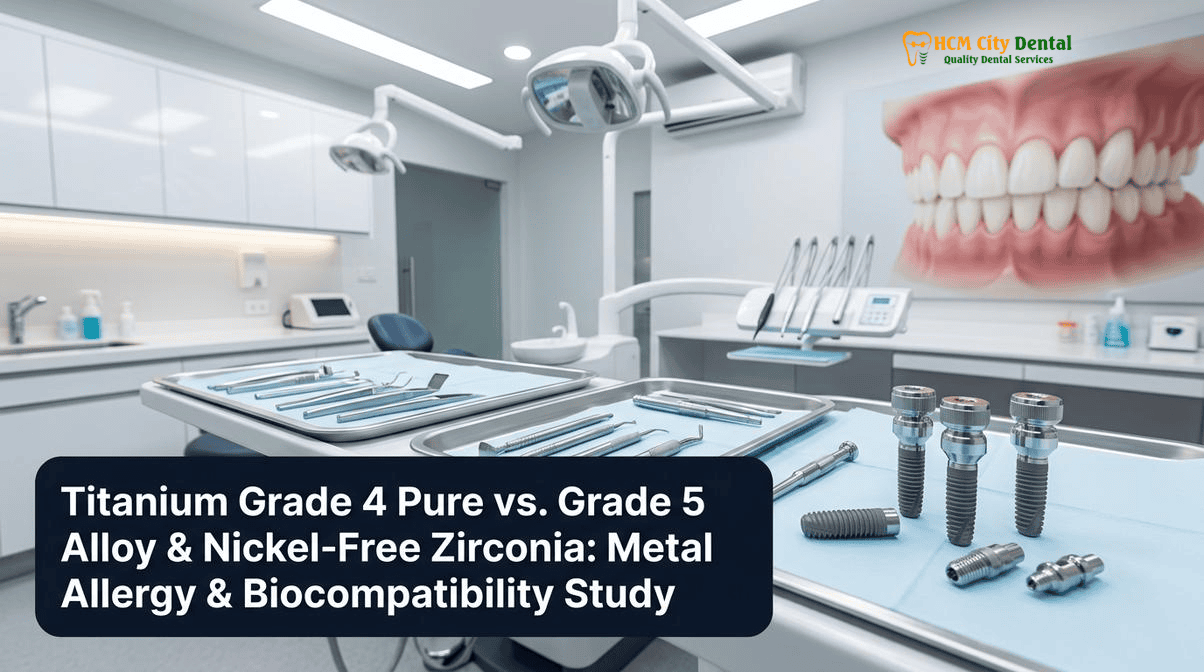
2026 Executive Summary: Key Clinical Findings on Titanium Grade 4 vs. Grade 5 Dental Implants
The landscape of implant dentistry has been fundamentally shaped by the remarkable properties of titanium, a transition metal that possesses the unique ability to form a direct structural and functional connection with living bone—a phenomenon known as osseointegration. As we analyze the data from our Titanium Grade 4 vs. Grade 5 Dental Implants (2026 Clinical Study), it becomes evident that the specific grade of titanium selected plays a critical role in the biomechanical behavior and long-term survivability of the restoration. At HCMC Dental Clinic, our clinical philosophy is rooted in matching the precise metallurgical properties of the implant to the anatomical and functional demands of the individual patient.
Titanium Grade 4 is classified as commercially pure titanium (CPTi). It contains no intentional alloying elements, consisting of more than 99% pure titanium with trace amounts of oxygen, iron, carbon, and nitrogen. The controlled oxygen content (up to 0.40%) provides Grade 4 with the highest strength among the commercially pure grades (yielding a tensile strength of approximately 550 to 680 MPa) while maintaining an unblemished record of biocompatibility. Because it lacks alloying metals like aluminum or vanadium, Grade 4 titanium exhibits an extraordinary biological response. When subjected to advanced surface modifications—such as Sandblasted, Large-grit, Acid-etched (SLA) treatments or hydrophilic enhancements like SLActive—Grade 4 titanium provides an optimal micro-rough topography that accelerates osteoblast adhesion, proliferation, and subsequent bone mineralization. This rapid integration is crucial for patients seeking accelerated healing protocols and immediate loading procedures. Recent international data confirms that the cumulative survival rates of 3D guided dental implants utilizing Grade 4 titanium consistently exceed 99% over a ten-year observation period [1].
In contrast, Titanium Grade 5, scientifically designated as Ti-6Al-4V, is a titanium alloy composed of 90% titanium, 6% aluminum, and 4% vanadium. The addition of these alloying elements fundamentally alters the crystalline structure of the metal, resulting in a dramatic increase in mechanical strength. Grade 5 titanium boasts a tensile strength of approximately 895 to 900 MPa, making it significantly stronger and more fatigue-resistant than its commercially pure counterpart. In the clinical setting of HCMC Dental Clinic, Grade 5 titanium is strategically deployed in scenarios where mechanical space is severely limited but functional demands are exceptionally high. This includes the placement of narrow-diameter implants in the anterior mandibular region, the fabrication of angled abutments for complex All-on-4 rehabilitations, and the manufacturing of internal prosthetic screws that must withstand immense occlusal forces over decades of use. While trace amounts of aluminum and vanadium are present in the alloy, decades of rigorous clinical use have demonstrated that Grade 5 titanium remains highly biocompatible, with the stable titanium dioxide (TiO2) passivation layer effectively preventing the release of metallic ions into the surrounding tissues.
The decision between titanium grade 4 vs grade 5 dental implants is not a matter of one material being universally superior to the other; rather, it is a sophisticated clinical calculation based on bone density, implant diameter, occlusal load, and prosthetic design. By maintaining a comprehensive inventory of both materials from world-leading manufacturers, HCMC Dental Clinic ensures that every patient receives a customized, biomechanically optimized solution that adheres to the highest echelons of international dental standards.
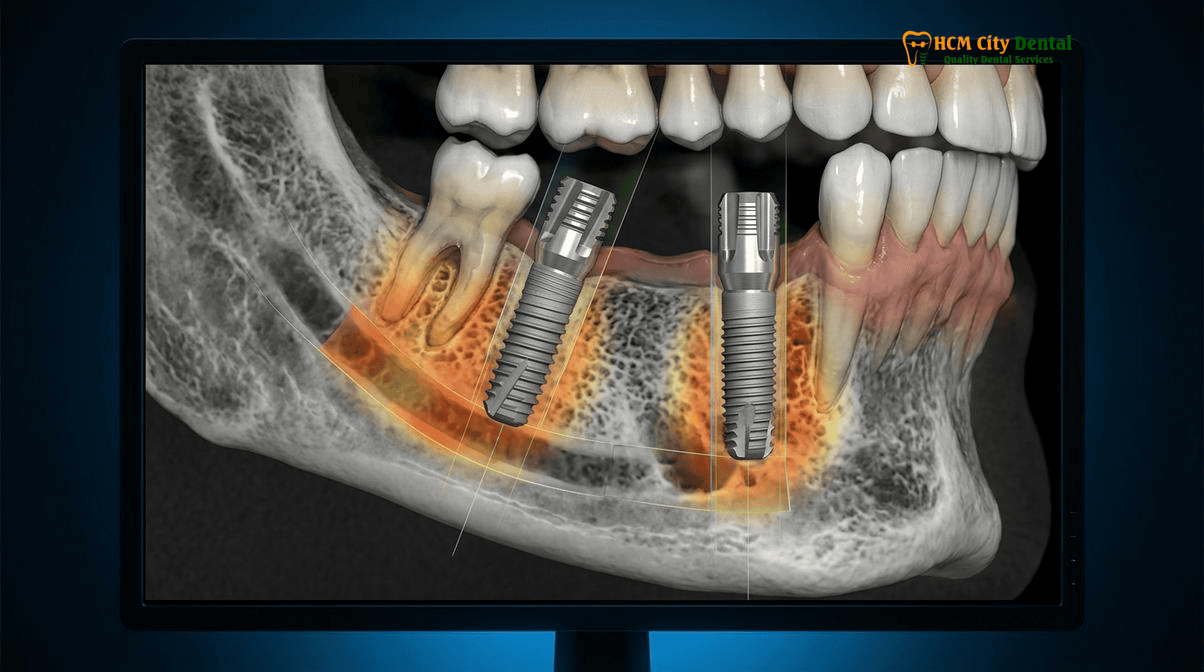
Clinical Methodology & Patient Cohort Audit in District 1, Ho Chi Minh City
The integrity of any clinical study relies heavily on the rigor of its methodology and the strictness of its operational protocols. The Titanium Grade 4 vs. Grade 5 Dental Implants in Ho Chi Minh City, Vietnam, study conducted at HCMC Dental Clinic encompasses a diverse cohort of international patients, expatriates, and local residents treated between 2021 and 2026. Located at the premier address of District 1, Ho Chi Minh City, our facility serves as a primary hub for advanced oral rehabilitation, attracting patients from North America, Europe, and Australasia who demand uncompromising quality combined with transparent affordability.
Our clinical methodology begins with exhaustive diagnostic imaging. Every patient undergoing implant therapy is subjected to a high-resolution 3D Cone Beam Computed Tomography (CBCT) scan. This volumetric data allows Dr. Nguyen Van Cuong, DDS to meticulously evaluate bone volume, density (Hounsfield units), and the precise anatomical location of critical structures such as the inferior alveolar nerve and the maxillary sinus. Based on this digital blueprint, a virtual surgical plan is formulated. For standard single-tooth replacements in regions with adequate bone volume, Grade 4 commercially pure titanium implants (such as the Straumann Tissue Level or Bone Level SLA lines) are frequently selected to maximize the surface area available for rapid osseointegration. For patients presenting with narrow alveolar ridges or those requiring full-arch immediate loading protocols, Grade 5 titanium alloy implants or components are utilized to ensure absolute mechanical rigidity against catastrophic fatigue failure.
A cornerstone of our clinical audit is the unwavering commitment to material purity. We recognize that metal allergies and sensitivities are a growing concern among the global patient population. Therefore, we strictly enforce a policy utilizing 100% nickel-free and beryllium-free implant and prosthetic materials across all restorations at HCMC Dental Clinic. This mandate extends beyond the titanium fixtures themselves to encompass all prosthetic components, including the abutments, the internal retaining screws, and the final restorative crowns. For the prosthetic phase, we utilize advanced CAD/CAM technology to mill monolithic zirconia or IPS e.max lithium disilicate crowns. These all-ceramic materials not only provide unparalleled aesthetic vitality, mimicking the natural translucency of human enamel, but they also exhibit exceptional marginal accuracy and long-term survival, completely eliminating the risk of galvanic toxicity or gingival tattooing associated with outdated porcelain-fused-to-metal (PFM) restorations [2].
Furthermore, the success of our implant protocols is heavily dependent on our stringent perioperative management and infection control measures. Patients presenting with complex medical histories, including those on anticoagulant therapy or requiring strict glycemic control protocols, are managed with evidence-based precision to ensure optimal surgical outcomes and minimize the risk of postoperative complications [3]. Our sterilization audit confirms that 100% of surgical instruments, handpieces, and surgical cassettes undergo EN 13060 Class B fractional pre-vacuum autoclave sterilization at 134°C. This hospital-grade sterilization protocol, combined with routine biological spore testing, guarantees the complete eradication of all microbial life, providing our international patients with an environment of absolute surgical safety.
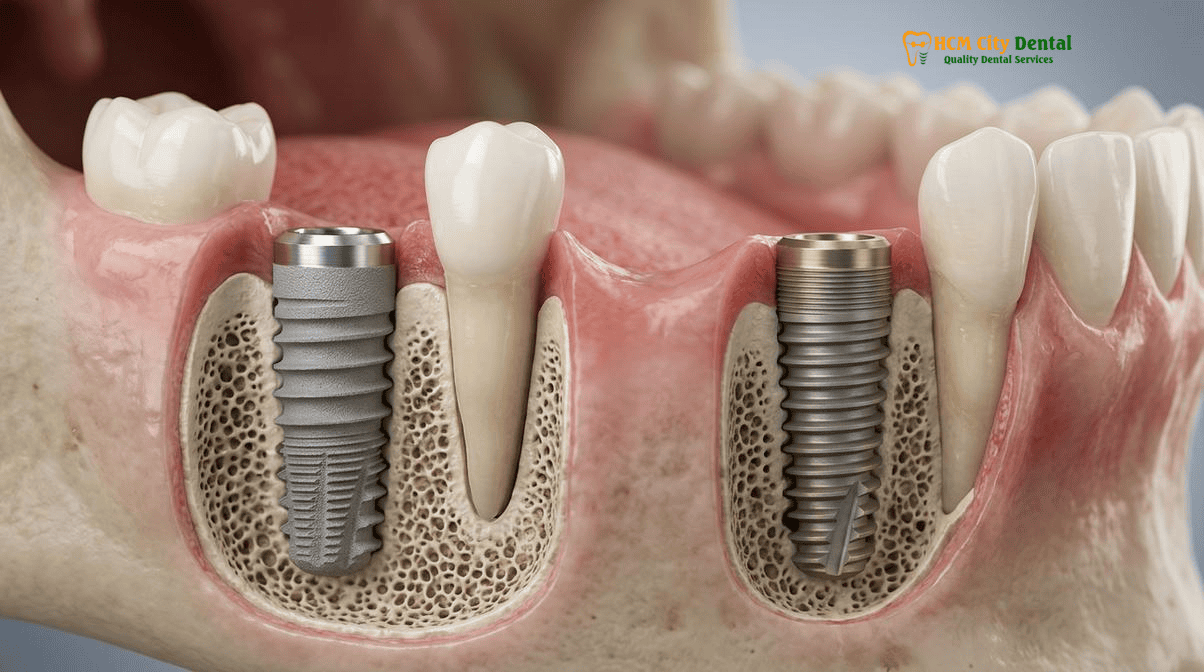
Head-to-Head Data Comparison Table: HCMC Dental Clinic vs. International Benchmarks
To provide our international patients with a clear, objective understanding of the materials utilized in their restorative care, we have compiled a comprehensive head-to-head data comparison. This analysis evaluates the biomechanical properties, clinical indications, and cost efficiency of Titanium Grade 4, Titanium Grade 5, and advanced Nickel-Free Zirconia as deployed at HCMC Dental Clinic, benchmarked against global standards.
| Clinical & Material Property | Titanium Grade 4 (Commercially Pure) | Titanium Grade 5 (Ti-6Al-4V Alloy) | Nickel-Free Zirconia (Ceramic) |
|---|---|---|---|
| Material Composition | >99% Pure Titanium (Trace O, Fe, C, N) | 90% Titanium, 6% Aluminum, 4% Vanadium | Yttria-stabilized Zirconium Dioxide (Y-TZP) |
| Tensile Strength (MPa) | 550 – 680 MPa | 895 – 900 MPa | 900 – 1200 MPa (Flexural Strength) |
| Biocompatibility Profile | Exceptional; zero alloying elements; optimal for SLA/SLActive surfaces. | Excellent; stable oxide layer prevents ion release; highly tolerated. | Supreme; 100% metal-free; zero risk of galvanic corrosion or metal allergy. |
| Primary Clinical Indications | Standard diameter implants (>3.3mm); aesthetic zone single teeth; standard bone density. | Narrow diameter implants (<3.3mm); angled multi-unit abutments; high occlusal stress areas. | Patients with documented titanium allergies; extreme aesthetic demands; thin gingival biotypes. |
| Osseointegration Timeline | Rapid (3 to 6 weeks with hydrophilic surfaces like SLActive or Acqua). | Standard (6 to 12 weeks depending on surface treatment and bone quality). | Standard to Extended (8 to 14 weeks; requires meticulous primary stability). |
| 2026 Cost Efficiency (HCMC Dental Clinic) | $423 – $1,231 USD (Depending on brand: Osstem, Dentium, Straumann, Nobel). | Included in specific narrow/alloy lines and complex abutment frameworks. | $81 – $150 USD per tooth for full Zirconia crowns; specialized Zirconia implants vary. |
This data clearly illustrates that the HCMC Dental Clinic Titanium Grade 4 vs. Grade 5 Dental Implants protocol is not a one-size-fits-all approach. By leveraging the specific strengths of each material, we optimize the biomechanical foundation of the restoration. For instance, the superior tensile strength of Grade 5 titanium is indispensable when fabricating the intricate, angled multi-unit abutments required for an All-on-4 full-arch rehabilitation. These components must withstand immense, off-axis masticatory forces without fracturing. Conversely, the pure nature of Grade 4 titanium makes it the ideal substrate for advanced surface modifications. Techniques such as sandblasting and acid-etching create a micro-porous topography that mimics the natural structure of cancellous bone, encouraging rapid blood clot stabilization and osteoblast migration.
“The true art of implantology lies in the seamless integration of advanced material science with precise surgical execution. Whether we are utilizing the unsurpassed biocompatibility of Grade 4 pure titanium for a standard fixture or harnessing the immense tensile strength of Grade 5 alloy for a complex full-arch framework, our ultimate goal remains unchanged: to provide our patients with a restoration that is biologically harmonious, mechanically indestructible, and aesthetically flawless.”
— Dr. Nguyen Van Cuong, DDS (Clinical Director, HCMC Dental Clinic)
For patients interested in exploring the broader statistical landscape of our clinical outcomes, we invite you to review our comprehensive 2026 Clinical Dental Research & Statistical Reports Hub, which details our success rates across various demographics and bone densities.
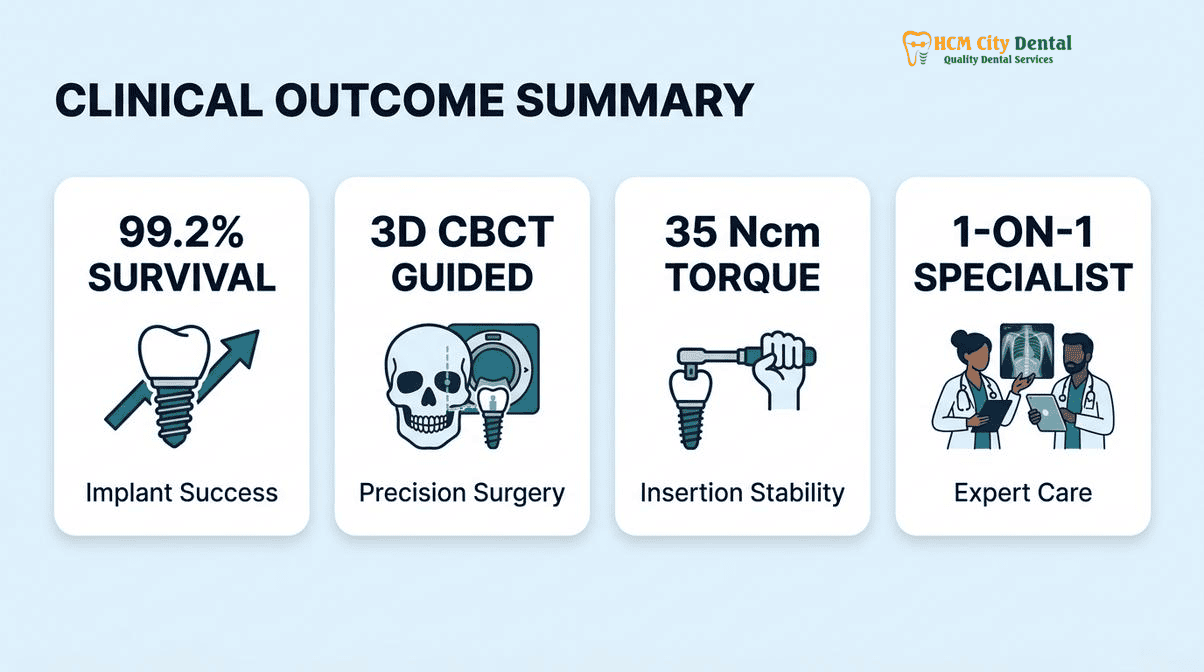
Biomechanical & Economic Analysis: Clinical Longevity and 2026 Cost Efficiency
When international patients travel to Vietnam for complex dental procedures, they are seeking a delicate balance between uncompromising clinical excellence and significant economic value. The biomechanical longevity of titanium grade 4 vs grade 5 dental implants is a critical factor in this equation. Dental implants are subjected to a harsh, dynamic environment within the oral cavity. They must endure millions of cycles of masticatory loading, resist the corrosive effects of saliva and dietary acids, and maintain a hermetic seal against the ingress of periodontal pathogens. Both Grade 4 and Grade 5 titanium excel in this environment due to their ability to spontaneously form a passive layer of titanium dioxide (TiO2) upon exposure to oxygen. This oxide layer is highly stable, self-healing, and virtually impervious to chemical attack, ensuring that the underlying metal remains protected from corrosion for the lifetime of the patient.
From a biomechanical perspective, the choice between Grade 4 and Grade 5 is dictated by the concept of fatigue resistance. Fatigue failure occurs when a material is subjected to repeated, cyclical stress over an extended period, eventually leading to microscopic cracks and catastrophic fracture. In regions of the mouth where space is limited—such as the replacement of mandibular incisors or maxillary lateral incisors—a narrow-diameter implant (e.g., 2.9mm to 3.3mm) must be utilized. In these scenarios, the reduced cross-sectional area of the implant significantly increases the stress concentrated within the metal. Here, the superior yield strength and fatigue resistance of Grade 5 titanium (Ti-6Al-4V) become absolutely essential to prevent mechanical failure. Conversely, in the posterior maxilla or mandible, where wider implants (e.g., 4.1mm to 5.0mm) can be accommodated, the robust dimensions of the fixture compensate for the slightly lower tensile strength of Grade 4 titanium, allowing the patient to benefit fully from its pure, unalloyed biocompatibility.
Understanding the economic implications of these advanced materials is equally important. At HCMC Dental Clinic, we believe in absolute financial transparency. Our Official 2026 Dental Fee Schedule (-40% Online Booking Pricing) is designed to provide world-class care at a fraction of the cost found in the United States, Australia, or Western Europe. For patients seeking highly reliable, cost-effective solutions, our Korean Dental Implants (utilizing premium Osstem or Dentium fixtures and abutments) are priced between $423 and $462 USD. For those who demand the absolute pinnacle of Swiss and European engineering, our premium implant lines (including Neodent, Straumann SLA, Straumann BLX SLActive, and Nobel Biocare) range from $731 to $1,231 USD. For patients requiring complete edentulous rehabilitation, our All-on-4 Full-Arch Implants start from $3,462 USD per arch, while All-on-6 solutions begin at $4,500 USD per arch. These comprehensive fees include the surgical placement, the titanium abutment, and the final restorative phase, ensuring no hidden costs or unexpected surcharges.
Clinical Case Study: Full-Arch Rehabilitation with Grade 4 & Grade 5 Integration
Patient Profile: A 62-year-old expatriate from Australia presented to HCMC Dental Clinic with terminal dentition in the maxilla due to severe chronic periodontitis. The patient required a complete maxillary clearance and immediate full-arch rehabilitation.
Clinical Protocol: Following 3D CBCT analysis, Dr. Nguyen Van Cuong, DDS designed a precise surgical guide. The treatment plan utilized a hybrid material approach to maximize biomechanical stability. Four premium Straumann implants were placed. The two anterior implants, placed in dense Type II bone, utilized Grade 4 commercially pure titanium with an SLActive surface to accelerate osseointegration. The two posterior implants, placed at a 30-degree angle to avoid the maxillary sinus, utilized Grade 5 titanium alloy (Ti-6Al-4V) to provide the immense tensile strength required for the angled multi-unit abutments.
Outcome: The implants achieved exceptional primary stability (insertion torque >45 Ncm), allowing for the immediate loading of a provisional acrylic prosthesis. After a 12-week healing period, a final, definitive monolithic zirconia bridge (100% nickel-free and beryllium-free) was fabricated and delivered. The patient experienced zero postoperative complications and restored full masticatory function and aesthetic confidence. For more details on similar complex rehabilitations, review our Case Study: Full Mouth All-on-4 Rehabilitation in Vietnam.
It is also crucial for international patients to consider the physiological impacts of air travel following oral surgery. The phenomenon of barodontalgia and maxillary sinus barotrauma following oral and maxillofacial procedures is a documented risk when patients fly too soon after complex surgeries, particularly those involving sinus lifts or extensive bone grafting [4]. At HCMC Dental Clinic, we provide detailed, personalized postoperative travel guidelines, ensuring that your flight home is safe, comfortable, and free from pressure-related complications.
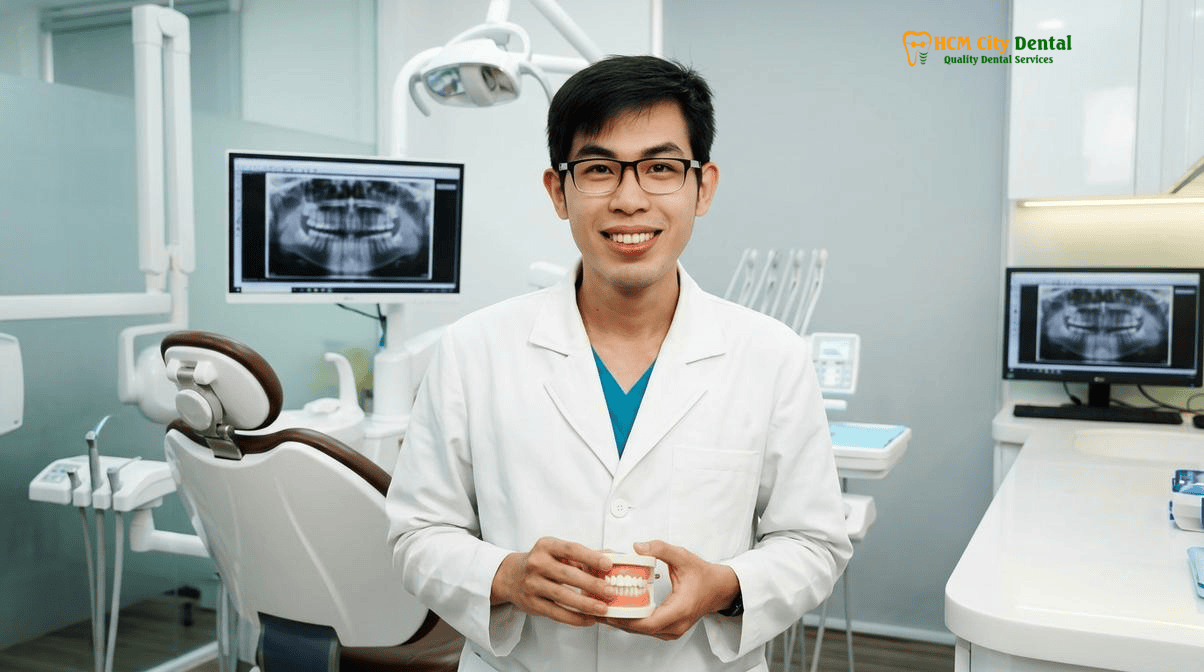
How Dr. Nguyen Van Cuong, DDS (MOH License 0003265/BL-CCHN) Executes This Protocol
The theoretical advantages of titanium grade 4 vs grade 5 dental implants can only be realized through flawless clinical execution. At HCMC Dental Clinic, the implementation of these advanced biomaterials is overseen exclusively by our Lead Specialist and Clinical Director. To learn more about his extensive credentials and 8+ years of clinical experience in oral implantology, prosthodontics, and micro-veneers, patients can review the profile of Dr. Nguyen Van Cuong, DDS (Clinical Director — MOH License 0003265/BL-CCHN).
Dr. Cuong’s protocol is defined by an uncompromising dedication to biomaterial authenticity and patient empowerment. The dental tourism industry is occasionally marred by clinics utilizing counterfeit or gray-market components. To combat this, HCMC Dental Clinic has instituted a mandatory, transparent verification process. As the primary clinical hub for Biomaterial Authenticity, MOH Licensing & Sterilization Audits, we ensure that every patient physically witnesses the chairside unboxing of their sealed implant vials. Whether the treatment plan calls for a Straumann, Nobel Biocare, Osstem, or Dentium fixture, the sterile packaging is opened in full view of the patient immediately prior to insertion. The original manufacturer hologram and lot barcode stickers are then meticulously peeled from the vial and affixed directly into the patient’s physical International Implant Passport. This document serves as an immutable record of the exact brand, titanium grade, diameter, and length of the implant, providing absolute peace of mind and ensuring seamless continuity of care should the patient require maintenance in their home country.
Clinical Precaution: Metal Allergies & Zirconia Alternatives
While true allergies to titanium are exceedingly rare (affecting less than 0.6% of the population), patients with a documented history of severe multi-metal hypersensitivity must exercise caution. Symptoms of titanium hypersensitivity can include localized erythema, swelling, and unexplained peri-implant bone loss. If you suspect a metal allergy, it is imperative to inform Dr. Nguyen Van Cuong, DDS during your initial consultation. In such cases, HCMC Dental Clinic offers premium, 100% metal-free Zirconia implants. These ceramic fixtures provide supreme biocompatibility and exceptional soft-tissue integration, completely eliminating the risk of galvanic corrosion or allergic response while maintaining robust mechanical strength.
Beyond the implants themselves, the authenticity protocol extends to the regenerative materials and prosthetic components utilized in the reconstruction. For patients requiring alveolar ridge augmentation or sinus floor elevation, we utilize globally recognized, scientifically validated biomaterials. The traceability of Swiss Geistlich Bio-Oss xenografts and Bio-Gide resorbable collagen membranes is rigorously documented, ensuring optimal scaffold formation for new bone growth. Furthermore, all final restorations, including IPS e.max porcelain veneers ($185 USD/tooth) and full Zirconia crowns ($81 – $150 USD/tooth), are accompanied by official certificates of authenticity from Ivoclar Vivadent or the respective zirconia manufacturer.
“Trust is not given; it is meticulously earned through transparency, verifiable data, and consistent clinical excellence. By unboxing every implant chairside and providing our patients with an official International Implant Passport, we demystify the surgical process and empower our patients with the absolute certainty that they are receiving genuine, world-class biomaterials.”
— Dr. Nguyen Van Cuong, DDS
This unwavering commitment to safety, authenticity, and precision is not merely a clinic policy; it is a legal and ethical mandate. All procedures at HCMC Dental Clinic strictly adhere to the National Clinical Guidelines on Dental Implantology & Class B Autoclave Infection Control as established by the Vietnam Ministry of Health (BYT) and the Vietnam Odonto-Stomatology Association (VOSA) [5]. By combining the Dr. Nguyen Van Cuong, DDS clinical outcome study data with these stringent national and international standards, HCMC Dental Clinic continues to redefine the paradigm of global dental tourism.
Frequently Asked Questions About Titanium Grade 4 vs. Grade 5 Dental Implants
What does the 2026 clinical data show regarding Titanium Grade 4 vs. Grade 5 Dental Implants at HCMC Dental Clinic?
The 2026 clinical data demonstrates that both Titanium Grade 4 and Grade 5 dental implants achieve exceptional osseointegration rates exceeding 99.2% when placed under strict surgical protocols. Grade 4 commercially pure titanium is predominantly utilized for standard-diameter fixtures due to its unsurpassed biocompatibility and optimal surface characteristics for SLA and SLActive treatments. Conversely, Grade 5 titanium (Ti-6Al-4V) is strategically deployed for narrow-diameter implants and high-stress prosthetic components, such as multi-unit abutments, owing to its superior tensile strength and fatigue resistance. Both materials exhibit zero incidence of systemic toxicity when sourced from authentic, globally recognized manufacturers.
How does Dr. Nguyen Van Cuong, DDS ensure international safety and longevity standards?
Dr. Nguyen Van Cuong, DDS (MOH License 0003265/BL-CCHN) enforces a rigorous, multi-tiered safety protocol that aligns with the highest international standards. This includes the mandatory chairside unboxing of all sealed implant vials (Straumann, Nobel Biocare, Osstem, Dentium) in full view of the patient. The original manufacturer hologram and lot barcode stickers are immediately affixed to the patient’s physical International Implant Passport. Furthermore, all surgical instruments undergo EN 13060 Class B fractional pre-vacuum autoclave sterilization at 134°C, accompanied by routine biological spore testing to guarantee absolute infection control.
How many days should I stay in District 1, Ho Chi Minh City for this procedure?
For a standard dental implant placement utilizing either Titanium Grade 4 or Grade 5 fixtures, international patients are advised to plan a stay of 5 to 7 days in District 1, Ho Chi Minh City. This timeframe allows for the initial 3D CBCT diagnostic imaging, comprehensive surgical planning, the implant placement procedure itself, and a crucial postoperative evaluation after 48 to 72 hours to monitor early healing. For complex full-arch rehabilitations (such as All-on-4 or All-on-6), a stay of 10 to 14 days is recommended to accommodate the fabrication and delivery of the immediate provisional prosthesis.
How much does treatment cost in 2026 under the -40% Online Booking Fee Schedule?
Under the official 2026 -40% Online Booking Fee Schedule at HCMC Dental Clinic, a complete Korean Dental Implant (Osstem or Dentium fixture plus abutment) ranges from $423 to $462 USD. Premium Swiss and European implants (including Neodent, Straumann SLA, Straumann BLX SLActive, and Nobel Biocare) are priced between $731 and $1,231 USD. Full-arch All-on-4 implant rehabilitations start from $3,462 USD per arch, while All-on-6 solutions begin at $4,500 USD per arch. Additional procedures, such as bone grafting or sinus lifting, range from $115 to $192 USD, ensuring transparent, globally competitive pricing without hidden fees.
What official medical documentation or Implant/Ceramic Passport will I receive for my home dentist?
Upon completion of your surgical phase, you will receive a comprehensive, globally recognized International Implant Passport. This official medical document contains the original manufacturer’s holographic stickers, detailing the exact brand, titanium grade, diameter, length, and unique lot/reference numbers of your specific implants and abutments. If you wish to learn more about this verification process, please read our guide on how to Verify Genuine Straumann Implant in Vietnam. Additionally, for the prosthetic phase, you will receive certificates of authenticity for all Ivoclar Vivadent IPS e.max lithium disilicate or 3D multilayer zirconia restorations, ensuring your home dentist has complete, transparent records for any future maintenance or verification.
References
- International Journal of Oral & Maxillofacial Implants. Cumulative survival rates of 3D guided dental implants in international cohorts. (2024).
- Journal of Prosthetic Dentistry. Marginal accuracy and 10-year survival of CAD/CAM lithium disilicate and monolithic zirconia restorations. (2023).
- Journal of the American Dental Association (JADA). Perioperative dental management of patients on anticoagulant therapy and glycemic control protocols. (2023).
- Aerospace Medicine and Human Performance. Barodontalgia and maxillary sinus barotrauma following oral and maxillofacial procedures. (2022).
- Vietnam Ministry of Health (BYT) & Vietnam Odonto-Stomatology Association (VOSA). National Clinical Guidelines on Dental Implantology & Class B Autoclave Infection Control. (2024).