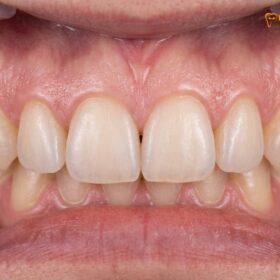
For international patients suffering from severe tooth wear, advanced periodontal disease, or extensive tooth loss, the prospect of restoring a functional, aesthetic smile can feel overwhelming. When considering full mouth reconstruction vietnam, patients are frequently presented with two primary pathways: extracting remaining failing teeth to place full arch dental implants (such as All-on-4 or All-on-6), or preserving the natural teeth to support full mouth zirconia crowns and bridges. Making the correct clinical decision requires a deep understanding of biomechanics, bone density, and long-term prognosis[1].
Clinical Summary:
Full mouth rehabilitation is a highly complex restorative process designed to rebuild the entire dentition. The choice between implant-supported prosthetics (All-on-4/6) and tooth-supported restorations (full mouth crowns/bridges) hinges entirely on the structural integrity of the remaining natural roots and the surrounding alveolar bone. While implants offer a permanent solution for terminal dentition, preserving healthy natural teeth with minimally invasive crowns or veneers remains the biological gold standard whenever clinically viable. Advanced diagnostics, including 3D CBCT imaging and Implant Stability Quotient (ISQ) testing, are mandatory to determine the safest, most predictable treatment protocol.
Key Takeaways:
- Implant vs. Crown Criteria: Natural teeth with healthy roots and adequate bone support should be preserved with crowns; teeth with severe mobility or >50% bone loss generally require extraction and implants.
- The All-on-4 Advantage: For terminal dentition, All-on-4/6 systems provide a fixed, full-arch restoration, often avoiding complex bone grafting by utilizing angled posterior implants.
- Immediate Loading: Same-day implant teeth are only viable if the primary stability (measured by ISQ) exceeds 65; otherwise, a healing phase is required.
- Restoring Vertical Dimension: Both methods aim to restore the Occlusal Vertical Dimension (OVD), which corrects collapsed facial profiles and alleviates TMJ stress.
- Cost Efficiency: Undergoing full mouth reconstruction in Ho Chi Minh City offers international patients significant savings compared to Western clinics, utilizing identical premium materials.
Understanding Full Mouth Rehabilitation Options
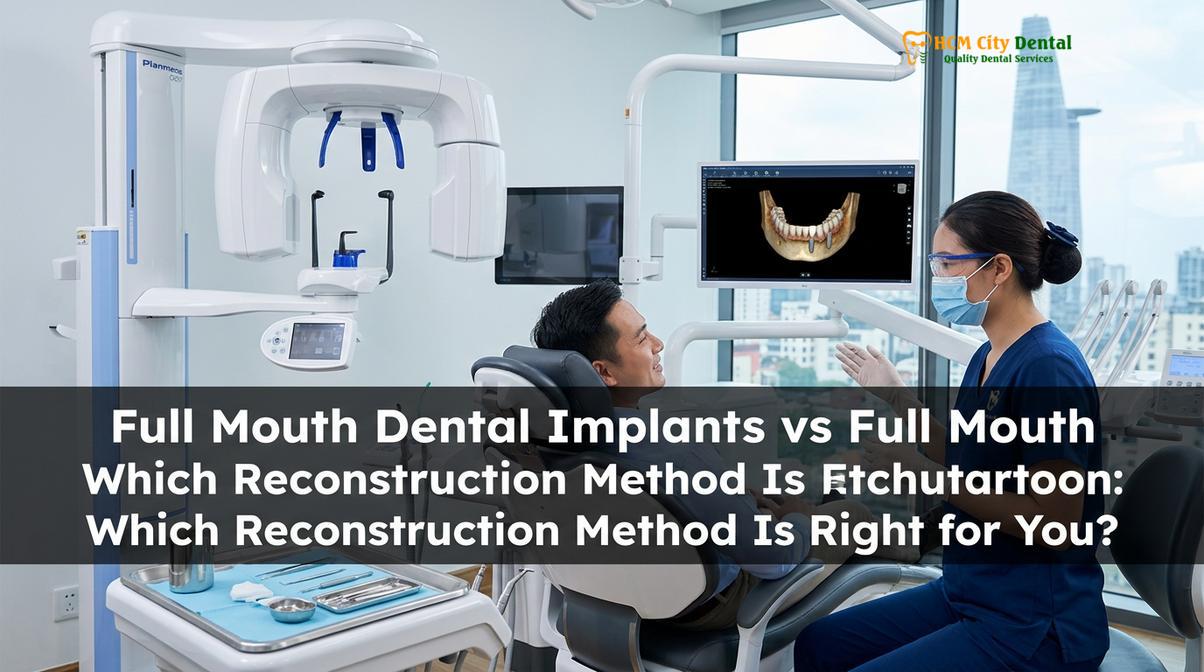
Full mouth rehabilitation is not merely a cosmetic makeover; it is a comprehensive neuromuscular and structural overhaul of the stomatognathic system. Whether utilizing implants or natural teeth, the goal is to establish harmonious occlusion (bite), optimal phonetics, and highly aesthetic facial proportions. At HCMC Dental Clinic in Ho Chi Minh City, our approach to comprehensive dental care is rooted in evidence-based prosthodontics and advanced surgical protocols[2].
The Philosophy of Full Arch Restoration
The fundamental philosophy of any reconstruction is biological preservation. If a tooth can be predictably saved for the long term, it generally should be. Natural teeth possess a periodontal ligament (PDL)—a vital shock absorber that provides proprioception (the sensory feedback that tells your brain how hard you are biting). Dental implants, being fused directly to the bone (osseointegration), lack this ligament. Therefore, preserving natural teeth through full mouth crowns or bridges is often preferred if the foundation is sound.
However, when the dentition is deemed “terminal”—meaning the teeth are failing due to advanced gum disease, massive decay, or severe structural compromise—holding onto them can lead to chronic infection and progressive bone loss. In these scenarios, transitioning to a full-arch implant system is often the most predictable way to halt bone resorption and restore total function.
Re-establishing Occlusal Vertical Dimension (OVD)
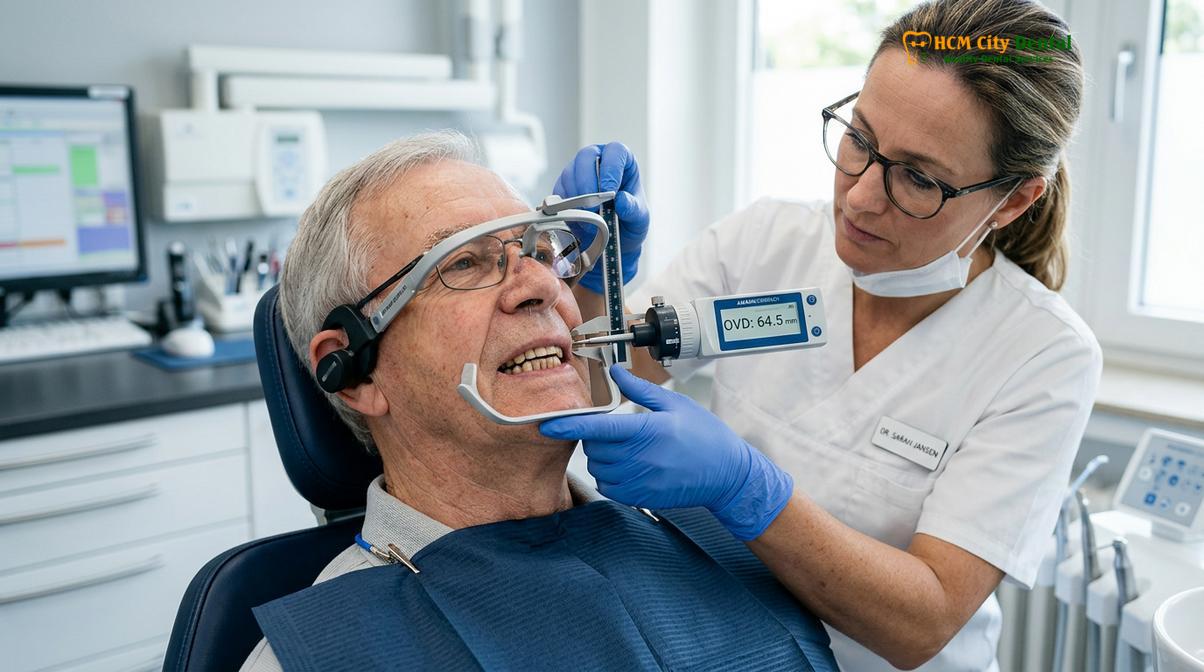
A critical component of any full mouth reconstruction is the restoration of the Occlusal Vertical Dimension (OVD). OVD refers to the distance between the upper and lower jaws when the teeth are in maximum intercuspation (fully bitten together). Years of severe bruxism (teeth grinding), acid erosion, or missing posterior teeth can cause the bite to “collapse.”
A collapsed OVD leads to a prematurely aged appearance—characterized by deep nasolabial folds, thinning lips, and a protruding chin—as well as temporomandibular joint (TMJ) dysfunction. Whether we are placing individual zirconia crowns on natural teeth or fabricating a full-arch implant bridge, the prosthodontist must carefully recalculate and rebuild this vertical height to restore facial harmony and joint health.
The Role of Digital Smile Design and Smile Line Aesthetics
Modern full mouth reconstructions rely heavily on Digital Smile Design (DSD). Before any physical treatment begins, digital scans and facial photographs are used to map the ideal position, shape, and color of the new teeth. A crucial factor in this planning is the “smile line” or the transition zone where the prosthetic teeth meet the gums.
In implant-supported full arch bridges, if the patient has a high smile line (showing a lot of gum when smiling), the surgeon may need to perform alveoloplasty (bone reduction) to hide the transition line between the artificial pink porcelain of the bridge and the patient’s natural gums beneath the upper lip. This ensures a seamless, natural appearance.
All-on-4 / All-on-6 Implants: The Golden Standard for Severe Tooth Loss
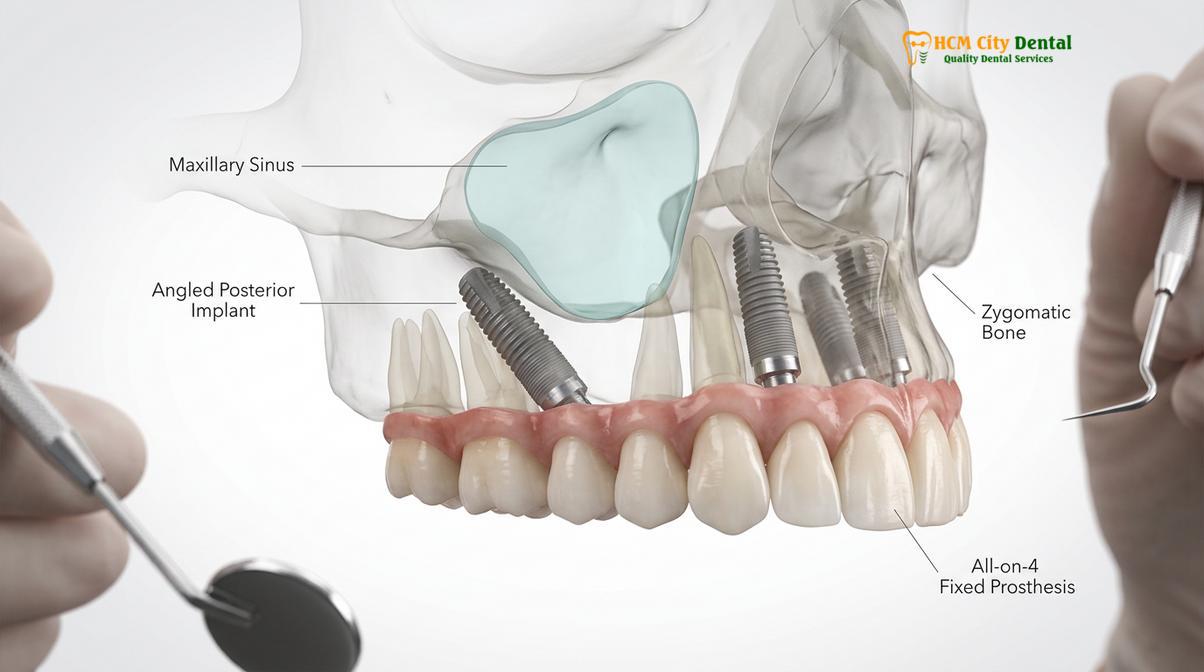
For patients with failing dentition or those who are already edentulous (toothless), the All-on-4 and All-on-6 implant protocols represent the pinnacle of modern implantology. By strategically placing four to six titanium implants per arch, a full fixed bridge can be securely anchored to the jawbone.
Surgical Protocols for Full Arch Implants
The All-on-4 technique is particularly revolutionary because it often minimizes the need for extensive bone grafting. The two anterior (front) implants are placed straight into the dense bone of the anterior maxilla or mandible. The two posterior (back) implants are tilted at angles up to 45 degrees. This angulation allows the surgeon to bypass anatomical structures like the maxillary sinus in the upper jaw and the mental nerve in the lower jaw, while maximizing contact with the available cortical bone.
For patients seeking the best full mouth dental implant surgeon saigon, it is vital to choose a clinic that utilizes 3D surgical guides. These guides, milled from CBCT scan data, ensure that implants are placed with sub-millimeter accuracy, optimizing the biomechanical distribution of biting forces across the prosthesis.
“The success of a full arch implant reconstruction lies not just in the surgery, but in the prosthetic planning. We must engineer the bridge to withstand hundreds of pounds of bite force while ensuring the patient can easily clean beneath it to maintain peri-implant health.”
Same-Day Implants vs. 2-Stage Integration (ISQ >65)
Many international patients travel to Vietnam hoping for “Teeth in a Day.” While immediate loading (attaching a temporary fixed bridge to the implants on the day of surgery) is highly desirable, it is strictly dictated by clinical metrics, specifically the Implant Stability Quotient (ISQ).
Clinical Warning: Immediate loading of dental implants is strictly dependent on primary bone stability. Loading implants with an ISQ score below 65 significantly increases the risk of micromovement and subsequent implant failure. A traditional two-stage healing protocol is required if bone density is insufficient.
During surgery, Resonance Frequency Analysis (RFA) is used to measure the primary stability of the implant in the bone. The ISQ scale ranges from 1 to 100.
- ISQ > 65: The implants are stable enough to withstand the micro-movements of chewing. A temporary fixed bridge can often be attached immediately.
- ISQ < 65: The bone is too soft, or the initial torque is too low. The implants must be buried under the gums to heal undisturbed. Loading these implants prematurely carries a high risk of failure.
Patients undergoing complex procedures often benefit from advanced pain management. For detailed information on surgical comfort, review our guide on IV Sedation Dental Surgery in Vietnam: Clinical Protocols & Safety.
Managing Severe Bone Loss: Grafting, Sinus Lifts, and Zygomatic Implants
When teeth have been missing for an extended period, the alveolar bone resorbs (melts away). Rebuilding this foundation is often necessary before or during implant placement. We frequently utilize advanced techniques to restore lost volume, which you can explore further in our Bone Graft & Gum Graft for Full Mouth Rehabilitation: Clinical Guide.
- Particulate Bone Grafting & PRF: Utilizing xenografts mixed with the patient’s own Platelet-Rich Fibrin (PRF) can dramatically accelerate soft tissue healing and bone regeneration.
- Sinus Floor Elevation: In the upper jaw, severe bone loss causes the sinus cavity to drop. A sinus lift involves gently raising the sinus membrane and packing bone graft material beneath it.
- Zygomatic Implants: For patients with extreme maxillary atrophy where traditional grafting is impossible, zygomatic implants offer an alternative by anchoring into the dense cheekbone.
Full Mouth Zirconia Crowns: Restoring Severely Worn Dentition
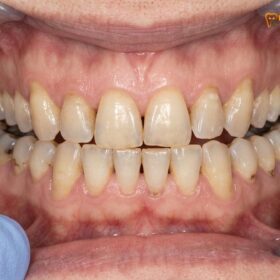
When a patient presents with severe tooth wear—often due to decades of untreated bruxism, acid reflux, or bulimia—but their tooth roots and supporting bone remain healthy, full mouth crowns or bridges are the treatment of choice. This approach preserves the natural proprioception of the teeth while completely rebuilding the visible crowns.
When to Preserve Natural Teeth
The decision to save natural teeth requires a meticulous endodontic and periodontal evaluation. Teeth that have healthy pulps (or well-treated root canals), a solid ferrule (adequate healthy tooth structure above the gumline), and no significant mobility are excellent candidates for crowns.
When comparing all on 4 vs full dental bridge saigon, patients must understand that a full dental bridge on natural teeth requires meticulous daily hygiene. If one anchor tooth in a long-span bridge fails due to decay or gum disease, the entire bridge may need to be replaced. Therefore, restoring teeth with individual crowns or short-span bridges is often preferred to isolate risk.
Full Mouth Crowns vs. Minimal Prep Veneers
Not all full mouth reconstructions require aggressive tooth reduction. The choice of material dictates how much natural enamel must be removed[3]:
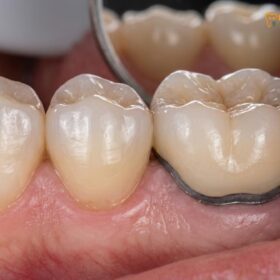
- Full Zirconia Crowns: Ideal for posterior (back) teeth that endure heavy chewing forces, or teeth that are already heavily broken down. Zirconia is incredibly strong but requires circumferential tooth reduction.
- Minimal Prep Veneers (IPS E.max): For anterior (front) teeth that are worn but structurally intact, ultra-thin lithium disilicate laminates can be utilized, preserving the vast majority of the natural tooth structure.
The Biomechanics of Full Dental Bridges on Natural Teeth
When replacing missing teeth using natural teeth as anchors (abutments), the prosthodontist must respect Ante’s Law. This clinical principle states that the combined root surface area of the abutment teeth must equal or exceed the root surface area of the teeth being replaced. If a bridge is too long, the excessive occlusal forces will traumatize the anchor teeth, leading to mobility and eventual failure. In cases where the span is too long, placing localized implants is a safer biomechanical choice than over-stressing natural teeth.
Bone Density Assessment: When Can You Keep Natural Teeth?
The dividing line between saving natural teeth and moving to full arch implants is dictated by the periodontium—the gums and bone supporting the teeth.
CBCT 3D Imaging and Periodontal Prognosis
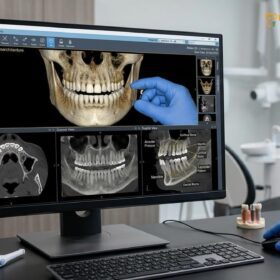
A standard 2D panoramic X-ray is insufficient for planning a full mouth reconstruction. Every complex case begins with a Cone Beam Computed Tomography (CBCT) scan. This 3D imaging allows for the evaluation of the exact volume and density of the alveolar bone, the presence of hidden periapical infections, and the proximity of vital structures like nerves and sinuses.
If a patient has advanced periodontitis, the bone supporting the teeth has melted away. Even if the teeth are splinted together with a full mouth bridge, the underlying disease process may continue. For older adults facing these challenges, we highly recommend reviewing our specific protocols in Full Mouth Reconstruction for Seniors: Clinical Protocols & Safety.
The Tipping Point: Extraction vs. Preservation
The “tipping point” for extraction usually occurs when a tooth has lost more than 50% of its supporting bone, exhibits severe mobility, or has a furcation involvement that cannot be maintained. In these cases, extracting the teeth and placing implants is generally a more conservative, predictable long-term strategy than attempting heroic efforts to save them.
“The hardest conversation to have with a patient is explaining that their natural teeth, while still present in the mouth, are no longer structurally sound enough to support a new bite. Transitioning to implants is not a failure; it is a definitive step toward predictable, lifelong oral health.”
When to Consult a Specialist for Full Mouth Reconstruction
Recognizing the signs that you may need a full mouth reconstruction is the first step toward restoring your oral health. You should consult a prosthodontist or an implant specialist if you experience any of the following:
- Multiple missing teeth that make chewing difficult or alter your speech.
- Severe tooth wear, where teeth appear significantly shorter, flat, or chipped.
- Chronic jaw pain, clicking, or popping in the TMJ, often associated with a collapsed bite.
- Advanced gum disease characterized by loose teeth, receding gums, and persistent bad breath.
- A history of massive dental decay or failing old restorations across multiple teeth.
Early intervention can often mean the difference between preserving your natural teeth with crowns and needing full arch extractions and implants.
Longevity, Maintenance & Cost Comparison in Saigon
Whether you choose full mouth implants or full mouth crowns, the longevity of your reconstruction depends heavily on your post-operative maintenance and the quality of the materials used. Vietnam has emerged as a premier destination for these procedures because top-tier clinics utilize the exact same globally recognized materials as clinics in the West, but at a fraction of the cost[4].
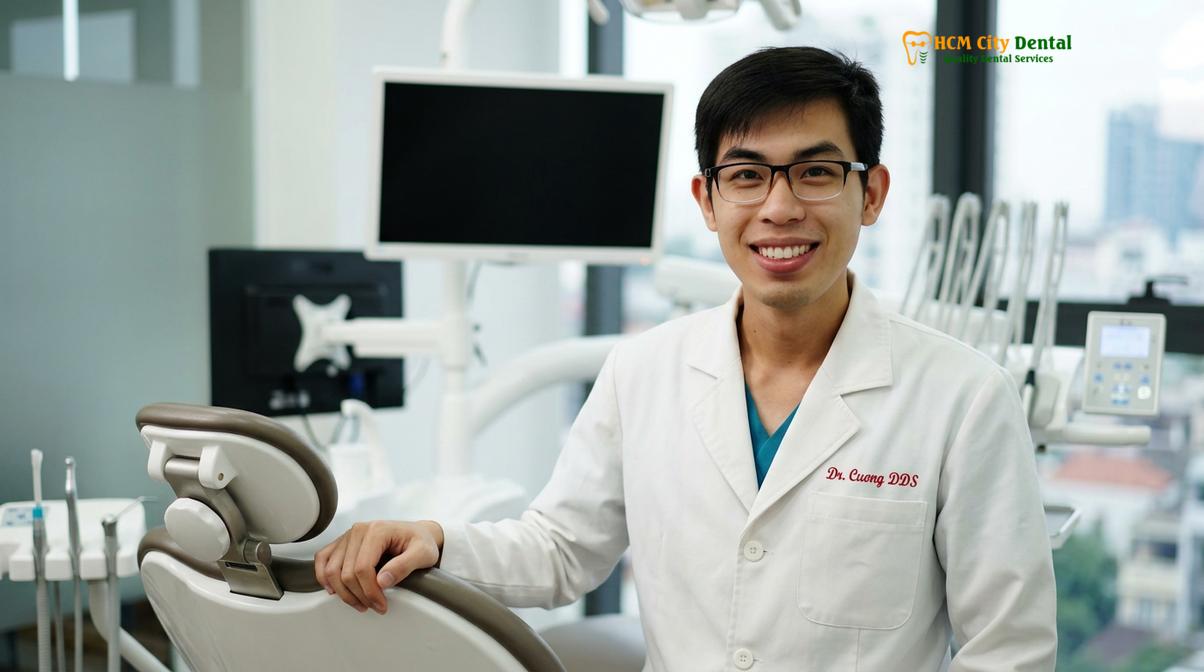
Dr. Nguyen Van Cuong, a leading specialist at HCMC Dental Clinic, emphasizes that every full mouth reconstruction must be tailored to the individual’s unique anatomical needs. Dr. Cuong utilizes advanced 3D diagnostics to ensure that whether a patient receives implants or crowns, the final result offers optimal biomechanical stability and aesthetic harmony.
Comparison: Full Mouth Implants vs. Full Mouth Crowns
| Clinical Factor | Full Mouth Implants (All-on-4/6) | Full Mouth Crowns / Bridges |
|---|---|---|
| Ideal Candidate | Terminal dentition, severe bone loss, missing teeth | Healthy roots, adequate bone, severe enamel wear |
| Treatment Timeline | Often requires 2 trips (spaced months apart) | Usually completed in a single 10-14 day trip |
| Bone Preservation | Halts bone resorption in edentulous areas | Maintains natural bone via periodontal ligament |
| Maintenance | Water flosser, annual professional bridge removal | Standard brushing, flossing, night guard for bruxism |
Long-Term Maintenance Protocols
Full mouth reconstructions require diligent home care and professional maintenance to ensure long-term success[5]. According to the Vietnam Odonto-Stomatology Association (VOSA) guidelines, strict infection control and precise surgical protocols are mandatory for implant success, but patient compliance at home is equally critical[6].
- Implant Maintenance: Patients with All-on-4 bridges must use water flossers and specialized floss daily to clean the space between the prosthetic bridge and the gums. Professional removal and ultrasonic cleaning of the bridge by a dentist is recommended annually. For more on living with implant prosthetics, see our Implant Supported Overdentures Snap On: Clinical Guide.
- Crown Maintenance: Full mouth crowns require standard brushing and flossing, but patients with a history of bruxism must wear a custom hard acrylic occlusal guard (night guard) while sleeping to protect the ceramic from chipping.
For international patients, understanding how to manage care once you return home is vital. We detail these protocols in our Dental Aftercare Warranty Abroad: Global Protection & Recovery Guide.
Case Study: A Patient’s Journey to Ho Chi Minh City
An international patient visited HCMC Dental Clinic in Ho Chi Minh City suffering from severe generalized tooth wear and a collapsed bite. After a comprehensive evaluation by Dr. Cuong, it was determined that her natural roots were healthy enough to support full mouth zirconia crowns. By avoiding extractions and utilizing digital smile design, the clinical team restored her occlusal vertical dimension in a single two-week trip. This approach provided a highly aesthetic and functional result while saving her thousands compared to Western prices. For more on planning your trip, see our Dental Tourism Saigon District 1: Clinical Guide & Costs.
Frequently Asked Questions
What is the difference between full mouth implants and full mouth crowns?
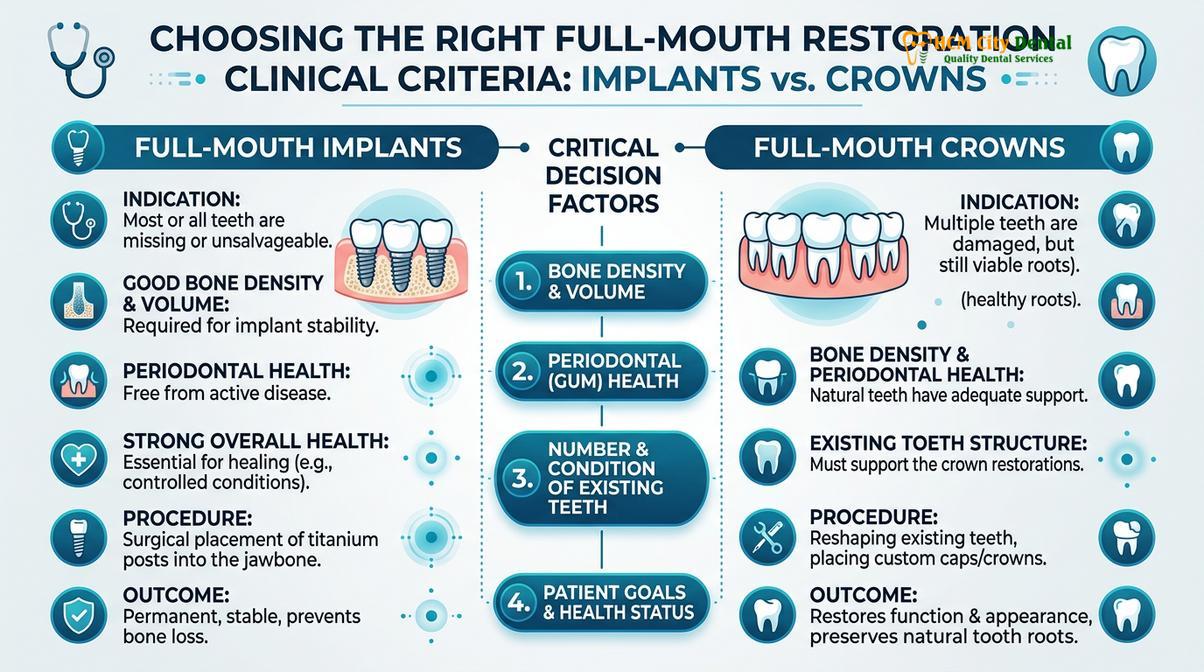
Full mouth implants replace missing or unsalvageable teeth by anchoring prosthetic bridges into the jawbone using titanium posts. Full mouth crowns, conversely, preserve your natural tooth roots, utilizing them as the foundation to support individual ceramic caps or bridges.
How do I know if my remaining teeth should be saved or extracted?
This is determined through a 3D CBCT scan and periodontal assessment. If your natural teeth have adequate bone support, healthy roots, and no severe mobility, they can often be saved with crowns. Teeth with severe bone loss, deep fractures, or advanced periodontitis generally require extraction and implant replacement.
How much does full mouth reconstruction cost in Vietnam?
The full mouth reconstruction cost in Vietnam typically ranges from $4,000 to $8,000 per arch for All-on-4/All-on-6 implants, and $3,000 to $6,000 for full mouth zirconia crowns. This represents a significant savings compared to prices in the US, UK, or Australia, without compromising on premium materials like Nobel Biocare or Straumann.
How long does full mouth rehabilitation take in Ho Chi Minh City?
Full mouth crowns can usually be completed in a single trip of 10 to 14 days. Implant reconstructions may require two trips spaced 3 to 6 months apart if bone grafting is needed, though patients with excellent bone density (ISQ >65) may qualify for immediate loading (same-day teeth) in a single 14-day visit.
What is the recovery time for full mouth dental implants?
Initial surgical recovery takes about 7 to 10 days, during which patients may experience mild swelling and bruising. However, the complete osseointegration process—where the bone fuses to the titanium implants—takes 3 to 6 months. During this time, patients wear a functional temporary prosthesis and must adhere to a soft food diet.
References
- Journal of the American Dental Association. Implant survival rates in digital dentistry. (2022).
- International Journal of Oral and Maxillofacial Implants. All-on-4 full arch rehabilitation. (2021).
- Journal of Esthetic and Restorative Dentistry. Minimal prep porcelain veneer longevity. (2020).
- British Dental Journal. Dental tourism safety protocols and material traceability. (2023).
- Journal of Clinical Periodontology. Infection control and aerosol management. (2021).
- Vietnam Odonto-Stomatology Association (VOSA). National guidelines on implant dentistry and infection control. (2022).
If you are struggling with severe tooth loss or extensive dental wear, a comprehensive evaluation is the first step toward reclaiming your smile and your confidence. Contact HCMC Dental Clinic in Ho Chi Minh City today to schedule your 3D CBCT scan and discover whether full mouth implants or crowns are the right solution for your unique clinical needs.