IV sedation dental surgery in Vietnam offers international patients a highly controlled, anxiety-free environment for undergoing complex oral procedures. By utilizing advanced intravenous pharmacological protocols under expert supervision, clinicians ensure profound relaxation and amnesia, allowing extensive full mouth rehabilitations to be completed safely, efficiently, and with minimal psychological stress.
Clinical Summary:
Intravenous (IV) sedation has revolutionized the approach to complex dental surgeries, particularly for international patients seeking extensive rehabilitative care in Vietnam. This advanced pharmacological protocol utilizes precisely titrated medications, such as Midazolam and Propofol, to induce a state of deep conscious sedation. Patients remain capable of breathing independently while experiencing profound anxiolysis and anterograde amnesia, effectively eliminating the psychological trauma associated with invasive procedures. Administered under the strict supervision of board-certified anesthesiologists, the process involves continuous monitoring of electrocardiogram (EKG) activity, blood pressure, and oxygen saturation to ensure absolute physiological stability. By integrating IV sedation with state-of-the-art diagnostics and minimally invasive surgical techniques, clinicians can execute comprehensive treatments—ranging from full arch implant placements to complex bone grafting—in fewer appointments. This approach not only guarantees a virtually pain-free experience but also optimizes the healing trajectory, making it an indispensable standard of care for extensive oral rehabilitation.
Key Takeaways:
- IV sedation utilizes targeted medications to provide deep relaxation and amnesia without the need for intubation.
- Continuous vital sign monitoring by an anesthesiologist ensures maximum cardiovascular and respiratory safety.
- Local anesthetics are administered only after sedation takes effect, guaranteeing a pain-free injection experience.
- Sedation allows for the consolidation of complex, multi-stage surgeries into fewer, more efficient clinical visits.
- Strict preoperative fasting and mandatory post-operative escort protocols are essential for patient safety.
Understanding Dental Phobia and the Need for Conscious Sedation
Dental phobia often prevents patients from seeking necessary care, leading to severe bite collapse and oral infections. Conscious sedation provides a safe, anxiety-free pathway to complete extensive treatments in fewer visits.
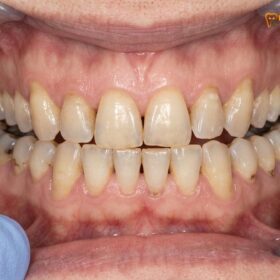
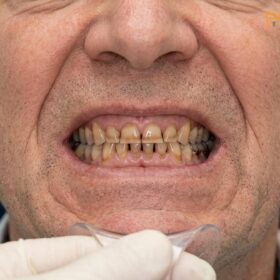
Dental anxiety and phobia represent significant barriers to achieving optimal oral health. For many patients, the mere anticipation of dental instruments, the sound of the handpiece, or the sensation of intraoral injections triggers a profound sympathetic nervous system response, characterized by tachycardia, hypertension, and acute psychological distress. When patients avoid the dentist due to these fears, minor dental issues inevitably progress into catastrophic structural failures, such as advanced periodontitis, widespread caries, and the eventual loss of the Vertical Dimension of Occlusion (VDO)[1]. Restoring a collapsed bite requires extensive, multi-disciplinary intervention, which can be daunting for an already anxious patient.
To bridge the gap between necessary clinical intervention and patient comfort, modern dentistry employs advanced pharmacological behavior management techniques. The implementation of dental phobia sedation transforms the clinical environment from a source of trauma into a sanctuary of healing. By altering the patient’s perception of time and sensory input, sedation allows clinicians to perform complex, time-intensive procedures—such as bilateral sinus lifts, autologous bone grafting, and the placement of multiple titanium fixtures—in a single, highly efficient surgical session. This consolidation is a critical component of an optimized full mouth reconstruction timeline, significantly reducing the total number of clinical visits and minimizing the cumulative stress placed on the patient’s immune and psychological systems.
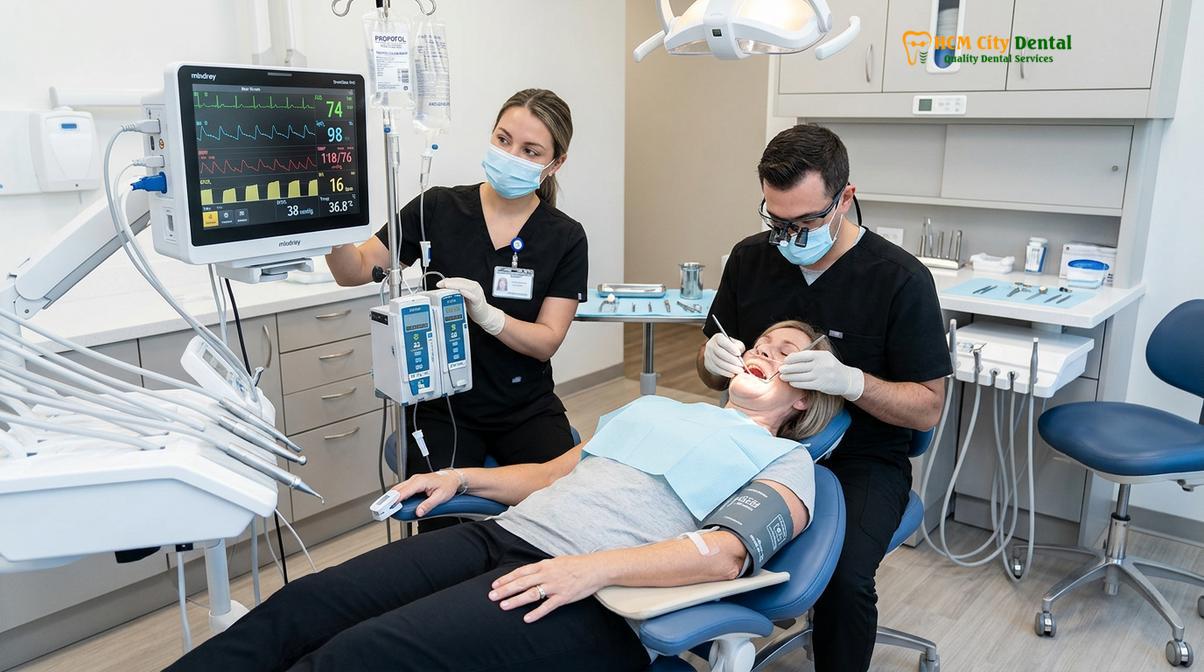
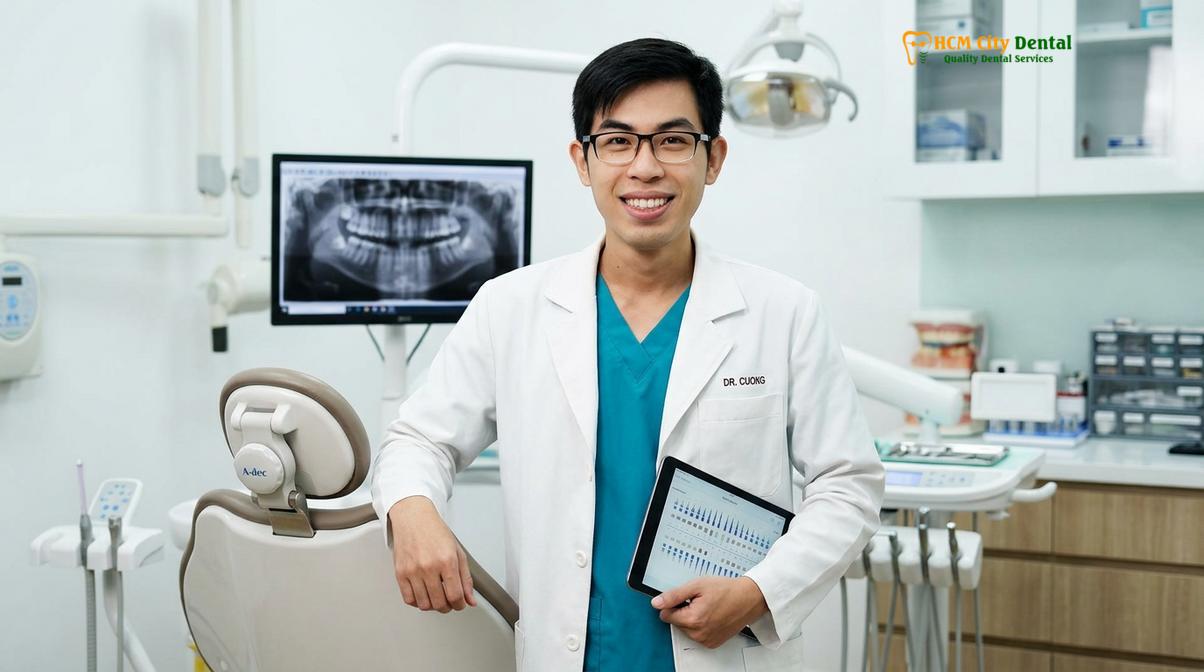
At HCMC Dental Clinic in Ho Chi Minh City, the clinical philosophy emphasizes treating the patient as a whole, rather than merely addressing isolated dental defects. Dr. Nguyen Van Cuong frequently notes that managing a patient’s emotional state is just as critical as the surgical execution itself. His approach ensures that when a patient is deeply relaxed, their musculature is less tense, which optimizes the physiological environment for healing and reduces post-operative inflammation.
“The true value of intravenous sedation extends far beyond patient comfort; it provides the clinician with a stable, controlled physiological canvas, allowing for meticulous surgical precision without the interference of patient fatigue or involuntary movement.”
How IV Sedation Works: Midazolam and Propofol Infusion Protocols
Intravenous sedation utilizes precise combinations of Midazolam and Propofol to induce a deep state of relaxation and amnesia while maintaining spontaneous breathing.
The efficacy of IV conscious sedation lies in the precise, intravenous delivery of sedative-hypnotic agents directly into the systemic circulation. Unlike oral sedatives, which must pass through the gastrointestinal tract and undergo first-pass hepatic metabolism—resulting in unpredictable onset times and variable efficacy—intravenous administration provides immediate bioavailability. This allows the anesthesiologist to titrate the medication to the exact clinical effect required, deepening or lightening the level of sedation in real-time based on the surgical stimulus and the patient’s physiological feedback.
The cornerstone of modern midazolam infusion dentistry is the utilization of Midazolam, a short-acting benzodiazepine. Midazolam binds to GABA-A receptors in the central nervous system, enhancing the inhibitory effects of gamma-aminobutyric acid. This mechanism produces profound anxiolysis, muscle relaxation, and, most importantly, anterograde amnesia[2]. Anterograde amnesia ensures that the patient forms no new memories from the time the medication takes effect until it begins to wear off. Consequently, even if a procedure lasts for four to six hours, the patient will perceive it as having passed in mere minutes, awakening with no recollection of the surgical trauma.
To complement the amnesic properties of Midazolam, Propofol is frequently integrated into the infusion protocol. Propofol is a highly lipophilic, ultra-short-acting intravenous anesthetic agent. Its rapid redistribution from the central nervous system to peripheral tissues allows for an exceptionally fast onset of action and a remarkably smooth, clear-headed emergence once the infusion is terminated. The synergistic use of Midazolam and Propofol allows the clinical team to maintain a deep level of conscious sedation—where the patient remains responsive to verbal commands and maintains their own airway reflexes—while ensuring absolute comfort.
Clinical Warning: Pre-Operative Fasting Guidelines
Strict adherence to preoperative fasting (NPO) guidelines is mandatory before undergoing IV sedation. Patients must abstain from solid foods for at least 8 hours and clear liquids for at least 2 to 4 hours prior to the procedure. Failure to comply significantly increases the risk of pulmonary aspiration, a severe and potentially life-threatening complication.
Anesthesiologist Supervision: Continuous EKG, Blood Pressure, and Oxygen Monitoring
A board-certified anesthesiologist continuously tracks vital signs, including EKG, blood pressure, and oxygen saturation, ensuring maximum patient safety throughout the surgical procedure.
The administration of intravenous sedatives induces dose-dependent depression of the central nervous, cardiovascular, and respiratory systems. Therefore, the presence of a dedicated, board-certified anesthesiologist or highly trained sedation specialist is an absolute clinical necessity. While the primary dental surgeon focuses entirely on the intricate details of the oral rehabilitation, the anesthesiologist’s sole responsibility is the continuous, vigilant management of the patient’s physiological state. This division of labor is a fundamental tenet of safe continuous monitoring anesthesia.
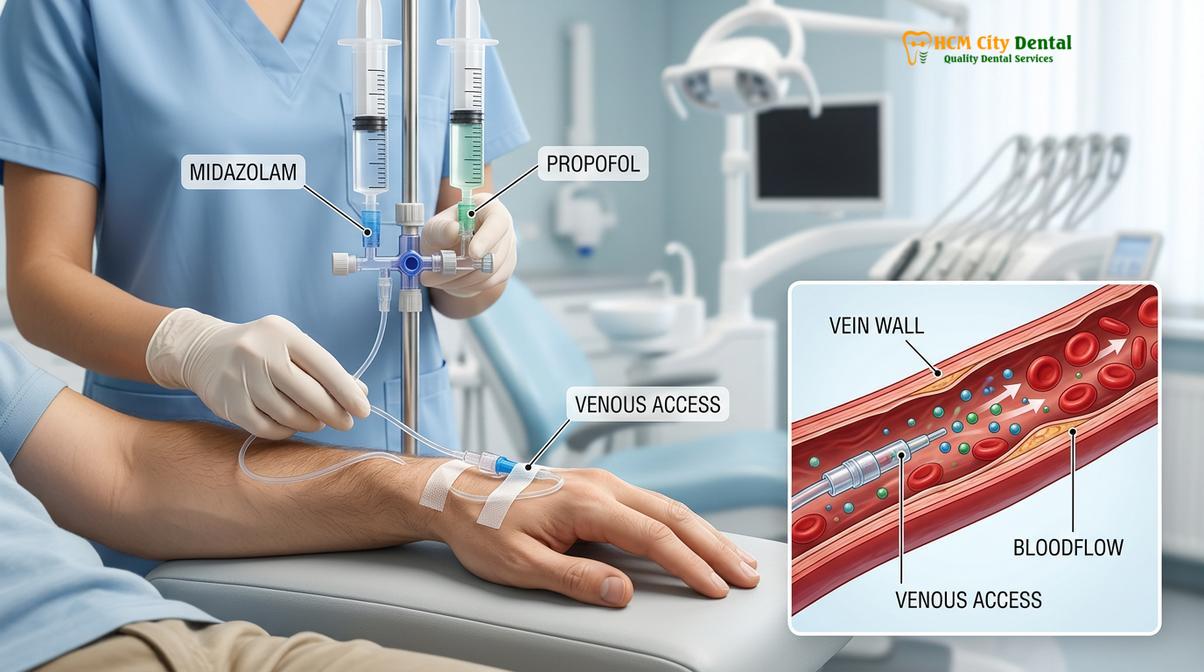
Throughout the procedure, the patient is connected to a comprehensive array of advanced monitoring equipment. The standard of care mandates the continuous evaluation of several critical parameters to maintain physiological stability[3]:
- Electrocardiography (EKG): Continuous EKG monitoring tracks the electrical activity of the heart, allowing the anesthesiologist to instantly detect any arrhythmias, ischemic changes, or conduction abnormalities that may arise due to surgical stress or pharmacological effects.
- Non-Invasive Blood Pressure (NIBP): Automated blood pressure cuffs cycle at regular intervals (typically every 3 to 5 minutes) to monitor systemic vascular resistance and cardiac output, ensuring adequate perfusion to vital organs.
- Pulse Oximetry (SpO2): A sensor placed on the patient’s finger continuously measures the oxygen saturation of arterial hemoglobin, providing immediate feedback on the efficacy of the patient’s respiratory function.
- Capnography (End-Tidal CO2): Perhaps the most critical monitor during conscious sedation, capnography measures the concentration of carbon dioxide in exhaled breath. It provides real-time, breath-by-breath confirmation of adequate ventilation, detecting respiratory depression or airway obstruction long before a drop in oxygen saturation occurs.
This rigorous monitoring protocol ensures that any subtle deviations from the patient’s baseline physiological parameters are identified and corrected instantaneously. For example, if the capnograph indicates a shallow breathing pattern, the anesthesiologist can immediately adjust the patient’s head position to open the airway, reduce the infusion rate of the sedatives, or administer supplemental oxygen via a nasal cannula. This proactive approach to airway and hemodynamic management is what makes IV sedation an exceptionally safe modality, even for complex, multi-hour surgeries.
The Pain-Free Guarantee: Local Anesthetic Injections Administered while Asleep
By administering local anesthetics only after the patient is fully sedated, clinicians eliminate the pain and anxiety associated with intraoral injections.
A common misconception regarding IV sedation is that the intravenous medications themselves provide pain relief at the surgical site. In reality, agents like Midazolam and Propofol possess no intrinsic analgesic properties; they provide anxiolysis, hypnosis, and amnesia. To achieve profound surgical anesthesia and block nociceptive (pain) signals from reaching the brain, the administration of local anesthetics remains absolutely essential.
However, the integration of IV sedation fundamentally alters the patient’s experience of receiving these injections. The protocol for pain-free injections dictates that the dental surgeon waits until the anesthesiologist confirms that the patient has reached the optimal depth of sedation. Only when the patient is deeply relaxed and amnesic does the surgeon administer the local anesthetic blocks, utilizing advanced agents such as Articaine 4% with Epinephrine or Lidocaine 2%.
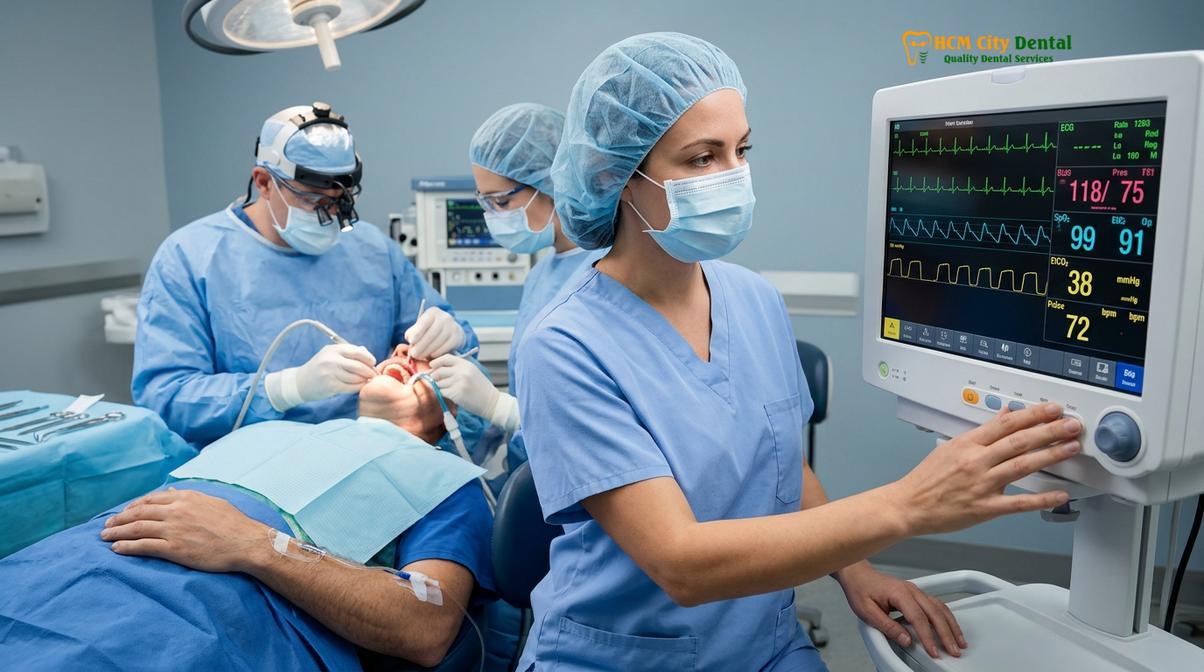
This sequence is critical for several reasons. First, it completely shields the patient from the psychological trauma and physical discomfort of the needle puncture and the pressure of the anesthetic fluid entering the tissues. Second, it prevents the sudden surge of endogenous catecholamines (adrenaline) that typically occurs when an anxious patient experiences pain. A spike in adrenaline can lead to unwanted tachycardia and hypertension, which complicates surgical hemostasis and increases cardiovascular strain.
By blocking the pain pathways while the patient is sedated, the clinical team ensures a stable hemodynamic profile throughout the procedure. Furthermore, the profound numbness achieved through precise nerve blocks—such as the inferior alveolar nerve block or maxillary infiltration—persists long after the IV sedation is discontinued. This ensures that the patient awakens comfortably, transitioning smoothly into the post-operative recovery phase without experiencing immediate surgical pain.
Clinical Integration: Full Mouth Rehabilitation and Advanced Diagnostics
Combining sedation with advanced diagnostics like Digital Smile Design and 3D CBCT allows for precise, extensive rehabilitations, including restoring the vertical dimension of occlusion.
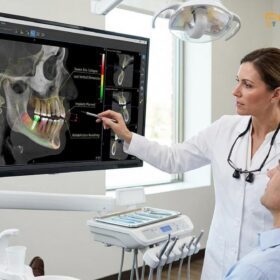
The true power of IV sedation is realized when it is seamlessly integrated with advanced diagnostic and rehabilitative technologies. For patients requiring comprehensive full arch restorations, the surgical phase is merely the execution of a meticulously planned digital blueprint. Prior to any surgical intervention, the clinical team utilizes 3D Cone Beam Computed Tomography (CBCT) to assess bone volume, density, and the proximity of vital anatomical structures such as the maxillary sinus and the inferior alveolar nerve.
This volumetric data is combined with intraoral optical scans to facilitate Digital Smile Design (DSD). DSD allows the restorative team to digitally engineer the final prosthetic outcome before the first incision is made. By establishing the ideal physiologic rest jaw position and correcting any bite collapse, the clinicians can precisely determine the necessary Vertical Dimension of Occlusion (VDO). This digital wax-up serves as the foundation for fabricating surgical guides, ensuring that dental implants are placed in the exact biomechanical positions required to support the final restorations[4].
Clinical Case Study: Comprehensive Arch Rehabilitation
A 62-year-old international patient presented to HCMC Dental Clinic in Ho Chi Minh City with severe dental phobia, generalized advanced periodontitis, and a collapsed VDO. Utilizing IV conscious sedation, the surgical team performed full maxillary and mandibular clearances, bilateral sinus augmentations, and the placement of 12 implants (All-on-6 protocol per arch) in a single session. The patient awoke comfortably, with no memory of the 5-hour procedure, and received fixed provisional restorations the following day, demonstrating the profound efficiency of combining sedation with digital workflows.
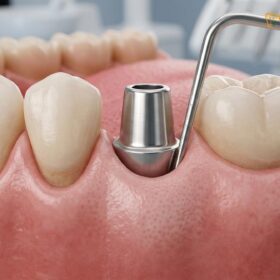
During the sedated surgical phase, the surgical team can execute these complex treatment plans with unparalleled efficiency. Procedures often involve the extraction of failing dentition, meticulous debridement of infected tissues, and the immediate placement of titanium implants. To accelerate osseointegration and soft tissue healing, autologous Platelet-Rich Fibrin (PRF)—derived from a small sample of the patient’s own blood drawn through the existing IV line—is frequently utilized. The PRF matrix releases concentrated growth factors directly into the surgical site, significantly enhancing the biological response.
The final restorative phase utilizes Biocompatible Monolithic Zirconia, sourced from premium Swiss and German manufacturers. These metal-free, bio-inert restorations are milled via CAD/CAM technology to achieve precise margin fits, ensuring long-term neuromuscular adaptation and structural integrity[5].
Recovery Protocols: Post-Sedation Timelines and Escort Requirements
Strict adherence to post-operative recovery protocols, including mandatory clinical observation and the presence of a responsible adult escort, is vital for ensuring a safe transition home.
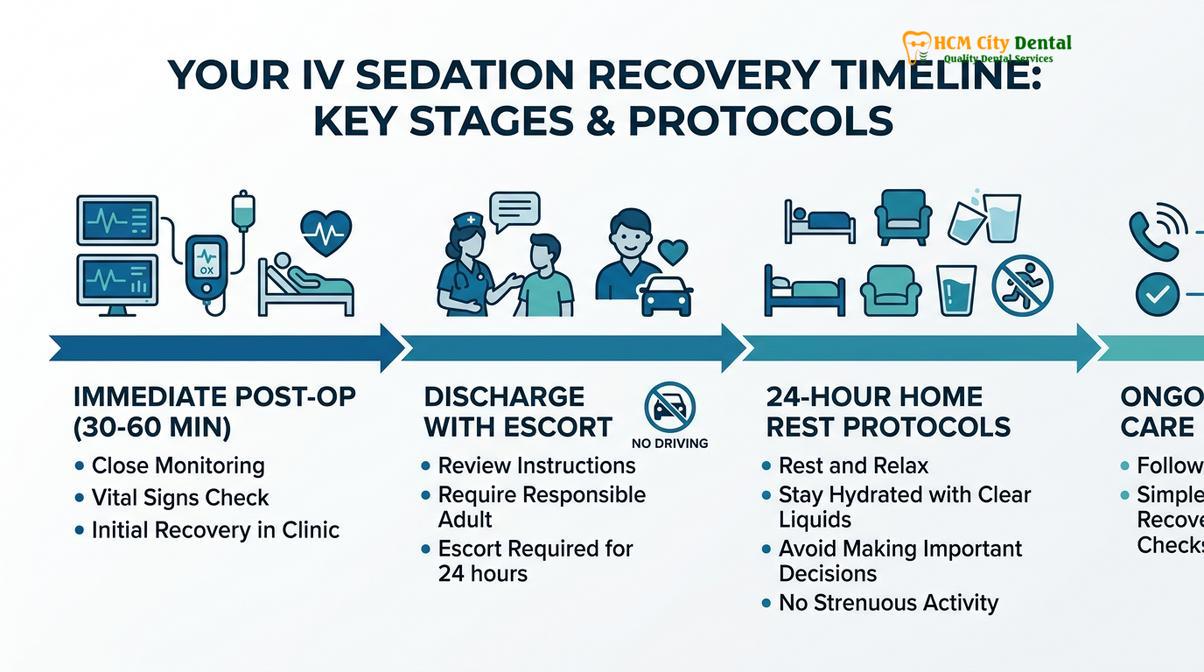
The conclusion of the surgical procedure marks the beginning of the critical recovery phase. As the intravenous infusion of sedatives is terminated, the patient gradually regains full consciousness. However, the residual effects of medications like Midazolam and Propofol can persist for several hours, impairing motor coordination, judgment, and memory. Therefore, a structured recovery protocol is implemented to ensure patient safety during this vulnerable period.
Following the guidelines established by international bodies and the Vietnam Ministry of Health (MOH) regarding anesthesia and sedation protocols[6], patients are transferred to a dedicated, quiet recovery room immediately after surgery. Here, the clinical team continues to monitor vital signs until the patient meets strict discharge criteria. These criteria typically include stable cardiovascular and respiratory function, the ability to maintain an open airway independently, and a return to baseline cognitive responsiveness.
| Recovery Phase | Estimated Timeline | Clinical Observation | Patient Requirements |
|---|---|---|---|
| Immediate Post-Op | 0 – 60 Minutes | Continuous EKG, SpO2, and NIBP monitoring in a dedicated recovery suite. | Resting quietly; gradual awakening; assessment of airway reflexes. |
| Discharge Readiness | 1 – 2 Hours | Evaluation of motor skills, orientation, and stable hemodynamics. | Must be accompanied by a responsible adult escort to leave the clinic. |
| Early Home Recovery | 2 – 12 Hours | Remote follow-up via phone call from the clinical care team. | Strict bed rest; hydration; taking prescribed post-operative medications. |
| Full Clearance | 24 Hours | Resolution of all residual sedative effects and grogginess. | May resume light activities; avoid driving or operating heavy machinery. |
A non-negotiable requirement for any patient undergoing IV sedation is the presence of a responsible adult escort. The escort must be available to receive post-operative instructions, physically assist the patient in returning to their hotel or residence, and remain with them for the first 12 to 24 hours. Patients are strictly prohibited from driving, operating machinery, or making significant legal or financial decisions for at least 24 hours post-sedation, as cognitive function may remain subtly impaired even if the patient feels fully awake.
“A successful sedation protocol does not end when the infusion stops; rigorous post-operative monitoring and strict adherence to discharge criteria are the ultimate safeguards of patient well-being.”
When to Seek Immediate Medical Attention Post-Sedation
Understanding post-operative warning signs is critical for ensuring a safe recovery after undergoing intravenous sedation for major dental surgery.
While IV sedation is exceptionally safe when administered by qualified professionals, the post-operative period requires careful observation by the patient’s escort. It is normal for patients to experience mild drowsiness, minor localized swelling, and slight oozing from the surgical sites. However, certain symptoms warrant immediate contact with the clinical team or emergency medical services.
The escort should monitor the patient for any signs of respiratory distress, such as shallow breathing, wheezing, or a bluish tint to the lips or nail beds, which could indicate inadequate oxygenation. Additionally, if the patient experiences severe, intractable nausea and vomiting that prevents the intake of fluids, there is a risk of dehydration and delayed healing. Prolonged lethargy, where the patient cannot be easily roused after several hours, or sudden, severe chest pain and palpitations are also critical warning signs that require prompt medical evaluation. At HCMC Dental Clinic, patients are provided with a 24-hour emergency contact number to ensure continuous support and peace of mind throughout their recovery journey.
If you are considering extensive restorative work and suffer from dental anxiety, explore the options for Full Mouth Rehabilitation tại HCMC Dental Clinic to experience world-class, comfortable care in Ho Chi Minh City.
References
- Journal of the American Dental Association. Guidelines for the Use of Sedation and General Anesthesia by Dentists.
- Anesthesia Progress. Pharmacokinetics and Clinical Application of Propofol and Midazolam in Dentistry.
- International Journal of Oral and Maxillofacial Surgery. Cardiovascular Monitoring Protocols During Intravenous Sedation.
- Clinical Oral Implants Research. Patient-Reported Outcomes Following Full Arch Rehabilitation Under Conscious Sedation.
- Journal of Prosthetic Dentistry. Vertical Dimension of Occlusion Restoration Parameters and Neuromuscular Adaptation.
- Vietnam Ministry of Health (MOH). National Guidelines on Anesthesia and Sedation Protocols in Odonto-Stomatology.
For customized treatment planning, transparent cost estimates, and direct consultation with Dr. Cuong, visit our comprehensive Full Mouth Rehabilitation service page or message our team directly via WhatsApp to receive an instant assessment.