Full mouth crowns in Ho Chi Minh City offer a comprehensive, highly aesthetic solution for severely worn or damaged dentition. By combining advanced digital scanning with premium German and Liechtenstein ceramics, patients achieve complete bite rehabilitation and a natural smile makeover at significantly reduced costs compared to Western clinics.
Clinical Summary:
Full arch dental crown reconstruction involves restoring all teeth in the upper and lower jaws using custom-milled ceramic restorations. This procedure corrects occlusal discrepancies, restores the vertical dimension of occlusion, and protects structurally compromised teeth. Utilizing CAD/CAM technology and intraoral scanners ensures precise marginal adaptation and optimal biologic width preservation. By partnering directly with advanced dental laboratories, clinics in Ho Chi Minh City can deliver comprehensive smile makeovers efficiently, making it an ideal solution for international patients seeking high-quality, cost-effective restorative care.
Key Takeaways:
- Utilizes iTero and Medit i700 intraoral scanners for impression-free, high-precision 3D modeling.
- Features premium certified materials including Zirconia HT (Cercon HT, Germany) and E.max (Ivoclar, Liechtenstein).
- Express 3-5 day turnaround facilitated by a direct lab partnership in Ho Chi Minh City.
- Exclusive 40% pre-arrival discount available for international patients booking via WhatsApp.
- Supported by a global warranty policy with remote follow-up via photo and video assessment.
What is Full Mouth Reconstruction?
Full mouth reconstruction is a comprehensive restorative approach that rebuilds every tooth in the oral cavity to restore optimal masticatory function, occlusal harmony, and facial aesthetics.
A full arch dental crown reconstruction is not merely a cosmetic endeavor; it is a complex biomechanical rehabilitation. When a patient suffers from generalized tooth wear, decay, or trauma, the vertical dimension of occlusion (VDO)—the distance between the upper and lower jaws when teeth are in contact—often collapses. According to established protocols for managing severe tooth wear and occlusal rehabilitation, restoring this vertical dimension is critical for long-term joint health and muscular balance[4]. This collapse can lead to temporomandibular joint (TMJ) disorders, muscular facial pain, and a prematurely aged appearance. Rebuilding the bite with Dental Crowns & Bridges restores this critical dimension, improving both function and facial proportion.
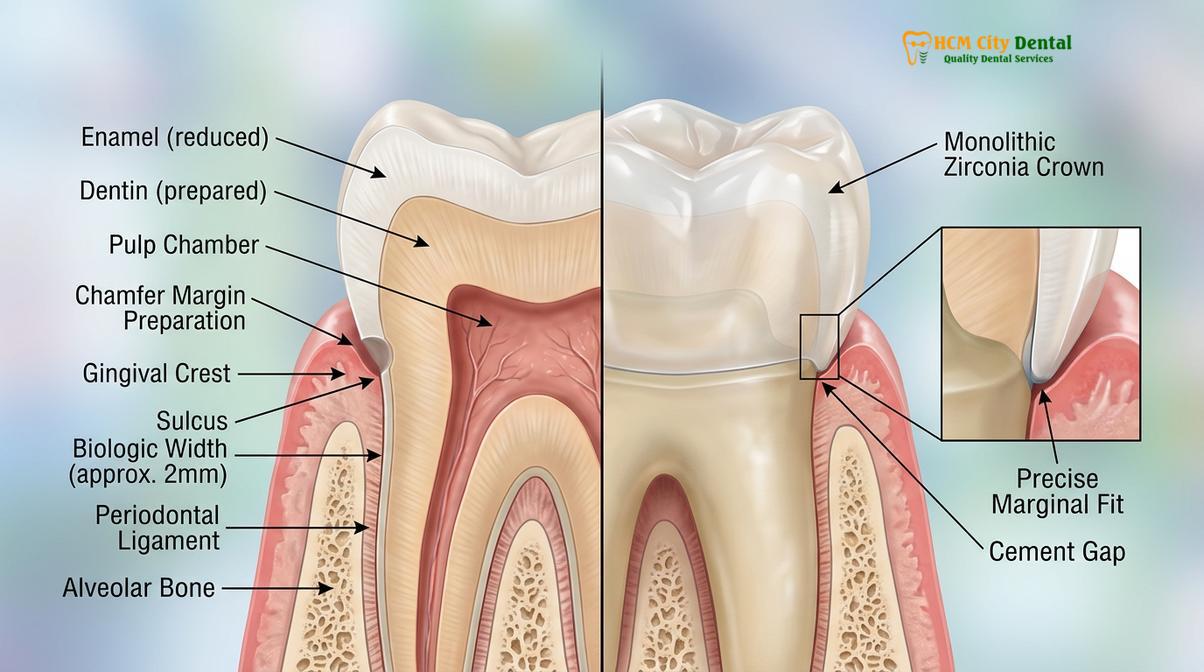
The clinical philosophy of saving teeth prioritizes the preservation of natural root structures whenever possible. During the preparation phase, the prosthodontist meticulously reshapes the enamel and dentin to create specific margin designs, typically a chamfer or a shoulder margin. These precise geometric preparations ensure that the final ceramic restoration seats seamlessly against the tooth, preventing microleakage and recurrent decay.
Furthermore, respecting the biologic width—the natural dimension of the gingival tissues attached to the tooth above the alveolar bone—is paramount to prevent chronic inflammation[1]. If a crown margin invades this space, it triggers unpredictable bone loss and gingival recession. Advanced digital planning allows the clinical team to design restorations that perfectly harmonize with the patient’s periodontal architecture, ensuring long-term tissue health and a vibrant, natural-looking result.
Candidates for Comprehensive Bite Restorations
Ideal candidates present with severe enamel attrition, generalized tooth decay, advanced acid erosion, or collapsed bites requiring extensive occlusal rehabilitation.
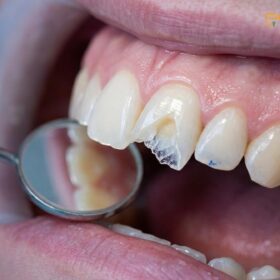
Determining candidacy for a full mouth cosmetic smile makeover requires a rigorous diagnostic evaluation. Patients who have experienced severe bruxism (teeth grinding) often present with flattened, hypersensitive teeth that have lost their protective enamel layer. Similarly, individuals with a history of acid reflux or high dietary acid intake may suffer from severe erosion, leaving the dentin exposed and vulnerable. In these scenarios, full coverage crowns are clinically indicated to halt further degradation and restore structural integrity.
Consulting a specialized bite rehabilitation dentist ensures that the underlying cause of the dental deterioration is addressed before restorations are placed. For teeth that are severely broken down, endodontic therapy (root canal treatment) followed by a post and core buildup may be necessary to provide a stable foundation for the overlying crown. The post anchors into the treated root canal, while the core material replaces the missing dentin, creating a robust structure to support the ceramic restoration.
In some complex cases, crown lengthening procedures are required prior to impression taking to ensure functional and esthetic outcomes[5]. This minor surgical intervention adjusts the gingival and bone levels to expose more healthy tooth structure, ensuring that the new crown has adequate retention and does not violate the biologic width. Whether performed for functional necessity or esthetic symmetry, crown lengthening is a critical adjunct in comprehensive restorative treatment plans.
Clinical Contraindications: Full mouth reconstruction using crowns is contraindicated in patients with active, untreated severe periodontitis, insufficient alveolar bone support, or uncontrolled bruxism without a commitment to wearing a protective occlusal night guard post-treatment. A comprehensive periodontal and radiographic assessment is mandatory prior to initiating restorative care.
Choosing the Right Materials for Full Arch Care
Selecting authentic, biocompatible ceramics is critical for balancing anterior aesthetics with posterior mechanical strength in full arch restorations.
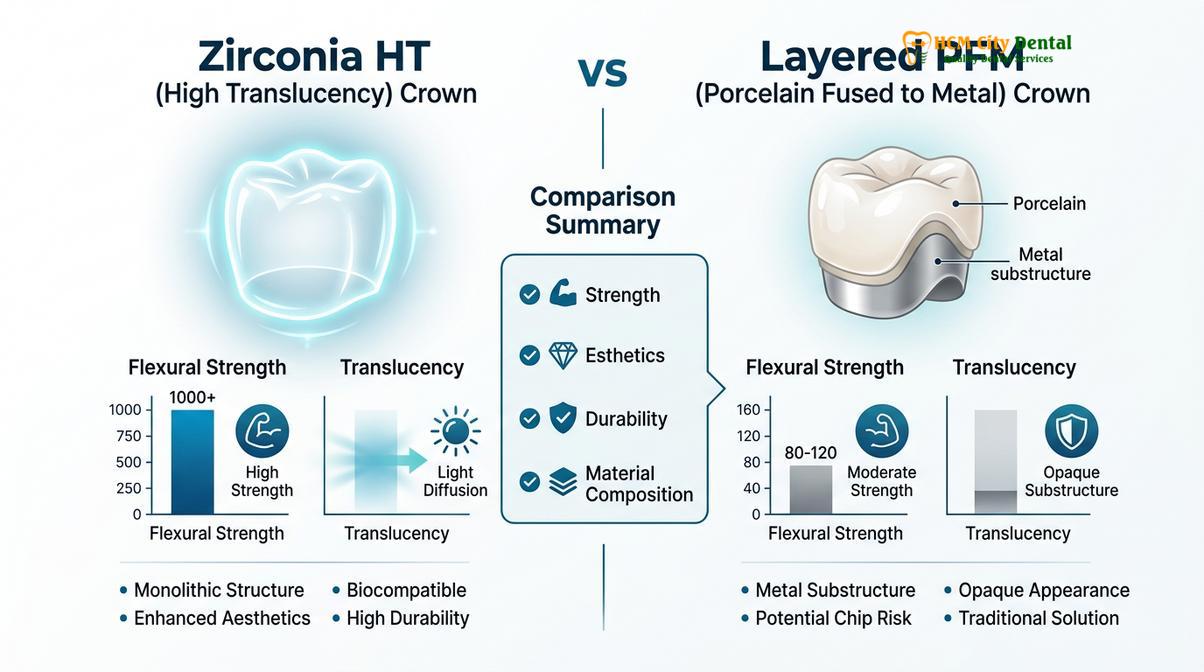
The success of a full mouth reconstruction relies heavily on the selection of appropriate restorative materials. Modern dentistry offers a spectrum of high-performance ceramics, each tailored to specific functional and aesthetic requirements. For posterior teeth, which bear the brunt of masticatory forces, monolithic Zirconia is often the material of choice. Zirconia HT (High Translucency), specifically Cercon HT from Germany, provides exceptional flexural strength while offering improved optical properties compared to older, opaque zirconia generations.
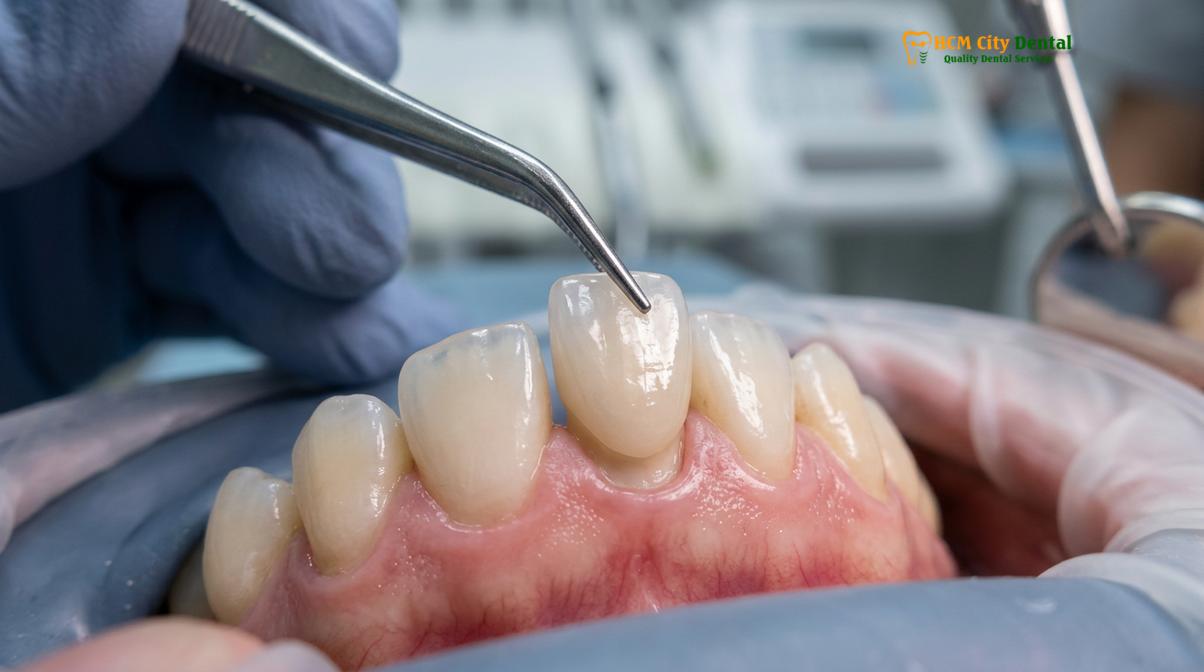
For anterior teeth, where lifelike aesthetics and light transmission are paramount, E.max (lithium disilicate by Ivoclar, Liechtenstein) is widely considered the gold standard. E.max restorations mimic the natural opalescence of human enamel, demonstrating excellent clinical performance for anterior aesthetics[2]. While slightly less fracture-resistant than zirconia, its strength is more than sufficient for incisors and canines when proper occlusal schemes are established. Furthermore, all restorative materials utilized must comply with national guidelines on prosthodontic rehabilitation and dental material safety standards to ensure biocompatibility and patient safety[6].
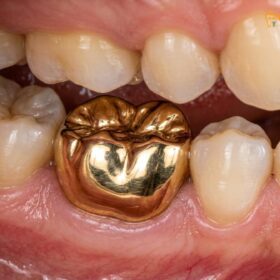
Porcelain-Fused-to-Metal (PFM) crowns remain a viable, economical alternative, though they are increasingly being replaced by all-ceramic options due to the risk of the metal margin showing through the gums over time. Regardless of the material chosen, ensuring material certification and authenticity is a non-negotiable standard of care.
To make these premium treatments accessible, clinics offer structured pricing with significant advantages for international patients. Below is the current pricing structure, highlighting the exclusive 40% pre-arrival discount available for patients who book their treatment plan via WhatsApp prior to arriving in Vietnam.
| Restoration Type / Material | Standard Walk-in Price (Estimated) | WhatsApp Pre-Booking (-40%) |
|---|---|---|
| PFM Crown (Porcelain-Fused-to-Metal) | ~$140 (3.5M VND) | From $84 (2.1M VND) |
| Zirconia Crown (Cercon, Germany) | ~$200 (5.0M VND) | From $120 (3.0M VND) |
| Zirconia HT Crown (Cercon HT, Germany) | ~$260 (6.5M VND) | From $156 (3.9M VND) |
| E.max Crown (Ivoclar, Liechtenstein) | ~$280 (7.0M VND) | From $168 (4.2M VND) |
| 3-Unit Bridge (Zirconia HT) | ~$480 (12.0M VND) | From $288 (7.2M VND) |
| 4-Unit Bridge (Zirconia HT) | ~$640 (16.0M VND) | From $384 (9.6M VND) |
| Inlay / Onlay (Sứ Lab) | ~$180 (4.5M VND) | From $108 (2.7M VND) |
The Rehabilitation Process Step-by-Step
The clinical workflow integrates digital diagnostics, precise tooth preparation, and rapid CAD/CAM milling to deliver a complete smile makeover efficiently.
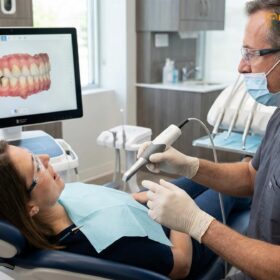
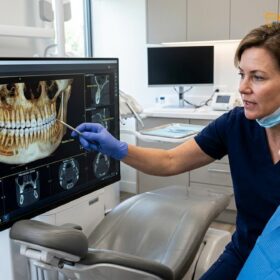
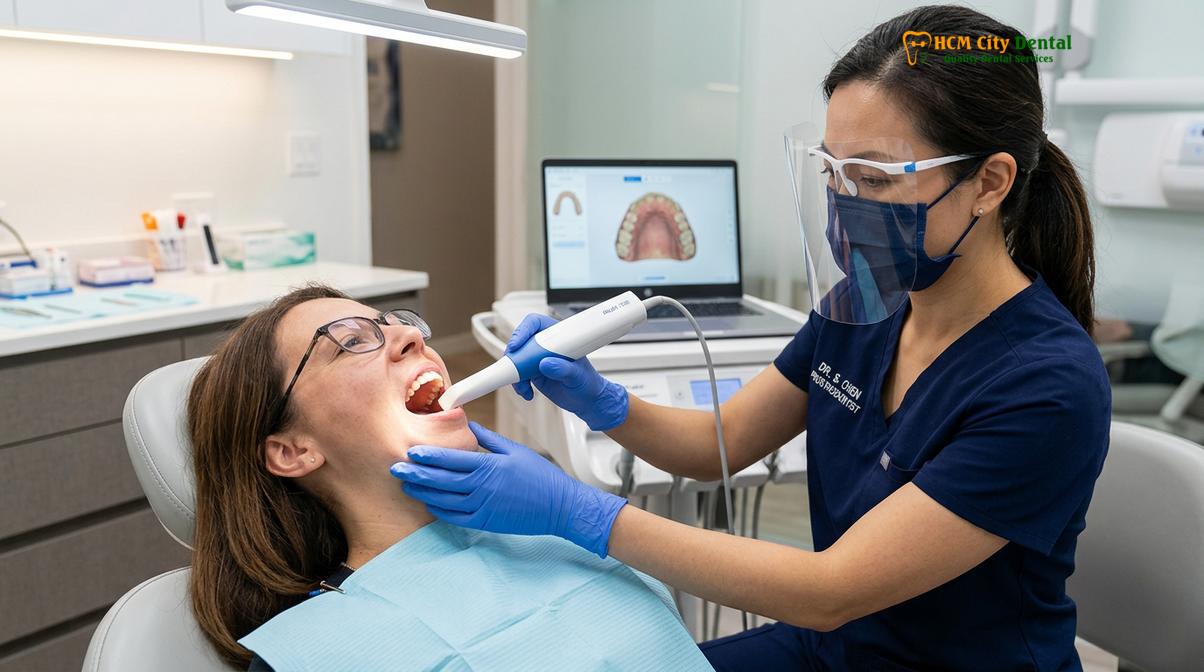
The journey to a fully restored smile begins with comprehensive digital diagnostics. Utilizing state-of-the-art iTero and Medit i700 Intraoral Scanners, the clinical team captures highly accurate 3D models of the patient’s dentition. This technology entirely eliminates the need for messy, uncomfortable traditional silicone impressions, providing maximum comfort and immediate visual feedback. The digital data allows the prosthodontist to analyze the bite, plan the new occlusal scheme, and design the restorations with micrometer precision.
“The integration of intraoral scanning has revolutionized our restorative workflow. By capturing the exact topography of the prepared teeth digitally, we eliminate the dimensional distortion inherent in traditional impression materials, ensuring that our ceramic crowns seat with absolute precision and minimal need for clinical adjustments.”
Following the diagnostic phase, the teeth are carefully prepared under local anesthesia. The amount of reduction is strictly controlled to preserve vitality while providing sufficient space for the ceramic material. Once prepared, custom provisional (temporary) crowns are fabricated and cemented. These temporaries serve a dual purpose: they protect the prepared teeth and act as a functional and aesthetic blueprint. Patients test drive their new bite and smile, allowing the dentist to make any necessary adjustments to the shape, length, or occlusion before the final ceramics are milled.
A significant advantage for dental tourists is the express 3-5 day turnaround. This rapid fabrication is made possible by a direct lab partnership with a leading dental laboratory in Ho Chi Minh City. Because the prosthodontist and the master ceramist collaborate directly, complete quality control is maintained throughout the CAD/CAM milling and custom shading processes. Once the final Zirconia or E.max crowns are ready, the temporaries are removed, and the permanent restorations are meticulously bonded into place, followed by a final bite adjustment to ensure perfect occlusal harmony.
Cost Comparison: Full Mouth Crowns vs. Implants
While full mouth crowns salvage existing natural roots, dental implants replace missing teeth entirely; combining both often yields the most cost-effective rehabilitation.
When planning a full arch reconstruction, patients often present with a combination of severely damaged teeth and completely missing teeth. Understanding the biomechanical differences between crowning natural teeth and placing dental implants is crucial for developing an optimal treatment plan. Natural teeth are suspended in the bone by the periodontal ligament, which provides proprioception (sensory feedback) and slight mobility to absorb chewing forces. Dental implants, conversely, are rigidly osseointegrated into the jawbone.
For edentulous spaces (missing teeth), the clinician must decide between a traditional dental bridge or an implant-supported crown. A 3-unit or 4-unit bridge utilizes the adjacent natural teeth as abutments to support the pontic (the false tooth). This is a highly efficient and cost-effective solution if the adjacent teeth already require crowns. However, if the adjacent teeth are perfectly healthy, placing a dental implant is often the more conservative approach, as it avoids unnecessary tooth preparation.
When implants are utilized, the choice between screw-retained versus cement-retained implant restorations is evaluated based on the implant’s angulation and esthetic demands[3]. Screw-retained crowns offer the advantage of easy retrievability for maintenance, while cement-retained crowns can sometimes provide superior occlusal aesthetics without a visible access hole. By strategically combining natural tooth crowns with targeted implant placement, patients can achieve a fully restored arch that balances biomechanical stability with financial efficiency.
Clinical Case Example: A 55-year-old international patient visited HCMC Dental Clinic in Ho Chi Minh City presenting with severe generalized attrition and two missing lower molars. The treatment plan utilized the express 5-day workflow. The upper arch was restored with 14 Zirconia HT crowns to rebuild the vertical dimension. The lower arch utilized a combination of single crowns and a 3-unit Zirconia bridge to replace the missing molars, avoiding the longer healing time required for implants. The result was a fully functional, highly aesthetic rehabilitation completed within a single week.
When to See a Doctor for Full Arch Dental Crown Reconstruction
Patients should seek a professional prosthodontic evaluation if they experience chronic jaw pain, notice their teeth becoming progressively shorter or flatter, or suffer from frequent chipping of existing dental work. These are classic signs of occlusal instability and structural fatigue. Additionally, if an old restoration fails, seeking prompt care for an emergency loose crown recementation or replacement is vital to prevent bacterial ingress and subsequent decay of the underlying tooth structure.
Dr. Nguyen Van Cuong, a leading specialist at HCMC Dental Clinic, emphasizes the importance of a conservative approach in full arch restorations. His clinical philosophy focuses on preserving natural tooth structure while utilizing advanced digital workflows to ensure precise occlusal harmony. Under his guidance, patients receive customized care plans that prioritize both long-term functional stability and exceptional aesthetic outcomes.
For international patients who have completed their treatment, ongoing support is a critical component of the care continuum. Reputable clinics provide comprehensive post-operative instructions and maintain open lines of communication to monitor the integration of the new restorations.
“We understand that traveling for extensive dental work requires immense trust. That is why we back our full mouth reconstructions with a global warranty policy. Through our dedicated WhatsApp remote support, we utilize photo and video assessment protocols to monitor our patients’ progress and address any concerns promptly, no matter where they are in the world.”
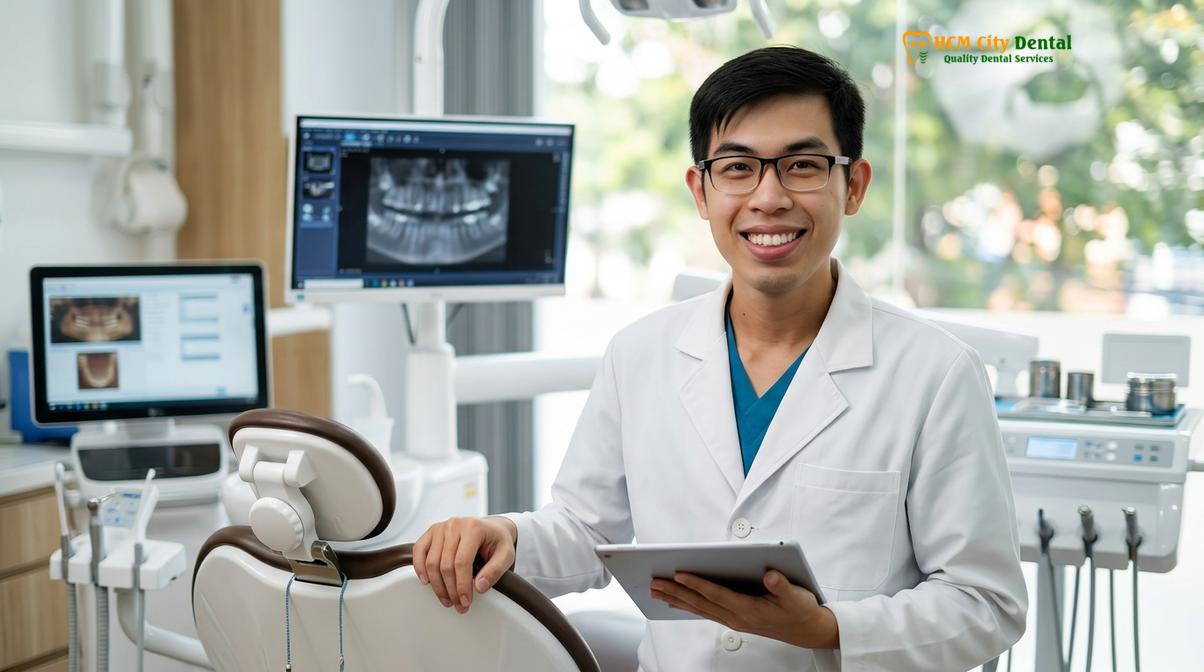
If you are experiencing severe dental deterioration or are dissatisfied with the function and appearance of your smile, a comprehensive clinical examination is the first step. Advanced diagnostics will determine the exact scope of treatment required to restore your oral health. For personalized advice, detailed treatment planning, and to take advantage of the WhatsApp pre-booking discount, contact the specialists at HCMC Dental Clinic, Ho Chi Minh City, to begin your journey toward a fully rehabilitated smile.
Frequently Asked Questions
How much does a full mouth of crowns cost in Vietnam?
A full mouth of crowns in Vietnam typically ranges from $2,000 to $4,500 depending on the material chosen. By utilizing our WhatsApp pre-booking discount, international patients can secure premium Zirconia or E.max restorations at a fraction of Western prices. The final cost is determined by the number of teeth requiring treatment, the necessity of root canal therapies, and whether any dental implants are integrated into the full arch reconstruction.
How long does a full mouth reconstruction take?
A complete full mouth reconstruction generally requires 3 to 5 days to complete. Thanks to our direct lab partnership and advanced CAD/CAM milling technology, the entire process—from initial digital scanning to final cementation—is optimized for efficiency. Patients typically attend two to three clinical appointments within this timeframe, allowing ample opportunity for bite adjustments and aesthetic try-ins before the final restorations are permanently bonded.
Who is a candidate for full mouth reconstruction?
Ideal candidates are individuals suffering from severe tooth wear, generalized decay, collapsed bite dimensions, or multiple missing teeth. A thorough clinical evaluation is required to assess periodontal health, bone density, and temporomandibular joint function. Patients must have sufficient healthy root structure to support crowns, or adequate bone volume to support implants if extractions are necessary.
Are digital impressions better than traditional silicone molds?
Yes, digital impressions offer superior accuracy, enhanced patient comfort, and immediate 3D visualization compared to traditional molds. Utilizing intraoral scanners like the iTero or Medit i700 eliminates the gag reflex associated with messy silicone putty. The digital data is instantly transmitted to the laboratory, reducing the margin of error and ensuring that the final ceramic restorations feature precise marginal adaptation.
How do I maintain my new full arch crowns?
Maintaining full arch crowns requires meticulous daily oral hygiene, including brushing twice daily and using water flossers or interdental brushes. Patients should avoid chewing on excessively hard items like ice or hard candies to prevent ceramic fractures. Routine professional cleanings and wearing a custom night guard, especially if you have a history of bruxism, are essential to protect the longevity of your restorations.
References
- Journal of Prosthetic Dentistry. The effect of biologic width violation on periodontal health.
- Journal of Esthetic and Restorative Dentistry. Clinical performance of lithium disilicate and zirconia crowns.
- International Journal of Prosthodontics. Retention protocols: Screw-retained versus cement-retained implant restorations.
- American Dental Association. Guidelines on the management of severe tooth wear and occlusal rehabilitation.
- Journal of Clinical Periodontology. Crown lengthening procedures for functional and esthetic outcomes.
- Vietnam Ministry of Health. National guidelines on prosthodontic rehabilitation and dental material safety standards.