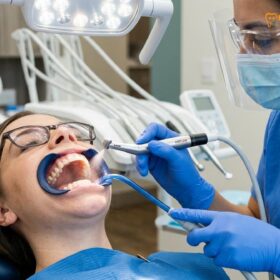
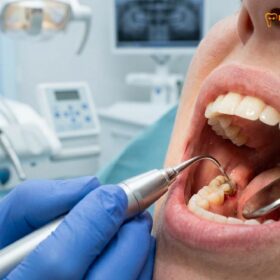
Cosmetic teeth cleaning effectively removes stubborn coffee stains by utilizing professional-grade polishing and ultrasonic scaling to lift pigmented biofilm from enamel micro-pores. This clinical procedure restores natural tooth brightness safely, eliminating dark discoloration without the abrasive damage often caused by over-the-counter whitening products.
Clinical Summary:
Professional cosmetic dental cleaning targets extrinsic stains caused by tannins and chromogens in coffee, tea, and tobacco. Utilizing advanced protocols like Guided Biofilm Therapy (GBT) with low-abrasive erythritol powder, clinicians can safely eradicate subgingival biofilm and surface discoloration. Combined with dual-scaler ultrasonic technology, this treatment preserves enamel integrity while significantly brightening the smile, serving as a foundational step before chemical teeth whitening.
Key Takeaways:
- Coffee and tea contain tannins that bind to enamel micro-pores, causing extrinsic yellow or brown discoloration.
- Guided Biofilm Therapy (GBT) uses 25μm erythritol powder to remove stains without scratching the enamel surface.
- Dual ultrasonic scalers (Piezoelectric and Magnetostrictive) allow customized, comfortable calculus removal.
- Professional cleaning is essential before chemical teeth whitening to ensure even penetration of bleaching agents.
- Maintaining a “White Diet” post-treatment helps prolong the brightness of your smile during the remineralization phase.
How Beverages Stain Enamel Micro-Pores
Enamel appears smooth but contains microscopic pores where dark pigments from coffee and tea accumulate over time, leading to stubborn extrinsic discoloration that regular brushing cannot remove.
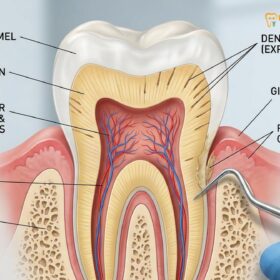
To understand how a cosmetic teeth cleaning coffee stains removal procedure works, it is essential to examine the microscopic anatomy of the human tooth. The outermost layer of the tooth, the enamel, is the hardest substance in the human body. However, despite its dense crystalline structure composed primarily of hydroxyapatite, enamel is not entirely solid. It features microscopic ridges, pits, and pores. When you consume dark beverages, the organic compounds within these liquids seep into these microscopic irregularities.
Coffee and tea are particularly notorious for causing dental discoloration due to their high concentration of chromogens and tannins. Chromogens are intensely pigmented compounds that readily adhere to dental surfaces. Tannins, which are plant-based polyphenols, act as a binding agent. They alter the pH of the oral cavity and facilitate the adherence of chromogens to the acquired salivary pellicle—a thin protein layer that naturally forms over the teeth[1]. Over time, as layers of pigmented pellicle build up and calcify into plaque and tartar, the teeth take on a dull, yellow, or brown appearance.
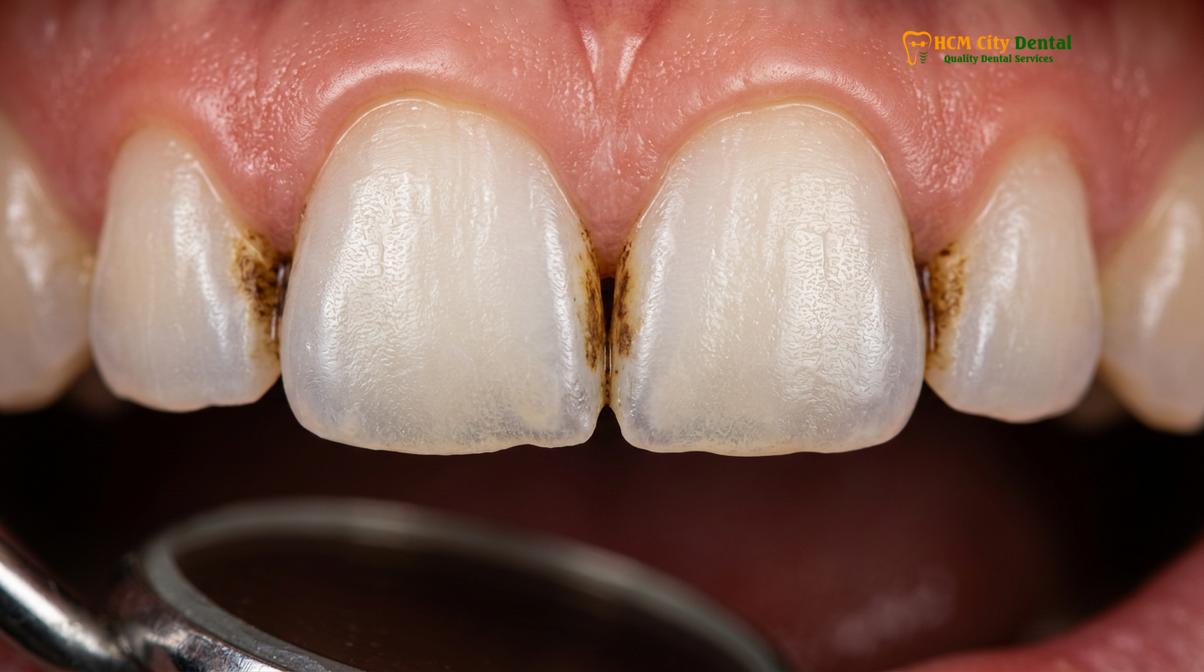
Furthermore, the acidity of coffee exacerbates this process. Acidic environments cause temporary demineralization, opening the enamel pores wider and allowing pigments to penetrate deeper into the tooth structure. This is why individuals seeking tea stains teeth treatment saigon often find that their discoloration is not merely on the surface but embedded within the calcified biofilm. Removing these complex stains requires professional intervention that can break the chemical bonds of the pellicle without damaging the underlying hydroxyapatite crystals.
Why Whitening Toothpaste Isn’t Enough
Over-the-counter whitening toothpastes rely on harsh abrasives that only scratch the surface, failing to lift deep-seated pigments while risking permanent enamel wear and dentinal hypersensitivity.
A common misconception among patients is that aggressive brushing with whitening toothpaste will reverse years of coffee consumption. In reality, most commercial whitening toothpastes do not contain sufficient concentrations of chemical bleaching agents (like hydrogen peroxide or carbamide peroxide) to alter the intrinsic color of the tooth. Instead, they rely heavily on mechanical abrasion to scrub away surface stains.
The abrasivity of toothpaste is measured by the Relative Dentin Abrasivity (RDA) scale. While a standard toothpaste has an RDA of around 70 to 100, many whitening variants exceed 150, pushing the limits of what is considered safe for daily use. Continuous use of highly abrasive pastes, especially those containing silica or activated charcoal, acts like sandpaper on the teeth. While it may temporarily remove superficial pigmented biofilm, it simultaneously strips away microscopic layers of enamel[2].
Clinical Warning: The prolonged use of abrasive charcoal toothpastes can lead to irreversible enamel erosion. Once the translucent enamel thins, the underlying dentin—which is naturally yellow—becomes more visible, paradoxically making the teeth appear darker and significantly increasing thermal sensitivity.
As the enamel thins, the teeth not only become more susceptible to decay but also develop a rougher surface texture. A rougher surface provides more surface area for future tannins and chromogens to latch onto, creating a vicious cycle of staining and abrasion. Therefore, a professional stain polishing performed by a qualified dental hygienist or dentist is the only clinically sound method to eradicate deep extrinsic stains while preserving the structural integrity of the tooth.
Professional Prophy Paste vs. Airflow
While traditional prophy paste uses gritty pumice to scrub stains, modern Airflow technology utilizes a gentle stream of warm water and micro-powder to safely wash away discoloration without scratching.
In the realm of cosmetic dental polishing, the techniques and materials used have evolved significantly. Historically, the standard method for removing extrinsic stains involved a rubber cup attached to a slow-speed handpiece, filled with a prophylactic (prophy) paste. This paste typically contains pumice, a volcanic rock that is highly effective at scouring away plaque and stains. However, traditional prophy paste can be unnecessarily abrasive for routine maintenance, potentially scratching composite restorations, porcelain veneers, and natural enamel if used too aggressively.
Today, advanced clinics prioritize Airflow polishing, a cornerstone of the Guided Biofilm Therapy (GBT) protocol. Airflow technology utilizes kinetic energy, projecting a controlled, pressurized stream of warm water, compressed air, and ultra-fine powder onto the tooth surface. The premium Swiss EMS GBT protocol specifically utilizes erythritol powder, which has a microscopic grain size of just 14 to 25μm. Because erythritol is much softer than enamel on the Mohs hardness scale, it effectively dissolves the pigmented biofilm and coffee stains without causing any micro-scratches[3].
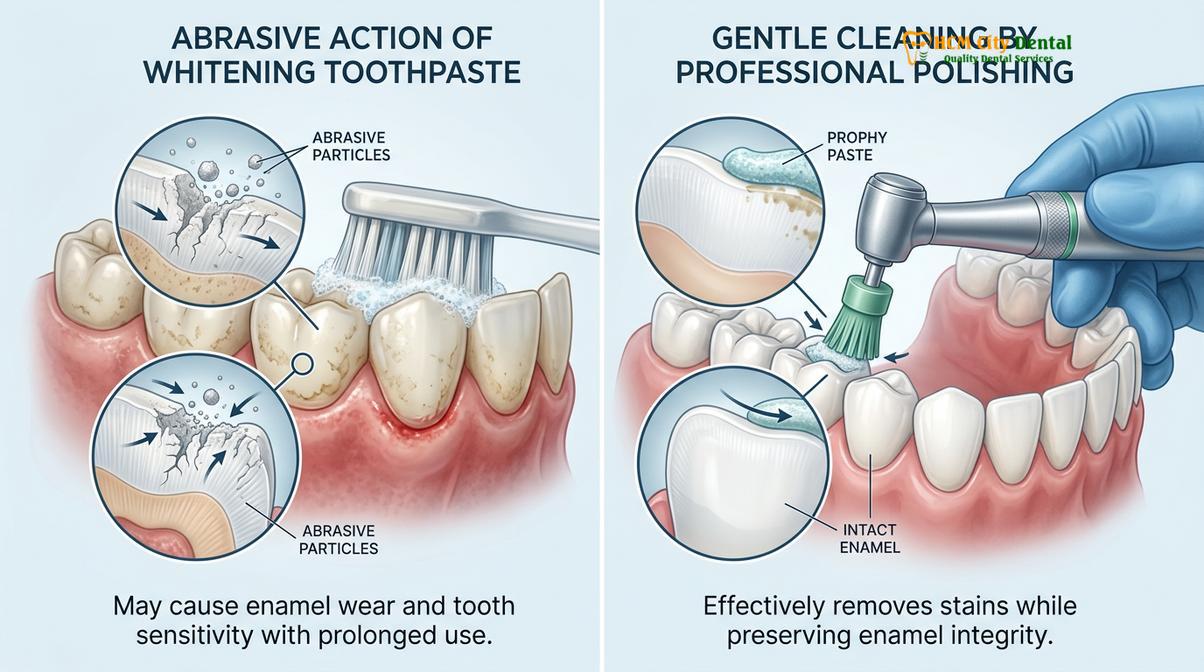
This modern approach is not only safer for the teeth but also vastly improves patient comfort. The warm water minimizes dentinal hypersensitivity, and the fine powder easily reaches into interproximal spaces (between the teeth) and deep periodontal pockets where a rubber cup cannot access.
| Feature | Traditional Prophy Paste | Airflow Polishing (GBT) |
|---|---|---|
| Abrasive Agent | Pumice or silica grit | Erythritol micro-powder (25μm) |
| Enamel Safety | Moderate (can cause micro-scratches) | High (preserves enamel and restorations) |
| Interdental Cleaning | Limited reach between teeth | Excellent penetration into tight spaces |
| Patient Comfort | Friction can cause heat and sensitivity | Warm water stream ensures high comfort |
| Stain Removal Efficacy | Effective on flat surfaces | Highly effective on all surfaces and pits |
The Clinical Workflow for Cosmetic Stain Removal
A comprehensive cosmetic cleaning integrates dual ultrasonic scaling and the Guided Biofilm Therapy protocol to ensure complete eradication of calculus and pigmented biofilm.
Achieving a flawless, stain-free smile requires a systematic clinical approach. At comprehensive dental cleaning appointments, the workflow is meticulously designed to address both the aesthetic concerns of coffee stains and the underlying periodontal health. The procedure begins with a thorough diagnostic assessment, evaluating the periodontal pocket depth, gingival inflammation, and the extent of calculus buildup.
A critical component of this workflow is the “Dual Scaler Advantage.” HCMC Dental Clinic uses BOTH Piezoelectric and Magnetostrictive ultrasonic scalers to customize treatments based on the patient’s specific calculus density and sensitivity levels:
- Piezoelectric Scalers (e.g., Acteon/Satelec): These devices utilize a linear back-and-forth motion generated by quartz crystals, operating at frequencies up to 32 kHz. They produce significantly less heat and are exceptionally gentle, making them the preferred choice for patients with sensitive teeth, children, and those undergoing orthodontic treatment.
- Magnetostrictive Scalers (e.g., Dentsply Cavitron): These scalers utilize an elliptical motion, vibrating all sides of the tip via metal stacks. This multi-directional energy is ideal for breaking down heavy, tenacious calculus, deep subgingival tartar, and performing full mouth debridement.
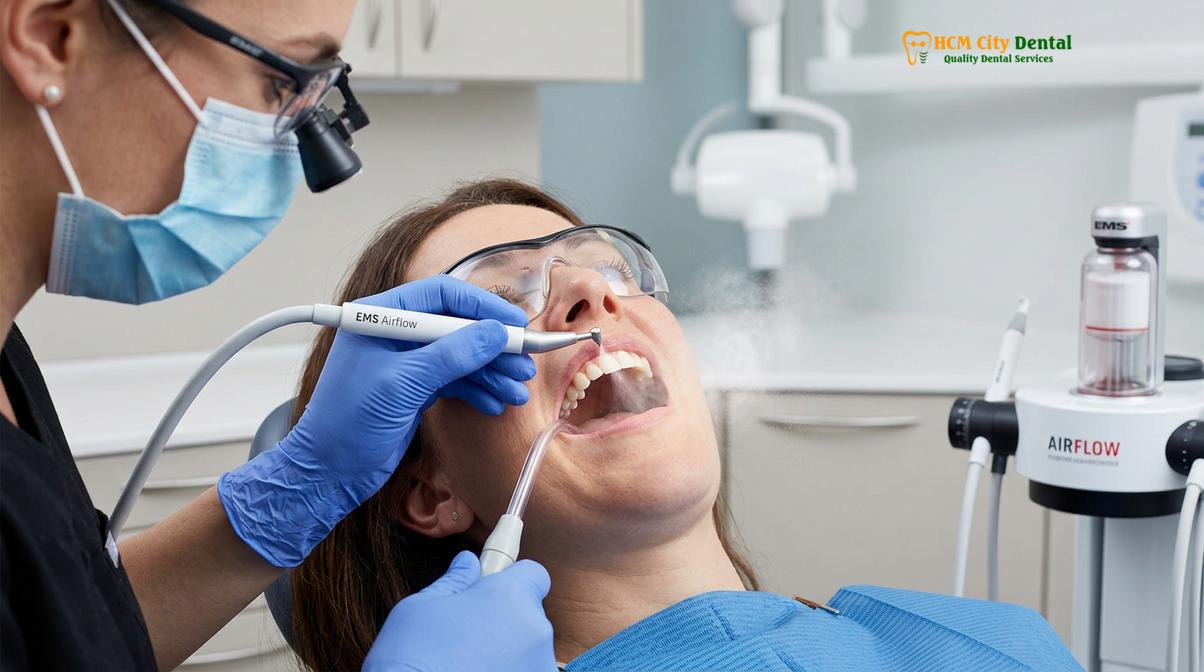
Dr. Nguyen Van Cuong emphasizes the clinical perspective on dental scaling technique: “The selection of ultrasonic power levels and the specific scaler type must be tailored to the individual’s enamel health and periodontal status. By utilizing the dual scaler approach, we maximize the cavitation effect to shatter calculus while ensuring absolute enamel preservation safety.”
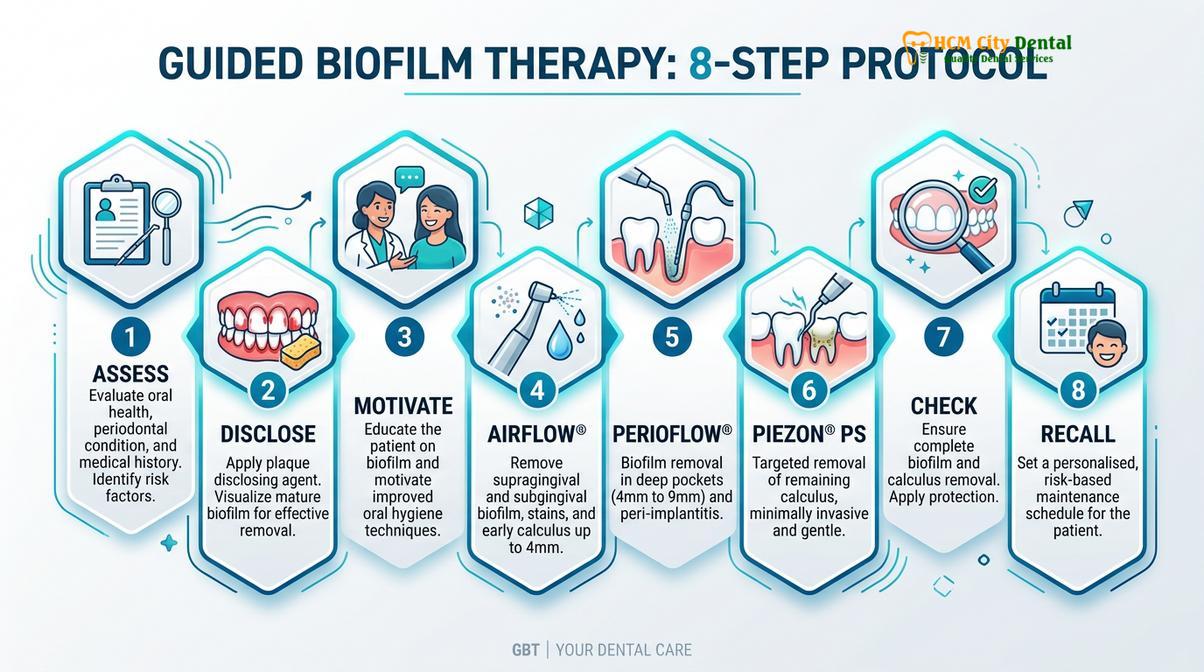
Following the removal of hard calculus, the Guided Biofilm Therapy (GBT) 8-step protocol is implemented. This includes applying a disclosing solution to make invisible plaque visible, followed by Airflow polishing to remove the disclosed biofilm and coffee stains. The process concludes with a final check and the application of fluoride varnish to promote enamel remineralization and seal the micro-pores against future staining.
Pricing and Treatment Options in Ho Chi Minh City
HCMC Dental Clinic offers transparent, tiered pricing for cosmetic cleaning services, ranging from standard scaling to advanced Guided Biofilm Therapy, ensuring accessible care for all patients.
Understanding the cost of cosmetic teeth cleaning coffee stains removal is crucial for patients planning their dental care. In Ho Chi Minh City, the pricing structure is designed to accommodate various levels of clinical need, from routine maintenance to extensive periodontal therapy. According to the latest clinic fee schedule, the pricing parameters are as follows:
- Standard Ultrasonic Scaling & Polishing: 500,000 to 800,000 VND (~$20 to $32 USD). For walk-in patients without prior booking, the fee ranges from 800,000 to 1,300,000 VND. This is ideal for patients with minimal staining and mild plaque-induced gingivitis.
- Airflow Prophylaxis / Guided Biofilm Therapy (GBT): 1,500,000 to 2,000,000 VND (~$60 to $80 USD). Walk-in rates are 2,500,000 to 3,300,000 VND. This premium service utilizes the Swiss EMS protocol and erythritol powder for superior stain removal and comfort.
- Scaling & Root Planing (SRP deep cleaning per quadrant): 1,000,000 to 1,500,000 VND (~$40 to $60 USD). Walk-in rates are 1,600,000 to 2,500,000 VND. Necessary for patients with active periodontal disease and deep subgingival calculus.
- Full Mouth Debridement (Heavy Tartar Removal): 2,000,000 to 3,000,000 VND (~$80 to $120 USD). Walk-in rates are 3,300,000 to 5,000,000 VND. Required when heavy calculus obscures the clinical evaluation of the teeth and gums.
Patients are highly encouraged to utilize the -40% WhatsApp booking discount to secure the most favorable rates. This transparent pricing ensures that high-quality periodontal maintenance is accessible to both local residents and international visitors.
Clinical Case Example: An expatriate patient visited HCMC Dental Clinic in Ho Chi Minh City complaining of severe brown discoloration from drinking four cups of espresso daily. After a comprehensive assessment, the clinical team performed a full Guided Biofilm Therapy session. Within 45 minutes, the heavy extrinsic stains were completely eradicated without any discomfort, restoring the patient’s confidence and natural tooth shade.
Combining with Teeth Whitening
Removing surface stains and calculus through professional cleaning is a mandatory prerequisite to ensure whitening gels penetrate the enamel evenly for optimal results.
Many patients seek a cosmetic dental polishing as a standalone treatment to brighten their smile. However, for those desiring a shade significantly lighter than their natural baseline, chemical teeth whitening is the next logical step. It is a strict clinical protocol that a thorough dental cleaning must precede any whitening treatment.
Calculus and pigmented biofilm act as physical barriers. If a whitening gel (hydrogen peroxide or carbamide peroxide) is applied over tartar or heavy coffee stains, the active oxygen molecules cannot penetrate the enamel micro-pores. This results in uneven, patchy whitening and suboptimal aesthetic outcomes. Furthermore, applying strong bleaching agents to inflamed, plaque-covered gums can cause severe chemical burns and exacerbate gingivitis.
“A pristine enamel surface is the canvas upon which successful teeth whitening is built. By verifying the complete removal of biofilm through the GBT protocol, we ensure that the bleaching agents interact directly with the hydroxyapatite structure, yielding a brighter, more uniform result while maintaining strict enamel preservation safety.” — Dr. Nguyen Van Cuong
Once the teeth are professionally cleaned and polished, the whitening gel can efficiently undergo the oxidation process, breaking down the complex carbon bonds of intrinsic stains deep within the dentin. This synergistic approach guarantees the highest success rate for cosmetic smile enhancements.
Maintaining Results: The “White Diet”
Adhering to a temporary “White Diet” after a cosmetic cleaning prevents newly exposed enamel pores from absorbing dark pigments during the critical remineralization phase.
After a thorough scaling and polishing, the teeth are exceptionally clean, but they are also temporarily more vulnerable to restaining. The mechanical and ultrasonic action removes the acquired salivary pellicle—the protective protein film that coats the teeth. It takes approximately 24 to 48 hours for the salivary glands to regenerate this protective barrier[4]. During this window, the enamel micro-pores are fully exposed.
To maximize the longevity of your cosmetic teeth cleaning coffee stains removal, clinicians strongly advise following the “White Diet” for at least two days post-treatment. This diet involves strictly avoiding any foods or beverages that contain heavy chromogens or artificial dyes.
- Beverages to Avoid: Coffee, black tea, green tea, red wine, dark sodas, and dark fruit juices (like grape or cranberry).
- Foods to Avoid: Berries (blueberries, blackberries), tomato-based sauces, soy sauce, curry, beetroot, and dark chocolate.
- Safe Alternatives: Water, milk, white wine, clear broths, chicken, white fish, rice, potatoes, and cauliflower.
“Patient compliance during the first 48 hours post-polishing is critical. If you must consume a caffeinated beverage, drinking iced coffee through a straw placed toward the back of the mouth can minimize direct contact with the anterior teeth, though complete avoidance is clinically preferred.”
Additionally, maintaining a rigorous home care routine—brushing twice daily with a soft-bristled brush and non-abrasive fluoride toothpaste, and flossing daily—will prevent the rapid re-accumulation of plaque, keeping the smile radiant until the next scheduled periodontal maintenance visit.
When to See a Doctor
Persistent discoloration, bleeding gums, or sudden tooth sensitivity require a professional clinical evaluation to rule out underlying periodontal disease or internal tooth decay.
While surface stains from coffee and tea are primarily an aesthetic concern, they can sometimes mask or accompany more serious dental issues. It is crucial to distinguish between general educational reference and individualized diagnostic advice. You should schedule a consultation with a dental professional if you experience any of the following symptoms:
- Unresponsive Stains: If your teeth remain dark or discolored despite professional polishing, the stains may be intrinsic (inside the tooth). This can be caused by trauma, root canal issues, or certain medications (like tetracycline), requiring internal bleaching or restorative options like veneers.
- Bleeding or Swollen Gums: Healthy gums do not bleed during normal brushing or flossing. Bleeding is a primary indicator of plaque-induced gingivitis or advanced periodontitis, necessitating immediate Scaling & Root Planing (SRP)[5].
- Receding Gum Lines: If your teeth appear longer or you notice dark triangles between them, heavy subgingival calculus may be destroying the supporting bone structure.
- Localized Dark Spots: A single dark spot on a tooth, especially if accompanied by pain or sensitivity to sweets, may indicate active dental caries (cavities) rather than a simple coffee stain.
Based on clinical diagnostics, a dentist can formulate a personalized treatment plan. Whether you require a standard cosmetic dental polishing or a more complex periodontal intervention, early detection and professional care are paramount for preserving both the aesthetics and function of your natural dentition.
Frequently Asked Questions
Can a dental cleaning remove deep coffee stains?
Yes, a professional dental cleaning can effectively remove deep extrinsic coffee stains that have settled into the enamel micro-pores. By utilizing advanced ultrasonic scaling and Airflow polishing with micro-powders, clinicians can lift heavy pigmentation and pigmented biofilm that regular brushing cannot eliminate, restoring the natural shade of your teeth. However, if the stain has penetrated the dentin (intrinsic staining), chemical teeth whitening may be required in addition to the cleaning.
How long does a cosmetic teeth polishing take?
A comprehensive cosmetic teeth polishing session typically takes between 30 to 45 minutes, depending on the severity of the staining and calculus buildup. The procedure includes ultrasonic scaling to remove hard tartar, followed by Airflow therapy or traditional prophy paste polishing to smooth the enamel and eradicate surface discoloration. Patients with heavy subgingival calculus or those requiring full mouth debridement may need an extended appointment lasting up to 60 minutes.
What is the white diet after scaling?
The white diet involves consuming only light-colored foods and beverages for 24 to 48 hours following a professional scaling and polishing procedure. Because the enamel pores are temporarily exposed after the removal of the protective pellicle layer, avoiding chromogen-rich items like coffee, tea, red wine, and berries prevents immediate restaining. Safe foods include chicken, rice, potatoes, milk, and water, allowing the enamel time to remineralize and seal.
Is Airflow polishing safe for sensitive teeth?
Airflow polishing is highly safe and generally much more comfortable for patients with sensitive teeth compared to traditional gritty polishing pastes. The Guided Biofilm Therapy protocol uses warm water and ultra-fine 25μm erythritol powder, which gently cleans the tooth surface without scratching the enamel or triggering severe dentinal hypersensitivity. The kinetic energy of the water and powder mixture efficiently removes biofilm without the friction and heat generated by rubber polishing cups.
How often should I get a cosmetic dental cleaning?
For individuals who consume coffee, tea, or tobacco daily, a cosmetic dental cleaning is recommended every four to six months to prevent permanent discoloration. Regular maintenance not only keeps the smile bright but also prevents plaque-induced gingivitis and stops calculus from accumulating in the subgingival periodontal pockets. Patients with excellent oral hygiene and low stain accumulation may only require a professional cleaning every six to twelve months based on their dentist’s evaluation.
References
- Journal of Clinical Periodontology. Guided Biofilm Therapy clinical efficacy and patient comfort. (2021).
- International Journal of Dental Hygiene. Ultrasonic scaling vs hand scaling in periodontal maintenance. (2020).
- Clinical Oral Investigations. Erythritol air-polishing powder safety on enamel and restorations. (2022).
- Journal of Dentistry. The role of chromogens and tannins in extrinsic tooth discoloration. (2019).
- Journal of the American Dental Association. Professional cleaning recall intervals and enamel preservation. (2018).